Stories

January 4, 2024

SHARE:

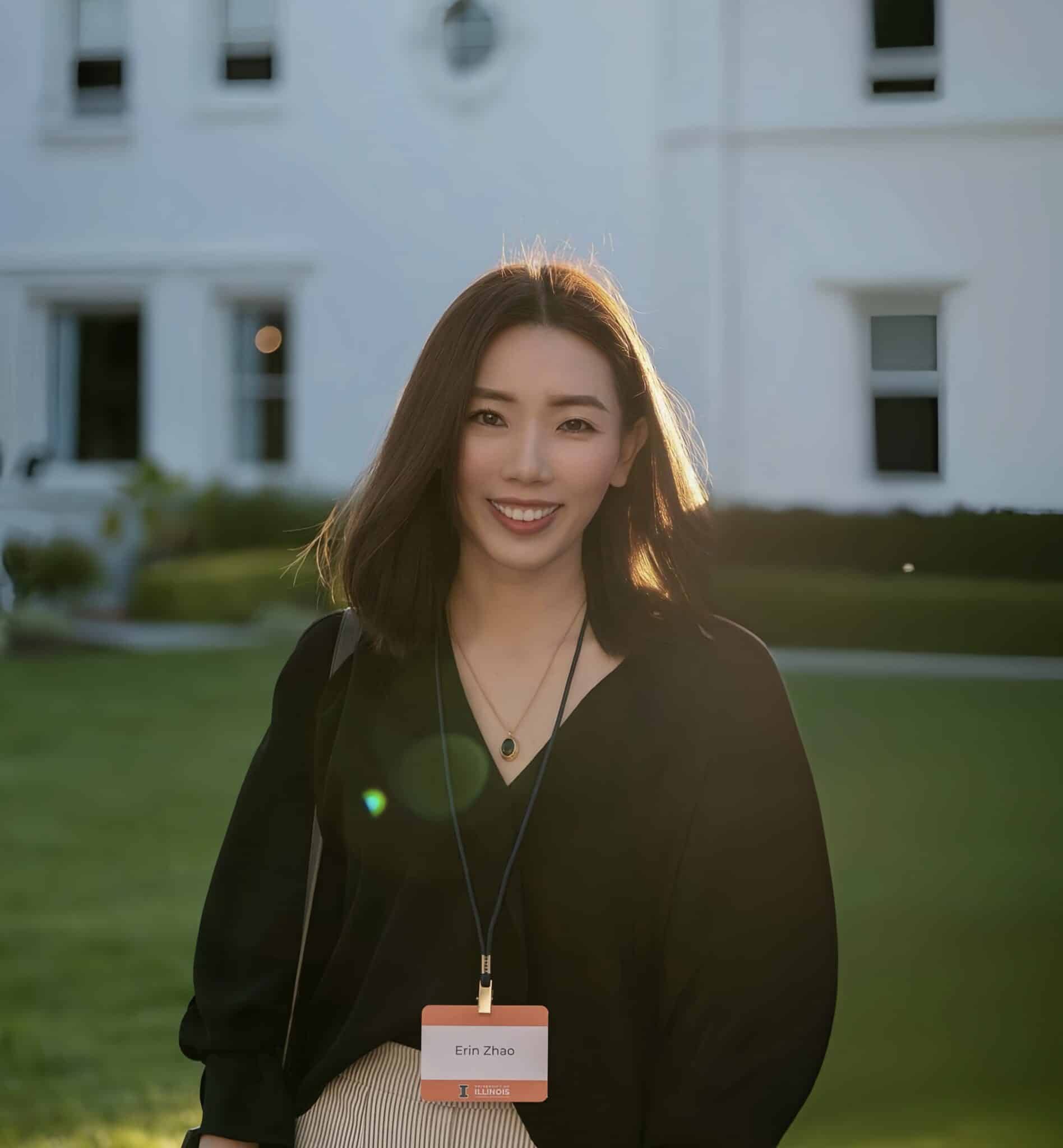
Ever found yourself in a new place, surrounded by unfamiliar faces, looking for friends or a community that shares your interest? Erin Zhao knows that feeling all too well.

With a childhood marked by frequent moves, each relocation brought Erin the recurring challenge of seeking kindred spirits who matched her enthusiasm for outdoor activities like cycling, golfing, and hiking. But here’s the thing: we live in an era where it’s so easy to connect with people virtually, have friends online, and yet feel like something’s missing.

As a person who loves solving puzzles and coming up with creative solutions, Erin founded OutWeGo, a wellness platform headquartered in the Bay Area, designed to combat feelings of loneliness and disconnection by facilitating personalized activities in an exclusive and curated community.

The Challenges of Being a Solo Female Founder and First-Time Entrepreneur

Erin faced distinctive challenges on her path to establishing OutWeGo, specially as a solo female founder and a first-time entrepreneur. One of them was finding the delicate balance between technological innovation and a human-centric vision.

Creating a digital platform that encourages authentic personal connections demands not only technical skills but also a deep understanding of social dynamics and user safety. Erin tackled this challenge by immersing herself in user feedback, embracing iterative design, and ensuring the platform was not only secure but also intuitively designed.

Another challenge that Erin faced was the weight of responsibilities that comes with being a solo founder. Managing everything from product development to marketing, finance, and user experience without the buffer of co-founders meant an increased workload and the necessity for rapid up-skilling in various domains.

Erin met this challenge head-on by embracing continuous learning, taking online courses, and networking with experts to acquire knowledge beyond her initial expertise.

Creating a Solution to the Problem

While doing extensive market research, including interviews with her friends and strangers, Erin found that the struggle of having real, meaningful connections these days is widespread. She discovered that many people, particularly those relocating or seeking companionship for specific activities, faced difficulties in finding suitable partners.

Realizing the commonality of this problem, Erin saw a clear opportunity to leverage technology and create a solution with OutWeGo.

Bridging the Gap with OutWeGo

Erin’s mission with OutWeGo is clear – to facilitate genuine, meaningful connections by bridging the gap between digital interactions and real-world social experiences. The vision is to create an exclusive, curated platform where individuals bond over shared interests, particularly in outdoor and sports activities.
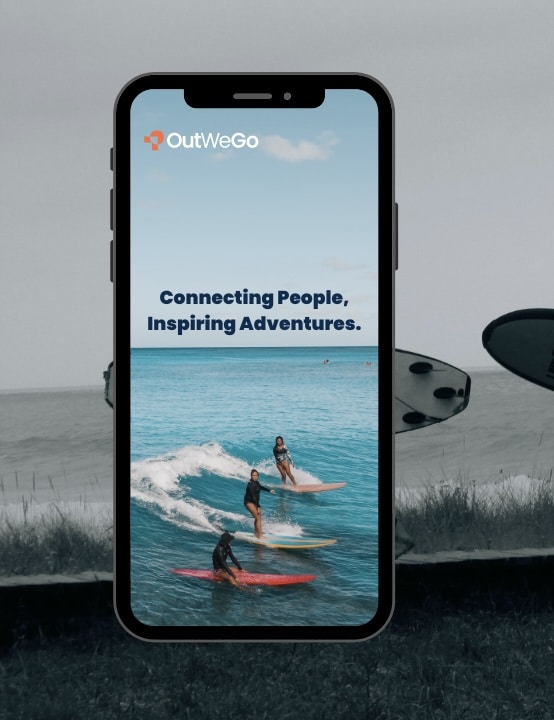
For the Asian community, OutWeGo serves as a powerful tool for empowerment. The platform fosters inclusivity, providing a space where Asians in the diaspora can connect with peers who share similar backgrounds, values, and passions. OutWeGo nurtures a sense of belonging and solidarity, reinforcing cultural connections and supportive networks among Asians living abroad.

OutWeGo Cycling Activity

Erin’s role in advancing overall wellness and social cohesion aligns with the principles of diversity, inclusivity, and mutual respect, making a tangible difference in the lives of the Asian community.

Connect with OutWeGo

Website: outwegosocial.com

Instagram: @outwegosocial

Linkedin: OutWeGo

Related Articles

Image Source istock

Uncategorized

New Report Says There Is Still A Talent Crunch In Southeast Asia Amidst The Layoffs

One of Southeast Asia’s biggest job platforms, Glints, just put out a report that shows the situation may not be as severe as they seem.

Glints co-founder and CEO Oswald Yeo told TechCrunch that there has been a lot of funding injected into the IT business. This is a response to the two-to-three-year bull run, and as a result, several firms grew swiftly. 

Yeo said that Singaporean firms seemed to adapt fastest to macroeconomic changes and that this wasn’t a terrible thing because other firms wanted to move swiftly, too. 

Operations, finance, HR, and certain sales and marketing teams have been hit hard, while businesses turned to Vietnam and Indonesia, which have fewer layoffs, for top-tier technical personnel. Moreover, the pandemic has created a decentralized-minded workforce.

Yeo observed that the pandemic had made remote work more convenient, necessitating cost-cutting measures. Many firms turn to remote employment to optimize their human and financial capitals. 

They have seen that remote work prospects on Glints have expanded tenfold in a year. Some regional firms in Malaysia continue to hire foreigners, while others only hire Malaysians. According to Glints, mid-to senior-level employees’ compensation won’t diminish, but junior talent may.

One-year fixed-term contracts are another trend that helps firms predict their financial destiny, as employers are wary about signing long-term contracts. 

He believes that not everything was awful — the need for technological and product skills on Glints favored job seekers.

Layoffs help startups build core teams. Yeo said that because there is less rivalry for talent, it’s a fantastic moment for organizations in a strong position to hire top managerial talent.

Image Source generocity.org

Uncategorized

Founder of Penn Asian Senior Services Im Ja Choi Passed Away At 73

A well-known supporter of Asian American seniors and the founder and emeritus CEO of the nonprofit Penn Asian Senior Services, Im Ja Choi,  passed away on Wednesday, June 22, from lung cancer in a South Korean hospital, she was 73. 

A memorial service will be conducted on July 16 at 3:00 pm at the Evergreen Center in Philadelphia. Contributions in her name will be appreciated.

Ms. Choi was born in Seoul, South Korea in 1948, majored in literature, and graduated from Korea University. She moved to Philadelphia after marrying her childhood friend Jung Choi in 1971, where she studied organizational dynamics at the University of Pennsylvania. She was a top-producing real estate agent in the 1980s and 1990s. 

She started Penn Asian Senior Services in 2004 to help Asian American elders with linguistic and cultural obstacles. Because she couldn’t get home care for her mother, and after hearing horrible experiences from other caregivers, she founded the charity that provides in-home care and homemaking services in over two dozen languages.

She undertook the fundraising efforts and strategic planning of the nonprofit, for which the charity received grants from the U.S. Department of Health and Human Services and numerous organizations. 

Moreover, she has also opened an adult day care for immigrants with language and cultural barriers, a state-licensed vocational school for entry-level Asian health-care workers, and a seniors community center. 

In 2013, she received the Ellis Island Medal of Honor from the National Ethnic Coalition of Organizations. The Independence Blue Cross Foundation president Lorina Marshall-Blake wrote that the region needed more health visionaries like Im Ja Choi. Ken Yang, CEO of Penn Asian Senior Services, said Ms. Choi’s care, generosity, and love for her family and community matched her innovative leadership.

She was also recognized by the governor as a 2014 Distinguished Daughter of Pennsylvania for her “extraordinary service and achievements to the Commonwealth.” In the same year, she gave the commencement address at Penn State Abington where she quoted “Where there’s a will, there’s a way.”