How These Immigrant Brothers Created a Revolutionary Mental Wellness Platform
Stories
June 23, 2023
SHARE:
At the helm of Aura, one of the world’s largest mental wellness content platforms, is Steve Lee, the co-founder and CEO with an inspiring story to tell.
Steve’s journey began as an immigrant in the United States, facing the challenges of language and cultural barriers. However, it was his parents’ bitter divorce, entangled in unfamiliar Korean laws, that deeply impacted his life. Witnessing his mother’s mental health struggles, Steve recognized the need for support and the stigma surrounding mental wellness, particularly within the Asian community.
Initially on a pre-med track at UC Berkeley, Steve’s true passion emerged through his involvement in founding non-profit organizations and self-reflection. Together with his brother Daniel, who shared the same vision, Steve embraced entrepreneurship as a means to create a societal-level impact. Thus, Aura was born.
With a grand vision to help a billion people find peace, Aura set out to democratize access to the knowledge and expertise of coaches and therapists. They created a platform that enabled coaches worldwide to record their voices and generate high-quality audio content from the comfort of their homes.
Aura is a revolutionary two-sided platform, comparable to Spotify and Netflix, that empowers coaches and therapists worldwide to create engaging mental wellness content. In contrast to earlier wellness apps functioning as content studios featuring only a limited number of coaches, Aura stands out by offering an extensive range of content and creators.
The platform goes beyond mere curation, with coaches hosting live streams and providing personalized 1-1 coaching sessions, making Aura the ultimate all-in-one destination for individuals seeking mental wellness support.
Aura proudly boasts the world’s largest mental wellness library, encompassing a wide array of topics including sleep, life coaching, cognitive-behavioral therapy (CBT), spirituality, breathwork, and much more. Additionally, Aura has fostered a thriving community where users can engage in live events hosted by coaches and benefit from one-on-one coaching sessions.
The platform’s commitment to offering comprehensive content, live engagement, and personalized support has revolutionized the way individuals access and experience mental wellness, firmly establishing Aura as a game-changer in the industry.
Aura has achieved unprecedented success and garnered recognition from reputable sources. In 2017, Aura was prominently featured in TechCrunch’s launch feature, drawing attention to its innovative approach. The following year, the platform received the prestigious honor of being listed in Apple’s “Best of Apps,” solidifying its reputation as a top player in the mental wellness space. To fuel further expansion, Steve secured significant venture capital funding from esteemed investors such as Cowboy Ventures and SkyDeck.
The impact of Aura’s efforts can be seen in the numbers and testimonials. Users flock to the platform, spending hundreds of millions of minutes engaging in meditation and self-care activities each year. This remarkable level of engagement demonstrates the profound influence Aura has on individuals’ well-being.
Steve extends a generous invitation to those who prioritize mental health to avail themselves of a special offer. By using the code “TOGETHERAHN” at aurahealth.io/redeem, individuals can gain free access to Aura for one year. While there is a limit to the number of available codes due to security measures, Steve encourages interested parties to reach out to him should the code become unavailable. More information about Aura can be found at aurahealth.io.
If you’ve ever ordered boba, you’ve probably used Snackpass before. Snackpass is a fast-growing startup that operates a social food-ordering app alongside a suite of software and hardware solutions for restaurant operations.
Boasting a $400 million valuation, Snackpass is backed by a slew of the best investors around, including Craft Ventures, a16z, General Catalyst, First Round, and Y Combinator. I had the pleasure to sit down with Snackpass’s co-founder and CEO, Kevin Tan, to talk about his background and experiences.
JOURNEY TO BECOMING A FOUNDER
My first question was if Kevin did anything entrepreneurial before Snackpass:
I had multiple projects before SnackPass. As a kid, I shot a movie with friends and made a comic book to sell. In college, I picked up programming, which sparked my interest in technology startups. I started that in my sophomore year. I tried a few different projects or companies and started SnackPass in my senior year.
Back in college, Kevin actually majored in Physics, not Computer Science. I asked Kevin what made him decide to pursue software over a career in Physics, and also why he decided to start a company as opposed to joining a big tech company:
I actually initially started in the humanities. After a year of humanities, I went and moved into Physics and started programming at the same time. I chose software because I felt that things were a bit more fast-paced in the world of technology. Also, I didn’t feel that I was going to be a top 1% physicist–though I still really enjoy Physics. As far as pursuing a startup instead of big tech, I did actually apply to Google for an internship, but I didn’t get in. One of my favorite things about startups is that you don’t necessarily need to impress any gatekeepers who hold power over your next job, you can go make your own! That’s something that made me super excited about startups.
STORIES AND THOUGHTS ABOUT SNACKPASS
I remember sometimes to get to the restaurant owners, I would set up a meeting and then trek across campus in the cold and in two feet of snow only for the owner to say “Oh, I rescheduled”, yet I always followed up and went back to meet them.
Kevin Tan
In an article by Free Ventures about Snackpass, I read “In the beginning, they partnered with restaurants by going door to door to mom-and-pop shops and talking personally with the owners. They also posted a bunch of flyers around campus and created referral mechanisms on the app to get the word out.” I asked Kevin what that experience was like:
Back then, we didn’t have any funding. We got rejected from Yale’s incubator, let alone venture capital. But we were able to get pretty far because I was able to code and go door to door to bootstrap our first set of customers. I’ve always had a very determined attitude about things and am willing to brute force it if I have to. I remember sometimes to get to the restaurant owners, I would set up a meeting and then trek across campus in the cold and in two feet of snow only for the owner to say “Oh, I rescheduled”, yet I always followed up and went back to meet them. Obviously, there needs to be a more efficient way to do that, but if you’re trying to learn something very quickly. That’s one way to do it.
Even to this day, we’ll go to new installs and try to embody the customer as much as possible. It’s very hectic behind the restaurant counter. To make a product like ours work, we have to get very deep into how the staff interacts with our tech and how they are receiving orders. Like, were the printers printing? Were they able to confirm the order or did it get missed?
As Kevin hinted in his answer, Snackpass started at Yale, then expanded to other colleges, and is now expanding to all restaurants. I asked Kevin how he decided it was time to expand to new markets:
There’s this blog post from Marc Andreessen about how there are two phases of a startup. One is before product-market fit, where you should do everything to find it. The second is after product-market fit, where you should do everything you can to exploit it. I think you don’t want to scale anything up before you have really strong product-market fit and a repeatable engine for driving revenue or growth. You can have an amazing product, but if you can’t get it out efficiently, that’s going to be a problem.
Whenever I think about the restaurant business, one of the first things that comes to mind is the pandemic. I asked Kevin how the pandemic affected Snackpass:
It was definitely a huge curveball. At the height of the pandemic, people were asking if college campus restaurants would stay in business. People went back home. We saw a big dip in our volume in the same way a lot of local marketplaces did. We used that time to ask how we were going to expand outside of college campuses. The pandemic motivated us to shift our whole business model. We shifted into focusing on building an operating system for these restaurants, and we’re still playing that out today.
I asked Kevin how Snackpass’s go-to-market motion has evolved over the company’s lifetime:
In terms of target customers, we’ve grown from just SMB restaurants to having some multi-location mid-market brands using us. In terms of how we acquire new customers, we get some inbound by being a market leader. Having a brand name and social proof is very important. Other channels that have worked for us are referrals and social media such as Instagram and Tiktok.
In a previous conversation I had with Gusto’s cofounder, Eddie Kim, he talked about the idea of sometimes needing to turn down larger customers and contracts to remain focused on the target customer. I asked Kevin if he ever thought about this:
Yes, we’ve definitely had to turn down some large potential customers. As a rule of thumb, larger and more enterprise-y customers tend to have more requirements, move slower, and want integrations and things that are not standardizable. These are often one-offs so we don’t get as much leverage with what we’re building.
Unless your strategy is enterprise-focused, you probably want to focus your angle of attack on one segment. There’s a good book called Crossing the Chasm. One point it makes is that the market you go after should be a single entity, one with a common set of characteristics and needs that you can address as a whole. We’ve definitely had to find our niche because there were customers asking all sorts of things. In the world of restaurants, especially, there are so many different varieties operation-wise, that you can get pulled in many different directions. Sometimes it’s tempting to chase revenue, but that can easily lead to a very overreaching product surface area. It’s better to have a narrower angle of attack, generally speaking.
A key differentiator of Snackpass compared to other food-ordering apps is the social components of the app. In Snackpass, you are able to gift points to a friend with each order you make. Once you accumulate enough points from someone, you hatch a mini digital chicken–sort of like a minigame. I asked Kevin for some cool or surprising ways he has seen people using these features:
Oh, there are tons. There’s a feed where you can see who’s sending gifts to whom. The idea behind the feature was to give users a social way to figure out what restaurants are interesting or popular, but we’ve heard some people use it to see who’s flirting with whom. It’s kind of a sneaky way to get a closer look at some people’s relationships. Another cool one is that we’ve heard many anecdotes of someone sending points to all their co-workers in an office and then they not only try out Snackpass but also try out the restaurant the person ordered it from. It’s a win-win.
BUILDING A TEAM
I’ve talked to many founders and culture is brought up time and time again as something that is extremely hard but important to get right. To kick things off, I asked Kevin how to fire people in a way that minimizes the negative effect on the wider team:
I believe this is something that I, and probably many others, can always improve upon. I strive to excel in this area, though I’m not sure if I’ve reached that point yet. Having clear expectations, like a Performance Improvement Plan (PIP) process, is crucial. This way, it’s not a surprise when someone is let go. If we fire someone, even though they may not realize it yet, they’re better off being successful somewhere else than being unsuccessful here. It’s painful at the moment to be rejected or to reject someone, but it’s a necessary step to ensure both sides are in a situation where they can thrive.
I also asked Kevin what Snackpass’s cultural tenets are, and what he does to implement those tenets in practice:
Our slogan is that we are humble and hungry. On the humble side, part of it is being easy to work with, which facilitates collaboration. It’s also about asking questions, acknowledging fallibility, and striving to prove yourself wrong. It’s about starting from a position where you just want to learn and get closer to the truth. Having an ego can blind you to the truth, I’m also guilty of this. Sometimes pride prevents you from admitting you’re wrong, even subconsciously. You have to put that aside to find the right answer. That’s the humility side. The hungry part, obviously, we’re a food company, but we also look for people who have a chip on their shoulder and are willing to work hard. There’s nothing more demotivating than having part of your team that’s really hard-working and driving towards success, and then having others who are indifferent about it. So we generally want a team that is really hungry, ambitious, and genuinely cares about the outcome.
Some founders say they want to be completely authentic with their team, sharing their concerns or fears. Others want to always project confidence to avoid worrying the team. I asked Kevin how he prefers to show up:
I tend to wear my emotions on my sleeve and I’m quite transparent. If I’m excited or annoyed about something, I’ll show it. My co-founder, on the other hand, is better at separating her outward expressions from her inner feelings. It’s just a stylistic thing. I’m quite transparent. My co-founder and I balance each other out in many ways, including our aptitudes, styles, and communication methods.
Being a founder comes with a lot of very low lows, so I asked Kevin how he copes with the lows:
I realized that being unhealthy doesn’t make you better at your job. So, I started going to the gym and running. I see time away from the computer as just as valuable. Sometimes, you might be working hard in the wrong direction. It’s better to pause and think for a moment. The concept of working smarter, not harder, is crucial in technology and startups. You can spend years going down the wrong path. It’s important to always be asking questions and self-correcting your direction. This doesn’t always require hours of grinding. Sometimes, it just takes a clear head.
I asked Kevin if his reflection time always took the form of exercise, or if it was anything away from work:
It could be taking walks or reading. There are some really good books that provide frameworks that expand the problem space even further or help me view problems from a different perspective. I like to read a lot. I also like to exercise and play music. It’s just something that isn’t focusing on the immediate problems in front of me. Sometimes, you can think really hard about something, but once you talk it through with someone or test it, you get so much more information quickly. You get out of the narrow set of parameters you’re working with.
ASIAN AMERICAN TALK
Anecdotally, I’ve noticed that a lot of places that use Snackpass are Asian restaurants. I asked Kevin if this lined up with reality, or if it was all in my head:
No, it’s not just you. We’re at a lot of Boba shops, for example. Part of it is because we initially launched on college campuses and there’s a lot of Boba near colleges, especially at Berkeley. I think it’s one of the most dense Boba areas in the country. We started off with just mobile order and pickup, and that has evolved into self-serve kiosks and digitizing the experience without a human in the loop. This has been particularly popular with Asians, especially Boba shops. It’s an interesting question as to why. I think we’ve found that Asian owners and operators are very practical. They see that it saves them money and increases efficiency, so they adopt it.
Next, I asked Kevin to tell me about his Asian background, and how it has impacted his own life journey, especially as a founder:
I was brought up by Chinese parents. They came from China for grad school. My dad arrived with only $50 in his pocket. My mom worked a full-time job while also taking care of me. I also spent a lot of time with my grandparents since my parents were working full-time, so they were also hugely influential for me.
I grew up in Ohio, where there weren’t a lot of Asians, so I grew up with a deep-seated feeling of being different and being an outsider. As a child or a teenager, I wished to fit in more with the mainstream. At some point, I learned to embrace going against the mainstream and being different. To this day, all my heroes are people who are counterculture and really go against the grain. As a founder, having a strong STEM background is helpful and I thank my family for that. My grandfather taught me math several years ahead of what I learned in school. It’s cool to see Asian-American founders like Jensen Huang or Tony Xu rising to the top. If you look at top leadership, a huge amount of them are Asian American, so I’d say that there’s a good match between tech and our culture. But, there’s also a sense of a bamboo ceiling. It takes time to break through that. The more examples there are of successful Asian leaders, the less of a bias there will be.
You know, the recent popularity of Asian culture has been incredible. Take K-pop for example, it’s like the new Hollywood in Korea. I feel like the 20th century was a century of unspeakable suffering for a ton of Asian countries. Our parents, my dad grew up in the cultural revolution and his dad went through the worst century of humiliation. Now, in the 21st century, I feel like they suffered for us to really thrive. Maybe this is the century where you see Asians globally–not just producing semiconductors or T-shirts–but being the cultural center of the world.
SHOUTOUTS
Leaning into the cultural aspect, Kevin wanted to shout out a few of his favorite Asian American artists, namely EDM artist ZHU and the 88rising crew, especially Joji, please go check them out!
Also, if you ever find yourself looking to order food, consider using Snackpass! They often have great discounts and you can earn loyalty points which can be used to redeem free items. You can download Snackpass on any of the major app stores.
If you own a quick-serve restaurant, please check out Snackpass’s offerings at https://www.snackpass.co/. Snackpass’s platform is trusted by many mom-and-pop shops as well as brands such as Sharetea, Somi Somi, and Pokeworks.
AHN and Meta Prosper have partnered on a new podcast series highlighting API creators. Meta Prosper is dedicated to amplifying and supporting the API community and driving economic growth and equitable representation. The Creators Podcast series delivers stories on how creators achieved success and created impact through their platforms, serving as an inspiration for the community.
Welcome to the third installment of the Creators Podcast series, where we delve into the inspiring stories behind some of the most beloved and innovative content creators. In this episode, we explore the charming and uplifting world of Tubby Nugget, a social media sensation dedicated to promoting self-love and mental health awareness.
Tubby Nugget is a delightful character from the whimsical universe of Nuggetville. This adorable alien loves eating chicken and has descended to Earth with a mission to spread positivity, laughter, and messages of self-care. With a growing presence on social media, Tubby Nugget offers a daily dose of joy and encouragement to fans around the world, reminding everyone to embrace their inner quirks and look after their mental well-being.
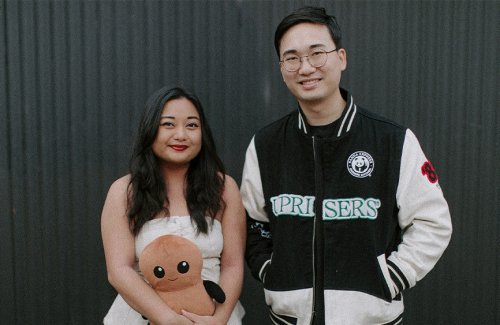
The creative minds behind Tubby Nugget are Joshua Jackson and Jenine Pastores.
Joshua, a skilled director, motion graphics artist, and film editor, has an impressive background working with notable media giants like Netflix, VEVO, and Jubilee Media. Leveraging his artistic expertise, he brings Tubby Nugget to life with vibrant animations and engaging storytelling. As the CEO and co-founder of Nuggetverse Inc., Joshua leads the team with a vision of spreading happiness through their unique content.
Jenine Pastores, the Chief Creative Officer of Nuggetverse, has a rich history as a creative producer and screenwriter, having collaborated with luminaries such as Jon M. Chu and companies like Jubilee Media, Alabaster Co., and VEVO. From a young age, Jenine’s passion for storytelling was nurtured by her love for books and her father’s bedtime stories. Pursuing a degree in screenwriting, she discovered the profound impact of storytelling in connecting people.
The story of Joshua and Jenine’s collaboration begins in 2015 during the Film Fellowship Program at Jubilee Media. Joshua, newly relocated from New Jersey to Los Angeles, met Jenine, who was already pursuing her screenwriting degree in LA. Their partnership started with Joshua directing a film that Jenine was involved in, marking the beginning of a creative journey that would eventually lead to the creation of Tubby Nugget.
Tubby Nugget’s mission is to provide a daily reminder of the importance of self-care and mental health. With a playful and humorous approach, Tubby Nugget encourages fans to embrace their unique selves and find joy in everyday moments.
Listen to the Creators Podcast featuring the creative minds behind Tubby Nugget here.
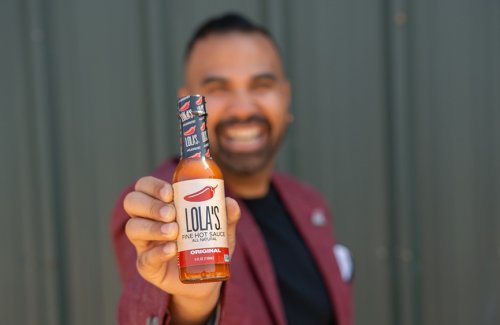
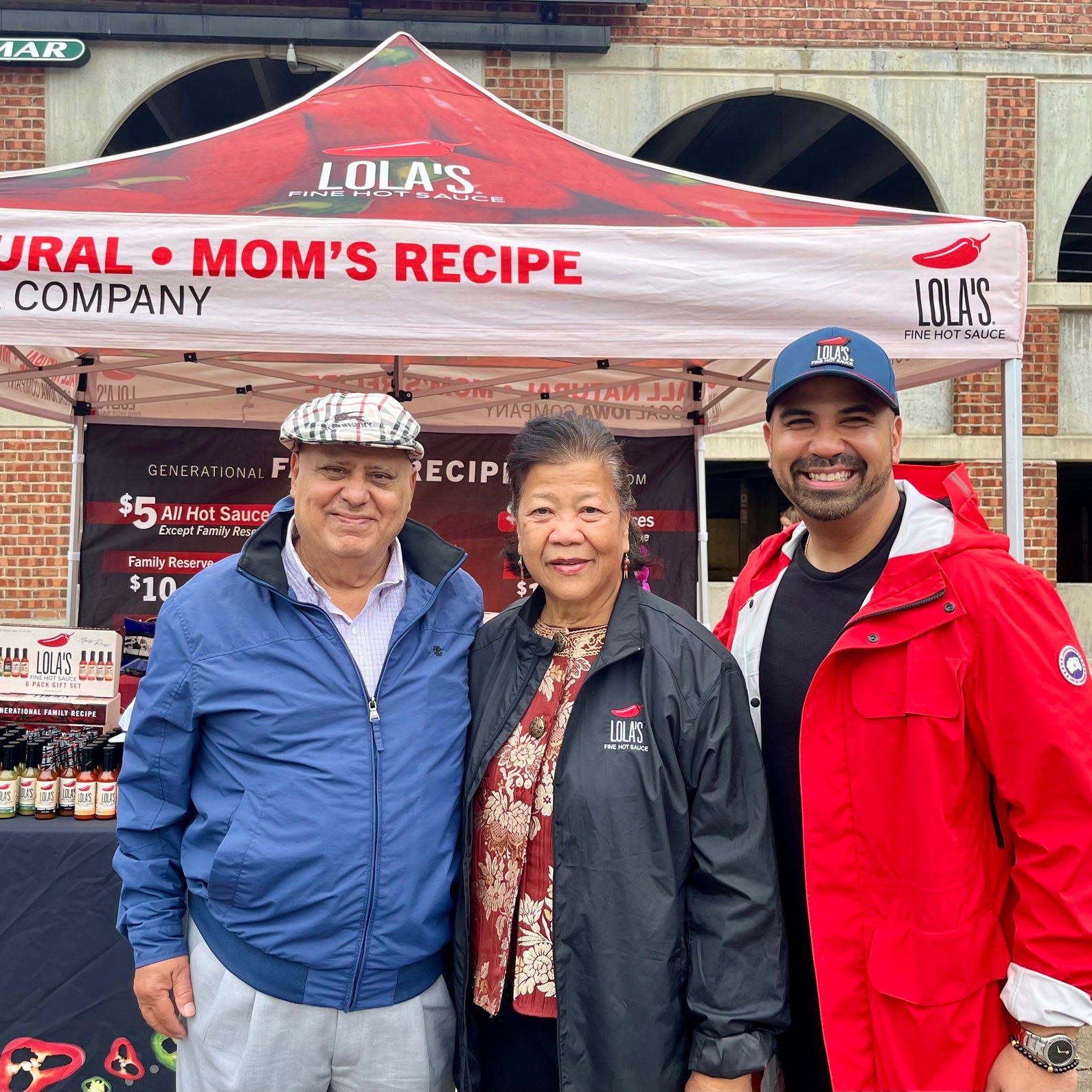
Last year, we had the pleasure of sharing the inspiring story of Taufeek Shah and Lola’s Fine Hot Sauce in the article “The Success Behind The First-Ever National Asian-Filipino-Owned Hot Sauce Brand,” delving into the brand’s multicultural roots and its recipe for success. With a unique blend of Filipino and Pakistani flavors, Lola’s Fine Hot Sauce, founded by Taufeek and his mother, has captured the hearts and taste buds of many across the United States.
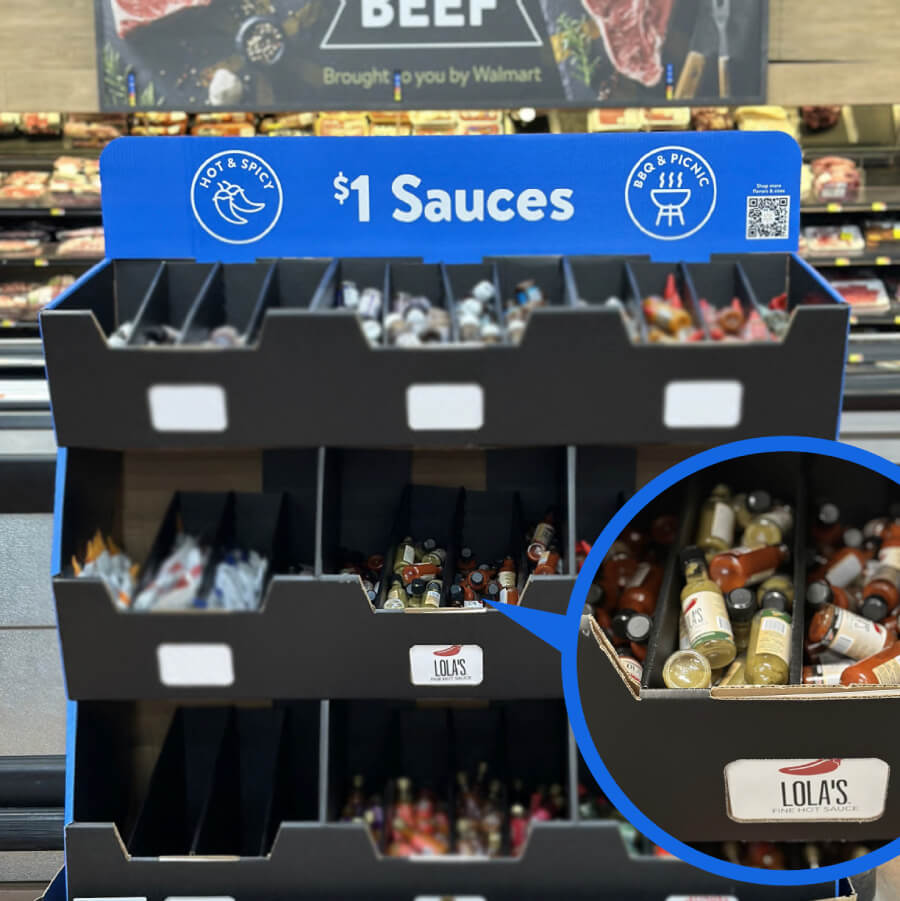
Since then, Lola’s Fine Hot Sauce has achieved remarkable growth. From expanding its product line to securing a significant distribution agreement with Walmart, the brand has continued to build on its success.
We had the honor of interviewing their CEO and founder Taufeek Shah once again to discuss the latest updates and achievements of Lola’s Fine Hot Sauce. Join us and get inspired.
I remember when it was just my mom and I selling at farmers markets and now to see her recipes in every Walmart store in America is truly the American Dream.
Taufeek Shah, CEO and Founder of Lola’s Fine Hot Sauce
WHAT’S NEW WITH LOLA’S FINE HOT SAUCE
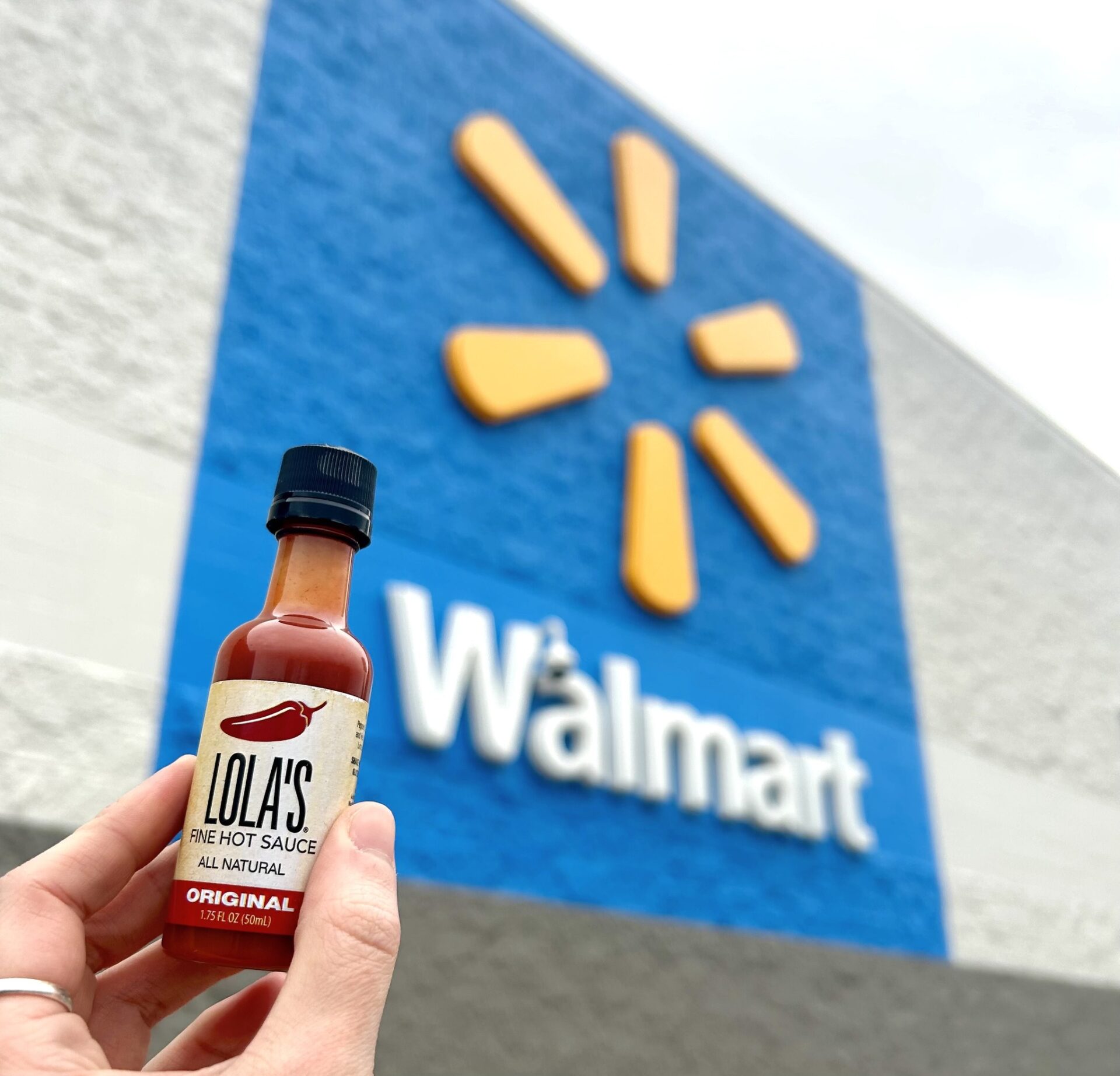
Since last year, Lola’s Fine Hot Sauce has achieved several significant milestones. We’ve expanded our product line by releasing Lola’s Fine Spicy Ketchup and AE Dairy Spicy Party Dip and introduced convenient mini bottles. Our distribution network has grown substantially, highlighted by a major partnership with Walmart: bringing our sauces to over 4,000 stores nationwide.
We’ve also partnered with local farmers, packaging companies, and local supply chains to make sure our products are proudly made in America featuring fresh real all-natural ingredients. Additionally, we’ve received numerous awards like the Best for Your Pantry Award by Better Homes and Gardens, awards in supplier diversity, and positive reviews, solidifying our reputation for quality and flavor. Overall, our growth and achievements reflect our commitment to bringing not only the best hot sauce but also our family’s recipe hot sauce to our customers while making a positive impact on the community.
HOW IT FEELS TO NOW BE AVAILABLE IN OVER 4000 WALMART STORES
It feels incredibly rewarding and humbling to see our family recipe hot sauces on the shelves of Walmart stores across the country! I remember when it was just my mom and I selling at farmers markets and now to see her recipes in every Walmart store in America is truly the American Dream. This milestone represents years of hard work and dedication from our entire team, and it’s amazing to see our brand reach such a wide audience.
OVERCOMING PRODUCTION CHALLENGES
One of the major challenges was scaling up production to meet the demand of over 4,000 stores without compromising on quality. We had to streamline our processes, invest in new equipment, partners, and logistics, and ensure our supply chain could handle the increased volume. Great communication and great relationships with our current partners and new partners helped create new jobs within our community and also helped us understand our sauce better. Being all-natural and the amount of pepper/garlic and more that we brought in truly created an all-ships-rise in collaboration.
KEY LEARNINGS ON LARGE-SCALE PRODUCTION AND DISTRIBUTION
We’ve learned the importance of robust logistics and supply chain management. Ensuring that we have a reliable source of ingredients and efficient distribution channels is crucial. We also realized the value of maintaining flexibility in our production processes to adapt to unexpected changes in demand or supply. Additionally, building strong relationships with our retail partners has been essential in facilitating smooth operations.
FEEDBACK FROM THE CUSTOMERS
The feedback has been overwhelmingly positive. Customers love the convenience of our mini bottles, which are perfect for on-the-go use and trying out different flavors without committing to a full-sized bottle. Our expanded product line, including unique flavors like our Green Jalapeno & Serrano along with our coveted Original, has been well-received for its unique tastes with rich garlic nodes and just the right amount of heat and flavor.
LOOKING AHEAD
In the next few years, we aim to expand our product line with new and innovative flavors as well as continue to drive our signature original in both food service and retail. We also have a hot honey launching in the next few days which features a delicious flavor profile that matches our hot sauce with an all-natural honey.
We’re also looking to enter new international markets and increase our presence in existing ones. Another goal is to enhance our online shopping experience, increase direct-to-consumer sales, and expand internationally.
ADVICE FOR OTHER MINORITY-OWNED BUSINESSES
Stay true to your vision and values. Build a strong, dedicated team that believes in your mission. Networking and building relationships within the industry are crucial. Don’t be afraid to seek mentorship. But most importantly hustle – grinding hard and outworking everyone with the belief in your brand or product will get you to where you want to be.
CONCLUSION
We’re excited about the future of Lola’s Fine Hot Sauce and grateful for the support we’ve received from our customers and partners. We’re committed to continuing our journey of delivering high-quality, flavorful family recipe hot sauces while making a positive impact on our community and supplier diversity proudly made in America while staying true to our Filipino/Pakistani roots.
This edition was a collaboration with The Early Newsletter by Michaela Gordon. You can read her thoughts on our conversation with Patrick here. Thank you Michaela for collaborating and please go check out her article!
The startup ecosystem has gone through a lot of changes over the years. From the dot com era to the modern era of AI, Patrick Lee has seen it all. A stalwart of the startup ecosystem, Patrick has started seven different companies over the last 30 years, including everybody’s favorite movie review website: Rotten Tomatoes. Michaela and I had the chance to sit down with Patrick to talk about Rotten Tomatoes, advice for founders, and Patrick’s reflections on being Asian.
How did Rotten Tomatoes get started?
Rotten Tomatoes had three co-founders. I was the CEO. There’s Senh Duong, who was the creator of Rotten Tomatoes, and he was basically our chief product officer, and Stephen Wang, who was our CTO. I knew them all from my freshman year of college. Senh was down the hall from me in the dorms.
Prior to Rotten Tomatoes, Stephen and I had founded a web design firm. We were doing a lot of work for the entertainment industry, a lot of work for Disney Channel, stuff for Warner Bros., Artisan Entertainment, MTV, VH1, and ABC. We even made the online flash game for Who Wants to Be a Millionaire.
During that time, Senh was our creative director, and he came up with the idea on the side. He was a huge movie buff. He came up with it and launched it on his own. It was written in static HTML because he wasn’t able to code at the time. And we hosted it for him. After about a year of hosting, we were like, “maybe this should be the business?” So we actually merged our company with his company and became co-founders of both companies and had equity in both. I went out and raised a million in funding, then transitioned our design firm off to another group to take over. We kept an equity stake in that design firm, but then we basically passed our clients to another group to take over. They took over the name and everything so that we could focus on Rotten Tomatoes fully.
What was your experience raising money like?
Rotten Tomatoes was my third company. In my first company, we put in our own savings. For the second company – the design firm – we took loans from our families. $10,000 from my mom and $20,000 from Stephen’s uncle. Once we started getting clients, we paid back the loan with interest.
For Rotten Tomatoes, one of our clients raised some venture money, so they put us in touch with their VC who said they would lead the round. They put in half a million. The rest we actually raised from our old design firm clients. A number of them were tech companies and had successful exits. So they were totally open to investing, and they knew what we could do because they were our clients.
Why did you decide to raise venture capital for Rotten Tomatoes?
This was in late 1999, right before the dot-com crash, so there was a lot of money going around and a lot of investment into the internet. It’s kind of like what Web3 was like a few years ago or what AI is like now. Multiple companies we worked with had raised a lot of money and had successful exits. We were basically building for all these companies and realized that we were on the wrong side of the business. We decided to try to build something that was our own instead of being a services company. That’s why we went and approached the VC that we had contact with. It was a small VC out of Taiwan. I remember we had a couple of different ideas. The first one was Rotten Tomatoes, which already had traction. The other one we thought was interesting was making a portal for Asians and Asian Americans. We were doing the official Jet Li site. We were working with Yolk magazine at the time. I remember having a meeting with Jet Li and he was getting excited about that idea. He was saying he could bring on Jackie Chan. At that time, there were a couple of other Asian magazines that were within our reach. It was a very small community back then. Our thought was, what if we got the different magazines, the different Asian sites, some of the big Asian and Asian American celebrities, and brought them all together? I remember when we pitched these two ideas to our VC, they told us to do Rotten Tomatoes because movies were mainstream. At the time, only 3% of the population in the US was Asian. Even among Asians, there are many different types and they might identify separately as Chinese, Japanese, Korean, Filipino, etc. The investor felt it would be very difficult to have content that appeals to all of them. They recommended we do Rotten Tomatoes, which, looking back, was definitely the correct decision. The other idea would have probably been about 20 years too early.
The first Rotten Tomatoes front page, published in 1998.
Rotten Tomatoes was launched in just two weeks. How did you navigate the tension between creating the perfect product versus getting it out as soon as possible?
Rotten Tomatoes was our creative director Senh Duong’s idea. He was a huge Jackie Chan fan. He wanted to know what everyone was saying about Rush Hour when the movie was coming out, so Senh went to the library and gathered reviews from magazines and newspapers–back then, very little was online. He decided that if he was putting all this work together, he might as well share it with other people. So he went home, built a page for Rush Hour and the other mainstream movies coming out that week, and put all the information up there. Because the scope was limited, he was able to go from idea to launch in about two weeks. He was gathering twenty to fifty reviews per movie for three or four movies. It was a lot of work, but doable by one person.
It turns out that just having the new releases was still very useful because people were most interested in the movies coming out that week. He didn’t need to have tens of thousands of scores for the long tail of movies. He just focused on the head, the tippy top of the head. It was immediately useful, and instantly started getting traffic and attention. Then he just kept it up. He would work on the next week and the next week and the next week. It wasn’t until a year in that we said; “hey, maybe we should turn this into a business.”
My advice for anyone is to launch quickly and test quickly. A lot of people, and I’ve made this mistake multiple times, spend six months to a year or two trying to make this perfect thing. They end up spending a lot of their own money or burning half or more of the funding that they raised trying to build this thing. The issue is you don’t know what perfect is until you actually get it out there.
You’ll see over and over, especially in consumers, folks put something out as a test and then it blows up. Twitter was a weekend project and then they just blew up. Twitch was Justin.tv in the beginning. They just messed around and put something out there. You just have to get the basic thing out there to see if people want it. Sometimes you don’t even have to build anything, you can literally just interview people or just do a mockup, and make a walkthrough of what the product would look like. It could literally be a napkin scribble and you can immediately start getting feedback. That feedback can actually give you a lot more information than putting something “perfect” out there. Go back to almost any consumer site or app and try to look up what version one looks like. Go look at the first versions of Facebook, eBay, Amazon, or whatever. They were ugly. But they solved something. That’s why they kept growing and taking off. I’m always recommending that.
The other thing I say to people a lot of times is to really focus. It’s generally a single thing that people care about. For Rotten Tomatoes, it’s the TomatoMeter. We could get rid of the cast, crew, filmography, photos, movie showtimes, and almost everything else on the site. But really, as long as you have a score, that’s the critical thing that you need.
If you think about fast food chains, every fast food chain specializes in a single type of food. The restaurants that offer multiple types of food are generally all mom-and-pop shops. The really big chains do one type of food. Every single one of them. When you look at social media, every social media platform started off with one unique singular feature. Like TikTok, Snapchat, Clubhouse, Twitter, YouTube, Instagram, and Substack, they all started as one thing. And again, as they got big, they started looking more like each other because they added more features. But they all started out as one thing. You find one thing that people actually care about. And you try to put that one thing out as fast as possible to see if they really care.
How do you know when to give up on an idea?
Testing doesn’t have to be serial. You can actually do some stuff in parallel. As an analogy: if you have a kitchen, you can test a few different types of food concurrently. You could even do a survey before you start cooking to narrow down your options. Then, you can try each of them out and go forward with the best-performing one. It doesn’t have to be: Let’s try chicken, now let’s try hamburgers, now let’s try pizza. You can try all of them at once.
In terms of knowing if an idea will work–you’ll know it when you see it. Rotten Tomatoes got the press instantly. It was getting noticed. USA Today was writing about it and Netscape was highlighting it at Yahoo. The day Pixar released A Bug’s Life, right around the time we released Rotten Tomatoes, we saw spiking traffic coming from Pixar.
When you look at Asian Hustle Network, they just put something out there and it went crazy. Facebook and Twitter had the same thing. Especially with consumer products, when it works, it works. You’ll know when it doesn’t work because it’s crickets. You’ll be trying to tell everyone to go on, you’ll be telling your friends and family, and some of them will go on once and never come back. That’s normal. That’s actually what happens almost every time.
Take an average YouTube video. You’d have a hard time getting even 100 views on it. Then every once in a while, for whatever reason, someone puts up a video and it gets millions of views and everyone’s sharing it like crazy. You kind of know it when you see it. If you’re begging everyone you can get, you’re trying to market in every way, you’re even buying ads and you’re having trouble getting a hundred views or a thousand views, you’re probably done. If it’s an app or a website, it’s probably not the right one. The way you know if you have product-market fit is if people tell other people about it without being asked to or incentivized to. Think about TV shows like The Queen’s Gambit a couple of years ago or Squid Game. People were sharing it with each other unprompted. They would just tell other people about it and it’s essentially free marketing.
Is it necessary to have startup experience or experience working for another company to execute and test ideas well? Or do you think the best experience to start a company is just to go and start it?
I would say that there is an optimal founder. That founder would be very bootstrappy. They would be able to launch things very quickly, iterate quickly, and without many resources. Also, they would have what I call irrational confidence. They just believe in themselves and what they’re trying to do with this insanely crazy confidence, and often based on nothing.
“When we did Rotten Tomatoes, we didn’t know anything about movies. The Airbnb people weren’t hotel people. The Uber people were not taxi people. Industry disruption often comes from outsiders because disruption requires something out of the box and those people were never in the box to begin with. It’s rare that the disruption happens from within.”
I often speak to students and recent graduates. Some of them will come up and say, “Hey, I was thinking about doing a startup, but I wanted to go work in corporate or management consulting for a couple of years, get experience, and then start it.” There’s a 99% chance you’ll never leave once you’re in and you’re used to a salary, getting raises, promotions, and all that stuff. It’s going to get harder and harder to quit, especially if you get to a point where you’re in your early 30s, married, with kids and a mortgage. The chance of you risking all of that is pretty much zero.
These people, when they come up to me, they’re saying, “Look, I’m too scared. I’m too conservative to actually go out and do it.” The best ones just do it. Yahoo, and Google, they were grad students at Stanford and just left. Zuckerberg was an undergrad at Harvard. Steve Wozniak and Steve Jobs just left and did it. Most of them don’t even finish school because they’re not scared of leaving early. They have so much belief that they just have to do it. This has happened so many times.
In some ways, dropping out was a good sign. It’s not that they dropped out to bum at home playing video games, they believed in themselves so much they didn’t have that fear of failure. I absolutely think that founding a startup is not for everyone. I don’t recommend it if you’re someone who’s very conservative, and very scared. Go get a normal job, and do the safe thing. But there are people who just have to do it. Even if you have the confidence, you still have to have the ability to iterate, to bootstrap, to do those things properly.
When you see that mix, it almost doesn’t matter what the idea is, assuming that they want to do something big. When you see that mix, that’s the right person. It doesn’t matter what their idea is, they’ll figure out something that’s going to work.
They are sharp and bold – it doesn’t surprise me at all when they make it later on. Look at any of these great athletes or entertainers, and when they were young, they probably had that spark. There is an element of luck, but a lot of it is who they are as a person. The biggest thing when looking at young founders is their irrational confidence. This is true for athletes, entertainers, or anyone who takes that risk. Go back to the beginning and look at them, they have that spark.
You’ve been founding startups for many years now. How have you seen the landscape for Asian American founders change since you started, particularly within tech and venture?
In tech and venture, we generally punch above our weight. At the highest levels, if you look at Nvidia, Yahoo back in the day, YouTube, Twitch, and Zoom, there are Asian founders. If you’re also counting South Asians, look at corporations such as Microsoft and Google, the heads are all Indian.
A lot of Asians tend to lean towards engineering, so we tend to be weaker on the executive side. When people talk about diversity, they often don’t count Asians as diversity for tech and venture.
Similar to college, it’s actually harder for Asians than anyone else. From when I started until now, it’s gotten better, but overall, we could use help on the executive side. In other industries like entertainment, it’s getting better but it’s still not great.
A lot of your business partners have been Asian. Is this intentional or coincidental?
Part of it is because I went to Berkeley. I wanted to go there because it was 40% Asian. I was born in LA but grew up in Maryland. There were only three Asians in my grade in elementary school, so I felt a little invisible sometimes. I later attended a magnet program for intermediate school and high school, where there were obviously more Asians. When college came around, I wanted to find a place that had more Asians so that I would find more people like me. After we sold Rotten Tomatoes, I went to China and then later on, I went to Hong Kong. What I realized was that when I went to China, they could tell I wasn’t like them just by looking at me. I realized that I’m actually a minority everywhere. The closest thing to people like me are Asian Americans, or even more specifically, Chinese Americans.
My circle tends to be at the intersection of tech and entertainment, and it leans more heavily Asian. The folks I was working with, like Holly, Kun, and Kevin, they’re Asian but they also were all doing companies at the intersection of tech and entertainment. I did Rotten Tomatoes, Holly did Kabam, Kun did Crunchyroll, and Kevin did Twitch. With Kun and Holly, we also had a connection through Berkeley. I was also really into Chinese martial arts when I was at Berkeley. Because of Berkeley and martial arts, I naturally had a pretty Asian group. But for me, I’ve tried really hard to get good diversity across industry, race, and gender.
What have you been working on recently?
When I came back from Asia, I did another startup, a mobile gaming company. We raised a lot of money – five million – but it didn’t work. We made every mistake you could make, including not being focused. I took a break and then ended up doing PKO Investments with Holly, Kun, and Kevin. We made an investment syndicate, investing at the intersection of tech and entertainment. We had about 800 people in our syndicate, half of which invested in at least one company. From 2021 to 2022, we invested in 45 companies and raised $35 million for those companies. Around November 2022, there was a big market crash and a lot of our angels needed to take a break. At that point, no one in our syndicate was looking to invest. We talked about potentially doing a fund or doing something else and eventually, we decided to do another startup.
That’s [Fanverse] what I’m currently working on full-time, and we’re basically doing a membership-driven community. We’re bringing together all the best builders, creators, and talent in the geek fandom space. Geek fandom being things like comic books, video games, anime, sci-fi, and fantasy. Geek fandom is something I’ve loved my whole life. We have founders of companies like Patreon and YouTube. We have gaming people: the CEO of Tetris, an ex-chairman of Midway Games, a board director from Roblox, and a board director from Atari. We have entertainment people, such as Adele Lim (a Malaysian director/writer), Shannon Lee, (Bruce Lee’s daughter who produced the TV series, Warrior), and Karen Gillen (Nebula in Guardians of the Galaxy). We have sci-fi authors like Neil Stevenson. This is a super cool group of people. There are about 80 people so far and it’s all community. We’re doing dinners, larger events featuring different speakers, a WhatsApp group, online Zoom stuff, all these things to try and get this community together.
At a very high level, we want to be broad enough that you’re going to meet people outside of your lane that you don’t know, but narrow enough that they are people you should know and could potentially collaborate with in the future, especially since pop culture and geek fandom IPs often span multiple mediums. For example, you have The Last of Us, Halo, and Fallout which are games that became TV shows. You have One Piece, which was a manga that became an animated TV show that has become a live-action TV show. You have the Marvel and DC comics which have become TV shows, movies, and games.
With all this crossover, our idea is to bring in people from each of those different mediums together, let them all meet socially, and then see what happens. We’re already seeing folks working together and investing in each other. Essentially, it’s a networking group of these nerdy folks.
Is there anything else you’d like to share?
For anyone who’s reading this, Asian or not, I would say that when you look historically, the biggest companies tend to form every time there’s a new wave of technology. Desktop computing gave us Apple, Microsoft, IBM, and Hewlett-Packard. The internet gave us Google, eBay, Amazon, and others. Mobile and cloud computing brought more. Today, I think AI is bigger than all of those combined times a thousand. It’s crazy what AI can do to change literally everything we know.
Rotten Tomatoes, for example, rode the wave of the internet. Most of these companies that are still around rode some wave. AI is the biggest wave ever and if you are interested in entrepreneurship and you are reading this article, get on that wave. When there’s such a massive wave, why wouldn’t you get on it? Why would you just go and get a normal job and do something boring and have this wave pass you by? Assuming you’re not too scared and you’re not too conservative, you should get on the wave, do something, and just survive and stick with it for a while. Everyone I know who got into entrepreneurship and stuck with it for ten years ended up doing something pretty interesting.
We at AHN Ventures are of the same mind as Patrick, and encourage our readers to go out there and start building! If you like what you read, you can follow Patrick @rottendoubt on all socials. Thank you for the interview, Patrick!