Stories

June 15, 2026

SHARE:

Stephanie Lau Jensen grew up between Hawaii and California. Like many Asian American kids raised in predominantly non-Asian communities, she learned early how to move between worlds. Parts of her culture stayed in the background, not because she pushed them away, but because the environment made it easier to leave them there.

She later returned to Hawaii for college, where her father is originally from. Being there placed her in a community where Asian culture was woven into daily life through food, language, and family traditions. It was not a rediscovery, it was a reminder of what had always been hers.

Years later, as a mother of three and a founder with a background in commercial real estate investing, she built CULTR, short for Created for Culture. A curated marketplace for AAPI  and third-culture families raising kids between cultures, one that makes cultural products easy to find and part of everyday life, not just special occasions.

A Birthday Conversation That Changed Everything

The idea for CULTR took shape at one of Stephanie’s birthday gatherings. She was talking with a close friend about identity and culture when a childhood friend overheard the conversation and joked that Stephanie used to be one of them before she moved to Hawaii and really leaned into her Asian side.

Everyone laughed. Stephanie included. But the comment stayed. It put words to something she had been sitting with for years. Culture is not something that automatically transfers to the next generation. It has to be lived daily. If it is not in the house on a regular Tuesday, it probably is not there at all.

When she became a mother and started looking for books, clothing, and toys that reflected her culture, she saw the problem clearly. The products existed. The founders were there, but their work was scattered across small websites and Instagram pages, invisible to most families who needed them.

The Platform She Wished Had Existed

Stephanie’s background in real estate investing trained her to look closely at markets and recognize opportunity gaps. As she continued discovering founder-led cultural brands online, she saw a clear problem: families who wanted these products had no easy way to find them.

That realization led her to build CULTR, a curated marketplace that brings modern cultural brands from around the world into one central destination. The platform highlights independent founders, many from Asian and immigrant communities, whose products carry culture through everyday objects, from children’s books to home goods, apparel, even everyday products you would have never known were made by AAPI makers. With a refined, modern aesthetic, CULTR presents these brands in a way that feels contemporary, approachable, and deeply connected to heritage.

Building CULTR came with its own challenges because the platform did not fit neatly into an existing category. It sits somewhere between a retail marketplace and a cultural storytelling platform, which meant Stephanie had to develop the platform while also helping people understand the vision behind it.
Bringing Culture Into Everyday Family Life

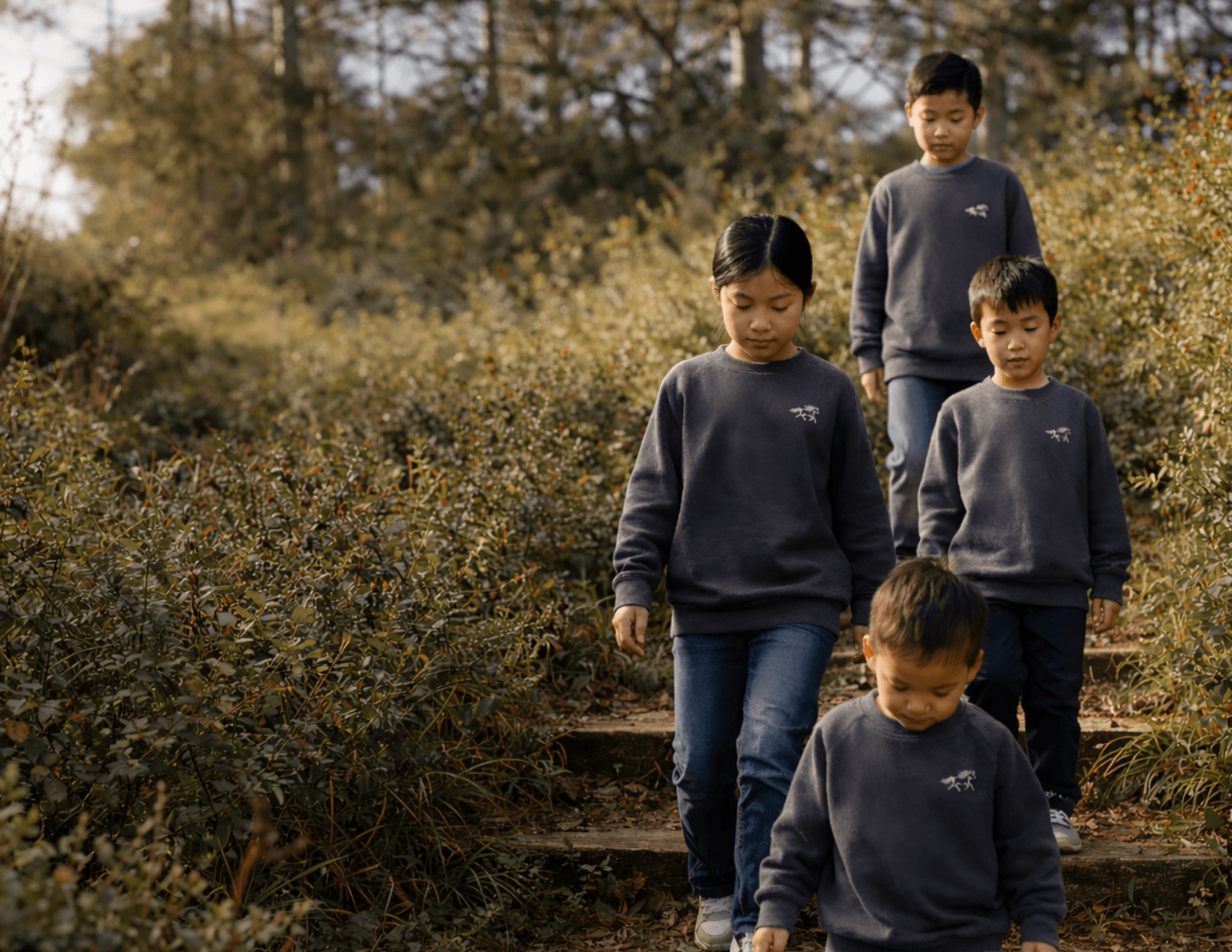
For Stephanie, culture often lives in the smallest everyday objects. A children’s book written in the language your grandparents spoke, a toy tied to tradition, or a piece of clothing that carries a story can shape how the next generation understands identity and belonging.

Alongside CULTR, she is also building PenPals Collective, a project designed to spark global curiosity and connection for children, and launching a podcast called Series M that explores career, motherhood, and identity. Each project reflects her interest in connecting people across culture, family, and generation.

Through each project, and while raising three young children, Stephanie continues working toward the same goal: creating spaces where culture is not something people rediscover later in life, but something families live with every day.

Learn more about CULTR here:

📍Website

Related Articles

Image Source: ©Studio Ghibli

News

World’s First Studio Ghibli Park In Japan Features Iconic Settings And Characters Animation

It’s the perfect time to visit Kyoto, Japan, as Ghibli Park opened less than an hour away from the city last November 1st. The new Park features some of your favorite animated scenes and characters from Studio Ghibli films.

During an event a few days before the park’s official opening, Studio Ghibli Co. chairman and president Koji Hoshino said that the start of the park has a significant meaning for them that surpasses almost three years of the pandemic.

Overall, the final design for Ghibli Park encompassed some 17.5 acres and was split into five distinct areas. Ghibli’s Grand Warehouse, the park’s centerpiece, is a huge indoor “town” with streets, displays, and reproductions of Studio Ghibli’s “Totoro” and “The Catbus from Outer Space” sets. The Ghibli Museum’s theater shows special short films to visitors of the new park and Tokyo’s Ghibli Museum.

There are also two restaurants, a souvenir shop, a vintage shopping district with lanes, and a play area for children. The “Hill of Youth” antique shop from “Whisper of the Heart” and “The Cat Returns” is the second tourist attraction. The park can be seen in its entirety from this vantage point.

The third and newest section of the park is the Dondoko Forest, which is themed after the anime film “My Neighbor Totoro.” Both the bouncy house and a Totoro-themed playground can be found there.

Valley of Witches will feature elements from “Howl’s Moving Castle,” about a young milliner who accidentally gets caught up in a war, and “Kiki’s Delivery Service,” about an earnest and hardworking young witch. 

According to the director and son of Studio Ghibli co-founder Hayao Goro Miyazaki, the park was conceived with the local community in mind. Miyazaki’s original intention for the site was to be a park, not a typical theme park with rides and attractions. He desires that the people of Aichi share his passion for their gardens, as he believes parks are primarily for the local community.

Check out their official website for ticket and booking information.

Image Source: Dominic Lorrimer/ Australian Financial Review

News

Australian Logistics Tech Firm Shippit Procures Singapore Startup Luwjistik for $11M

Shippit has announced that it will pay $18 million to buy the logistics SaaS platform Luwjistik, based in Singapore. 

Founded by longtime friends William On and Rob Hango-Zada in 2014, with a mission to improve shipping for small businesses, as they have personally experienced the drawbacks of online shopping.

After two years of operations in the region for the Sydney-based company, the Australian logistics tech company co-founder and co-CEO William On has relocated to Singapore to lead the new expansion and manage the existing 50-person Luwjistik team.

This comes after the company raised $65 million in Series B2 funding, which helped operations in Southeast Asia, and almost seven months after it bought the last mile logistics tech platform Premonition.

Shippit’s inclusion of Luwjistik’s co-founders, who bring extensive industry experience and connections to the table, is expected to revolutionize the company’s approach. The acquisition of Luwjistik will also enable the company to provide tailored solutions for the Southeast Asian market. Therefore, Shippit can be the best option for many who manage their warehouse or search for a logistics partner.

The startup works with carriers such as Ninja Van, J&T Express, and JNE Express, as well as logistics companies such as Maersk, POS Malaysia, Lion Parcel, and Summer International.

Within a month of launching Luwjistik, the duo raised US$1.1 million (AUD$1.7 million) in a seed round led by East Ventures, including MDI-Arise Finches and Global Founders Capital.

William anticipated a significant increase in e-commerce in Southeastern Asia, which will continue if Shippit and Luwjistik join forces. Currently, they can provide a one-stop platform for enterprises and the expanding SME segment, particularly in Indonesia, Malaysia, the Philippines, and Thailand.

More than 40 million deliveries were booked via the Shippit platform in the fiscal year 2022. Since its inception in 2014, Sydney-based Shippit has fulfilled e-commerce orders worth $5.5 billion for more than 3,500 retailers.

“I strongly believe that by combining our strengths, we can continuously innovate and offer the most impactful, reliable, and relevant solutions to a fast-changing, dynamic market.” – William shared with Business News Australia.

Image Source: Social Bella

News

A Millennial’s Gamble Pays Off As Her New Beauty Product Line Has Just Raised Over $225M

When the pandemic struck, all Chrisanti Indiana wanted to do was help her family and create jobs in her community.

Nonetheless, as the pandemic worsened, each day appeared to be a gamble. She gambled on her dreams, created her employment opportunity, and risked everything for her family because she had no safety or security options.

The Indonesian co-founder, and chief marketing officer of Social Bella, surprised everyone by taking her successful online store offline. In 2019, her online beauty and personal care store, Sociolla, already had two physical locations in Indonesia. It currently operates 47 outlets in Indonesia and 16 in Vietnam, making its earnings multiplied by ten by the end of 2021.

It started after Indiana had finished her studies in Australia in 2015 when she moved back to Jakarta, where she conceived the idea for Sociolla.

Chrisanti found that Australia was a great place to stock up on her favorite cosmetics because of the abundance of international brands. There couldn’t have been a bigger contrast with Indonesia.

With a combined $13,000, Indiana, her brother, and a close friend founded Social Bella to provide customers with access to legitimate goods and services.

“Since we started, we ensure that we only work with authorized distributors or brand owners,” Indiana said. 

The three founders of Sociolla had bigger plans than just building an online store. They have expanded beyond offline stores to become a global beauty and personal care product distributor. In Indonesia, they also became an associate partner for numerous international brands.

‘We want to ensure that we are scaling up and reaching more and more consumers. If Social Bella becomes a unicorn, it’s a bonus.” – Chrisanti Indiana shared with CNBC.

Image Source: DoorDash

Blogs, Development, Ideas, Stories

What Separates DoorDash Founder Tony Xu From The Rest Of The Tech Billionaire

Learn more about Tony Xu, the co-founder, and CEO of DoorDash, the most extensive service in the US for delivering food. Xu is a Chinese-American tech billionaire who has worked for eBay and PayPal in the past, but he attributes his current success to the experience he gained working as a dishwasher.

DoorDash went public in December 2020 after being co-founded in 2012 by a group of excellent Stanford University students, including Xu. Today, the platform has more than 6,000 employees and more than half the market share in the food ordering and delivery industry. Company earnings for 2021 were reported to be over US$4.8 billion.

Xu shared that he once felt discriminated against when surrounded by other entrepreneurs who were different from him. As the sole Asian-American cofounder of the company, he proudly and responsibly accepted the challenge. He is aware that there are not nearly as many Asian-American CEOs or other types of founders, so he remains a minority throughout this setting. He believes it serves as a gentle reminder always to recognize that and to maintain a lowly but humble attitude.

Not only has Xu found success with DoorDash, but he also serves on the board of directors for Meta, the parent company of Facebook, and was named to Fortune’s 40. He is also a huge NBA fan, leading to DoorDash becoming the league’s first official food delivery partner.

As of 2022, Xu’s net worth was estimated at US$1.3 billion, placing him at #2,190 on Forbes’ list of billionaires.