Stories

June 23, 2023

SHARE:

For William Lo, it’s a tool for change. In his non-profit project that aims to help talented underprivileged Chinese girls, he is using basketball to better their lives and further their education.


For Asian girls, pursuing sports like basketball can be challenging. Societal pressures, cultural barriers, and lack of resources often stand in the way of their dreams. In this article, we will explore the barriers that Asian girls face in sports, particularly basketball, and how William Lo’s project is breaking down those barriers, one basket at a time.

BASKETBALL HAS ALWAYS BEEN A BIG PART OF MY LIFE

I was born and raised in Hong Kong until I was 15 years old and went to school in New Jersey. My mother is from New Jersey and my father is from Hong Kong.

Basketball has always been a big part of my life and I was able to play at a Division 3 level. After college, I came back to Hong Kong and started “Strive” — a strength and conditioning facility mainly for basketball players looking to become better athletes. I did that for 6 years and then in 2019, we decided that it was time to expand into basketball training, as well as strength and conditioning to have a holistic training facility where basketball players could do basketball and fitness in one facility. I have been the Managing Director of Strive for almost 10 years.
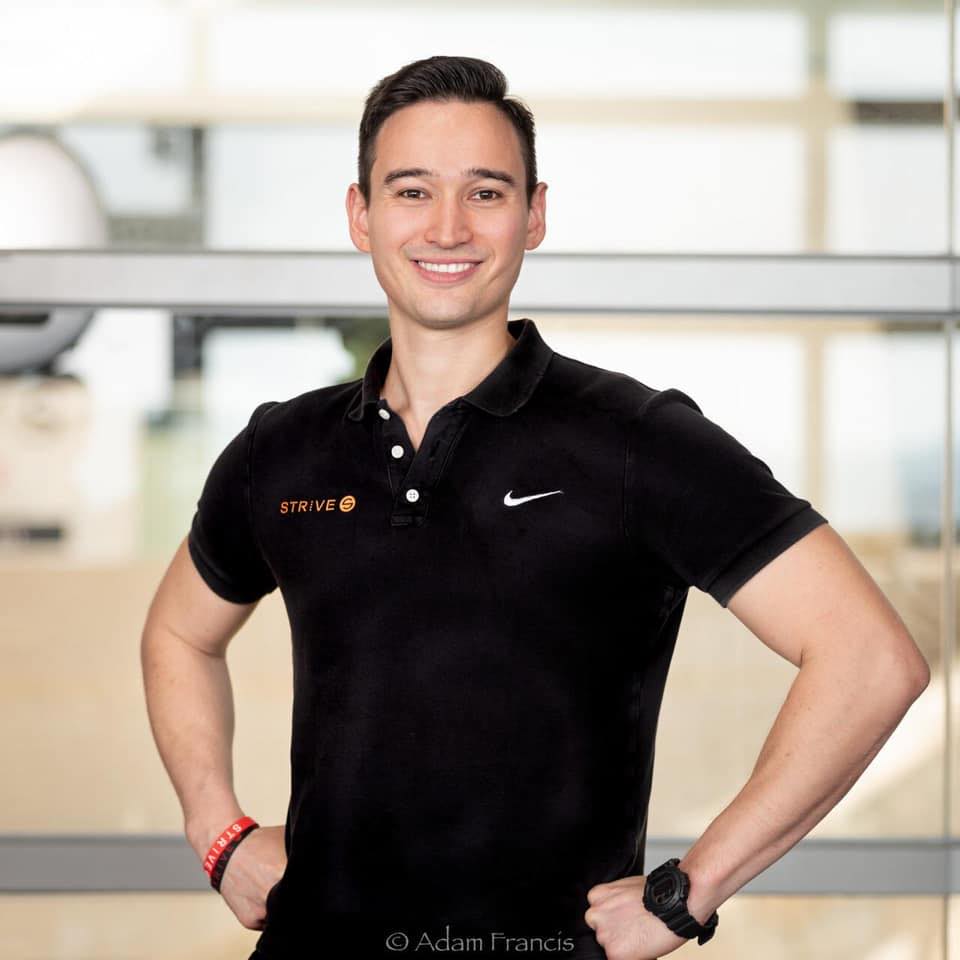
William Lo

THE GOLD TEAM

Our non-profit project, run by my wife Angela and I, is called “The Gold Team.” It’s a scholarship program where we help mainly talented and underprivileged Chinese girls, starting at ages 13-15, utilize basketball as a vehicle to further their education and better their lives.

We want our girls to be shining examples of what Chinese women are capable of on and off the court. Even if they don’t get the opportunity to play professionally, they could use the lessons they learned in the Gold Team and can move on to the next part of their life.

Gold Team is an elite training program, so we train 6 days per week on the court, 3 strength and conditioning sessions per week, and we also average 1 or more games against older women or boys.

We sign an agreement with all of our players and parents outlining what we will do for the girls and what is expected out of them. We also have a minimum GPA that we expect the girls to keep.

We believe in developing world-class players, students, and citizens at the same time. I take care of the basketball and training part, my wife Angela who was a much better student than I, monitors their grades closely. 

We want our girls to be shining examples of what Chinese women are capable of on and off the court.

William lo

CHALLENGES AND BARRIERS TO BECOME A SERIOUS ATHLETE

A lot of the challenges we see come from parents not understanding the point of why someone would want to become a serious athlete. I constantly hear “You can’t make a living on it so why spend so much time on it?” This is very common in our society and a lot of people do not see the value of how sports add value to a kid’s life mentally, emotionally and of course physically.

Another objection that I get a lot is the unwillingness to look outside of Hong Kong for bigger possibilities for basketball. Since there is a significant portion of Hong Kong people that have never traveled outside of Asia, they may not be aware of the possibilities of sports scholarships in countries such as the US, Canada, or Australia. I’m hoping that as we get more and more girls opportunities to play in the NCAA and other countries, this will change.

THE ROAD TO CHANGING ONE PLAYER’S LIFE FOREVER

Yannie Chan, who won Conference Player of the Year, is the first locally schooled Hong Kong girl in our city’s history to play in the NCAA, so that alone instilled a lot of hope for girls in our city. There will be more coming out of our program in the coming years!

In the classroom, we also have a girl who is now one of our best players — I got her when she was 13, she had a terrible track record at school and was ready to drop out and become a part-time waitress. I told her that in order to join the Gold Team she had to have a certain GPA. She immediately went to her teacher the next day and asked for tutoring, which left her teacher in shock! She has gone from a 2.5 GPA to a 3.4 GPA in 2 years. Now she has opportunities to play at prep school level in America. Her family is on government subsidies and now she is on the road to changing her life forever.

SKY’S THE LIMIT FOR CHINESE WOMEN ATHLETES

Men are often the first priority over women when it comes to sports. This is true, especially in our part of the world. However, after years of observation, I am very bullish on Chinese women’s sports. We have some of the best athletes in the world and girls who can compete with any country. Chinese women in the world cup are a perfect example coming in second after the US. I believe that if given the right opportunity, time, and love, the sky’s the limit for Chinese women athletes.

I want to also prove to parents that sports do, in fact, have a lot of value in the development of kids. Putting your sole focus only on studying is definitely not the way to developing a well-rounded adult in the future. If you are a great athlete and a great student, it opens up a lot more doors for you than only being good in the classroom.

Finally, as an Asian basketball player, I was not given a lot of respect just because of the color of my skin. Basketball in America is not an Asian-dominated sport and we need to be extra tough and extra skilled in order to earn that respect, which I’m totally fine with. I want to make a statement to the world that Asian players, when given the opportunity, can be just as good as anyone anywhere in the world. I firmly believe that.

Asian players, when given the opportunity, can be just as good as anyone anywhere in the world.

William lo

THE GOAL TO SHOOT FOR SUCCESS

My goal is to be able to travel with the girls multiple times per year around the world so that they can play against different competitions, learn about different cultures and see the world.

This June, My wife and I raised around 40-45,000 USD to sponsor 9 girls to come to the US and play on the AAU circuit (Amateur Athletic Union). Hopefully, with this trip many of our girls will be recruited to play in college.

SPREAD THE WORD

We are trying to change Asian sports and if you have any interest in knowing more you can contact me anytime. william@strivefitnesshk.com

Website: www.strivefitnsshk.com

Instagram: @willvlo

Related Articles

Image Source Ken Chan Facebook

Uncategorized

Pandemic Turns Filipino Actor Ken Chan Into A Serial Entrepreneur

Ken Chan, a 29-year-old Filipino actor, proves that the pandemic has not only caused bad things but has also brought good fortune to some, being a celebrity-turned-entrepreneur after losing his job during the crisis.

Ken swiftly expanded his franchised iFuel gas station with 10 branches in different parts of the country in just a year. He also opened Cafè Claus, a Christmas-themed café, which has extended into three branches around Metro Manila, Philippines.

Nonetheless, he also braved the wellness industry with his Aromagicare Luxury Massage Chair. He mentioned that his triumph is also because of saving and spending wisely. 

Ken said he had taken to heart the financial lesson his parents had taught him wherein he learned not to overspend on himself.

During his recent interview, Ken said that he takes pride in the fact that he rarely makes purchases for himself and even makes the most of his cars while they are still roadworthy.

The actor realized during the pandemic that artists should secure their fallback in case they lose their jobs in the industry.

Image Source: Koury Angelo / Forbes

Uncategorized

Rejections Didn’t Stop Kinside CEO Shadiah Sigala To Reach A Stellar Entrepreneurial Career

Shadiah Sigala co-founded HoneyBook, a $2 billion financial management software platform for small businesses, motivated by her ability to negotiate uncertainty while gathering information and making decisions.

When Shadiah was a child, her Mexican mother together with her two siblings moved to southern California. Despite most of her family members being unable to attend college, she was an honor student whose lifelong ambition was to acquire the greatest degree of education.

Shadia attended Pomona College for Latin American Studies and Harvard Kennedy School for public policy. As a result, she established a strategy for reaching goals she wasn’t sure about.

Before becoming an accomplished millennial, she finished her master’s degree and became the highest-earning member of their family as a project manager at Aetna, a health insurance company, where she learned about entrepreneurship, realized she is a “builder,” and thought starting her own company was the best option.

However, Shadia realized that she wouldn’t be happy there since she wouldn’t be valued. Shadia ultimately started a personal chef business in 2010, using her Pomona College alumni network to find well-off grads who wanted someone to cook for them.

In 2012, another realization occurred to her that cooking wasn’t for her. Shadiah then decided to move with her then-husband to San Francisco and found tech. She arranged informative interviews with everyone in the sector and learned that the problem she wanted to tackle was one she’d experienced as a business owner: no effective method to handle backend logistics like emails, payments, and bills.

With the three Israeli business people who have a similar concern as hers, they decided to digitize all these tedious procedures that micro small firms must complete to free them up to genuinely focus on doing what they love.

Using that concept, Shadia established HoneyBook in 2013 and worked there for five years according to CNBC.

As her most recent business, Shadia co-founded Kinside in 2018, a child-care marketplace that is available to employees that offers new parents a centralized location to look for daycare in their neighborhood, which has reached over $16 million, according to Crunchbase. 

Letting fear and excitement be one’s guide and being open-minded is what Shadia advises to other aspirants. According to her, opportunities that “feel like they are beyond your pay grade” are exactly how stellar is made.

Image Source Artbound

Uncategorized

ARTBOUND Features Giant Robot’s Asian-American Pop Culture Influence In Its Latest Episode

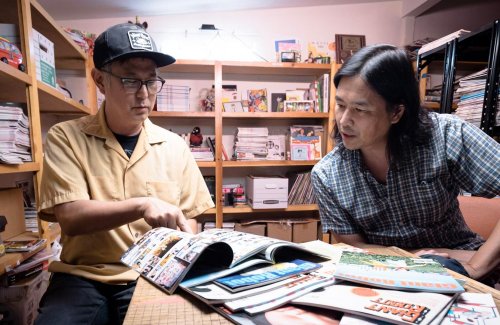
Highlighting the impact of the Asian-American pop culture publication Giant Robot, the debut of the latest episode entitled “Giant Robot: Asian Pop Culture and Beyond” was finally aired last October 26 in the acclaimed arts and culture series ARTBOUND on KCET.

The episode showed Giant Robot’s examination of Sawtelle Boulevard as a Japanese-American neighborhood, sparking interest in Asian and Asian-American popular culture which resulted to a long line of Asian American artists who won recognition on a global scale. 

Established in 1994, Giant Robot was a bimonthly journal that focused on Asian popular culture that soon included works by Asian-American artists including David Choe and James Jean.

Eric Nakamura began publishing Giant Robot as a digest-sized zine. The piece covered a variety of subjects, including trendy Asian American independent filmmakers, Japanese punk rock, and contemporary Hong Kong films. National media sources including the New York Times, Wired, and LA Weekly published the story.

In 2001, Nakamura opened his first store named “Giant Robot Store” in Sawtelle Japantown and expanded in 2003.

Giant Robot co-founder, Martin Wong edited all 68 issues of the glossy magazine on Asian, Asian-American, and new hybrid culture from 1994 to 2010, when it was still a punk zine. His wife Wendy Lau served as Giant Robot’s graphic designer beginning with issue 18. Even today, Martin continues to publish zines and contribute to them.

The popular weekly television program and online site ARTBOUND captures the essence of California’s expanding arts and cultural scene and investigates how it is transforming the state into the world’s creative capital. 

The KCET Original series investigates and clarifies contemporary cultural challenges, offering insightful in-depth study of how the arts and culture impact society.

Image Source: Julie’s Bakeshop

Uncategorized

Dreams Set No Limits To 50-Year-Old Who Started A Bakeshop Now The Philippines’ Most Famous Brand

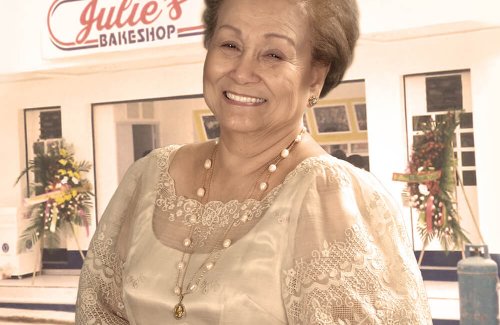
“In a way, I was poor. I was hungry, maybe not for food but for self-achievement. I thought there must be something more I can do than just being a housewife. I was very determined to succeed, in whatever came my way,” thus said Julie Gandionco as quoted by the Inquirer, the Philippines’ local newspaper.

In January 1981, then-50-year-old Julia Gandionco opened Julie’s Bakeshop to satisfy her thirst for proving that she is more than a housewife.

Julie’s Bakeshop gloriously celebrates being one of the Philippines’ largest bakery chains with more than 500 branches all over the country, which can be traced back to Mandaue City on the Island of Cebu as its place of origin.

In the 1970s, Julie was a canteen concessionaire at a rattan company, and subsequently became a manager of its sister company. She also opened another canteen a year later.

Having these three canteens being managed, she felt the rising demand for bread which made her take the chance of opening a bakeshop, despite having zero knowledge of baking.

Julie stressed that her bakeshop exists because of “a growing need for bread products and a strong trust in God,” and that she desires to encourage and uplift other mothers to dream big and strive for their goals.