How Basketball Is Transforming The Lives Of Underprivileged Chinese Girls Through ‘The Gold Team’ - AHN Media Group

Stories

June 23, 2023

SHARE:

For William Lo, it’s a tool for change. In his non-profit project that aims to help talented underprivileged Chinese girls, he is using basketball to better their lives and further their education.


For Asian girls, pursuing sports like basketball can be challenging. Societal pressures, cultural barriers, and lack of resources often stand in the way of their dreams. In this article, we will explore the barriers that Asian girls face in sports, particularly basketball, and how William Lo’s project is breaking down those barriers, one basket at a time.

BASKETBALL HAS ALWAYS BEEN A BIG PART OF MY LIFE

I was born and raised in Hong Kong until I was 15 years old and went to school in New Jersey. My mother is from New Jersey and my father is from Hong Kong.

Basketball has always been a big part of my life and I was able to play at a Division 3 level. After college, I came back to Hong Kong and started “Strive” — a strength and conditioning facility mainly for basketball players looking to become better athletes. I did that for 6 years and then in 2019, we decided that it was time to expand into basketball training, as well as strength and conditioning to have a holistic training facility where basketball players could do basketball and fitness in one facility. I have been the Managing Director of Strive for almost 10 years.
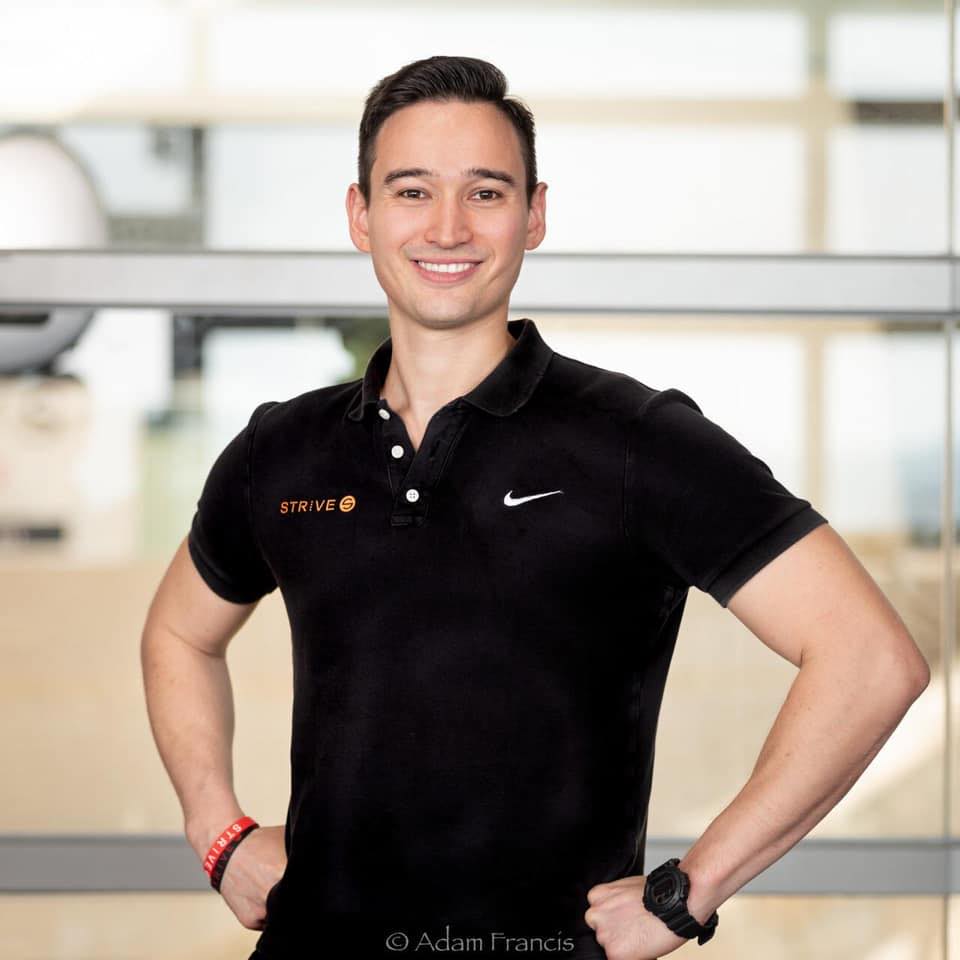
William Lo

THE GOLD TEAM

Our non-profit project, run by my wife Angela and I, is called “The Gold Team.” It’s a scholarship program where we help mainly talented and underprivileged Chinese girls, starting at ages 13-15, utilize basketball as a vehicle to further their education and better their lives.

We want our girls to be shining examples of what Chinese women are capable of on and off the court. Even if they don’t get the opportunity to play professionally, they could use the lessons they learned in the Gold Team and can move on to the next part of their life.

Gold Team is an elite training program, so we train 6 days per week on the court, 3 strength and conditioning sessions per week, and we also average 1 or more games against older women or boys.

We sign an agreement with all of our players and parents outlining what we will do for the girls and what is expected out of them. We also have a minimum GPA that we expect the girls to keep.

We believe in developing world-class players, students, and citizens at the same time. I take care of the basketball and training part, my wife Angela who was a much better student than I, monitors their grades closely. 

We want our girls to be shining examples of what Chinese women are capable of on and off the court.

William lo

CHALLENGES AND BARRIERS TO BECOME A SERIOUS ATHLETE

A lot of the challenges we see come from parents not understanding the point of why someone would want to become a serious athlete. I constantly hear “You can’t make a living on it so why spend so much time on it?” This is very common in our society and a lot of people do not see the value of how sports add value to a kid’s life mentally, emotionally and of course physically.

Another objection that I get a lot is the unwillingness to look outside of Hong Kong for bigger possibilities for basketball. Since there is a significant portion of Hong Kong people that have never traveled outside of Asia, they may not be aware of the possibilities of sports scholarships in countries such as the US, Canada, or Australia. I’m hoping that as we get more and more girls opportunities to play in the NCAA and other countries, this will change.

THE ROAD TO CHANGING ONE PLAYER’S LIFE FOREVER

Yannie Chan, who won Conference Player of the Year, is the first locally schooled Hong Kong girl in our city’s history to play in the NCAA, so that alone instilled a lot of hope for girls in our city. There will be more coming out of our program in the coming years!

In the classroom, we also have a girl who is now one of our best players — I got her when she was 13, she had a terrible track record at school and was ready to drop out and become a part-time waitress. I told her that in order to join the Gold Team she had to have a certain GPA. She immediately went to her teacher the next day and asked for tutoring, which left her teacher in shock! She has gone from a 2.5 GPA to a 3.4 GPA in 2 years. Now she has opportunities to play at prep school level in America. Her family is on government subsidies and now she is on the road to changing her life forever.

SKY’S THE LIMIT FOR CHINESE WOMEN ATHLETES

Men are often the first priority over women when it comes to sports. This is true, especially in our part of the world. However, after years of observation, I am very bullish on Chinese women’s sports. We have some of the best athletes in the world and girls who can compete with any country. Chinese women in the world cup are a perfect example coming in second after the US. I believe that if given the right opportunity, time, and love, the sky’s the limit for Chinese women athletes.

I want to also prove to parents that sports do, in fact, have a lot of value in the development of kids. Putting your sole focus only on studying is definitely not the way to developing a well-rounded adult in the future. If you are a great athlete and a great student, it opens up a lot more doors for you than only being good in the classroom.

Finally, as an Asian basketball player, I was not given a lot of respect just because of the color of my skin. Basketball in America is not an Asian-dominated sport and we need to be extra tough and extra skilled in order to earn that respect, which I’m totally fine with. I want to make a statement to the world that Asian players, when given the opportunity, can be just as good as anyone anywhere in the world. I firmly believe that.

Asian players, when given the opportunity, can be just as good as anyone anywhere in the world.

William lo

THE GOAL TO SHOOT FOR SUCCESS

My goal is to be able to travel with the girls multiple times per year around the world so that they can play against different competitions, learn about different cultures and see the world.

This June, My wife and I raised around 40-45,000 USD to sponsor 9 girls to come to the US and play on the AAU circuit (Amateur Athletic Union). Hopefully, with this trip many of our girls will be recruited to play in college.

SPREAD THE WORD

We are trying to change Asian sports and if you have any interest in knowing more you can contact me anytime. william@strivefitnesshk.com

Website: www.strivefitnsshk.com

Instagram: @willvlo
Related Articles

image-png

Stories

Princeton Engineer Luisa Zhou Left Corporate Life to Build a Million-Dollar Business on Her Own Terms

Luisa Zhou once believed that a Princeton degree and a prestigious engineering title were the ultimate markers of a secure and successful life. However, that sense of safety evaporated the moment her family faced a health crisis and she realized her “perfect” job offered no room for her to actually be there.

She learned the hard way that even a massive salary is a poor substitute for the freedom to prioritize your family during their darkest hours. That realization sparked a fire within her to stop trading her presence for a paycheck and to start building a life where she held the keys.

Image Source: Forbes

Engineering a Great Escape

Luisa did not leave her career on a whim because she understood that true freedom requires a foundation built on more than just hope. She spent two long years working on her consulting business during every stolen lunch break and late night while her colleagues were resting. By applying her logical engineering mind to the world of entrepreneurship, she proved that you can build a bridge to a new life without burning the one you are currently standing on.

This methodical approach allowed her to test her ideas in the real world while the safety of her corporate salary was still intact. She advocates for the slow build because it removes the desperation that often leads new founders to make short-sighted decisions for quick cash. When she finally stepped away from her desk for the last time, she was not taking a leap of faith but rather walking through a door she had already unlocked.

Image Source: Business Insider

Redefining the Million-Dollar Life

By the time Luisa officially left the corporate world, her “side project” was already generating over a million dollars in annual revenue. Now at 36, she has designed a lifestyle where four hours of focused work allows her to sustain a million-dollar business on her own terms. Her daily schedule is no longer a list of demands from a manager but a reflection of the people and passions that she values most in the world.

The most inspiring part of her journey is the fact that her bank account is secondary to the absolute control she now has over her time. Wealth for Luisa is the quiet confidence of knowing she can close her laptop whenever a loved one needs her without seeking anyone’s permission. She has proven to the world that the most valuable thing you can ever own is the right to decide exactly how your day unfolds.

image (1)-png

Stories

From Corporate Rejection to Global Power: The Story of Morris Chang Who Controls 90% of the World’s Advanced Chips

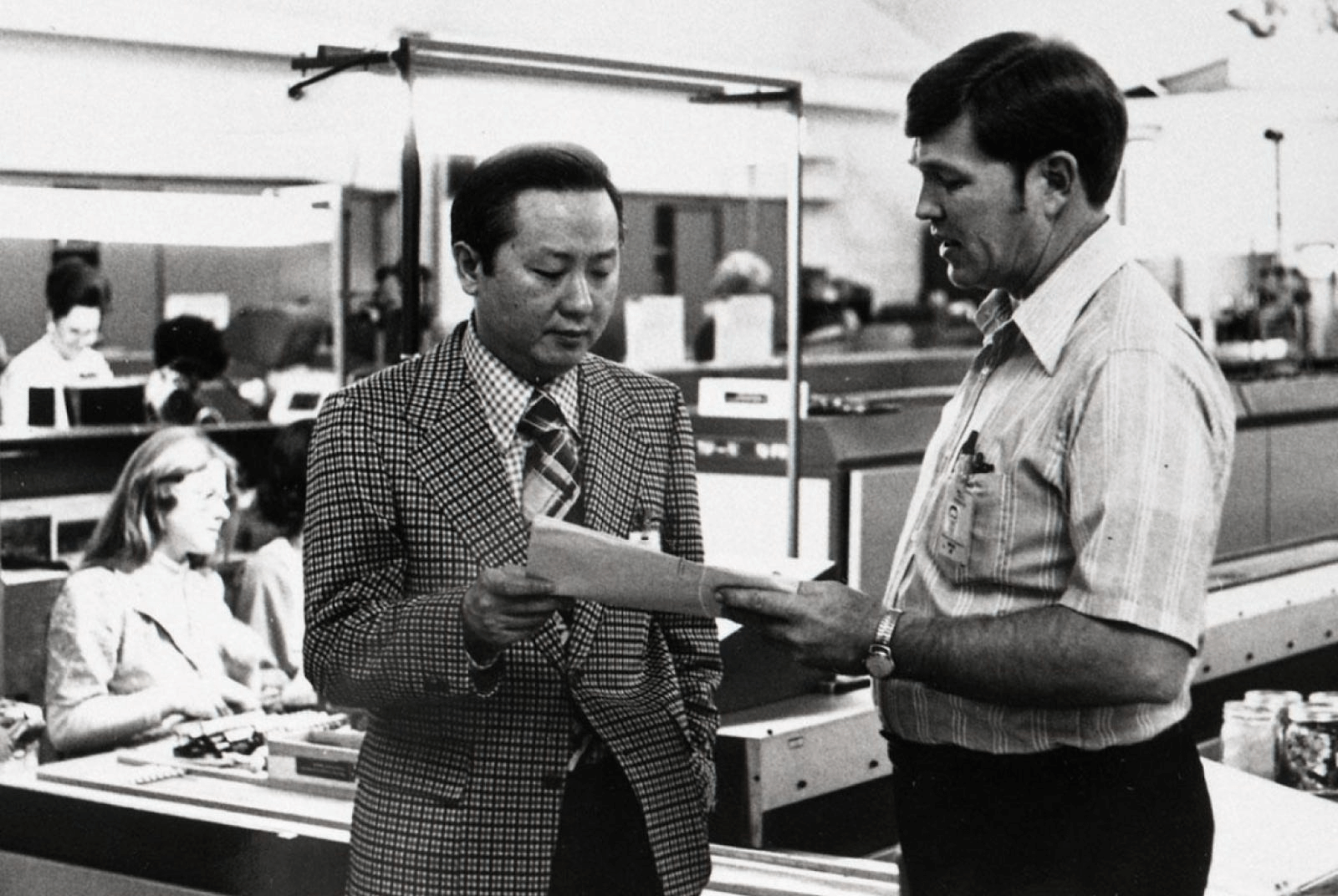
In 1985, Morris Chang reached a professional crossroads after being passed over for the top job at Texas Instruments. At 54 years old, he had a massive resume but felt there was nowhere left to go within the American corporate system. Instead of accepting a quiet retirement, he moved to Taiwan to build a business that addressed a major flaw in how computers were built.

This move was the first step in a journey that eventually placed him in control of the global tech supply chain. By choosing to solve a problem that many other executives ignored, he transformed a career setback into a global revolution. His transition from the United States to Taiwan set the stage for one of the most significant shifts in manufacturing history.

Image Source: Startup Synergy

The Career That Nearly Ended

Back then, if you wanted to design a chip, you had to spend billions to build the factory as well. Chang realized that this massive financial requirement was slowing down progress for everyone in the industry. He envisioned a new model that would allow innovators to focus on their designs while his company handled the heavy lifting of production.

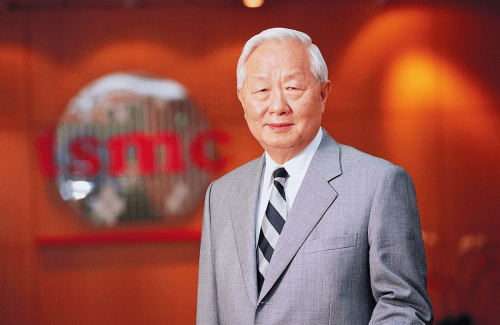
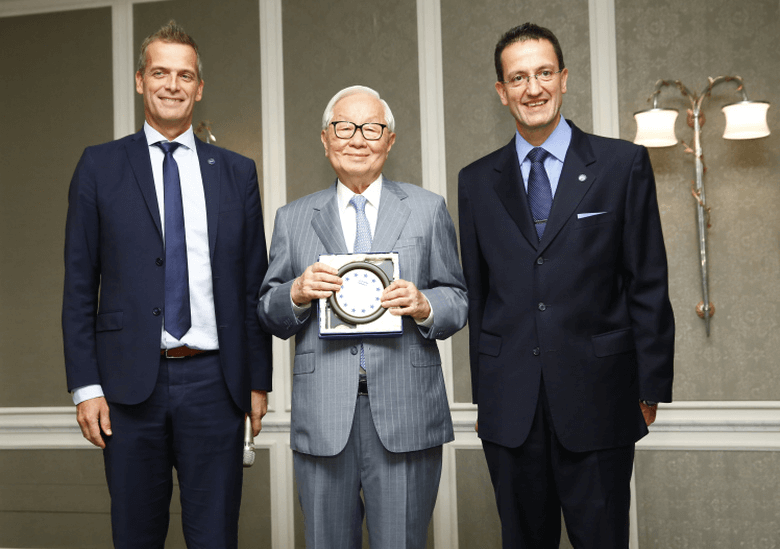
He founded TSMC in 1987 with a disruptive promise that he would manufacture chips for others but never design his own. By refusing to compete with his customers, he gained the trust of global tech giants like Nvidia. This specialized approach allowed these companies to thrive and scale without the burden of owning their own factories.

Image Source: European Chamber of Commerce Taiwan

The Idea Everyone Doubted

Decades of singular focus turned Chang into the most powerful man in tech, with his factories now producing 90% of the world’s advanced semiconductors. This level of market dominance makes TSMC the essential foundation for almost every modern electronic device we use. The sheer scale of his success proves that a single, well-executed idea can reshape the entire global economy.

The importance of his work is highlighted by the fact that if his production stops, the global supply of iPhones, Teslas, and AI systems stops with it. His legacy proves that the future isn’t just built in garages by young people, but by veterans with the grit to see opportunity where others see a dead end. Morris Chang didn’t just build a successful company; he built the infrastructure that the modern world depends on every day.

image (1)

Stories

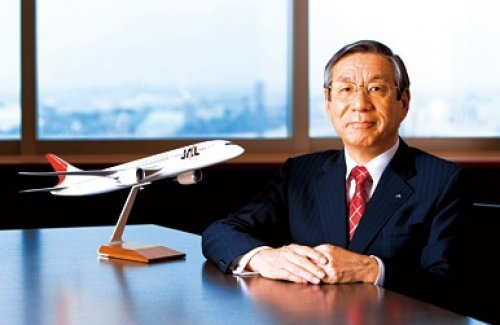
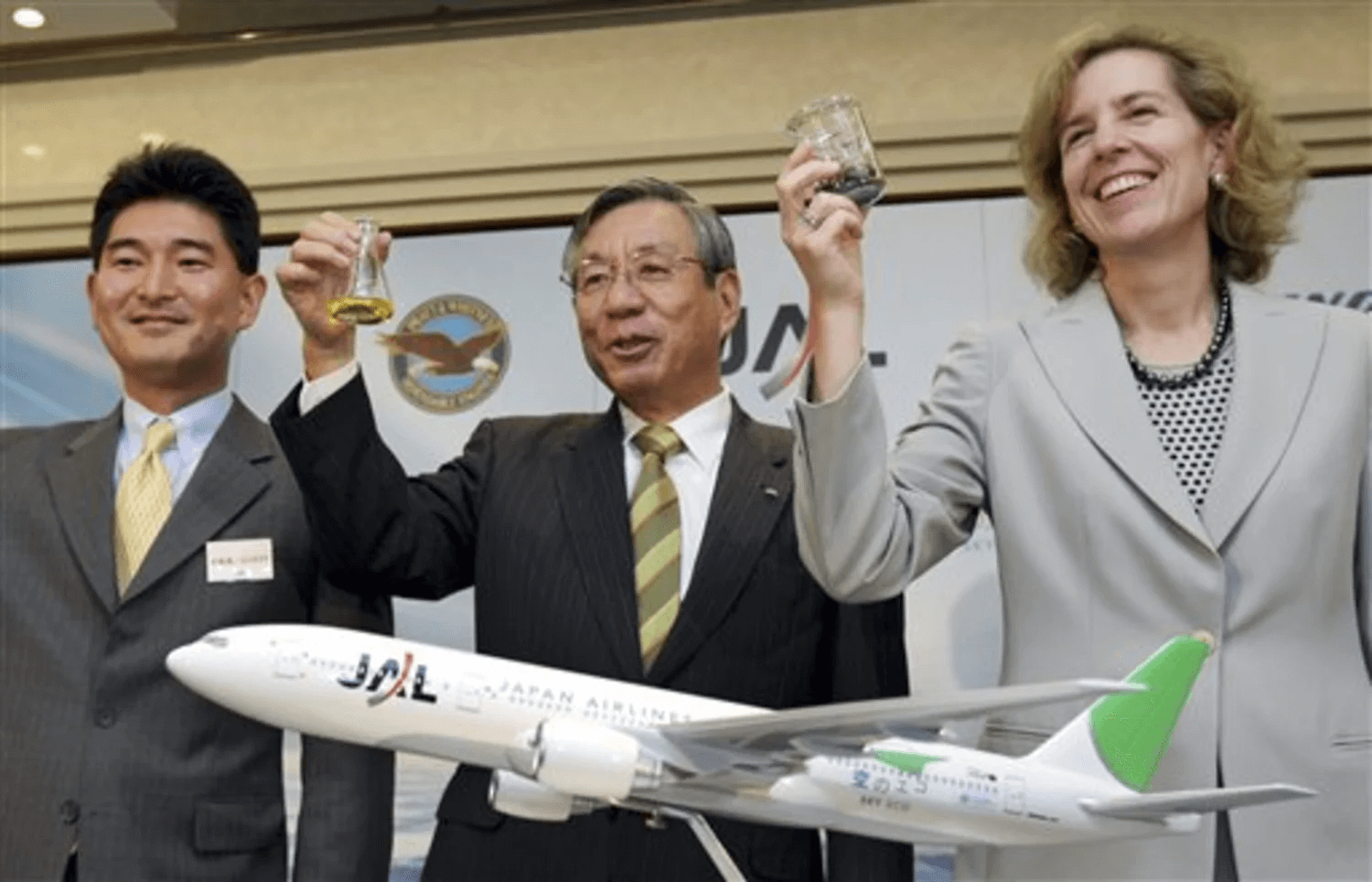
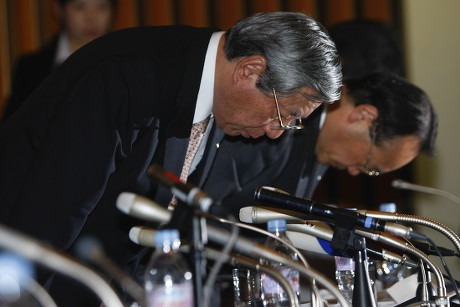
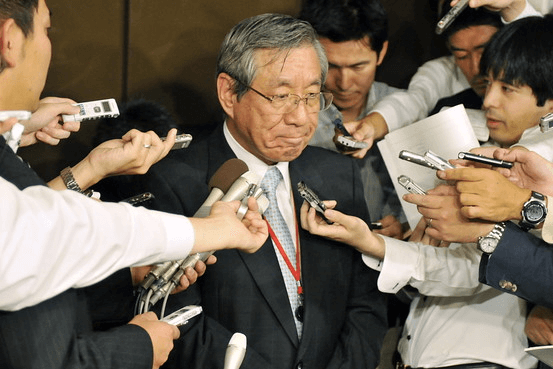
How Haruka Nishimatsu Defined Modern Leadership by Cutting His Salary to $90,000 a Year to Save Jobs

In the modern corporate landscape, it is common to see executives receive massive bonuses even as their companies face financial turmoil. Haruka Nishimatsu, the former head of Japan Airlines, famously broke this cycle by putting his employees’ security before his own wealth. He recognized that a company is only as strong as the people who keep it running every day.

When the airline faced billions in debt and the threat of bankruptcy, Nishimatsu decided to slash his own salary to just $90,000. This move ensured that he was feeling the same economic pressure as the frontline workers he led. His choice was a profound statement that leadership is a responsibility to others rather than a path to personal enrichment.

Image Source: NBC News

Leading by Example Through Shared Sacrifice

Nishimatsu discarded the traditional perks of his high-ranking position to remain grounded with his workforce. He traded a private limousine for the city bus and waited in line for lunch at the staff cafeteria.

These daily actions removed the social distance that typically separates a CEO from the rest of the office. By working at a regular desk in an open-plan room, he made himself accessible to everyone in the building.

Image Source: The Wall Street Journal

Prioritizing People Over Short-Term Profits

During the 2009 financial crisis, Nishimatsu refused to use mass layoffs as a quick fix for the company’s rising debt. He understood that protecting the livelihoods of his staff was more important than protecting the executive payroll.

This commitment to job security built a deep sense of trust and loyalty throughout the entire organization. His strategy proved that a business can navigate a crisis without ever abandoning its moral compass.

Image Source: The Wall Street Journal

The True Source of Professional Respect

Nishimatsu demonstrated that real authority is earned through character and shared experience rather than a fancy title. He did not need a corner office or a massive paycheck to command the respect of his pilots and flight attendants.

His influence came from the fact that he stood right beside them when the company was struggling. This style of leadership serves as a timeless reminder of what it means to be a true steward of a brand.

image (3)-png

Stories

How Buddhist Values Helped Thai Lee Build a $16B Tech Empire and Become the U.S.’ 5th-Richest Self-Made Woman

Born in Thailand and raised in South Korea, Thai Lee was shaped by constant cultural shifts from a young age. Although her family practiced Christianity, her early education in a Buddhist primary school introduced her to ideas that would quietly guide her life and leadership.

There, she learned that life is marked by suffering, impermanence, and uncertainty. Rather than seeing these as obstacles, she absorbed them as realities to work with—an outlook that later became central to her approach to business and power.

Image Source: Asia Society

Embracing Suffering as a Path to Growth

A core Buddhist teaching Lee internalized early was that suffering is not a failure, but a condition of growth. This belief trained her to stay calm under pressure and to see difficulty as something to be managed, not avoided.

That mental discipline carried her through an intense academic path, including a double major in biology and economics. It also shaped her resilience at Harvard Business School, where she became the first Korean woman to graduate by staying focused on long-term purpose rather than short-term comfort.

Image Source: Freepik

Practicing Utility Over Ego in Business

When Lee purchased a failing IT reseller in 1989 for $1 million and renamed it Software House International, she rejected the idea of growth for growth’s sake. Guided by the Buddhist value of utility, she asked one simple question: does this technology truly help people?

Instead of chasing trends or flashy innovations, she prioritized practical solutions that made work more efficient and reliable. This steady, service-driven approach allowed SHI to earn trust over time, scaling quietly into a $16 billion global company serving major institutions like Boeing and AT&T.

Image Source: Expansión

Right Livelihood as the Measure of Success

As her wealth grew, Lee leaned more deeply into the Buddhist principle of Right Livelihood—earning success through ethical means and responsibility to others. She believes leadership should reduce harm, not amplify ego or excess.

Despite being the fifth-richest self-made woman in the United States, she avoids executive privileges and symbolic power. By parking with employees, managing her own calendar, and staying close to daily operations, she reinforces her belief that real wealth is measured by trust, dignity, and the well-being of the 7,000+ people she leads.

Learn more about Thai Lee here:

📍LinkedIn