News, Stories

August 22, 2022

SHARE:

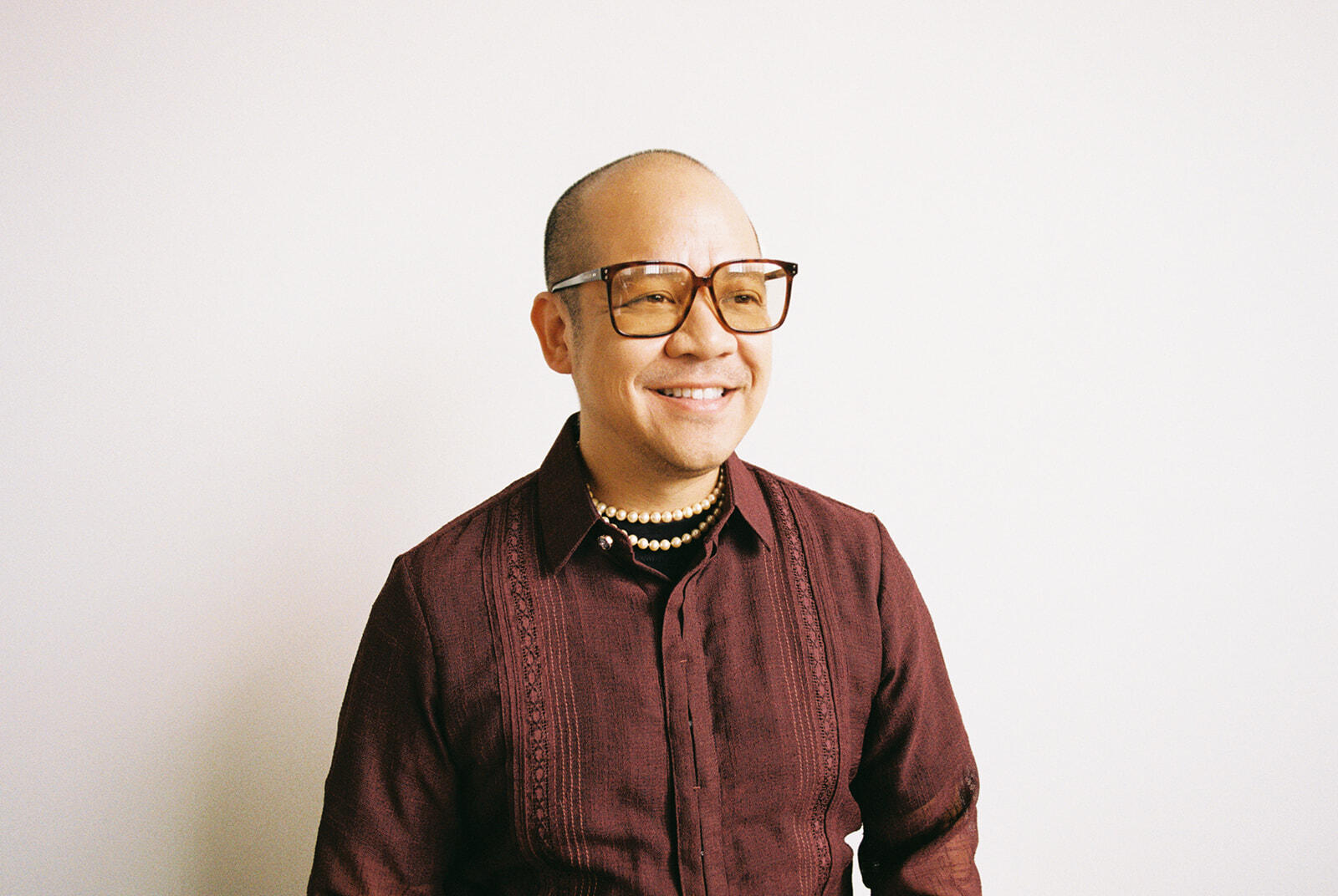
Jeremiah Abraham, the founder and CEO of Tremendous Communications, had bumps in the road in getting to where he is today. Starting his business right before the pandemic, he doubted the path that he created and considered quitting everything that he was doing. But with mentors along his side and his determination to uplift the AAPI community, his company has contributed to protecting and celebrating the Asian American and Pacific Islander communities when they needed it the most.

Working at renowned companies like Disney and Warner Bros., Jeremiah has spent years hustling at the intersection of technology and entertainment. Using his talent in marketing, he has constantly shed light on the AAPI community by promoting films such as Everything Everywhere All At Once and co-producing the Filipino American musical drama film Yellow Rose. He still finds ways to balance work and life by tearing down the systematically ingrained notion of working from 9 to 5.

In this one hour interview, Jeremiah lays out his story of how he entered this industry, experiencing ignorant approaches to different cultures in a white dominant workplace, and his immense passion for AAPI representation.

Blend of Tech and Entertainment

I got my degree in computer engineering from UC Irvine and that was when I needed to decide what I wanted to do in life. I wanted to make a difference in technology back then, so I got that degree. One of my first jobs was in the aerospace industry. I was working there and I realized that I was just really bad at math. I didn’t think I could realistically pursue this as a long-term career. It was one of those moments where you had to have this introspective, realization, or catharsis about what you thought you were going to be and what you want in life.

Then I found this blend of tech and entertainment, which I was always interested in. I ended up being a front-end developer for Disney, which was a nice blend of the programming skills that I learned from school and the entertainment brands that I’ve always admired. Social media was still fairly new at these companies. This was back in 2007, and I would say that the biggest leap from this tech world to this communications world was when I discovered a Master’s program for Digital Social Media and Online Communities at USC. So I worked at Disney full-time, and at night I tried to get my master’s degree. I knew in my head what I wanted to build for myself and that was this intersection.

An intersection of my interest in engineering and social dynamics is interesting because a lot of people didn’t know why I even majored in computer engineering and minored in sociology. Engineers build societies, but you can’t build it without understanding it first. I ended up pursuing this even more and realized that I had a knack for marketing which I ended up pursuing after receiving my degree at USC.

Uplifting the Filipino Community

After I got my master’s degree, I decided to pursue my thesis project as a full-on business venture, which was an online community and editorial group for Filipino Americans called BakitWhy.com. Uplifting the Filipino community has always been a constant in my life. Since high school, I was part of a Filipino club where we celebrated our culture and volunteered for Filipino community organizations. I knew that whatever I did, whether it was engineering or marketing, was in the service of our people.

So I started this website and it was one of the first, if not the first, Filipino American digital destinations for editorial and news content. We were covering events and a new emerging digital identity among the Filipino American community. I called this the golden age of Filipino YouTubers back in 2007. These were the days of HappySlip, NinjaDrops, ndtitanlady, and more. We were able to rally this community both on the digital side and also offline to develop not just a thriving company and brand, but a lifestyle destination that people could relate to. I wanted to create something wonderful for us.

One of the things that I pride Tremendous on is that we’re not just there to engage the AAPI community as a business, but we primarily want to instill genuine progress and impact. We are immersed in our Asian American community. We don’t clock out after a certain time and say “Sorry we’re done today Asians, it’s five o’clock and we’re not going to do anything anymore.” No, this is our life. This is what fulfills us and I think it helps set our campaigns apart. The way we communicate and interact with our clients also influences the strategy we give to them because we’re not just looking at numbers, we’re looking at people. We are all about uplifting authentic Asian American experiences, diasporas, stories and narratives. For us not to be authentic with that presence in our daily lives would be hypocritical.

One of the things that I pride Tremendous on is that we’re not just there to engage the AAPI community as a business, but we primarily want to instill genuine progress and impact

– Jeremiah Abraham

Marketing in a White Dominant Setting

There was one instance where I was the only person of color in the room at a large entertainment company, still very green and inexperienced. I didn’t feel like I had the authority and the voice to chime in and redirect these senior leaders of this space. And they’re sitting around going like, “Hey, it’s February next month. It’s almost Black History Month. What can we do?” And then someone just started listing off all the movies in their catalog that had some resemblance of Black narrative. And I’m just like, “All right, well, that’s very top-level. But what more can we do? Can we bring in more people who actually represent this community in the room and have a conversation about it?” That situation really helped me realize that we needed to be part of that room of decision-makers. Being there that day sparked a drive in me that I’ll never forget.

One of the things that I had issues with while leading the publicity and marketing for Yellow Rose before we got acquired by Sony Pictures, was that people didn’t understand what Filipinos were, that our stories were relatable to all moviegoers, and that we were equally as valuable in Hollywood. People couldn’t wrap their brains around this and asked “Why is a Filipino family living in Texas? Do they really sing country music like that? Will non-Filipinos even relate to this?” They were seeing the Filipino diaspora within one specific lens instead of embracing the spectrum of the Filipino experience. They didn’t realize that there are mechanisms that historically pushed us to these areas that we’re thriving in, to these places where they may not think that there is a large thriving Filipino community. The lead characters are Filipino American, but the story is universal. If you took the lead characters out and made them Latinx or Black, for example, you would still have the same emotion. You’d still have the same humanity. You’d still have the same story. It just so happened that these people are Filipino. This is one of the things that Jo Koy discusses during his  interviews for Easter Sunday. The movie isn’t about Filipinos, it’s a movie about his family and his mom. That’s one of the biggest things I appreciated about this film. It’s a story for everyone.

The first movie that I ever saw when I moved to the United States was Superman 2 with my dad and that’s always ingrained in my head. I was in such awe of this superhero and I’ve always wondered how impactful it would have been if Superman was Filipino. That would have made such a big difference for me growing up. I love Christopher Reeve as Superman, but imagine if it was a Christopher Santos or a Christopher Dela Cruz in that heroic cape instead! Today I’m so happy that our next generation can enjoy seeing themselves as heroes with films like Shang-Chi and people like Iman Vellani as Kamala Kahn making a difference.

I think it’s incredibly important for us to make these decisions on how we are portrayed and valued for ourselves, with representation across every part of the process –  behind the camera, in front of the camera, in business and below the line. We can bring these little nuances of authenticity to these stories that are so important and help shape the next generation of folks who want to do this work. 

They were seeing the Filipino diaspora within one specific lens instead of embracing the spectrum of the Filipino experience. They didn’t realize that there are mechanisms that historically pushed us to these areas that we’re thriving in, to these places where they may not think that there is a large thriving Filipino community.

– Jeremiah Abraham

A Chronicle of Starting a Business Right Before a Pandemic

Starting a business at the cusp of a global pandemic was a big lesson in resilience. There is a lot of strategy, planning, introspection and decisions that need to be made behind the scenes. I had been planning Tremendous for years. I spent so much time creating the structure of it, the business strategy, forecasting our trajectory and all those things that you need to help lay the foundation of a business… then the pandemic hit and I needed to shift very quickly.

Tremendous incorporated in 2019 and started to plant the seeds of studio partnerships. When we were ready to sign a couple of contracts, all the major movie studios suddenly shut down. I had to take a step back and I realized the mission of Tremendous is not rooted in movies and entertainment, but it exists to uplift the visibility of Asian Americans as a whole. We couldn’t work in entertainment at the time but that didn’t stop us from working within the community. That’s when we helped support Racism is a Virus, and co-founded Unapologetically Asian and CollaborAzian. We used our expertise to help uplift Stop AAPI Hate. We were able to leverage our network and our skills and our desire to make change in this very crucial moment of the Asian American community.

There certainly were many surprises along the way. I pitched this movie that was supposed to come out on January 2021. We were ready! We put this beautiful deck together, we brainstormed, we strategized. And then they told me, “Hey, we’re going to make an announcement today that this movie is going to be pushed to January 2022.” I was like, “What am I going to do for a year?” It’s a lot of those things that I learned as an entrepreneur that it doesn’t necessarily go how you forecast, even though you spend so much time strategizing and pulling numbers. And that’s fine because that will push you to be more dynamic as a business and help you imagine new, creative avenues for yourself. But for me, it was a lesson in resilience, being flexible, and not beating yourself up too much for things that are outside of your control.

I had to take a step back and I realized the mission of Tremendous is not rooted in movies and entertainment, but it exists to uplift the visibility of Asian Americans as a whole.

– Jeremiah Abraham

Confinements that Pull us Back

There were many moments where that lingering voice of doubt made me wonder if this was the right path for me. Should I go back to a safe, stable job with benefits and a retirement plan? What if I end up losing all my money in this venture? Is it okay that I decided not to work today?

Even now, I can make my own schedule. I can wake up at noon if I wanted to and keep working until 2:00 am or just take a random afternoon off. And that’s my choice to make. But because I’ve been so conditioned to think that the limits of my brain power need to be confined between nine to five, having this new freedom came with a sense of guilt.

I have such a hard time realizing that you don’t need to operate within those confines to be productive and successful and fulfilled. I just have to keep reminding myself that it’s okay to permit yourself to watch Netflix for an hour at 2:00 pm for you to refocus and recenter. It’s okay that you’re sleeping in until 11:00 am or 12:00 pm today because you worked until 1:00 am last night. I have to keep reminding myself that nobody is telling you what you need to do except for yourself. That’s the life of an entrepreneur and I’m still learning how to adjust to this new level of control, even today.

Shining Leadership Skills for Better Productivity

Throughout the years, I have applied my learning lessons in leadership – especially with how I lead my team and how I conduct business. Sometimes we have many projects to work on at the same time, sometimes we have less. I’ve always told my team, as long as you get your stuff done and you are communicative and responsive, then I’m good with that.

I really encourage them to explore their interests, experience life and bring those experiences back to the company. This helps bring fresh, new ideas during our brainstorms and campaigns. One of the things that I took away from working as a Marketing Director at Condé Nast is that they encouraged you to go travel. Travel changes you, it opens up your mind. It allows you to experience new things so you can bring that experience back into your editorial piece or your marketing strategy.

I’ve never liked the idea that you need to clock in at 9:00 am every day or else you’re considered a bad employee. Just because I’m sitting there physically doesn’t mean I’m mentally there. I’ve never understood that kind of leadership where it’s more important to appease other people and make them feel better about themselves because of your presence. It’s those antiquated expectations and older ways of doing business that I’m constantly reshaping for Tremendous. As long as we get our projects done, we don’t miss meetings, and our clients are happy… who cares if you sleep in an extra hour that day?

Travel changes you, it opens up your mind. It allows you to experience new things so you can bring that experience back into your editorial piece or your marketing strategy.

– Jeremiah Abraham

People that helped along the way

I never had one specific mentor during my career. Instead, I’ve had some amazing senior executives who have taught me different aspects of my leadership skills. One of them taught me negotiation skills, another taught me how to properly communicate my ideas in a meeting, another pushed me to be more assertive with what I need to succeed in a business setting. I’ve really taken these lessons and made them my own.

One of these executives is Terra Potts, who is the Executive Vice President of Worldwide Marketing at Warner Bros. Pictures. We kind of grew up at WB together back in the day. She taught me how to stand up for your worth in situations where people may not immediately see it. I take that into every negotiation that I am part of. Teal Newland, my Senior Vice President at Condé Nast Entertainment helped me hone my creative eye and incorporate different perspectives in my marketing campaigns. Diane Paragas, who is the director of Yellow Rose, mentored me in the filmmaking process. These are just some of the people who empowered me in my journey and I’m happy to give back to others who are working with me today.

Another friend of mine is Jose Antonio Vargas, who is the Founder of Define American. We had many check-ins during the pandemic and I told him straight up once that I was thinking about quitting because I didn’t know if I was doing the right thing. No studios hired me, no movies went out, the movies that were supposed to be in theaters were going out into streaming services. And it was hard for me to see what was coming down the line and the larger picture of it all. He gave me some tough love and said “Jeremiah, you’re building something that doesn’t currently exist. Obviously you’re going to run into these situations where the solution isn’t immediately there because you have to make it up for yourself.” I never thought about it that way. If the path has not always been taken, obviously you have the flexibility and the responsibility to forge a new one to create something that never existed before. That conversation inspired me to realize that I can’t hold myself to the same standard that I had before because I’m creating new standards for myself now. That helped shift my thinking and my perspective about it and, honestly, helped shape the development of Tremendous. I could have easily quit because of the pandemic, but I would have regretted it the rest of my life.

I would encourage people to pursue multiple avenues of mentorship. It was very valuable to me to learn from many very skilled individuals, not just one. And you never know where your new life lesson is going to come from or which experience you’re going to value for years to come. For me, it was the guidance of many people that helped me get to where I am today.

I can’t hold myself to the same standard that I had before because I’m creating new standards for myself now.

– Jeremiah Abraham

How to reach out

I am @jerabraham on Instagram and Twitter, and Tremendous is @tremendous_comm on all those platforms as well.

Interviewed by Tiff Soga

Related Articles

Image Source Sharon Cuneta Youtube Vlog

Uncategorized

Filipino-Chinese Lester Yu Of Fruitas Holdings Inc. Further Expands His 25+ Brand Portfolio

One of the leading groups in the food cart industry in the Philippines, Fruitas Holdings Inc., owned by Chinese-Filipino entrepreneur Lester Yu, has expanded its brand portfolio with the acquisition of Ling Nam, a 72-year-old establishment that operates three locations in Manila, Philippines. 

Fruitas’ wholly-owned subsidiary Soykingdom bought 100% of LN Banaue Inc. This firm operates Ling Nam restaurants such Peter K. Fung and Wanton Parlor.

Established in the 1950s, Ling Nam has long served authentic Cantonese noodles, congee, and dim sum. Beef Wanton Noodles, along with various other sizzling and mouth-watering dishes, can be found on the menus of restaurants in Manila’s Banawe and T. Alonzo districts in Quezon City.

Yu’s 25+ brand portfolio is one of the assets to be purchased as part of the acquisition. Soykingdom will pay 60% of the acquisition price when the deal closes. The remaining 40% will be paid till March 2023. The acquisition price is less than 10% of Fruitas’ March 31 assets and book value.

Fruitas had 720 stores across the country as of the end of December 2021, according to Bilyonaryo where they provided customers with fresh fruit shakes and juices, lemonade, coolers, milk tea, desserts, meat-filled pastries, soya-based products, baked goods, and lechon.

Image Source Canlis Restaurant

Uncategorized

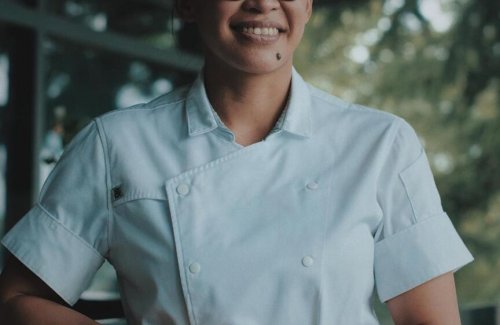
Seattle’s Famous Canlis Restaurant named the First Female Executive Chef

Aisha Ibrahim has been announced as the new head chef of the famed restaurant Canlis in Seattle. She is the first female executive chef at Canlis and joins a long list of notable chefs who have worked at the restaurant over its seven decades.

The management at Canlis was looking for a chef who was interested in that way of thinking, someone who was interested in not simply putting his or her ego on a plate, but rather in actually trying to help inspire an entire industry.

Ibrahim was a sous chef at California’s three-star Manresa. She worked with chef Eneko Atxa at Aziamendi and Azurmendi, developing her culinary horizons.

The new head chef was drawn to Seattle’s wealth of locally sourced ingredients, according to the New York Times, her Canlis dishes would explore the region’s microclimates, traditional cuisine, and Asian influences.

Brian Canlis, a co-owner of the restaurant, considered Ibrahim’s test meal as the final step in the long process. “We set out to find a leader who could help rebuild a broken industry,” he tells Eater. Many kitchen cultures are toxic, he added. They want to continue creating a new norm for how individuals are regarded in kitchens and restaurants.

During the COVID-19 pandemic, Canlis, along with many other restaurants in the past year, experimented with a variety of different service formats. These formats included everything from parking lot yurts to drive-through burgers. 

The famed restaurant has informed that they will soon be opening a restaurant that will be distinct from the one that they previously operated but which they shut down a year ago. They have no interest in going in the other direction and would much rather proceed in the future path.

Canlis will be led by Ibrahim into the post-pandemic future, with the debut of her menu slated for July 2021.

Image Source theguardian.com

Uncategorized

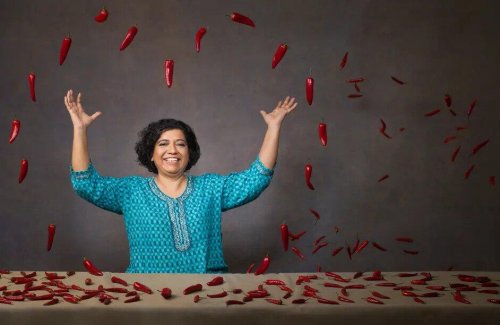
Darjeeling Express Chef Asma Khan’s New Cookbook Celebrates Women and Her Ammu (Mother)

Cookbook author, activist Indian chef Asma Khan is so much more than just being in the kitchen. 

In addition to owning London’s Darjeeling Express and hosting her own online cooking class, YesChef, she uses her platforms to advocate for world hunger, mentoring immigrant women, gender equality, and calling out toxic work cultures in kitchens.

With the release of ‘Ammu: Indian Home-Cooking to Nourish Your Soul’, The Bengali chef continues to redefine how women are portrayed at home and in restaurant kitchens, with a loving ode to her Ammu (or mother).

“Ammu [is] a tribute to these powerful women”, Asma tells Elle Canada, “the sharp things in our lives and the anchors that kept us going in difficult and stormy times. There [are] births, deaths [and] marriages in our culture; food is a very important element of that. That’s what this book really reflects.”

Ammu is filled with 100 dishes that will leave your mouth-watering recipes that have been carefully passed down from generation to generation.

Asma hopes the readers to try her chicken biryani, “Because I’ve worked so hard on getting the recipe right and I [know] people have recreated it” she tells Elle Canada.

According to The Guardian, Asma Khan’s biryani has the power to make you cry — not in the hyperbolic, internet vernacular sense, where food is considered “amazing”, “divine” or “to die for”

Asma also recommends trying out cooking any of the kababs, fish dopiyaza, and prawn malai.

“So much of our food is bastardized into [something that is] super spicy, oily, with cream and butter. If I put [that] much cream and butter in my shoe, it’ll taste nice! Our food is actually light and refreshing, but most people don’t associate those words with Indian food.” 

As the only female-founded, all-female kitchen cooking Indian food globally, she hopes that the next generation of women would surpass her, “That will be my greatest victory.”

Caroline Mangune Alanis

Uncategorized

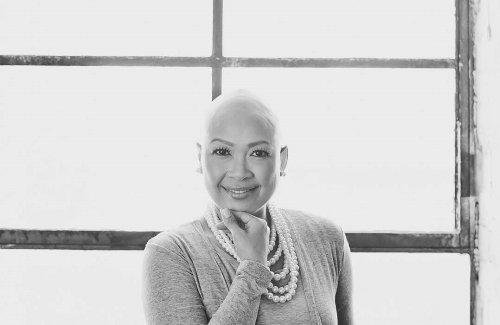
Bald, Bold, and Beautiful: Proud Of Being Fifty-Five Walking My Truth

In the view of society, hair is connected with youthfulness and beauty in women, virility, and masculinity in men. It should come as no surprise that hair loss may make many men and women feel self-conscious. But should that be always the case?

Caroline Mangune Alanis was only 4 years old when she lost all her hair, “I don’t even know what it is like to have hair.” she said. Caroline has Alopecia Universalis (AU)  — the rarest form of Alopecia Areata, it’s an autoimmune condition that attacks the hair follicles.

Growing up Bald

Born in the Philippines to a strict father and a sweet and kind soul mother, as she describes, “My dad didn’t allow me to go out with friends a lot. I was never allowed to go on sleepovers.  He sheltered me from people. I never realized that until I was an adult, and reflected on my childhood.” She also has two brothers who were protective as well.

At the tender age of 4, she was already practicing “DAILY AFFIRMATIONS” although she never knew how impactful they were,  “I was always told to look in the front of the mirror.  I would say, I am beautiful, I am strong, I am special. I have beautiful eyes, beautiful skin, etc.”  Her parents never told her the pain and heartbreak of raising her, rather they just always told her how special and beautiful she was, “They always told me I was meant to stand out.”

She had no recollection of the time her hair started falling out, but she was told that her hair fell off within a 2-week time frame, “My mom said it could have been brought by stress from an earthquake we had in the Philippines.”  

Caroline was never allowed to say negative words about herself, or else her father would scold her. She was imparted that words she says about herself will either bring her up or tear her down, “So maybe I thought negative things about myself, but I never said it. Growing up bald, I never felt ugly, just incomplete.”

Growing up bald, I never felt ugly, just incomplete.

– Caroline Mangune Alanis

Although her parents taught her how to be courageous and had always made her feel how beautiful and blessed she was, growing up bald was not easy — she had to endure the everyday pressure of life. “There was the pressure of seeing little girls with beautiful hair and wishing every day that I had that. There was the pressure of kids being mean and pulling off my bandana and laughing at me because I was bald.” She faced the pressure of name-calling and bullying.

Caroline’s parents finally convinced her to start wearing a wig which, unfortunately, didn’t make things easier as she recalls. Walking home from school one day with her brother, a girl decided it would be fun to pull Caroline’s wig off and throw it on the ground. “At that moment, all I could do was cry and run home,” she adds, “every day I feared leaving the house, the emotional scar is unimaginable.”

She learned how to hide her AU, she felt as if people wouldn’t accept her for being her so it became a secret, and only her family and those she truly trusted, which were not many, knew the real Caroline.

In high school, only a handful knew about her AU, “which made it so easy to try to blend in since I never wanted to stand out, never!” The ironic part about it, as Caroline describes, was she would always be the one to be called by her teachers to lead a project, sing solos, and participate in plays and fashion shows. They even nominated her to join the homecoming queen and enter a beauty pageant. However, “I realized that my fear never really went away by keeping my AU a secret and the emotional scar was also still a part of my life.”

Every day I feared leaving the house, the emotional scar is unimaginable.

-Caroline Mangune Alanis

Being Bold With The Love Of Her Life

She met her husband Mark from work, where they were both managing stores at a mall in Chicago. They became best friends and were each other’s plus one at weddings, “We didn’t start dating until I transferred to another mall.” she said.    

But the day has to come when she must tell Mark about her condition, “Telling Mark about my alopecia was very difficult. He once told me that he loved hair and eyes on a woman,” she adds, “He himself has gorgeous hair.” Caroline felt she didn’t have one of the criteria Mark was looking for. Although she mentioned several times that she had something to tell him and he would always say “whenever you are ready.” Caroline thought that they both knew that Mark is aware of her wearing a wig, they just never talked about it. 

Mark and Caroline had been dating for about a year when she finally tried to tell him one evening. She got choked up and started crying. He told her, “Caroline, don’t you think I know you by now from your head down to your toes?” He had tears in his eyes. She then asked Mark why he didn’t tell her.  He replied, “I wanted you to trust me enough to tell me”.  

As they began to start their family, Caroline’s AU became their secret. She held her family bound to her alopecia. When her daughters’ were infants, she wouldn’t carry them in public for fear that they would pull her wig. “They were taught never to touch mommy’s hair, ever!” 

Her daughter could never have friends sleep over because it would be very uncomfortable for Caroline to be her in her own home. “My daughters were always fearful when we were out in public, especially on windy days.” 

Caroline’s baldness was a big secret, even her husband’s family didn’t know, “because I hid so much all my life, I didn’t realize I walked in fear every day.  I didn’t realize I lived in bondage.”

Mark told her, “Caroline, don’t you think I know you by now from your head down to your toes?” He had tears in his eyes. She then asked Mark why he didn’t tell her.  He replied, “I wanted you to trust me enough to tell me”.  

Embracing Being Beautiful

In the summer of 2015, her life opened a new door, she became a part of an International Alopecia Group on Facebook and realized that her journey with AU has prepared her to help others like her. She saw so many men and women devastated by losing their hair. They were going through a lot of emotional pain, “You see, alopecia can happen at any time in one’s life so the adults experience a loss and have to grieve.” Caroline said. Alopecia might not be life-threatening but it is life-altering. Hair, eyebrows, and lashes truly make a difference in one’s appearance, “I myself put my face on every day.” she added. 

She also saw some men and women walking proudly bald. One man, in particular, Anthony Carrigan, an actor who also kept his alopecia a secret but he came out and had been helping others and is a beacon of light.  

Then, Caroline started giving advice about doing daily affirmations, “doing lots of SELF LOVE!”  as well as giving makeup tips, the alopecia community knows her as the “Eyelash Queen”.

But once the parents of alopecia children started posting their heartbreaks, “that’s when I realized my parents’ challenges of raising me, a bald child.” Caroline started reiterating what her parents taught her. She gave advice to parents, about how special their child was, how they were perfect and beautiful just as they were. “Alopecia children are so strong,” she noted.

“I then realized I was all those things: perfect, beautiful, and strong,” she said, but her baldness was still a secret. Caroline thought to herself, how does she encourage others to accept themselves if she herself could not let people know about her condition? So as those thoughts lingered in her head, she began telling her family and friends — she only wanted to tell people, not show people. Her goal was to have 30 different wigs for each day of the month.

“But God! God had other plans for me,” the unexplainable started occurring, her wigs became unbearably uncomfortable to wear, “it almost felt like my scalp was burning,” which she thought was completely strange since she has been wearing them for 40 years. It took a lot to take a look at herself bald.  She then began to think, “How can I tell my daughters  and others that beauty really lies deep within if I myself can’t see past my lack of hair?”

On August 14, 2015, on her way home with her husband from dinner, Caroline’s wig was getting itchy so she took it off to scratch her head. She was about to put her wig back on but Mark held her hand to stop her. He said “Honey, don’t put it on, you’re fine. You are safe with me, nothing can hurt you, and no one will hurt you. You are beautiful.” She reluctantly did what he asked and wanted to be strong for him. 

Mark kept holding her hand tight and kept asking if she was okay,  “I just kept saying it is scary.”  As they were nearing their home, her husband pulled over and said “Come on let’s take a selfie.” to lighten the situation. Her husband dropped Caroline off in front of their home, with her wig in her purse. Mark told her to go ahead and go into their home.  

“For the first time in 40  years, I felt God’s love on my head. The soft wind touched my head, a few raindrops falling on my head. I cried and laughed as I ran to my house.” she recalls.  

After that night, her husband helped Caroline with her small steps into seeing herself for who she was — a beautiful woman living with AU. Slowly, she found herself no longer wearing her wigs. They would go on drives and take walks on the beach. “I felt free, my secret slowly fading; including the emotional scar.”

I felt free, my secret slowly fading; including the emotional scar.

-Caroline Mangune Alanis

“On Sept 9, 2015, I posted it on Facebook, I cried the whole night.  Everyone was so kind.  I was still afraid, but I started walking bald.” she expressed.

In the fall of that year, it started getting cold and she didn’t like her hats since they looked terrible without any hair. She was pretty sad because she really did not want to start wearing her wigs again, “I just prayed and asked God to lead me in what I am supposed to do. I got my answer on Sunday, October 4th,” A lady stopped her and asked if she has Alopecia, to which she responded “Yes!”. The woman said, so did she, and asked Caroline, how does she do it? — She knew the lady meant how she could walk around without her wig.

Caroline answered “I don’t know. This is all new to me. “God is giving me the strength to do this. I couldn’t have done this on my own.” So that day, she officially retired all her wigs. “Yes, I put them all away for those special occasions,” she added.

She has met so many people just like her all over the world which inspired her to start her own Alopecia Group in Chicago, where they meet once a month. “I love having a family I call my own, people who truly understand me.”

The Chicago Alopecians

Caroline together with her friends started the Facebook group, with her as the main facilitator. It is a place where they can share their personal journeys and ask for advice or help. The Chicago Alopecians’ mission is to ensure that no one feels alone. Recently, they have been planning to create more events to cater to everyone, children, teens, and men. 

“We each have our own alopecia journey and we just want to connect with each other,” said Caroline. They also allow wig vendors in the group, “Chicagoland is such a big place. I love having a solution for everyone in the group.” As of writing, they currently have 332 members, and they’ve also started an Instagram page to widen their reach.

For the international group, Caroline is also encouraging others to create their own alopecia groups — their own tribe in their local towns.

“I have always known God wanted me to stand out, but I was always afraid.  These days, I am no longer afraid to not have my wig on, I embrace it.”

Caroline is truly a woman who is defying what society calls “beautiful”.