Stories

December 19, 2025

SHARE:

Nathan Yun did not start his career thinking he would one day build a consumer brand. His early years were spent on film sets and in editing rooms, learning how stories are shaped and how audiences respond to them. Working as an assistant to Jackie Chan gave him a front-row view of storytelling at its highest level. He watched how a single film could reach millions of people and create a shared emotional moment across cultures.

Yet over time, he noticed something that stayed with him. The inspiration was real, but it faded quickly. Once the credits rolled, people returned to their usual routines. That contrast made him question what lasting influence really looked like. Was it found in big, unforgettable moments, or in the small things people interacted with every day?

Paire grew out of that question, built not around trends or marketing tactics, but around everyday essentials, starting with socks. If stories could move people for a moment, Nathan believed products could shape how they lived every day.

From Film Sets to Daily Habits

Nathan came to understand that while stories stay with people selectively, habits are formed through repetition. Clothing, especially everyday essentials, plays a quiet but constant role in daily life. When something feels uncomfortable or wears out too quickly, people notice it immediately, even if they never say it out loud.

This insight marked a turning point. Nathan no longer wanted to create something people felt for a moment. He wanted to build something they could rely on every day. From the beginning, Paire was shaped around that idea.

Instead of chasing trends, the brand focused on fit, fabric, and longevity. The goal was simple: to make essentials people would reach for again without thinking.

Nathan Yun (right), Founder of Paire

Learning How to Build Before Building His Own

Before launching Paire, Nathan spent five years at furniture startup Brosa, where he learned what it takes to grow a business beyond an idea. As the company expanded from a ten-person team to more than one hundred employees, his role evolved from content creation to leading brand and marketing.

During that time, he saw how forecasting affected inventory, how data guided growth, and how pressure increased as operations scaled. He also witnessed what happened when demand moved faster than systems, and how costly it could be to build those systems too late.

Those experiences shaped how Nathan approached entrepreneurship. He did not want to build Paire on instinct alone. He wanted a clear understanding of supply chains, margins, logistics, and customer behavior before committing to his own brand.

Nathan Yun (far right), Founder of Paire

The Trip That Made the Mission Personal

The purpose behind Paire became clear during a trip to India. Away from polished storefronts and online campaigns, Nathan saw the fashion industry in a very different light. He witnessed environmental damage near production sites and spoke with workers whose livelihoods depended on high-volume manufacturing.

“That experience made it clear something needed to change,” Nathan explains. What stayed with him most was how disconnected these realities were from everyday shopping habits.

Much of the damage he saw came from clothing treated as disposable. When he returned home, Nathan reached out to his longtime friend Rex, a textile expert. Instead of launching a wide range of products, they chose to start small. The focus was on improving a single item and making it last.
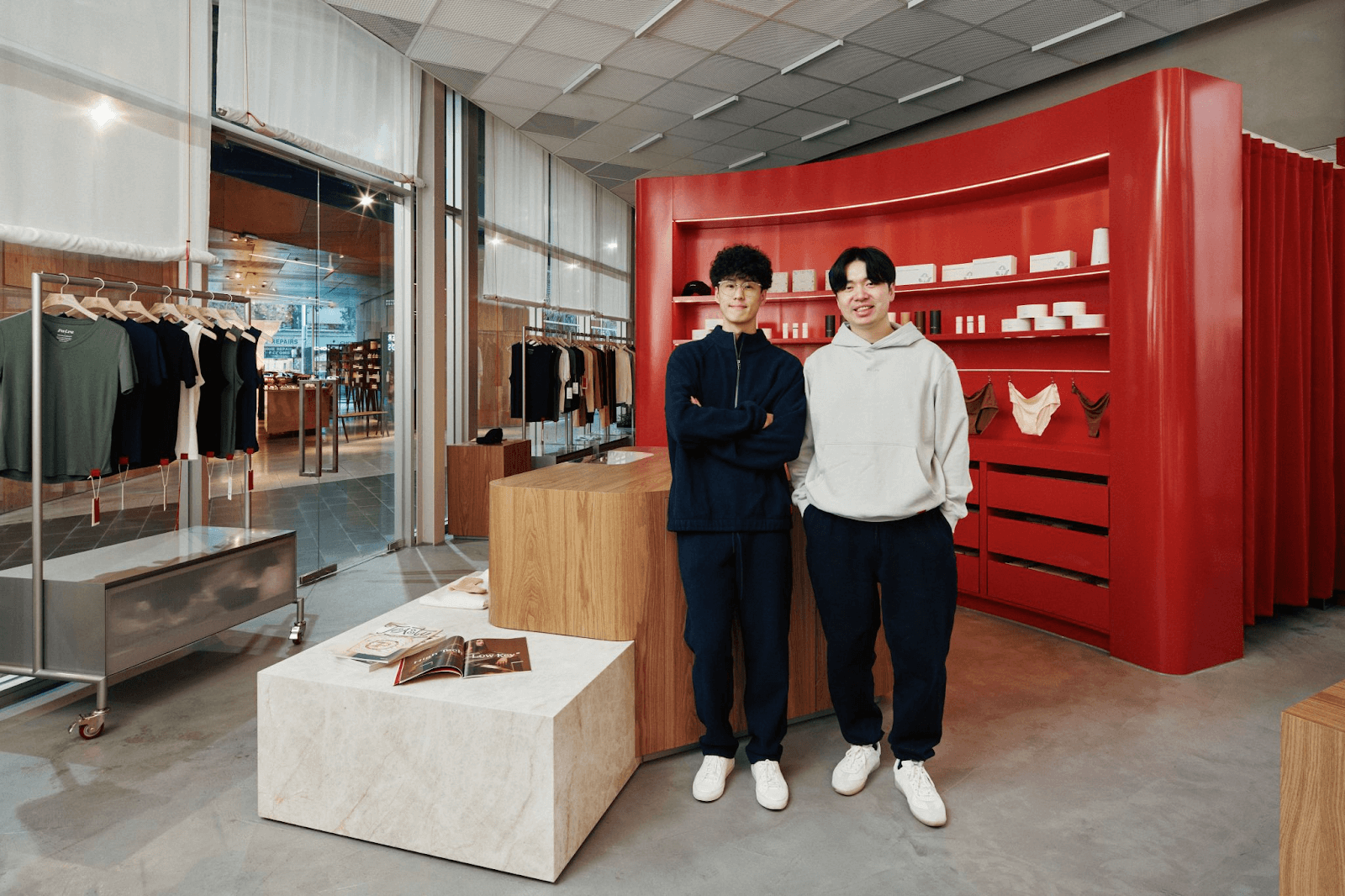
Nathan Yun (left), Founder of Paire

Earning Trust Through the Product Itself

Nathan understood that values alone would not earn loyalty. The product had to prove itself in everyday life. The team spent months refining fabric blends, improving breathability, and testing durability through repeated wear and wash cycles.

Pricing a pair of socks at twenty-four dollars came with risk. Most consumers were used to buying socks cheaply and replacing them often. But once people tried Paire, many returned. Nearly seventy percent became repeat customers, not because of marketing, but because the product became part of their routine.

By focusing on quality and longevity, Nathan Yun built a $15M-a-year brand that shows meaningful change does not always arrive loudly. Sometimes, it begins quietly, through the simplest things we rely on every day.

Follow Nathan’s journey:

📍 Website
📍 Instagram | LinkedIn

Related Articles

Image Source: Liezel Nudalo Formentera

Uncategorized

Filipina Mom Started Her Career Selling Vegetables Got Her Degree At 32 To Become A Teacher

Liezel Nudalo Formentera is now ready to work toward achieving her lifelong ambition in the field of education.

Formentera works as a street vendor in Cebu, Philippines, and hopes to improve her family’s situation someday. The only way she can see doing so is to further her education and get a better job. She could not finish elementary and high school, but she was determined and decided to join the DepEd’s ALS (Department of Education’s Alternative Learning System) program. 

ALS is a parallel learning system in the Philippines that gives students an alternative to the formal education they already got. She didn’t have to miss out on her primary education because of ALS.

In 2018, Formentera finished high school, and she began to sign up for college. She went to Cebu Technological University to earn a Bachelor of Industrial Technology with a major in Computer Technology (CTU). 

Because she also has to look after her children while she is in school, there were times when she felt physically exhausted from her work. They also experienced financial difficulties, but her farmer husband assists and supports her. There were times when she wanted to give up on her studies when times were tough, but she considered her children and the life she has worked so hard to provide for them. Thus, she worked harder for it.

She understood that there is no age limit on learning. Today, she remains overjoyed and grateful that she never expected to graduate from college. “Life is like this when you are confronted with hard times; simply pray to the Lord, and your blessing will arrive when you least expect it. This is for my children and my hope for the prosperity of my family. My children will not face poverty as I did.” – she happily shared with their local newspaper, The Philippine Star.

Image Source: Business Wire

Uncategorized

Takashi Cheng Honored With A Special Award For Exemplary Initiatives On Elevating The AAPI Creator Community

The Gala hosted by the Asian Business Association was in full swing during the evening spent celebrating AAAPI contemporaries. The evening’s events revolved around the concept of authentic old Hollywood, and its guest list included several famous personalities. 

Takashi Cheng was honored with the Media Visionary of the Year Award, one of the night’s main highlights. He is one of the business leaders from the Los Angeles community who highlights the accomplishments of prosperous business owners and corporations and has contributed to advancing the ABA’s goals and mission. 

Cheng serves as the Chief Executive Officer of Society One. He is known to be a creative investor and a public intellectual. Cheng has seen many ups and downs, but he credits his success to the American Bar Association (ABA), which he calls a shelter for young professionals seeking mentorship and employment. He attributed a significant portion of his success to the support of his wife and their young children.

Cheng’s Bling Empire castmate and friend Kane Lim called him a visionary. Lim is proud and happy that Cheng is in the spotlight for investing in people and projects that aim to elevate the Asian community. He is amazed at how Cheng invests in people and projects that seek to promote the Asian community.

Besides all the recognition that night, Cheng modestly used his platform to show the world that a large investment in the AAPI creator community is needed to provide a perspective and a complete spectrum of content that better understands the underrepresented. 

Cheng pledged $100 million to create new films, programs, resources, and infrastructure for Asian American business leaders. This showed Society 1’s support for AAPI creators. He concluded that he had “come full circle” from being a spectator in the crowd to receiving recognition from highly regarded community members.

Image Source: Amberlyns Cake / Danica Lynne Casta

Uncategorized

How An Engineering Graduate Trades Hard Hats For Pastry Becomes 6-Figure Baker

For Danica Lynne Casta, an engineer by profession turned baker, success was hers after she risked taking a big step outside her comfort zone. She now manages her online cake business under “Amberlyns Cake.”

The Filipina baker had just graduated from university when the pandemic struck. Danica began to reconsider her professional goals in baking when her family had financial difficulties, so she looked for a short-term position in the online world.  

Danica had limited experience in baking. But through hard work, she persisted in her quest to become a better baker until she became well-known for her delicious “bento cakes”.

The bento cakes were not only delicious but also the perfect size and price for those watching their spending. She also recently launched a “Selfie Mirror Cake” featuring a real mirror on top of the cake. So, you can take one-of-a-kind mirror selfies while taking a snap of your scrumptious cake.

In only one month, she turned a profit into double digits. At that moment, she knew that baking was her true calling in life. “I told my family that I was quitting my job and would be a full-time baker from now on,” she told The Philippine Star, a digital newspaper in the Philippines.

As of writing, Amberlyns Cake (@amberlynscake) got over 178k followers on Instagram and Facebook.

Image Source: CNBC Make It

Uncategorized

25-year-old Who Earns Half A Million Per Year Proves That No One Is Too Young To Be A Real Estate Investor

This millennial will inspire you with his quest for financial independence. Sahil Mehta earns $515,000 a year flipping houses in addition to his full-time job at Golden Gate Sotheby’s.

Mehta grew up in a low-income household. He moved to California at 16, where he started college and graduated early to launch a successful career in real estate. Today, he has already put five rental apartments into the real estate market in Berkeley and has been able to make a profit from them.

He acknowledges that prospective investors require substantial capital even to enter the game. One essential thing he considers in investing his money is making deposits into a personal retirement account. Now, Mehta puts a lot of money into himself and puts away about $10,000 monthly for real estate investments. 

The 25-year-old also invests $1,500 per month, while most financial advisers recommend saving 10% to 15% of income for retirement. Brilliant move to put some of it in an IRA, where it can multiply at 6% to 8% every year.

O’Leary, chairman of O’Shares ETFs and a judge on the new CNBC show “Money Court,” was impressed by Sahil Mehta’s connotations to stock market strategies. “That’s what you’re putting aside for your nest egg when you turn 65.”