Awaken* newsletter

July 25, 2024

SHARE:

Wendy Wen, founder and CEO of pet CPG platform Antelope and co-founder of luxury handbag brand Senreve, shares insights on the early days of building the Senreve brand with her co-founder Coral Chung, creating their first iconic Maestra bag, and overcoming the challenges of scaling a startup. She reflects on the importance of focusing on vision, strategy, and hiring the right people, as well as maintaining resilience and equanimity as a CEO. Wendy also discusses her new venture, Antelope, her excitement for its potential, and the lessons learned from her Asian upbringing and entrepreneurial journey.

HanYue: Tell us a little bit about the early days of Senreve. And then what was the biggest challenge you had to overcome?

Wendy: You know, it was really just me and my co-founder Coral sitting across from each other in an empty conference room. We were borrowing an office space from one of our investors. And a lot of it was just kind of dreaming: thinking about what the brand could be. It was actually really, really fun. And I think because it’s before you have any metrics, any real product, anything. So anything is possible. In the early days of us, we were literally just trying to figure out what’s going to be our value proposition, positioning, and how we’re gonna get started. It was super fun. 

HanYue: That sounds fun. Tell us about your first “IT” bag, as you call it.

Wendy: Our first bag was the Maestra bag, which is a convertible bag that becomes a backpack. You can wear it in different ways: you can hold it over your hand on the handle, you can wear it as a crossbody, you can wear it as a shoulder bag, and then you can also wear it as a backpack. It fits a laptop, it’s water resistant, and it’s 100% made in Italy. It has all these nice compartments on the inside, so you can keep everything organized. It’s a beautiful bag that happens to be really functional, especially for the modern working woman who needs to carry a laptop. 

HanYue: Tell us a little bit about how you and your team created this popular bag.

Wendy: So I loved bags. Coral loved fashion. Personally, we just wanted something that was really beautiful and also worked with my busy professional life. So it kind of stemmed from a personal need. 

HanYue: Wow, that is amazing to hear. You really found a way to personally connect with the product that you’re building. Let’s switch gears a little bit, to what you’re currently building. Do you feel better prepared for a second go at entrepreneurship?

Wendy: Absolutely. Yes. There are always ups and downs in any startup journey, and I think I made a lot of mistakes with Senreve. 

I think, first of all, I didn’t necessarily focus on the important things. I was always kind of doing urgent things. Graham Weaver (a lecturer at GSB and founder of Alpine Investors) talks a lot about that matrix of important, not important, urgent, not urgent. As a founder, you really want to be operating in the non-urgent, important bucket. 

An example of what I didn’t focus on enough before would be our hiring culture. Instead, I was focusing on getting things done, which in retrospect, might not have been the best use of my time. For Antelope, I’m much more disciplined about how I spend my time. I really believe that the founder and CEO job should just be vision and strategy. Setting that vision, getting alignment across your team on that vision, helping your team truly understand how their work and their outcomes tie up to the grand vision, and what the dream outcome needs to look like. That’s one big rock for me. 

Another one is just hiring the right people. The people who are going to be better than you, at each division, at each function. Hire the best people who will help you dream up something better than what you can dream of, and then make it into a reality. So now I am always pushing for the dream candidate. After that, it’s about developing them, keeping them motivated, and building the culture so that they can thrive.

When I was at Senreve, I was younger, more junior, and much more just about blocking and tackling and getting things done. Now I try to think more about scalability. I think the third piece that I’ve learned, and just gotten a lot better over the years, is just being resilient. 

Part of being an entrepreneur and a CEO is maintaining a certain equanimity in the face of problems. I have to maintain an objective distance from the company. Because if you hold on to it too tightly, and it becomes life or death, then every problem can catch you off guard. Versus, if there’s a natural kind of distance, then you have space to treat everything as just a small problem or puzzle that you have to fix.

It makes you as a CEO think a lot more clearly, and a lot more strategically. Because at these higher levels, your main job is making decisions. It’s not fixing the problem. It’s about finding the right architecture, the right people, the right processes, and structures so that your team can fix the problem. And so having that equanimity as a muscle, to deal with the ups and downs, is a really important part of my job as CEO. 

HanYue: That’s really powerful. I love your learning about equanimity. Looking forward, what is your biggest challenge right now you want to solve?

Wendy: Our biggest challenge right now is to hire a chief supply chain officer. I have a big gap in operations and supply chain. So if anybody is really good at that kind of stuff, come to me! 1

I am also learning along the way, from 10 different colors to now 500 SKUs of pet treats, supplements, food, and dental treats with expiration dates. You have to get your planning and forecast super accurate. Every piece of the logistics needs to be precise and accurate in order to meet your demand. And it also has to be efficient from a cost perspective. We really need a C-level executive who has enough experience and lots of great attributes, so she/he can continue to learn and grow with us.

HanYue: Amazing. We hope someone in our subscriber base has this special talent! What are you most excited about next? 

Wendy: So many things excite me! I think Antelope is the next P&G/Honest Company of pet products. And we’re just getting started. And there’s just so much low-hanging fruit opportunity that we haven’t yet tapped. Every channel we are in can be grown by 10x. And I think that’s super, super, super exciting. It’s exciting to continue to educate pet parents. So many pet parents are not aware of the preservatives in their existing dog food, what the right content and makeup should be in their food, and what supplements they can give their dog to prevent cancer, arthritis, and joint pain. So I am super excited by this potential. 

HanYue: I think that there’s really nothing that compares to the potential as an early-stage founder. You can see this big dream just slowly unfolding in front of you. A lot of our new founders will be fundraising and thinking about working with their investors. I know you work very closely with Graham and Alpine Investors. Would love to hear a bit more about that partnership, and your advice on finding great mentors. 

Wendy: The relationship I have with Alpine and Graham has been just 20 out of 10 if I had to give it an NPS score. It’s beyond my wildest expectations what great partners they are. They provide the right level of support, but then they’re really hands-off. They’re empowering and trusting. And oftentimes, honestly, I think about how Alpine is treating and managing me, and how I should train and manage my executives and my direct reports, because they’re a really unique private equity fund that truly, truly has a heart of gold and focuses on people first. 

In terms of advice for how students can go out and build mentorship, and relationships with professors and people in their career. It’s simple –  just talk to them. Don’t be afraid to reach out. Make sure you follow up. That’s what I did to fundraise for Senreve. And those relationships have followed me through to Antelope.

I met Graham, in an MGE (Managing Growing Enterprise) class when he was practicing to become a lecturer at GSB. He was shadowing Dave Dodson back then. And I just had a conversation with him about what I wanted to do after school. That’s the most common question he gets nowadays, right? The students always go to a professor at Stanford and ask, what should I do with my life? Should I go back to private equity? Should I do this? And I remember, I think he actually offered me a job at Alpine as a CIT (CEO in Training), but I just didn’t want to move anywhere location-wise. So I politely declined.

Graham told the story about the genie goal in his class: if you have three wishes from the genie, what would your goals be? So when I was getting started with Senreve, I called him and I said, I think I’m gonna go pursue my genie goal – to cofound this handbag company. And he angel invested. It was really nice that he was willing to do that, and I think it came from the fact that I just asked and I had that prior relationship with him and reached out. 

After Senreve, when I was starting Antelope, I reached out again. So I think it’s just making sure you keep in touch with your professors. I remember going through every single person that I might have interacted with at the GSB. I was co-president of WIM (women in management), and I organized a ton of these speaker events. So I would email every one of the speakers I’d come into contact with. Many of them became mentors and some knew people in the handbag industry that could help. I was shocked that some of them remembered me. Most students don’t realize that all they need to do is a little bit of legwork and follow-up. Every time you go to a networking event, follow up. Even after a few months, send them an email, updating them on where you’re at. That’s how you build a relationship. It’s really not that hard. 

HanYue: That is really inspiring and empowering. The notion that a really good mentor relationship is just a few emails away is so powerful. 

Wendy: Definitely. Diane Von Furstenberg came to Stanford to speak once. After that, I was like, you know what, I’m just going to send her an email. And I said, “Hey, I loved your talk. I read your book, now I’m starting a handbag company. Would you mind talking to me?” And she replied, the same day, and said: “Here’s my number. Call me tomorrow at 9 am.” And that’s Diane Von Furstenberg. I think students overestimate how often these people get reached out to. I think you are probably thinking that – oh they get so many emails and pings. But the reality is that they probably don’t get that many. 

HanYue: Amazing. I want to switch gears a little bit again. If you don’t mind, we’d love to hear a little bit about your upbringing. How has being Asian impacted your entrepreneurship journey or maybe just the mentality of life? 

Wendy: I am Chinese, I grew up in Southern California to immigrant parents, who wanted me to be a doctor just like every other Chinese family. I remember doing like my freshman year summer internship in medicine and just being so bored. I was stuck in a lab all day. I think I was too extroverted to follow that path. I’m really dynamic. I love meeting people. I love talking, I love pitching. I get a high from pitching – probably why I enjoy entrepreneurship. And something just clicked. I realized that that medicine path wasn’t for me.

I think what my Asian upbringing helped with though was, that my parents were really good about rewarding effort and not outcomes. They always told me, “Hey, Wendy, it’s not about the grade that you get, if you get an A-minus, but you didn’t try, we will be disappointed in you. But if you got a B plus, and you tried your absolute best, we will be extremely proud of you.” They just wanted me to maximize my potential. And I think that notion really propelled me to just give it all to everything I do. If I’m going to put my mind to doing something, I want to knock it out of the park and do it really well. 

In terms of pursuing entrepreneurship, though, that is really not in my parents’ DNA, I think what happened is that they provided me with so many opportunities, by coming to the US and allowing me to have this American education, so that I just got so inspired and absorbed all these American thoughts. And I’m very American, obviously. But I still had the work ethic from my Asian upbringing. That, coupled with such family support, gave me the confidence to pursue what I really, really want to do, which is building companies. 

Mark Leslie, he’s another one of my angel investors and mentors, said, there are only three reasons why people want to start a company: one, it’s to make a lot of money. Two is to make a difference in the world. And then three is to build something of lasting value. He said usually people fall within one of these three camps. And I think for me, it’s definitely the last one like I just love building things. I love building culture. I love building a team, and I like building products. 

I also think being bilingual helped us expand into other regions for Senreve. We were in Singapore, Taiwan and Hong Kong. I think having multicultural blood and experiences in me, makes me more adaptable and flexible, and more resilient, potentially, because I know how to learn about a different culture. You know how to build a life somewhere else. That’s the entrepreneurial spirit. 

HanYue: So to sum it up, it’s like that notion of ‘give it your best’ that coupled with a little bit of risk-taking that allowed you to find out what you want to do and really go for it. On top of that, being open-minded and flexible when it comes to like, new obstacles, different experiences, and new regions. Those are amazing takeaways. You have accomplished a lot already. Do you have a few favorite moments from the past or favorite stories that you want to share?

Wendy: There was a time at my last company retreat for Antelope when I celebrated my birthday and the team surprised me with a birthday cake, a sash, and a crown. All 80 of our employees celebrated my birthday with me. And I thought that was really special. Because our team is so talented, they’re so smart. And for them to choose to contribute their talent, to Antelope’s vision – I take it very personally, I take it as a favor they’re doing for me. Seeing everybody in that room, working towards this Antelope vision was so inspiring. Running this company is the best job I could have asked for. 

HanYue: That is really heartwarming. You really build a great team and a great culture. And then you got to observe it taking on a life of its own! 

Wendy: Yeah, it did take on its own form. That’s the thing. I think seeing the moments when Antelope is taking on its own life just makes me so joyful. Our social media team is amazing. Last year, I remember seeing an Instagram post pop up on Bocce’s Bakery, which is one of our brands. The post was like PupChella – it was a play on Coachella. And they had a lineup of all these artists that were like, dog-named. Like Bark Pink, and Tailvin Harris. It was so cute. It was so funny. And I was so proud of my team. This team is so creative. And I was so proud to see their creativity come to life. 

HanYue: Wow. That sounds phenomenal. I think that is actually all my questions. Thank you so much. Wendy! 

Wendy Wen’s journey from Senreve to Antelope exemplifies the power of vision, resilience, and strategic focus in entrepreneurship. Her insights offer valuable lessons for aspiring founders on building successful and impactful companies.

  1. Since the time of this interview, Antelope was able to hire a great Chief Supply Chain Officer. ↩︎
Related Articles

Angel Zhen Built a $500K Solo CPA Firm and Redefined Success

Stories

Angel Zhen Built a $500K Solo CPA Firm and Redefined Success

From Public Accounting to Personal Freedom

For most people in the accounting world, success looks like a corner office, a big team, and an endless stream of clients. For Angel Zhen, CPA, MST, success meant something entirely different — independence.

“I wanted to build something that valued freedom, quality, and impact,” he says. “After years in public accounting, I saw how the system rewarded long hours over real results. I knew there had to be a better way — to build a high-performing firm without sacrificing your life.”

That clarity led Angel to found Pasadena Tax CPA, a one-person practice that now generates over $500,000 in annual revenue and serves more than 300 clients nationwide. Angel’s work has earned national recognition from both CPA.com and the AICPA, including being named a 2025 Innovative Practitioner Award Finalist and 2025 Leadership Academy Selectee.

From Public Accounting to Personal Freedom

Turning Loss into Leadership

Angel’s story didn’t begin with business success. It began with loss.

“In April 2020, my dad passed away unexpectedly,” he recalls. “Because COVID hit and I was deep in tax season, I didn’t get to see him one last time. That moment changed everything — life, time, and purpose.”

Like many in Asian families, Angel describes his father as the pillar — the provider and decision-maker everyone looked up to. When he passed, Angel knew it was his turn to step up.

He moved back home to Rosemead, California, to take care of his mom and rebuild his life. What began as a moment of grief became a defining transformation. “Starting over during a pandemic forced me to innovate to survive,” he says. “I turned loss into fuel and fear into focus.”

Five years later, that focus became a thriving solo CPA firm built on innovation, strategy, and heart.

“There’s a Chinese saying, 苦尽甘来 — after bitterness comes sweetness,” Angel says softly. “Every struggle built the clarity, strength, and mindset that led me here today.”

Challenging the Traditional CPA Model

Angel’s biggest challenge wasn’t the market — it was his own mindset. As an Asian CPA, he grew up with messages about safety and stability: work hard, follow the rules, don’t take risks. But entrepreneurship demanded something different.

“I had to unlearn the belief that success required a big team, long hours, or a corporate ladder,” he explains. “I built systems, automations, and pricing models that gave me confidence and time back.”

Those systems didn’t just make him efficient — they made him exceptional. Today, Pasadena Tax CPA is recognized as one of the most efficient solo CPA firms in the nation, a model of what’s possible when technology meets intention.
His book, The Profitable Solopreneur Playbook, expands on that mission — teaching other CPAs and solo business owners how to build practices that generate both profit and freedom.

Challenging the Traditional CPA Model

Redefining Success in the Modern Asian American Dream

Angel’s success challenges a long-held cultural narrative — that stability and ambition are mutually exclusive. His mission is to show Asian professionals that they can have both.

“For the Asian community, I want to normalize the idea that you don’t have to choose between stability and ambition,” he says. “You can honor your roots while building your own path.”

Through mentorship, education, and storytelling, he’s helping others reclaim the idea of financial independence — not as a luxury, but as a form of empowerment. His philosophy is simple but powerful: “Build with intention, clarity, and courage.”

A Beacon of Innovation and Leadership

Angel’s recognitions from CPA.com and the AICPA are more than professional honors — they’re milestones in a larger movement to modernize the accounting industry.

“Being recognized by CPA.com as one of the most innovative practitioners isn’t just about accounting,” he says. “It’s about leadership, legacy, and resilience.”

His nomination for the 2025 Innovative Practitioner Award celebrates his ability to merge technology and empathy — running a fully remote, tech-driven practice that still feels deeply personal.
🗳️Vote for Angel Zhen, CPA → cpa.com/innovative-practitioner

Rooted in Legacy, Driven by Purpose

What drives Angel today isn’t just revenue or recognition — it’s the promise he made to himself after his father’s passing: to live with intention.

“I’m proud of building a $500K+ one-person CPA firm from scratch — without a team, referrals, or outside funding,” he reflects. “It’s proof that with clarity, systems, and consistency, one person can do extraordinary things.”

Beyond his business, he continues to inspire thousands of professionals across CalCPA, Asian Hustle Network, and beyond — showing that even in an industry built on rules, creativity and freedom can lead the way.

Rooted in Legacy, Driven by Purpose

About Angel Zhen, CPA, MST

Angel Zhen is the founder of Pasadena Tax CPA, a one-person firm serving clients nationwide with a focus on tax strategy, clarity, and efficiency. He has been recognized by CPA.com as a 2025 Innovative Practitioner Award Finalist and by the AICPA as a 2025 Leadership Academy Selectee. Angel is also the author of The Profitable Solopreneur Playbook, helping others design businesses that create both wealth and freedom.

🗳️Vote for Angel Zhen, CPA as the 2025 Innovative Practitioner

https://www.cpa.com/innovative-practitioner

Connect with Angel Zhen

LinkedIn: linkedin.com/in/angelzhencpa 

Website: www.pasadenatax.cpa

Founder-Images_3-2-scaled-jpg

Stories

Singapore’s Snack Revolution: How The Golden Duck Turned Salted Egg Yolk Into a Premium Global Phenomenon

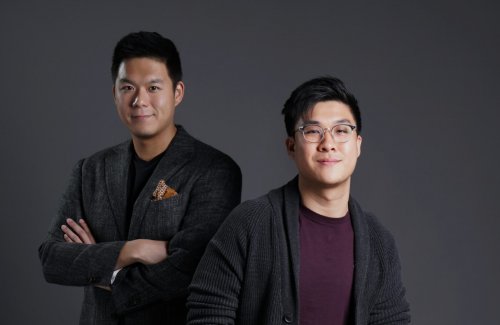
Chris Hwang (left) and Jonathan Shen (right) – founders of The Golden Duck

Growing up with Asian snacks like salted egg yolk chips meant savoring flavors that felt both comforting and unforgettable. Yet when Jonathan Shen and Chris Hwang turned their eyes to the global market, they saw a different reality: these beloved treats were undervalued, underpriced, and largely overlooked by international consumers.

Back in 2015, Singapore’s FMCG market was crowded, dominated by established Western brands. Asian flavors were largely seen as niche, affordable snacks rather than premium products you’d gift or showcase in events.

Jonathan and Chris quickly recognized a gap: millennial consumers craved adventurous, culturally rooted flavors, but no brand was presenting them in a way that made people proud to share them.

They founded The Golden Duck with a vision to elevate Asian snacking to a globally aspirational experience.

Today, The Golden Duck has sold over 20 million packs worldwide, and is stocked in 650+ Woolworths and Metro stores.

How It Began: Inspiration from a Familiar, Unlikely Flavor

Jonathan Shen and Chris Hwang didn’t start with a massive budget or fancy offices. What they had was complementary expertise, and a shared passion for snacks. 

Jonathan, with a keen eye for branding and marketing, looked at salted egg yolk and asked: what if salted egg yolk could feel luxurious? 

While ubiquitous in Asia, it was rarely found outside hawker stalls or home-cooked dishes.

Chris, a stickler for quality and craftsmanship, understood that getting the recipe and packaging right could make all the difference.

When it launched, crowds queued for hours, wanting to get their hands on chips that tasted like home but looked like luxury. The Golden Duck’s Salted Egg Yolk later earned Jonathan & Chris recognition on Forbes 30 Under 30 Asia.

How It Went: Bold Flavors, Relentless Hustle

Entering a competitive FMCG market without big funding meant bootstrapping everything—from sourcing ingredients to hand-packing orders. They had to balance daring flavors with high-quality production, ensuring every snack met premium standards.

It wasn’t just about product innovation. Breaking into a market dominated by Western brands meant shifting perceptions: convincing consumers that Asian snacks could be modern and premium. Every unconventional pairing, every new flavor, was a calculated risk.

Chris ensured every ingredient and recipe exceeded expectations, while Jonathan told the story in a way that resonated with millennial snack enthusiasts.

They launched pop-ups, engaged directly with customers, and refined details one by one. Salted egg yolk became their signature flavor, but it was only the beginning. The Golden Duck now offers a growing range of gourmet Asian-inspired snacks, from Chilli Crab Seaweed to Tom Yum Goong and Spicy Mala Hot Pot.

What’s Next For The Golden Duck?

The Golden Duck isn’t slowing down. In 2025, the brand launched a new line of canister chips for Western markets including Australia, the United States, and Canada, with bold flavours like bold flavours like Truffle Wagyu, Kombu Seaweed Butter, and Sour Cream & Sriracha. At the same time, the company is actively entering new markets such as the UK, Europe, and China.

Innovation and sustainability remain at the heart of The Golden Duck’s strategy. The company continues to explore new flavors and formats while sourcing real ingredients to deliver premium, authentic taste experiences.

With every new flavor and product, Jonathan Shen and Chris Hwang are proving that Asian snacks can be premium and globally celebrated. Every bite is a story of heritage, innovation, and taste waiting to be told.

Connect With The Golden Duck

Website: https://www.thegoldenduck.co/

IG: @thegoldenduck.sg

@thegoldenduck.au

IMG_6214 (1)

Stories

From Prison to Purpose: How Tuan Huynh Brewed Redemption Into VietFive Coffee

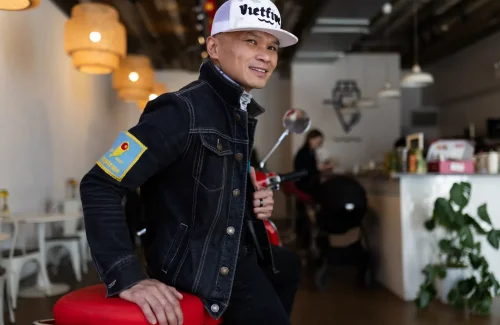
When you walk into VietFive Coffee in Chicago’s West Loop, the first thing you notice isn’t the rich aroma of Vietnamese Robusta beans. It’s the energy. Strangers sit shoulder-to-shoulder, conversations spark, and a sense of belonging fills the air. For founder Tuan Huynh, this space is far more than a café. It’s proof that redemption is real.

Tuan didn’t set out to build a coffee brand. He set out to rewrite a life story that once seemed destined to end behind prison walls. Today, he’s not just serving bold coffee; he’s serving hope, heritage, opportunity, and community.

The Darkest Chapter

Tuan’s early life was marked by conflict. Born in Vietnam, his family fled to the U.S. when he was just three years old, carrying little more than hope for a better future. They settled in government housing, where poverty pressed down on daily life. Like so many kids searching for belonging, Tuan got swept into the culture of gangs and drugs. At just 18 years old, barely an adult, his life took a devastating turn.

Convicted of first-degree murder, Tuan was sentenced to life in prison with the possibility of parole after 15 years. He spent the next decade and a half in Lansing Correctional Facility, one of the country’s maximum-security prisons.

Prison has a way of stripping people of their identity. For many, it cements a cycle of despair. But for Tuan, it became the crucible where transformation began. “Even in the darkest places,” he says, “I knew my story wasn’t finished.”

Choosing Creativity Over Despair

Inside those walls, during the latter half of his prison experience, Tuan chose to reimagine his life. He leaned into art and design, creative outlets that gave him purpose and revealed a talent for visual storytelling. Every sketch, every concept was an act of defiance against the idea that his future had already been written.

When he was finally paroled on June 21st, 2011, a date and time he still recalls with reverence, Tuan stepped into a world that had changed beyond recognition. He was a free man, but freedom didn’t come with an instruction manual. He carried the stigma of incarceration, the weight of lost time, and the daunting task of rebuilding from scratch.

A Door Opens in the Most Unexpected Place

Determined not to waste his second chance, Tuan pursued higher education, earning a Bachelor of Fine Arts in Conceptual Design. His portfolio caught the attention of the world’s largest advertising agency, which offered him a role in Chicago. For a refugee kid who had once been told he would never amount to anything, it was validation.

But something was still missing. After eight years in advertising, Tuan felt the pull of something deeper, something personal. On a trip back to Vietnam, the first since leaving as a child, he discovered his family’s legacy: generations of farmers cultivating Robusta coffee. That revelation ignited a vision.

Coffee, he realized, could be the perfect medium. It wasn’t just a drink. It was heritage, resilience, and connection poured into a cup. And with that, VietFive was born.

Tuan Huynh (right) with his uncle

Building VietFive Against All Odds

Launching a business as a formerly incarcerated person was no small feat. Doors closed before Tuan could step through them. Banks hesitated, investors doubted, and skeptics assumed his past would define his future. But Tuan refused to let rejection write his story.

Instead, he built VietFive from the ground up, importing beans from his family’s farm, shaping the brand through design, and pouring his heart into creating not just a business, but a movement.

VietFive is vertically integrated, meaning Tuan controls the process from farm to cup. That ensures authenticity, quality, and fair practices. But more than that, it provides every sip tells a story. A story of Vietnamese resilience. A tale of personal redemption.

The Power of Representation

For Tuan, VietFive is not just about coffee. It’s about representation. Too often, the stories of immigrants, refugees, and formerly incarcerated people are missing from mainstream narratives. By building VietFive, Tuan created a stage where those voices can’t be ignored.

“When people drink our coffee,” he says, “I want them to taste more than flavor. I want them to taste legacy, survival, and pride.”

That representation extends to the community VietFive has built. Walk into the café, and you’ll see it as a true “third space” where all are welcome. From business leaders to students, from immigrants to lifelong Chicagoans, VietFive has become a gathering point for connection.

Turning Pain Into Purpose

Tuan’s proudest achievement isn’t revenue numbers, though VietFive is on track to approach seven figures this year. His real pride is seeing familiar faces return, watching conversations unfold, and knowing that his café has become a home for many.

The struggles he faced, incarceration, rejection, and underrepresentation, didn’t vanish. But he reframed them. Each obstacle became a stepping stone, each “no” a chance to persist, each bias an opportunity to prove that transformation is possible.

In Tuan’s words, “VietFive is not just about beans. It’s about belonging.”

A Vision for the Future

Tuan’s mission is clear: to elevate Vietnamese Robusta on the global stage, to create spaces of connection, and to rewrite narratives that society often overlooks. He envisions VietFive not only as a coffee brand but as a global movement rooted in heritage and social impact.

For the Asian community, VietFive stands as an affirmation, proof that their culture, history, and voices belong at the table. For those who carry the weight of incarceration or failure, it’s a beacon of hope that broken beginnings can lead to beautiful new chapters.

Redemption in Every Cup

At its core, VietFive is more than coffee. It’s a story of redemption steeped into every brew. It’s the story of a refugee child who stumbled, a prisoner who refused despair, and an entrepreneur who now builds bridges where walls once stood.

When you sip VietFive, you’re not just tasting Robusta, you’re tasting resilience. You’re part of a narrative that proves our past does not define our future.

As Tuan Huynh himself puts it: “VietFive is my second chance in a cup. And I want every person who walks through our doors to feel that same possibility, that no matter where you’ve been, there’s always a way forward.”

Connect with Tuan Huynh

AHS EMAIL ANGLE (5)

Blogs, Development

Understand Conversions with Attribution

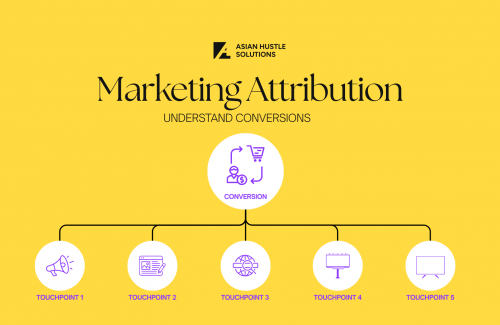
To win your customers, you need to run many marketing activities across multiple channels. And then those conversions came pouring in, but you don’t exactly know where those conversions come from since there are too many ongoing activities. That’s what marketing attribution does. By assigning credit to touchpoints, you can gauge how effective each touchpoint is to the conversion.

There are two types of Attribution:

  • Single-source attribution: Credits are given fully to one touchpoint, assuming that is the most effective one at driving conversion.
  • Multiple-source attribution: More complex models. This type of attribution model acknowledges that multiple touchpoints contribute to the buying decisions and gives partial credit to each.

Understanding attribution will help you to know where the revenue comes from so you can optimize your budget and gain more from your spending. to said touchpoint makes it more effective and less costly. Understanding the journey can help you win the race.

Why Asian Hustle Solutions?

At AHS, we specialize in helping brands capture attention and inspire action — whether you’re launching a new product or scaling your business, we’ll guide you to marketing that resonates and delivers results.

If you want to learn more about our services, visit the Asian Hustle Solutions website at asianhustlenetwork.com/services/