Blogs, Development

December 19, 2025

SHARE:

The creator economy is no longer a niche corner of the internet. It is a $250 billion industry, powering modern marketing, culture, and commerce. Yet for the creators at its core, the experience often remains unstable and fragmented. Inconsistent rates, shifting platform demands, and “gifting” budgets paired with outsized expectations have left many navigating an ecosystem that hasn’t caught up to their value.

As we look toward 2026, the industry is approaching a tipping point. Growth alone is no longer enough. What creators need now are standards, systems, and support that allow them to build sustainable careers—not just viral moments.

Below are five critical shifts shaping the future of creator work, and the standards Meraki is building to support a stronger, more intentional industry.

1. Stronger Structure for a Growing Industry


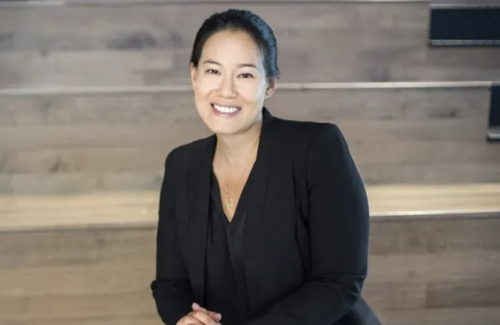
Photo courtesy of Vivian Kwan (center), Founder of Meraki Group

While creator content has never been more polished, the backend of the industry remains disorganized. Uneven pay scales, scope creep mid-campaign, and unclear paths to professional growth are still common. Creators are often met with constant brief changes or “gifting” requests that require high-level deliverables without fair compensation.

The gap: There is no shared structure defining fair rates, clear deliverables, or realistic timelines across the industry. Expectations are often implied rather than stated, leaving creators to absorb last-minute changes, unpaid revisions, and expanded usage. Over time, this places most of the financial and emotional risk on creators instead of being shared evenly with brand partners.

The Meraki solution: Meraki builds every partnership on clarity. Terms and rates are established upfront, expectations are clearly defined, and communication stays transparent throughout the process. By setting strong boundaries early, creators are protected from underpayment, and brands begin each project with a shared roadmap for success.


2. Education That Powers Careers, Not Just Content


Image Source: Pexels

The biggest challenges creators face are rarely creative. They are structural. Pricing work correctly, understanding usage rights, and identifying harmful contract clauses remain major pain points—even for experienced creators.

Too often, creators are expected to learn these lessons the hard way.

The gap: Most creators enter the industry without access to professional guidance that supports long-term career growth. Knowledge around contracts, licensing, and negotiation is often gatekept or learned through costly mistakes. As a result, many creators stay stuck in short-term cycles instead of building sustainable paths forward.

The Meraki solution: Meraki focuses on training ethical, creator-first managers who act as true career partners. Through negotiation support and education around contract red flags, creators are equipped to think beyond the next deal and toward sustainable, multi-year growth.


3. Standards in Negotiation and Contracts


Image Source: Pexels

A significant number of creators still undercharge for their work, and 26% report needing help navigating contracts. Without standardized deal benchmarks, creators are often left guessing their worth—leading to pay gaps, rights misuse, and legal risk.

The gap: Negotiation norms vary widely, with no clear benchmarks for fair compensation or usage terms. Many contracts are written in dense legal language that creators are expected to sign without full understanding. This imbalance leaves creators vulnerable to losing control of their work and long-term earning potential.

The Meraki solution: Meraki empowers creators with defined negotiation standards and the confidence to secure fair, market-value deals. By demystifying contracts and usage terms, creators can focus on their craft knowing their income and intellectual property are protected.


4. Work Models That Protect Wellbeing


Image Source: Pexels

Burnout has become one of the industry’s most pressing issues, affecting more than half of full-time creators. The always-on model—driven by algorithm shifts and last-minute deadlines—is no longer sustainable.

Creativity cannot thrive under constant urgency.

The gap: Many campaigns are built around speed and volume rather than realistic creative timelines. Creators are expected to be constantly available, adapt instantly, and produce under pressure without recovery time. Over time, this erodes both creative quality and mental health.

The Meraki solution: Meraki advocates for structured planning and sustainable workflows. Campaign timelines are built to protect both creative quality and mental health, proving that high-level output does not require constant exhaustion.


5. Representation Rooted in Voice, Not Trends
 

Image Source: Pexels

Creators are increasingly resistant to being reduced to labels or treated as trend-driven checkboxes. True representation starts with understanding a creator’s voice—not forcing them into a predefined brand narrative.

The gap: Many partnerships remain transactional, prioritizing short-term relevance over genuine alignment. Creators are often selected to fill a category rather than for their perspective or long-term vision. This leads to inauthentic work that disconnects creators from their communities.

The Meraki solution: Meraki begins every partnership by listening. By understanding each creator’s goals and vision, Meraki aligns them with brands that share their values—fostering long-term relationships that feel authentic to both the creator and their community.
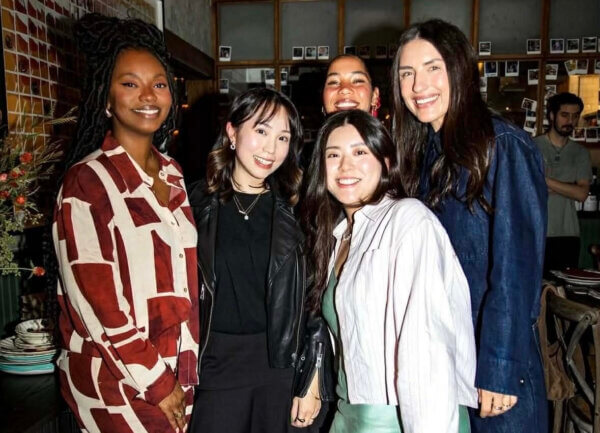
 

Photo courtesy of Vivian Kwan (second from left), Founder of Meraki Group


The Next Era: Purpose Over Pressure

As we look toward 2026, the transition from a “Wild West” to a professionalized industry requires more than just better tools—it requires a fundamental shift in how we value the humans behind the content. 

Meraki sits at the center of this new era, bridging creative passion with real professional growth. By pushing for fair standards, ethical representation, and sustainable careers, Meraki does more than manage creators; they help protect the future of creative work.wi

Learn more about Meraki Group:
📍Website

📍Instagram 

Related Articles

Image Source: Binance

Stories

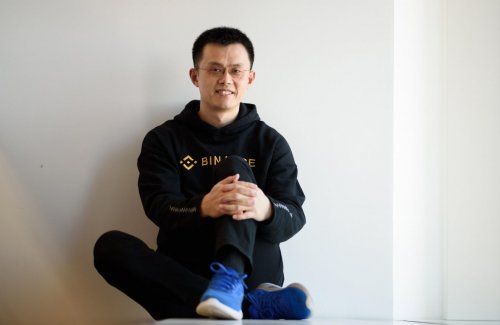
From Gas Jockey To Binance CEO: How Changpeng Zhao Became Richest Man In Cryptocurrency

Binance is one of the most valuable cryptocurrency exchanges in the world as of today, and its founder and current CEO is Changpeng Zhao, according to the Bloomberg Billionaires Index, had a net worth of approximately $30 billion, which placed him in 33rd spot on the list of the world’s richest people.

Early on in life, Zhao was born into a family of educators in a rural village in Jiangsu province, China. He claimed that as a child living in rural China, he had to endure food rationing. His family immigrated to Canada in the late 1980s and felt incredibly fortunate to have been able to leave China.

When Zhao and his family moved to Canada, he worked several part-time jobs, including one at McDonald’s. He attempted to earn money at 14 by working at a Chevron gas station and as a volleyball referee.

He studied computer science at McGill University in Montreal, where he developed an interest in technology similar to that of his father, a math prodigy and programmer in his teens.

Zhao began coding when he was only 16 years old and took programming classes in high school before enrolling at McGill University.  After finishing college, Zhao worked at the Tokyo Exchange and then at Bloomberg in the Tradebook department from 2001 to 2005. Zhao left his job in 2005 to become a partner at the Shanghai firm Fusion Systems, which developed software for the financial markets. 

After discovering Bitcoin in 2013 while playing poker, he went all-in on crypto and committed his life to it. He even gave up his home to fund his Bitcoin investment. He persisted, even as the value of bitcoin dropped from $600 to $200 after he bought it.

Being a tech leader at Blockchain, a cryptocurrency wallet provider, and OKCoin, a cryptocurrency marketplace, Zhao decided to create his exchange, combining the efficiency of high-frequency trading platforms he had previously developed with the potential of cryptocurrencies. Thus, he started Binance with a $15 million initial coin offering.

However, getting to the top is more complicated than it seems, especially for Binance. When Binance’s cryptocurrency, BNB, dropped in value below its ICO price, Zhao and his early colleagues were forced to adapt quickly to changing market conditions.

As a result, Zhao initiated the initiative to make Binance a distributed organization with a flexible international staff. He was also instrumental in growing Binance into a user-friendly platform with maximum bandwidth, low fees, and other benefits.

In a relatively short period, Binance’s offering became too attractive to the cryptocurrency community to be held back by persistent difficulties. Six months after its launch, Binance soared to the top of the cryptocurrency exchange rankings, which remains to this day.

He is now widely known by his alias CZ and is widely regarded as the cryptocurrency industry’s most influential and prosperous figure. His majority stake in the cryptocurrency platform is responsible for much of his wealth at around $30.6 billion. Since the exact value of Zhao’s cryptocurrency holdings is unknown, Bloomberg’s blog post reported that it did not factor them into his wealth.

Image Source: Harper's Bazaar Singapore

News

A Culinary Adventure With Mark Wiens On HBO Go To Debut This November

As the nation’s most famous foodie Mark Wiens is coming back to HBO Go with his very own show. He is currently located in Thailand and is a co-owner of Phed Mark, a popular Thai eatery known for its “very spicy” pad krapao.

A small look into the culture of Singapore will be presented in the Food Affair with Mark Wiens episode that will be made available on HBO GO on November 18th. Food is a serious matter; for Mark, it is not simply about consuming food; instead, he will bring each dish’s cultural and traditional elements to life.

The six-part series will feature him shooting the breeze up with everyone from Michelin-starred chefs to legendary street food vendors in Singapore.  He is impressed but used to being delighted by the city because it is home to more than fifty restaurants with Michelin stars and over sixty entries in the Bib Gourmand guide.

Mark found it inspiring to hear how the owners of different restaurants came to follow their dreams and create the unique cuisines they do today. ”It’s undeniable that food is at the center of all our lives, and that’s what brought us all together,” Mark shared.

The 36-year-old food enthusiast has persisted in pursuing his hobby of food vlogging, and he frequently takes the 9.3M audience of his YouTube channel around the world as he samples a variety of mouthwatering cuisines. The expressions on his face communicate to anyone who watches him exactly how delicious each dish is.

Follow Mark as he explores all aspects of Singapore’s food culture, from hawker centers and high-end restaurants.

Image Source: Open Table

Blogs, Development, Ideas

If You Are Doubting On Your Career Move, Take It From This CEO Who Made Corporate Twists and Turns

If you’re worried about making the wrong career move because you’ve started to second-guess yourself, keep in mind that there is no bad decision regarding your professional development. Debby Soo, CEO of restaurant reservation service OpenTable, can understand.

Consider Soo’s words carefully if you’re struggling to make a major career choice or feel paralyzed by uncertainty.

She eventually settled on a mantra that brought her peace. She struggled with worry and stress over her future career path and doubted her choices at each turning point. Eventually, things worked out for her. 

She realized that her work experience was valuable despite her dissatisfaction with her job. She knew that her decision which appeared disastrous at the time might ultimately result in professional success in ways she could never have imagined. Soo firmly believed there are no wrong turns in any career, “I didn’t have to spend so much time stressing about it,” she told CNBC Make It.

To maximize one’s employment as a learning opportunity, Soo suggested working diligently in any position. Soo advised, “Do the work, do the homework, and be prepared, even if it’s a boring and tedious task or position,” Soo explains to CNBC Make It, “If you put in the effort, something will come to fruition eventually.”

As a result of keeping an open mind and learning from her mistakes, she has come to appreciate the tasks she once found tedious. She has acquired knowledge in areas such as the types of work one never wants to do again and the best ways to handle problematic coworkers.

Soo was well aware that one choice regarding a job opportunity would not determine the course of the rest of her life. She may find that her definition of an ideal dream job shifts for the better due to the twists and turns she encounters along the way toward her goal of advancing her career. 

At the moment, Soo has continued to manage OpenTable since 2020. After more than a decade at the travel search company Kayak and work experience at Google that left her with a great deal of doubt about her professional future, Soo is now actively working to better herself and is successfully advancing her career as a CEO woman.

Image Source: Brendan Duong

Stories

A Secret Business Purchase Grew Into A Multi-million Dollar Enterprise

Tess Nguyen who is a trained physiotherapist was searching Gumtree, Australia’s marketplace, for a physiotherapy clinic to buy. Instead, a sleepwear ad called Midnight Mischief captured her eye, “I’d never heard of personalised pyjamas, and I was pretty up-to-date with trends, so I sent an inquiry,” she told 7life.

She consulted her friends who have accounting and business experience and told Tess it was worth nothing and advised her not to buy it. However, she liked the pyjamas’ style and name, plus she was able to bargain the business down to $15,000. So, a month later she bought the business.

Tess kept the purchase secret from her family. The business was going slow during the first two years, and running the business while working as a full time physiotherapist, took its toll.

When 2020 hit, the business was ready for the huge demand prompted by COVID and people staying at home. The big moment was when TV presenter Jules Sebastian posted a photo of herself wearing Midnight Mischief pyjamas.

The brand grew 165% in the year to July 2021. And Tess has gone from pyjama girl to Pyjama Queen – selling a set every 10 minutes. The designs retail for about $99.95 – and her sleepwear empire is now turning over $2.3 million.

“I’m so glad I did it and I’d tell anyone else to do the same,” Tess told 7Life, “Just go for it. You can figure it out as you go along. It’s worked for me.”