Blogs, Development

December 19, 2025

SHARE:

The creator economy is no longer a niche corner of the internet. It is a $250 billion industry, powering modern marketing, culture, and commerce. Yet for the creators at its core, the experience often remains unstable and fragmented. Inconsistent rates, shifting platform demands, and “gifting” budgets paired with outsized expectations have left many navigating an ecosystem that hasn’t caught up to their value.

As we look toward 2026, the industry is approaching a tipping point. Growth alone is no longer enough. What creators need now are standards, systems, and support that allow them to build sustainable careers—not just viral moments.

Below are five critical shifts shaping the future of creator work, and the standards Meraki is building to support a stronger, more intentional industry.

1. Stronger Structure for a Growing Industry


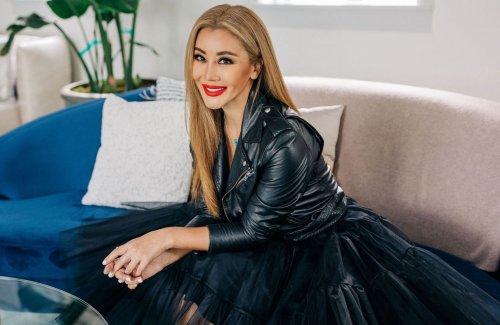
Photo courtesy of Vivian Kwan (center), Founder of Meraki Group

While creator content has never been more polished, the backend of the industry remains disorganized. Uneven pay scales, scope creep mid-campaign, and unclear paths to professional growth are still common. Creators are often met with constant brief changes or “gifting” requests that require high-level deliverables without fair compensation.

The gap: There is no shared structure defining fair rates, clear deliverables, or realistic timelines across the industry. Expectations are often implied rather than stated, leaving creators to absorb last-minute changes, unpaid revisions, and expanded usage. Over time, this places most of the financial and emotional risk on creators instead of being shared evenly with brand partners.

The Meraki solution: Meraki builds every partnership on clarity. Terms and rates are established upfront, expectations are clearly defined, and communication stays transparent throughout the process. By setting strong boundaries early, creators are protected from underpayment, and brands begin each project with a shared roadmap for success.


2. Education That Powers Careers, Not Just Content


Image Source: Pexels

The biggest challenges creators face are rarely creative. They are structural. Pricing work correctly, understanding usage rights, and identifying harmful contract clauses remain major pain points—even for experienced creators.

Too often, creators are expected to learn these lessons the hard way.

The gap: Most creators enter the industry without access to professional guidance that supports long-term career growth. Knowledge around contracts, licensing, and negotiation is often gatekept or learned through costly mistakes. As a result, many creators stay stuck in short-term cycles instead of building sustainable paths forward.

The Meraki solution: Meraki focuses on training ethical, creator-first managers who act as true career partners. Through negotiation support and education around contract red flags, creators are equipped to think beyond the next deal and toward sustainable, multi-year growth.


3. Standards in Negotiation and Contracts


Image Source: Pexels

A significant number of creators still undercharge for their work, and 26% report needing help navigating contracts. Without standardized deal benchmarks, creators are often left guessing their worth—leading to pay gaps, rights misuse, and legal risk.

The gap: Negotiation norms vary widely, with no clear benchmarks for fair compensation or usage terms. Many contracts are written in dense legal language that creators are expected to sign without full understanding. This imbalance leaves creators vulnerable to losing control of their work and long-term earning potential.

The Meraki solution: Meraki empowers creators with defined negotiation standards and the confidence to secure fair, market-value deals. By demystifying contracts and usage terms, creators can focus on their craft knowing their income and intellectual property are protected.


4. Work Models That Protect Wellbeing


Image Source: Pexels

Burnout has become one of the industry’s most pressing issues, affecting more than half of full-time creators. The always-on model—driven by algorithm shifts and last-minute deadlines—is no longer sustainable.

Creativity cannot thrive under constant urgency.

The gap: Many campaigns are built around speed and volume rather than realistic creative timelines. Creators are expected to be constantly available, adapt instantly, and produce under pressure without recovery time. Over time, this erodes both creative quality and mental health.

The Meraki solution: Meraki advocates for structured planning and sustainable workflows. Campaign timelines are built to protect both creative quality and mental health, proving that high-level output does not require constant exhaustion.


5. Representation Rooted in Voice, Not Trends
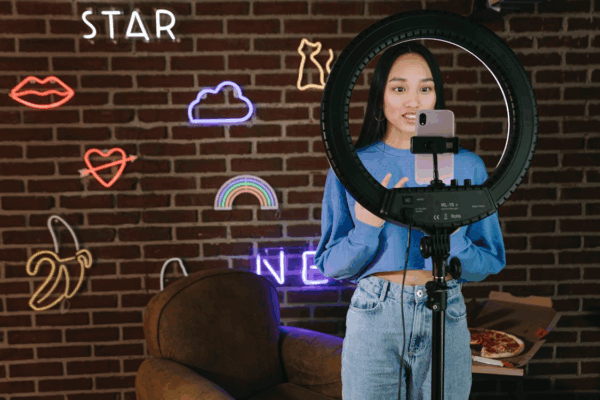
 

Image Source: Pexels

Creators are increasingly resistant to being reduced to labels or treated as trend-driven checkboxes. True representation starts with understanding a creator’s voice—not forcing them into a predefined brand narrative.

The gap: Many partnerships remain transactional, prioritizing short-term relevance over genuine alignment. Creators are often selected to fill a category rather than for their perspective or long-term vision. This leads to inauthentic work that disconnects creators from their communities.

The Meraki solution: Meraki begins every partnership by listening. By understanding each creator’s goals and vision, Meraki aligns them with brands that share their values—fostering long-term relationships that feel authentic to both the creator and their community.
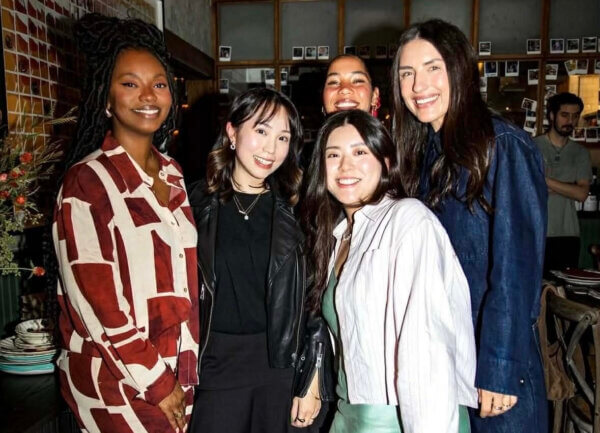
 

Photo courtesy of Vivian Kwan (second from left), Founder of Meraki Group


The Next Era: Purpose Over Pressure

As we look toward 2026, the transition from a “Wild West” to a professionalized industry requires more than just better tools—it requires a fundamental shift in how we value the humans behind the content. 

Meraki sits at the center of this new era, bridging creative passion with real professional growth. By pushing for fair standards, ethical representation, and sustainable careers, Meraki does more than manage creators; they help protect the future of creative work.wi

Learn more about Meraki Group:
📍Website

📍Instagram 

Related Articles

the toronto star-jpg

News

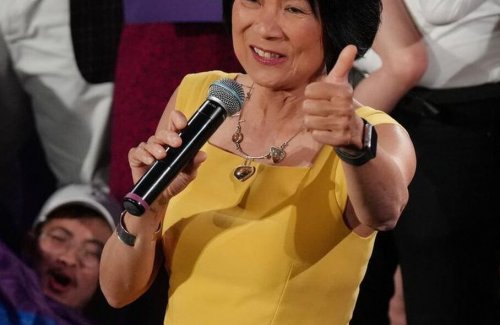
Olivia Chow Makes History as First Chinese-Canadian Mayor in Toronto

Olivia Chow has emerged as Toronto’s first Chinese-Canadian mayor, ending over a decade of conservative rule and ushering in a new progressive era for the city.

Olivia was 13 years old when she first arrived in the country as an immigrant. Now, at 66, she has achieved a remarkable feat, surpassing 102 candidates to become Toronto’s first Chinese-Canadian mayor.  During her campaign, she focused on addressing the housing affordability crisis and pledged to raise the city’s low property taxes while providing support for tenants.

Upon taking office, Olivia faces opposition from Ontario’s premier, Doug Ford, who had warned that her victory would be an “unmitigated disaster.” Ford’s brother, Rob Ford, previously served as mayor of Toronto but faced controversy due to a video showing him smoking crack cocaine and a cancer diagnosis.

Throughout her career, Olivia has served as a member of parliament for the New Democratic Party, a Toronto city councilor, and a school board trustee. She also campaigned alongside her late husband, Jack Layton, who ran for mayor in 1991 and later became the leader of the opposition in Canada.

Olivia assumes the role of mayor at a challenging time for Toronto. The city, with a population of 2.7 million and a metropolitan area of nearly 7 million, is grappling with surging rents and a budget deficit of approximately $1.5 billion. Public safety concerns have also grown, particularly following a series of violent attacks on individuals using the public transit system.

According to The Guardian, Olivia is expected to be a champion for transit, as well as for walking and cycling – she does not have a driving license – and has promised to turn the tide on years of low-tax austerity politics enacted by her conservative predecessors.

Featured Image Source: The Toronto Star

vogue sg-jpg

News

Daniel Wu Shines Spotlight on Asian Cultural Icons in ‘American Born Chinese’

Daniel Wu, known for his roles in “Into the Badlands” and “Westworld,” is thrilled to bring Gene Luen Yang’s celebrated graphic novel, “American Born Chinese,” to a wider audience through its screen adaptation.

In a Zoom interview with UPI, Wu expressed his excitement about introducing the action-comedy story to a broader mainstream audience. The series, which is now streaming on Disney+, follows the journey of Jin Wang (played by Ben Wang), a teenager navigating the challenges of fitting in at his high school against the wishes of his traditional parents (portrayed by Yeo Yann Yann and Chin Han).

“The screen adaptation that was done by Kelvin Yu is amazing in integrating these three disparate story lines,” Wu said to UPI.

When Jin meets Wei-Chen (Jimmy Liu), a Chinese immigrant and the secret son of the legendary Monkey King (portrayed by Wu), their intertwined destinies set the stage for a captivating narrative.

Wu emphasized the significance of showcasing the iconic Monkey King character to a different audience, highlighting the character’s deep-rooted connection to Asian culture. By doing so, he hopes to reveal the Asian “superheroes” and idols from his own childhood to viewers who may not be familiar with these cultural icons. 

According to UPI, Wu found a personal connection to the Monkey King character as a father himself. Reflecting on his experiences during the COVID-19 pandemic and the challenges of distance learning, he humorously described himself as a “Tiger Dad.”

“I realized that I am part Tiger Dad and that I am strict on my kid and then I need to let go,” he said to UPI. “This character is dealing with that same situation.”

Wu is working alongside Michelle Yeoh who portrays Guanyin the Goddess of Mercy. Despite knowing each other for two decades, this project marked their first collaboration, making it even more special.

With its visually spectacular action sequences and heartfelt storytelling, the series offers a distinctive viewing experience that can be cherished by families across generations.

Featured Image Source: Vogue SG

tatler asia-jpeg

News

A Korean Immigrant’s Journey to Becoming a Beauty Industry Icon

Toni Ko is a first-generation Korean immigrant who has made an indelible mark in the business world as the founder of NYX Cosmetics and a champion of women-run brands.

Toni is the visionary behind NYX Cosmetics and a fierce advocate for women-run brands. With her relentless work ethic and unparalleled business acumen, she has carved a path to success that has earned her a well-deserved place among Forbes magazine’s Richest Self-Made Women.

Despite facing numerous challenges after moving to California in 1986, the language barriers and unfamiliar surroundings, she thrived on the difficulties and developed a resilient character. She drew from her family’s background in the cosmetics industry to launch NYX Cosmetics in 1999 with $250,000 in seed money from her parents. Her vision was to provide high-quality cosmetics at affordable prices, bridging the gap between luxury and affordability.

Toni used social media to propel NYX Cosmetics to remarkable success. The brand gained traction through partnerships with influential beauty creators on platforms like YouTube, capturing a younger audience and solidifying its place in the market. In 2014, L’Oréal acquired NYX Cosmetics for an estimated $500 million.

Driven by her passion for empowering women, Toni established the Toni Ko Foundation in 2014. Through this foundation, she supports organizations dedicated to uplifting underprivileged children and championing women’s empowerment. In addition, she actively invests in women-owned businesses through her venture capital firm, Butter Ventures, fostering the growth and success of fellow female entrepreneurs.

Toni has been lauded with prestigious accolades, including the WWD Beauty Inc. Brand of the Year award for NYX Cosmetics and her inclusion on Forbes’ esteemed list of Richest Self-Made Women. More than a businesswoman, Toni is a beacon of inspiration, paving the way for a future where women’s voices are amplified and their dreams are within reach.

Featured Image Source: Tatler Asia

The Fresno Bee-jpeg

News

Hmong Baker “The Brioche Lady” Opens Her Own Asian Grocery Store in Fresno

Renowned for her fluffy French bread, The Brioche Lady has returned, assuming a new role as the proprietor of an Asian grocery store.

While many people are familiar with Nubchi Thao for her delectable French brioche bread sold at farmers markets and her previous bakery, The Brioche Lady Bakery, she has now taken on the role of an Asian grocery store owner. Thao is of Hmong descent and was raised in France, where she acquired her expertise in baking French bread.

Located in Tarpey Village at the intersection of Ashlan and Clovis avenues, the newly opened store named TBL Asian Market is situated between the Arco station and the Sno-White Drive-In, replacing the former Golden Phoenix Asian Market, which was owned by Thao’s relatives.

According to Fresnobee, customers can now immerse themselves in a culinary journey spanning Filipino, Vietnamese, and various other cuisines. The store’s fresh vegetable section showcases an assortment of items, including fresh Thai peppers, okra, lychee, and rambutan—a peculiar fruit adorned with distinctive red whiskers.

The market boasts an extensive selection of noodles and rice, catering to diverse tastes. Moreover, the snack aisle entices shoppers with an array of treats sourced from several countries. From cookies originating from various regions to chocolate-dipped Pocky sticks, Japanese mochi desserts, and even wasabi peas, the store caters to a wide range of palates. Adding a touch of warmth and familiarity, one is likely to encounter the Thao family’s children among the store’s employees. 

In addition to on-site baking, Thao is exploring alternative avenues for customers to enjoy her beloved bread. She intends to introduce a brioche mix, empowering customers to bake their own loaf at home by simply adding eggs, water, and butter.

Furthermore, she is developing a larger version of the mix tailored for bakeries and restaurants. Additionally, Thao seeks to establish partnerships that would allow others to bake her recipe and serve the thriving Hmong community, which holds a strong affinity for her bread.

Featured Image Source: The Fresno Bee