Blogs, Development

December 19, 2025

SHARE:

The creator economy is no longer a niche corner of the internet. It is a $250 billion industry, powering modern marketing, culture, and commerce. Yet for the creators at its core, the experience often remains unstable and fragmented. Inconsistent rates, shifting platform demands, and “gifting” budgets paired with outsized expectations have left many navigating an ecosystem that hasn’t caught up to their value.

As we look toward 2026, the industry is approaching a tipping point. Growth alone is no longer enough. What creators need now are standards, systems, and support that allow them to build sustainable careers—not just viral moments.

Below are five critical shifts shaping the future of creator work, and the standards Meraki is building to support a stronger, more intentional industry.

1. Stronger Structure for a Growing Industry


Photo courtesy of Vivian Kwan (center), Founder of Meraki Group

While creator content has never been more polished, the backend of the industry remains disorganized. Uneven pay scales, scope creep mid-campaign, and unclear paths to professional growth are still common. Creators are often met with constant brief changes or “gifting” requests that require high-level deliverables without fair compensation.

The gap: There is no shared structure defining fair rates, clear deliverables, or realistic timelines across the industry. Expectations are often implied rather than stated, leaving creators to absorb last-minute changes, unpaid revisions, and expanded usage. Over time, this places most of the financial and emotional risk on creators instead of being shared evenly with brand partners.

The Meraki solution: Meraki builds every partnership on clarity. Terms and rates are established upfront, expectations are clearly defined, and communication stays transparent throughout the process. By setting strong boundaries early, creators are protected from underpayment, and brands begin each project with a shared roadmap for success.


2. Education That Powers Careers, Not Just Content


Image Source: Pexels

The biggest challenges creators face are rarely creative. They are structural. Pricing work correctly, understanding usage rights, and identifying harmful contract clauses remain major pain points—even for experienced creators.

Too often, creators are expected to learn these lessons the hard way.

The gap: Most creators enter the industry without access to professional guidance that supports long-term career growth. Knowledge around contracts, licensing, and negotiation is often gatekept or learned through costly mistakes. As a result, many creators stay stuck in short-term cycles instead of building sustainable paths forward.

The Meraki solution: Meraki focuses on training ethical, creator-first managers who act as true career partners. Through negotiation support and education around contract red flags, creators are equipped to think beyond the next deal and toward sustainable, multi-year growth.


3. Standards in Negotiation and Contracts


Image Source: Pexels

A significant number of creators still undercharge for their work, and 26% report needing help navigating contracts. Without standardized deal benchmarks, creators are often left guessing their worth—leading to pay gaps, rights misuse, and legal risk.

The gap: Negotiation norms vary widely, with no clear benchmarks for fair compensation or usage terms. Many contracts are written in dense legal language that creators are expected to sign without full understanding. This imbalance leaves creators vulnerable to losing control of their work and long-term earning potential.

The Meraki solution: Meraki empowers creators with defined negotiation standards and the confidence to secure fair, market-value deals. By demystifying contracts and usage terms, creators can focus on their craft knowing their income and intellectual property are protected.


4. Work Models That Protect Wellbeing


Image Source: Pexels

Burnout has become one of the industry’s most pressing issues, affecting more than half of full-time creators. The always-on model—driven by algorithm shifts and last-minute deadlines—is no longer sustainable.

Creativity cannot thrive under constant urgency.

The gap: Many campaigns are built around speed and volume rather than realistic creative timelines. Creators are expected to be constantly available, adapt instantly, and produce under pressure without recovery time. Over time, this erodes both creative quality and mental health.

The Meraki solution: Meraki advocates for structured planning and sustainable workflows. Campaign timelines are built to protect both creative quality and mental health, proving that high-level output does not require constant exhaustion.


5. Representation Rooted in Voice, Not Trends

 

Image Source: Pexels

Creators are increasingly resistant to being reduced to labels or treated as trend-driven checkboxes. True representation starts with understanding a creator’s voice—not forcing them into a predefined brand narrative.

The gap: Many partnerships remain transactional, prioritizing short-term relevance over genuine alignment. Creators are often selected to fill a category rather than for their perspective or long-term vision. This leads to inauthentic work that disconnects creators from their communities.

The Meraki solution: Meraki begins every partnership by listening. By understanding each creator’s goals and vision, Meraki aligns them with brands that share their values—fostering long-term relationships that feel authentic to both the creator and their community.

 

Photo courtesy of Vivian Kwan (second from left), Founder of Meraki Group


The Next Era: Purpose Over Pressure

As we look toward 2026, the transition from a “Wild West” to a professionalized industry requires more than just better tools—it requires a fundamental shift in how we value the humans behind the content. 

Meraki sits at the center of this new era, bridging creative passion with real professional growth. By pushing for fair standards, ethical representation, and sustainable careers, Meraki does more than manage creators; they help protect the future of creative work.wi

Learn more about Meraki Group:

📍Website

📍Instagram 

Related Articles

golden gate ventures-png

News

Jeffrey Paine Unveils the Secrets of Building a Successful Start-up

Entrepreneurship is often regarded as a skill that can be taught, but according to Jeffrey Paine, co-founder of Golden Gate Ventures, certain innate personality traits play a crucial role in a founder’s success.

According to The Peak Magazine, Paine believes that while 80% of entrepreneurship can be learned, the remaining 20% is an inherent quality. He emphasizes the importance of fluid intelligence, the ability to process information and make decisions with limited data and tight deadlines. However, he also highlights the need for founders to be disagreeable yet humble to make effective decisions.

Golden Gate Ventures was born out of Paine’s desire to solve a funding gap he observed in the South-east Asia (SEA) startup ecosystem. Alongside Vinnie Lauria, Paine launched the venture capital firm to bridge the gap between start-ups in the region and investors from the Bay Area.

Since its inception, Golden Gate Ventures has invested in nearly 70 companies across SEA, Greater China, and the US, including successful ventures like Carousell and RedMart. The firm is now expanding its operations in Vietnam, recognizing the country’s potential for growth and its pool of technical talent.

Paine identifies Vietnam, Singapore, and Indonesia as the region’s Startup Golden Triangle, each offering unique advantages for entrepreneurs and investors. Singapore boasts capital, talent, and ambitious founders with a global outlook. Indonesia’s large market size and potential returns make it an attractive investment destination. Vietnam, on the other hand, stands out with its technical talent and ability to tackle complex projects such as Web3 and cryptocurrency.

Looking ahead, Paine predicts that starting a business in the next decade will become more challenging due to a maturing startup ecosystem and the control exerted by a few dominant players. Entrepreneurs will need to identify untapped opportunities and build companies that can adapt to changing trends.

Golden Gate Ventures aims to support founders in this evolving landscape through its Founder First initiative, providing financial, human, and social capital to equip entrepreneurs for success.

Featured Image Source: Golden Gate Ventures

8newsnow-jpg

News

This LA Grad Student Flew Through an Academic Year to Save on Rent

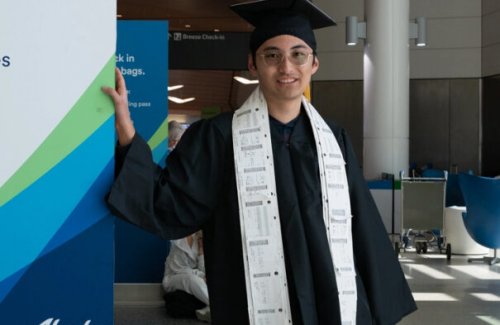
A resourceful graduate student from Los Angeles has gained attention for his clever solution to cut down on housing costs while attending the University of California, Berkeley.

Known as Bill, he shared his story on Reddit in a post titled “I survived living in LA and commuting to Cal by plane over the past academic year to save on rent, AMA (ask me anything).”

Bill’s strategy was simple yet unconventional: he flew between Los Angeles International Airport (LAX) and San Francisco International Airport (SFO) multiple times a week for classes. Waking up early, he caught a 6 a.m. flight from LAX to SFO and then took the 8:30 a.m. train to reach Berkeley on time.

Despite the grueling nature of his commute, Bill approached it as an adventure rather than a burden. He never missed a class during the academic year.

Bill also managed to track his expenses, spending a total of $5,592.66 on flights between LAX and SFO. This included costs for train fares, parking, gas, inflight WiFi, and flights with different airlines.

Bill’s unique approach to saving on rent has impressed a lot of people, showing that creative solutions can help overcome financial challenges in pursuit of education.

Featured Image Source: 8NewsNow

IG ravthechef-png

News

How This 29-Year-Old Entrepreneur Turned a Home Business into a South Asian Culinary Sensation

29-year-old Raveena Oberoi has successfully incorporated South Asian flavors into her business, Just Cakes Bakeshop.

Raveena’s passion for baking began during her high school years when she turned to the kitchen as an outlet for dealing with bullying. Inspired by shows like Food Network and Cake Boss, she developed a deep love for baking and crafting unique cake designs.

Starting as a home business, she faced challenges when she moved to Vancouver for her psychology studies at UBC, as she no longer had access to a kitchen. Undeterred, she commuted back to her hometown of Abbotsford every weekend to fulfill cake orders. After graduating in 2015, Raveena took a leap of faith and traveled to Paris to study pastry arts at Ecole Bellouet Conseil.

Upon her return, she opened Surrey’s first Just Cakes Bakeshop (JCB) in 2017.

Raveena’s hard work paid off, and today she serves as a judge on Food Network’s Wall of Bakers, operates two JCB storefronts, and supplies products to over 85 retailers in the province. Proudly representing the young South Asian community, she infuses nostalgic flavors into her creations, such as the popular cardamom dream mousse.

A significant milestone for JCB occurred in April 2023 when their signature cakes in a jar became available at all Blenz Coffee locations in British Columbia and Alberta. Raveena reflects on the remarkable growth of this product, going from making just 100 jars a month in her mother’s kitchen to producing close to 15,000 jars monthly from their dedicated facility.

Since its establishment in 2017, Just Cakes has experienced substantial growth, expanding its team to 30 employees and generating $2.2 million in revenue this fiscal year. The company’s innovation is exemplified by the introduction of Canada’s first cake jar vending machine, the Jar Bar, currently located at Burnaby’s Brentwood Mall and Abbotsford’s Sevenoaks Mall.

Featured Image Source: @ravthechef

Sporting News-jpeg

News

The Inspiring Journey of a 17-Year-Old Indian American Baseball Prodigy

Arjun Nimmala’s journey serves as an inspirational story for Indian Americans across the nation.

Born to parents who migrated from Andhra Pradesh, India, Arjun shares a similar background with many first-generation Indian Americans. Arjun grew up in Dover, Florida, where he discovered his passion for baseball and dedicated himself to pursuing his dream of playing in the Major Leagues.

Arjun’s parents, Balu and Neeru Nimmala, brought with them a love for sports from their native country. Both competed in various sports, including track and field, cricket, basketball, and volleyball. Arjun and his younger brother, Akhil, inherited their parents’ athletic abilities and developed a deep passion for baseball.

At the age of 12, Arjun made the decision to focus solely on baseball, leaving behind soccer and basketball. He began to demonstrate his potential as he honed his skills in the sport. 

Arjun’s dedication and hard work paid off during his senior year at Strawberry Crest High School, where he garnered numerous accolades. With an impressive batting average of .479, six home runs, 29 RBIs, and 30 runs scored, Arjun’s exceptional performance earned him the title of Player of the Year.

Arjun’s selection by the Toronto Blue Jays in the first round of the MLB Draft marks a significant milestone in his career. As the first first-generation Indian American to be drafted at such a high position across the four major sports, Arjun has shattered barriers and become a trailblazer in his community. According to MLB, his remarkable achievement follows in the footsteps of other notable Indian American athletes, such as left-handed pitcher Rohan Handa and basketball player Satnam Singh.

At the age of 17, Arjun’s success not only represents the realization of his own dreams but also serves as an inspiration for young Indian Americans aspiring to make their mark in the world of sports.

Featured Image Source: Sporting News