Blogs, Development

December 19, 2025

SHARE:

The creator economy is no longer a niche corner of the internet. It is a $250 billion industry, powering modern marketing, culture, and commerce. Yet for the creators at its core, the experience often remains unstable and fragmented. Inconsistent rates, shifting platform demands, and “gifting” budgets paired with outsized expectations have left many navigating an ecosystem that hasn’t caught up to their value.

As we look toward 2026, the industry is approaching a tipping point. Growth alone is no longer enough. What creators need now are standards, systems, and support that allow them to build sustainable careers—not just viral moments.

Below are five critical shifts shaping the future of creator work, and the standards Meraki is building to support a stronger, more intentional industry.

1. Stronger Structure for a Growing Industry


Photo courtesy of Vivian Kwan (center), Founder of Meraki Group

While creator content has never been more polished, the backend of the industry remains disorganized. Uneven pay scales, scope creep mid-campaign, and unclear paths to professional growth are still common. Creators are often met with constant brief changes or “gifting” requests that require high-level deliverables without fair compensation.

The gap: There is no shared structure defining fair rates, clear deliverables, or realistic timelines across the industry. Expectations are often implied rather than stated, leaving creators to absorb last-minute changes, unpaid revisions, and expanded usage. Over time, this places most of the financial and emotional risk on creators instead of being shared evenly with brand partners.

The Meraki solution: Meraki builds every partnership on clarity. Terms and rates are established upfront, expectations are clearly defined, and communication stays transparent throughout the process. By setting strong boundaries early, creators are protected from underpayment, and brands begin each project with a shared roadmap for success.


2. Education That Powers Careers, Not Just Content


Image Source: Pexels

The biggest challenges creators face are rarely creative. They are structural. Pricing work correctly, understanding usage rights, and identifying harmful contract clauses remain major pain points—even for experienced creators.

Too often, creators are expected to learn these lessons the hard way.

The gap: Most creators enter the industry without access to professional guidance that supports long-term career growth. Knowledge around contracts, licensing, and negotiation is often gatekept or learned through costly mistakes. As a result, many creators stay stuck in short-term cycles instead of building sustainable paths forward.

The Meraki solution: Meraki focuses on training ethical, creator-first managers who act as true career partners. Through negotiation support and education around contract red flags, creators are equipped to think beyond the next deal and toward sustainable, multi-year growth.


3. Standards in Negotiation and Contracts


Image Source: Pexels

A significant number of creators still undercharge for their work, and 26% report needing help navigating contracts. Without standardized deal benchmarks, creators are often left guessing their worth—leading to pay gaps, rights misuse, and legal risk.

The gap: Negotiation norms vary widely, with no clear benchmarks for fair compensation or usage terms. Many contracts are written in dense legal language that creators are expected to sign without full understanding. This imbalance leaves creators vulnerable to losing control of their work and long-term earning potential.

The Meraki solution: Meraki empowers creators with defined negotiation standards and the confidence to secure fair, market-value deals. By demystifying contracts and usage terms, creators can focus on their craft knowing their income and intellectual property are protected.


4. Work Models That Protect Wellbeing


Image Source: Pexels

Burnout has become one of the industry’s most pressing issues, affecting more than half of full-time creators. The always-on model—driven by algorithm shifts and last-minute deadlines—is no longer sustainable.

Creativity cannot thrive under constant urgency.

The gap: Many campaigns are built around speed and volume rather than realistic creative timelines. Creators are expected to be constantly available, adapt instantly, and produce under pressure without recovery time. Over time, this erodes both creative quality and mental health.

The Meraki solution: Meraki advocates for structured planning and sustainable workflows. Campaign timelines are built to protect both creative quality and mental health, proving that high-level output does not require constant exhaustion.


5. Representation Rooted in Voice, Not Trends

 

Image Source: Pexels

Creators are increasingly resistant to being reduced to labels or treated as trend-driven checkboxes. True representation starts with understanding a creator’s voice—not forcing them into a predefined brand narrative.

The gap: Many partnerships remain transactional, prioritizing short-term relevance over genuine alignment. Creators are often selected to fill a category rather than for their perspective or long-term vision. This leads to inauthentic work that disconnects creators from their communities.

The Meraki solution: Meraki begins every partnership by listening. By understanding each creator’s goals and vision, Meraki aligns them with brands that share their values—fostering long-term relationships that feel authentic to both the creator and their community.

 

Photo courtesy of Vivian Kwan (second from left), Founder of Meraki Group


The Next Era: Purpose Over Pressure

As we look toward 2026, the transition from a “Wild West” to a professionalized industry requires more than just better tools—it requires a fundamental shift in how we value the humans behind the content. 

Meraki sits at the center of this new era, bridging creative passion with real professional growth. By pushing for fair standards, ethical representation, and sustainable careers, Meraki does more than manage creators; they help protect the future of creative work.wi

Learn more about Meraki Group:

📍Website

📍Instagram 

Related Articles

the honeycombers-png

News

Samia Khan is Championing Modern South Asian Fashion Through Melange

Melange is a multi-label South Asian fashion platform that shares fashionable items from South Asia.

Samia Khan, who lives in Singapore but comes from Mumbai, started Melange in 2015. She wanted to bring attention to modern Indian designs for clothes, jewelry, and other accessories. She loves fashion that’s versatile, meaning you can wear it in different situations. She doesn’t think it’s just for Indian people – anyone can enjoy it.

During a virtual chat with The Peak, she talked about a special event she went to in Mumbai, India. It displayed how famous fashion companies like Yves Saint Laurent, Chanel, and Dior have used Indian fabrics for a long time. Samia was really impressed by this exhibition, and is excited about the growing interest in Indian fashion.

Because of the pandemic, Samia had to move Melange’s business online. This turned out to be good because more people from different countries like the US, UK, and Australia can now enjoy Indian fashion through her website.

Samia wants to keep sharing South Asian fashion and hopes to have a permanent showroom someday. “I want South Asian fashion to be accessible to many more people. I hope to be able to contribute to my heritage in this way,” Samia shares with The Peak.

Featured Image Source: The Honeycombers

ezgif.com-webp-to-jpg-jpg

News

Ghazal Alagh Wanted Safe Products for Her Baby and Built a Billion Dollar Business During Pregnancy

Ghazal Alagh is the co-founder of MamaEarth, a company worth $1.2 billion. She’s not a graduate from fancy colleges like IIT or IIM, but her story is remarkable and full of inspiration.

Ghazal’s journey began in Gurgaon, Haryana, where she grew up in a middle-class family. After finishing her studies in computer application from Punjab University in 2010, she explored her creative side by learning about design and art at the New York Academy of Art. These experiences laid the foundation for her entrepreneurial path.

In 2016, Ghazal and her husband, Varun Alagh, started MamaEarth because they wanted safe and natural products for their soon-to-arrive baby. They cared deeply about the environment, so they made sure their products were organic and packed in materials that could be recycled.

Like many business ventures, their journey wasn’t easy, but eventually, MamaEarth became Asia’s first brand to earn the MadeSafe label, showing that their products were free from harmful stuff. They started selling online but soon expanded to physical stores. They have their own place to create and test products, which helped them achieve big success.

Now, MamaEarth isn’t just about baby stuff; they offer all kinds of personal care items. Over 5 million people use their products in 500 cities. Last year, they made a profit of Rs 14 crores and became a unicorn, now worth $1.2 billion.

Featured Image Source: Fortune India

india today-jpg

News

Diganta Das’ Journey from being a Daily Wage Worker to Paratha Business Owner

Diganta Das’ journey to becoming a successful food entrepreneur in Assam from a humble beginning as a daily wage worker despite facing numerous hardships is a testament to the power of determination and perseverance.

Originally from Gohpur town in Assam, Diganta had different jobs to support his family. He worked as a cook, security guard, and even in a coal mine. But he didn’t give up on his dreams.

One of Diganta’s friends started a paratha business in Andhra Pradesh, and Diganta joined him to handle the marketing. Through hard work and dedication, he not only succeeded in the marketing venture but also helped expand the business.

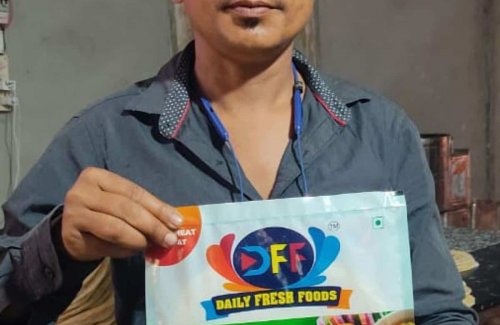
Eventually, with his love for travel and cooking, he was able to start his own paratha business. He created DFF (Daily Fresh Food), offering tasty parathas that people can enjoy on the go. Today, DFF is well-known for its delicious ready-to-eat parathas.

It was not an easy journey for Diganta. He faced financial struggles and at one point, even got partially paralyzed in an accident. But he didn’t lose hope and he kept going.

Diganta’s journey shows that with enough determination and courage, anyone can overcome challenges and achieve their dreams.

Featured Image Source: India Today

ezgif.com-webp-to-jpg (2)-jpg

News

Lee Su-jin’s Rise from Motel Janitor to Billionaire Entrepreneur with Yanolja

Lee Su-jin, the founder and chairman of Yanolja, one of the world’s leading hotel booking sites, has a remarkable journey from being a motel janitor to amassing a net worth of $1.2 billion. 

Yanolja, a Korean phrase meaning “Hey, let’s play,” began its operations in 2007 and quickly evolved into a popular travel app, boasting over 57 million downloads worldwide.

Lee had a challenging upbringing, losing his parents at a young age and spending most of his childhood with relatives. At the age of 23, Lee found himself working as a janitor at a love hotel, which offers short-term accommodations at hourly rates.

But despite the difficult circumstances, Lee saw an opportunity to save money and invest in stocks. He even attempted a salad business, which unfortunately didn’t work out. However, these experiences laid the groundwork for his future in the hospitality industry.

The love hotel business faced societal stigmas and challenges in the early 2000s, particularly with the passage of an anti-prostitution law in South Korea in 2004. Lee aimed to make love hotels more appealing to a broader audience, emphasizing safety, convenience, and affordability, eventually skyrocketing Yanolja’s success.

The company achieved “unicorn” status in 2019, reaching a valuation of over $1 billion during a funding round. SoftBank Vision Fund 2 further bolstered Yanolja’s growth by acquiring a minority stake for $1.7 billion at a $6.7 billion valuation. Speculation about an IPO arose, but the company prioritized the industry’s post-pandemic recovery.

Beyond its travel booking services, Yanolja expanded its offerings to include Yanolja Cloud, an AI-powered software for hospitality and leisure platforms. Currently, its combined software platforms serve 19 million users, facilitating booking, travel, and property management operations.

 As Yanolja continues to make strides in the global travel industry, its impact extends far beyond its bottom line, transforming an entire sector and enriching the experiences of travelers worldwide.

Featured Image Source: Forbes