Blogs, Development

December 19, 2025

SHARE:

The creator economy is no longer a niche corner of the internet. It is a $250 billion industry, powering modern marketing, culture, and commerce. Yet for the creators at its core, the experience often remains unstable and fragmented. Inconsistent rates, shifting platform demands, and “gifting” budgets paired with outsized expectations have left many navigating an ecosystem that hasn’t caught up to their value.

As we look toward 2026, the industry is approaching a tipping point. Growth alone is no longer enough. What creators need now are standards, systems, and support that allow them to build sustainable careers—not just viral moments.

Below are five critical shifts shaping the future of creator work, and the standards Meraki is building to support a stronger, more intentional industry.

1. Stronger Structure for a Growing Industry


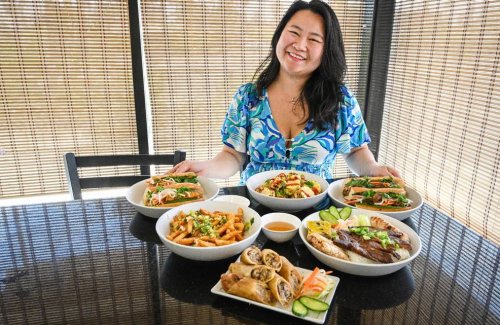
Photo courtesy of Vivian Kwan (center), Founder of Meraki Group

While creator content has never been more polished, the backend of the industry remains disorganized. Uneven pay scales, scope creep mid-campaign, and unclear paths to professional growth are still common. Creators are often met with constant brief changes or “gifting” requests that require high-level deliverables without fair compensation.

The gap: There is no shared structure defining fair rates, clear deliverables, or realistic timelines across the industry. Expectations are often implied rather than stated, leaving creators to absorb last-minute changes, unpaid revisions, and expanded usage. Over time, this places most of the financial and emotional risk on creators instead of being shared evenly with brand partners.

The Meraki solution: Meraki builds every partnership on clarity. Terms and rates are established upfront, expectations are clearly defined, and communication stays transparent throughout the process. By setting strong boundaries early, creators are protected from underpayment, and brands begin each project with a shared roadmap for success.


2. Education That Powers Careers, Not Just Content


Image Source: Pexels

The biggest challenges creators face are rarely creative. They are structural. Pricing work correctly, understanding usage rights, and identifying harmful contract clauses remain major pain points—even for experienced creators.

Too often, creators are expected to learn these lessons the hard way.

The gap: Most creators enter the industry without access to professional guidance that supports long-term career growth. Knowledge around contracts, licensing, and negotiation is often gatekept or learned through costly mistakes. As a result, many creators stay stuck in short-term cycles instead of building sustainable paths forward.

The Meraki solution: Meraki focuses on training ethical, creator-first managers who act as true career partners. Through negotiation support and education around contract red flags, creators are equipped to think beyond the next deal and toward sustainable, multi-year growth.


3. Standards in Negotiation and Contracts


Image Source: Pexels

A significant number of creators still undercharge for their work, and 26% report needing help navigating contracts. Without standardized deal benchmarks, creators are often left guessing their worth—leading to pay gaps, rights misuse, and legal risk.

The gap: Negotiation norms vary widely, with no clear benchmarks for fair compensation or usage terms. Many contracts are written in dense legal language that creators are expected to sign without full understanding. This imbalance leaves creators vulnerable to losing control of their work and long-term earning potential.

The Meraki solution: Meraki empowers creators with defined negotiation standards and the confidence to secure fair, market-value deals. By demystifying contracts and usage terms, creators can focus on their craft knowing their income and intellectual property are protected.


4. Work Models That Protect Wellbeing


Image Source: Pexels

Burnout has become one of the industry’s most pressing issues, affecting more than half of full-time creators. The always-on model—driven by algorithm shifts and last-minute deadlines—is no longer sustainable.

Creativity cannot thrive under constant urgency.

The gap: Many campaigns are built around speed and volume rather than realistic creative timelines. Creators are expected to be constantly available, adapt instantly, and produce under pressure without recovery time. Over time, this erodes both creative quality and mental health.

The Meraki solution: Meraki advocates for structured planning and sustainable workflows. Campaign timelines are built to protect both creative quality and mental health, proving that high-level output does not require constant exhaustion.


5. Representation Rooted in Voice, Not Trends
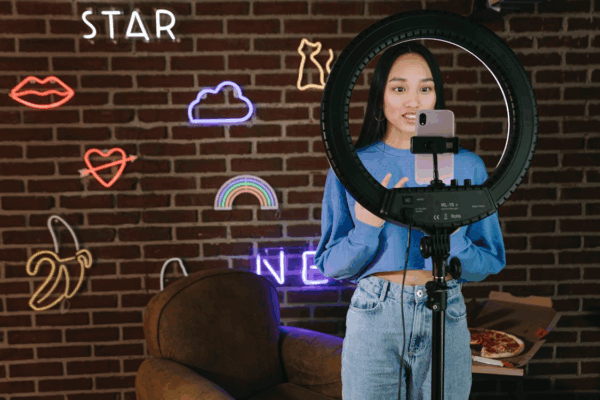
 

Image Source: Pexels

Creators are increasingly resistant to being reduced to labels or treated as trend-driven checkboxes. True representation starts with understanding a creator’s voice—not forcing them into a predefined brand narrative.

The gap: Many partnerships remain transactional, prioritizing short-term relevance over genuine alignment. Creators are often selected to fill a category rather than for their perspective or long-term vision. This leads to inauthentic work that disconnects creators from their communities.

The Meraki solution: Meraki begins every partnership by listening. By understanding each creator’s goals and vision, Meraki aligns them with brands that share their values—fostering long-term relationships that feel authentic to both the creator and their community.
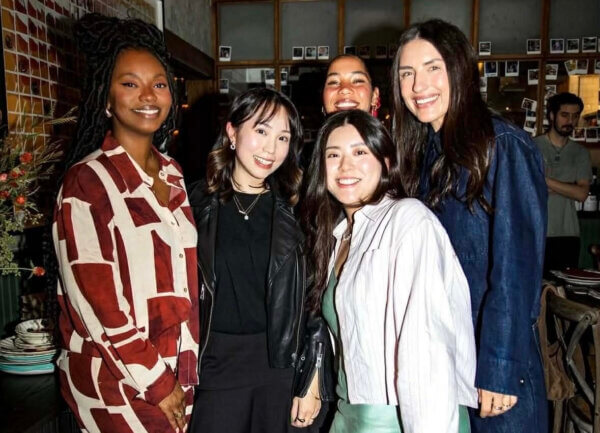
 

Photo courtesy of Vivian Kwan (second from left), Founder of Meraki Group


The Next Era: Purpose Over Pressure

As we look toward 2026, the transition from a “Wild West” to a professionalized industry requires more than just better tools—it requires a fundamental shift in how we value the humans behind the content. 

Meraki sits at the center of this new era, bridging creative passion with real professional growth. By pushing for fair standards, ethical representation, and sustainable careers, Meraki does more than manage creators; they help protect the future of creative work.wi

Learn more about Meraki Group:
📍Website

📍Instagram 

Related Articles

Eater LA-jpg

News

Tue Nguyen’s Journey from TikTok Stardom to Opening Her Own Restaurant

Tue Nguyen is a young cook who came to the US from Vietnam as a kid. She became extremely well-known on TikTok for demonstrating how to prepare Vietnamese food. She went from posting videos of her cooking Vietnamese dishes on TikTok during the pandemic to opening her own restaurant called Di Di near Los Angeles.

“I think that’s always kind of been like a dream. But… I honestly didn’t know that it would come this fast,” Nguyen shared in a recent interview with AFP.

She learned cooking in a special school, but her real talent came from her family’s way of cooking. Her mom and stepdad taught her how to make good food and trust her taste.

At first, Tue put videos online as TwayDaBae where she did mukbangs. People liked them, but they loved her cooking videos more. She saw that most of her audience didn’t just want to watch, they also wanted to learn how to make the delicious food themselves.

Tue didn’t start by making a big restaurant. She began with small places where she cooked for people. The first place where she did this is now her restaurant, called Di Di. Many people follow her on social media like Instagram and TikTok. They like her videos a lot, but Tue thinks that sharing recipes online won’t stop people from coming to her restaurant. She says her online recipes are simple, while her restaurant food looks and tastes more special.

Di Di, which means “Let’s go” in Vietnamese, is like a piece of Tue’s heart. It’s filled with comfy chairs, pretty lamps, and plants. It opened recently and is already making people happy. Tue mixes what she learned in cooking school with the flavors from her family.

Featured Image Source: Eater LA

The Fresno Bee-jpg

News

How Leila Jace Built a Thriving Street Food Joint Inspired by Childhood Memories in Vietnam

Growing up in Vietnam, Leila Jace cherished the simple joys of childhood, like the intoxicating aroma of smoky grilled corn wafting from street vendors as she walked home from school. She didn’t have much money, but she saved up her lunch money to buy a treat she loved – a slightly charred corn on the cob sprinkled with scallions for extra flavor.

Little did she know that this fond memory would become the star of her own restaurant in Fresno, California.

Just nine months ago, Leila’s dream came true as she opened the doors to Sizzle n’ Steam, a cozy spot at Maroa and Shields avenues in Fresno. This Vietnamese street food joint has quickly become a hit, boasting an impressive 4.5-star rating on Yelp.com and even snagging the third spot in The Bee’s poll for the most underrated restaurant in town.

Leila’s journey to becoming a food entrepreneur is quite a story. According to The Fresno Bee, Leila came to California at 14 without speaking much English. She pursued her studies and even built a successful career in retirement planning. But a longing for change and a desire to be close to her parents led her to Fresno, where she decided to give life a new flavor – by opening a restaurant.

What makes Sizzle n’ Steam so special? It’s all about fusing Leila’s unique style and travel adventures with the mouthwatering Vietnamese street food. Yes, the menu features well-known delicacies like pho, spring rolls, and bowls of vermicelli noodles. But the real magic lies in the lesser-known treats that Leila has added, like the Gilroy garlicky fries that pay homage to the place her family first settled when they came to the U.S. The restaurant also offers an array of vegan and vegetarian options, catering to a diverse clientele.

Aside from what her restaurant has to offer, Leila’s warm hospitality is outstanding, transforming her customers into friends, and turning Sizzle n’ Steam into a hub where diners feel right at home.

Featured Image Source: The Fresno Bee

gulf news-jpg

News

Filipino Entrepreneur’s Journey From Being an Employee to Owning Three Businesses in UAE

Dubai has long been known as a hub of opportunity, a place where dreams can flourish and aspirations come true. Frando Sarmiento’s journey from a regular worker to a successful entrepreneur is a great example of this. He now owns not one, not two, but three thriving businesses in the UAE. Let’s dive into his inspiring story and see how he made it happen.

Frando Sarmiento’s story began in a small fishing village in the Philippines. His parents worked hard to raise him and provide a good education. Even though life was simple, his parents’ efforts and support shaped his dreams of doing something big one day.

In 2005, Sarmiento came to Dubai to explore job options. He started with jobs like sales manager and gained experience in different companies. These experiences gave him insights into various industries and ignited his desire to run his own businesses someday.

The efficient process of setting up a company surprised him and made his entrepreneurial journey smoother. According to Gulf News, Sarmiento was amazed by how easy it was to start a business in the UAE, and this played a big role in his success.

“It is best to start while you’re young. Whatever happens, one is bound to learn something profound that will benefit him in many ways. When we are young, we are not afraid of making mistakes. There is a lot of time left to recover and learn. This is something I would have told myself during my younger years. But, as they say, it is never too late to start building what you want,” Sarmiento shared with Gulf News.

Featured Image Source: Gulf News

82EF93C1-0E09-4458-B3F1-EE5FF945AC38

Stories

Meet the CrossFit Athlete Breaking Records and Stereotypes in a Field We All Thought We Knew

Meet Dana Paran, a Filipino-American athlete who has broken down stereotypes and redefined what it means to be a CrossFit champion. Dana’s path, as one of the first people from her background to make her imprint on the global scene, is a powerful symbol of dedication and diversity.

Dana’s path to success is paved with sacrifices that reflect her unwavering commitment, including a daily routine that revolves around rigorous training, meticulous nutrition, and forsaking ordinary celebrations in pursuit of greatness.

Through an exclusive AHN interview with Dana, we witness not just a remarkable athlete, but a true advocate for change and a trailblazer for a more diverse and inclusive future in sports.

Join us as we discover more about her journey in the world of CrossFit.

HOW DOES IT FEEL TO REPRESENT THE PHILIPPINES AND ASIAN ATHLETES IN THE WORLD OF CROSSFIT?

Mixed emotions. I feel very privileged and extremely proud to represent the Philippines as one of the first Fil-American athletes – the fact that I am one of the first points out the lack of DEI (diversity – equity – inclusion) in the sport.

Representation matters. Seeing professional athletes that represent minorities is crucial for aspiring athletes. I hope that I can inspire Filipino/AAPI/Asian athletes to continue to break stereotypes.

COULD YOU SHARE A SPECIFIC INSTANCE WHERE YOU HAD TO MAKE A SIGNIFICANT SACRIFICE TO PURSUE YOUR GOALS?

Honestly, from the outside looking in, my entire career is one overarching ‘sacrifice.’ My daily activities are all dictated by the fact that I need to be able to train for 5-8 hours, fuel my body to sustain my training, and get enough rest and recovery to do it all again when I wake up.

For now, I miss out on celebrating weddings, date nights, vacations, and holidays all in the pursuit of greatness. On the days that my motivation battery is at 0, I am able to lean on the fact that all of the elements of my training are not actually a ‘sacrifice,’ but a temporary expenditure for tomorrow’s success. 

AS AN ATHLETE WHO HAS COMPETED IN VARIOUS INTERNATIONAL CHAMPIONSHIPS, HOW DO YOU APPROACH THE MENTAL AND EMOTIONAL ASPECTS OF COMPETITION?

“Have courage” is a mantra I repeat to myself in moments of doubt – whether I am training or before the 3-2-1 countdown in competition. To me, having courage means having strength in the face of something that frightens me, hardships, or adversity.

It’s an affirmation to myself that “I belong here & I believe in myself.”

WHAT ARE SOME OF THE CHALLENGES YOU HAVE FACED IN FINDING SUPPORT IN A SPORT WITH LIMITED SPONSORSHIP OPPORTUNITIES FOR ATHLETES LIKE YOU?

CrossFit is a niche sport and Asian brands actively marketing in the CrossFit space seem close to non-existent. I have tried to branch out to brands that market to the general ‘fitness’ industry but have been met with little interest on their end for partnerships. 

While it is discouraging to be rejected, I am hopeful that a “no” today will become a “yes” tomorrow. The reality is every competition I go to I have Asian spectators approach me to say how special it is to see themselves in an Elite athlete. I am hopeful that, as we show that we belong in CrossFit, Asian athletes will have many opportunities to align with brands that mirror who they are.

AS YOU AIM TO ELEVATE YOUR ATHLETIC CAREER TO NEW HEIGHTS, WHAT ARE SOME OF THE GOALS YOU HAVE SET FOR YOURSELF?

The CrossFit Games is the biggest and final stage in our sport.

Only the fittest of the fittest in the world qualify and it is an amazing opportunity to showcase what got you there in the first place. As I work towards that opportunity, I have been sure to ‘stay in my lane,’ recognizing the aspects of my training that are conducive to success and tailoring my training, recovery, and the people around me to ensure that I’m moving forward. 

While competing at the Games (and other Elite level competitions, such as the Rogue Invitational) is an athletic goal, another of my goals will always be encouraging diversity in the sport & making fitness inclusive to those who have historically felt unwelcome. I am actively networking with individuals and brands that align with my purpose to amplify that message. 

WHAT IS THE MOST IMPORTANT PIECE OF ADVICE YOU WOULD GIVE TO ANYONE PURSUING THEIR PASSIONS, WHETHER IT BE IN SPORTS OR ANY OTHER FIELD?

Being successful doesn’t have to come at the expense of your well-being. As a society, we have accepted that drops in physical health should be attended to, but mental health is overlooked or ignored.

I’ve realized that protecting your peace & knowing when to take a step back to “refill your own cup” is incredibly important. You cannot push through with an empty cup & it’s okay to acknowledge that you need to rest and recover in order to keep moving forward.

CONNECT WITH DANA

Instagram: @dvnveverest

Facebook: Dana Paran