Blogs, Development

December 19, 2025

SHARE:

The creator economy is no longer a niche corner of the internet. It is a $250 billion industry, powering modern marketing, culture, and commerce. Yet for the creators at its core, the experience often remains unstable and fragmented. Inconsistent rates, shifting platform demands, and “gifting” budgets paired with outsized expectations have left many navigating an ecosystem that hasn’t caught up to their value.

As we look toward 2026, the industry is approaching a tipping point. Growth alone is no longer enough. What creators need now are standards, systems, and support that allow them to build sustainable careers—not just viral moments.

Below are five critical shifts shaping the future of creator work, and the standards Meraki is building to support a stronger, more intentional industry.

1. Stronger Structure for a Growing Industry


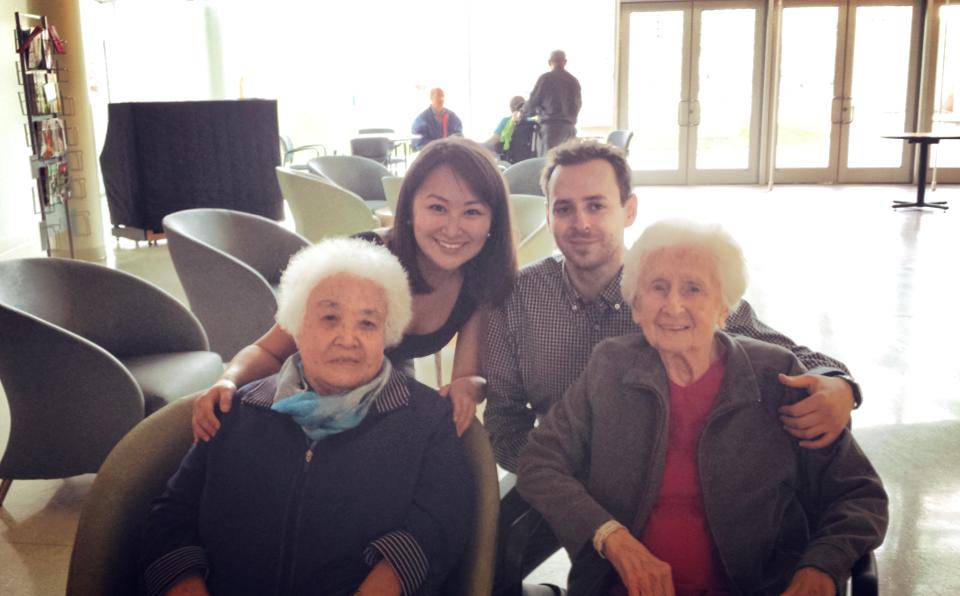
Photo courtesy of Vivian Kwan (center), Founder of Meraki Group

While creator content has never been more polished, the backend of the industry remains disorganized. Uneven pay scales, scope creep mid-campaign, and unclear paths to professional growth are still common. Creators are often met with constant brief changes or “gifting” requests that require high-level deliverables without fair compensation.

The gap: There is no shared structure defining fair rates, clear deliverables, or realistic timelines across the industry. Expectations are often implied rather than stated, leaving creators to absorb last-minute changes, unpaid revisions, and expanded usage. Over time, this places most of the financial and emotional risk on creators instead of being shared evenly with brand partners.

The Meraki solution: Meraki builds every partnership on clarity. Terms and rates are established upfront, expectations are clearly defined, and communication stays transparent throughout the process. By setting strong boundaries early, creators are protected from underpayment, and brands begin each project with a shared roadmap for success.


2. Education That Powers Careers, Not Just Content


Image Source: Pexels

The biggest challenges creators face are rarely creative. They are structural. Pricing work correctly, understanding usage rights, and identifying harmful contract clauses remain major pain points—even for experienced creators.

Too often, creators are expected to learn these lessons the hard way.

The gap: Most creators enter the industry without access to professional guidance that supports long-term career growth. Knowledge around contracts, licensing, and negotiation is often gatekept or learned through costly mistakes. As a result, many creators stay stuck in short-term cycles instead of building sustainable paths forward.

The Meraki solution: Meraki focuses on training ethical, creator-first managers who act as true career partners. Through negotiation support and education around contract red flags, creators are equipped to think beyond the next deal and toward sustainable, multi-year growth.


3. Standards in Negotiation and Contracts


Image Source: Pexels

A significant number of creators still undercharge for their work, and 26% report needing help navigating contracts. Without standardized deal benchmarks, creators are often left guessing their worth—leading to pay gaps, rights misuse, and legal risk.

The gap: Negotiation norms vary widely, with no clear benchmarks for fair compensation or usage terms. Many contracts are written in dense legal language that creators are expected to sign without full understanding. This imbalance leaves creators vulnerable to losing control of their work and long-term earning potential.

The Meraki solution: Meraki empowers creators with defined negotiation standards and the confidence to secure fair, market-value deals. By demystifying contracts and usage terms, creators can focus on their craft knowing their income and intellectual property are protected.


4. Work Models That Protect Wellbeing


Image Source: Pexels

Burnout has become one of the industry’s most pressing issues, affecting more than half of full-time creators. The always-on model—driven by algorithm shifts and last-minute deadlines—is no longer sustainable.

Creativity cannot thrive under constant urgency.

The gap: Many campaigns are built around speed and volume rather than realistic creative timelines. Creators are expected to be constantly available, adapt instantly, and produce under pressure without recovery time. Over time, this erodes both creative quality and mental health.

The Meraki solution: Meraki advocates for structured planning and sustainable workflows. Campaign timelines are built to protect both creative quality and mental health, proving that high-level output does not require constant exhaustion.


5. Representation Rooted in Voice, Not Trends
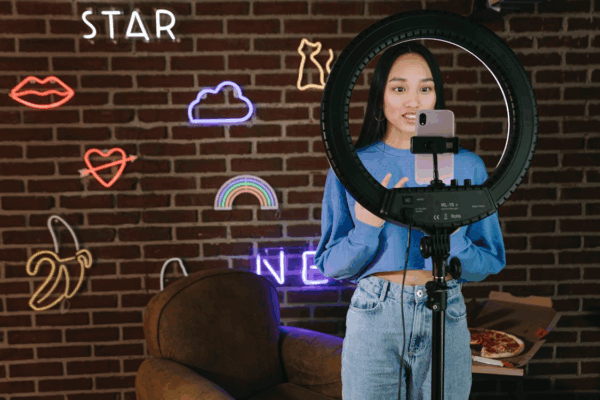
 

Image Source: Pexels

Creators are increasingly resistant to being reduced to labels or treated as trend-driven checkboxes. True representation starts with understanding a creator’s voice—not forcing them into a predefined brand narrative.

The gap: Many partnerships remain transactional, prioritizing short-term relevance over genuine alignment. Creators are often selected to fill a category rather than for their perspective or long-term vision. This leads to inauthentic work that disconnects creators from their communities.

The Meraki solution: Meraki begins every partnership by listening. By understanding each creator’s goals and vision, Meraki aligns them with brands that share their values—fostering long-term relationships that feel authentic to both the creator and their community.
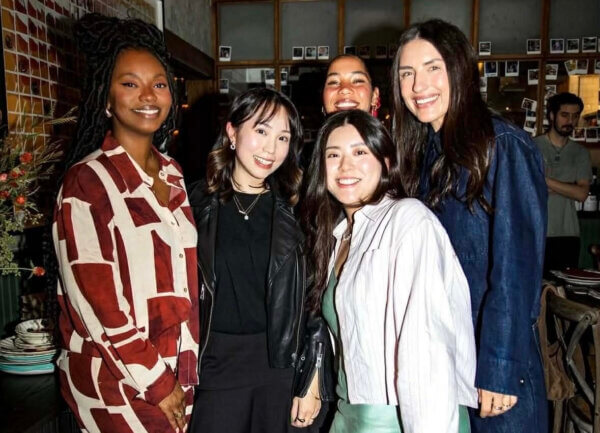
 

Photo courtesy of Vivian Kwan (second from left), Founder of Meraki Group


The Next Era: Purpose Over Pressure

As we look toward 2026, the transition from a “Wild West” to a professionalized industry requires more than just better tools—it requires a fundamental shift in how we value the humans behind the content. 

Meraki sits at the center of this new era, bridging creative passion with real professional growth. By pushing for fair standards, ethical representation, and sustainable careers, Meraki does more than manage creators; they help protect the future of creative work.wi

Learn more about Meraki Group:

📍Website

📍Instagram 

Related Articles

jennfinalimages-197-jpg

Stories

This Couple Created a Mahjong Inspired Game That Celebrates Diverse Cultures

Meet Jennifer Guo and Adam Szakacs, a couple with a creative vision. They wanted their child to cherish both her Chinese and Jewish roots, despite living far from family. So, they invented something extraordinary.

Inspired by their grandmothers’ unexpected friendship over mahjong, they reimagined the game as “Not Your Ma’s Jong.” This isn’t just any game; it’s a lively card version of mahjong that celebrates their backgrounds. It carries a powerful message – embracing your heritage and sharing it with others is something to be proud of.

Through Not Your Ma’s Jong, Jennifer and Adam hope to bring people closer. By sharing traditions, they aim to show that understanding each other’s cultures can create harmony.

In an exclusive interview with Asian Hustle Network, Jennifer and Adam share their journey in creating “Not Your Ma’s Jong.” Read through as we get a glimpse of how this game could help forge connections and celebrate diverse cultures.

Whether celebrating certain holidays, traveling together to meaningful places, or simply making a memorable recipe together, spending quality time together is the most important thing – and playing a game like Not Your Ma’s Jong is one way to spend time together.

Jennifer Guo

Can you tell us about the inspiration behind creating Not Your Ma’s Jong and how it connects to your Chinese and Jewish heritage?

Jenn: I learned how to play mahjong as a kid by watching my grandma play in China. Mahjong was a part of our daily lives and at the center of every family occasion. For me, mahjong is a way to connect with those memories.

My grandma used to split her time between her home in Xi’an, China, and Toronto where she stayed with my parents. In 2014, we brought my grandma to visit Adam’s granny who was healing from a hip injury. My grandma speaks only Mandarin, so we started by translating some simple hellos and small talk. It was so special to have them meet and communicate with each other.

Adam: At one point, we were talking about their respective cultures and the things they enjoy. My granny plays a lot of card games and also mentioned mahjong. Jenn’s grandma’s eyes lit up, and she told us about playing throughout her life. Jenn’s grandma is certainly the more avid player, but once my granny’s hip recovered and she was back home, they were able to play together.

Jenn: When I was pregnant with our first daughter in 2018, we started thinking about how we could connect our children with their cultures and heritage. I realized that living in Canada, they would not have the same exposure to Chinese traditions like mahjong as I did growing up. We started thinking about ways to honor the memories we had of growing up with our parents and grandparents and decided to create a simplified version of mahjong, which became Not Your Ma’s Jong.

Jenn and Adam with their grandmas

As an international card game played around the world, what do you believe makes Not Your Ma’s Jong unique and appealing to a diverse audience?

Adam: We realized that even though our grandparents played mahjong and we played with them, we never played with our friends. We started asking around and kept hearing the same thing–most of our friends had heard of mahjong or seen their families play, but few knew how to play themselves.

Jenn: Not Your Ma’s Jong is a simplified version of mahjong, using 75 cards as opposed to 144 tiles in the traditional game. The rules are also simplified to create a fast-paced and fierce game that anyone can pick up quickly. When we started playing test versions with our friends, the excitement showed us we were on to something!

Could you share some examples of how you incorporated Chinese and Jewish emblems into Not Your Ma’s Jong? How do these cultural elements enhance the gameplay experience and foster cultural understanding?

Jenn: We wanted to dedicate the game to our grandmas. Many of the cards are symbols from growing up with them – some with Adam’s Jewish granny, and some with my Chinese grandma. Some center around memories of family feasts we’d eat together, gifts they’d give us, or how they made us feel – and while the symbols are specific to our cultures, those memories and feelings are universal.

Other cards are a bit whimsical – we imagined what their friendship could have been if they had lived near each other earlier in their lives. Things like doing tai chi together in a park, or building a muscular snowman together! We wanted to make them relatable for people who grew up in any culture, with special winks for people who grew up Chinese or Jewish.

What are some of the challenges you faced while developing and popularizing Not Your Ma’s Jong? How did you overcome those challenges, and what lessons did you learn along the way?

We had a lot of fun creating Not Your Ma’s Jong – but turning it into a product and making people aware of it was hard! After the initial Kickstarter campaign, the remaining games sat in our home for over a year until we started to get some media attention. We were fortunate that a blog article turned into a newspaper feature which then got our story and the game featured on TV twice! Hasbro took an interest at that point, licensed the game and it’s now being sold around the world. This showed us that people love it once they hear about it! That initial exposure was the hard part.

Can you share any heartwarming stories or feedback you have received from players of Not Your Ma’s Jong?

Adam: The initial Kickstarter campaign was a very personal experience for us. We received stories and repeat orders from some of the earliest recipients of the game, sharing how they played with their parents, children, or nieces and nephews, and how it caused them to reminisce about their own family stories when they saw the illustrations on the cards. We still love getting emails and seeing reviews from people who feel a connection to the game.

What advice would you give to individuals or families who are seeking to explore and celebrate their own cultural heritage? How can games like Not Your Ma’s Jong play a role in this process?

Jenn: It was important to us to not let our families’ cultures and memories fade away for our daughters, and creating this game was one of our ideas to do that. I know it’s hard – especially with young kids – but I think it’s important for parents to think back on their childhoods and choose some of the traditions that they want to continue with their children. Whether celebrating certain holidays, traveling together to meaningful places, or simply making a memorable recipe together, spending quality time together is the most important thing – and playing a game like Not Your Ma’s Jong is one way to spend time together.

In conclusion, what message or lasting impact do you hope Not Your Ma’s Jong will leave on players and society as a whole?

Jenn: The world can sometimes feel so divided – we hope people see this game, and the story behind it, as a small example of how people with different cultural backgrounds and languages can find common ground and develop a friendship. We hope they get a glimpse into Chinese and Jewish cultural experiences and relate with their own experiences too!

CONNECT WITH NOT YOUR MA’S JONG

Instagram: @notyourmasjong

Threads: @notyourmasjong

Website: notyourmasjong.com

People Daily-png

News

Meet The Chinese Pancake Shop Owner with Exceptional Calligraphy Skills

Mastering the art of calligraphy has transformed Kang Jinming, a humble 50-year-old proprietor of a cozy pancake roll shop, into a local sensation known as “the calligrapher at a pancake shop.” Situated in the heart of Hefei city, the capital of China’s Anhui Province, Kang’s unassuming establishment is renowned for its delectable stuffed pancake rolls, a favorite among the locals.

Over weekends, as customers savor their pancake rolls, Kang surprises them with a small yet significant gift—a carefully composed note featuring a line of poetry, a fragment of prose, an age-old adage, or a beautifully scribed Chinese character. Most commonly, the characters for “Le” (joy) and “Qu” (fun) are included in these tokens.

For 30 years, while taking care of his shop, he practiced calligraphy. When there are no customers around, Kang quietly sits at a small table and practices his writing with a brush. After closing his shop, he continues on bigger pieces of paper. His love for calligraphy makes him use anything he can find to write on – old books, newspapers, and even cardboard.

Kang’s establishment has become a local attraction, drawing both online attention and physical visits from locals and tourists alike. Looking to the future, Kang aims to create a few calligraphy pieces and have them framed as a legacy for the next generation.

“That’s what lies in the innermost part of my heart—knowing that I’ve left something in the world and society and that I’ve been happy doing what I love. I will be content with my life,” he shared with People Daily.

Featured Image Source: People Daily

Asian journal-jpg

News

How Plants Became a Source of Hope During the Pandemic for Peter Dario

When tough times hit during the pandemic, people everywhere turned to plants for comfort. Lockdowns and worries made people feel alone, but planting things brought them joy and hope. Terrace Plant Shop is an example of this.

The proud Filipino-American owner, Peter Dario, faced a big tragedy two years ago, when he lost his dad and grandpa to COVID-19. This was really tough for his family. To help heal, they started getting into plants, even though Peter wasn’t into them before.

Peter wasn’t sure if it would work at the beginning. But despite the uncertainty, he took the leap.

Terrace Plant Shop goes beyond being a store – it stands as a symbol of resilience. People who also navigated pandemic struggles found hope in its story. It proved that even when things are tough, positivity can grow.

Beyond plants, the shop offers an array of treasures like soil, pots, and even candles. Among the diverse plant offerings, the Monstera Adansonia, with its striking heart-shaped leaves, steals the spotlight. The “Friendship Plant,” or Pilea Peperomioides, is another crowd favorite. Its low-maintenance nature and cheerful appearance are a hit.

Terrace Plant Shop also offers workshops that teach people how to craft terrariums, miniature plant havens. These interactive sessions cater to groups and teams, fostering creativity and connection.

Featured Image Source: Asian Journal

News

Marquis Blends Asian Roots and Modern Flair with Innovative Energy Drinks

The energy drink industry is on an exciting upswing, having expanded by a remarkable $7 billion over the past half-decade. Stepping into this dynamic field is Marquis, a family-founded beverage brand rooted in AAPI heritage. Their approach involves crafting a sparkling drink featuring a unique caffeine blend, setting them apart in the market.

Unlike most energy drinks and functional beverages that cram 200 to 300 milligrams of caffeine into each serving, Marquis opts for a milder 100 milligrams. Interested buyers can find Marquis beverages both on the official website, drinkmarquis.com, and select Target stores, including the Downtown branch located at 735 S. Figueroa Street, as well as local Erewhon Markets.

LA natives Christopher Lai and Danny Huang, co-founders of Marquis, are leading the charge for a healthier caffeine experience. Lai shared with LA Downtown News that around 90% of American adults consume caffeine daily, but Marquis’ caffeine drink comes with added benefits.

Marquis crafts its beverages with organic ingredients, sidestepping added sugars and excess calories. Their concoction combines green tea, green coffee, and yerba mate to offer a balanced, natural energy lift throughout the day. Huang emphasized their ability to provide sustained, natural energy with a fraction of the usual caffeine content.

Marquis beverages boast antioxidants, vitamins B and C, setting them apart in promoting health-conscious choices. Lai’s focus on differentiation from other energy drink companies reflects in Marquis’ careful crafting and dedication to responsible caffeine consumption.

The brand’s flavors, including citrus yuzu, lychee peach, mango ginger, super berry, and pineapple passion, carry a unique touch shaped by their “Asian-ness,” as described by Huang. Their latest flavor, lemon lavender, adds a botanical dimension. Huang revealed that these flavors are a testament to their history, culture, and personal experiences, a way to share nostalgia and love with the world.

Featured Image Source: LA Magazine