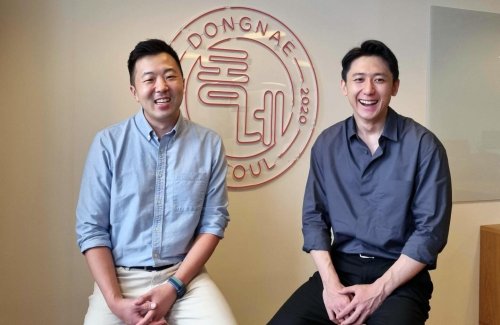
On December 11th, I had the honor to chat with Siqi Chen. Siqi is a legendary figure in the startup space. He has led product at Zynga and growth at Postmates, served as CEO at SandboxVR, and is a 3x founder with two exits. Siqi currently works as the founder and CEO of Runway: a company which develops tools to allow businesses to painlessly model their finances. We had a great conversation which touched on topics such as high/low agency, PMF, insecurity. I thought this conversation was especially fruitful. Without further ado:
DEVELOPING AGENCY
I started out the conversation by asking Siqi if he felt he was always a high agency person, and it seemed so, he said:
Looking back, there were memorable things from my childhood that suggest that I probably did. For instance, when I was three or four, I would ride my tricycle in the yard. When my grandparents closed the gate, I would turn the tricycle around and ride it through the vegetable patch to get to the other side. That seems pretty emblematic of how I turned out. But it’s hard to tell when you’re young… One of the more profound impacts on how I turned out is–my dad is a physicist and he gave me a book by Richard Feynman when I was in the 6th grade. It’s called “Surely You’re Joking, Mr. Feynman”. That had a huge impact on my development. I recommend that book to everyone. He was a very iconic, first principles thinker, didn’t care what other people think.
I followed up by asking how people like me can work on developing more agency. The short answer is self-awareness, but here’s the complete answer:
In my interactions with people, I think there are feedback loops that can become very productive or very negative, depending on where it starts. And I think maybe where it all starts is self-awareness. Like, what are the feedback loops that are feeding you right now? Where people become low agency, is when they ascribe blame or responsibility to people, to things outside of them. And it’s not even wrong, right? Like, we’re all affected by things outside of our control. But when everything that happens, you assign blame to something outside of you. Then you’re right, and it’s confirmatory. Next time it happens, you’re going to do it again and you increasingly get into this loop where you have less and less agency. And the converse is also true, right? If everything that happens, I could have done something about that. Increasingly, you become more capable and you have more agency. So I think it’s like identifying which feedback loop you want, and understanding what feedback loop you’re in now is probably the way to do it.
I agreed with Siqi and added that I thought that the positive feedback loop was the more meaningful, but difficult way to live life–surprisingly, Siqi had a different opinion, explaining that a low-agency life is actually more difficult because you end up at the whim of other people, living a life you don’t want to live.
PRODUCT MARKET FIT
Naturally, as the master of all things growth, I had to ask Siqi about PMF. I started by asking him how he defined PMF:
One way I think about it is that product market fit is something that you want to always constantly be chasing. You can have perfect product market fit with the market that you have, but in order to grow you need to extend to new markets and increase the capabilities of it. There’s always going to be a customer in that new segment that is unsatisfied with your product and it’s going to feel bad.
I think it is a continuum that you chase, but there is also another part of my mental model about product market fit. I don’t think it’s a line. I think it’s actually a 2D grid.
When I think about starting a new startup, there is like, are you even on the path to increasing product market fit? Initially, you’re just like searching in the wilderness for something. You don’t necessarily know what is the right target customer. You don’t know what the right solution is. There’s a bunch of unknowns. As you talk to more customers and you build more things, you can see further out into this forest, you can maybe see the exit from the forest, and that’s when you start getting on the tracks.
So I think it’s very much a 2D grid, and so you want to first get on the track. To make sure that you understand what you’re doing. You have a pretty good understanding of what your ideal customer profile is, and you’re going to build towards it. Then it becomes like, okay, how many of the market can I actually service? Today is it 10, 100, a thousand? And can I expand to different segments?
Siqi also mentioned another framework he used for PMF which to me seemed retention focused:
One framework I do have is this idea of a boat. The problem with the boat is if you don’t have product market fit. The best boat will sink if there’s a hole in it. You can try to compensate by having a nicer boat, a bigger boat, or a faster boat, but if there’s a hole, you won’t be able to see it unless you focus on it. In terms of metrics, that’s retention. You could be really good at growth hacking and have a million people come in, but if they’re not sticking around, you probably do not have product-market fit.
I also brought up an article I had read recently, The Tyranny of the Marginal User, which is a great article that I recommend our readers read. Essentially, the main idea of the article is that modern apps are catering to the marginal user, the next user they’re going to get. By adding features or tuning our apps or products to reach the widest audience, the product can be degraded, especially for existing consumers. I had Siqi give his thoughts on this:
Andrew Chen referred to this as the next feature fallacy ten years ago. The next feature is the thing that’s going to get you there. What you’re describing is a version of that at scale, where you can only do the next feature because you have so many users. I think the framework that I have about this is that products are path dependent. If you start with a certain audience and a certain user base, they will lead you towards the shape of a certain product. Their asks and their problems are going to be a certain shape. That might not at all intersect with some other segment that you would find really valuable.
If you’re building a product for a brand new startup with ten to 20 people, there’s a lot of these companies out there. It’s a pretty big market. There’s nothing wrong with that. You’re going to be building new products, but the things that they ask for a lot of the time, if not most of the time, are going to be very different from the things that an enterprise customer will ask for. If you actually want to get the enterprise with any level of latency, sooner rather than later, you have to go directly attack them. You can’t just next feature your way from there to here. You have to figure out, okay, I can focus on this product, but there is some other segment, another value we’re probably going to solve, and I’m going have to treat that almost independently of the product that I have.
I asked Siqi if he had run into this problem with Runway:
It’s a lesson I took for Runway. Initially, the thinking was, we’re going to build something for startups and just for startups. Like, companies of a certain size and we’ll grow with them. We built a product focused on reporting and Runway. It helps you understand your spend because you’re a brand new startup. What do you care about? You just care about burn. You’re not a very sophisticated business. What we quickly found is that we solved that problem.
It’s not that valuable a problem, as it turns out. Once you’re a startup, you learn that Runway tells you very succinctly, that you spend all your money on people this month and next month doesn’t change, right? Meanwhile, you have these larger companies who are making multimillion-dollar decisions, and they need some kind of modeling planning tool. These use cases are so far apart. We could have gotten a million startups, but they wouldn’t have had the pain and the detail of this problem. So we kind of threw it away after a year and focused on the SMB use case or 50,000 employees and you’re on excel, and there’s a lot of complexity. The product, as a result, looks completely different. If we kept on chasing more of those startups, the product would have looked completely different and would never have gotten us to where we are today.
I asked Siqi if they still offered the original product, turns out they’ve sunsetted it to focus their limited resources on building tools for SMBs, but they are planning to eventually go back and serve the very early startup market.
BEING ASIAN AND INSECURITIES
As Asian Hustle Network, I was obligated to ask Siqi how he felt being Asian qualified his experience as a founder–his answer was similar to Webflow cofounder Bryant Chou’s:
I try to avoid it as much as I can. Not because I’m not proud of being Asian. I think there’s plenty to be proud of. It’s generally seen as one of the model minorities. But I do think about it sometimes. I think about conflict avoidance. Or I can be introverted. And I noticed that it will surprise people who don’t know me, but I’m an INTP. I’m super introverted. And I tend to be kind of conflict avoidant. And I do wonder, when I look at people who are more outgoing and into football, would my career would have turned out better if I liked “white people” things. So I have thought about it, but I actively try to avoid thinking about it because it comes back to agency. Whether I’m Asian or not, it’s not something I can control.
I think being introverted is something a lot of Asians can relate to, so I asked him to drill down on that:
I felt like over time, you become confident in the things that you are good at. For me, at least, that was a big moment in my growth as a kid. Finding something that I could be proud of, something that I’m good at. And then you focus on that. I feel like once you have that, the introversion matters a lot less. Because you can focus on the thing that you’re good at and develop more confidence in there. As a byproduct, you sort of express or come off as less introverted.
What I took away from Siqi’s comments was that introversion/shyness and insecurity in your abilities were pretty related. I brought this up, and Siqi had a pretty interesting comment on the relationship between insecurity and extreme outcomes:
One of the things that a lot of entrepreneurs and high performing people have in common is this sense of insecurity. That also causes a desire to please people because you’re insecure. So that you have to push yourself to be better and you want to make sure other people like you because of that insecurity. And that is highly motivating for me, and I think many people. It’s like how people get, I think, to certain points in their life or certain levels of success, at least somewhat. And then once you’re there, all of those causes become less useful. Like, the insecurity, the willingness to please as a CEO, those are, like, really toxic things. That paradoxically got you to this point because it made you push yourself to be better. But once you’re there, it doesn’t get you further.
BEING A LEADER
The last topic Siqi and I talked about was leading others, the first thing Siqi brought up was something he had recently heard in a Brian Chesky interview.
Brian described the job of a leader as believing that people can level up and exceed their own expectations and get them there. That was really a point of reflection for me. I believe in smart people and hiring and talent and all these things. But if you want to get the best out of people, the prerequisite is that you have to actually believe that they can be amazing. Because if you don’t even believe that, you’re not going to set those expectations or deal with any kind of motivation or inspiration.
I didn’t quite understand this, because I would expect Siqi to only hire people if he believed that they could be amazing. Siqi explained to me:
It’s just that my temperament is to quickly write people off. “They’re good at this particular role that we hired them for, and that’s all they’re going to do.” But people want to know that you have their interests in mind, that there is a growth path for them. If you don’t believe that there is, that’s a problem. You want to hire the best people that you can, but in how you lead and manage them, you have to always believe that they can do better than they are.
We also chatted a little about what made a good employee.
Edwin: One thing I’m curious about. What kind of person do you notice is the best employee? What matters more, their talent and technical ability or how much they believe or align with the mission of the startup?
Siqi: It’s a difficult question to answer because there’s a lot of wisdom out there that says, “This is the most important thing.” I think the reality is they’re all requirements. They’re all important. And you don’t want to compromise on any of those aspects. What are those aspects? High integrity, proactiveness, high agency. Some people think integrity is the most important thing. Others think intelligence is the most important. Those things are important, they’re all absolute requirements. You want extremely high intelligence, extremely high integrity, and extremely high self-awareness and agency. But out of all of those, I think the thing that is the most important is high agency. Intelligence is a lot of nature, so that’s fairly difficult to change, but there’s a certain baseline that you want.
But everything else outside of that is almost entirely driven by agency. Whether you are successful, whether you blame people, whether you can grow. Whether you’re a good collaborator, whether self-aware. There’s so many things that one thing affects. That is the thing that I look for the most.
SHOUTOUTS
Runway is hiring for engineering and customer-success roles! You can check out current job openings at https://runway.com/careers/
[Hint: if this isn’t you but you still really want to work at Runway, I would drop Siqi a line and articulate how you would add value to the company, bonus points for bringing a demo/a plan]
If you are currently having financial planning problems, sign up for early access for Runway at https://runway.com/
Thank you to Siqi for chatting with us!