Stories

July 4, 2023

SHARE:

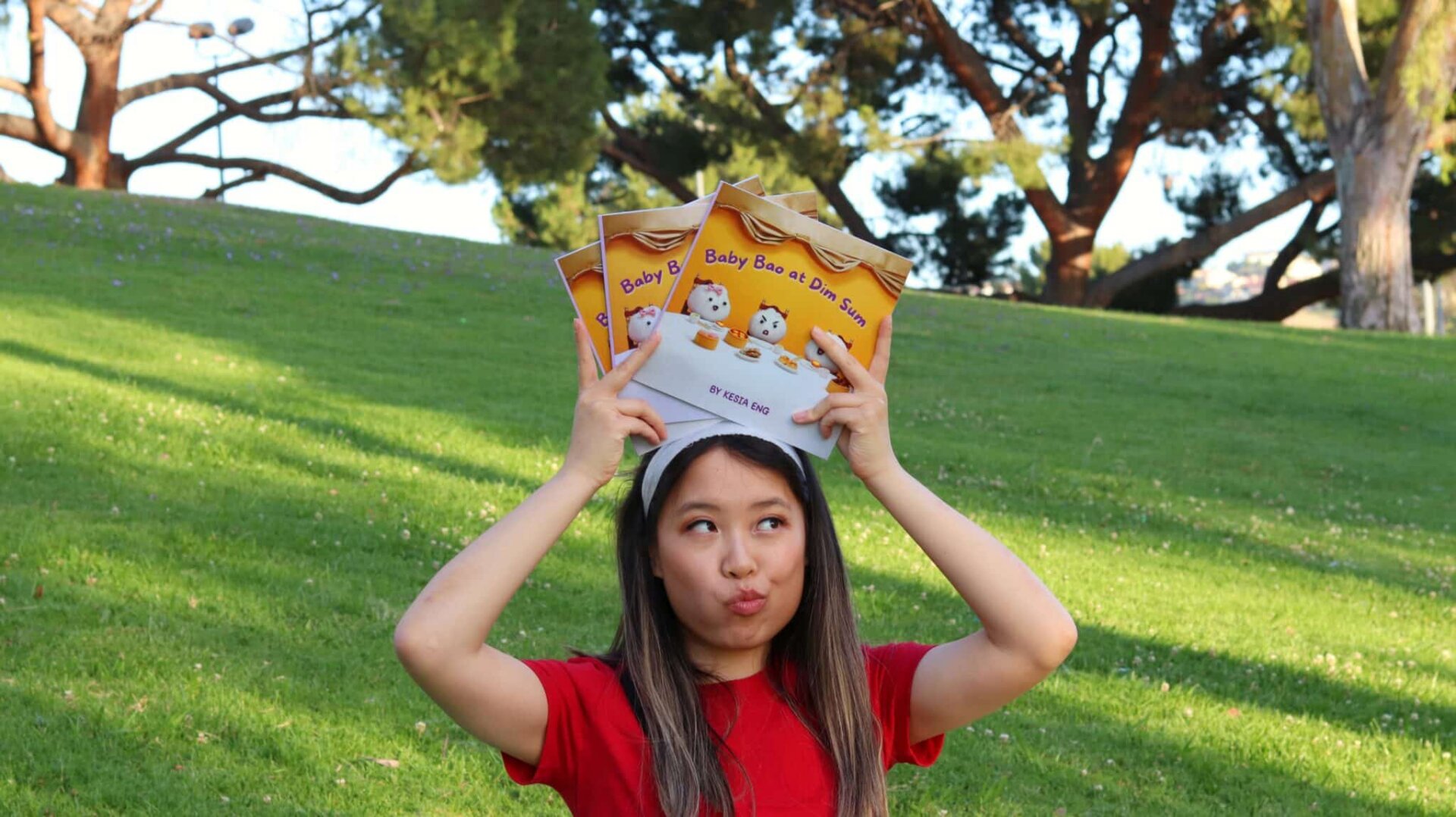
In a time when the world seemed to close its doors, Los Angeles native and talented writer Kesia Eng found her inspiration for her  delightful children’s book titled “Baby Bao at Dim Sum.”

Kesia shares with Asian Hustle Network her motivation and experiences behind this captivating story that captures the essence of family bonds and the rich cultural heritage of East Asian cuisine.

Growing up, Kesia cherished her visits to dim sum restaurants with her family. The savory aroma, the clinking of chopsticks, and the joy of feasting on delicious food became the backdrop of countless treasured memories.

Dim sum not only brought her family together but also offered a window into her Chinese heritage, teaching her the values of respect, care, and love for others. Ultimately, these shaped her identity and inspired her to write this book.

The pandemic threatened to rob younger generations of the invaluable experiences Kesia cherished, making her determined to pass on the cultural significance of dim sum to kids and share it with others.

In her debut children’s book, “Baby Bao at Dim Sum,” Kesia beautifully weaves a tale that explores the importance of family, selflessness, and the joy of bonding over a delicious meal. This book serves as a tool for parents and children to read together, sparking meaningful conversations about the values embedded in East Asian culture.

Join us as we delve into the story behind “Baby Bao at Dim Sum” through an exclusive interview with Kesia Eng.

Dim sum helped me better understand and appreciate my parents and our Chinese culture. I think I can speak for many American kids who have immigrant parents: There aren’t a lot of things in common between our upbringing and theirs. But food is our shared connection.

Kesia Eng

KESIA’S INSPIRATION FOR WRITING “BABY BAO AT DIM SUM”

As with most recent creative endeavors, the idea for the book sprouted during the pandemic. Everything was closed. Schools were shut down. Sports games were canceled. Even my favorite Target store started closing at 8 p.m. The world truly was ending. But the most devastating thing? My beloved dim sum restaurants have stopped indoor dining.

I know it didn’t seem significant. There’s plenty of other food. Plus, we can still get takeout. But I grew up coming to these restaurants with my family. Going there was a real treat as a kid – taking in the savory aroma that fills the air, hearing the excited chatter and clinking of chopsticks all around you, and of course, feasting on all the varieties of delicious food. Every time I came back from college for the weekend, my parents would take me to eat dim sum – it was a huge part of our everyday life.

Most importantly, dim sum helped me better understand and appreciate my parents and our Chinese culture. I think I can speak for many American kids who have immigrant parents: There aren’t a lot of things in common between our upbringing and theirs. But food is our shared connection. Food isn’t just something you eat. When you look closely, the experience of dim sum is filled with the values of East Asian culture:

  • pouring tea for the oldest person at the table first, and your own cup last
  • serving food to others before yourself
  • keeping an eye on everyone’s cup so you can refill it for them
  • fighting to pay for the check (and never backing down, even if you have to chase down the waiter and force your Visa card into their hands) 
  • and so on

All of the above embody community-oriented respect, care, and love for others. It’s how my parents showed how deeply they loved our family, even through the mundane act of eating at a restaurant. When my mom saves the biggest and best dumpling for me, or when my dad reaches across the table to fill my teacup first, I know it’s because they love me. And it’s a way for me to show my love in return – pouring their tea first, giving the best dim sum piece to them, (and yes, now that I’m a post-grad adult, literally fighting to pay that check). It’s not just nostalgia – dim sum is an essential part of my heritage, shaping how I’ve grown up, who I am, and who I want to become.

With COVID, it seemed like the pandemic would take these valuable moments away from younger generations. To be honest, it made me sad because I didn’t want them to grow up without having that experience, and thus a practical understanding of their cultural background. It’s a learning moment I want to pass on to kids and share with other people too.

“BABY BAO IS ME”

Part of the reason why I chose to focus on the theme of family and selflessness is in reaction to a lot of Asian American stories today that center on the difficult relationships that kids have with their immigrant parents.

I think the current popular narrative sometimes pushes this idea of hyperindividualism; that it’s all about the self and what the self wants. I totally understand the heart behind where that narrative/story comes from but sometimes it can demonize our parents for being hateful because they don’t agree with everything we say or do what we expect. Granted, nobody is perfect. But I think it’s important to have empathy towards our parents who grew up in a different environment than we did. We can try to put ourselves in their shoes, imagine the upbringing they had, the hardships they went through, etc.

And to be honest, I wrote it because of my own revelation. Baby Bao is me. I wrote Baby Bao as myself because I definitely was not a self-sacrificial loving kid growing up. It wasn’t until college that I realized I had taken their love and care for granted. I think it’s easy for us to be selfish and maybe not consider what our parents would appreciate or how they care for us. They do love us, but maybe it isn’t expressed in the exact fashion we expect it to be. 
FULL CREATIVE CONTROL AS A SELF-PUBLISHER

I knew the route of traditional publishing was long and a bit arduous. I felt like there were many gatekeepers and I didn’t want the flow/speed of my project to be hindered because of it.

It kinda goes like this: after you do your due diligence on finding the appropriate literary agent, you have to keep cold-emailing them about your manuscript, hoping they’d want to support you and your book. And finally landing a literary agent could range from a few months to a few years. They’re the best resource to connect you to a traditional publisher who would get your book published. 

But why wait for someone to give me the green light when I could just get my book out directly to the audience? I like to think I have an entrepreneurial spirit , because when I really believe in something, I don’t want to wait for someone to give me approval to do it. I just want to go for it. So I decided to self-publish my idea.

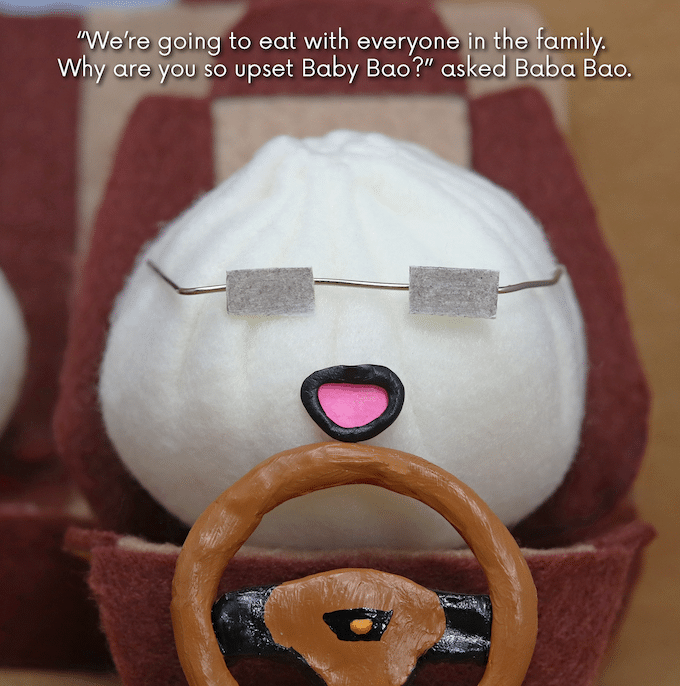
I think what’s truly unique about this book is that the illustrations are not 2D animated artwork that’s common in picture books. I can’t draw to save my life and I didn’t have enough funds to hire an illustrator, so I brainstormed ways to figure out how I was going to make the visual part of the story come to life.

While rummaging through my bookshelf, I found an old book my parents bought when I was young, that taught simple Chinese words. The front cover looked so interesting to me – it was a claymation of a girl. That basically spawned the idea of using claymation/”stop-motion” as the illustrations of the book.

I made all the sets, characters, and mini items by hand with lots of construction paper, cardboard, and other materials. I then taught myself product lighting, photography, and photo editing. I also run all the social media accounts. And this is in addition to writing the story myself, so it was truly a one-woman production.

Fun fact: I gave my book to Netflix Bling Empire’s Christine Chiu!

WHAT KESIA HOPES THAT READERS WILL TAKE AWAY

If I can narrow it down to just 3 takeaways I hope parents and children get out of this book, it’s that (1) family is important (2) loving others often requires self-sacrifice but is definitely worth it and (3) dim sum is an avenue we can use to love and cherish our families more!

I wanted parents and their children to think deeply about the message together. And that desire played a huge part in why I decided to deliver that through the form of a children’s book. I think the nature of children’s books often necessitates parent-child bonding because parents often read to their kids who aren’t strong independent readers yet.

So the book, “Baby Bao at Dim Sum” is a great opportunity for parents to bond with their cute kiddos just by reading it together. It also leads parents to talk through the story more with their children by mentioning the cultural values of it, going over the universal value of family, and asking them insightful questions about what they learned or what they noticed. 

DIVERSITY AND REPRESENTATION IN CHILDREN’S LITERATURE

I’m seeing a lot of great Asian American children’s books recently and I envision “Baby Bao at Dim Sum” adding depth to the representation of the Asian American experience in children’s literature.

The book shows that parents and/or family relatives ought to be given importance as well.

Additionally, the book does a great job showing and not just telling how the cultural values common in East Asian culture (community-oriented respect, care, and love for others) are embedded into the subtle actions (pouring tea for the oldest person at the table first and your own cup last, serving food to others before yourself, and keeping an eye on everyone’s cup so you can refill it for them) during a traditional Chinese meal.

Representation is showing the authentic experience of something, and I think showing chicken feet, regardless of people’s initial reaction to it, is an important unfiltered experience of dim sum. So I made it a mission for myself to include the chicken feet dish in my children’s book (right on the first page) because it’s an iconic Chinese cultural food. I think just because it’s different from what most people outside of the culture may see, it doesn’t make it weird or gross. Walk into a dim sum restaurant and you see it on the tables of so many diners.

I hope the story is an easy and welcoming way for people unfamiliar with East Asian culture, to learn about it and get a glimpse of what really goes on during an authentic Chinese meal of dim sum. Additionally, I think it’s a perfect book for East Asian families to personally connect with those experiences and pass them down to younger generations. 

It really warms my heart to see so many parents message me that their little ones love the book, want to read it every night with them, or want to eat dim sum because of it. Seeing those comments and messages never gets old!

UPCOMING PROJECTS

I drafted several storylines for the next potential “Baby Bao” adventure, and have whittled it down to two options. I can’t reveal when this project is going to be done just yet, but it’s in the works! Many of my readers have expressed that they’d love to see more of Baby Bao, so I’m happy to continue working on more stories with him as the protagonist.

In terms of other work, I’m actually in the process of finalizing a manuscript for my next writing project: a satirical poetry book about early adulthood! I enjoy comedy and I enjoy satire, so of course, I had to try writing with that flair. The book is a witty take on young adult life and pokes fun at relatable moments we experience in careers, friendships, and love. Final touches are being added. Release date TBA but aiming for before this fall season. 

Readers can expect that I’ll be pursuing different writing projects because I want to build upon my writing skills and flex my creative muscle. I think I have a knack for knowing my audience well and crafting stories that are relatable to all of us on a human level. So I’m really excited to continue exploring various story ideas and styles of writing to see what I’m the best at and produce work that my readers would love.

CONNECT WITH KESIA / BABY BAO AT DIM SUM

Instagram: @babybaoatdimsum

Tiktok: @babybaoatdimsum

Amazon: BUY HERE

Email: babybaoatdimsum@gmail.com

Website: kesiaeng.com
Related Articles

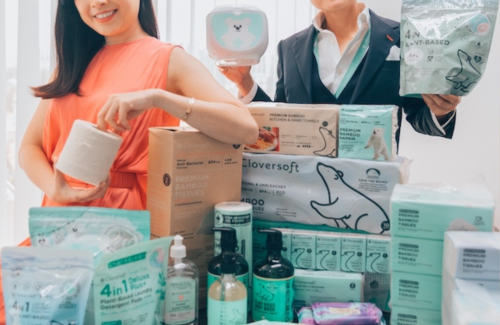
Image Source: Cloversoft

Stories

Two Former Bankers Set Out To Make Plant-Based Home Goods Using Bamboos

In order to produce environmentally friendly household goods such as tissues and wipes, Singaporeans Angela Sim and Lynn Yeo, the founders of Cloversoft, invested in bamboo trees as the material of choice. 

Bamboos were discovered to be the fastest-growing plants in the study, so they decided to cultivate them. Furthermore, unbleached bamboo does not contain any chemicals, which contributes to its sustainability.

Angela and Lynn founded Cloversoft in September 2014, and both are passionate about producing safe and environmentally friendly consumer goods. They became close friends while working at a bank for several years before launching their business. Lynn’s lifelong passion is recycling and green projects, whereas Angela strongly cares for animals.

According to Angela, a documentary on a polar bear in the Arctic brought her to tears on an aircraft back to Singapore from a business trip abroad. Because of this, she became fond of the cute critter that would eventually become Cloversoft’s mascot.

Cloversoft only uses superior, cruelty-free, vegan, and eco-friendly raw ingredients. No artificial scents, colors, alcohol, chlorine, or other chemicals that might harm the consumer were included.

Other brands may not adopt bamboo because of its higher cost, despite its environmental benefits. Angela and Lyn, however, keep prices low so people and companies may afford to go green. The duo plans to expand its operations in the United States, including Vietnam and Indonesia. 

Coversoft’s long-term objective is to build the most successful fast-moving consumer goods (FMCG) company in Singapore, with offices around the world, centered on the core values of providing products that are affordable, environmentally friendly, and derived from plants.

Lack of business experience made learning tough at first. There was no demand for their eco-friendly goods, and other corporations repeatedly turned them down. Angela admitted,  “This was one of the darkest moments in our entrepreneurship journey”.  

Fortunately, consumers now publicly acknowledge their items and frequently purchase their green products  Word-of-mouth and consumer feedback helped them quickly spread the word, and their sales grew 1,500% in one year.

They’ve also donated a portion of their revenues to Polar Bears International in Canada to help protect the polar bear population.

Cloversoft’s first year of business saw strong sales and rising client bases in Asia Pacific countries. The firm aims to become the largest FMCG company headquartered in Singapore, with branches throughout the world, by delivering safe, environmentally friendly, and fairly priced plant-based products.

Image Source: shout.sg

Stories

Former Foodpanda Rider Launches Dessert Bar Serving Coriander Gelato, Mala Waffles

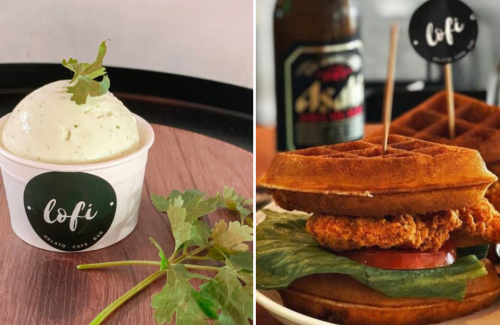
Combining sweet cream with the sharp zing of coriander, this gelato flavor apparently converted over 80% of coriander haters who tried it, as per Eat Book Singapore.

Bryan Liew launched his dessert cafe LoFi Bar at the height of the pandemic, with no prior F&B experience except being a Foodpanda rider.

According to Vulcan Post, Bryan’s purpose behind launching his cafe was simple: to fulfill Singaporeans ‘ habit of “eating and hunting for food ” during the COVID-19 pandemic. 

The 27-year-old earned a Malaysian and UK digital marketing degree and started as a Retail Marketer in 2017 before becoming a Senior Operations Manager. He quit his job on the first day of Singapore’s ‘circuit breaker’ lockdown.

Bryan used his digital marketing skills and did thorough consumer research to attract more consumers during the lockdown. When his restaurant opened, he surveyed every customer for feedback.

He innovated his menu with unique food like coriander ice cream which is currently their best seller, and the sweet, spicy, and savory Mala chicken waffles.

As a former Foodpanda rider, he understands the challenges riders face and makes food collecting easier, especially those with beverages, which are well-packed to minimize spillage.

Make sure to visit LoFi Bar when you travel to Singapore!

IMG_4416

Stories

Teen Brothers Build Non-Profit To Empower Underprivileged Kids Through Educational And Enrichment Programs

Founded in 2016, Ethan and Dylan sell what first started as Ethan’s Legenade at Summer Concerts, Sports Tournaments, Taste of Elk Grove, and various fundraisers. The brothers also get invited to private events to be speakers so they can share their moving stories.  

They speak to youth groups to inspire young kids and were invited on TV in local morning shows Good Day Sacramento, and Fox40 News. On top of that, they manage to keep up with the Honors Program in school, and extracurricular activities. 

Good Day Sacramento, a local morning show, in July 2019

There are currently 6 locations Legenade Children’s Fund sends to in the Philippines – Marikina, Cebu, Cotabato, Antique, Anao and Mexico in Pampanga. With the help of the catholic convent, Daughters of Divine Zeal, where Dylan and Ethan’s great aunt is a nun there.

They also have volunteers and coordinators the brothers meet through family and friends who still live in the Philippines. For them, it’s very important to have proper connections there to keep these programs going. The program sends help twice per year before the school season starts and during the Christmas season.

Back to School Program in Antique, Philippines 2021

Ethan and Dylan shared with Asian Hustle Network their journey as early founders, advice to their peers and future generations, and their hopes to find a mentor to help them grow toward their goals.

13-year-old Ethan runs with their school Cross Country and Track Team, while 16-year-old Dylan is in the Cyber Patriots, a cybersecurity club in school where they compete with other schools nationwide. 

Since their launch, the brothers have been in at least 5-7 big events every year — with Elk Grove Giant Pumpkin Festival as the biggest, which attracts more than 60,000 people every year.

The Young and Simple Legendaries

Ethan: Hi, my name is Ethan Black. I’m the CEO of Legenade Children’s Fund. I’m 13 years old, going into 8th grade. I like running, like Cross Country and Track. I like to hang out with friends, and also be on the computer playing games. 

Dylan: My name is Dylan Black (16 years old) and I’m a junior at Franklin High School. My interests lie in finance, business, and engineering. 

Dylan (right) and Ethan (right) With Elk Grove City Councilmember, Stephanie Nguyen
Dylan and Ethan at Taste of Elk Grove in 2017

How It All Started

Ethan:  Legenade started with a business called Ethan’s Legenade that I started when I was about 7 years old. It means “Legendary Lemonade”. I met another local nonprofit through my mom, and I decided I wanted to help them so I made Ethan’s Legenade and sold lemonade. I gave 50% of the profit that came from Ethan’s Legenade to the local nonprofit. After doing that for about 3-4 years, my grandma helped us turn it into a nonprofit which is known today as Legenade Children’s Fund. 

Dylan: My brother wanted to help a charity owned by a friend of ours. To help that charity, he decided to open a lemonade stand and donate 50% of the profits. We attended small events and sold lemonade there, and that’s how we made our initial profits and we expanded from there into other sorts of events. 

Ethan’s very first event – Summer Concert in Elk Grove May 2016
Chicks in Crisis is the charity that Ethan wanted to help in the beginning. So he sold lemonade and donated half his earnings to them. He still supports them to this day.

Legenade’s Big Vision, Mission, and Goal

Ethan: Our motto is “Helping Kids Become Legendary”, which basically means helping them so they can be the best they can be. We mainly focus on children’s education through 5 different programs. Our goal is to help kids and communities all around the world. 

5 Legenade’s Programs are: Back to School Program, Future Legends Scholarship, Color the World Project, STEAM Programs, and Community Outreach

Dylan: I would like our nonprofit to have a well-established local and international presence to help kids with the education of all forms. That’s my goal, that’s my vision, that’s my mission. 

Achievements and Learnings

Ethan:  A few years back in 2019, we got Rookie Business of the Year from the Elk Grove Chamber of Commerce for being the best new business. I guess another achievement is actually turning into a nonprofit, coming from Ethan’s Legenade to becoming an official nonprofit. I’ve learned more about how to run a business. I was probably naive about how to run one when I was first starting out when I was 7. I’m more careful about making decisions. I’ve learned how kids live in other countries. 

Receiving the “Rookie Business of the Year 2019” award presented by the Elk Grove Chamber of Commerce. Dylan and Ethan are the youngest entrepreneurs in their city.

Whenever I heard stories about the Philippines, it was always worse than the life that we have here, so we shouldn’t take stuff for granted. You’d think that stories like that are exaggerated, but from the photos I’ve seen, it’s not. Their conditions are not ideal. So for example, we ship out toy cars, the ones you pull back to wind up and let go. Then we realized that they can’t play with them because they don’t even have concrete. Their houses are built on dirt. We learned to pay more attention to their living conditions and what they need so we can send them the proper help. 

Dylan: Our biggest achievement would probably be becoming an official nonprofit because it allows us to coordinate and organize resources to give to our donation recipients. Another one of our biggest achievements is the number of people we have helped. We’ve helped several thousands of people in some way, shape, or form. I’ve learned that I really like business and finance, and most likely do that in the future as a career. I’ve also learned that people can accomplish a lot and all they need is a little push from an outside force, maybe in the form of a donation. 

Legenade’s Current Project 

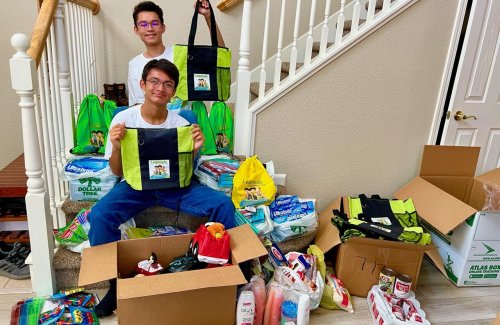
Ethan: Right now, school is about to start so we’re focused on the Back to School Program. We provide backpacks and school supplies to about 1000 students in multiple locations in the Philippines. We have Future Legends Scholarship where we sponsor gifted students and pay for their tuition fees so they can stay in school. A lot of them leave school so they can work to help their families. We help them finish high school at least. Closer to the holidays, we do community outreach locally here in Elk Grove, and Christmas Programs in the Philippines, and send toys and food to the kids and their families. 

Community Outreach Food Program – Anao and Mexico, Pampanga, Philippines.

Dylan: My current project is expanding our sphere of influence to reach more people with advertising and campaigns. Also to get our Legenade bottled at a bottling facility in high numbers so we can get them in vending machines and stores. Relying on donations from people means that the people we are helping are at the mercy of your kindness. When you sell a product, we can more reliably help people. We are grateful to our donors, but it’s better to be self-sufficient so our programs can be consistently well funded. 

The Founders’ Hope For Legenade 10 Years From Now

Ethan: I’d like to see Legenade 10 years from now being one of the biggest nonprofits in America, maybe in the Top 10 charities. We also want to help in more places internationally and nationally so instead of just here in Elk Grove, CA, maybe we can find people to help in all 50 states. Also internationally, instead of just in the Philippines, we can help somewhere else in Asia, Africa, or Southern America. We also want to visit our programs in the Philippines and meet the kids we’re helping. We can’t afford that right now so they just send us pictures and videos.  

Dylan: I hope that in 10 years, Legenade will have helped many people go to school and get credentials from high school, and even college. Also, be able to help more areas and not just have focused efforts in a couple of cities, but in many places. Education is important because it helps you make good decisions and helps you help other people and it lifts everybody up. I can’t help people if I don’t have an education. 

Advice To Young Generation

Ethan: I don’t want to sound generic. Do not wait, or like, don’t procrastinate. If you have an idea and you know it’s good, then go for it. Even if it turns out to be bad, then you can classify that as a learning experience. 

Dylan: Your plans don’t have to be big and grandiose. You can start off small and can go from there. Don’t overwhelm yourself by trying to reach huge goals, just spread it up into several smaller goals. And don’t let anything stress you out. Avoid things that stress you out. 

Raising money during the pandemic. May 2021

Seeking Entrepreneurs and Mentorship

Dylan:  Our goal is to get Legenade bottled. I’m hoping to reach out to other entrepreneurs who have gone through the process, and are willing to share what they’ve learned with us.

Ethan: We’re trying to get into mass producing our Legenade, but we have very little experience in doing so. We’re trying to collect as many contacts who can help us make it happen. Of course, we always need donations to keep our programs going. Please consider sharing your blessings. Any amount will help a lot.

Image Source: Startup Grind

Stories

The Rise of Young CEO Mehak Vohra: From College Dropout to Successful Marketing Mentor

After dropping out of school, Mehak Vohra spent the next two years working her way up the corporate ladder before establishing SkillBank, where she can now assist people land jobs at marketing agencies across the United States. 

Vohra was an experienced ghostwriter and copywriter from an agency, which inspired her to establish her marketing.

When the 21-year-old growth hacker attempted to launch Skilbank, it was initially conceived as a growth marketing training program geared toward newly established technology businesses. She first started the organization during the pandemic in 2019 and aspired to train a workforce that could soon fill entry-level positions in marketing. 

She has also established relationships with her business partners, who are her primary motivation in maintaining a healthy balance within the company and developing productive plans. 

Even though the pandemic has made people jobless, Vohra had the chance to build up the organization to help service workers upskill and gain employment. Skillbank was able to raise $1.5 million thanks to the support of investors like Jason Calacanis, Hawke Media Ventures, Soma Capital, Hustle Fund Champion Hill Labs, Transcend Network, John Kobs, Nelson Wang, Saunder Schroeder, Zack Bloom, and TikTok’s own Josh Richards and Griffin Johnson.

Investors have teamed up with Skillbank partly because they want to contribute to the funding of technologically savvy marketers. They believed that despite marketers’ best efforts, they are not educated in the field and often lack a solid foundation. They also liked that SkillBank was making their training easily accessible and thought the standard education model could use some improvements. “Mehak is a rockstar, and we believe she is the person to get this to success,” said Erik Huberman, CEO of Hawke Media, in praise of Vohra’s decision to Skillbank.

Skillbank just closed a funding round that helped numerous marketers make a career change and, as a result, increase their remuneration. Vohra also has designs for growing SkillBank’s business. At this time, a subscription to SkillBank’s courses starts at $4999, or $7199 if paid in installments. The SkillBank team may be small at the moment, but they have big plans to take on industry leaders like Masterclass and General Assembly.

Nothing can prevent anyone from becoming successful; even a student who quit school and later decided she wanted to devote her life to assisting others in achieving their goals can turn her dreams into a reality.