Stories

March 1, 2025

SHARE:

“Over time, I realized that speaking and understanding Chinese wasn’t just a ‘useful skill’—it is my superpower and key to belonging,” says Cheryl Mainland, Founder & CEO of Dragon Academy. Her fluency in Chinese has been a source of identity and has played a key role in her journey—from understanding her cultural heritage to excelling at Harvard in East Asia Studies and negotiating successful global business deals.

Recognizing the power of language to bridge cultures and connect with 1.3 billion native Chinese speakers, Cheryl is now committed to creating an engaging and interactive multi-media platform for children and adults worldwide to learn Chinese through Dragon Academy.

At its core, Dragon Academy is an epic tale of nine multicultural teens journeying through six mystical realms brimming with ancient legends, mythical beasts, and dragons – all united in a quest to bridge worlds. This story is told across multiple media formats and channels, including a book series, social media content, an AI animation series, and other cultural initiatives. Complementing their adventure is a highly gamified app that transforms Chinese language learning into an exciting, immersive, (and even addictive) experience.

A mother of three, serial entrepreneur, lifelong adventurer, and avid surfer, Cheryl has become an inspiration to many. She has been featured in top media outlets such as The Wall Street Journal, Financial Times, Vogue, Tatler, WWD, and numerous other prestigious publications.

Cheryl Mainland, Founder & CEO, Dragon Academy (Image Source: Samanta Katz)

The Struggle of Language and Identity

Cheryl embodies the essence of a third-culture kid. Born in Taiwan, she is half-Chinese, half-American, and raised across Asia, she navigated the complexities of identity, language, and belonging from an early age.
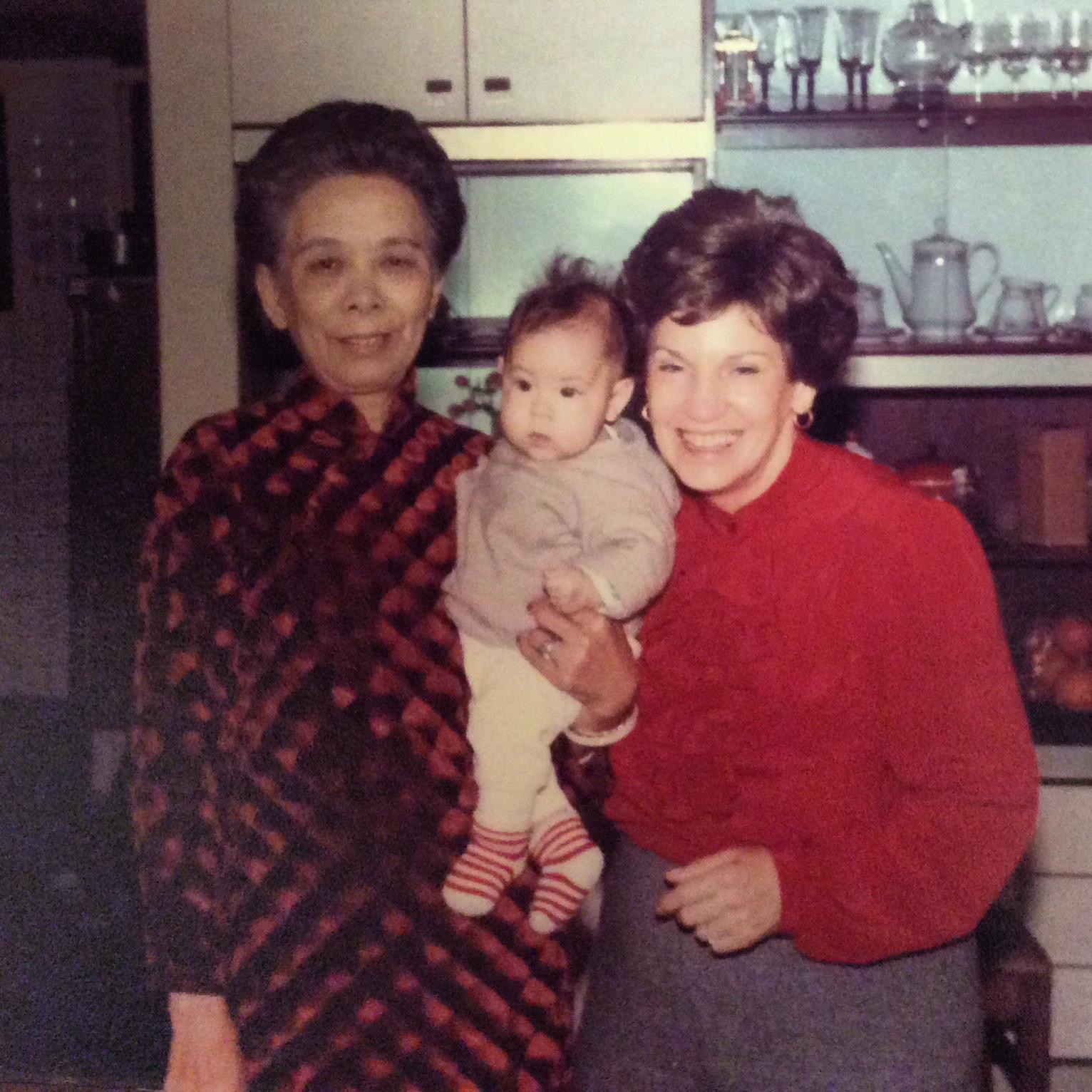
Cheryl with her maternal and paternal grandmothers Taipei, Taiwan, 1983 (Image Source: Cheryl Mainland)

“Like many of us, I grew up straddling two worlds. The ultimate translator of languages, cultures, generations.  I carry with me the collective memory of (boring) Saturday Chinese school, the struggle of keeping up with my Chinese lessons, and the challenge of celebrating my heritage while forging my own path,” Cheryl says. “After having kids, I witnessed their similar struggles – nothing has changed.” She recognized that the traditional methods of learning Chinese – endless hours of copying hanzi characters on square grid paper (田字格) – have experienced minimal change over the centuries, relying on rote memorization rather than engagement.

Not wanting her children to face the same language learning struggles she faced (and hundreds of thousands of other Chinese learners), Cheryl is embracing this as an opportunity to spark a cultural movement that breathes new life into the Chinese language and culture. Dragon Academy’s strategy ignites a passion for learning through an epic narrative delivered via a highly gamified app, an AI mini-series, a book series, social media content, and a future film adaptation. Each of the multimedia platform components captures the story-based enthusiasm, teaching Chinese through nine proprietary building block methods that make learning Chinese fun, engaging, and truly relevant.

Dragon Academy Universe: the foundation of a highly gamified Chinese language learning app, book series, cartoons, feature films, documentaries, merchandise, and console games. (Image Source: Cheryl Mainland)

Cheryl’s Entrepreneurial Journey: Empowering the Masses

Throughout Cheryl’s entrepreneurial ventures, a constant theme has been empowering communities by identifying unmet needs and transforming the “uncool” into “cool” through innovative solutions. From dressing corporate women in clothes that boosted their self-confidence in the boardroom (The Fold London), to inspiring tweens and teens “to wear their invisible crown” on all special occasions (PromGirl.com), to reimagining sun-protective fashion—proving that staying safe in the sun doesn’t mean sacrificing style (Mott50)—her work consistently uplifts and inspires.


Most recently, to celebrate the launch of Dragon Academy Book 1 during Lunar New Year 2025, Cheryl partnered with artist Archie Geotina to honor the 46 million-strong Chinese diaspora through Pearls, an art series. Chinese Pearls features three generations of female surfers from diverse Chinese heritage – Indonesian Chinese, Singaporean Chinese, mixed-Chinese families, adoptees, and expats – riding Bali’s iconic waves in modern QiPao, empowering the community and highlighting its resilience, heritage, and unity.

A Future for the Community

“As an Asian American entrepreneur, Asian American mom, and a lifelong advocate for bridging cultures, I resonate deeply with AHN’s mission to uplift and empower the global Asian diaspora,” Cheryl affirms.  

She draws a parallel between Dragon Academy’s goal to reignite the next generation’s connection to their heritage and AHN’s commitment to rewriting narratives and celebrating Asian excellence. When asked about her future plans, Cheryl confidently states, “We are on an ambitious mission to increase the percentage of the world that speaks Chinese by 5% over the next five years.”

An estimated 5 million people started learning Japanese because of Manga, 15 million took up Korean because of K-pop, Dragon Academy is set to start a Chinese language movement. By juxtaposing storytelling and technology, Dragon Academy is approaching Chinese language learning from an “obsess, learn, master” order. 

“Imagine a world where kids want to learn Chinese because they see it as their ultimate superpower and key to belonging. That’s the future we’re building,” exclaims Cheryl.

And the journey is just beginning. Dragon Academy Book 1 launched at the beginning of this year. The highly gamified learning app, immersive AI mini-series, and a host of exciting cultural initiatives are currently in development. The first round of external investment has commenced – seeking visionary, like-minded investors to join this transformative movement.  Dragon Academy is poised to redefine the landscape of Chinese language learning and cultural exploration.

DRAGON ACADEMY “Traditional Scene.” The OG Dragon Keepers, ancestors of the 9 multicultural teenage protagonists of the Dragon Academy Universe. (Artist: Andrew Archer)

Learn More about Dragon Academy

Website: https://dragonacademy.com/

Instagram: @dragonacademy_official

Book 1: www.amazon.com/dp/B0DM4YDLL3

Connect With Cheryl Mainland

Instagram: @cherylmainland

LinkedIn: Cheryl Mainland

Email: Cheryl@dragonacademy.com

Related Articles

Image Source Ken Chan Facebook

Uncategorized

Pandemic Turns Filipino Actor Ken Chan Into A Serial Entrepreneur

Ken Chan, a 29-year-old Filipino actor, proves that the pandemic has not only caused bad things but has also brought good fortune to some, being a celebrity-turned-entrepreneur after losing his job during the crisis.

Ken swiftly expanded his franchised iFuel gas station with 10 branches in different parts of the country in just a year. He also opened Cafè Claus, a Christmas-themed café, which has extended into three branches around Metro Manila, Philippines.

Nonetheless, he also braved the wellness industry with his Aromagicare Luxury Massage Chair. He mentioned that his triumph is also because of saving and spending wisely. 

Ken said he had taken to heart the financial lesson his parents had taught him wherein he learned not to overspend on himself.

During his recent interview, Ken said that he takes pride in the fact that he rarely makes purchases for himself and even makes the most of his cars while they are still roadworthy.

The actor realized during the pandemic that artists should secure their fallback in case they lose their jobs in the industry.

Image Source: Koury Angelo / Forbes

Uncategorized

Rejections Didn’t Stop Kinside CEO Shadiah Sigala To Reach A Stellar Entrepreneurial Career

Shadiah Sigala co-founded HoneyBook, a $2 billion financial management software platform for small businesses, motivated by her ability to negotiate uncertainty while gathering information and making decisions.

When Shadiah was a child, her Mexican mother together with her two siblings moved to southern California. Despite most of her family members being unable to attend college, she was an honor student whose lifelong ambition was to acquire the greatest degree of education.

Shadia attended Pomona College for Latin American Studies and Harvard Kennedy School for public policy. As a result, she established a strategy for reaching goals she wasn’t sure about.

Before becoming an accomplished millennial, she finished her master’s degree and became the highest-earning member of their family as a project manager at Aetna, a health insurance company, where she learned about entrepreneurship, realized she is a “builder,” and thought starting her own company was the best option.

However, Shadia realized that she wouldn’t be happy there since she wouldn’t be valued. Shadia ultimately started a personal chef business in 2010, using her Pomona College alumni network to find well-off grads who wanted someone to cook for them.

In 2012, another realization occurred to her that cooking wasn’t for her. Shadiah then decided to move with her then-husband to San Francisco and found tech. She arranged informative interviews with everyone in the sector and learned that the problem she wanted to tackle was one she’d experienced as a business owner: no effective method to handle backend logistics like emails, payments, and bills.

With the three Israeli business people who have a similar concern as hers, they decided to digitize all these tedious procedures that micro small firms must complete to free them up to genuinely focus on doing what they love.

Using that concept, Shadia established HoneyBook in 2013 and worked there for five years according to CNBC.

As her most recent business, Shadia co-founded Kinside in 2018, a child-care marketplace that is available to employees that offers new parents a centralized location to look for daycare in their neighborhood, which has reached over $16 million, according to Crunchbase. 

Letting fear and excitement be one’s guide and being open-minded is what Shadia advises to other aspirants. According to her, opportunities that “feel like they are beyond your pay grade” are exactly how stellar is made.

Image Source Artbound

Uncategorized

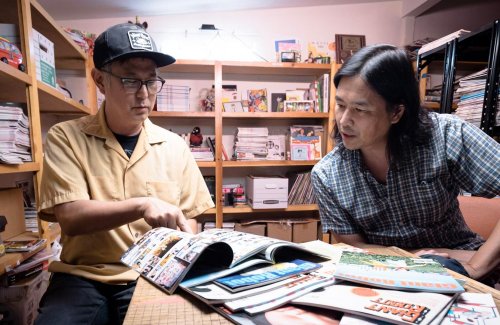
ARTBOUND Features Giant Robot’s Asian-American Pop Culture Influence In Its Latest Episode

Highlighting the impact of the Asian-American pop culture publication Giant Robot, the debut of the latest episode entitled “Giant Robot: Asian Pop Culture and Beyond” was finally aired last October 26 in the acclaimed arts and culture series ARTBOUND on KCET.

The episode showed Giant Robot’s examination of Sawtelle Boulevard as a Japanese-American neighborhood, sparking interest in Asian and Asian-American popular culture which resulted to a long line of Asian American artists who won recognition on a global scale. 

Established in 1994, Giant Robot was a bimonthly journal that focused on Asian popular culture that soon included works by Asian-American artists including David Choe and James Jean.

Eric Nakamura began publishing Giant Robot as a digest-sized zine. The piece covered a variety of subjects, including trendy Asian American independent filmmakers, Japanese punk rock, and contemporary Hong Kong films. National media sources including the New York Times, Wired, and LA Weekly published the story.

In 2001, Nakamura opened his first store named “Giant Robot Store” in Sawtelle Japantown and expanded in 2003.

Giant Robot co-founder, Martin Wong edited all 68 issues of the glossy magazine on Asian, Asian-American, and new hybrid culture from 1994 to 2010, when it was still a punk zine. His wife Wendy Lau served as Giant Robot’s graphic designer beginning with issue 18. Even today, Martin continues to publish zines and contribute to them.

The popular weekly television program and online site ARTBOUND captures the essence of California’s expanding arts and cultural scene and investigates how it is transforming the state into the world’s creative capital. 

The KCET Original series investigates and clarifies contemporary cultural challenges, offering insightful in-depth study of how the arts and culture impact society.

Image Source: Julie’s Bakeshop

Uncategorized

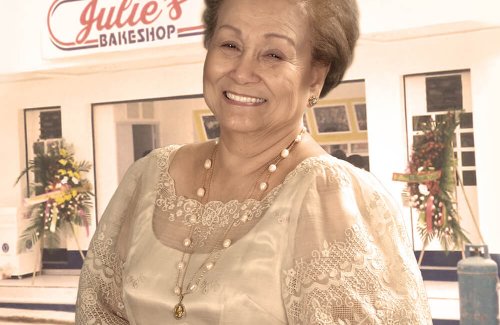
Dreams Set No Limits To 50-Year-Old Who Started A Bakeshop Now The Philippines’ Most Famous Brand

“In a way, I was poor. I was hungry, maybe not for food but for self-achievement. I thought there must be something more I can do than just being a housewife. I was very determined to succeed, in whatever came my way,” thus said Julie Gandionco as quoted by the Inquirer, the Philippines’ local newspaper.

In January 1981, then-50-year-old Julia Gandionco opened Julie’s Bakeshop to satisfy her thirst for proving that she is more than a housewife.

Julie’s Bakeshop gloriously celebrates being one of the Philippines’ largest bakery chains with more than 500 branches all over the country, which can be traced back to Mandaue City on the Island of Cebu as its place of origin.

In the 1970s, Julie was a canteen concessionaire at a rattan company, and subsequently became a manager of its sister company. She also opened another canteen a year later.

Having these three canteens being managed, she felt the rising demand for bread which made her take the chance of opening a bakeshop, despite having zero knowledge of baking.

Julie stressed that her bakeshop exists because of “a growing need for bread products and a strong trust in God,” and that she desires to encourage and uplift other mothers to dream big and strive for their goals.