Stories

November 7, 2025

SHARE:

The first time Vivian Kwan realized she could build something on her own terms was during her college years in the U.S. — a time that completely shifted her perspective on what a career could be.

She found herself surrounded by students who were running side hustles, freelancing, and starting companies before graduation. It was a stark contrast to her upbringing in Hong Kong.

“Back home in Hong Kong, the path was pretty clear: study hard, land a stable job, and climb the corporate ladder,” she recalls. “But in the U.S., I met people who were building something entirely their own. That inspired me to think differently.”

Curious and driven, Vivian began experimenting — running a small photography business and creating content for fun. That experiment grew into Meraki Group, a boutique talent management agency representing a diverse roster of lifestyle creators — and now a 7-figure business built entirely from the ground up.
Redefining Success as a First-Generation Founder

When Vivian launched Meraki Group in 2021, she had no network, no outside funding, and no PR machine behind her, just the belief that creators deserved better representation.

As a first-generation Asian immigrant, Vivian was raised to stay quiet and keep her head down. “But entrepreneurship requires something different,” she says. “I had to learn to advocate for myself and my talents loudly and unapologetically.”

Without big teams or resources, she leaned into what she could control: being hands-on, transparent, and relationship-driven. That boutique approach became Meraki’s unique selling point: brands and creators know they can reach Vivian directly, and that trust has allowed Meraki to thrive against the odds. Today, Meraki has closed 300+ brand campaigns with brand partners like HOKA, REI, Shark, Columbia Sportswear, Libman, Google, and UGG.

The Challenge of Balance

Motherhood has always run parallel to Vivian’s entrepreneurial journey — two worlds that demand her heart in equal measure. In the early years of Meraki, she often found herself caught between deadlines and bedtime stories, client calls and school drop-offs. The guilt was relentless: every hour spent growing the business felt like time borrowed from her children.

But over time, her perspective shifted. She began to see that showing her kids what fulfillment looked like was one of the greatest gifts she could give them. Building Meraki wasn’t just about proving something to the industry — it was about showing her children what resilience, purpose, and self-belief looked like in real life.

“My kids deserve a mother who’s confident and happy,” she says simply. “That thought keeps me grounded when things get hard.”

A Year of Growth and Gratitude

In October, the Meraki community came to life in a way that no Zoom call ever could. Vivian and her team hosted their annual NYC dinner — an intimate gathering of creators, brand partners, and friends who had helped shape the agency’s journey. The room buzzed with laughter, warm reunions, and stories that stretched back to Meraki’s earliest days.

For Vivian, it was a full-circle moment. Many of the guests were creators she had signed during the uncertainty of the pandemic — people she had championed from afar before ever shaking their hands in person. Watching them share a table, swapping stories and ideas, felt like witnessing the agency’s spirit materialise in real life.

It wasn’t a night of flashy sponsors or curated photo ops, but of genuine connection — the kind that has quietly fueled Meraki’s success from day one. “What I’m most proud of isn’t the growth,” Vivian reflects. “It’s loyalty. Many of my creators have been with me for three or four years. In an industry where talent often comes and goes, that kind of long-term commitment means everything.”

What Comes Next

As Meraki continues to grow, Vivian is laying the groundwork for a new chapter — one that strengthens the agency’s foundation while amplifying its impact. She’s focused on expanding her team and refining systems to preserve Meraki’s signature boutique quality, even as it scales.

“I’m being intentional with this next chapter,” she says. “Before stepping deeper into consulting and mentorship, I want to make sure the agency continues to run with the same care and creative integrity it was built on.”

With that foundation in place, Vivian plans to open limited consulting slots and launch educational programs for creators and emerging talent managers. Her goal is to nurture the next generation of creative leaders — empowering them to build with heart, purpose, and the courage to redefine what success can look like.
Follow Vivian’s journey:
📍 LinkedIn | Instagram

Related Articles

Image Source: CNN

Stories

Young Tech Startup Founders In Asia Make Mental Health Support Accessible To Break Stigma

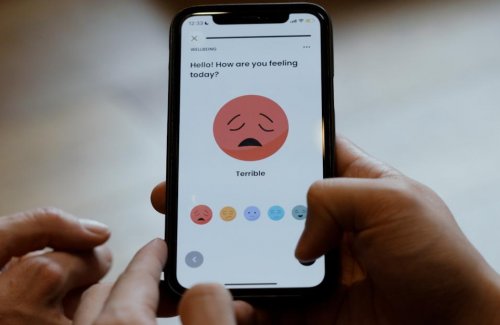
Breaking down societal stigma and creating a new mental healthcare system for the Asia-Pacific area are two of Theodoric Chew’s objectives, founder of the digital mental health app, Intellect.

Founded in 2019, the mobile app frequently monitors users’ moods, delivers rescue sessions and exercises, and lets them chat with therapists in real-time. 

The 26-year-old explained that mental health is just as important as physical health, “You and I face things like stress, burnout, sleep issues, and relationship struggle as well.” he told CNN, “ That’s where actually a lot of us should start working on our mental wellbeing.”

Since early 2020, the startup serves over 3 million Asia-Pacific users in 15 languages. According to CNN Business, the Singapore-based mobile app has raised $20 million in its Series A funding, the largest amount raised by a mental health start-up in Asia.

Early this year, Singapore and Jakarta-based digital mental healthcare start-up, Ami, has raised at least $3 million from a number of investors, including Meta, the owner of Facebook. The firm was founded by Justin Kim, a Forbes 30 Under 30 Asia alum with Beknazar Abdikamalov.

Both digital mental health companies are targeting employers in their business models, where companies can subscribe to provide staff unlimited, private access to their services.

According to the WHO, depression and anxiety disorders cost the global economy $1 trillion a year in lost productivity. In March, it was reported that anxiety and sadness surged 25% worldwide in the first year of the pandemic.

Image Source: Shoutout LA

Uncategorized

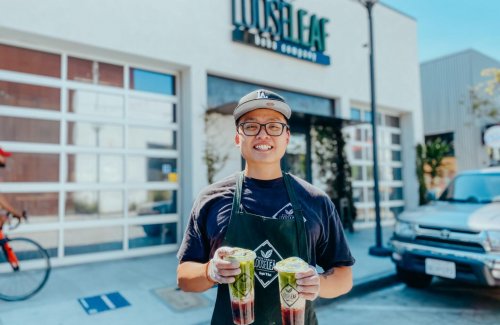
Loose Leaf Boba Company Blends Third-wave Coffee And Tea With Cultural Inclusion

Loose Leaf Boba Company is not only well-known for its expert “bobaristas.” but also for its diverse cultural representation including Burmese, Thai, Filipino, and Hispanic. “Going out for boba” was a childhood tradition that assisted the company’s mission of unifying people by normalizing cultural differences.

The brand constantly values cultural inclusivity and also empowers BIPOC, AAPI, women, and the LGBTQ+ community.

Loose Leaf Boba Company’s sharp vision of “Building a Better Boba Company” comes to life every time a customer experiences a foreign favorite, for which they make beverages for customers to try global favorites. This means making tasty beverages like Vietnamese Egg Coffee or Mexican-inspired Guava Atole.

Founded in 2012 by husband and wife duo Thomas and Jasmine Liu in West Covina, the viral third-wave shop has locations across the United States, including Connecticut, California, and Massachusetts.  This bubble tea tycoon has big plans to grow large retail sites in metro Dallas, TX, Northampton, MA, and Hadley, MA.

Image Source: Forbes Asia

Stories

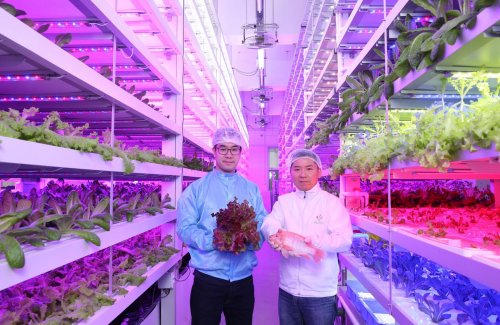
Farm of the Future: Farm66 Cultivates Vegetables Within Hong Kong’s Skyscrapers

In the course of COVID-19, a significant number of people have reported having insufficient access to fresh food entirely for sustainable living.

Gordon Tam has created an urban farm that solves this problem. He is the co-founder and CEO of the Hong Kong-based vertical farming – Farm66. With advanced farming technology, he grows fresh vegetables inside skyscrapers in Hong Kong. 

In 2013, Tam and Billy Lam, Farm66’s COO, founded Hong Kong’s first high-tech vertical farm and developed LED lighting and wavelength innovations for farms. Tam and his team found that different light wavelengths affect plant growth. Red LEDs generate longer, stronger stems, whereas blue LEDs produce larger, stronger leaves.

The technological and robotic advances at Farm66 are also both groundbreaking. The 20,000-square-foot indoor farm is managed with IoT sensors and robots for quality assurance and other tasks. 

When asked about the challenges facing conventional farming, Tam cites a lack of talent as a significant issue. “It’s because the children of many remaining farmers don’t want to take over the farms. They think it’s a very tedious job.” – he told Forbes. This is why he placed a premium on technology and saw it as a means to attract young people to farming by making the industry more appealing.

Farm66’s latest farming mechanism impressed billionaire Tang Yiu’s tech-focused venture capital firm ParticleX. The Alibaba Entrepreneurs Fund, Sino Group, and the Hong Kong government’s Cyberport and Science & Technology Parks are also investors. A total of over $4 million in funding has been acquired so far. Hengqin Financial Investment and the City University of Hong Kong have also backed Farm66.

There are currently fifteen full-time workers at Farm66, including data analysts, food scientists, and mechanical engineers, who can harvest as much as seven tons of vegetables every month. Tam hopes to share its company’s urban farming methods and success in Hong Kong with other cities. For instance, Farm66 converted a shipping container into a mobile farm for use in Middle Eastern desert cities.

Image Source: Jack X. Li/Eater Chicago

Stories

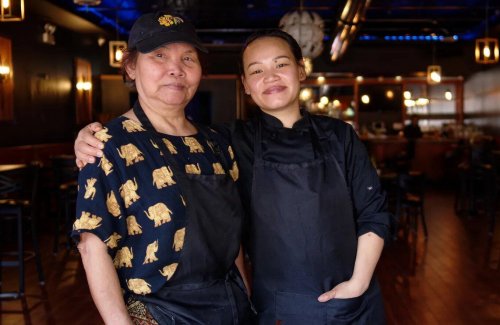
Chicago’s Khmai Fine Dining: A Daughter’s Tribute To Mother’s Healing From Khmer Rouge

Khmai Fine Dining is a unique Cambodian restaurant in Rogers Park, Chicago. Owned by executive chef Mona Sang, the name is a mix of “Khmer,” the language and ethnicity of native Cambodians, and “me,” the Khmer term for mother, to emphasize her mother’s important role in presenting traditional Cambodian cuisine.

Mona, together with her sister, two brothers, and mother Sarom Sieng came to the US in early 1980 after surviving the Cambodian genocide. The Khmer Rouge tortured Sarom and executed her husband as the family fled to Thai refugee camps.

A single mother who never spoke English, Sarom began cooking for other families in the Cambodian community in order to survive and eventually expanded into catering events at Living Water Community Church in Rogers Park.

Mona hasn’t heard every detail of Sarom’s experience during the genocide, but the trauma her mother went through is still very clear to her. “I don’t know the whole story, but she tells it little by little when she’s cooking,” Mona told Eater Chicago. “I think there’s a lot of other people out there who have been through the same thing, but their story has never been told.”

In 2018, another family tragedy came when one of Mona’s brothers died unexpectedly in his sleep. Her mother discovered him the next morning and that image haunted Sarom.

Now that she is almost 80 years old, Sarom spends her days with her 13 grandchildren or assisting at Khmai.

According to Eater, Mona isn’t simply conveying a message to its customers with Khmai’s name. It is also a way of healing and writing a love letter to her mother who has fought for them to survive through the restaurant.

Khmai’s mesmerizing dishes include “Nom Bahn Chok”, a vermicelli noodle dish with minced tilapia marinated in kreoung and prahok, simmered in coconut fish stock, “Sach Koh Ang”, beef skewers marinated in lemongrass, Khmer spices and chili peppers, and Mai’s famous eggrolls stuffed with ground chicken, bean thread noodles and taro root.