Stories

November 7, 2025

SHARE:

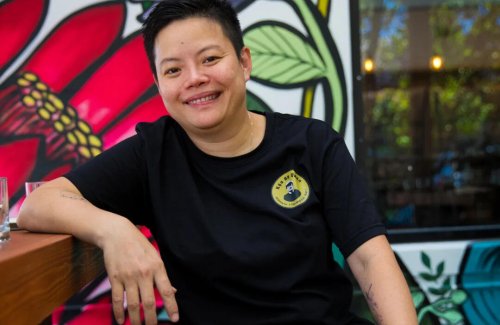
The first time Vivian Kwan realized she could build something on her own terms was during her college years in the U.S. — a time that completely shifted her perspective on what a career could be.

She found herself surrounded by students who were running side hustles, freelancing, and starting companies before graduation. It was a stark contrast to her upbringing in Hong Kong.

“Back home in Hong Kong, the path was pretty clear: study hard, land a stable job, and climb the corporate ladder,” she recalls. “But in the U.S., I met people who were building something entirely their own. That inspired me to think differently.”

Curious and driven, Vivian began experimenting — running a small photography business and creating content for fun. That experiment grew into Meraki Group, a boutique talent management agency representing a diverse roster of lifestyle creators — and now a 7-figure business built entirely from the ground up.

Redefining Success as a First-Generation Founder

When Vivian launched Meraki Group in 2021, she had no network, no outside funding, and no PR machine behind her, just the belief that creators deserved better representation.

As a first-generation Asian immigrant, Vivian was raised to stay quiet and keep her head down. “But entrepreneurship requires something different,” she says. “I had to learn to advocate for myself and my talents loudly and unapologetically.”

Without big teams or resources, she leaned into what she could control: being hands-on, transparent, and relationship-driven. That boutique approach became Meraki’s unique selling point: brands and creators know they can reach Vivian directly, and that trust has allowed Meraki to thrive against the odds. Today, Meraki has closed 300+ brand campaigns with brand partners like HOKA, REI, Shark, Columbia Sportswear, Libman, Google, and UGG.

The Challenge of Balance

Motherhood has always run parallel to Vivian’s entrepreneurial journey — two worlds that demand her heart in equal measure. In the early years of Meraki, she often found herself caught between deadlines and bedtime stories, client calls and school drop-offs. The guilt was relentless: every hour spent growing the business felt like time borrowed from her children.

But over time, her perspective shifted. She began to see that showing her kids what fulfillment looked like was one of the greatest gifts she could give them. Building Meraki wasn’t just about proving something to the industry — it was about showing her children what resilience, purpose, and self-belief looked like in real life.

“My kids deserve a mother who’s confident and happy,” she says simply. “That thought keeps me grounded when things get hard.”

A Year of Growth and Gratitude

In October, the Meraki community came to life in a way that no Zoom call ever could. Vivian and her team hosted their annual NYC dinner — an intimate gathering of creators, brand partners, and friends who had helped shape the agency’s journey. The room buzzed with laughter, warm reunions, and stories that stretched back to Meraki’s earliest days.

For Vivian, it was a full-circle moment. Many of the guests were creators she had signed during the uncertainty of the pandemic — people she had championed from afar before ever shaking their hands in person. Watching them share a table, swapping stories and ideas, felt like witnessing the agency’s spirit materialise in real life.

It wasn’t a night of flashy sponsors or curated photo ops, but of genuine connection — the kind that has quietly fueled Meraki’s success from day one. “What I’m most proud of isn’t the growth,” Vivian reflects. “It’s loyalty. Many of my creators have been with me for three or four years. In an industry where talent often comes and goes, that kind of long-term commitment means everything.”

What Comes Next

As Meraki continues to grow, Vivian is laying the groundwork for a new chapter — one that strengthens the agency’s foundation while amplifying its impact. She’s focused on expanding her team and refining systems to preserve Meraki’s signature boutique quality, even as it scales.

“I’m being intentional with this next chapter,” she says. “Before stepping deeper into consulting and mentorship, I want to make sure the agency continues to run with the same care and creative integrity it was built on.”

With that foundation in place, Vivian plans to open limited consulting slots and launch educational programs for creators and emerging talent managers. Her goal is to nurture the next generation of creative leaders — empowering them to build with heart, purpose, and the courage to redefine what success can look like.

Follow Vivian’s journey:
📍 LinkedIn | Instagram

Related Articles

Image Source: houstoniamag.com/SHANNON O’HARA

Stories

From A Struggling Restaurateur To Successful Netflix Chef

The ability to cook does not, however, automatically translate into the capacity to manage a restaurant. The food industry is a fiercely competitive one.

Fortunately for Vietnamese chef Nikki Tran, he succeeded as an “accidental chef” despite his previous failures in the restaurant industry. But what exactly is the secret to his success? 

Nikki launched his first restaurant in Vietnam but was doomed to flop from the beginning because of its quick decline. It started on a drunken night when he drafted his first business plan. He had put down a deposit on a new location that same night, hired a chef, and opened a new restaurant within a week. 

The only problem was that the chef didn’t show up which caused trouble on the first day it was open. The restaurant also struggled to bring in customers despite the backing of Nikki’s famous actress friend, which resulted in a steady loss of revenue. 

Nikki recognized his missteps and realized he was not as well prepared as he thought. Consequently, he worked to improve and reinvent his culinary skills. It did not end up being a challenge for him; instead, he worked toward opening a second restaurant in Houston, Texas, when he returned to the United States. 

At that time, he got hooked on crawfish and began eating them frequently. He took it to Vietnam and experimented with it using a typical technique of its culture. His family, friends, and the first people in Vietnam are thrilled to try it out, and they’ve called it “Viet-Texan cuisine.”

This innovation, which was his take on the now-classic Viet-Cajun crawfish boil made using Vietnamese river prawns, became the one that accidentally brought and pushed him into the international limelight.

Soon, he was profiled by media outlets such as Vice, NBC’s Travel Voyager, Houston Eater, and Netflix. He did not let his first failure or lack of experience prevent him from pursuing his dreams and developing relationships until he became a Netflix star. He is also a familiar face in David Chang’s Ugly Delicious, Phil Rosenthal’s Somebody Feed Phil, and the critically acclaimed Street Food: Asia.

Today, Nikki operates three locations of his restaurant, known as “Ku Ba Quán.” And even though he is known for breaking the rules of traditional Vietnamese cuisine and blending in international influences whenever he feels it is appropriate, he has the impression that he has always gone his own way.

Image Source: tribune.com.pk

News

Wu Makes Historic Singles Match Grand Slam Win For China In 63 Years

Wu Yibing became the first male tennis player from China in 63 years to win a Grand Slam tennis match with a victory in this year’s US Open beating Nikoloz Basilashvili 6-3 6-4 6-0 in the first round.

The 22-year-old didn’t compete from March 2019 to January 2022 owing to elbow, back, shoulder, and wrist injuries, with elbow surgery being the most significant. But Wu didn’t want to use his injuries as an excuse.

“I don’t really like to talk about those injuries in too (much) detail because every player has injuries,” Wu had told the ATP website, “The mental strength that you have to go through the pain is part of the game,” he added.

Wu’s compatriot Zhang Zhizhen nearly joined him in the second round, but Tim van Rijthoven saved seven match points in the third set to win 3-6 6-7(4) 7-6(9) 6-1 6-4.

But Wu hopes they can both raise China’s flag, “We are both pushing Chinese men’s tennis levels and we’re still young… I think we’re going to get to the Top 100,” 

As of this writing, Wu is ranked 173rd in the world for men’s singles. However, he hopes to move up the ranks when the 2022 U.S.

Image Source: Pesconex Facebook, Latest Chika

News, Stories

Young Siblings’ Pest Control Startup Skyrocketed In Two Months After Their Tiktok Video Went Viral

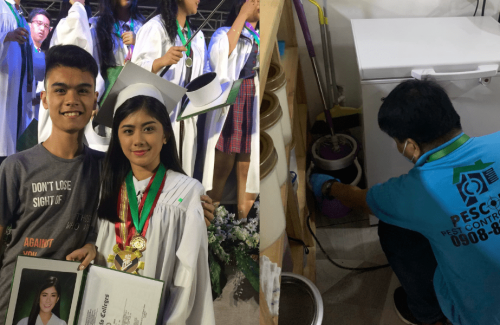
In just two months, these two siblings launched a pest control business that now serves a wide area around Quezon Province and nearby cities in the Philippines. They are like any other young adult with unfortunate life prospects, but they’ve persevered because they know there must be a better way. 

Pesconex Pest Control Services is owned jointly by its co-founders, Clark Dennies and Clarissa Joyce Demejes. They started their team with their cousin, who has grown to include four more members. 

What began as a training ground provided by their uncle is now a well-recognized business offering services with a quick phone call around Quezon Province and even reached the island of Palawan. 

Their uncle quickly loaned them money to help them start their own business. The effective pest control technique they use is a standardized process and is a convenient way to get rid of pests. They also made sure it is safe and environmentally friendly.

Within the first month, they serviced only a handful of clients, including a few homes, small sari-sari stores, and some bakeries — their parents even drove them to their clients. Nowadays, certain large companies and grocery stores are among the few that hire the team. 

Their success and customer acquisition began when Clarisse posted a TikTok video demonstrating the service they are providing. Many netizens have praised what the two have been doing, and some are so impressed that they would like to utilize their services. 

In just two short months, the siblings have established themselves financially and have also acquired their company car with their first significant earnings successfully.

Instead of focusing on the possibility that the endeavor will be unsuccessful, Clarissa encourages taking the risk. “Manifest that your business will be successful, do your best to succeed.” — she added. 

Image Source lawmagazine.bc.edu

Stories

Asian-American Woman in Law On Finding Her Voice That Lead To Her Success In The Courtroom

When looking at an Asian-American woman, certain implicit biases exist. They are often judged as being too meek, timid, or passive to achieve their goals. They may be held back by such an evaluation, preventing them from realizing their full potential.

It was difficult for Asian-American lawyer Debra Wong Yang to speak up throughout her early career. In the long run, she realized that her inability to stand up for herself did not only hurt her but also her clients.

“Eventually, we all find a voice — my advice is to just make sure the one you ultimately adopt is actually yours,” she advised in her essay published by Law360.

Yang graduated from law school in 1985 when women were still relatively powerless in the legal field. Since she was still working toward the goal of following the path she had chosen, she has faced many challenges along her journey. She has witnessed it all, from the very traditional Chinese upbringing she received to the various sacrifices, frustrations, and challenges she must face on a day-to-day basis in her chosen field.

After years of practicing law and facing challenges in the courtroom, she came to a number of important realizations that helped her become a successful attorney. She remembered when she thought up some strategies that she hoped would assist her in communicating effectively with others. 

Yang also tried to conquer her fear, and her motivation helped her cope with the situation and make further progress. With a lot of the many books she has read on leadership, she knows she has finally found her own approach to developing herself. 

She aspires on detailing how she was preparing for her court session with an outline of her questions and concerns, and other litigants will be able to better manage their time with counsel. She realized she was getting better at defending her clients in court because she was able to keep her attention solely on the issues and evidence in her case.

When she was currently going through a period of learning and challenges, she learned that holding a position of authority does not guarantee respect from subordinates. She came to understand that one of the responsibilities of a leader is to address concerns raised by those who doubt one’s abilities.

In her courtroom sessions, Yang strongly suggests analyzing the situation first and looking for authentic solutions carefully. She strongly believed that the solutions to some problems sometimes are not immediately obvious and have never been tried before, or that it’s extremely straightforward. However, she is challenged to keep turning the issue over and over in her mind until she begins to see it from a new perspective.

Yang also stressed the importance of having mentors to turn to for advice and insight. She was assertive in her belief that one should be guided by the process of sitting down, thinking it through, and acting in a way that is most beneficial to them. She went on to say that if the message comes from within, the receiver will perceive it as more genuine and at ease.

In 2002, She was appointed by President George W. Bush as United States Attorney and became a former judge serving the Los Angeles County Superior Court. The fact that her success can be attributed to her strong leadership and the bravery that she possesses as an individual is a reason why she wields her power. 

Not only does Yang share her own experiences, but she also provides valuable advice that other women can use to advance their careers. She stated, “My wish for each of you is that you will be brave when facing self-doubts, challenges, and obstacles. That you will dig deep, reach out if needed, do the research, make the tough decision and not be afraid of losing.”

The fact that Yang, an Asian American woman-in-law, was able to take control of her power demonstrates that one’s race should not determine the opportunities available to them or the path they choose to take in their professional advancement. However, by maintaining a positive attitude and giving oneself the power to make decisions, one will be able to live up to the standards and goals that have been established to assist in one’s own success.