Stories

June 23, 2023

SHARE:

Christina is a dancer and the studio director of Lisa Performing Arts located in Bay Area. Through her dance performances, she tells stories about Chinese culture, including the ways people live, their mannerisms, and their unique clothing, all while passing down their unique stories from generation to generation.

Christina’s journey has been filled with success and opportunities for her dancers to showcase their Asian American dance styles. They have competed at international competitions, premiered on NBC TV, and performed at various high-caliber events. Most recently, they were given the privilege of performing a halftime show for the NBA Golden State Warriors.

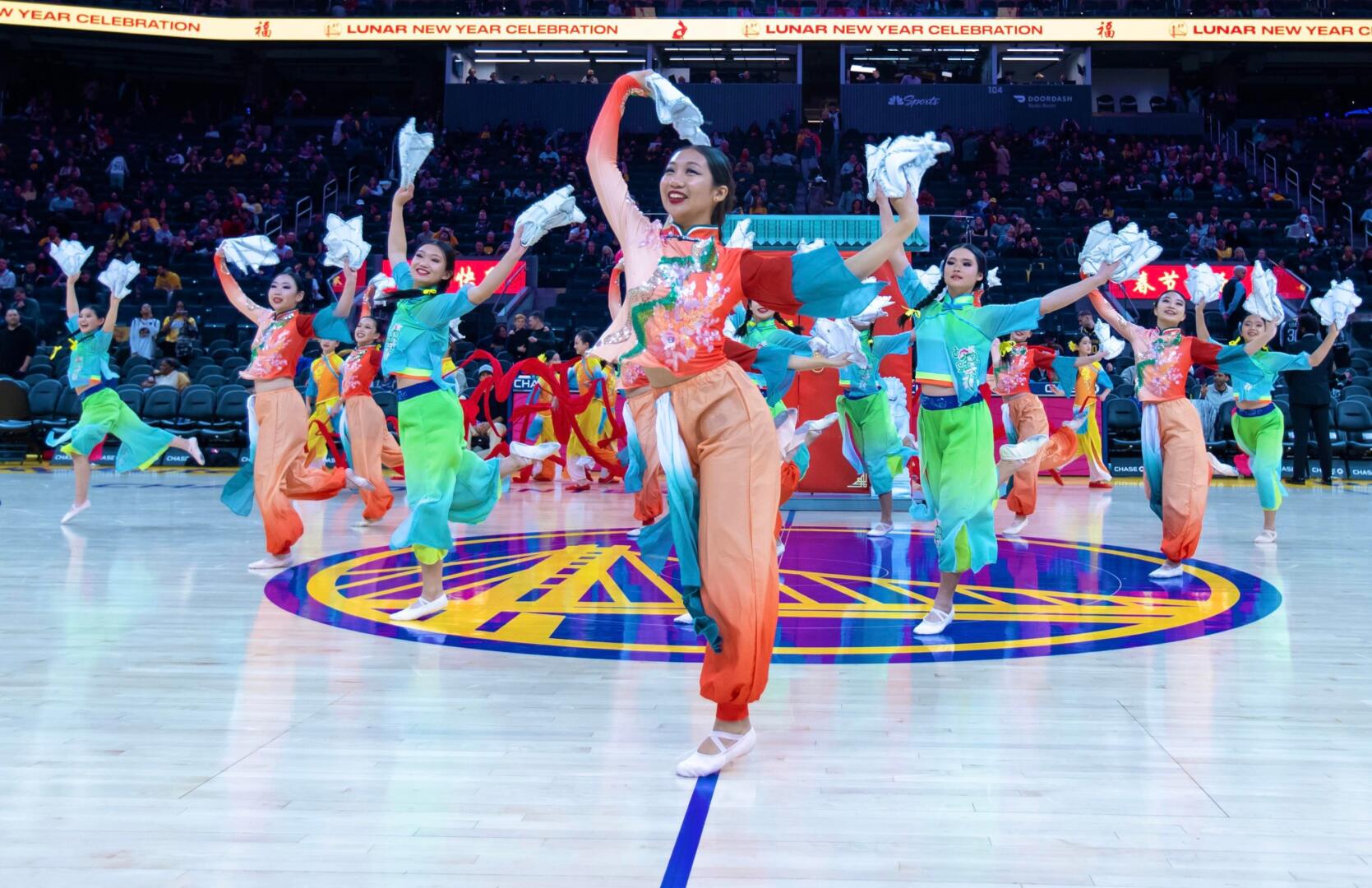
The troupe brought a unique and cultural experience to the game featuring the dynamic handkerchief dance, graceful and fluid movements of the ribbon dance, and intricate lantern dancing. The performance was the first of its kind, featuring “authentic Chinese dance” and a combination of fusion styles they have learned.

Read through as Christina delves deeper into the creative process of choreographing a new dance, her recent performance at the NBA Golden State Warriors halftime show, and the importance of celebrating one’s cultural identity.

BRIDGING THE GAP BETWEEN AMERICAN AND ASIAN CULTURES

Growing up as an Asian American, I experienced a lack of representation of Chinese culture in mainstream American platforms and faced the challenge of reconciling my traditional Chinese culture with the dominant American culture, which often excluded Asian Americans and perpetuated stereotypes.

I found solace in Chinese dance — a beautiful and intricate art form often overlooked in mainstream American platforms. My passion for bridging the gap between American and Asian cultures began when I started learning Chinese dance, which surprised me because not many people knew about it beyond the “lion dance.”

Chinese dance involves advanced technique, beautiful costumes, and a variety of unique dance styles, including Mongolian, Tibetan, Dai, Classical, and more. However, I noticed a lack of appreciation for Chinese dance at school rallies, outside performances, and dance competitions.

As I grew older, I realized that to bridge the gap between American and Asian cultures, I needed to find a way to blend the two in a way that was accessible and appealing to both. I was inspired by the success of Bollywood dance in America and dreamed of Chinese dance becoming just as popular. To achieve this, I realized it was necessary to incorporate elements of mainstream styles such as “contemporary” movements, technique, and storytelling, while adding our own Chinese dance elements such as costuming, music, and style.

I worked to create an “East meets West” fusion style of dance that combined both American and Chinese elements. I hoped to bring together teachers and dancers of both backgrounds to learn and appreciate each other’s styles and create unique fusion styles as Asian Americans.

Through my work in Chinese dance, I have seen a growing interest and appreciation for the art form from people of all ethnicities. I am proud to have helped spread awareness and understanding of Chinese culture and have given a voice to Asian Americans in the performing arts world.

Looking forward, I hope to continue to promote authentic representations of Chinese dance in mainstream media and to build a more diverse and inclusive society by encouraging greater cultural understanding and appreciation. My goal now is to form connections with Hollywood networks to ensure that authentic Chinese dance is portrayed in film and music videos and to prevent cultural appropriation.

I believe that the performing arts provide a universal language through which we can all communicate and that by embracing and celebrating our cultural identities, we can build a more harmonious and united world.

BEING ASIAN IS A STRENGTH, NOT A WEAKNESS

My interest in dance began at a young age. My mother was a professional dancer in China who opened her own dance studio in the US. I was exposed to a variety of dance styles, which allowed me to form strong friendships with people of all ages and backgrounds. Through dance, I not only learned about movement and performance, but also about teamwork, leadership, and resilience.

As I grew older, I became passionate about promoting and showcasing Chinese culture through dance. Chinese dance is a unique and vibrant art form with a rich history and tradition. It has a diverse array of costumes, props, and ethnic styles, as well as stunning technical skills, it was a hidden gem waiting to be shared on a larger platform. I felt that it was important to share this cultural identity with others and to show that being Asian is a strength, not a weakness.

Today, I am proud to say that our studio is well-known and respected in the Bay Area. Through our performances and outreach, we have been able to promote Chinese culture and inspire others to celebrate their own cultural identity.

I felt that it was important to share this cultural identity with others and to show that being Asian is a strength, not a weakness.

-Christina Wang

THE CREATIVE PROCESS

When choreographing a new dance, my creative process starts with considering the group of dancers I’ll be working with for the season. I think about each dancer’s individual strengths and how to create unity among the group. This includes deciding on a dance style that fits the group and identifying which dancers will perform which roles.

I then search for songs that will sound intriguing to the audience and consider modernized versions of traditional Chinese music if possible. Next, I find costumes that are in-season and on-trend to bring a contemporary Chinese feel to the performance. I also draw inspiration from trending technical work and group lifts that can work well with the group, as well as any props we may be using. The movements and facials themselves tell the story, and I choose ethnic styles that reflect the particular cultural traditions we’re exploring.

When creating a production piece, I try to tell a story that is easily understood by the audience. To achieve this, I brainstorm ideas inspired by TV shows, movies, and Chinese folklore that can be given an added twist through the use of props. For example, for our piece “The Legend of Avatar: East meets West,” we used props to tell the story of using Earth’s four elements.

Production pieces are more complex to choreograph, as I need to think about how different sections will mesh, color coordination for costumes, smooth transitions between segments, and how to coordinate rehearsals for a large group of people. I also need to consider which parts of the performance to cut or keep, depending on whether we’re performing for a competition or for a show. It’s a true team effort, with many people involved behind the scenes, including visionaries, teachers, prop makers, parents, costume designers, music editors, and dancers who make the vision come to life.

A PRICELESS MEMORY

The dance troupe’s recent halftime show performance for the NBA Golden State Warriors was a truly special and memorable experience. As the first Chinese dance studio to put on a full dance production at the Chase Center, it was an incredible honor to be able to showcase Chinese culture on such a large platform. While martial arts and lion dance have been featured in the past, Chinese dance had never been given the same opportunity until now.

This milestone not only allowed us to introduce Chinese dance to a wider audience who may not have seen it before, but it also provided a priceless memory for our dancers.

BREAKING DOWN CULTURAL BARRIERS

In addition to positive feedback on our technique and performances, we’ve also received comments on how our troupe’s performances have helped to promote cultural awareness and diversity. 

People have expressed appreciation for the opportunity to learn about Chinese culture through our dances, and many have shared how our performances have inspired them to explore and appreciate their own cultural heritage. We’ve also received word that our performances have helped to break down cultural barriers and build bridges between different communities. It’s all very encouraging and it keeps us motivated to continue doing what we do.

EMBRACING YOUR CULTURAL IDENTITY

For young Asian Americans who may be struggling with their cultural identity, my advice is to embrace your uniqueness and find your community. Don’t be ashamed or embarrassed about your heritage, as it is a valuable part of who you are.

Surround yourself with like-minded individuals who share your values and can help you grow. You can seek out cultural groups or organizations in your area, attend cultural events, or connect with others through social media.

Additionally, try to think outside the box and find creative ways to integrate your cultural identity with what people are already comfortable with, while highlighting the unique aspects of your heritage. 

Finally, don’t be afraid to take risks and pursue your passions, even if they may not fit the mold of traditional expectations. By embracing your cultural identity and celebrating your heritage, you can become stronger and more confident and inspire others to be the same.

Don’t be ashamed or embarrassed about your heritage, as it is a valuable part of who you are.

-Christina wang

VISION FOR THE FUTURE

Looking ahead, my vision for the future of my dance troupe and work in promoting Asian culture is to continue expanding our reach and impact. One of my top goals is to provide more opportunities for our dancers to perform at high-caliber events such as the White House, the Olympics, and major award shows like the Oscars and Grammys.

Beyond these major platforms, I hope to see Chinese dance become a more integrated part of the arts and cultural scene, potentially even becoming part of school curriculums to expose young people to this beautiful art form at a young age.


In the long term, I would love to take our work to the next level by establishing a Chinese American dance studio with a dance-specific talent agency sector, through which casting directors would be able to select dancers who can perform authentic Chinese dance for film, media, and commercials. This would create more opportunities for dancers to showcase their skills and help to further promote and introduce Chinese culture to a bigger audience.
Related Articles

250612 (1)-jpg

Blogs, Development

The Secret Behind Every “Why”: Climbing the Ladder

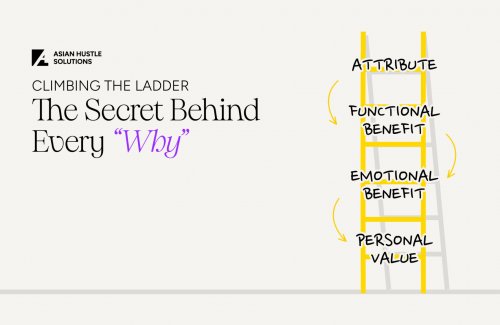
Have you ever asked someone why they bought something, and then asked again? You’d be surprised to find out that the answer now extends beyond the functional—we’re getting emotional. That’s what “laddering” is about. 

Laddering is a simple but effective tool to dive deeper into the decision-making thought process. Instead of just asking what people like, we explore the whys. Each answer helps us climb the ladder from surface-level to more profound insights.

1. ATTRIBUTE

A specific feature or characteristic of a product or choice.

Example: “These shoes have extra cushioning.”

attribute

2. FUNCTIONAL BENEFIT

The practical or performance-related advantage that the attribute provides.

Example: “They make running more comfortable.”

functional_benefit

3. EMOTIONAL BENEFIT

How the person feels because of the functional benefit.

Example: “I feel more confident and energized when I run.”

emotional_benefit

4. PERSONAL VALUE

A deeper belief, life goal, or principle that the emotional benefit supports.

Example: “Being healthy helps me feel free and in control of my life.”

personal_value

Why Asian Hustle Solutions?

At Asian Hustle Solutions, we help Asian-owned brands grow by understanding what truly drives their audience—beyond features, into feelings and values.

If you want to learn more about our services, visit the Asian Hustle Solutions website at asianhustlenetwork.com/services/

250605 (1)-jpg

Blogs, Development

Fishing for Success: Using the STP Model to Grow Your Brand

Marketing is like fishing—there are plenty of fish in the sea, but each type requires a different approach. Knowing your audience is not an open-and-shut case. It is the process of researching, analyzing, and evaluating your audience base. 

The following framework, STP, serves as your fishing rod—helping you cast with purpose and reel in the right catch.

S – Segmentation

The world isn’t a monolith. People have diverse needs and preferences—but some will share common demands that align with what your business offers. 

That’s why audience segmentation matters. By understanding the unique traits of each group, you can identify which ones are the best fit for your brand. 

audience-segmentation

T – Targeting

Now, after you have an overall picture of the market, it’s time to focus your efforts. Targeting means selecting the specific segment—or segments—that your brand is best positioned to serve. 

This is where you shift from broad insights to strategy, adapting your message, products, and services to meet their needs.

target-audience

P – Positioning

Now, it’s not just about who you are—but it’s also about who they think you are. 

Positioning answers the question: Why should they choose you? Whether it’s your values, pricing, design, or experience, positioning helps you own a unique space in the market.

brand-positioning

Why Asian Hustle Solutions?

To grow your brand, the goal isn’t just to reach a large audience—it’s to build a loyal segment that will stay with you over time. Getting to know this audience takes patience and insight. That’s where Asian Hustle Solutions comes in to support you every step of the way.

If you want to learn more about our services, visit the Asian Hustle Solutions website at asianhustlenetwork.com/services/

chester-yow-png

Stories

From Singapore to New York: How Chester Yow Turned Doubt Into Drive

Breaking New Ground in a Foreign Land

For Chester Yow, the decision to leave Singapore, his hometown, wasn’t an excursion but rather a mission. After two years in the military, Chester aimed to challenge his own comfort zone, venturing far away from the familiar into the unknown of a new country on the other side of the world. “I wanted to prove that I can be successful in another country, in another city,” he shares. While it is common that many Asians would like to take the stable route to be near their community, Chester wanted to flip the script and rewrite his story.

Drawn to the fast pace and competitive spirit of New York City (NYC), Chester quickly realized that real estate was made for him—because for a person who doesn’t enjoy 9-to-5 office jobs like Chester, real estate allows the flexibility while maintaining the discipline needed to survive in NY. It is this combination of freedom and responsibility that has become the driving force for him to start building a network from scratch in this city that never sleeps.

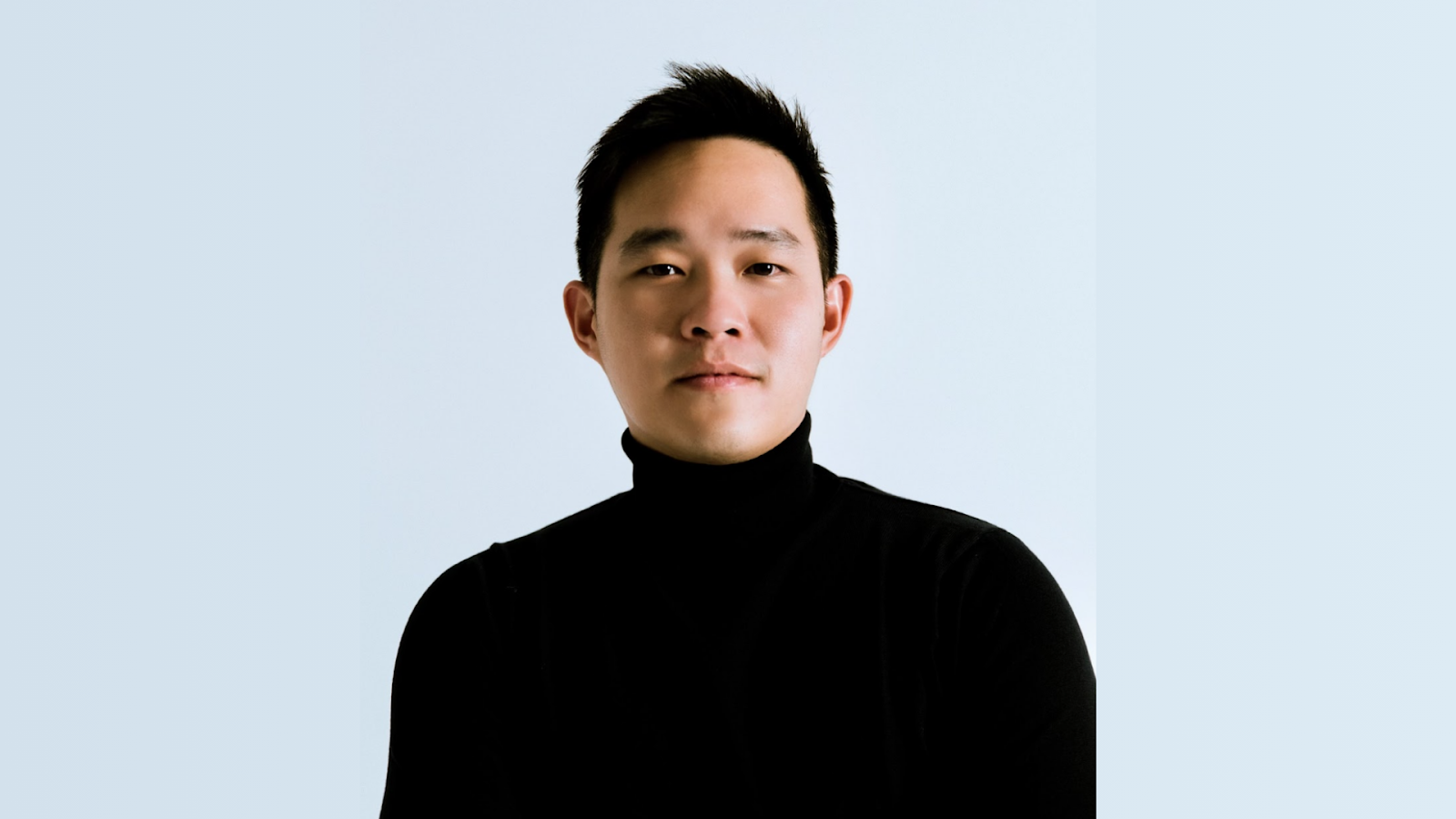
Chester Yow, a Licensed Associate Real Estate Broker and Founder of the Chester Yow Team at SERHANT, smiling confidently in professional attire.
Chester Yow | Licensed Associate Real Estate Broker and Founder of Chester Yow Team at SERHANT

Shattering Stereotypes in the Heart of New York

“If you can make it there, you’ll make it anywhere.” It’s a common, inspirational pipeline when speaking of New York. It’s inspiring enough to imply that challenges will always remain—not to bring you down, but to toughen you up. Chester’s no exception. With a heart filled with unrelenting passion and determination, it was still not enough—especially when dealing with racial discrimination and prejudice.

As a fresh-off-the-boat Asian in the U.S., he soon faced the harsh realities here—that discrimination can be both subtle and publicized at the same time. “You do get looked down on as a ‘minority’ at times, and people tend to judge or doubt you faster. I sometimes get, ‘Wow, your English is so good’ (English is the spoken language of Singapore), or ‘Why aren’t you a doctor, lawyer, or accountant?’” he recalls.

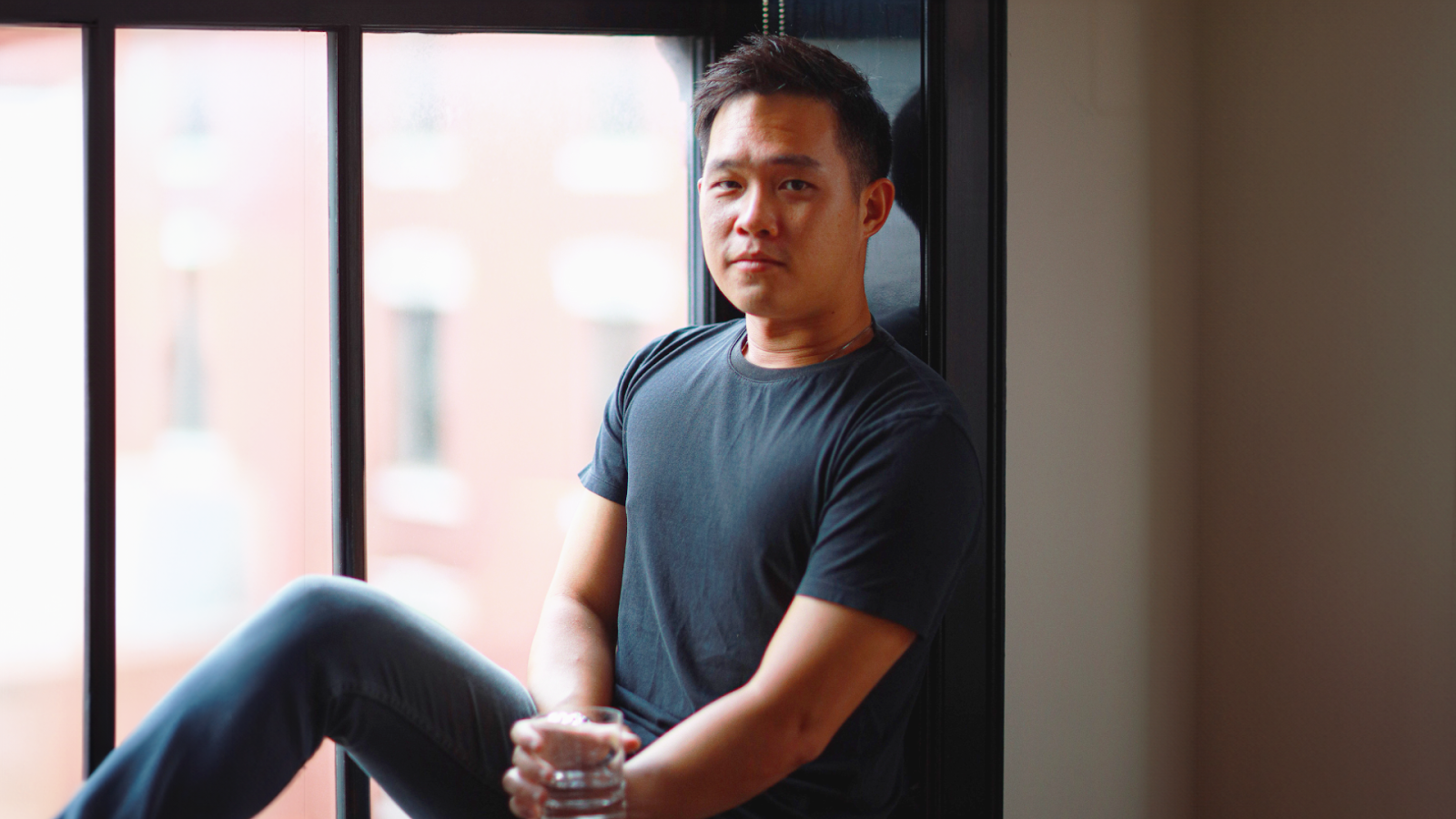
Chester Yow, a Licensed Associate Real Estate Broker and Founder of the Chester Yow Team at SERHANT, who overcame early challenges in the U.S. such as racial discrimination and cultural differences, smiling confidently in professional attire.
Chester faced many challenges during his early days in the States, including racial discrimination and cultural differences. 

But instead of surrendering to the stereotypes, Chester leveraged them as inspiration. “I work harder than the next person, I study harder, I make sure I’m more prepared, I do everything necessary in my power so that there’s no doubt in anyone’s mind to question my capabilities.”

And his effort paid off. By exceeding expectations and proving himself with actual results, Chester is, step by step, changing common misconceptions—not only for himself but also for an Asian working in real estate in New York. Then, even those who doubted him reached out to him for work.

What grounds me is knowing why I work so hard and who I’m working for—my family, my loved ones, my future self 30 years down the road, and my own future family. I’m working hard for them. Having that quiet confidence to keep my head down and keep going is crucial, too.

The Life-Changing $450 Million Development Project

“Tough times don’t last, tough men do”—a quote from my military days that has stuck with me. Ryan Serhant also says, “You are allowed to quit—just make sure it’s on your best day.” You control your own destiny, and building mental toughness is essential to success. Mentorship is crucial for any entrepreneur, and one of Chester’s mentors can be traced back to his military days.

That advice led to a breakthrough in his career. One of the biggest turning points came in 2017, when Chester helped launch a $450 million luxury real estate project in Manhattan. As part of the SERHANT. team, he had the opportunity to bring the project to Ryan Serhant—one of the industry’s most prominent figures—and collaborate directly with his top-tier team.

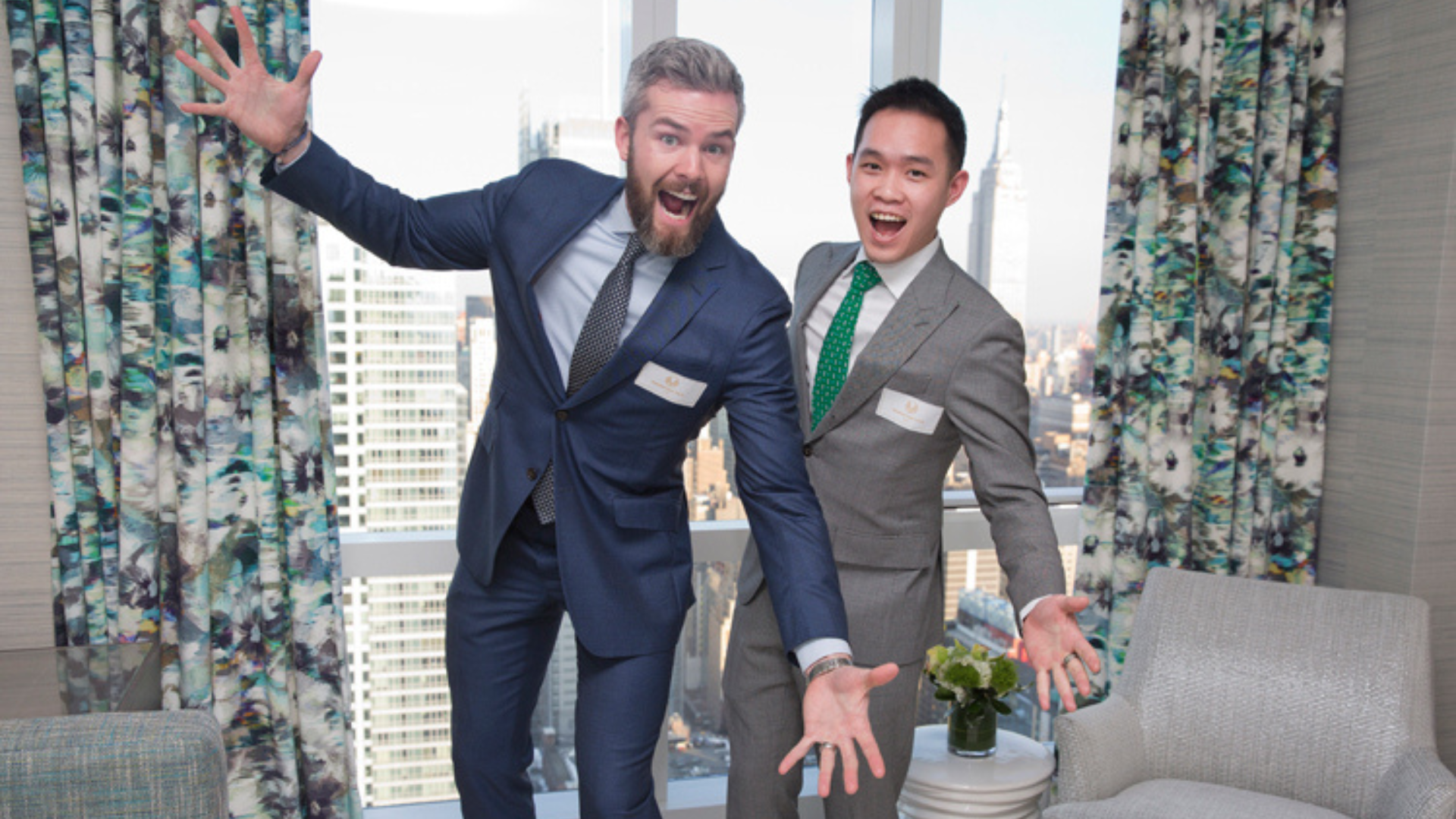
Ryan Serhant (left) and Chester Yow (right) standing together, both in professional attire, smiling confidently.
Ryan Serhant (left) and Chester (right)

“That project didn’t just help me close more deals (and earn more), it grew my network with consumers and other top agents, to learn the ropes of new development, and to work and learn closely with Ryan, thus growing my career exponentially,” Chester shared. It was an experience that catapulted his career and opened doors that might’ve otherwise taken years to access.

Staying Rooted on Unfamiliar Ground

As someone who grew up in Asia, Chester was raised with a mindset rooted in caution and logic. “We’re often taught to think of the worst-case scenario, to lead with reason, and to stay guarded and conservative. But that can sometimes come off as negative or dismissive,” he said. Living and working in the U.S. challenged those values and pushed him to adopt a more balanced approach. “I’ve learned not just to be prepared for the worst, but also to lead with optimism, follow my heart, and be vulnerable. Embracing failure and change has been key to my growth.”

That flexibility in mindset has helped Chester adapt and thrive in a fast-paced environment like New York. Even after many years away from Singapore, he’s maintained a strong connection to its culture and community. He regularly attends events and is active in organizations that support Asians in NYC. “There are so many ways to stay connected to being Singaporean and Asian here,” he shared. “I have a great group of friends and partners—we collaborate, support each other’s businesses, and stay rooted in our culture. In fact, 70% of my clients are Asian, and working with them helps me stay connected as well.”

Connect With Chester Yow

“Work hard, work smart, stay persistent, and block out the noise around you. Find a purpose that gets you out of bed every day and use it as your daily motivation. Hold on to the people who believe in you—and forget the ones who don’t.”

Website: Chester Yow

Instagram: @chester.yow

250529_AHS-EMAIL-MKT-jpg

Blogs, Development

Winning with Keywords: How AHS Boosts Your Search Results

Words are not just a compilation of letters—there’s power and impact beneath them that can alter your brand’s SEO performance. Here are three tips to choose keywords with the right strategy and the right timing.

Look for Problem-Based Words

Instead of targeting what people want, focus on the audience’s problems. Before they want to buy, they have to be seen first. Scout public forums to find how users address their problems.

problem-based-words

Analyze SERP Intent, Not Just Search Volume 

Not every high-volume word should be used if the top results associated with that word are irrelevant to your content type.  Always check the SERP (search engine results page) to see Google’s current favorites—blogs, products, videos, etc.

focus-on-serp-intent

Track Keyword Trends by Season or Event

Utilize tools like Google Trends to identify rising keywords linked to seasons, holidays, or industry events. With the right timing, these short-term spikes will help drive quick traffic.

track-keywords

Why Asian Hustle Solutions?

At AHS, we help brands grow smarter with SEO that starts with strategic keyword analysis. By understanding search intent, trends, and real user problems, we find the terms that actually drive traffic and conversions—not just clicks.

If you want to learn more about our services, visit the Asian Hustle Solutions website at asianhustlenetwork.com/services/