Uncategorized

July 19, 2022

SHARE:

In the view of society, hair is connected with youthfulness and beauty in women, virility, and masculinity in men. It should come as no surprise that hair loss may make many men and women feel self-conscious. But should that be always the case?

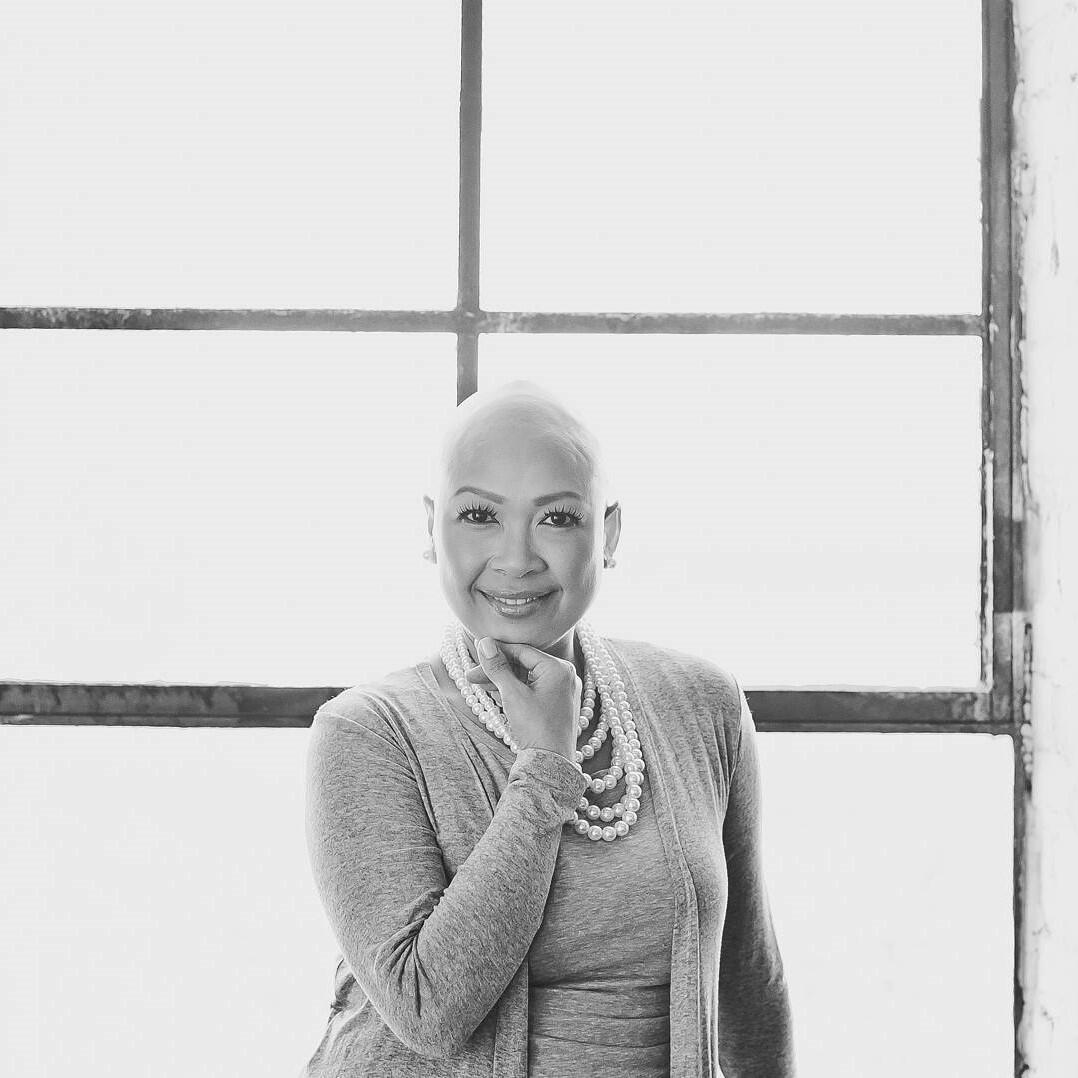
Caroline Mangune Alanis was only 4 years old when she lost all her hair, “I don’t even know what it is like to have hair.” she said. Caroline has Alopecia Universalis (AU)  — the rarest form of Alopecia Areata, it’s an autoimmune condition that attacks the hair follicles.

Growing up Bald

Born in the Philippines to a strict father and a sweet and kind soul mother, as she describes, “My dad didn’t allow me to go out with friends a lot. I was never allowed to go on sleepovers.  He sheltered me from people. I never realized that until I was an adult, and reflected on my childhood.” She also has two brothers who were protective as well.

At the tender age of 4, she was already practicing “DAILY AFFIRMATIONS” although she never knew how impactful they were,  “I was always told to look in the front of the mirror.  I would say, I am beautiful, I am strong, I am special. I have beautiful eyes, beautiful skin, etc.”  Her parents never told her the pain and heartbreak of raising her, rather they just always told her how special and beautiful she was, “They always told me I was meant to stand out.”

She had no recollection of the time her hair started falling out, but she was told that her hair fell off within a 2-week time frame, “My mom said it could have been brought by stress from an earthquake we had in the Philippines.”  

Caroline was never allowed to say negative words about herself, or else her father would scold her. She was imparted that words she says about herself will either bring her up or tear her down, “So maybe I thought negative things about myself, but I never said it. Growing up bald, I never felt ugly, just incomplete.”

Growing up bald, I never felt ugly, just incomplete.

– Caroline Mangune Alanis

Although her parents taught her how to be courageous and had always made her feel how beautiful and blessed she was, growing up bald was not easy — she had to endure the everyday pressure of life. “There was the pressure of seeing little girls with beautiful hair and wishing every day that I had that. There was the pressure of kids being mean and pulling off my bandana and laughing at me because I was bald.” She faced the pressure of name-calling and bullying.

Caroline’s parents finally convinced her to start wearing a wig which, unfortunately, didn’t make things easier as she recalls. Walking home from school one day with her brother, a girl decided it would be fun to pull Caroline’s wig off and throw it on the ground. “At that moment, all I could do was cry and run home,” she adds, “every day I feared leaving the house, the emotional scar is unimaginable.”

She learned how to hide her AU, she felt as if people wouldn’t accept her for being her so it became a secret, and only her family and those she truly trusted, which were not many, knew the real Caroline.

In high school, only a handful knew about her AU, “which made it so easy to try to blend in since I never wanted to stand out, never!” The ironic part about it, as Caroline describes, was she would always be the one to be called by her teachers to lead a project, sing solos, and participate in plays and fashion shows. They even nominated her to join the homecoming queen and enter a beauty pageant. However, “I realized that my fear never really went away by keeping my AU a secret and the emotional scar was also still a part of my life.”

Every day I feared leaving the house, the emotional scar is unimaginable.

-Caroline Mangune Alanis

Being Bold With The Love Of Her Life

She met her husband Mark from work, where they were both managing stores at a mall in Chicago. They became best friends and were each other’s plus one at weddings, “We didn’t start dating until I transferred to another mall.” she said.    

But the day has to come when she must tell Mark about her condition, “Telling Mark about my alopecia was very difficult. He once told me that he loved hair and eyes on a woman,” she adds, “He himself has gorgeous hair.” Caroline felt she didn’t have one of the criteria Mark was looking for. Although she mentioned several times that she had something to tell him and he would always say “whenever you are ready.” Caroline thought that they both knew that Mark is aware of her wearing a wig, they just never talked about it. 

Mark and Caroline had been dating for about a year when she finally tried to tell him one evening. She got choked up and started crying. He told her, “Caroline, don’t you think I know you by now from your head down to your toes?” He had tears in his eyes. She then asked Mark why he didn’t tell her.  He replied, “I wanted you to trust me enough to tell me”.  

As they began to start their family, Caroline’s AU became their secret. She held her family bound to her alopecia. When her daughters’ were infants, she wouldn’t carry them in public for fear that they would pull her wig. “They were taught never to touch mommy’s hair, ever!” 

Her daughter could never have friends sleep over because it would be very uncomfortable for Caroline to be her in her own home. “My daughters were always fearful when we were out in public, especially on windy days.” 

Caroline’s baldness was a big secret, even her husband’s family didn’t know, “because I hid so much all my life, I didn’t realize I walked in fear every day.  I didn’t realize I lived in bondage.”

Mark told her, “Caroline, don’t you think I know you by now from your head down to your toes?” He had tears in his eyes. She then asked Mark why he didn’t tell her.  He replied, “I wanted you to trust me enough to tell me”.  

Embracing Being Beautiful

In the summer of 2015, her life opened a new door, she became a part of an International Alopecia Group on Facebook and realized that her journey with AU has prepared her to help others like her. She saw so many men and women devastated by losing their hair. They were going through a lot of emotional pain, “You see, alopecia can happen at any time in one’s life so the adults experience a loss and have to grieve.” Caroline said. Alopecia might not be life-threatening but it is life-altering. Hair, eyebrows, and lashes truly make a difference in one’s appearance, “I myself put my face on every day.” she added. 

She also saw some men and women walking proudly bald. One man, in particular, Anthony Carrigan, an actor who also kept his alopecia a secret but he came out and had been helping others and is a beacon of light.  

Then, Caroline started giving advice about doing daily affirmations, “doing lots of SELF LOVE!”  as well as giving makeup tips, the alopecia community knows her as the “Eyelash Queen”.

But once the parents of alopecia children started posting their heartbreaks, “that’s when I realized my parents’ challenges of raising me, a bald child.” Caroline started reiterating what her parents taught her. She gave advice to parents, about how special their child was, how they were perfect and beautiful just as they were. “Alopecia children are so strong,” she noted.

“I then realized I was all those things: perfect, beautiful, and strong,” she said, but her baldness was still a secret. Caroline thought to herself, how does she encourage others to accept themselves if she herself could not let people know about her condition? So as those thoughts lingered in her head, she began telling her family and friends — she only wanted to tell people, not show people. Her goal was to have 30 different wigs for each day of the month.

“But God! God had other plans for me,” the unexplainable started occurring, her wigs became unbearably uncomfortable to wear, “it almost felt like my scalp was burning,” which she thought was completely strange since she has been wearing them for 40 years. It took a lot to take a look at herself bald.  She then began to think, “How can I tell my daughters  and others that beauty really lies deep within if I myself can’t see past my lack of hair?”

On August 14, 2015, on her way home with her husband from dinner, Caroline’s wig was getting itchy so she took it off to scratch her head. She was about to put her wig back on but Mark held her hand to stop her. He said “Honey, don’t put it on, you’re fine. You are safe with me, nothing can hurt you, and no one will hurt you. You are beautiful.” She reluctantly did what he asked and wanted to be strong for him. 

Mark kept holding her hand tight and kept asking if she was okay,  “I just kept saying it is scary.”  As they were nearing their home, her husband pulled over and said “Come on let’s take a selfie.” to lighten the situation. Her husband dropped Caroline off in front of their home, with her wig in her purse. Mark told her to go ahead and go into their home.  

“For the first time in 40  years, I felt God’s love on my head. The soft wind touched my head, a few raindrops falling on my head. I cried and laughed as I ran to my house.” she recalls.  

After that night, her husband helped Caroline with her small steps into seeing herself for who she was — a beautiful woman living with AU. Slowly, she found herself no longer wearing her wigs. They would go on drives and take walks on the beach. “I felt free, my secret slowly fading; including the emotional scar.”

I felt free, my secret slowly fading; including the emotional scar.

-Caroline Mangune Alanis

“On Sept 9, 2015, I posted it on Facebook, I cried the whole night.  Everyone was so kind.  I was still afraid, but I started walking bald.” she expressed.

In the fall of that year, it started getting cold and she didn’t like her hats since they looked terrible without any hair. She was pretty sad because she really did not want to start wearing her wigs again, “I just prayed and asked God to lead me in what I am supposed to do. I got my answer on Sunday, October 4th,” A lady stopped her and asked if she has Alopecia, to which she responded “Yes!”. The woman said, so did she, and asked Caroline, how does she do it? — She knew the lady meant how she could walk around without her wig.

Caroline answered “I don’t know. This is all new to me. “God is giving me the strength to do this. I couldn’t have done this on my own.” So that day, she officially retired all her wigs. “Yes, I put them all away for those special occasions,” she added.

She has met so many people just like her all over the world which inspired her to start her own Alopecia Group in Chicago, where they meet once a month. “I love having a family I call my own, people who truly understand me.”

The Chicago Alopecians

Caroline together with her friends started the Facebook group, with her as the main facilitator. It is a place where they can share their personal journeys and ask for advice or help. The Chicago Alopecians’ mission is to ensure that no one feels alone. Recently, they have been planning to create more events to cater to everyone, children, teens, and men. 

“We each have our own alopecia journey and we just want to connect with each other,” said Caroline. They also allow wig vendors in the group, “Chicagoland is such a big place. I love having a solution for everyone in the group.” As of writing, they currently have 332 members, and they’ve also started an Instagram page to widen their reach.

For the international group, Caroline is also encouraging others to create their own alopecia groups — their own tribe in their local towns.

“I have always known God wanted me to stand out, but I was always afraid.  These days, I am no longer afraid to not have my wig on, I embrace it.”

Caroline is truly a woman who is defying what society calls “beautiful”. 
Related Articles

Image Source John Andrew Dangca Facebook

Uncategorized

From Former Janitor To Leading A Flourishing Filipino Restaurant In Australia

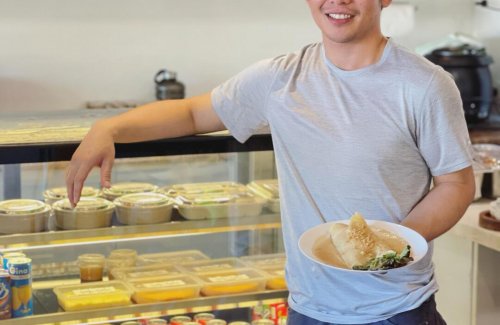
Who would have thought that the odd jobs of a janitor and a street vendor would lead to such a great story? This is what actually transpired to John Andrew Dangca, the owner of a Filipino restaurant in Canberra, Australia.

Before establishing his popular restaurant among Filipinos, he worked as a street vendor and janitor. Despite his difficult beginning, he was determined to succeed. He saved money and eventually opened his own restaurant. His business success has allowed him to provide for his family. 

Salu-Salo Restaurant, which has been serving Filipino cuisine in Canberra, Australia was also impacted by the pandemic. Fortunately, he was able to adapt by pivoting to a delivery and take-out model. 

He says that they’ve been able to weather the challenge because of the support of their customers. Andrew admitted that he reaches out to his customers to order some food, and if they do, he personally travels to them, regardless of the distance. 

His journey to Australia began when he was young and open to the idea of studying or working abroad. His aunt sponsored his trip to Australia in 2013, where he enrolled in college and began training as a cleaner. It was never easy for him to juggle a job and schoolwork, but he did it because he wanted to provide for his family.

Andrew’s story demonstrates that it is possible to achieve success despite challenging circumstances if one is willing to work hard and never give up. “I put in a lot of effort and always try to do my best in order to be where I am now,” he stated on a Philippine TV show. 

He proved that beginning in a low position, such as working as a janitor or street vendor, is not an obstacle to future success. Rather, this will serve as the fuel that propels you forward toward achieving your goals.

Untitled design

Uncategorized

Humphry Slocombe Launched Filipino-Inspired Ice Cream In Collaboration With Popular Eatery Señor Sisig

There is nothing quite like a scoop of ice cream on a hot day, as we’re sure you’ll agree! And what better way to enjoy one than with a tasty serving of delectable creations alongside your best dishes?

This summer, the renowned Filipino food truck now restaurant Señor Sisig will open a branch in the food hall of the San Francisco Bay Area and collaborate with the Filipino-inspired experimental ice cream Humphry Slocombe.

They have been starting to develop a new ice cream flavor that evokes childhood and promotes the favorite dishes with an accompanying dessert. According to SFGate, both businesses have decided to work together as they get ready to become Ferry Building tenants.

It may be a new flavor for Humphry Slocombe customers, but it’s not for Filipinos. Made with cinnamon and bananas, the ice cream is as delicious as it sounds. Named “churron”, a mash-up of “churro” and “turon,” a Filipino caramelized fried banana roll.

The new Señor Sisig restaurant will serve drinks with Filipino and Mexican tastes including ube, pandan, and calamansi.

Stop by one of the six Humphry Slocombe locations around the Bay Area to enjoy this new flavorful ice cream before it sells out!

Melody

Uncategorized

Melody Hahm on Shaping a Diverse Venture Capital Landscape for Entrepreneurs

Melody Hahm has held many roles as an acclaimed business journalist for CNBC and Yahoo Finance and a platform and community manager for venture capital firm Harlem Capital. But her Twitter bio begins with “unapologetically Korean.” That’s a good indicator of the kind of person Melody is. 

In her interview with AHN, Melody is unapologetically honest about her experiences as, often, the only Asian in the room. She shares her journey of finding value in her work and, as a result, recognizing her self-worth to advocate for herself in traditionally male-dominated newsrooms. 

Since joining Harlem Capital in July 2021, she has helped female entrepreneurs and people of color make their mark in history. She leads off-site and operator networking events and content strategy for the firm’s portfolio companies. But she’s doing so much more for the BIPOC community of entrepreneurs by giving them the resources and platform to succeed. 

A CHILD OF KOREAN IMMIGRANTS FINDING HER PASSION FOR JOURNALISM

I was born in New York City and raised in the tri-state area in Connecticut and Jersey. I was a lifelong east coaster. My parents are Korean immigrants who met in the States, and I’m their only child. It became my passion early on to become a journalist. 

I had a dream of telling international stories, given my background as a child of Korean immigrants. Starting in elementary school, I took a liking to my Spanish class, and I performed the best in English reading and comprehension. So, pairing those things together, I was like, I’ll think I’ll figure out what this journalism thing is. It was after a journalism and writing summer program that I did after eighth grade that I realized this is the area I want to focus on. 

I started to write for my school newspaper and contributed to my local newspaper, the New Haven Register. There weren’t necessarily Asian bylines I could look to. There was Connie Chung and a few token Asian women on TV. But I could not envision what my career would look like. 

I’ll never forget what my mom said. She said, if you watch TV or go to a Broadway show and see someone that looks like you, it’s probably the stereotypically nerdy character who has a line or two, but you’ll never see someone who looks like you as the main character. She didn’t mean to discourage my dreams, but I think it was a reality check that perhaps it wasn’t the most practical route. 

“There weren’t necessarily Asian bylines I could look to…I could not envision what my career would look like.” 

-Melody hahm

FROM PRE-LAW TO BUSINESS JOURNALISM AND VENTURE CAPITAL

I went into college pursuing pre-law, but all my internship interests were in journalism. Then, I got a grant through school to go to New Delhi, India, for two months on a broadcast journalism internship. That was a turning point for me. Until that point, I didn’t understand what a real career in journalism could look like. When I got back, I tapped into any potential connection I had in the journalism world. It was through an alum of my school, who was the managing editor of Fortune magazine, who connected me to a couple of folks, and one of his contacts at CNBC reached out to me in my senior year. 

They said a news associate position was open and asked if I wanted it. I had no idea what financial and business journalism was, but it seemed like an opportunity I couldn’t pass on. So, I began my career in financial journalism on CNBC’s flagship morning show, Squawk Box. I produced segments and pitched ideas for startups to be featured on the show. At the time, it was very markets-driven, and I carved a niche for myself. 

I recognized that there wasn’t a platform for women and people of color running interesting startups to share their stories in a mainstream way. I took it upon myself to prove that these companies were going to be meaningful one day. I also wanted more experience on-air and I ended up finding an opportunity as an on-air reporter for Yahoo Finance. It was a great transition because Yahoo Finance is all digital. I got the chance to create content in a medium that I consumed. I hosted a show called Breakouts, which focused on entrepreneurship, especially among women and people of color. 

In July 2021, I left traditional media to join an early-stage venture fund called Harlem Capital which invests in diverse and women entrepreneurs. I lead their community and platform, which essentially means working with the portfolio companies and founders. As well as expanding our purview and reach as we think about democratizing venture capital for people who deserve it. It shouldn’t matter what you look like. 

It’s been a wild journey so far. There are a lot of different hats I wear. Some of my media expertise and savviness does play a role at Harlem, but I’m getting to flex my muscles to help entrepreneurs in a different realm and world, which I’m excited about. 

“I recognized that there wasn’t a platform for women and people of color running interesting startups to share their stories in a mainstream way. I took it upon myself to prove that these companies were going to be meaningful one day.” 

-melody hahm

TAKING STEPS TOWARD WHERE SHE IS TODAY

I would love to say it was well-thought-out, squarely defined, and manifested, but it wasn’t and never is. It’s always messy. Oftentimes, there are little signals along the way that remind you maybe this is not where my attention should be. I initially did not pursue a business or financial journalism career, the opportunity found me. I recognized that it was not my passion to report on the market’s daily moves. I can talk about it, but did I feel like I was getting value? Probably not. Making the 1% richer was never part of my mission. I obviously never went into journalism to make money. 

Being in that corner of media made me reconsider and reflect on who my audience was. Both Yahoo Finance and CNBC served the investor class, which tends to be more affluent and privileged. During COVID, I started excavating a bit. I asked myself how I could play a role in helping entrepreneurs, especially people who look like me, succeed. 

If you wanted to cover a startup in mainstream media, it was always about who backed them. That’s when I first started covering venture capitalists. I interviewed a lot of VCs and participated in conferences to interview VCs and the startups they funded. My mind was open to the opportunity to work at a venture capital firm where I could play a role in the process of helping entrepreneurs and equipping them with tools so they can have a fighting chance in making their mark on history. 

RECOGNIZING SELF-WORTH IN TRADITIONALLY MALE-DOMINATED WORK ENVIRONMENTS

I think my experience working in two traditionally male spaces has only fueled my fire to identify opportunities where I can change the narrative. I am very fortunate to have had mentors and direct bosses sticking their necks out for me, including the person who connected me to CNBC. I met him when I was a college student in 2011, and he ended up becoming my boss at Yahoo Finance. I’ll never forget this one conversation we had. It was our mid-year check-in, and I was so nervous. I knew I deserved a raise, but I didn’t want to be disappointed if I didn’t get it. 

I even went to seminars coaching women on negotiations. So, I was like, “Melody, you can do it. He’s always believed in you.” During the conversation, he gave me a 24% raise. I was going to ask for a third of that. My walkaway number was going to be 8%. That illustrated to me: Why was I valuing myself so little? Part of it is systemic, but I was selling myself short. That was an inflection point for me to recognize that even if this macrosystem is stacked against me, I know my worth, I know my strengths, and I know that I work hard. There are very clear and measurable things to show that makes you believe you deserve more. I recognized that even if the landscape is so male-dominated, that will not deter me. 

Tying it back to the venture capital world, so much it is bleak. Very few top-tier firms have BIPOC partners at all levels. Then, I joined Harlem Capital, which is founded by Black men. We have three Black men who are partners, and four of us are women of color, which is unheard of. You don’t see that in venture capital. I’m the only Asian woman, so it empowers me to know that they value and invest in people of color. I have a seat at the table, and I recognize my fight for my community. 

Our tagline is that we want to invest in 1,000 diverse entrepreneurs over the next 20 years. I think the only way you can do that is if the investor class and the people in the firm reflect the type of people you want to empower. We have the upper hand in understanding the problems and queries facing diverse founders. We’re the ones trying to solve the issues and provide the resources to feel the gap. It feels like a unique position to be in the venture landscape. 

“Even if this macrosystem is stacked against me, I know my worth, I know my strengths, and I know that I work hard. There are very clear and measurable things to show that makes you believe you deserve more.”

-melody hahm

NAVIGATING THE NEWSROOM AS AN ASIAN WOMAN

There were so many incidents of micro and clear aggressions from my colleagues, especially at Yahoo Finance, where I was, for a long time, the token Asian. Over the nearly six years I was at Yahoo Finance, our newsroom really blossomed. We had a flurry of people of color and lots of Asian women who joined the team. But the first couple of years were really difficult. If there was news related to ongoing issues in the Asia continent, I was expected to know the answer. I’m like, I was born in New York. I’m connected to my Korean heritage, but I don’t know the ins and outs of the dynamic of Japan and Korea. The assumption that I would have these answers definitely messed me up a little bit. 

In light of the hate crimes facing Asians, it was difficult for me during the work day because we wouldn’t cover that news. It was only when there was a business angle or organizations pledged tens of millions of dollars that it became a story in the business world. I understood that we weren’t working under a general news system, but at the same time, the lack of care felt disappointing to me. I felt I had to advocate for myself and the Asian community. 

In my current role in the venture world, it’s night and day because my colleagues are all people of color. Even when Michelle Go passed, against this influx in hate crimes was happening, they would check in on me, asking how I was doing on a personal level. To be honest, Harlem Capital has grown over the last couple of years, alongside the deaths of Black Americans like George Floyd and Breonna Taylor. My colleagues recognize how hard it is to compartmentalize pain and trauma as you experience professional success, trying to reconcile the two. I think there’s empathy in my current role and organization that gives me a little bit more strength and hope. 

THE FUTURE OF VCS

I think 20 years from now, we’ll see a magnificent diaspora of Asian, African, and Latino founders who go on to raise future rounds of capital, take their companies public, maybe start their own VCs, and become angel investors. It’s beyond my wildest dreams to think about what that diaspora looks like. Tier one VCs are already investing in Africa and Latin America. We’re seeing people choose to operate in international landscapes, and they’re all contributing to changing the face of entrepreneurship. 

I have no doubt in my mind that when hopefully my child is growing up that if they were an entrepreneur, they could look at the options and say, ‘There’s a partner who looks like me and understands my story.’ It won’t be tokenization as a poster child of diversity. It will be an integration as the DNA of up-and-coming VCs, VCs that have yet to be created, and existing firms where it won’t be an option anymore to not be diverse. This is a one-way street, and if you don’t buy into it, you will get left behind.

“It will be an integration as the DNA of up-and-coming VCs, VCs that have yet to be created, and existing firms where it won’t be an option anymore to not be diverse.”

-melody hahm

HOW TO REACH OUT

You can reach me on Twitter @melodyhahm, on Instagram @melhahm, and on LinkedIn. If you want to learn more about Harlem Capital, or if you want to learn more about my journey, I’m always excited and happy to chat with folks. If anyone is contemplating a move, career or otherwise, feel free to hit me up because I love to talk about those kinds of transitions. 

Interview credit: Tiff Soga

Image Source: Chell Diaz Fernandez Facebook

Uncategorized

‘Mompreneur’ Turned Her Hurdles Into Success And On A Mission To Help Other Moms Start Their Businesses

Filipino entrepreneur Chell Diaz Fernandez is on a mission to inspire other mothers to persevere in pursuing their dreams, regardless of how simple those businesses are or how difficult the road lies ahead.

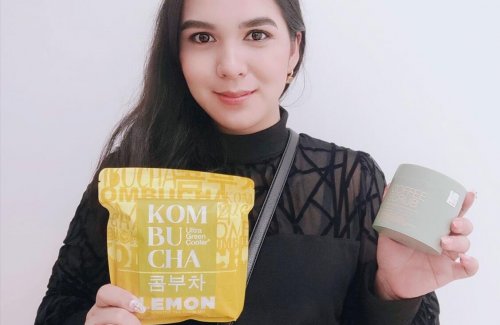
The “mompreneur” has tried over 15 businesses since 2016 — she has sold in bazaars and had “sari-sari store” or a neighborhood sundry store. She’s also created a party supplies store, started selling secondhand clothes on Facebook live, and even vlogged.

Chell is currently a full-time Ultra Green Coffee business consultant, helping other mothers start coffee enterprises. She aspires to show that being a mother doesn’t limit success in business. She encourages stay-at-home moms to contact her for financial opportunities. “I want to inspire my fellow moms out there that if I can do it, you can too.” she said.

She described how difficult it was initially because her husband insisted that she should only take care of their children and would not allow her to work or start a business. She had to stand up for herself and realize that even as a stay-at-home mom, she is capable of more than she currently does.

As Chell expressed on her journey, she was aware of the many hardships she had experienced. Nonetheless, she pushed on, thinking of her loved ones and not giving up, and would forever be grateful for the pain and adversity she had endured.

She was hopeful that this would pave the way for her future development and success. In the end, she hopes that those who are discouraged will be able to find strength and hope in her motivational story about her business.