Awaken* newsletter

December 9, 2024

SHARE:

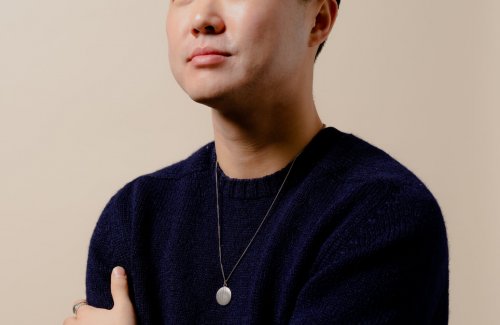
In this month’s edition of the Awaken* Newsletter, we speak with Kristy Kim, Founder and CEO of TomoCredit, a fintech startup focused on improving access to credit for underserved consumers. By using AI to evaluate real-time cash flow data rather than traditional credit scores, TomoCredit connects consumers with lenders.

Kristy discusses her journey as an immigrant, an Asian female founder, and an entrepreneur working to transform the financial industry. Through her leadership, TomoCredit aims to provide more people with better access to capital and lending opportunities.

Can you start by giving us an overview of your company and what you’re trying to solve?

Kristy Kim: Sure! At TomoCredit, our mission is to bridge the gap between underserved consumers and lenders using AI technology. We are focused on serving individuals who have been left behind by traditional financial systems, especially those without credit scores or with limited credit history.

There are millions of people in the U.S. who are underbanked, and the financial institutions that could potentially help them either don’t have access to their data or don’t understand their risk profile. We leverage AI to evaluate consumers based on their cash flow instead of relying solely on traditional credit scores. This enables us to match these individuals with lenders who are willing to serve them without taking on additional risk. Our platform helps both consumers and lenders—consumers get access to capital, and lenders expand their market in a low-risk way.

What motivated you to start TomoCredit?

As a first-generation immigrant from South Korea, I moved to the U.S. at eleven. In my early twenties, I faced the challenges of building my own credit history. After graduating from UC Berkeley, I worked in investment banking.

Despite having a stable income, I was denied an auto loan five times because I lacked a credit score. This experience highlighted a significant gap in the financial system, where many immigrants, young adults and many other underserved communities are excluded due to the absence of a credit history. After being turned down multiple times, I knew something had to change. I saw that the traditional credit system wasn’t serving millions of people, particularly immigrants, who had the ability to repay but lacked a credit history to prove it.

That experience of being excluded from the financial system really motivated me to find a way to help people like myself access the credit they needed. Determined to address this issue, I founded TomoCredit to provide credit solutions for those who, like me, struggle to access traditional credit avenues.

I wanted to create a system that didn’t rely on traditional credit scores but instead used alternative data, like cash flow, to assess creditworthiness. The idea was to connect underserved consumers to lenders in a way that wouldn’t increase their risk. TomoCredit was born out of this desire to make the financial system more inclusive—so others wouldn’t face the same rejections I did, and would have the chance to access capital and thrive.

As an immigrant founder, have you faced any challenges or biases in fundraising or building relationships with big institutions?

Kristy Kim: Yes, there are definitely challenges that come with being an immigrant founder, and at times, it can feel like an uphill battle. But, interestingly, my background has also played to my advantage.

As an immigrant, I have a unique lens on the problems facing underserved communities. I know firsthand what it’s like to struggle with the traditional credit system. I’ve faced the same barriers that many of our customers face, and that gives me an edge when I’m speaking to financial institutions. I’m able to say, “Look, I know my customers better than anyone else. These people are creditworthy, but they’re being overlooked by the traditional system.”

There is some bias, of course, especially when you’re dealing with legacy institutions, but I think they also recognize that I bring something different to the table—an intimate understanding of the market and the customers they often don’t have access to. Lenders are willing to listen because they know that by partnering with us, they can expand their pool of potential customers without taking on additional risk.

You’ve been in this industry for over five years now. What keeps you motivated despite the challenges you’ve faced?

Kristy Kim: That’s a great question. Honestly, the progress we’ve made keeps me motivated. Every year, I see the interest in our approach growing, and it reinforces that we’re heading in the right direction.

When we first started, it felt like I was an outsider trying to convince traditional financial institutions to embrace an entirely new way of evaluating credit. But now, year after year, we see more and more mainstream players realizing that there’s a huge market for underserved consumers—and that these consumers are creditworthy if we just use the right tools to understand them. It’s exciting to be at the forefront of this change.

For me, it’s not just about building a business—it’s about creating lasting impact. The U.S. consumer credit industry is worth over $4 trillion, and the fact that we are focusing on a largely ignored segment of that market feels like we’re making a real difference. And, of course, as a founder, seeing our technology evolve and improve with time and data is incredibly motivating.

How does your solution differ from other competitors in the market who are also targeting underserved consumers?

Kristy Kim: The key differentiator is that we don’t just rely on traditional credit scores to assess risk.

Our AI model is powered by cash flow data—essentially, we evaluate consumers based on their spending and income patterns, which gives a far more accurate picture of their financial health. Over the past five years, we’ve accumulated a wealth of data that allows us to refine our model, and with every new data point, we get better at underwriting.

Unlike competitors who may be using generic data or building from scratch, we have a more granular understanding of how underserved consumers behave financially. Additionally, the beauty of our system is that we’re not just looking at data from one financial institution—we’re aggregating data from multiple sources. Our customers might have accounts with multiple banks, and that gives us a fuller picture of their financial habits. In comparison, other companies might only have access to data from one bank, which limits their ability to assess risk accurately.

As a founder, what has been the most rewarding part of your journey so far, and what has been the hardest?

Kristy Kim: The most rewarding part has been seeing the validation from both the industry and our customers. When leaders of financial institutions tell me that TomoCredit makes sense, it’s incredibly validating. It’s a feeling of affirmation that, yes, we’re on the right path. But it’s also rewarding to see the real-world impact we’re having on people’s lives. We’ve helped thousands of people access capital who otherwise wouldn’t have had the chance.

On the flip side, the hardest part has been dealing with the mental burden of being a startup founder. When things are going well, it feels like everything is moving at full speed, but when challenges arise—whether it’s fundraising hurdles, market uncertainty, or hiring struggles—the pressure is immense. Unlike larger companies with more resources, startups have less margin for error. It can feel like one wrong move could jeopardize everything, and that can be emotionally exhausting. But it’s in those moments that you really find your resilience, and you learn that, no matter how tough it gets, you have to push forward.

As a seasoned founder, what key lessons from your previous startup experience have you applied to building TomoCredit?

When I launched my first company, I was in my early twenties, full of energy but lacking experience. It was a trial-and-error journey, where I learned a lot, but I quickly realized that having a clear vision and understanding the real impact you want to make is crucial.

Starting TomoCredit was a completely different experience. This time, I approached it with a clear strategy, having learned the importance of tackling a problem that I was personally passionate about. My previous startup experience taught me how to make more strategic decisions, prioritize what matters most, and stay resilient through the inevitable ups and downs of entrepreneurship.

What advice would you give to aspiring founders, particularly those who may be feeling discouraged after a tough year?

Kristy Kim: My advice would be to stay grounded in your purpose and conviction. It’s easy to get distracted by the ups and downs of the startup world, but at the end of the day, your mission should drive you more than the fear of failure or the setbacks you face along the way.

When I first started my company, it wasn’t about just building a business—it was about solving a real problem that I deeply cared about. The passion for the idea needs to be stronger than the fear of failure. Even if things don’t work out the way you hope, you can still be proud knowing that you tried to create something that could have made a real impact.

The most successful founders I know are the ones who are able to maintain a strong sense of purpose, even when it feels like everything is falling apart. If you believe in what you’re doing and are committed to the long-term vision, that will carry you through the hard times.

What are some recent key achievements or milestones that you’re excited to share?

Kristy Kim: Thanks for asking. First, our AI-driven platform continues to help underserved consumers access credit by using cash flow data to connect them with lenders.

We’ve also made significant strides in improving our underwriting capabilities by leveraging years of data to assess creditworthiness more accurately. This year, we paused issuing new credit cards to focus on refining our AI and underwriting technology. While we haven’t issued new cards yet, we’re still accepting customers and offering other financial services. Additionally, our partnerships with larger financial institutions are also growing, with increasing interest from major players. These collaborations are essential to our mission of expanding access to lending for underserved communities.

And lastly, on the team front, we’ve made several key hires, including the former CTO at Experian and the former CEO of LegalZoom. Their expertise in open banking and scaling high-growth companies will help us continue to expand our offerings and further our mission.

Looking ahead, what’s next for TomoCredit?

Kristy Kim: We’re expanding our offering, bringing more lenders into the network, and continuing to refine our AI technology to provide better risk assessments.

We’ve been growing the B2B side of our business over the last year, and we’re seeing significant interest from bigger players in the financial sector. We’re also planning to expand our product offerings to include more types of loans, like auto loans and mortgages, to help more customers get the access they need.

We’re also actively hiring, which is very exciting for us. We’re looking for a talented marketing person to help us build our brand and spread the word about what we’re doing. Our mission is to make financial access easier for everyone, and we’re excited to continue growing and impacting even more lives.


Kristy Kim’s journey proves that determination, a clear vision, and a deep understanding of your market can break through even the toughest barriers. At TomoCredit, she’s not just building a company; she’s seeking to reshape how credit is accessed, especially for those often left behind by traditional systems. Stay tuned for more updates on TomoCredit’s journey, and learn how they’re challenging the status quo while creating new opportunities for underserved communities.

Author: Donna Yu
Related Articles

William-Yu-4_v2-jpg

Stories

Korean American Screenwriter’s Journey From Working in Advertising to Redefining Asian American Narratives in Hollywood

In the bustling world of Hollywood, where dreams are forged and narratives come to life, Korean American screenwriter William Yu has emerged as a rising force.

Hailing from Philadelphia, Hong Kong, Boston, and New York, and now based in Los Angeles, William has taken the leap from having a successful advertising career into the world of screenwriting, fueled by a desire to create ambitious stories with vibrant and nuanced characters and to challenge the boundaries of Asian American representation.

William writes sharp, biting stories about witty underdogs who rise to upend the systems that they’ve been held back by.

Projects like “Good Boy,” a dramedy exploring the clash between personal dreams and familial expectations, and his feature romantic comedy “It Was You,” recognized by the esteemed Black List, showcase William’s talent and ambition. As an alum of the prestigious Sundance Episodic Labs and the NBCU Launch TV Writers Program, his work not only contributes to the larger conversation on Asian American representation in the entertainment industry but also pushes the boundaries of storytelling.

In an interview with Asian Hustle Network, William gives us a front seat on his journey as a screenwriter. Join us as we delve into his inspiring story.

TRANSITIONING FROM HIS ADVERTISING CAREER TO BECOMING A SCREENWRITER

Before becoming a screenwriter, I worked in advertising as a Creative Strategist for some years. Having this professional background not only gave me the structure and discipline that I’ve carried over to writing but also instilled a self-starter mindset that gets excited by creative ideas that go against the grain.

Two things happened. The first: I hit a quarter-life crisis after finding a list of goals I had written down after I graduated college. I realized that I had accomplished most of these milestones, but was finding my mental health was quickly deteriorating to the point where I had to make a change.

The second: I had recently created a project called #StarringJohnCho that sparked a viral, global conversation about Asian representation in media. Seeing so many communities engage in this movement demonstrated to me that a profound cultural shift was happening. I could either sit on the sidelines in advertising and continue to critique Hollywood from the outside, or I could dive into this world, participate in the craft, and write the stories I wish I knew. So, I took the leap.

CHALLENGES OF BEING A SCREENWRITER FROM AN UNDERREPRESENTED BACKGROUND

I entered Hollywood because I wanted to expand the definition and labels that have traditionally been assigned to the Asian American community, to go from “good” and “bad” to “awkward” and “messy” and “joyful” and “gut-wrenching.” But as much as I want to create characters and narratives that are rooted in my experience, I need to write stories that are first and foremost–entertaining.

As a screenwriter from an underrepresented group, there is always a well-intentioned instinct to cast our people in a soft, non-offensive glow. But who wants to watch that film or TV series? Part of the representation that I want to add to is demonstrating that as much as we are brave and tenacious, we are also flawed and dangerous, whether that’s in a small indie project or a massive studio tentpole. I believe that the faster we can jump into that conversation, exciting stories are destined to follow.

ABOUT THE DRAMEDY “GOOD BOY”

The short film is a proof of concept for a TV series I’m developing that’s been workshopped through the Sundance Episodic Labs. It’s a personal story that’s loosely based on my time working at Bodega – the world-famous sneaker shop started in Boston – and various conversations and feelings that I’ve had with exes, best friends, my family, and other people that I love.

Streetwear is a world where the clash of cultures is the point. There is no “right answer” – It’s funny and ugly and inspiring. Isn’t that the case for life as well?

‘Good Boy’ was my way of reflecting on moments in my life when I’ve felt cared for, hurt, joyous, and lost. I tried to not just depict what I was feeling, but also reflect on why I felt those feelings. When I first started writing the original pilot script in the Fall of 2019, I was simultaneously embracing my own agency in my life. My hope is that this story might nudge others to also own their journeys moving forward.

MORE OF WILLIAM’S PROJECTS

I’m extremely proud of ‘It Was You,’ my feature romantic comedy that’s like if Nora Ephron’s ‘You’ve Got Mail’ was set in Manhattan Chinatown. The script was voted to the annual Black List – a compilation of the most well-liked unproduced scripts in Hollywood – and ‘Crazy Rich Asians’ director Jon M. Chu is attached as a producer. I’m such a massive fan of those ‘90s-era rom-coms and this story was such a light to write during the pandemic. 

My latest TV project is a political scandal drama called ‘Koreagate’ which is based on the true story set in the 1970s of a charming swindler in Washington D.C. known as “The Asian Gatsby” who was found to be bribing U.S. Congressmen in the name of South Korean interests. It’s a wild, pulpy, fast-paced tale in the vein of The Wolf Of Wall Street and The Post that showcases America at its best and its worst. And it all really happened!

WILLIAM’S CONTRIBUTION TO ASIAN AMERICAN REPRESENTATION IN THE ENTERTAINMENT INDUSTRY

My main goal as a storyteller is to create ambitious stories with vibrant and nuanced characters. If I can hold up my end of the equation, I believe the representation conversation will only expand and grow in complexity.

What’s so exciting is that this is a LARGE conversation, there are so many voices and stories from our community that have yet to come to the forefront. And when we all overlap and intersect and discuss, that’s when the magic happens.

WILLIAM’S ASPIRATIONS LOOKING FORWARD AS A SCREENWRITER

First off, my biggest hope right now is that the WGA strike ends soon and that the studios pay us writers what we deserve.

What excites me is continuing to push my ideas to new heights in terms of scale and wonder. Stories that push the boundaries of the imagination. That wink at you while flipping you off. I’ve been working on a family adventure blockbuster and romance crime drama lately, and have a romantic comedy feature script that takes a surprise turn into a thriller in the works next. Right now, I feel drawn to stories that feel twisted and that showcase characters brushing up against the extremities of who they are.

ADVICE TO THOSE WHO WANT TO START A CAREER IN THE ENTERTAINMENT INDUSTRY

I can only really speak for the screenwriting side of things. This industry may seem like it’s an image-driven business, but it’s actually a product-driven one.

Everyone has an idea for a story, so make sure you’re the one that has a script (or scripts!) ready to go when someone asks. Know that there are lots of stories of those who follow the “rules” or those who are “exceptions”, but know that there is no “right way” of making it in this industry. Lastly: Be kind.

CONNECT WITH WILLIAM

Instagram: @its_willyu

Twitter: @its_willyu

Website: itswillyu.com

Stream Good Boy

Good Boy Instagram: @goodboyteevee

Good Boy Twitter: @goodboyteevee

Good Boy Website: goodboytv.com

328706802_2196885747184445_1375533947303608836_n-jpg

Stories

From growing up in a refugee camp to struggling financially in college, Mai Hlee has learned to hustle from an early age

Mai Hlee’s journey is a testament to the power of resilience and hard work.

Mai’s entrepreneurial spirit comes from her mother, who taught her life-long skills. Mai’s resilience is evident in her journey to paying off her student loans, living frugally, and raising a family of 6. She started her first online business documenting her journey on her blog where she shared savings tips to help others save too

Despite experiencing mental health challenges and social anxiety, she found strength in vulnerability and persevered to become a public figure in her community. Her tenacity and resourcefulness show that with hard work and determination, anything is possible.

THE HUSTLE STARTS EARLY

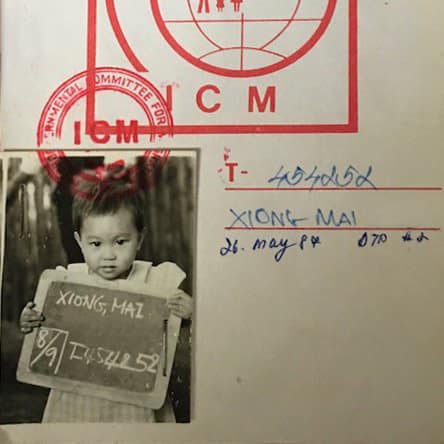
Born in a refugee camp in Thailand after her family fled the aftermath of the Vietnam War, Mai’s parents and older siblings swam across the Mekong River in the middle of the night to escape to Thailand, where they lived in a refugee camp for seven years. Mai was born in 1984 and when she was 3 years old, Mai and her family were accepted into the United States. Mai became the first in her family to receive a full public school education.

Mai learned to hustle at an early age. Her dad was a machine operator and made $6 an hour while her mother found odd jobs and became a seamstress while taking care of her and her other 8 siblings. Mai had to learn how to use a sewing machine at an early age so that she could help her mom. While she was sewing letters on college sweatshirts and hoodies alongside her mom, other kids her age were playing outside. “Now that I look back, I am so grateful for the life-long skills that my mom taught me. My entrepreneurial spirit comes from her,” Mai said.

TURNING ADVERSITY INTO MOTIVATION

When her parents were able to buy their first personal computer that she had to share with her siblings, she took the opportunity to learn how to code in HTML. And at the age of 12, she secured an internship at Ohio.com.

But despite how hard she worked, she still struggled financially in college. There was a time when she had no more than $5 in her pocket and faced the dilemma of using it to either buy gas or get a slice of pizza. You could say that she starved most days.

During her childhood, church people would knock on their door on weekends and bring giant, clear trash bags filled with donuts. Donuts that no one else wanted. It was one of her best memories as a child because she never got to eat sweets. Only to find out that all those years, she has been eating expired donuts. “I came home one night crying my eyeballs out and telling myself that one day I would never ever be poor again or allow my future children to experience what I did.”

FROM FRUGAL LIVING TO INFLUENCER SUCCESS 

After graduating from the College for Creative Studies with her Bachelor of Fine Arts in 2007, she already had a full-time job as a Web Designer lined up for her at an advertising agency. She used the money from her job to publish her own cultural Hmong magazine, with 10,000 in circulation at its peak, and eventually, she went to work for a startup company as a Frontend Developer. She took on side jobs, building websites, designing logos, and doing photography.

When she was pregnant with her first daughter in 2011, she still had over $50,000 in student loan debt, and was paying the bare minimum. She wasn’t taught or prepared to manage her own finances and her parents worked so hard to provide for a family of 11 that even they were stretched thin.

She made a promise to herself to pay off all her loans before her daughter started her own educational path. So she started to live as frugally as possible. She sold anything she had that was worth anything, learned how to extreme coupon. She documented her journey, shared deals and saving tips on a blog and on social media. She amassed a 170,000+ following on Facebook and 50,000 on Instagram.

Before the term Influencer even became popular, she was already working with brands like Nestle, Pampers, Kellogg’s, Walmart, and Sam’s Club. She was able to make multiple six-figures in passive income from Amazon, Google Adsense, and other sources. Eventually, she was able to pay off the full amount of her student loan, and even took her kids to Disney World twice.

Just last year, Mai received two scholarships and a fellowship to attend Harvard University and Michigan State University to further enhance her public speaking and leadership skills. This year, she became an honorary Ambassador and was chosen to travel to Japan to learn about the culture, economy and its people.

FINDING STRENGTH IN VULNERABILITY

Despite her digital and online success, she was diagnosed with PTSD due to a harrowing situation that caused her to have social anxiety and mental health problems, including self-doubt. “Meeting my husband saved me. While others pointed their fingers and laughed at me, he was my protector and my biggest supporter.”

While Mai was in college, she entered a Hmong pageant and became the Miss Lao-Hmong Wisconsin in 2004 without any experience or formal training. The pageant became a platform for Mai to advocate for her community while bringing awareness to the Hmong genocide in Laos. She joined two more pageants after that but shortly after the last pageant and in the summer of 2008, Mai became the victim of a cyber stalker.

Her perpetrator used social media to harass, terrorize and sabotage her life. He had spent weeks gathering images of her, from creating a fake social media account to friending her, lifting and gathering photos of her, and making video collages with explicit messages to taunt her. 

Mai couldn’t trust anyone around her because she had no idea who it was. She just knew it had to be someone who had been watching her for a long time. She reached out to the police but they were unable to identify the cyberstalker.

One night, she decided to use her technical background in Web Design to track her cyber stalker, and the perpetrator was eventually found and arraigned. However, Mai faced backlash from her community when they found out her cyber stalker was a Hmong man. Relatives that supported her initially turned against her, and the woman she had interviewed for her magazine’s front cover dropped out. Mai’s parents were pressured by the Hmong elders to drop the case. Traditionally, Hmong girls are taught to be quiet, timid, and domesticated at an early age.

But Mai was their daughter, so they supported her. Mai had to face her stalker in court and be judged, after a year of waiting for her case to be brought to a trial because the cyberstalker did not budge or take a plea.

The case lasted one week, and the jury found the stalker guilty.

THE LIGHT AT THE END OF THE TUNNEL

After a decade of healing and overcoming her anxiety and fear of being around people, she was voted by the people to be a public figure in her community. Mai now oversees a more than a billion dollar annual budget, attends conferences, public events and is proud to share her experiences with others.

Overcoming PTSD and her mental health challenges made Mai a more resilient person. After the cyberstalking, becoming an outcast in her community, and facing a grueling trial, she looked back on her life and what she went through and realized that she came out as a stronger person. There was nothing anyone could say or do that would hurt her. She had been at the lowest of the low and now, there was nowhere else to go, but up.

During the trial, Mai met her now husband, Adam. Although he knew what happened to Mai, his kindness and support for her never wavered. While everyone was quick to judge her and cast her away, he protected her.

Mai’s parents didn’t live long enough to see her success, and her husband lost his parents when he was younger, so raising their family has been challenging.

But despite all the hardships she has been through, Mai has overcome adversity and continues to thrive in her personal and professional life through hard work and determination.

“When my darkest clouds lifted, I saw just how beautiful the sunlight really was. There is a light at the end of the tunnel.” -Mai

TIPS ON PASSIVE INCOME

  1. Define your niche. Usually, it’s what you love to do or what you’re very interested in. For me, it was personal finance.
  2. Be consistent. Just like a full-time job, show up on time and schedule your tasks and get them done, consistently  
  3. Show up as your true self and you’ll build the right audience –people who are eager to know you and be in your circle
  4. Pitch to brands that you’re passionate about. I would look at things I already have in my house and look up the brand’s story, the founders, and identify what I can bring to the table to make them even better
  5. Automate or outsource anything that you don’t like to do so that you can focus on the things that spark your passion

ADVICE FROM ONE HUSTLER TO ANOTHER

Don’t ever let people tell you that you can’t do it. Don’t let people define your future. Listen to your intuition, that inside voice that is telling you what feels right. When you get rejected by clients or hiring managers, ask them what you can do to be better next time and the kind of person they’re looking for. 

Forge a different path: when people are “Zig-ing” –you “Zag.”  

CONNECT WITH MAI

Facebook: Mai Hlee

Instagram: @maihleex

Website: maihleex.com

329143384_1365440140878096_8694695818769525810_n (1)-jpg

Stories

Career Pivot from Being an Educator to a Natural Dye Artist, She Creates Designs Based on Her Memories in The Philippines

The world of home decor is a place where creativity and self-expression know no bounds. It’s a space where artists and makers come together to craft unique and meaningful designs that add a personal touch to people’s homes.

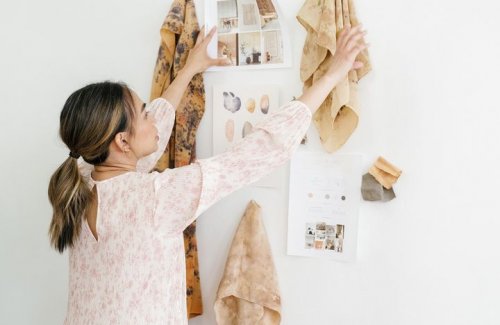
In the heart of San Diego, California is France Malvar. Her story is one of hope, passion, and self-discovery. After 14 years as an early childhood educator, France took a leap of faith and pivoted her career to become a natural dye artist and create Lu France Interiors, a home decor brand for intentional design. For the past two years, she’s been pouring her heart and soul into her work, crafting pieces that are as beautiful as they are sustainable.

France carefully chooses the businesses and artisans that her brand partners with. Her previous collections were made in collaboration with small businesses all over the world, mostly in the Philippines, to support the local weavers and artisans in her homeland.

I HOLD FOND MEMORIES GROWING UP IN THE PHILIPPINES

I’m pretty blessed to have had a childhood full of memorable experiences and surrounded by people who have in one way or another shaped me.

I grew up in my Papa’s ancestral house in the Philippines before my parents eventually built their own, which became our home, and I have nothing but good memories of both. Summers and Christmas breaks were spent with my cousins and we would spend weeks at our Lola’s house, or at our Tita and Tito’s home, or somewhere exploring a new place together.

As my parents got settled in their respective careers, we progressed to traveling more or going out — driving up to Tagaytay, spending Sundays at the park, exploring all sorts of shops and markets, or eating out. They also gave us the opportunity to explore different sorts of activities and I took a special interest in ballet, starting classes at the age of 3 and then continuing through the start of high school before moving to other forms of dance through college. A lot of my memories involve recitals and shows and having my family there to support me. 

I don’t know what defines a typical childhood. But I do know that I hold fond memories growing up in the Philippines. Even to this day, there are moments that I get so nostalgic for every time, and I am grateful for all of them.

TRANSITIONS CAN BE SCARY, PIVOTS AT LEAST TO ME ARE TERRIFYING

Much of my young adulthood has always been about pivots.

Growing up, a career in medicine is what I’ve always been exposed to. A lot of times I’d tag along with my sisters to our Papa’s clinic or I’d wait for Mama in hospital break rooms and offices. Whether those instances were by design or simply out of necessity, I always thought I’d just follow along and take a science course to eventually pursue a career in medicine in one form or another.

So I studied Sports Science in college. During an Adapted Physical Education class, I realized that I liked teaching children. It gave me so much joy seeing how even the smallest actions you make and the lessons you share, impact their days and eventually their lives. After graduation, I applied for teaching jobs with a focus on music and movement, and fitness for young children. I figured I could take my Sports Science degree, my love for dance and movement, and use it to pivot to a career teaching children.

My first job offer out of college was from a school in Singapore, but I chose to stay in the Philippines and worked for a year there before moving to the US. I eventually took a certificate in early childhood education and spent 14 years in that industry working both in the US and the Philippines. It was a career I loved (and honestly actually miss). While I continued to teach, I also kept dabbling in the different art forms I’ve taken a liking to. I took design workshops to relieve my stress – styling, floral arrangement, natural dyes, etc.

When the pandemic happened and schools shut down, I enrolled in Interior Design online and started honing my love for all things design, leaving a career I’ve known for 14 years and taking my love for natural dyes and design a step further by launching my business.

Transitions can be scary, pivots at least to me are terrifying. I’m the type of person who is constantly planning. I need to know where I will be, and what I will do at certain points in my life. When changes happen and I need to adjust, that throws me off and my anxiety kicks in. But I think for the most part it is exactly because I am a planner and because I willingly chose these pivots from Sports Science to early childhood to now, a natural dye artist and small business owner, there was more excitement than anxiety as I took every transition. 

LU FRANCE INTERIORS IS AN EXTENSION OF MYSELF

Much of who I am as a designer and artist are rooted deeply in my being Filipino and more specifically, my experiences and memories I have growing up in the Philippines. That’s true for the things that catch my eye whether it be handcrafted wood pieces, ceramics, or the spaces I gravitate to, I crave rooms and spaces that are “maaliwalas,” full of warmth with a lived-in look, calming, and organic.

The stories that shape my collections are all stories from home. The candle scents I have in collaboration with Terra, a Filipino-American brand, are inspired by my life growing up in the Philippines. Every single scent has a story, a distinct memory attached to it.

The stories that guide and serve as the foundation for my naturally dyed pieces are all inspired by memories from the Philippines too. Sometimes a moment from years ago inspires me or a Filipino word that resonates with me moves me to make a tangible piece of art. Or sometimes an event back in the Philippines moves me to create a whole collection of naturally dyed textiles. I previously dropped a whole collection inspired by the campaign of former Vice President Leni Robredo! What I can’t articulate, I translate in the form of my naturally dyed textiles, always hoping to share a piece of my being Filipino with others. 

My values also play an important role in the people I choose to work with. I have a collaboration collection with Anthill, a social enterprise based in Cebu, Philippines. My thrust for love of community, sustainability, amplifying the work of Filipino artisans, and sharing their stories are some of the values I found in Anthill too. 

And while I proudly work with non-Filipino makers too and curate pieces from artisans and businesses around the globe, the same design influences from my life in the Philippines and the same values guide me in choosing what to pick and who to work with no matter where they come from. I say this often, Lu France Interiors is an extension of myself. It’s me in brand form and while I do not constantly scream about my being Filipino, I think if you browse through my website or follow me on social media, you’ll see why I don’t have to — it’s just naturally, constantly, permanently, and beautifully a part of my identity. 

ALLOWING MYSELF TO ASK FOR HELP FROM OTHERS HELPED ME TO RIDE THE HICCUPS THAT USED TO KEEP ME UP AT NIGHT

As with any other small business, I think the financial uncertainty that comes with building and running a brand is the most challenging part of building a business. The design process comes easily to me (at least thankfully, for the most part, it does!).

My years of teaching children and dealing with difficult parents have also helped me in dealing with customers and suppliers. But navigating slow seasons, courier mishaps, and other unexpected issues that affect cash flow were challenges that really kept me up for nights at some point since I launched my brand. But I’m really lucky to have the constant support of family who all go above and beyond in helping me pursue and monetize this passion, the support of friends, and the support of a very loyal audience who all continue to spread the word about my brand. 

I also found comfort and strength in knowing that I am not the only small business owner who has had to deal with the hardships post-pandemic and I’ve learned much from my fellow makers, artists, and owners. I pivoted to pushing for more wholesale opportunities for my natural dye work so that they are stocked in more retail stores, I joined more pop-up markets to introduce my brand to audiences that social media doesn’t reach, and I adjusted in terms of collection batches and when and how I launch and restock pieces.

The brand is a continuous work in progress for sure as much as I am too as a person and I think changing my perspective on how I view these challenges and using them as learning curves and allowing myself to ask for help from others helped me to ride the hiccups that used to keep me up at night. It’s okay to ask for help and to admit when you need it! 

THE PHILIPPINES IS AND WILL ALWAYS BE MY HOME

That’s not to say that America isn’t because it is too and I’m super grateful for that. But I think wherever I go and whatever I do, the foundation on which my identity is anchored is firmly rooted in calling the Philippines my home. I feel like it has always been my comfort zone, most of my friends are there and I feel like I navigate everyday life more confidently over there.

I’m an introvert and I think that has been magnified so much more here in the US. But you know how situations force you to adjust and adapt? I think I’ve become much braver living here, I push myself to do things I wouldn’t have tried back in the Philippines. I know it sounds cliche but America has really opened doors for me in terms of providing an environment for me to explore and create opportunities for myself and for others. Moving here has been a journey of self-discovery and it still is. This adoptive country of mine has taught me that I am more than one thing and that it isn’t too late to try something else.

If you told me while living in the Philippines that I’d one day call myself a natural dye artist, own a home decor brand, have pop-ups at stores like Madewell, join markets and art exhibits at galleries, and connect with strangers turned customers turned friends through social media, I would have laughed and said you are crazy. Yet here I am surprising myself every single day, bravely going out of my comfort zone, opening myself up to people, and rediscovering a deep sense of love and immense gratitude for 2 countries that I proudly call home. 

CHANGING CAREERS SHOULDN’T BE TAKEN LIGHTLY

I’ll probably raise a few eyebrows in saying this but I don’t believe in the “Do what you love, love what you do” statement or advice. I think that doing a pivot and considering a major career change entails not only sacrifice but careful planning and much… so much patience.

Every situation is different, we all come from different paths and I recognize that it is a privilege to be able to pivot to a new career and explore a whole new industry without worrying about what to eat the next day or where to sleep. So I think before you make that leap you should thoroughly, carefully, consider your situation, your needs, and your goals. 

If you need to stick to doing something that you don’t love at the moment so that it gives you a little more cushion for the pivot you are planning then hang in there for a little bit longer and use your dream as your motivation. Changing careers, especially leaving a stable job with a stable, monthly income shouldn’t be taken lightly. But when you do, if you are able to, give it your all. Do it wholeheartedly, give it 110% of your time and effort, and stick to it. Stick to it long enough for as long as it makes you happy, for as long as the joy you get from it outweighs the sacrifices you make to make it work. And do not ever forget your WHY. Let your WHY guide you always.

CONNECT WITH FRANCE

Instagram: @lufranceinteriors

Website lufranceinteriors.com

Facebook @lufranceinteriors

linkedin-jpeg

News

Former Actress Jennifer Yen Integrates Traditional Asian Remedies into Her Modern Skincare Brands

Jennifer Yen, the founder of beauty companies Purlisse and Yensa, has seamlessly integrated traditional Asian ingredients into her product lines.

In her conversation with Boston University, Jennifer shares valuable insights into her entrepreneurial journey and the transformative power of traditional Asian remedies in the beauty industry.

Growing up in a Chinese American family, Yen was exposed to the healing power of traditional remedies from an early age. From her grandmother’s soothing green tea to her mother’s revitalizing black rice and mushroom soups, Yen realized that these remedies could be translated into effective skincare products. Her own struggles with sensitive skin and adult acne, exacerbated by her acting career (she portrayed Vypra in Power Rangers Lightspeed Rescue), further motivated her to create a restorative, clean-beauty line.

Image Source: Twitter

In 2008, Yen launched her first company, Purlisse, featuring a range of products infused with ingredients passed down through generations. And in 2018, Yen introduced Yensa Beauty, a cosmetics line infused with eight Asian “SuperBlacks,” including black rice and black seaweed. Inspired by her mother’s vitality-boosting meals, Yensa aims to modernize Asian cultural wisdom for everyday women. 

While Purlisse caters to a millennial audience, Yensa primarily targets Gen X customers, tailoring products to their unique requirements.

Featured Image Source: Linkedin