Awaken* newsletter

December 9, 2024

SHARE:

In this month’s edition of the Awaken* Newsletter, we speak with Kristy Kim, Founder and CEO of TomoCredit, a fintech startup focused on improving access to credit for underserved consumers. By using AI to evaluate real-time cash flow data rather than traditional credit scores, TomoCredit connects consumers with lenders.

Kristy discusses her journey as an immigrant, an Asian female founder, and an entrepreneur working to transform the financial industry. Through her leadership, TomoCredit aims to provide more people with better access to capital and lending opportunities.

Can you start by giving us an overview of your company and what you’re trying to solve?

Kristy Kim: Sure! At TomoCredit, our mission is to bridge the gap between underserved consumers and lenders using AI technology. We are focused on serving individuals who have been left behind by traditional financial systems, especially those without credit scores or with limited credit history.

There are millions of people in the U.S. who are underbanked, and the financial institutions that could potentially help them either don’t have access to their data or don’t understand their risk profile. We leverage AI to evaluate consumers based on their cash flow instead of relying solely on traditional credit scores. This enables us to match these individuals with lenders who are willing to serve them without taking on additional risk. Our platform helps both consumers and lenders—consumers get access to capital, and lenders expand their market in a low-risk way.

What motivated you to start TomoCredit?

As a first-generation immigrant from South Korea, I moved to the U.S. at eleven. In my early twenties, I faced the challenges of building my own credit history. After graduating from UC Berkeley, I worked in investment banking.

Despite having a stable income, I was denied an auto loan five times because I lacked a credit score. This experience highlighted a significant gap in the financial system, where many immigrants, young adults and many other underserved communities are excluded due to the absence of a credit history. After being turned down multiple times, I knew something had to change. I saw that the traditional credit system wasn’t serving millions of people, particularly immigrants, who had the ability to repay but lacked a credit history to prove it.

That experience of being excluded from the financial system really motivated me to find a way to help people like myself access the credit they needed. Determined to address this issue, I founded TomoCredit to provide credit solutions for those who, like me, struggle to access traditional credit avenues.

I wanted to create a system that didn’t rely on traditional credit scores but instead used alternative data, like cash flow, to assess creditworthiness. The idea was to connect underserved consumers to lenders in a way that wouldn’t increase their risk. TomoCredit was born out of this desire to make the financial system more inclusive—so others wouldn’t face the same rejections I did, and would have the chance to access capital and thrive.

As an immigrant founder, have you faced any challenges or biases in fundraising or building relationships with big institutions?

Kristy Kim: Yes, there are definitely challenges that come with being an immigrant founder, and at times, it can feel like an uphill battle. But, interestingly, my background has also played to my advantage.

As an immigrant, I have a unique lens on the problems facing underserved communities. I know firsthand what it’s like to struggle with the traditional credit system. I’ve faced the same barriers that many of our customers face, and that gives me an edge when I’m speaking to financial institutions. I’m able to say, “Look, I know my customers better than anyone else. These people are creditworthy, but they’re being overlooked by the traditional system.”

There is some bias, of course, especially when you’re dealing with legacy institutions, but I think they also recognize that I bring something different to the table—an intimate understanding of the market and the customers they often don’t have access to. Lenders are willing to listen because they know that by partnering with us, they can expand their pool of potential customers without taking on additional risk.

You’ve been in this industry for over five years now. What keeps you motivated despite the challenges you’ve faced?

Kristy Kim: That’s a great question. Honestly, the progress we’ve made keeps me motivated. Every year, I see the interest in our approach growing, and it reinforces that we’re heading in the right direction.

When we first started, it felt like I was an outsider trying to convince traditional financial institutions to embrace an entirely new way of evaluating credit. But now, year after year, we see more and more mainstream players realizing that there’s a huge market for underserved consumers—and that these consumers are creditworthy if we just use the right tools to understand them. It’s exciting to be at the forefront of this change.

For me, it’s not just about building a business—it’s about creating lasting impact. The U.S. consumer credit industry is worth over $4 trillion, and the fact that we are focusing on a largely ignored segment of that market feels like we’re making a real difference. And, of course, as a founder, seeing our technology evolve and improve with time and data is incredibly motivating.

How does your solution differ from other competitors in the market who are also targeting underserved consumers?

Kristy Kim: The key differentiator is that we don’t just rely on traditional credit scores to assess risk.

Our AI model is powered by cash flow data—essentially, we evaluate consumers based on their spending and income patterns, which gives a far more accurate picture of their financial health. Over the past five years, we’ve accumulated a wealth of data that allows us to refine our model, and with every new data point, we get better at underwriting.

Unlike competitors who may be using generic data or building from scratch, we have a more granular understanding of how underserved consumers behave financially. Additionally, the beauty of our system is that we’re not just looking at data from one financial institution—we’re aggregating data from multiple sources. Our customers might have accounts with multiple banks, and that gives us a fuller picture of their financial habits. In comparison, other companies might only have access to data from one bank, which limits their ability to assess risk accurately.

As a founder, what has been the most rewarding part of your journey so far, and what has been the hardest?

Kristy Kim: The most rewarding part has been seeing the validation from both the industry and our customers. When leaders of financial institutions tell me that TomoCredit makes sense, it’s incredibly validating. It’s a feeling of affirmation that, yes, we’re on the right path. But it’s also rewarding to see the real-world impact we’re having on people’s lives. We’ve helped thousands of people access capital who otherwise wouldn’t have had the chance.

On the flip side, the hardest part has been dealing with the mental burden of being a startup founder. When things are going well, it feels like everything is moving at full speed, but when challenges arise—whether it’s fundraising hurdles, market uncertainty, or hiring struggles—the pressure is immense. Unlike larger companies with more resources, startups have less margin for error. It can feel like one wrong move could jeopardize everything, and that can be emotionally exhausting. But it’s in those moments that you really find your resilience, and you learn that, no matter how tough it gets, you have to push forward.

As a seasoned founder, what key lessons from your previous startup experience have you applied to building TomoCredit?

When I launched my first company, I was in my early twenties, full of energy but lacking experience. It was a trial-and-error journey, where I learned a lot, but I quickly realized that having a clear vision and understanding the real impact you want to make is crucial.

Starting TomoCredit was a completely different experience. This time, I approached it with a clear strategy, having learned the importance of tackling a problem that I was personally passionate about. My previous startup experience taught me how to make more strategic decisions, prioritize what matters most, and stay resilient through the inevitable ups and downs of entrepreneurship.

What advice would you give to aspiring founders, particularly those who may be feeling discouraged after a tough year?

Kristy Kim: My advice would be to stay grounded in your purpose and conviction. It’s easy to get distracted by the ups and downs of the startup world, but at the end of the day, your mission should drive you more than the fear of failure or the setbacks you face along the way.

When I first started my company, it wasn’t about just building a business—it was about solving a real problem that I deeply cared about. The passion for the idea needs to be stronger than the fear of failure. Even if things don’t work out the way you hope, you can still be proud knowing that you tried to create something that could have made a real impact.

The most successful founders I know are the ones who are able to maintain a strong sense of purpose, even when it feels like everything is falling apart. If you believe in what you’re doing and are committed to the long-term vision, that will carry you through the hard times.

What are some recent key achievements or milestones that you’re excited to share?

Kristy Kim: Thanks for asking. First, our AI-driven platform continues to help underserved consumers access credit by using cash flow data to connect them with lenders.

We’ve also made significant strides in improving our underwriting capabilities by leveraging years of data to assess creditworthiness more accurately. This year, we paused issuing new credit cards to focus on refining our AI and underwriting technology. While we haven’t issued new cards yet, we’re still accepting customers and offering other financial services. Additionally, our partnerships with larger financial institutions are also growing, with increasing interest from major players. These collaborations are essential to our mission of expanding access to lending for underserved communities.

And lastly, on the team front, we’ve made several key hires, including the former CTO at Experian and the former CEO of LegalZoom. Their expertise in open banking and scaling high-growth companies will help us continue to expand our offerings and further our mission.

Looking ahead, what’s next for TomoCredit?

Kristy Kim: We’re expanding our offering, bringing more lenders into the network, and continuing to refine our AI technology to provide better risk assessments.

We’ve been growing the B2B side of our business over the last year, and we’re seeing significant interest from bigger players in the financial sector. We’re also planning to expand our product offerings to include more types of loans, like auto loans and mortgages, to help more customers get the access they need.

We’re also actively hiring, which is very exciting for us. We’re looking for a talented marketing person to help us build our brand and spread the word about what we’re doing. Our mission is to make financial access easier for everyone, and we’re excited to continue growing and impacting even more lives.


Kristy Kim’s journey proves that determination, a clear vision, and a deep understanding of your market can break through even the toughest barriers. At TomoCredit, she’s not just building a company; she’s seeking to reshape how credit is accessed, especially for those often left behind by traditional systems. Stay tuned for more updates on TomoCredit’s journey, and learn how they’re challenging the status quo while creating new opportunities for underserved communities.

Author: Donna Yu

Related Articles

Stories

Sophia Li Unites Two Cultures for Climate Action and Social Advocacy

AHN and Meta Prosper have partnered on a new podcast series highlighting API creators. Meta Prosper is dedicated to amplifying and supporting the API community and driving economic growth and equitable representation. The Creators Podcast series delivers stories on how creators achieved success and created impact through their platforms, serving as an inspiration for the community.

In the fourth episode of Creators Podcast, we embark on an empowering journey as AHN and Meta Prosper sit down with Sophia Li, a phenomenal Chinese American journalist, climate advocate, and public speaker. In this episode, Sophia Li addresses her cultural heritage and how she raises awareness of complicated subjects including climate justice, civil rights, and technology with ease. 

Even though Sophia was born and raised in the US, she spent two years of childhood with her grandparents in Shandong, China before returning to the US for preschool. Her adjustment to the US culture, along with Buddhist influence throughout childhood, has turned her cross-cultural journeys and wisdom into impact, bridging the two worlds apart into one globally mutual cause – sustainability. 

Sophia has always been a social advocate. After graduating with a Bachelor of Arts in Fashion Design and Merchandising, her paper on cotton globalization enabled her to receive a $2,000 grant from Cotton Inc., travel the world for fashion studies, and land a four-year position at Vogue.

Now, leveraging her platform and knowledge, she co-founded STEWARD, a project that emphasizes sustainability in the world of Web3 while serving as the co-chair of the World Economic Forum’s Web3 Sustainability Coalition. 

Moreover, Sophia does not stop at climate change but she’s also a vocal advocate for social justice. Sophia is an official United Nations Human Rights Champion and a strong supporter of the #StopAsianHate movement and youth education. 

Listen to the Creators Podcast featuring Sophia Li here.

CONNECT WITH SOPHIA LI

Instagram: @sophfei

Website: sophfei.com

image1-png

Awaken* newsletter

Transforming the Future of Work: An Insightful Conversation with JJ on Entrepreneurship, Innovation, and Personal Growth

In this candid conversation, JJ reflects on his remarkable journey, from gaining admission to Stanford GSB to founding Onloop. He discusses his proudest achievements, the challenges of building a pioneering company, and the invaluable lessons learned along the way. JJ also shares his vision for Onloop in the evolving landscape of remote work and generative AI, his approach to angel investing, and offers insightful advice for aspiring entrepreneurs. Join us as we delve into the experiences and insights of a trailblazing entrepreneur committed to transforming the future of work.

HanYue: You have accomplished a lot in your career. What’s your proudest achievement so far?

JJ: My proudest achievement remains getting into the Stanford GSB MBA program. Before Stanford, I had spent my entire life in Asia. Moving to Stanford marked a significant shift in both my career and personal development. Immersing myself in the challenging yet enriching environment of the Bay Area was transformative, and I just returned there for my 10-year reunion.

HanYue: Can you tell us about the origins of Onloop?

JJ: Onloop originated from personal frustrations I encountered while managing teams at Uber for 3.5 years, especially with inefficient HR processes. This led to extreme frustration with the outdated systems. After leaving Uber in September 2019, I started OnLoop to solve some of these frustrations. We developed our first product around changing how performance reviews get done using GPT3 in early 2021. We’ve come a long way building out our platform and focused on helping every manager become a great manager using habit-forming technology and applied AI It’s been an exhilarating journey, shaping a company that contributes to the evolving future of work landscape especially given all the transformative impact of distributed & hybrid work as well as the maturity of large language models (LLMs).

HanYue: What have you learned from building Onloop?

JJ: Building Onloop has taught me that a founder’s longevity hinges on their conviction in their mission and the people they surround themselves with. Pioneering in any field is incredibly challenging—far more so than creating a copycat startup. Jensen Huang famously said he’d say ‘hell no’ if asked to do it all over again. The world resists change, and you must consistently challenge the status quo. 

Growing up in an Asian household where academic success was prioritized and entrepreneurship was uncommon, taking a non-salary path wasn’t easy. This background often amplifies the voices of doubt during challenging times, yet confidence and eloquence are the most significant drivers of success in the early days. 

Life in your late 30s and 40s has many more responsibilities with respect to family so it’s not always easy to take the plunge, but the learning experience from entrepreneurship is absolutely invaluable. I’m better off for it, even if things don’t pan out as expected. Starting a company is like becoming a parent—it’s a transformative experience that teaches you new ways to live.

HanYue: What’s your vision for Onloop?

JJ: Our vision at Onloop is to help knowledge workers fully realize their potential during this era of significant transformation. The rise of remote work and the advent of generative AI—akin to an industrial revolution for knowledge workers—presents new challenges and opportunities. We aim to help these professionals optimize their careers in a rapidly changing environment. The knowledge work sector is vast and often influenced by chance, especially in job placement – knowledge worker wages are a multi-trillion dollar asset class allocated by chance. My goal is to develop and disseminate optimal strategies for knowledge workers, enabling them to seize the best opportunities available.

HanYue: Tell me about your angel investing career and how it impacts your entrepreneurship journey.

JJ: I don’t subscribe to the notion of work-life balance but prefer to maintain a purpose portfolio, which currently includes my family, OnLoop, and enhancing Singapore’s status as a global hub, especially for highly innovative companies. My approach to angel investing focuses more on the people than the ideas themselves, reinforcing my belief that the right people drive success. And I apply this same principle in my work with other CEOs and founders.

While I believe any manager can become great with the right support, a CEO doesn’t have a direct manager, making coaching essential. I therefore coach a handful of founder CEOs and  this interaction offers mutual learning opportunities and enhances my own growth as a CEO/founder 

Talking about angel investing, it isn’t just for the rich and wealthy. I have made six investments so far in the range of US$1,000 through syndicates to US$15,000 in certain founders that I know personally. I have learned that while my bets on ideas have failed, my bets on people have not. This supports my hypothesis that early-stage investing is 80% about the founding team. 

Lastly, having become a Singaporean last year, I feel even more committed to the Singaporean ecosystem and proud to build in it.

HanYue: Advice for young entrepreneurs these days? 

JJ: When I was single and enjoyed partying, I never imagined I’d find myself here today. People seek pleasure when they lack purpose, as Victor Frankl famously spoke about. Today, living a life of purpose is crucial for happiness — it involves engaging in activities that you deeply enjoy and believe are your calling. This philosophy has guided both my personal and professional life and serves as my constant motivation. 

JJ’s journey exemplifies the blend of purpose and innovation needed to navigate the evolving landscape of modern work. His insights into entrepreneurship, the importance of mission-driven leadership, and the power of transformative technology offer invaluable guidance for the next generation of innovators.

{"ARInfo":{"IsUseAR":false},"Version":"1.0.0","MakeupInfo":{"IsUseMakeup":false},"FaceliftInfo":{"IsChangeEyeLift":true,"IsChangeFacelift":false,"IsChangePostureLift":false,"IsChangeNose":false,"IsChangeFaceChin":false,"IsChangeMouth":false,"IsChangeThinFace":false},"BeautyInfo":{"SwitchMedicatedAcne":false,"IsAIBeauty":false,"IsBrightEyes":false,"IsSharpen":false,"IsOldBeauty":false,"IsReduceBlackEyes":false},"HandlerInfo":{"AppName":2},"FilterInfo":{"IsUseFilter":false}}

Stories

How Benny Yap and Jae Tan Drive TGFX Agency’s Success

Benny Yap and Jae Tan are not just co-founders of TGFX Agency; they are a powerhouse duo transforming businesses through innovative branding and marketing.

Benny Yap, a seasoned entrepreneur, is renowned for his outstanding achievements in the marketing and advertising industry. His expertise encompasses advertising, branding, illustration, and ideation. Benny Yap’s leadership and artistic vision play a pivotal role in shaping TGFX’s distinctive approach to branding and marketing, driving its success.

Jae Tan is a dedicated and results-driven entrepreneur with over a decade of experience in branding, web development, and video production. Under his strategic guidance and leadership, Jae has propelled TGFX to unprecedented success.

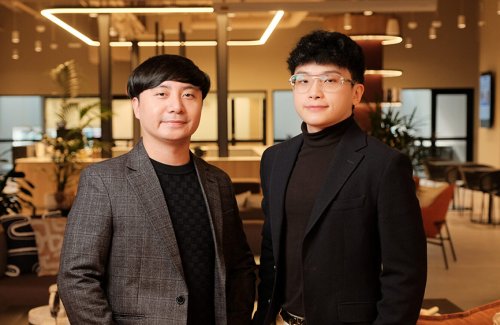
Jae Tan (left) and Benny Yap in a meeting.

In an exclusive interview with Asian Hustle Network, Benny and Jae share their journey, challenges, and insights, offering a glimpse into the dynamic partnership driving TGFX. Read on to discover how they are transforming brands and making a lasting impact on the marketing industry.

EARLY CAREER AND THE BIRTH OF TGFX

Benny Yap and Jae Tan both studied graphic design and advertising and initially met through a design project. This collaboration not only brought them together as best friends but also sparked the idea of starting a business together. They realized that by combining their forces—their creativity and design skills—they could tackle the business world more effectively as a team. This shared vision and partnership led them to start TGFX.

OVERCOMING INITIAL CHALLENGES

Benny and Jae faced significant challenges when starting TGFX, especially during the COVID period. One of the biggest hurdles was adapting their business model. Initially, they focused on one-off jobs, but they soon realized the need for stability and consistent cash flow.

They decided to pivot to a retainer basis, particularly in social media marketing. This shift not only helped them navigate through a difficult time but also allowed them to build stronger, long-term relationships with their clients.

DYNAMIC PARTNERSHIP

As co-founders, Benny and Jae complement each other perfectly in running TGFX. Benny, previously from BBDO Advertising agency, brings a wealth of creativity and innovative ideas, driving the creative direction and ensuring the campaigns are cutting-edge, Meanwhile, Jae excels in managing operations and strategic planning, providing a solid foundation for the business. This dynamic allows them to leverage their individual strengths, resulting in a well-balanced and effective partnership.

TGFX’S MISSION AND CORE VALUES

TGFX’s mission is to help businesses across Australia succeed and thrive. Their core values include providing world-class services and being recognized as one of the best and most innovative agencies in Australia. They emphasize treating clients like family and growing alongside them, fostering strong, long-term relationships built on trust and mutual success. 

INDUSTRY-SPECIFIC CHALLENGES

Having worked with numerous businesses across various industries, TGFX encounters several industry-specific challenges. Key issues include maintaining brand consistency, attracting the right customers, and building a loyal customer base.

TGFX addresses these challenges by tackling each core issue one day at a time and maintaining consistency in everything they do for the brand. This methodical and dedicated approach helps their clients overcome obstacles and achieve long-term success.

IMPACT ON THE ASIAN COMMUNITY

As entrepreneurs with roots in the Asian community, Benny and Jae see TGFX Agency as having a significant impact and contribution to this community. With 80% of their clientele being Asian-owned businesses, TGFX Agency is dedicated to helping the Asian business community in Australia thrive. By providing tailored branding and marketing strategies, they support these businesses in achieving success and growth.

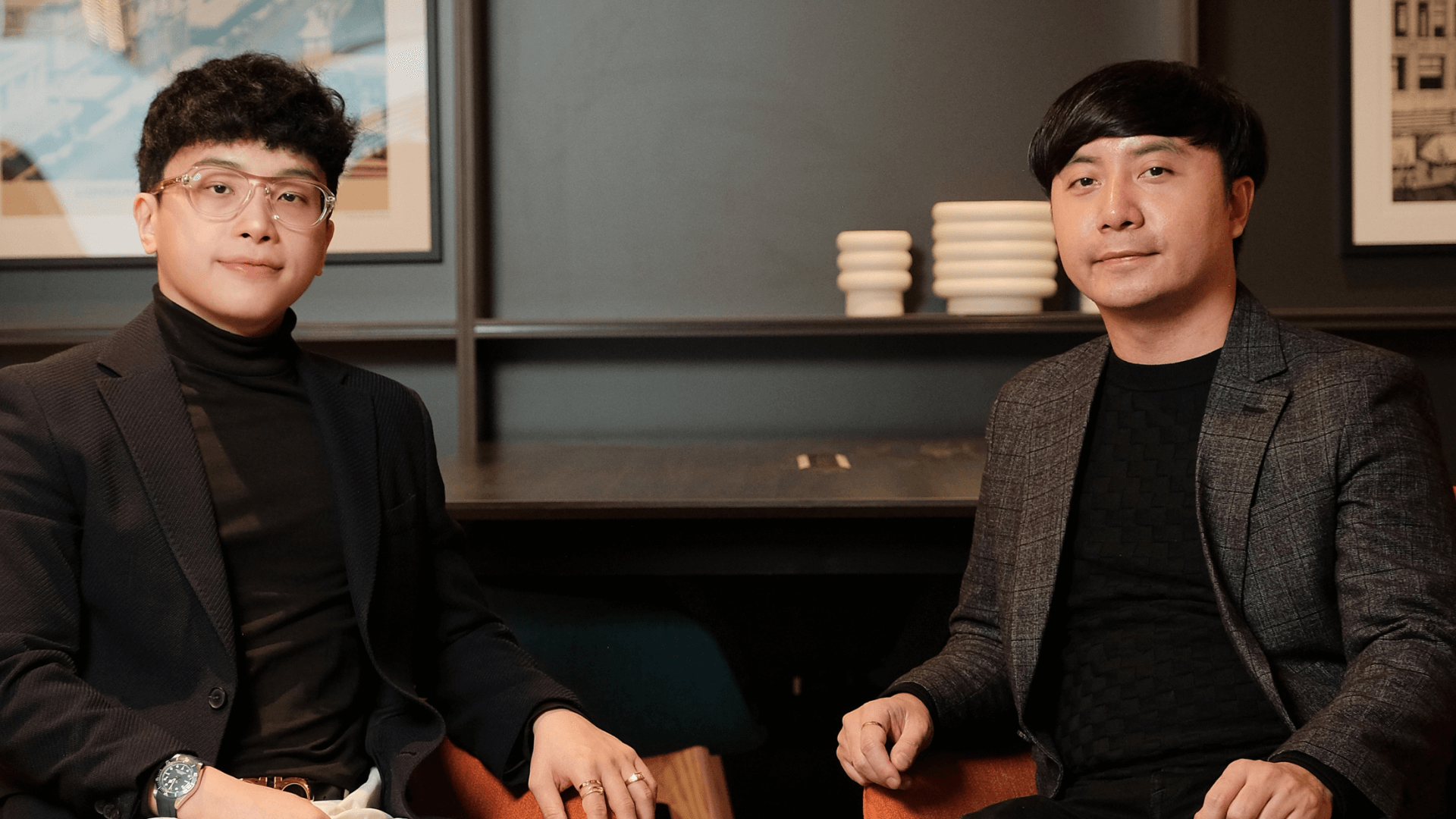
Jae Tan (left) and Benny Yap
With TGFX, the duo aim to uplift Asian businesses in Australia.

ADVICE FOR ASPIRING ENTREPRENEURS

Benny and Jae emphasize the importance of adding value to the marketplace. Aspiring entrepreneurs should understand their consumers’ needs and preferences thoroughly, conduct extensive market research, and stay attuned to industry trends and client feedback.

“Persistence is key—never give up, even when faced with challenges. Building a successful agency requires resilience, continuous learning, and an unwavering commitment to delivering exceptional service and results. In addition to that, our team is the cornerstone of our success. Without their dedication and hard work, we wouldn’t have achieved our current position. Each member plays a crucial role in our accomplishments, bringing unique skills and perspectives that drive our progress forward. We are deeply grateful for their commitment and contribution to our shared goals. Together, we continue to grow and thrive, thanks to their invaluable efforts,” Benny and Jae shared.

Benny Yap (left) and Jae Tan
Benny (left) and Jae highlight persistence, market research, and a strong team as keys to success.

FUTURE VISION AND GOALS

TGFX Agency continually strives to expand into new areas across Australia and different industries, aiming to deliver data-driven results to businesses in need of growth. They are also committed to expanding their Malaysia agency, bringing on new businesses, and growing the team there.

Benny and Jae are excited about the future and look forward to furthering their impact on businesses both locally and internationally. Their advice to others is to stay focused, and consistent, and always strive to add value. Understand your customers’ needs and don’t shy away from innovation.

CONNECT WITH TGFX

Website: tgfx.com.au

Instagram: @tgfx.agency

Kevin Tan

Awaken* newsletter

From Bytes to Bites, A Conversation with Snackpass Co-founder and CEO Kevin Tan

If you’ve ever ordered boba, you’ve probably used Snackpass before. Snackpass is a fast-growing startup that operates a social food-ordering app alongside a suite of software and hardware solutions for restaurant operations.

Boasting a $400 million valuation, Snackpass is backed by a slew of the best investors around, including Craft Ventures, a16z, General Catalyst, First Round, and Y Combinator. I had the pleasure to sit down with Snackpass’s co-founder and CEO, Kevin Tan, to talk about his background and experiences.

JOURNEY TO BECOMING A FOUNDER

My first question was if Kevin did anything entrepreneurial before Snackpass:

I had multiple projects before SnackPass. As a kid, I shot a movie with friends and made a comic book to sell. In college, I picked up programming, which sparked my interest in technology startups. I started that in my sophomore year. I tried a few different projects or companies and started SnackPass in my senior year.

Back in college, Kevin actually majored in Physics, not Computer Science. I asked Kevin what made him decide to pursue software over a career in Physics, and also why he decided to start a company as opposed to joining a big tech company:

I actually initially started in the humanities. After a year of humanities, I went and moved into Physics and started programming at the same time. I chose software because I felt that things were a bit more fast-paced in the world of technology. Also, I didn’t feel that I was going to be a top 1% physicist–though I still really enjoy Physics. As far as pursuing a startup instead of big tech, I did actually apply to Google for an internship, but I didn’t get in. One of my favorite things about startups is that you don’t necessarily need to impress any gatekeepers who hold power over your next job, you can go make your own! That’s something that made me super excited about startups.

STORIES AND THOUGHTS ABOUT SNACKPASS

I remember sometimes to get to the restaurant owners, I would set up a meeting and then trek across campus in the cold and in two feet of snow only for the owner to say “Oh, I rescheduled”, yet I always followed up and went back to meet them.

Kevin Tan

In an article by Free Ventures about Snackpass, I read “In the beginning, they partnered with restaurants by going door to door to mom-and-pop shops and talking personally with the owners. They also posted a bunch of flyers around campus and created referral mechanisms on the app to get the word out.” I asked Kevin what that experience was like:

Back then, we didn’t have any funding. We got rejected from Yale’s incubator, let alone venture capital. But we were able to get pretty far because I was able to code and go door to door to bootstrap our first set of customers. I’ve always had a very determined attitude about things and am willing to brute force it if I have to. I remember sometimes to get to the restaurant owners, I would set up a meeting and then trek across campus in the cold and in two feet of snow only for the owner to say “Oh, I rescheduled”, yet I always followed up and went back to meet them. Obviously, there needs to be a more efficient way to do that, but if you’re trying to learn something very quickly. That’s one way to do it. 

Even to this day, we’ll go to new installs and try to embody the customer as much as possible. It’s very hectic behind the restaurant counter. To make a product like ours work, we have to get very deep into how the staff interacts with our tech and how they are receiving orders. Like, were the printers printing? Were they able to confirm the order or did it get missed? 

As Kevin hinted in his answer, Snackpass started at Yale, then expanded to other colleges, and is now expanding to all restaurants. I asked Kevin how he decided it was time to expand to new markets:

There’s this blog post from Marc Andreessen about how there are two phases of a startup. One is before product-market fit, where you should do everything to find it. The second is after product-market fit, where you should do everything you can to exploit it. I think you don’t want to scale anything up before you have really strong product-market fit and a repeatable engine for driving revenue or growth. You can have an amazing product, but if you can’t get it out efficiently, that’s going to be a problem. 

Whenever I think about the restaurant business, one of the first things that comes to mind is the pandemic. I asked Kevin how the pandemic affected Snackpass:

It was definitely a huge curveball. At the height of the pandemic, people were asking if college campus restaurants would stay in business. People went back home. We saw a big dip in our volume in the same way a lot of local marketplaces did. We used that time to ask how we were going to expand outside of college campuses. The pandemic motivated us to shift our whole business model. We shifted into focusing on building an operating system for these restaurants, and we’re still playing that out today. 

I asked Kevin how Snackpass’s go-to-market motion has evolved over the company’s lifetime:

In terms of target customers, we’ve grown from just SMB restaurants to having some multi-location mid-market brands using us. In terms of how we acquire new customers, we get some inbound by being a market leader. Having a brand name and social proof is very important. Other channels that have worked for us are referrals and social media such as Instagram and Tiktok.

In a previous conversation I had with Gusto’s cofounder, Eddie Kim, he talked about the idea of sometimes needing to turn down larger customers and contracts to remain focused on the target customer. I asked Kevin if he ever thought about this:

Yes, we’ve definitely had to turn down some large potential customers. As a rule of thumb, larger and more enterprise-y customers tend to have more requirements, move slower, and want integrations and things that are not standardizable. These are often one-offs so we don’t get as much leverage with what we’re building. 

Unless your strategy is enterprise-focused, you probably want to focus your angle of attack on one segment. There’s a good book called Crossing the Chasm. One point it makes is that the market you go after should be a single entity, one with a common set of characteristics and needs that you can address as a whole. We’ve definitely had to find our niche because there were customers asking all sorts of things. In the world of restaurants, especially, there are so many different varieties operation-wise, that you can get pulled in many different directions. Sometimes it’s tempting to chase revenue, but that can easily lead to a very overreaching product surface area. It’s better to have a narrower angle of attack, generally speaking.

A key differentiator of Snackpass compared to other food-ordering apps is the social components of the app. In Snackpass, you are able to gift points to a friend with each order you make. Once you accumulate enough points from someone, you hatch a mini digital chicken–sort of like a minigame. I asked Kevin for some cool or surprising ways he has seen people using these features:

Oh, there are tons. There’s a feed where you can see who’s sending gifts to whom. The idea behind the feature was to give users a social way to figure out what restaurants are interesting or popular, but we’ve heard some people use it to see who’s flirting with whom. It’s kind of a sneaky way to get a closer look at some people’s relationships. Another cool one is that we’ve heard many anecdotes of someone sending points to all their co-workers in an office and then they not only try out Snackpass but also try out the restaurant the person ordered it from. It’s a win-win.

BUILDING A TEAM

I’ve talked to many founders and culture is brought up time and time again as something that is extremely hard but important to get right. To kick things off, I asked Kevin how to fire people in a way that minimizes the negative effect on the wider team:

I believe this is something that I, and probably many others, can always improve upon. I strive to excel in this area, though I’m not sure if I’ve reached that point yet. Having clear expectations, like a Performance Improvement Plan (PIP) process, is crucial. This way, it’s not a surprise when someone is let go. If we fire someone,  even though they may not realize it yet, they’re better off being successful somewhere else than being unsuccessful here.  It’s painful at the moment to be rejected or to reject someone, but it’s a necessary step to ensure both sides are in a situation where they can thrive.

I also asked Kevin what Snackpass’s cultural tenets are, and what he does to implement those tenets in practice:

Our slogan is that we are humble and hungry. On the humble side, part of it is being easy to work with, which facilitates collaboration. It’s also about asking questions, acknowledging fallibility, and striving to prove yourself wrong. It’s about starting from a position where you just want to learn and get closer to the truth. Having an ego can blind you to the truth, I’m also guilty of this. Sometimes pride prevents you from admitting you’re wrong, even subconsciously. You have to put that aside to find the right answer. That’s the humility side. The hungry part, obviously, we’re a food company, but we also look for people who have a chip on their shoulder and are willing to work hard. There’s nothing more demotivating than having part of your team that’s really hard-working and driving towards success, and then having others who are indifferent about it. So we generally want a team that is really hungry, ambitious, and genuinely cares about the outcome.

Some founders say they want to be completely authentic with their team, sharing their concerns or fears. Others want to always project confidence to avoid worrying the team. I asked Kevin how he prefers to show up:

I tend to wear my emotions on my sleeve and I’m quite transparent. If I’m excited or annoyed about something, I’ll show it. My co-founder, on the other hand, is better at separating her outward expressions from her inner feelings. It’s just a stylistic thing. I’m quite transparent. My co-founder and I balance each other out in many ways, including our aptitudes, styles, and communication methods.

Being a founder comes with a lot of very low lows, so I asked Kevin how he copes with the lows:

I realized that being unhealthy doesn’t make you better at your job. So, I started going to the gym and running. I see time away from the computer as just as valuable. Sometimes, you might be working hard in the wrong direction. It’s better to pause and think for a moment. The concept of working smarter, not harder, is crucial in technology and startups. You can spend years going down the wrong path. It’s important to always be asking questions and self-correcting your direction. This doesn’t always require hours of grinding. Sometimes, it just takes a clear head. 

I asked Kevin if his reflection time always took the form of exercise, or if it was anything away from work:

It could be taking walks or reading. There are some really good books that provide frameworks that expand the problem space even further or help me view problems from a different perspective. I like to read a lot. I also like to exercise and play music. It’s just something that isn’t focusing on the immediate problems in front of me. Sometimes, you can think really hard about something, but once you talk it through with someone or test it, you get so much more information quickly. You get out of the narrow set of parameters you’re working with.

ASIAN AMERICAN TALK

Anecdotally, I’ve noticed that a lot of places that use Snackpass are Asian restaurants. I asked Kevin if this lined up with reality, or if it was all in my head:

No, it’s not just you. We’re at a lot of Boba shops, for example. Part of it is because we initially launched on college campuses and there’s a lot of Boba near colleges, especially at Berkeley. I think it’s one of the most dense Boba areas in the country. We started off with just mobile order and pickup, and that has evolved into self-serve kiosks and digitizing the experience without a human in the loop. This has been particularly popular with Asians, especially Boba shops. It’s an interesting question as to why. I think we’ve found that Asian owners and operators are very practical. They see that it saves them money and increases efficiency, so they adopt it.

Next, I asked Kevin to tell me about his Asian background, and how it has impacted his own life journey, especially as a founder:

I was brought up by Chinese parents. They came from China for grad school. My dad arrived with only $50 in his pocket. My mom worked a full-time job while also taking care of me. I also spent a lot of time with my grandparents since my parents were working full-time, so they were also hugely influential for me.

I grew up in Ohio, where there weren’t a lot of Asians, so I grew up with a deep-seated feeling of being different and being an outsider. As a child or a teenager, I wished to fit in more with the mainstream. At some point, I learned to embrace going against the mainstream and being different. To this day, all my heroes are people who are counterculture and really go against the grain. As a founder, having a strong STEM background is helpful and I thank my family for that. My grandfather taught me math several years ahead of what I learned in school. It’s cool to see Asian-American founders like Jensen Huang or Tony Xu rising to the top. If you look at top leadership, a huge amount of them are Asian American, so I’d say that there’s a good match between tech and our culture. But, there’s also a sense of a bamboo ceiling. It takes time to break through that. The more examples there are of successful Asian leaders, the less of a bias there will be.

You know, the recent popularity of Asian culture has been incredible. Take K-pop for example, it’s like the new Hollywood in Korea. I feel like the 20th century was a century of unspeakable suffering for a ton of Asian countries. Our parents, my dad grew up in the cultural revolution and his dad went through the worst century of humiliation. Now, in the 21st century, I feel like they suffered for us to really thrive. Maybe this is the century where you see Asians globally–not just producing semiconductors or T-shirts–but being the cultural center of the world. 

SHOUTOUTS

Leaning into the cultural aspect, Kevin wanted to shout out a few of his favorite Asian American artists, namely EDM artist ZHU and the 88rising crew, especially Joji, please go check them out!

Also, if you ever find yourself looking to order food, consider using Snackpass! They often have great discounts and you can earn loyalty points which can be used to redeem free items. You can download Snackpass on any of the major app stores.

 If you own a quick-serve restaurant, please check out Snackpass’s offerings at https://www.snackpass.co/. Snackpass’s platform is trusted by many mom-and-pop shops as well as brands such as Sharetea, Somi Somi, and Pokeworks.

Thank you for coming to the newsletter, Kevin!