Awaken* newsletter

June 13, 2024

SHARE:

Tracy Young is a founder who has been on my radar for a long time. Beyond the fact that she is a successful exited founder, having sold PlanGrid to Autodesk for just under $900 million, Tracy’s family–like my own father–immigrated to the United States following the Vietnam war. With one major success under her belt, Tracy is going for a second, having recently founded a new startup named TigerEye, which focuses on AI-powered strategic planning. I sat down with Tracy to chat about lessons from PlanGrid, what she’s currently working on at TigerEye, and her identity as an Asian woman.

On Identity

I wasn’t the only one with a newsletter on the call! Tracy also recently started a LinkedIn newsletter titled Predictable Growth, a monthly Q&A with women leaders generating revenue for their businesses. I asked Tracy what the motivation behind starting it was, and what she hoped to see it accomplish:

Representation matters. In sales and go-to-market functions, women are underrepresented at the leadership level. However, many impressive, talented, and hardworking women have achieved the CRO/CMO level, and I wanted to hear their stories. So, it’s a way for us to showcase women and give them a platform to tell their stories and how they got to where they are. There are many great jobs in sales, but many women don’t realize that they’re available to them. Anyone can be good at sales, it’s not just men. Reaching the highest levels in sales gives women a lot of power to help out their families, help the economy, etc.

In previous interviews, Tracy has pointed out how women are especially underrepresented in enterprise SaaS. I asked Tracy if she had any ideas why this is the case, and how we can increase representation:

I’m not sure why that’s the case. But you can see it if you look at the stats or walk into any enterprise company. I would guess it’s systemic. I think it starts with the words we use for boys and girls, the way we treat them, and what is expected of them. This is part of our cultural history. One way to change that is to show what is possible. What Predictable Growth aims to achieve is to showcase all these women who are leaders at their companies. There’s no decision that the CEO is making without running it by them. We want to say: “This could be your future, if you want it”, for anyone reading, and hopefully, it’s a young woman reader.

Next, I wanted to get Tracy’s thoughts on how being an Asian woman has affected her experience as a founder:

My PlanGrid co-founder, Ryan, and I met in college. He’s been trying to convince me to start a company with him since I was 18. Being an Asian woman, I didn’t think it was possible. I brushed him off for many years. I thought, “I’m not a founder,” because I looked at all these other founders, and they didn’t look like me. That kept me from starting a company for a long time. Around 2007-2009, I remember Ryan really wanted me to apply for Y Combinator with him. And again, I told him, “I just don’t think it’s going to work.” I didn’t think other people would accept me, and I didn’t want to put myself through it. It wasn’t until Y Combinator put out a request for startups working on the exact problem we were working on that I felt comfortable applying. That request for startups almost gave me permission to apply to YC. But even when we got in, and we were making real revenue, and we fundraised, and we had real customers, and our product was getting better… even then, I still felt that founders should look a certain way. I don’t know how many years in we were before I finally realized how wrong I was.

In an interview eight years ago with Ron Miller at Techcrunch Disrupt, Tracy responded to a similar question very differently. I asked her what motivated her shift in perspective since then:

Back then, I really tried to separate myself from being a woman. I felt like that was not part of the equation. And again, it’s such a big part of me, I am a strong woman. For many years, I pretended that I wasn’t, down to how I dressed. What really woke me up was becoming a mom. Going through pregnancy and birth and postpartum recovery, and taking care of a baby, I think it was really at that point when I realized how strong women are, how strong our mothers and grandmothers are, and how strong my colleagues are. It was a disservice not to acknowledge that our journey is different. It’s not better or worse. It’s just different.

TigerEye

I asked Tracy how she came up with the idea for her new startup, TigerEye:

There’s no shortage of problems to solve in business software. If you talk to anyone who works for a public company, you’ll find a lot of outdated software still in use. After selling my last startup, I worked for a public company and got to use these expensive products that our company was paying for every year. I saw firsthand how they made us less productive and frustrated our team. Many areas need improvement, such as HR software, finance software, sales software, and everything in between, including development tools. 

A common strategy I hear from founders is that they want to start by selling to other startups, and then grow into an enterprise software company alongside their clients. I asked Tracy how she decided to skip that and go straight for enterprise customers:

I like to solve problems that I have experienced. TigerEye comes from my experience running a fast growth company for ten years. When we reflected on our PlanGrid journey, we asked ourselves a few questions: What would have accelerated growth? What would have made the difference between us still running PlanGrid today versus needing to sell? TigerEye is that product. This is a scientific tool that would have helped us grow more efficiently, be more profitable, and would’ve enabled us to be more courageous in our decision-making by providing extra validation. It’s an AI-powered business simulator. You can test out your plans before you make your team execute it. You can test out as many plans as you want and as many scenarios as you want before you bring it to the board for sign-off. Back at PlanGrid, we had a bunch of very smart people trying to generate the same thing that took months that TigerEye is outputting instantaneously now. This is the product that I wish I had to help grow PlanGrid. And this is why we are building for the enterprise. All I know to do is build things to help me with problems I’ve faced.

Starting a Company as a Second-time Founder

I asked Tracy what she thought about distribution at PlanGrid, and how that has changed for TigerEye:

PlanGrid was always mobile first. We really benefited from timing. Steve Jobs announced the first generation iPad, and we decided to start building construction software for that device soon after. We were one of the first enterprise apps to launch on all of the app stores. 

Let’s say you’re a construction person and you’ve got your new iPad or other tablet. You search for construction because that is your profession, and PlanGrid pops up as the top result. If it looks interesting, you might download it, and we had a freemium model so users could try us out. As a mobile-first company, having great SEO on the app stores was crucial for our inbound growth. That’s how we thought about distribution for PlanGrid, but that is totally irrelevant for TigerEye (although we do have a mobile version of our software). TigerEye is an enterprise-grade product, and you can’t just try it out as an individual. It is being deployed to whole departments, and that is a completely different distribution model. For many years, PlanGrid was sold on a per-seat basis. At TigerEye, we have an unlimited seat model, and it’s deployed to several teams at once, and the starting fee is five figures. It’s an enterprise-grade product. And so for us to get deployed and adopted usually takes a field sales team two or three conversations with the company, because it’s not just sales, it’s revenue operations, it’s strategic finance, and then it’s a champion at the C-suite level. It’s very different from PlanGrid’s model, where anyone with a credit card in a job site could swipe their credit card and buy PlanGrid today.

Next, I asked if she felt that being a second-time founder came with any benefits:

There are definitely benefits. For example, the first 15 people we recruited were people we had handpicked and worked with before. As a result, we were able to recruit a talented team with a strong track record and a strong work ethic. It’s difficult for first-time founders in their early 20s to attract talented individuals. The people who worked for us were our friends or recent college graduates. From our decade of experience, we’ve also seen what works and what doesn’t in terms of core values. This time, we made sure to have a set of values that we live by personally and professionally. These core values are non-negotiable and we share them with candidates we’re trying to recruit during our first phone call. We’re serious about it. Everyone says they care about their core values, but we actually hire and fire by them. 

Tracy’s emphasis on core values stood out because this was the first time I had heard a founder emphasize them to this degree. I asked Tracy why this mattered so much to her:

Through my experience growing PlanGrid to 450 employees and scaling the team to 1,300 employees post-acquisition, I got to see what slows down a team. I got to see how infighting can destroy a company. There are minor things that you can put in place to mitigate this, such as basic rules of engagement. We have a document called “Our commitments to working with each other,” which outlines how we work together at TigerEye. The document clarifies our five core values. It’s very simple, you cannot misinterpret what the core values mean. I’ll give you a couple of examples: 1) I will walk it like I talk it. 2) I will never speak destructively behind my teammate’s back. 3) If I have a problem, I will go to you and talk it out because we’re professionals and I can trust that we can have the hard conversations. If everyone follows these rules, then we’re in a really good place. That means that when there are problems, we can speak openly as a team and get through it together. We were very deliberate about the culture and work environment we were creating, especially as a remote company. I think our culture is especially important because we aren’t together every single day.  

Fostering a Culture of Authenticity

Throughout my research, a consistent theme Tracy touched on was being authentic as a leader. I asked her if she felt there are boundaries to authenticity and if it’s fine for CEOs to express fear or lack of confidence to their team.

There is definitely a line in terms of vulnerability and authenticity. It’s never acceptable to be disrespectful. Some might argue that they’re just being direct, but there’s a difference between being direct and being rude. It’s okay to question things and suggest new approaches. When I’m concerned about something related to the company, I share it with the team. I either present a potential solution or let them know that I’m working on one. This approach makes it easier to lead and get the team on board with the direction we’re heading. They may not always agree, but at least they understand why I’ve made certain decisions. If they understand, it’s easier for them to commit to the decision, even if they initially had reservations. 

To your second question, I think it is completely okay for a leader or anyone in the company to show that they are human, and as humans we experience fear and insecurity–they are natural emotions. As a leader and a productive teammate, it isn’t beneficial to dwell on these negative emotions. It’s challenging, if not impossible, to suppress these feelings because they will eventually surface. My approach is to allow myself to experience these emotions when things are tough, but also to take control and not let them linger. For instance, I might allow myself a day to experience these feelings, but the next day, it’s time to put on a game face and figure things out together. As long as there’s movement and progress, then it’s okay. Feelings like anger, insecurity, and sadness, when prolonged, are completely useless. They don’t serve anyone any good. They’re just there making everyone feel bad and that is absolutely not okay.

I asked Tracy what actions she takes to make sure everyone on her team is comfortable being authentic and vulnerable with each other:

We do this fun activity. We all take the Enneagram test. New teammates will take the test and present their enneagram results sometime within the first few weeks. The presentations are basically: “This is when I’m at my best. This is how I am at my worst. This is how I want to get feedback.” This helps us understand who we are as people because there are all kinds of different personalities, and conflict comes from two personalities at their worst coming together. If we can acknowledge and understand that might happen, it’s easier to get through it together. Essentially, it’s having self-awareness and giving your team a blueprint of being aware of who you are. 

For those who don’t know, Enneagram is a popular personality test that emphasizes how you interact with other personality types, making it a popular choice for teams. I am normally skeptical of these kinds of tests, but even I am a big fan of Enneagram, and I think it has helped me better understand myself and my interactions with others. For those curious, Tracy is Enneagram type 1, “The Reformer”. A fitting type for a person with such ambition and vision.

Shoutouts

If you are a leader in sales, RevOps, finance, or marketing, TigerEye has built a go-to-market planning tool to help you track, plan, and predict your go-to-market performance. The tool analyzes every change in your CRM using artificial intelligence to guide decisions and show you where you’re headed.

If you are interested in checking out what Tracy and TigerEye. have built, please drop her a note on LinkedIn or on X (f.k.a. Twitter) @Tracy_Young. Thank you Tracy for the interview!
Related Articles

forbes2-jpg

News

Michelle Cordeiro Grant Enters the Wellness Space With Clean Energy Drinks

Michelle Cordeiro Grant, a serial entrepreneur and former Victoria’s Secret executive, has once again taken the business world by storm with her latest venture, Gorgie.

After successfully founding and scaling the online intimate apparel company Lively, which was later sold for $105 million, Michelle decided to enter the wellness space with a new line of clean energy drinks, valuing at $20 billion.

Gorgie was inspired from Lively’s previous slogan “gorgeous human” and it already had a dedicated following before it was created, as customers expressed their desire for functional benefits in the form of a refreshing drink rather than powders or pills.

Image Source: Gorgie

Gorgie offers six delightful bubbly variations like citrus burst, watermelon crush, and mango tango. These eye-catching beverages, packaged with a subtle ’80s film grain aesthetic, can be found in around 700 retail locations, including popular stores like Sprouts and Whole Foods. With plans to reach 1,000 stores by summer’s end, Gorgie is expected to achieve impressive revenue results in its inaugural year.

According to Forbes, the success of Gorgie can be attributed to Michelle’s partnership with Jason Cohen, a seasoned entrepreneur in the consumer packaged goods (CPG) industry. Their complementary skillsets and experience propelled Gorgie’s rapid market entry. Cohen’s expertise in the beverage space, coupled with Michelle’s branding and digital marketing background, paved the way for Gorgie’s quick journey from ideation to product launch.

“I picture Gorgie coolers at the checkout line of Sephora and Ulta, and the end cap of Target that happens to face the beauty aisle because we’re at the intersection of energy meets wellness,” Michelle said to Forbes. “Everybody’s ready for this rollout to happen, so I’m manifesting it out loud.”

Featured Image Source: Forbes

9DE840DB-D754-4D3C-BE99-3117422A648E-jpg

Stories

An Engineer-Entrepreneur’s Pursuit to Showcase Authentic Taiwanese Cuisine

A successful engineer by day and an entrepreneur by night, that’s what Derek Ting is.

Derek followed his passion for entrepreneurship and launched FREESTYLE a few years back, a brand with the purpose to help and inspire individuals out there to pursue their own path in life through sharing stories, empowering messages, bold designs, and building a community. But he didn’t stop there.

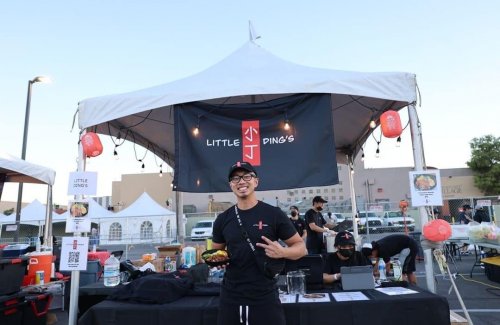
Without a professional experience in the kitchen or background in culinary, but with a dream of sharing Taiwanese cuisine with more people in the world, he brought Little Ding’s to life.

In an interview with Asian Hustle Network, Derek shared insights into his entrepreneurial journey. Join us as we delve into Derek Ting’s remarkable story, uncovering the secrets to his success and the invaluable lessons he has learned along the way.

DEREK’S JOURNEY BOTH AS AN ENGINEER AND ENTREPRENEUR

I graduated back in 2019 with an engineering degree while working to launch my first real brand/business, FREESTYLE, but I wasn’t always into business or entrepreneurship. Before 2015, I thought that being an engineer was “IT” for me. I thought engineering was everything I wanted and everything I would be doing for the rest of my life so I didn’t even think of any other possibility. 

In 2015 I took on my first internship/Co-op after freshman year at IBM/Globalfoundries which was honestly a dream come true for me (I mean what freshman wouldn’t be excited about an opportunity like that?). Little did I know, that experience would change everything for me but in the complete opposite way I thought it would.

Seeing the energy of the people who were there for 20-30 years made me realize I needed to do something else, something different. That was when I read my first book, started taking stocks more seriously, and started trying out a whole bunch of different ventures/ideas/things. And for those of you who don’t know what you want to do yet, it’s okay to not know, but you won’t know unless you go out and try a whole bunch of different things!

Nothing stuck with me until later in college, which was FREESTYLE, but even then I wasn’t anywhere near launch by the time I graduated so I stuck out engineering as a way to support myself while I go on this journey to figure “business” out.

FREESTYLE didn’t take off how I wanted it to and I slowly learned that business in general and then each industry had their own “game” to play but I knew how important it was for me to continue to go through the growing pains. Experience compounds and business principles transfer over to new ventures so it was important I kept going despite not finding “success” so I could keep learning. I don’t believe that I’d be able to do what I’m doing with Little Ding’s today and at the speed we’re going at if I didn’t keep building FREESTYLE.

It’s been 5 years since I started building an actual brand/business and 7 since I started learning about entrepreneurship and I’m only getting started!

Little Ding’s has been something I’ve wanted to build for a long time and the accumulation of all of my past experiences, knowledge, and network is moving us forward and getting us opportunities at a speed that I couldn’t have predicted. It’s been really cool and super mind blowing but again, this is only the beginning, we haven’t even gotten started yet!

I’m blessed that I am also a full-time engineer on the side because being an engineer (specifically in data and analytics), has helped me develop and refine skills necessary in business but not stressed such as the importance of understanding numbers, metrics, and data pertaining to each aspect of the business. Is it hard to do all of the above? Yeah, my entire life at this moment is just work… but I love it.

PUSHING THE LIMITS

In the process of building FREESTYLE and Little Ding’s, I learned that limits are self-imposed.

I’m a huge dreamer, and I love challenges. The process and hardships of entrepreneurship, which are basically personal development, helped me to discover that every time I pushed myself to what I thought was my limit, I could handle more, and once I realized that the playbook was entirely up to me, I went kind of crazy (in a good way of course).

For example, I launched Little Ding’s in October of 2022. We then did ONE small event in November and ONE event in January. How were we able to handle the largest food events on the west coast, back-to-back weekends, and even introduce a new menu item? Because that’s exactly what we did when we did the Water Lantern Festival, into the first and second Foodieland, the first 626 Mini Night Market, the first We Bridge Expo in Vegas into more and more up to now, where within 8 months of even existing, we are coming for the main 626 events in SoCal!

STAYING TRUE TO THE FLAVORS OF AUTHENTIC TAIWANESE CUISINE

My goal with Little Ding’s is to bring Taiwanese food out to more of the world, and so doing that means the food I focus on has to be somewhat relatable between cuisines such as Taiwanese popcorn chicken, where almost everyone has some idea of what popcorn chicken is, but maybe not necessarily Taiwanese popcorn chicken.

When thinking about new food items to add, I’m envisioning myself taking a stroll through Taiwan’s night markets and seeing which foods are popular that I remember the taste of and would be easily accepted in the States.

When it comes to testing recipes, I gather a ton of different online recipes and lay out all of the ingredients that are being used to figure out what each ingredient adds to the recipe and then slowly test out the ratios until the taste brings me back to the streets of the night market.

I may not come from a culinary background or know a ton about ingredients but I have good taste buds and I can remember taste even if I didn’t know what made it.

The reality is that, it is a LOT of testing and as much as everyone around me enjoys the food I make and the recipes I created, I myself got a bit sick of them because I ate each item that I tested multiple times a day for weeks before I got the recipes to where I wanted them AND THEN I would continue to adjust as I got feedback from all of my guinea pigs *cough* I mean friends, in Vegas.

It’s a bit easier now because I have a team so I don’t have to eat as much of my own food over and over again but it’s still a lot of testing especially to stay true to the flavors of authentic Taiwanese cuisine.

OVERCOMING HURDLES

The more I zoom out, the smaller the stumbles become.

Derek Ting

I love challenges in general so I actively seek them out for us to take on and I think almost every event we’ve done was a challenge because every single one was unique.

But in terms of the challenges we’ve faced where things went wrong or weren’t great for us, a lot of it comes down to the long-term vision and how focused you are on it. We came out swinging when we launched Little Ding’s and crushed our first event. We thought it would be like that for other events too but we were met with two financial losses in a row, one of them being -$2,700 which hurt really bad especially when we’re just getting started and every dollar meant more.

So this is where the long term vision comes in. If I look at the 3-month timeline, we’re absolutely broken. We invested thousands, made some back at the first event, and then dug a deeper ditch with the next two events. If I look at the 6-month timeline, well okay we have Foodieland and 626 Vegas coming up, and we have a good chance of making those losses up at those events. If I look at the 2-year timeline, we should have 1-2 stores open by then with catering clients set and be doing multiple events a weekend.

The more I zoom out, the smaller the stumbles become. Even if they hurt a ton at the time. Another thing I will note is that as a founder or leader, you can’t break… at least not in front of your team. It’s good to be transparent with how business is doing but even in those moments, you have to excite your team.

And there are of course countless challenges with doing outdoor events especially not having done any yourself but those typically come down to how fast you can think on the spot and how well you can adapt to situations which honestly becomes second nature after enough practice.

OTHER VENTURES DEREK IS INTERESTED IN EXPLORING

I have a ton of ideas in my head that I want to eventually build out, including a sister shop to Little Ding’s focused on Taiwanese desserts, a co-working space with incubator access, with access to investors, schools similar to the one founded by the Blue Man Group in Manhattan, universal educational platforms for everyone, and I do want to get into Esports but that one is more of a “for fun” project.

HOW DEREK DEFINES SUCCESS

Success to me has changed a lot throughout the years and a lot of it had to do with the friends I have around me.

Before, success to me was making a ton of money to buy my parents and myself nice things and not having to work anymore. Now, success to me is being able to create without anything holding you back.

Create businesses, opportunities, and experiences for those around you. That’s what I care about and want to do and there’s some debt I have to pay off first but honestly, I think I’ll be successful as long as I can get both myself and businesses in the green because after that, I’ll have some money to do more of the above!

ESSENTIAL QUALITIES OR SKILLS FOR ENTREPRENEURS

The essential qualities or skills I believe every entrepreneur should have or be working on are: communication and vision, humility, adaptability and decision-making, mental fortitude and perseverance, and patience and optimism.

I think the ones I grouped together work hand in hand!

Communication should include vision because your team should always know where you’re going as a company and where they’re going/where they can go within the company. Drop your ego, you don’t know as much as you think you do, and listening can save you time, money, and resources.

Being able to adapt pretty much means making a decision to change on the spot but both are important and practice helps a lot here.

You have to have the mental fortitude to push through because it’s not easy (principles are simple but insanely hard to master).

The last one is patience where you have to be patient with the results of your work since it might not show up for years and that plays in with optimism because you have to see that you will succeed (the “light”) otherwise you might need to re-evaluate your current trajectory.

CONNECT WITH DEREK

IG: 

Derek Ting – @duhricehero 

Little Ding – @littledingscafe

FREESTYLE – @frstyleofficial

Websites/Blogs:

Little Ding’s – littledingscafe.com

Little Ding’s Blogs (Medium) – @littledingscafe 

FREESTYLE – frstyleofficial.com

FREESTYLE Podcast – Spotify

aura team (screenshot)-png

Stories

How These Immigrant Brothers Created a Revolutionary Mental Wellness Platform

At the helm of Aura, one of the world’s largest mental wellness content platforms, is Steve Lee, the co-founder and CEO with an inspiring story to tell.

Steve’s journey began as an immigrant in the United States, facing the challenges of language and cultural barriers. However, it was his parents’ bitter divorce, entangled in unfamiliar Korean laws, that deeply impacted his life. Witnessing his mother’s mental health struggles, Steve recognized the need for support and the stigma surrounding mental wellness, particularly within the Asian community.

Initially on a pre-med track at UC Berkeley, Steve’s true passion emerged through his involvement in founding non-profit organizations and self-reflection. Together with his brother Daniel, who shared the same vision, Steve embraced entrepreneurship as a means to create a societal-level impact. Thus, Aura was born.

With a grand vision to help a billion people find peace, Aura set out to democratize access to the knowledge and expertise of coaches and therapists. They created a platform that enabled coaches worldwide to record their voices and generate high-quality audio content from the comfort of their homes.

Aura is a revolutionary two-sided platform, comparable to Spotify and Netflix, that empowers coaches and therapists worldwide to create engaging mental wellness content. In contrast to earlier wellness apps functioning as content studios featuring only a limited number of coaches, Aura stands out by offering an extensive range of content and creators.

The platform goes beyond mere curation, with coaches hosting live streams and providing personalized 1-1 coaching sessions, making Aura the ultimate all-in-one destination for individuals seeking mental wellness support.

Aura proudly boasts the world’s largest mental wellness library, encompassing a wide array of topics including sleep, life coaching, cognitive-behavioral therapy (CBT), spirituality, breathwork, and much more. Additionally, Aura has fostered a thriving community where users can engage in live events hosted by coaches and benefit from one-on-one coaching sessions.

The platform’s commitment to offering comprehensive content, live engagement, and personalized support has revolutionized the way individuals access and experience mental wellness, firmly establishing Aura as a game-changer in the industry.

Aura has achieved unprecedented success and garnered recognition from reputable sources. In 2017, Aura was prominently featured in TechCrunch’s launch feature, drawing attention to its innovative approach. The following year, the platform received the prestigious honor of being listed in Apple’s “Best of Apps,” solidifying its reputation as a top player in the mental wellness space. To fuel further expansion, Steve secured significant venture capital funding from esteemed investors such as Cowboy Ventures and SkyDeck.

The impact of Aura’s efforts can be seen in the numbers and testimonials. Users flock to the platform, spending hundreds of millions of minutes engaging in meditation and self-care activities each year. This remarkable level of engagement demonstrates the profound influence Aura has on individuals’ well-being.

Steve extends a generous invitation to those who prioritize mental health to avail themselves of a special offer. By using the code “TOGETHERAHN” at aurahealth.io/redeem, individuals can gain free access to Aura for one year. While there is a limit to the number of available codes due to security measures, Steve encourages interested parties to reach out to him should the code become unavailable. More information about Aura can be found at aurahealth.io.

CONNECT WITH AURA

Website: aurahealth.io

Instagram: @aurahealthhq

Jed Rodriguez

Stories

How a Veteran’s Military Experience Led To Raising Healthcare Awareness Through Lifestyle Brand

Jed is a first-generation Filipino-American who was born in Los Angeles, California and later on moved to San Diego when he was a teenager. He has spent 11 years in the military, serving as a Navy Corpsman for the Marines and later became a specialized X-ray tech. He was deployed to different countries like Afghanistan, Qatar, Japan, Philippines, Vietnam, Guam, Palau, and Solomon Islands. It was this during this time that he witnessed the need for better medical care in the world.

He always had an entrepreneurial mindset that started off early in high school, when he created a local clothing brand. This transitioned to his adult life where he continued to make fashionable lifestyle wear mixed with fitness culture.  Although he had a passion for creating merchandise for others to wear, he wanted to create something that would have a deeper meaning and have the ability to help more people. He realized that he could combine his entrepreneurial mindset with his TikTok audience and quickly discovered that he could reach more people.

He started to use his newfound influence to raise awareness about issues that he is passionate about, and that’s when he realized he could do more. 

This sparked an inspiration for him to rebrand his long-time lifestyle clothing line into RADDEPT. With every sale, his company donates 10% to a charity that provides radiological services in underserved communities around the world. His goal is to make fashionable clothing for healthcare workers while also making a positive impact on the world.
Jed is proof that one person can make a significant impact on the world. His story reminds us that even the smallest actions can lead to something greater. We all have the power to create positive change in the world, and it’s never too late to start.

HOW THE MILITARY MOLDED ME AS THE PERSON I AM TODAY

The military helped me mature as a person. People always compare their “10-year transformation,” how they have changed physically, and honestly, mine was a complete mental 180. I grew up as a child of a single mother. We were pretty poor, and at times we were homeless, bouncing around to my mom’s friend’s houses. She worked in the real estate realm, and the companies she worked for were either shutting down or downsizing due to the economy. 

I started rebelling around high school so she kicked me out to live with my uncle in San Diego. He was a prior Corpsman in the Navy and became a solid role model. Eventually, after high school, I worked as a Certified Nursing Assistant for 3 years while attempting to complete the prerequisites for nursing school. I ended up joining the Navy so I could have nursing school paid for when I finally applied.

What was supposed to be a 4 year in and out Naval career, turned into an 11-year career that molded me into the person I am today. I excelled with being able to do the grunt work while developing excellent leadership traits. I used my background to help mentor the junior personnel and still continue that habit to this day. I remain in contact with peers, mentors, and mentees, and they all have a significant impact on my life.

THE BIGGEST BARRIERS IN HEALTHCARE

With my military experience, I have noticed that the biggest barrier to accessing quality healthcare for underserved communities is their access to ancillary services. During my last deployment to pacific countries, I recognized that the host nation’s patients had access to primary care visits and surgeries, but the patients had to pay out of pocket for ancillary services like medical imaging.

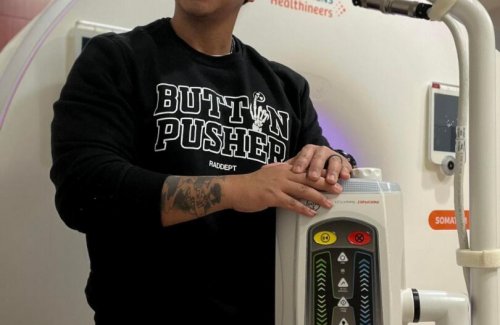
If you asked me about the significance of radiology before I ended up in this role, I would have laughed and said, ”They don’t do anything but push buttons.” But after completing school, I learned that Radiology has a significant impact on medical treatment – from early detection for diagnosis to being the eyes in the operating room or figuring out the next step for lifesaving intervention.

This deployment opened my eyes to the fact that many patients outside the United States are seriously prone to a lot of diseases that are uncommon in our country. Healthcare quality (although heavily scrutinized by the media) is actually pristine in America and we are lucky to have all these safety protocols in place.

With my military experience, I have noticed that the biggest barrier to accessing quality healthcare for underserved communities is their access to ancillary services.

jed rodriguez

RAISING AWARENESS FOR ANCILLARY SERVICES THROUGH RADDEPT

The first step I hope to achieve this year is to establish a community with my brand RADDEPT. The power of a community can achieve great accomplishments. My first milestone this year is to give 10% of each purchase to charity. I hope to collaborate with more people to be able to give more.

I plan to shine light on the effectiveness and importance of ancillary services. There is always a spotlight on becoming a doctor or a nurse. I plan on creating relatable merchandise for ALL healthcare workers. I’d like to be able to create products that I could donate to countries like the other ones I have previously traveled to and administered care to.

ONE DAY AT A TIME

My biggest advice for someone who wants to make a positive impact on the world but doesn’t know where to start is to take the first step and go for what they want.

One thing that always resonated with me was “Lay one brick a day and eventually, you would have built a well.” This is how I tackle the majority of my life goals. Small baby steps and take it one day at a time. If I keep focusing on the bigger picture, then it becomes overwhelming. Small daily/weekly goals and all those combined will help accomplish the bigger goals.

Also, surround yourself with like-minded individuals. Have mentors and mentees, everything you learn is important, but it is more important to spread the knowledge to the next person!

My biggest advice for someone who wants to make a positive impact on the world but doesn’t know where to start is to take the first step and go for what they want.

jed rodriguez

CONNECT WITH JED RODRIGUEZ

Social media is super important in today’s society. One thing I have learned from having my previous brand for years was the power of ad spending and email marketing. Now, I realized that TikTok could also act as a running ad, and I plan to maximize social media by influencer marketing and collaborating with other creators in the healthcare niche, in order to drive awareness and change.

Tiktok: jroddynotricch

ig: radxdept

www.raddept.com