Awaken* newsletter

June 13, 2024

SHARE:

Tracy Young is a founder who has been on my radar for a long time. Beyond the fact that she is a successful exited founder, having sold PlanGrid to Autodesk for just under $900 million, Tracy’s family–like my own father–immigrated to the United States following the Vietnam war. With one major success under her belt, Tracy is going for a second, having recently founded a new startup named TigerEye, which focuses on AI-powered strategic planning. I sat down with Tracy to chat about lessons from PlanGrid, what she’s currently working on at TigerEye, and her identity as an Asian woman.

On Identity

I wasn’t the only one with a newsletter on the call! Tracy also recently started a LinkedIn newsletter titled Predictable Growth, a monthly Q&A with women leaders generating revenue for their businesses. I asked Tracy what the motivation behind starting it was, and what she hoped to see it accomplish:

Representation matters. In sales and go-to-market functions, women are underrepresented at the leadership level. However, many impressive, talented, and hardworking women have achieved the CRO/CMO level, and I wanted to hear their stories. So, it’s a way for us to showcase women and give them a platform to tell their stories and how they got to where they are. There are many great jobs in sales, but many women don’t realize that they’re available to them. Anyone can be good at sales, it’s not just men. Reaching the highest levels in sales gives women a lot of power to help out their families, help the economy, etc.

In previous interviews, Tracy has pointed out how women are especially underrepresented in enterprise SaaS. I asked Tracy if she had any ideas why this is the case, and how we can increase representation:

I’m not sure why that’s the case. But you can see it if you look at the stats or walk into any enterprise company. I would guess it’s systemic. I think it starts with the words we use for boys and girls, the way we treat them, and what is expected of them. This is part of our cultural history. One way to change that is to show what is possible. What Predictable Growth aims to achieve is to showcase all these women who are leaders at their companies. There’s no decision that the CEO is making without running it by them. We want to say: “This could be your future, if you want it”, for anyone reading, and hopefully, it’s a young woman reader.

Next, I wanted to get Tracy’s thoughts on how being an Asian woman has affected her experience as a founder:

My PlanGrid co-founder, Ryan, and I met in college. He’s been trying to convince me to start a company with him since I was 18. Being an Asian woman, I didn’t think it was possible. I brushed him off for many years. I thought, “I’m not a founder,” because I looked at all these other founders, and they didn’t look like me. That kept me from starting a company for a long time. Around 2007-2009, I remember Ryan really wanted me to apply for Y Combinator with him. And again, I told him, “I just don’t think it’s going to work.” I didn’t think other people would accept me, and I didn’t want to put myself through it. It wasn’t until Y Combinator put out a request for startups working on the exact problem we were working on that I felt comfortable applying. That request for startups almost gave me permission to apply to YC. But even when we got in, and we were making real revenue, and we fundraised, and we had real customers, and our product was getting better… even then, I still felt that founders should look a certain way. I don’t know how many years in we were before I finally realized how wrong I was.

In an interview eight years ago with Ron Miller at Techcrunch Disrupt, Tracy responded to a similar question very differently. I asked her what motivated her shift in perspective since then:

Back then, I really tried to separate myself from being a woman. I felt like that was not part of the equation. And again, it’s such a big part of me, I am a strong woman. For many years, I pretended that I wasn’t, down to how I dressed. What really woke me up was becoming a mom. Going through pregnancy and birth and postpartum recovery, and taking care of a baby, I think it was really at that point when I realized how strong women are, how strong our mothers and grandmothers are, and how strong my colleagues are. It was a disservice not to acknowledge that our journey is different. It’s not better or worse. It’s just different.

TigerEye

I asked Tracy how she came up with the idea for her new startup, TigerEye:

There’s no shortage of problems to solve in business software. If you talk to anyone who works for a public company, you’ll find a lot of outdated software still in use. After selling my last startup, I worked for a public company and got to use these expensive products that our company was paying for every year. I saw firsthand how they made us less productive and frustrated our team. Many areas need improvement, such as HR software, finance software, sales software, and everything in between, including development tools. 

A common strategy I hear from founders is that they want to start by selling to other startups, and then grow into an enterprise software company alongside their clients. I asked Tracy how she decided to skip that and go straight for enterprise customers:

I like to solve problems that I have experienced. TigerEye comes from my experience running a fast growth company for ten years. When we reflected on our PlanGrid journey, we asked ourselves a few questions: What would have accelerated growth? What would have made the difference between us still running PlanGrid today versus needing to sell? TigerEye is that product. This is a scientific tool that would have helped us grow more efficiently, be more profitable, and would’ve enabled us to be more courageous in our decision-making by providing extra validation. It’s an AI-powered business simulator. You can test out your plans before you make your team execute it. You can test out as many plans as you want and as many scenarios as you want before you bring it to the board for sign-off. Back at PlanGrid, we had a bunch of very smart people trying to generate the same thing that took months that TigerEye is outputting instantaneously now. This is the product that I wish I had to help grow PlanGrid. And this is why we are building for the enterprise. All I know to do is build things to help me with problems I’ve faced.

Starting a Company as a Second-time Founder

I asked Tracy what she thought about distribution at PlanGrid, and how that has changed for TigerEye:

PlanGrid was always mobile first. We really benefited from timing. Steve Jobs announced the first generation iPad, and we decided to start building construction software for that device soon after. We were one of the first enterprise apps to launch on all of the app stores. 

Let’s say you’re a construction person and you’ve got your new iPad or other tablet. You search for construction because that is your profession, and PlanGrid pops up as the top result. If it looks interesting, you might download it, and we had a freemium model so users could try us out. As a mobile-first company, having great SEO on the app stores was crucial for our inbound growth. That’s how we thought about distribution for PlanGrid, but that is totally irrelevant for TigerEye (although we do have a mobile version of our software). TigerEye is an enterprise-grade product, and you can’t just try it out as an individual. It is being deployed to whole departments, and that is a completely different distribution model. For many years, PlanGrid was sold on a per-seat basis. At TigerEye, we have an unlimited seat model, and it’s deployed to several teams at once, and the starting fee is five figures. It’s an enterprise-grade product. And so for us to get deployed and adopted usually takes a field sales team two or three conversations with the company, because it’s not just sales, it’s revenue operations, it’s strategic finance, and then it’s a champion at the C-suite level. It’s very different from PlanGrid’s model, where anyone with a credit card in a job site could swipe their credit card and buy PlanGrid today.

Next, I asked if she felt that being a second-time founder came with any benefits:

There are definitely benefits. For example, the first 15 people we recruited were people we had handpicked and worked with before. As a result, we were able to recruit a talented team with a strong track record and a strong work ethic. It’s difficult for first-time founders in their early 20s to attract talented individuals. The people who worked for us were our friends or recent college graduates. From our decade of experience, we’ve also seen what works and what doesn’t in terms of core values. This time, we made sure to have a set of values that we live by personally and professionally. These core values are non-negotiable and we share them with candidates we’re trying to recruit during our first phone call. We’re serious about it. Everyone says they care about their core values, but we actually hire and fire by them. 

Tracy’s emphasis on core values stood out because this was the first time I had heard a founder emphasize them to this degree. I asked Tracy why this mattered so much to her:

Through my experience growing PlanGrid to 450 employees and scaling the team to 1,300 employees post-acquisition, I got to see what slows down a team. I got to see how infighting can destroy a company. There are minor things that you can put in place to mitigate this, such as basic rules of engagement. We have a document called “Our commitments to working with each other,” which outlines how we work together at TigerEye. The document clarifies our five core values. It’s very simple, you cannot misinterpret what the core values mean. I’ll give you a couple of examples: 1) I will walk it like I talk it. 2) I will never speak destructively behind my teammate’s back. 3) If I have a problem, I will go to you and talk it out because we’re professionals and I can trust that we can have the hard conversations. If everyone follows these rules, then we’re in a really good place. That means that when there are problems, we can speak openly as a team and get through it together. We were very deliberate about the culture and work environment we were creating, especially as a remote company. I think our culture is especially important because we aren’t together every single day.  

Fostering a Culture of Authenticity

Throughout my research, a consistent theme Tracy touched on was being authentic as a leader. I asked her if she felt there are boundaries to authenticity and if it’s fine for CEOs to express fear or lack of confidence to their team.

There is definitely a line in terms of vulnerability and authenticity. It’s never acceptable to be disrespectful. Some might argue that they’re just being direct, but there’s a difference between being direct and being rude. It’s okay to question things and suggest new approaches. When I’m concerned about something related to the company, I share it with the team. I either present a potential solution or let them know that I’m working on one. This approach makes it easier to lead and get the team on board with the direction we’re heading. They may not always agree, but at least they understand why I’ve made certain decisions. If they understand, it’s easier for them to commit to the decision, even if they initially had reservations. 

To your second question, I think it is completely okay for a leader or anyone in the company to show that they are human, and as humans we experience fear and insecurity–they are natural emotions. As a leader and a productive teammate, it isn’t beneficial to dwell on these negative emotions. It’s challenging, if not impossible, to suppress these feelings because they will eventually surface. My approach is to allow myself to experience these emotions when things are tough, but also to take control and not let them linger. For instance, I might allow myself a day to experience these feelings, but the next day, it’s time to put on a game face and figure things out together. As long as there’s movement and progress, then it’s okay. Feelings like anger, insecurity, and sadness, when prolonged, are completely useless. They don’t serve anyone any good. They’re just there making everyone feel bad and that is absolutely not okay.

I asked Tracy what actions she takes to make sure everyone on her team is comfortable being authentic and vulnerable with each other:

We do this fun activity. We all take the Enneagram test. New teammates will take the test and present their enneagram results sometime within the first few weeks. The presentations are basically: “This is when I’m at my best. This is how I am at my worst. This is how I want to get feedback.” This helps us understand who we are as people because there are all kinds of different personalities, and conflict comes from two personalities at their worst coming together. If we can acknowledge and understand that might happen, it’s easier to get through it together. Essentially, it’s having self-awareness and giving your team a blueprint of being aware of who you are. 

For those who don’t know, Enneagram is a popular personality test that emphasizes how you interact with other personality types, making it a popular choice for teams. I am normally skeptical of these kinds of tests, but even I am a big fan of Enneagram, and I think it has helped me better understand myself and my interactions with others. For those curious, Tracy is Enneagram type 1, “The Reformer”. A fitting type for a person with such ambition and vision.

Shoutouts

If you are a leader in sales, RevOps, finance, or marketing, TigerEye has built a go-to-market planning tool to help you track, plan, and predict your go-to-market performance. The tool analyzes every change in your CRM using artificial intelligence to guide decisions and show you where you’re headed.

If you are interested in checking out what Tracy and TigerEye. have built, please drop her a note on LinkedIn or on X (f.k.a. Twitter) @Tracy_Young. Thank you Tracy for the interview!

Related Articles

Cool Author photo that I haven't publicly used yet-jpeg

Stories

Chinese American Writer Celebrates Family Bonds and Cultural Heritage in New Book About Dim Sum

In a time when the world seemed to close its doors, Los Angeles native and talented writer Kesia Eng found her inspiration for her  delightful children’s book titled “Baby Bao at Dim Sum.”

Kesia shares with Asian Hustle Network her motivation and experiences behind this captivating story that captures the essence of family bonds and the rich cultural heritage of East Asian cuisine.

Growing up, Kesia cherished her visits to dim sum restaurants with her family. The savory aroma, the clinking of chopsticks, and the joy of feasting on delicious food became the backdrop of countless treasured memories.

Dim sum not only brought her family together but also offered a window into her Chinese heritage, teaching her the values of respect, care, and love for others. Ultimately, these shaped her identity and inspired her to write this book.

The pandemic threatened to rob younger generations of the invaluable experiences Kesia cherished, making her determined to pass on the cultural significance of dim sum to kids and share it with others.

In her debut children’s book, “Baby Bao at Dim Sum,” Kesia beautifully weaves a tale that explores the importance of family, selflessness, and the joy of bonding over a delicious meal. This book serves as a tool for parents and children to read together, sparking meaningful conversations about the values embedded in East Asian culture.

Join us as we delve into the story behind “Baby Bao at Dim Sum” through an exclusive interview with Kesia Eng.

Dim sum helped me better understand and appreciate my parents and our Chinese culture. I think I can speak for many American kids who have immigrant parents: There aren’t a lot of things in common between our upbringing and theirs. But food is our shared connection.

Kesia Eng

KESIA’S INSPIRATION FOR WRITING “BABY BAO AT DIM SUM”

As with most recent creative endeavors, the idea for the book sprouted during the pandemic. Everything was closed. Schools were shut down. Sports games were canceled. Even my favorite Target store started closing at 8 p.m. The world truly was ending. But the most devastating thing? My beloved dim sum restaurants have stopped indoor dining.

I know it didn’t seem significant. There’s plenty of other food. Plus, we can still get takeout. But I grew up coming to these restaurants with my family. Going there was a real treat as a kid – taking in the savory aroma that fills the air, hearing the excited chatter and clinking of chopsticks all around you, and of course, feasting on all the varieties of delicious food. Every time I came back from college for the weekend, my parents would take me to eat dim sum – it was a huge part of our everyday life.

Most importantly, dim sum helped me better understand and appreciate my parents and our Chinese culture. I think I can speak for many American kids who have immigrant parents: There aren’t a lot of things in common between our upbringing and theirs. But food is our shared connection. Food isn’t just something you eat. When you look closely, the experience of dim sum is filled with the values of East Asian culture:

  • pouring tea for the oldest person at the table first, and your own cup last
  • serving food to others before yourself
  • keeping an eye on everyone’s cup so you can refill it for them
  • fighting to pay for the check (and never backing down, even if you have to chase down the waiter and force your Visa card into their hands) 
  • and so on

All of the above embody community-oriented respect, care, and love for others. It’s how my parents showed how deeply they loved our family, even through the mundane act of eating at a restaurant. When my mom saves the biggest and best dumpling for me, or when my dad reaches across the table to fill my teacup first, I know it’s because they love me. And it’s a way for me to show my love in return – pouring their tea first, giving the best dim sum piece to them, (and yes, now that I’m a post-grad adult, literally fighting to pay that check). It’s not just nostalgia – dim sum is an essential part of my heritage, shaping how I’ve grown up, who I am, and who I want to become.

With COVID, it seemed like the pandemic would take these valuable moments away from younger generations. To be honest, it made me sad because I didn’t want them to grow up without having that experience, and thus a practical understanding of their cultural background. It’s a learning moment I want to pass on to kids and share with other people too.

“BABY BAO IS ME”

Part of the reason why I chose to focus on the theme of family and selflessness is in reaction to a lot of Asian American stories today that center on the difficult relationships that kids have with their immigrant parents.

I think the current popular narrative sometimes pushes this idea of hyperindividualism; that it’s all about the self and what the self wants. I totally understand the heart behind where that narrative/story comes from but sometimes it can demonize our parents for being hateful because they don’t agree with everything we say or do what we expect. Granted, nobody is perfect. But I think it’s important to have empathy towards our parents who grew up in a different environment than we did. We can try to put ourselves in their shoes, imagine the upbringing they had, the hardships they went through, etc.

And to be honest, I wrote it because of my own revelation. Baby Bao is me. I wrote Baby Bao as myself because I definitely was not a self-sacrificial loving kid growing up. It wasn’t until college that I realized I had taken their love and care for granted. I think it’s easy for us to be selfish and maybe not consider what our parents would appreciate or how they care for us. They do love us, but maybe it isn’t expressed in the exact fashion we expect it to be. 

FULL CREATIVE CONTROL AS A SELF-PUBLISHER

I knew the route of traditional publishing was long and a bit arduous. I felt like there were many gatekeepers and I didn’t want the flow/speed of my project to be hindered because of it.

It kinda goes like this: after you do your due diligence on finding the appropriate literary agent, you have to keep cold-emailing them about your manuscript, hoping they’d want to support you and your book. And finally landing a literary agent could range from a few months to a few years. They’re the best resource to connect you to a traditional publisher who would get your book published. 

But why wait for someone to give me the green light when I could just get my book out directly to the audience? I like to think I have an entrepreneurial spirit , because when I really believe in something, I don’t want to wait for someone to give me approval to do it. I just want to go for it. So I decided to self-publish my idea.

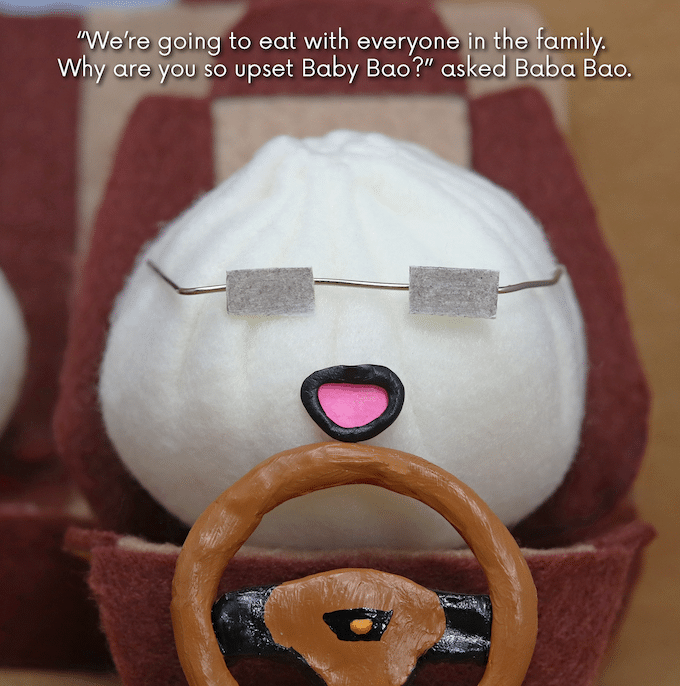
I think what’s truly unique about this book is that the illustrations are not 2D animated artwork that’s common in picture books. I can’t draw to save my life and I didn’t have enough funds to hire an illustrator, so I brainstormed ways to figure out how I was going to make the visual part of the story come to life.

While rummaging through my bookshelf, I found an old book my parents bought when I was young, that taught simple Chinese words. The front cover looked so interesting to me – it was a claymation of a girl. That basically spawned the idea of using claymation/”stop-motion” as the illustrations of the book.

I made all the sets, characters, and mini items by hand with lots of construction paper, cardboard, and other materials. I then taught myself product lighting, photography, and photo editing. I also run all the social media accounts. And this is in addition to writing the story myself, so it was truly a one-woman production.

Fun fact: I gave my book to Netflix Bling Empire’s Christine Chiu!

WHAT KESIA HOPES THAT READERS WILL TAKE AWAY

If I can narrow it down to just 3 takeaways I hope parents and children get out of this book, it’s that (1) family is important (2) loving others often requires self-sacrifice but is definitely worth it and (3) dim sum is an avenue we can use to love and cherish our families more!

I wanted parents and their children to think deeply about the message together. And that desire played a huge part in why I decided to deliver that through the form of a children’s book. I think the nature of children’s books often necessitates parent-child bonding because parents often read to their kids who aren’t strong independent readers yet.

So the book, “Baby Bao at Dim Sum” is a great opportunity for parents to bond with their cute kiddos just by reading it together. It also leads parents to talk through the story more with their children by mentioning the cultural values of it, going over the universal value of family, and asking them insightful questions about what they learned or what they noticed. 

DIVERSITY AND REPRESENTATION IN CHILDREN’S LITERATURE

I’m seeing a lot of great Asian American children’s books recently and I envision “Baby Bao at Dim Sum” adding depth to the representation of the Asian American experience in children’s literature.

The book shows that parents and/or family relatives ought to be given importance as well.

Additionally, the book does a great job showing and not just telling how the cultural values common in East Asian culture (community-oriented respect, care, and love for others) are embedded into the subtle actions (pouring tea for the oldest person at the table first and your own cup last, serving food to others before yourself, and keeping an eye on everyone’s cup so you can refill it for them) during a traditional Chinese meal.

Representation is showing the authentic experience of something, and I think showing chicken feet, regardless of people’s initial reaction to it, is an important unfiltered experience of dim sum. So I made it a mission for myself to include the chicken feet dish in my children’s book (right on the first page) because it’s an iconic Chinese cultural food. I think just because it’s different from what most people outside of the culture may see, it doesn’t make it weird or gross. Walk into a dim sum restaurant and you see it on the tables of so many diners.

I hope the story is an easy and welcoming way for people unfamiliar with East Asian culture, to learn about it and get a glimpse of what really goes on during an authentic Chinese meal of dim sum. Additionally, I think it’s a perfect book for East Asian families to personally connect with those experiences and pass them down to younger generations. 

It really warms my heart to see so many parents message me that their little ones love the book, want to read it every night with them, or want to eat dim sum because of it. Seeing those comments and messages never gets old!

UPCOMING PROJECTS

I drafted several storylines for the next potential “Baby Bao” adventure, and have whittled it down to two options. I can’t reveal when this project is going to be done just yet, but it’s in the works! Many of my readers have expressed that they’d love to see more of Baby Bao, so I’m happy to continue working on more stories with him as the protagonist.

In terms of other work, I’m actually in the process of finalizing a manuscript for my next writing project: a satirical poetry book about early adulthood! I enjoy comedy and I enjoy satire, so of course, I had to try writing with that flair. The book is a witty take on young adult life and pokes fun at relatable moments we experience in careers, friendships, and love. Final touches are being added. Release date TBA but aiming for before this fall season. 

Readers can expect that I’ll be pursuing different writing projects because I want to build upon my writing skills and flex my creative muscle. I think I have a knack for knowing my audience well and crafting stories that are relatable to all of us on a human level. So I’m really excited to continue exploring various story ideas and styles of writing to see what I’m the best at and produce work that my readers would love.

CONNECT WITH KESIA / BABY BAO AT DIM SUM

Instagram: @babybaoatdimsum

Tiktok: @babybaoatdimsum

Amazon: BUY HERE

Email: babybaoatdimsum@gmail.com

Website: kesiaeng.com

NPR-jpeg

News

21-Year Old Who Had Motor Skill Challenges Breaks Record as World’s Fastest Rubik’s Cube Solver

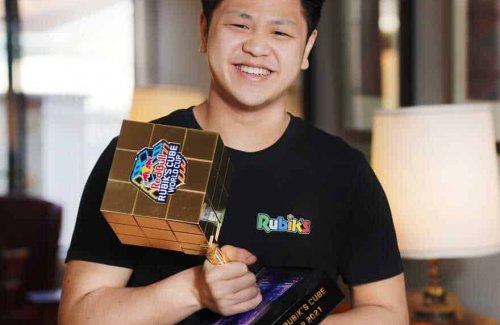
Max Park, a 21-year-old Korean-American from Cerritos, California who lacked fine motor skills, as a symptom of his autism, emerged as the world’s fastest Rubik’s cube solver, setting a new world record of solving the cube in just 3.13 seconds.

According to NPR, Max faced motor skill difficulties during his preteen years as a result of autism, making even simple tasks like unscrewing a water bottle cap a challenge for him. Now, Max can solve a Rubik’s cube faster than most people can read a sentence.

During a recent competition in Southern California on June 11th, Max astounded the speedcubing community by setting a new world record for the fastest 3x3x3 Rubik’s cube time, clocking in at a mind-boggling 3.13 seconds. Matthew Dickman, the senior delegate for the United States and Canada at the World Cube Association, described Max’s achievement as the “holy grail of records.”

Max’s journey began at the age of 9 when he developed an interest in the Rubik’s cube. His mother, Miki, took the initiative to learn how to solve it herself through YouTube tutorials. Within a mere couple of days, Max solved the puzzle effortlessly. This newfound passion for cubing led him to participate in his first speedcube competition in downtown Los Angeles at the age of 10.

Image Source: Guinness World Record

The popularity of speedcubing has surged in recent years, with over a dozen competitions held worldwide each weekend and a registered base of over 140,000 cubers from 140 countries. These events encompass various challenges, ranging from blindfolded solves to one-handed techniques.

However, the original 3x3x3 cube remains the centerpiece of the sport, attracting the most skilled competitors who have mastered hundreds of algorithms to conquer the puzzle. The speedcubing scene has become increasingly competitive, with participants continually pushing the limits, often beating their rivals by mere fractions of a second.

Schwan, Max’s father, said that his success gives a sense of hope for the parents too, that their child can find something they’re passionate about and it will help give them a sense of purpose.

As Max continues to break barriers, his impact extends far beyond solving a puzzle. His achievements serve as a symbol of determination, resilience, and the boundless potential that lies within each of us.

Featured Image Source: NPR

the guardian-jpg

News

Indian Immigrant Uncovers South Asian Stories Through Media Platform

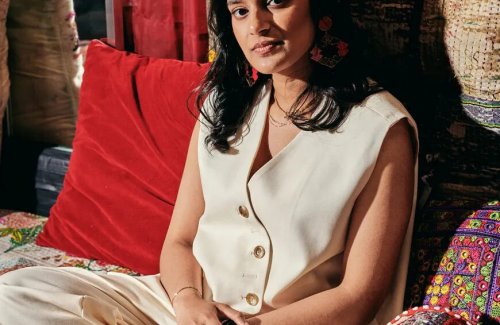
Founded by Snigdha Sur in 2019, the Juggernaut is a subscription-based website that breathes life into forgotten histories and brings depth to current topics.

Sur was born in India and immigrated to the United States with her parents in 1990. Growing up in the Bronx and Queens, she experienced firsthand the lack of media outlets catering to South Asians of her generation. This led her to create a platform that would bridge the gap and provide authentic representation.

Sur’s journey towards launching the Juggernaut was marked by exceptional academic achievements and valuable professional experiences. After completing her undergraduate studies at Yale University, she embarked on a career in management consulting, working at prestigious firms like McKinsey & Company. She then pursued an MBA at Harvard Business School, where she honed her strategic acumen and entrepreneurial spirit.

Juggernaut’s mission is to uncover compelling stories that frequently go overlooked. The platform quickly gained traction, capturing the attention of a diverse audience eager for meaningful storytelling. 

Sur faced her fair share of challenges along the way. During the COVID-19 pandemic, Sur adeptly adapted the platform’s focus, demonstrating resilience and a commitment to delivering the content that resonates most with the Juggernaut’s audience.

Looking ahead, Sur envisions a future where the Juggernaut becomes a household name, synonymous with South Asian storytelling and expertise. Drawing inspiration from successful media ventures like the New York Times and the Athletic, Sur envisions a platform that collaborates with major productions, offers narrative consultation, and produces compelling content across various mediums. 

Featured Image Source: The Guardian

cnn-jpeg

News

TikTok Invests Billions to Drive E-Commerce Success in Southeast Asia

TikTok, the popular short video app owned by ByteDance, has announced plans to invest billions of dollars in Southeast Asia in a bid to boost its e-commerce business.

The move comes as TikTok aims to capitalize on its large user base in the region and address concerns over data security. With a collective population of 630 million, half of whom are under 30 years old, Southeast Asia represents a key market for TikTok, attracting over 325 million monthly visitors to the app.

Despite its impressive user numbers, TikTok has struggled to convert its popularity into significant e-commerce revenue in Southeast Asia, facing tough competition from established players such as Shopee, Lazada, and Tokopedia.

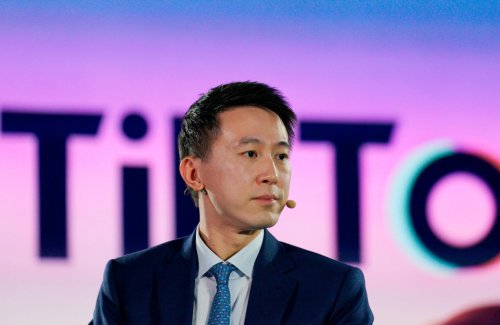
To address this challenge, TikTok CEO Shou Zi Chew revealed the company’s plans to invest billions of dollars in Indonesia and the broader Southeast Asian region over the next few years. While a detailed breakdown of the investment plan was not provided, TikTok intends to focus on training, advertising, and supporting small vendors interested in joining its e-commerce platform, TikTok Shop.

Chew emphasized that TikTok’s content is becoming more diverse as the platform expands beyond advertising into e-commerce. This evolution enables consumers to make purchases directly through the app during live streams. In Indonesia, TikTok’s largest market in Southeast Asia, the platform already hosts 2 million small vendors selling their products. The region’s e-commerce transactions reached nearly $100 billion in 2022, with Indonesia alone accounting for $52 billion of that figure, according to Reuters.

While Southeast Asian governments have not imposed major bans on government devices, TikTok has faced scrutiny regarding its content. In 2018, Indonesia briefly banned the app due to concerns over inappropriate content, while Vietnam has expressed concerns about the platform’s impact on local culture and tradition.

Despite the challenges posed by established competitors and data security concerns, TikTok remains committed to expanding its presence in Southeast Asia and tapping into the region’s vibrant e-commerce market.

Featured Image Source: CNN