Awaken* newsletter

June 13, 2024

SHARE:

Tracy Young is a founder who has been on my radar for a long time. Beyond the fact that she is a successful exited founder, having sold PlanGrid to Autodesk for just under $900 million, Tracy’s family–like my own father–immigrated to the United States following the Vietnam war. With one major success under her belt, Tracy is going for a second, having recently founded a new startup named TigerEye, which focuses on AI-powered strategic planning. I sat down with Tracy to chat about lessons from PlanGrid, what she’s currently working on at TigerEye, and her identity as an Asian woman.

On Identity

I wasn’t the only one with a newsletter on the call! Tracy also recently started a LinkedIn newsletter titled Predictable Growth, a monthly Q&A with women leaders generating revenue for their businesses. I asked Tracy what the motivation behind starting it was, and what she hoped to see it accomplish:

Representation matters. In sales and go-to-market functions, women are underrepresented at the leadership level. However, many impressive, talented, and hardworking women have achieved the CRO/CMO level, and I wanted to hear their stories. So, it’s a way for us to showcase women and give them a platform to tell their stories and how they got to where they are. There are many great jobs in sales, but many women don’t realize that they’re available to them. Anyone can be good at sales, it’s not just men. Reaching the highest levels in sales gives women a lot of power to help out their families, help the economy, etc.

In previous interviews, Tracy has pointed out how women are especially underrepresented in enterprise SaaS. I asked Tracy if she had any ideas why this is the case, and how we can increase representation:

I’m not sure why that’s the case. But you can see it if you look at the stats or walk into any enterprise company. I would guess it’s systemic. I think it starts with the words we use for boys and girls, the way we treat them, and what is expected of them. This is part of our cultural history. One way to change that is to show what is possible. What Predictable Growth aims to achieve is to showcase all these women who are leaders at their companies. There’s no decision that the CEO is making without running it by them. We want to say: “This could be your future, if you want it”, for anyone reading, and hopefully, it’s a young woman reader.

Next, I wanted to get Tracy’s thoughts on how being an Asian woman has affected her experience as a founder:

My PlanGrid co-founder, Ryan, and I met in college. He’s been trying to convince me to start a company with him since I was 18. Being an Asian woman, I didn’t think it was possible. I brushed him off for many years. I thought, “I’m not a founder,” because I looked at all these other founders, and they didn’t look like me. That kept me from starting a company for a long time. Around 2007-2009, I remember Ryan really wanted me to apply for Y Combinator with him. And again, I told him, “I just don’t think it’s going to work.” I didn’t think other people would accept me, and I didn’t want to put myself through it. It wasn’t until Y Combinator put out a request for startups working on the exact problem we were working on that I felt comfortable applying. That request for startups almost gave me permission to apply to YC. But even when we got in, and we were making real revenue, and we fundraised, and we had real customers, and our product was getting better… even then, I still felt that founders should look a certain way. I don’t know how many years in we were before I finally realized how wrong I was.

In an interview eight years ago with Ron Miller at Techcrunch Disrupt, Tracy responded to a similar question very differently. I asked her what motivated her shift in perspective since then:

Back then, I really tried to separate myself from being a woman. I felt like that was not part of the equation. And again, it’s such a big part of me, I am a strong woman. For many years, I pretended that I wasn’t, down to how I dressed. What really woke me up was becoming a mom. Going through pregnancy and birth and postpartum recovery, and taking care of a baby, I think it was really at that point when I realized how strong women are, how strong our mothers and grandmothers are, and how strong my colleagues are. It was a disservice not to acknowledge that our journey is different. It’s not better or worse. It’s just different.

TigerEye

I asked Tracy how she came up with the idea for her new startup, TigerEye:

There’s no shortage of problems to solve in business software. If you talk to anyone who works for a public company, you’ll find a lot of outdated software still in use. After selling my last startup, I worked for a public company and got to use these expensive products that our company was paying for every year. I saw firsthand how they made us less productive and frustrated our team. Many areas need improvement, such as HR software, finance software, sales software, and everything in between, including development tools. 

A common strategy I hear from founders is that they want to start by selling to other startups, and then grow into an enterprise software company alongside their clients. I asked Tracy how she decided to skip that and go straight for enterprise customers:

I like to solve problems that I have experienced. TigerEye comes from my experience running a fast growth company for ten years. When we reflected on our PlanGrid journey, we asked ourselves a few questions: What would have accelerated growth? What would have made the difference between us still running PlanGrid today versus needing to sell? TigerEye is that product. This is a scientific tool that would have helped us grow more efficiently, be more profitable, and would’ve enabled us to be more courageous in our decision-making by providing extra validation. It’s an AI-powered business simulator. You can test out your plans before you make your team execute it. You can test out as many plans as you want and as many scenarios as you want before you bring it to the board for sign-off. Back at PlanGrid, we had a bunch of very smart people trying to generate the same thing that took months that TigerEye is outputting instantaneously now. This is the product that I wish I had to help grow PlanGrid. And this is why we are building for the enterprise. All I know to do is build things to help me with problems I’ve faced.

Starting a Company as a Second-time Founder

I asked Tracy what she thought about distribution at PlanGrid, and how that has changed for TigerEye:

PlanGrid was always mobile first. We really benefited from timing. Steve Jobs announced the first generation iPad, and we decided to start building construction software for that device soon after. We were one of the first enterprise apps to launch on all of the app stores. 

Let’s say you’re a construction person and you’ve got your new iPad or other tablet. You search for construction because that is your profession, and PlanGrid pops up as the top result. If it looks interesting, you might download it, and we had a freemium model so users could try us out. As a mobile-first company, having great SEO on the app stores was crucial for our inbound growth. That’s how we thought about distribution for PlanGrid, but that is totally irrelevant for TigerEye (although we do have a mobile version of our software). TigerEye is an enterprise-grade product, and you can’t just try it out as an individual. It is being deployed to whole departments, and that is a completely different distribution model. For many years, PlanGrid was sold on a per-seat basis. At TigerEye, we have an unlimited seat model, and it’s deployed to several teams at once, and the starting fee is five figures. It’s an enterprise-grade product. And so for us to get deployed and adopted usually takes a field sales team two or three conversations with the company, because it’s not just sales, it’s revenue operations, it’s strategic finance, and then it’s a champion at the C-suite level. It’s very different from PlanGrid’s model, where anyone with a credit card in a job site could swipe their credit card and buy PlanGrid today.

Next, I asked if she felt that being a second-time founder came with any benefits:

There are definitely benefits. For example, the first 15 people we recruited were people we had handpicked and worked with before. As a result, we were able to recruit a talented team with a strong track record and a strong work ethic. It’s difficult for first-time founders in their early 20s to attract talented individuals. The people who worked for us were our friends or recent college graduates. From our decade of experience, we’ve also seen what works and what doesn’t in terms of core values. This time, we made sure to have a set of values that we live by personally and professionally. These core values are non-negotiable and we share them with candidates we’re trying to recruit during our first phone call. We’re serious about it. Everyone says they care about their core values, but we actually hire and fire by them. 

Tracy’s emphasis on core values stood out because this was the first time I had heard a founder emphasize them to this degree. I asked Tracy why this mattered so much to her:

Through my experience growing PlanGrid to 450 employees and scaling the team to 1,300 employees post-acquisition, I got to see what slows down a team. I got to see how infighting can destroy a company. There are minor things that you can put in place to mitigate this, such as basic rules of engagement. We have a document called “Our commitments to working with each other,” which outlines how we work together at TigerEye. The document clarifies our five core values. It’s very simple, you cannot misinterpret what the core values mean. I’ll give you a couple of examples: 1) I will walk it like I talk it. 2) I will never speak destructively behind my teammate’s back. 3) If I have a problem, I will go to you and talk it out because we’re professionals and I can trust that we can have the hard conversations. If everyone follows these rules, then we’re in a really good place. That means that when there are problems, we can speak openly as a team and get through it together. We were very deliberate about the culture and work environment we were creating, especially as a remote company. I think our culture is especially important because we aren’t together every single day.  

Fostering a Culture of Authenticity

Throughout my research, a consistent theme Tracy touched on was being authentic as a leader. I asked her if she felt there are boundaries to authenticity and if it’s fine for CEOs to express fear or lack of confidence to their team.

There is definitely a line in terms of vulnerability and authenticity. It’s never acceptable to be disrespectful. Some might argue that they’re just being direct, but there’s a difference between being direct and being rude. It’s okay to question things and suggest new approaches. When I’m concerned about something related to the company, I share it with the team. I either present a potential solution or let them know that I’m working on one. This approach makes it easier to lead and get the team on board with the direction we’re heading. They may not always agree, but at least they understand why I’ve made certain decisions. If they understand, it’s easier for them to commit to the decision, even if they initially had reservations. 

To your second question, I think it is completely okay for a leader or anyone in the company to show that they are human, and as humans we experience fear and insecurity–they are natural emotions. As a leader and a productive teammate, it isn’t beneficial to dwell on these negative emotions. It’s challenging, if not impossible, to suppress these feelings because they will eventually surface. My approach is to allow myself to experience these emotions when things are tough, but also to take control and not let them linger. For instance, I might allow myself a day to experience these feelings, but the next day, it’s time to put on a game face and figure things out together. As long as there’s movement and progress, then it’s okay. Feelings like anger, insecurity, and sadness, when prolonged, are completely useless. They don’t serve anyone any good. They’re just there making everyone feel bad and that is absolutely not okay.

I asked Tracy what actions she takes to make sure everyone on her team is comfortable being authentic and vulnerable with each other:

We do this fun activity. We all take the Enneagram test. New teammates will take the test and present their enneagram results sometime within the first few weeks. The presentations are basically: “This is when I’m at my best. This is how I am at my worst. This is how I want to get feedback.” This helps us understand who we are as people because there are all kinds of different personalities, and conflict comes from two personalities at their worst coming together. If we can acknowledge and understand that might happen, it’s easier to get through it together. Essentially, it’s having self-awareness and giving your team a blueprint of being aware of who you are. 

For those who don’t know, Enneagram is a popular personality test that emphasizes how you interact with other personality types, making it a popular choice for teams. I am normally skeptical of these kinds of tests, but even I am a big fan of Enneagram, and I think it has helped me better understand myself and my interactions with others. For those curious, Tracy is Enneagram type 1, “The Reformer”. A fitting type for a person with such ambition and vision.

Shoutouts

If you are a leader in sales, RevOps, finance, or marketing, TigerEye has built a go-to-market planning tool to help you track, plan, and predict your go-to-market performance. The tool analyzes every change in your CRM using artificial intelligence to guide decisions and show you where you’re headed.

If you are interested in checking out what Tracy and TigerEye. have built, please drop her a note on LinkedIn or on X (f.k.a. Twitter) @Tracy_Young. Thank you Tracy for the interview!
Related Articles

Vevolution-jpg

News

How Young Asians are Making a Global Impact One Green Step at a Time

Rising from the bustling streets of Asia, a new wave of young eco-champions is shaping the world of green business. One of these changemakers is Samuel Tecuala, a student from the Philippines studying in the UK.

Tecuala realized that coconuts could do more than make tasty treats—they could also help the environment. Back home, he noticed that lots of people were lactose intolerant, which means they can’t drink regular milk. So, he started a company called Dehusk, which makes coconut milk that’s good for people and the planet.

This isn’t just one person’s effort. According to Study International, a survey found that almost everyone in Asia is willing to spend more money on products that are kind to the Earth. Around 40% of people want to buy things that don’t hurt the environment in the next few years. In fact, Asians care as much about the environment as folks in the Western world, and they’re extra concerned about things that are good for their health.

This change in attitude comes after the pandemic showed us how much we depend on a healthy planet. During lockdowns, places like New Delhi and Mumbai saw less air pollution. This made people pay more attention to living sustainably, which means using less energy and creating less waste.

Schools, like the EHL Hospitality Business School in Switzerland and Singapore, are teaching students how to make the world cleaner and better. They’re showing that even small actions, like not wasting things, can add up to a big difference.

People all over Asia are joining the green movement, and schools are teaching students how to keep the Earth healthy. This is a good reminder that even small steps can lead to a big change.

Featured Image Source: Dehusk

4842526282518201374.83a087bd019a3fd0ca9f2dd45e6f6907.23012408 2

Stories

Thai Fashion Designer Redefines ‘Made in Asia’ by Creating Timeless and Elegant Sarong-Inspired Dresses

After decades of experience in the fashion industry in Paris, Pring Bunnag has embarked on a new venture that aims to revolutionize the perception of “made in Asia.”

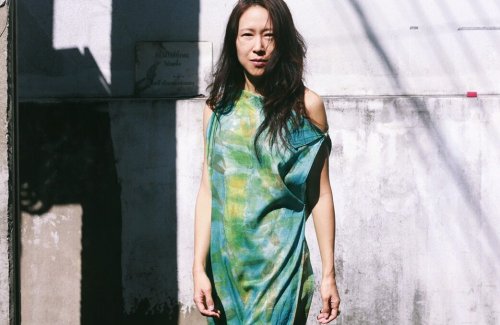
Born in Thailand, she embarked on a transcontinental journey, spending her childhood in California, where her father owned a liquor store in Long Beach. Inspired by the rich heritage of Southeast Asia, Pring introduces “SIN-Dress” to the world, a brilliant reimagining of the classic sarong, or “sin” in Thai. This modern masterpiece skillfully blends elegance and adaptability, and it was created to enhance and appreciate the attractiveness of many body types.

What sets her creations apart is the meticulous attention to detail in the production process. Each piece of artisanal Thai silk undergoes individual hand printing and hand dyeing, resulting in wearable art that empowers women to embrace their unique beauty and personal style.

Pring aims to depart from fleeting trends, labels, and the unsustainable practices associated with fast fashion. By advocating for slow and mindful consumption, she aims to redefine luxury in the Asian fashion industry, proving that it can harmonize with ethical and sustainable principles while still delivering the highest quality.

In an exclusive interview with Asian Hustle Network, Pring delves into the depths of her brand Sucette and reveals the captivating story behind SIN-Dress.

HOW SIN-DRESS CAME TO LIFE

I was inspired by the Southeast Asian garment, the sarong, or “sin” in Thai, which is essentially a piece of fabric sewn into a tube, and traditionally worn as a skirt by both men and women. 

I actually started Sucette as an artisanal shoe brand during the pandemic. I arrived in Thailand in February 2020, was 7 months pregnant, and saw Covid hit the country right after China. I ended up giving birth during the first lockdown and saw the economic devastation hit Thai artisan communities and saw the rising trend of “fast fashion”.

I was still freelancing as a shoe designer part-time and was deeply saddened by how badly Thai craftspeople were suffering economically and having to accept very low-paying and demeaning jobs to survive and I felt compelled to do something about it. 

I started Sucette as an artisanal shoe brand featuring hand-woven Thai silks and hand-carved heels but due to the complexity of shoes and not wanting to have to invest in a ton of sizing and stock, I was playing around with the idea of the sarong in my head. I loved the idea of the garment and creating something that was at once truly “Thai/ Asian” but also contemporary and universal.

I also loved to collect vintage silk sarongs but never wore them as I didn’t have the skills of tying them. I also didn’t want to have to cut them into dresses as each silk was so perfect as it is and would be a shame to cut! 

So I started to play around with the way it wrapped and one day I came up with the first “SIN-Dress”! I remember draping the entire piece of Thai silk on a mannequin and with just 2 pins, saw it hang beautifully as a tunic dress. I then added 24k gold plated brass hoops, handcrafted by a local workshop here in Bangkok, because I wanted to add a subtly luxurious and unique artisanal element. 

From then, I worked on the longer version, which is also a single piece of silk without any cuts or complicated patterns, in keeping with the “essence” of the sarong. 

My biggest inspiration is probably the way Siamese and Southeast Asian women wore the sarong historically. I loved looking at archive images, especially 19th-century photographs of women draped in beautiful silk and looking so elegant. My goal is to showcase this heritage to the world but in a contemporary way.

My other inspirations are Japanese designers, especially Issey Miyake and his invention of Pleats Please which is a conceptual collection, now renowned worldwide, but based on very Japanese ideas. 

PRING’S EXPERIENCE IN THE PARISIAN FASHION INDUSTRY

Being in Paris taught me the value of heritage and know-how and combining that rich tradition with a contemporary twist.

In Paris, heritage is absolutely everywhere you look–from the architecture to the food to the fashion and the art, but creators aren’t afraid to take that heritage and give it a contemporary make-over, while still being respectful of tradition. I also learned the value of being unique and owning your individuality.

In Thailand and perhaps in Asia there is a tendency to “copy” what the West is doing, and I believe that we have so much wealth of culture and knowledge that it is much better to showcase our own identity than to try to be like someone else. 

THE CREATIVE PROCESS

I fell in love with hand printing and dyeing silks because I found it very empowering that I could create totally unique artistic prints without having to go through the industrial process. For me, it is a similar process as artisans would do in their local communities, and I thought there is such value in making something beautiful and one-of-a-kind, for both the client and the maker.

I use a technique called “eco printing” which uses leaves and plants to print onto the silk. I also experiment with making my own natural dyes, tie-dyeing, and shibori dyeing techniques. My goal is to create wearable works of art that my clients will feel good in and hopefully keep forever. 

WHAT MAKES THE SIN-DRESS UNIQUE

Unlike a typical fashion brand, I don’t create “collections”

The SIN-Dress comes in 2 variations only, the short and long versions, and fits most body shapes and sizes. However, each dress is made from a totally unique piece of hand-printed silk therefore each dress is unique. 

My goal is to create a garment that would always fit, feel amazing on, and that each woman can style her own way to suit her individual personality. Much like the traditional sarong, there is no “correct way” to wear a “SIN-Dress”!

I always encourage my clients to have fun expressing their unique styles and to let their personalities shine. I want to create forever pieces of wearable art that are also effortless and versatile and can be worn for multiple occasions.

I’d love to be an example that it is possible to build a strong brand while going against the fashion industry’s vicious cycle of the “constant chase for newness” and overproduction. I’d also love to prove that “Made in Thailand/Asia” can be synonymous with sustainably handcrafted luxury and artistry at the highest level! 

PRING’S GOALS AND ASPIRATIONS FOR SUCETTE

I would love for the SIN-Dress to become a household name worldwide, to prove that a garment based on Asian heritage can become universally appealing and desirable!

My goals for my brand Sucette is to create beautiful wearable art in a way that also contributes to positive change–for the environment by choosing sustainable and artisanal production methods, for local communities by providing highly paid and rewarding work, and for my clients by celebrating individual style and beauty. 

CONNECT WITH PRING

Website: sucetteofficial.com

Instagram: @sucetteofficial

Facebook Page: Sucetteofficial

Sucette FB Group: Sucette Silk Couture Club

Joeydolls-Launch-Dolls-67-jpg

Stories

A Mother’s Mission to Create Dolls that Celebrate Asian Heritage and Address Lack of Representation in the Toy Industry

When COVID-19 forced Samantha Lee to put her wedding photography/videography business on hold, she seized the opportunity to cherish precious moments with her one-year-old daughter.

As news of the alarming increase in Anti-Asian hate spread, Samantha became deeply concerned about the world her daughter would grow up in.

Born in Malaysia to Chinese parents, Samantha’s family made the life-changing decision to relocate to Australia when she was just eight months old, motivated by her father’s aspiration for a better life. Growing up, Samantha only had blonde dolls to play with, so she wanted to be like her blonde classmates. She thought that they were so lucky to be born that way. 

She wanted differently for her daughter, so she embarked on a quest to find dolls that represented their Asian heritage to help her daughter feel proud of her Asian identity. However, Samantha was disheartened by the lack of diversity and representation available in the toy industry when she couldn’t find any.

Fuelled by a passionate desire to make a difference, Samantha resolved to create dolls that would empower Asian children and celebrate the vibrant tapestry of Asian cultures. Starting with six cultures, Samantha’s goal was to expand her collection to represent as many cultures as possible, including underrepresented regions like Southeast Asia, Vietnam, and the Philippines.

Now, after months of hard work and unwavering dedication, Samantha’s dolls, Joeydolls, are finally ready to be ordered. These dolls embody the beauty and traditions of various Asian cultures, instilling a sense of pride and confidence in children.

Join us as we delve into the inspiring story of Samantha Lee, who, in an exclusive interview with Asian Hustle Network, shares her journey in creating Joeydolls.

LACK OF REPRESENTATION IN DOLLS

When I was growing up, I grew up with only blonde dolls and only saw the same on TV. I remember thinking that I was so envious of my classmates at school – that they were so lucky to be both that way. I also remember thinking that I could never be a princess or a famous actress. Not seeing myself represented meant that I always felt like I was not good enough the way I was, that I didn’t really matter, and that I was only meant to be on the sidelines. 

When I witnessed the rise in anti-Asian hate, I was scared for the world my daughter would grow up in. I began to reflect upon my own experience. I didn’t want her to feel the same shame I grew up with. Since we were in lockdowns during the pandemic, my daughter couldn’t play with other children so I started to look for dolls that could be her companion. Most of the dolls only had fair skin and black hair and they were considered “Asian”. I just couldn’t connect to them, especially since I also experienced colorism while pregnant. I was told that it would be better if my daughter was born with my husband’s fair skin and my eyes (double eyelids). I was really disheartened by the continued concept of beauty in the Asian community. 

Around that time, we celebrated my daughter’s first year birthday by putting her in traditional Chinese and Korean outfits and I wondered why dolls didn’t do the same. I wanted her to not only feel comfortable with who she is, how she looks, and where she comes from. 

THESE DOLLS ARE MORE THAN JUST DOLLS FOR PEOPLE, THEY ARE PART OF THEIR STORY AND THEIR HEALING

I faced a lot of challenges in creating the dolls. I didn’t know anything about producing a doll – or a toy for that matter. I also had no experience in fashion or sewing. I was just a mom who wanted to make a difference. It was hard to find the resources since I also had no contacts in the industry.

I started with the concept of doing 6 ethnicities and then expand in the future. I wanted to make sure that Southeast Asia was represented since they have been underrepresented for so long. Initially, I wanted the dolls to have different skin tones to pick from for each ethnicity, however, it was so difficult to do so on a mass scale.

I was also surprised at how difficult it was to find the right shades for the skin tones and at the same time keep costs low since my production numbers were not large enough. As I was losing so many of my contracts in my photography business, I didn’t have a sustained and reliable income to be able to support this passion project. So I really tried to develop the dolls on a shoestring budget. 

I wanted to start the prototyping and manufacturing process locally but the costs got exponentially larger especially when it was so difficult to find the fabrics and materials we needed. We were so limited in what we were able to source so that’s when I began to look overseas. 

I began developing the dolls with one company that gave a very good price for the dolls, but they had a lot of trouble finding the right skin tone and couldn’t do the hair like we wanted. Then, we found another company that was able to do the skin tones and hair we wanted, but I found that their quality was not acceptable. Quality was very important to me because I really wanted people to feel proud to have these dolls and what they represented.

I often posted to Instagram about my progress and people would respond by saying that they teared up seeing them. I knew that these dolls are more than just dolls for people, they are part of their story and their healing. So many people said that they would have so loved having these dolls when they were younger and it would have helped them feel better about themselves. That’s exactly what I wanted these dolls to do for people – to help them feel that they are worthy in this world. 

It took a lot of dedication to learn each of the cultures and the symbolism behind some of the traditional details. I also wanted the dolls to be safe for babies to have as well, so that’s where I struggled with keeping the details accurate, cost-effective, and most importantly safe for all children. There was a lot of back and forth and redesigning. We went through countless prototypes and so many times I wanted to give up because I felt that I was not up to the task to complete it.

I had to remind myself of my “why”. I decided that instead of trying to hide behind social media, I would be vulnerable and talk about the struggles behind developing these dolls. I was worried that people would tell me to just give up, but instead, they gave me so many messages of support. They pushed me to keep going and told me how much they appreciated what I was doing. That these dolls make such an impact on them! I knew I had to keep going. So I kept pushing. These dolls are not only for my children but also for the other children who NEED these dolls.

YES, WE ARE ASIAN BUT WE HAVE SO MANY DIFFERENCES THAT MAKE US SPECIAL AND UNIQUE

I hope that children will see the dolls and feel proud to learn more about their heritage and also just be comfortable in their own skin. I hope that it helps parents teach their children how worthy they are. I hope that the dolls will help foster positive self-esteem and self-confidence. 

I want to change the narrative – that Asians are not a monolith. Yes, we are Asian but we have so many qualities that make us special and unique. So in doing so, I also hope that these dolls will help create more awareness and education about Asian diversity. That each of our cultures is not the same. That each should be celebrated. 

I hope that our dolls can be a stark contrast to the hate. That’s why I created the campaign #StartAsianLove instead.

CHILDREN AND ADULTS WILL FINALLY FEEL INCLUDED AND REPRESENTED BY DOLLS THAT RESEMBLED THEM

Even when my daughters couldn’t speak, their faces would light up and they would giggle with delight as I designed the dolls on my computer. It was a heartwarming experience, even during moments when I wasn’t fully satisfied with the prototypes. I would hide them around the house or in my office, and my daughters would discover them, hugging and kissing the dolls as if they were their dear companions. The sheer joy they exhibited upon seeing those happy doll faces was truly priceless.

When my youngest daughter Jasmine turned 1, we dressed her in a traditional hanbok. To my delight, my oldest daughter Joey pointed at the Korean doll and exclaimed, “It looks like Jasmine!” On another occasion, she referred to the same doll as a “princess.” It was a deeply touching moment for me because I had never imagined that Asians, including myself, could be seen as princesses.

The feedback I received from parents further affirmed the impact of my work. One parent expressed gratitude for creating a different world for their child, where they could proudly embrace their culture and heritage without the fear of being bullied or pressured to assimilate. The acknowledgment of the value of diversity was deeply meaningful to them.

Another parent expressed admiration for how Joeydolls would positively influence the lives of other girls. The representation of Asian culture was applauded, as it meant that children and adults will finally feel included and represented by dolls that resembled them. The support and well wishes I received from these parents fueled my motivation, and I am grateful for their continued support.

I WAS IN TEARS READING EACH MESSAGE BECAUSE I COULD FEEL HOW EACH PERSON CONNECTED WITH MY STORY

It was amazing to receive all the messages of support on AHN! I was in tears reading each message because I could feel how each person connected with my story and just wanted to give me that push to keep going.

I knew that my story was important. As a community, we needed to see these dolls be finally made and put in the hands of young children, and how these dolls can further impact the community on a much greater level.

I was excited about being the one to push for changing our narrative, breaking stereotypes, and deconstructing racism and colorism. These are all important changes I wanted to make in the world and all the messages solidified how important my work was.

SAMANTHA’S HOPE FOR JOEYDOLLS

My goal is to represent as many ethnicities/cultures within Asia. This will further help solidify the messaging of how beautiful and diverse Asians are! Also, I want to create boy/gender-neutral dolls too.

I hope that children (and adults!) of all backgrounds (not just Asians) will appreciate and love our dolls and what they symbolize. I also have some other fun ideas that I hope to work on that still encompass celebrating the beauty of Asian culture and diversity. 

CONNECT WITH SAMANTHA

Website: joeydolls.com

Instagram: @joeydolls

Facebook: Joeydolls

Youtube: Joeydolls

TikTok: @joeydollsco

la crosse tribune-png

News

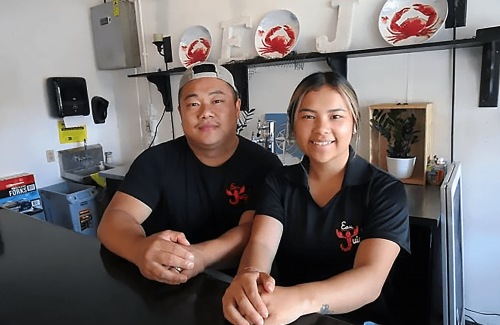
Couple Behind Eau Juicy-La Crosse Unveils Their Asian-inspired Menu

Bringing a delightful blend of Asian-inspired Cajun seafood to the city, Eau Juicy-La Crosse has been making waves since its opening on July 14. The minds behind this exciting venture are Xavier Yang and his fiancee, Yer Thao, who express their satisfaction with the positive response received from the community.

Through this venture, Yang and Thao have gained valuable insights into the preferences of local residents. Yang shares his observations with La Crosse Tribune, stating, “We’ve noticed that here, a lot of people like snow crab.” Located at 412 Main St. in downtown La Crosse, the restaurant has become a focal point after the closure of Soula’s Cuisina at the end of June.

Building on their prior experience, Yang and Thao operated their first Eau Juicy restaurant in Eau Claire from July 2021 to September 2022. Their success has paved the way for the next chapter, as they plan to open another Eau Juicy establishment in nearby Altoona come spring, according to La Crosse Tribune.

Unveiling the favorites on their menu, patrons are drawn to the head-off shrimp and the sumptuous Dillybob Special platter. This elaborate feast includes 4 to 5 pounds of shrimp, mussels, crawfish, and snow crab, complemented by four servings of corn, potatoes, and a generous portion of sausages. This feast is designed to cater to the appetites of two to four individuals.

Aside from seafood, the menu boasts a diverse array of options, ranging from wings and french fries to egg rolls and a variety of sides such as corn, potatoes, sausages, sticky rice, and sweet rolls. The dining experience is further elevated by an array of sauces, allowing patrons to tailor their meals to their preferences. Additionally, the restaurant offers catering services to ensure their delectable offerings are a highlight of special occasions.

Looking ahead, Yang and Thao are eager to expand their beverage options. Pending the acquisition of a city liquor license, they plan to introduce beer, wine, and cocktails to complement their culinary offerings, enhancing the overall dining experience.

Featured Image Source: La Crosse Tribune