Awaken* newsletter

June 20, 2024

SHARE:

This edition was a collaboration with The Early Newsletter by Michaela Gordon. You can read her thoughts on our conversation with Patrick here. Thank you Michaela for collaborating and please go check out her article!

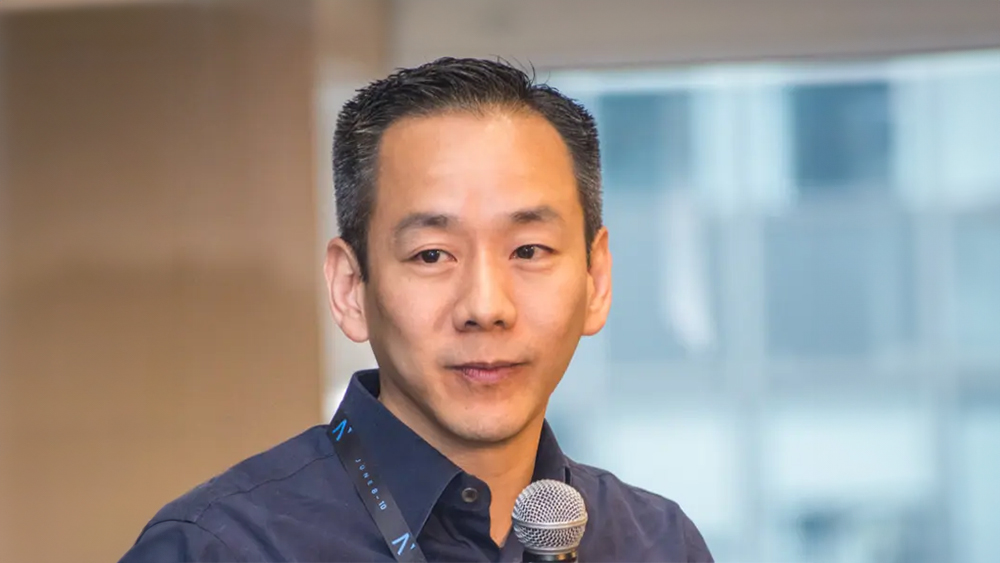
The startup ecosystem has gone through a lot of changes over the years. From the dot com era to the modern era of AI, Patrick Lee has seen it all. A stalwart of the startup ecosystem, Patrick has started seven different companies over the last 30 years, including everybody’s favorite movie review website: Rotten Tomatoes. Michaela and I had the chance to sit down with Patrick to talk about Rotten Tomatoes, advice for founders, and Patrick’s reflections on being Asian.

How did Rotten Tomatoes get started?

Rotten Tomatoes had three co-founders. I was the CEO. There’s Senh Duong, who was the creator of Rotten Tomatoes, and he was basically our chief product officer, and Stephen Wang, who was our CTO. I knew them all from my freshman year of college. Senh was down the hall from me in the dorms. 

Prior to Rotten Tomatoes, Stephen and I had founded a web design firm. We were doing a lot of work for the entertainment industry, a lot of work for Disney Channel, stuff for Warner Bros., Artisan Entertainment, MTV, VH1, and ABC. We even made the online flash game for Who Wants to Be a Millionaire. 

During that time, Senh was our creative director, and he came up with the idea on the side. He was a huge movie buff. He came up with it and launched it on his own. It was written in static HTML because he wasn’t able to code at the time. And we hosted it for him. After about a year of hosting, we were like, “maybe this should be the business?” So we actually merged our company with his company and became co-founders of both companies and had equity in both. I went out and raised a million in funding, then transitioned our design firm off to another group to take over. We kept an equity stake in that design firm, but then we basically passed our clients to another group to take over. They took over the name and everything so that we could focus on Rotten Tomatoes fully. 

What was your experience raising money like?

Rotten Tomatoes was my third company. In my first company, we put in our own savings. For the second company – the design firm – we took loans from our families. $10,000 from my mom and $20,000 from Stephen’s uncle. Once we started getting clients, we paid back the loan with interest. 

For Rotten Tomatoes, one of our clients raised some venture money, so they put us in touch with their VC who said they would lead the round. They put in half a million. The rest we actually raised from our old design firm clients. A number of them were tech companies and had successful exits. So they were totally open to investing, and they knew what we could do because they were our clients.

Why did you decide to raise venture capital for Rotten Tomatoes?

This was in late 1999, right before the dot-com crash, so there was a lot of money going around and a lot of investment into the internet. It’s kind of like what Web3 was like a few years ago or what AI is like now. Multiple companies we worked with had raised a lot of money and had successful exits. We were basically building for all these companies and realized that we were on the wrong side of the business. We decided to try to build something that was our own instead of being a services company. That’s why we went and approached the VC that we had contact with. It was a small VC out of Taiwan. I remember we had a couple of different ideas. The first one was Rotten Tomatoes, which already had traction. The other one we thought was interesting was making a portal for Asians and Asian Americans. We were doing the official Jet Li site. We were working with Yolk magazine at the time. I remember having a meeting with Jet Li and he was getting excited about that idea. He was saying he could bring on Jackie Chan. At that time, there were a couple of other Asian magazines that were within our reach. It was a very small community back then. Our thought was, what if we got the different magazines, the different Asian sites, some of the big Asian and Asian American celebrities, and brought them all together? I remember when we pitched these two ideas to our VC, they told us to do Rotten Tomatoes because movies were mainstream. At the time, only 3% of the population in the US was Asian. Even among Asians, there are many different types and they might identify separately as Chinese, Japanese, Korean, Filipino, etc. The investor felt it would be very difficult to have content that appeals to all of them. They recommended we do Rotten Tomatoes, which, looking back, was definitely the correct decision. The other idea would have probably been about 20 years too early. 
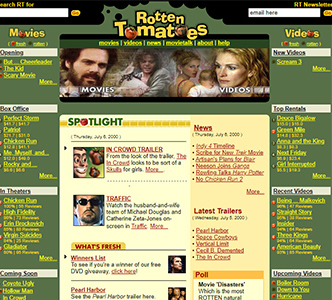
The first Rotten Tomatoes front page, published in 1998.

Rotten Tomatoes was launched in just two weeks. How did you navigate the tension between creating the perfect product versus getting it out as soon as possible?

Rotten Tomatoes was our creative director Senh Duong’s idea. He was a huge Jackie Chan fan. He wanted to know what everyone was saying about Rush Hour when the movie was coming out, so Senh went to the library and gathered reviews from magazines and newspapers–back then, very little was online. He decided that if he was putting all this work together, he might as well share it with other people. So he went home, built a page for Rush Hour and the other mainstream movies coming out that week, and put all the information up there. Because the scope was limited, he was able to go from idea to launch in about two weeks. He was gathering twenty to fifty reviews per movie for three or four movies. It was a lot of work, but doable by one person. 

It turns out that just having the new releases was still very useful because people were most interested in the movies coming out that week. He didn’t need to have tens of thousands of scores for the long tail of movies. He just focused on the head, the tippy top of the head. It was immediately useful, and instantly started getting traffic and attention. Then he just kept it up. He would work on the next week and the next week and the next week. It wasn’t until a year in that we said; “hey, maybe we should turn this into a business.” 

My advice for anyone is to launch quickly and test quickly. A lot of people, and I’ve made this mistake multiple times, spend six months to a year or two trying to make this perfect thing. They end up spending a lot of their own money or burning half or more of the funding that they raised trying to build this thing. The issue is you don’t know what perfect is until you actually get it out there.

You’ll see over and over, especially in consumers, folks put something out as a test and then it blows up. Twitter was a weekend project and then they just blew up. Twitch was Justin.tv in the beginning. They just messed around and put something out there. You just have to get the basic thing out there to see if people want it. Sometimes you don’t even have to build anything, you can literally just interview people or just do a mockup, and make a walkthrough of what the product would look like. It could literally be a napkin scribble and you can immediately start getting feedback. That feedback can actually give you a lot more information than putting something “perfect” out there. Go back to almost any consumer site or app and try to look up what version one looks like. Go look at the first versions of Facebook, eBay, Amazon, or whatever. They were ugly. But they solved something. That’s why they kept growing and taking off. I’m always recommending that. 

The other thing I say to people a lot of times is to really focus. It’s generally a single thing that people care about. For Rotten Tomatoes, it’s the TomatoMeter. We could get rid of the cast, crew, filmography, photos, movie showtimes, and almost everything else on the site. But really, as long as you have a score, that’s the critical thing that you need. 

If you think about fast food chains, every fast food chain specializes in a single type of food. The restaurants that offer multiple types of food are generally all mom-and-pop shops. The really big chains do one type of food. Every single one of them. When you look at social media, every social media platform started off with one unique singular feature. Like TikTok, Snapchat, Clubhouse, Twitter, YouTube, Instagram, and Substack, they all started as one thing. And again, as they got big, they started looking more like each other because they added more features. But they all started out as one thing. You find one thing that people actually care about. And you try to put that one thing out as fast as possible to see if they really care. 

How do you know when to give up on an idea?

Testing doesn’t have to be serial. You can actually do some stuff in parallel. As an analogy: if you have a kitchen, you can test a few different types of food concurrently. You could even do a survey before you start cooking to narrow down your options. Then, you can try each of them out and go forward with the best-performing one. It doesn’t have to be: Let’s try chicken, now let’s try hamburgers, now let’s try pizza. You can try all of them at once. 

In terms of knowing if an idea will work–you’ll know it when you see it. Rotten Tomatoes got the press instantly. It was getting noticed. USA Today was writing about it and Netscape was highlighting it at Yahoo. The day Pixar released A Bug’s Life, right around the time we released Rotten Tomatoes, we saw spiking traffic coming from Pixar. 

When you look at Asian Hustle Network, they just put something out there and it went crazy. Facebook and Twitter had the same thing. Especially with consumer products, when it works, it works. You’ll know when it doesn’t work because it’s crickets. You’ll be trying to tell everyone to go on, you’ll be telling your friends and family, and some of them will go on once and never come back. That’s normal. That’s actually what happens almost every time. 

Take an average YouTube video. You’d have a hard time getting even 100 views on it. Then every once in a while, for whatever reason, someone puts up a video and it gets millions of views and everyone’s sharing it like crazy. You kind of know it when you see it. If you’re begging everyone you can get, you’re trying to market in every way, you’re even buying ads and you’re having trouble getting a hundred views or a thousand views, you’re probably done. If it’s an app or a website, it’s probably not the right one. The way you know if you have product-market fit is if people tell other people about it without being asked to or incentivized to. Think about TV shows like The Queen’s Gambit a couple of years ago or Squid Game. People were sharing it with each other unprompted. They would just tell other people about it and it’s essentially free marketing.

Is it necessary to have startup experience or experience working for another company to execute and test ideas well? Or do you think the best experience to start a company is just to go and start it?

I would say that there is an optimal founder. That founder would be very bootstrappy. They would be able to launch things very quickly, iterate quickly, and without many resources. Also, they would have what I call irrational confidence. They just believe in themselves and what they’re trying to do with this insanely crazy confidence, and often based on nothing. 

“When we did Rotten Tomatoes, we didn’t know anything about movies. The Airbnb people weren’t hotel people. The Uber people were not taxi people. Industry disruption often comes from outsiders because disruption requires something out of the box and those people were never in the box to begin with. It’s rare that the disruption happens from within.”

I often speak to students and recent graduates. Some of them will come up and say, “Hey, I was thinking about doing a startup, but I wanted to go work in corporate or management consulting for a couple of years, get experience, and then start it.” There’s a 99% chance you’ll never leave once you’re in and you’re used to a salary, getting raises, promotions, and all that stuff. It’s going to get harder and harder to quit, especially if you get to a point where you’re in your early 30s, married, with kids and a mortgage. The chance of you risking all of that is pretty much zero.

These people, when they come up to me, they’re saying, “Look, I’m too scared. I’m too conservative to actually go out and do it.” The best ones just do it. Yahoo, and Google, they were grad students at Stanford and just left. Zuckerberg was an undergrad at Harvard. Steve Wozniak and Steve Jobs just left and did it. Most of them don’t even finish school because they’re not scared of leaving early. They have so much belief that they just have to do it. This has happened so many times.

In some ways, dropping out was a good sign. It’s not that they dropped out to bum at home playing video games, they believed in themselves so much they didn’t have that fear of failure. I absolutely think that founding a startup is not for everyone. I don’t recommend it if you’re someone who’s very conservative, and very scared. Go get a normal job, and do the safe thing. But there are people who just have to do it. Even if you have the confidence, you still have to have the ability to iterate, to bootstrap, to do those things properly. 

When you see that mix, it almost doesn’t matter what the idea is, assuming that they want to do something big. When you see that mix, that’s the right person. It doesn’t matter what their idea is, they’ll figure out something that’s going to work. 

They are sharp and bold – it doesn’t surprise me at all when they make it later on. Look at any of these great athletes or entertainers, and when they were young, they probably had that spark. There is an element of luck, but a lot of it is who they are as a person. The biggest thing when looking at young founders is their irrational confidence. This is true for athletes, entertainers, or anyone who takes that risk. Go back to the beginning and look at them, they have that spark. 

You’ve been founding startups for many years now. How have you seen the landscape for Asian American founders change since you started, particularly within tech and venture?

In tech and venture, we generally punch above our weight. At the highest levels, if you look at Nvidia, Yahoo back in the day, YouTube, Twitch, and Zoom, there are Asian founders. If you’re also counting South Asians, look at corporations such as Microsoft and Google, the heads are all Indian. 

A lot of Asians tend to lean towards engineering, so we tend to be weaker on the executive side. When people talk about diversity, they often don’t count Asians as diversity for tech and venture. 

Similar to college, it’s actually harder for Asians than anyone else. From when I started until now, it’s gotten better, but overall, we could use help on the executive side. In other industries like entertainment, it’s getting better but it’s still not great.

A lot of your business partners have been Asian. Is this intentional or coincidental?

Part of it is because I went to Berkeley. I wanted to go there because it was 40% Asian. I was born in LA but grew up in Maryland. There were only three Asians in my grade in elementary school, so I felt a little invisible sometimes. I later attended a magnet program for intermediate school and high school, where there were obviously more Asians. When college came around, I wanted to find a place that had more Asians so that I would find more people like me. After we sold Rotten Tomatoes, I went to China and then later on, I went to Hong Kong. What I realized was that when I went to China, they could tell I wasn’t like them just by looking at me. I realized that I’m actually a minority everywhere. The closest thing to people like me are Asian Americans, or even more specifically, Chinese Americans. 

My circle tends to be at the intersection of tech and entertainment, and it leans more heavily Asian. The folks I was working with, like Holly, Kun, and Kevin, they’re Asian but they also were all doing companies at the intersection of tech and entertainment. I did Rotten Tomatoes, Holly did Kabam, Kun did Crunchyroll, and Kevin did Twitch. With Kun and Holly, we also had a connection through Berkeley. I was also really into Chinese martial arts when I was at Berkeley. Because of Berkeley and martial arts, I naturally had a pretty Asian group. But for me, I’ve tried really hard to get good diversity across industry, race, and gender.

What have you been working on recently?

When I came back from Asia, I did another startup, a mobile gaming company. We raised a lot of money – five million – but it didn’t work. We made every mistake you could make, including not being focused. I took a break and then ended up doing PKO Investments with Holly, Kun, and Kevin. We made an investment syndicate, investing at the intersection of tech and entertainment. We had about 800 people in our syndicate, half of which invested in at least one company. From 2021 to 2022, we invested in 45 companies and raised $35 million for those companies. Around November 2022, there was a big market crash and a lot of our angels needed to take a break. At that point, no one in our syndicate was looking to invest. We talked about potentially doing a fund or doing something else and eventually, we decided to do another startup. 

That’s [Fanverse] what I’m currently working on full-time, and we’re basically doing a membership-driven community. We’re bringing together all the best builders, creators, and talent in the geek fandom space. Geek fandom being things like comic books, video games, anime, sci-fi, and fantasy. Geek fandom is something I’ve loved my whole life. We have founders of companies like Patreon and YouTube. We have gaming people: the CEO of Tetris, an ex-chairman of Midway Games, a board director from Roblox, and a board director from Atari. We have entertainment people, such as Adele Lim (a Malaysian director/writer), Shannon Lee, (Bruce Lee’s daughter who produced the TV series, Warrior), and Karen Gillen (Nebula in Guardians of the Galaxy). We have sci-fi authors like Neil Stevenson. This is a super cool group of people. There are about 80 people so far and it’s all community. We’re doing dinners, larger events featuring different speakers, a WhatsApp group, online Zoom stuff, all these things to try and get this community together. 

At a very high level, we want to be broad enough that you’re going to meet people outside of your lane that you don’t know, but narrow enough that they are people you should know and could potentially collaborate with in the future, especially since pop culture and geek fandom IPs often span multiple mediums. For example, you have The Last of Us, Halo, and Fallout which are games that became TV shows. You have One Piece, which was a manga that became an animated TV show that has become a live-action TV show. You have the Marvel and DC comics which have become TV shows, movies, and games. 

With all this crossover, our idea is to bring in people from each of those different mediums together, let them all meet socially, and then see what happens. We’re already seeing folks working together and investing in each other. Essentially, it’s a networking group of these nerdy folks.

Is there anything else you’d like to share?

For anyone who’s reading this, Asian or not, I would say that when you look historically, the biggest companies tend to form every time there’s a new wave of technology. Desktop computing gave us Apple, Microsoft, IBM, and Hewlett-Packard. The internet gave us Google, eBay, Amazon, and others. Mobile and cloud computing brought more. Today, I think AI is bigger than all of those combined times a thousand. It’s crazy what AI can do to change literally everything we know.

Rotten Tomatoes, for example, rode the wave of the internet. Most of these companies that are still around rode some wave. AI is the biggest wave ever and if you are interested in entrepreneurship and you are reading this article, get on that wave. When there’s such a massive wave, why wouldn’t you get on it? Why would you just go and get a normal job and do something boring and have this wave pass you by? Assuming you’re not too scared and you’re not too conservative, you should get on the wave, do something, and just survive and stick with it for a while. Everyone I know who got into entrepreneurship and stuck with it for ten years ended up doing something pretty interesting.

We at AHN Ventures are of the same mind as Patrick, and encourage our readers to go out there and start building! If you like what you read, you can follow Patrick @rottendoubt on all socials. Thank you for the interview, Patrick!

Related Articles

Image Source: The Guardian / Unison Creative

Stories

TukTuk Box Founders Highlight Southeast Asian Flavors With Snack Kits

Laotian American Christy Innouvong-Thornton and Beatriz Aurelio-Saguin of Filipino and Indonesian descent use food to explore and share their heritage.

“Food is our love language. In the Asian community, sometimes our parents don’t like to express their emotion,” Beatriz told the Guardian, “But they’d give you a big bowl of rice and your favorite dish when you’re sad, and you know you’re loved. For us, food is also an ever-changing storytelling vehicle.”

They wanted to find a way to debunk racist stereotypes about the foods they grew up eating while giving back to Southeast Asian communities.

In 2020, Christy and Beatriz founded TukTuk Box to raise money and awareness for Thai refugees.TukTuk Box is a specialty food retailer and subscription box company focusing exclusively on Southeast Asian products and purveyors, working with people from the diaspora or identifying as BIPOC.

For Christy, starting TukTuk was also a way for her to heal and create a relationship with my biological mom. 

Most of Beatriz’s dad’s siblings were born in Jakarta, while her dad was born in the Philippines, which made him only know a few staple Indonesian dishes. But because of Tuk Tuk Box, he’s been able to learn more about his own background.

They told The Guardian that they’ve curated their products from Asian stores all around California, Thai Town in LA, and Cambodian communities in Orange county. Before the pandemic, they also had a lot of snacks directly imported from Thailand and the Philippines.

Christy and Beatriz are publishing a cookbook soon featuring different stories and recipes from folks in our community that they have collected over the last two years.

Jeremiah

News, Stories

Gleaming Presence of Tremendous Communications Shining an Iridescent Light on AAPI

Jeremiah Abraham, the founder and CEO of Tremendous Communications, had bumps in the road in getting to where he is today. Starting his business right before the pandemic, he doubted the path that he created and considered quitting everything that he was doing. But with mentors along his side and his determination to uplift the AAPI community, his company has contributed to protecting and celebrating the Asian American and Pacific Islander communities when they needed it the most.

Working at renowned companies like Disney and Warner Bros., Jeremiah has spent years hustling at the intersection of technology and entertainment. Using his talent in marketing, he has constantly shed light on the AAPI community by promoting films such as Everything Everywhere All At Once and co-producing the Filipino American musical drama film Yellow Rose. He still finds ways to balance work and life by tearing down the systematically ingrained notion of working from 9 to 5.

In this one hour interview, Jeremiah lays out his story of how he entered this industry, experiencing ignorant approaches to different cultures in a white dominant workplace, and his immense passion for AAPI representation.

Blend of Tech and Entertainment

I got my degree in computer engineering from UC Irvine and that was when I needed to decide what I wanted to do in life. I wanted to make a difference in technology back then, so I got that degree. One of my first jobs was in the aerospace industry. I was working there and I realized that I was just really bad at math. I didn’t think I could realistically pursue this as a long-term career. It was one of those moments where you had to have this introspective, realization, or catharsis about what you thought you were going to be and what you want in life.

Then I found this blend of tech and entertainment, which I was always interested in. I ended up being a front-end developer for Disney, which was a nice blend of the programming skills that I learned from school and the entertainment brands that I’ve always admired. Social media was still fairly new at these companies. This was back in 2007, and I would say that the biggest leap from this tech world to this communications world was when I discovered a Master’s program for Digital Social Media and Online Communities at USC. So I worked at Disney full-time, and at night I tried to get my master’s degree. I knew in my head what I wanted to build for myself and that was this intersection.

An intersection of my interest in engineering and social dynamics is interesting because a lot of people didn’t know why I even majored in computer engineering and minored in sociology. Engineers build societies, but you can’t build it without understanding it first. I ended up pursuing this even more and realized that I had a knack for marketing which I ended up pursuing after receiving my degree at USC.

Uplifting the Filipino Community

After I got my master’s degree, I decided to pursue my thesis project as a full-on business venture, which was an online community and editorial group for Filipino Americans called BakitWhy.com. Uplifting the Filipino community has always been a constant in my life. Since high school, I was part of a Filipino club where we celebrated our culture and volunteered for Filipino community organizations. I knew that whatever I did, whether it was engineering or marketing, was in the service of our people.

So I started this website and it was one of the first, if not the first, Filipino American digital destinations for editorial and news content. We were covering events and a new emerging digital identity among the Filipino American community. I called this the golden age of Filipino YouTubers back in 2007. These were the days of HappySlip, NinjaDrops, ndtitanlady, and more. We were able to rally this community both on the digital side and also offline to develop not just a thriving company and brand, but a lifestyle destination that people could relate to. I wanted to create something wonderful for us.

One of the things that I pride Tremendous on is that we’re not just there to engage the AAPI community as a business, but we primarily want to instill genuine progress and impact. We are immersed in our Asian American community. We don’t clock out after a certain time and say “Sorry we’re done today Asians, it’s five o’clock and we’re not going to do anything anymore.” No, this is our life. This is what fulfills us and I think it helps set our campaigns apart. The way we communicate and interact with our clients also influences the strategy we give to them because we’re not just looking at numbers, we’re looking at people. We are all about uplifting authentic Asian American experiences, diasporas, stories and narratives. For us not to be authentic with that presence in our daily lives would be hypocritical.

One of the things that I pride Tremendous on is that we’re not just there to engage the AAPI community as a business, but we primarily want to instill genuine progress and impact

– Jeremiah Abraham

Marketing in a White Dominant Setting

There was one instance where I was the only person of color in the room at a large entertainment company, still very green and inexperienced. I didn’t feel like I had the authority and the voice to chime in and redirect these senior leaders of this space. And they’re sitting around going like, “Hey, it’s February next month. It’s almost Black History Month. What can we do?” And then someone just started listing off all the movies in their catalog that had some resemblance of Black narrative. And I’m just like, “All right, well, that’s very top-level. But what more can we do? Can we bring in more people who actually represent this community in the room and have a conversation about it?” That situation really helped me realize that we needed to be part of that room of decision-makers. Being there that day sparked a drive in me that I’ll never forget.

One of the things that I had issues with while leading the publicity and marketing for Yellow Rose before we got acquired by Sony Pictures, was that people didn’t understand what Filipinos were, that our stories were relatable to all moviegoers, and that we were equally as valuable in Hollywood. People couldn’t wrap their brains around this and asked “Why is a Filipino family living in Texas? Do they really sing country music like that? Will non-Filipinos even relate to this?” They were seeing the Filipino diaspora within one specific lens instead of embracing the spectrum of the Filipino experience. They didn’t realize that there are mechanisms that historically pushed us to these areas that we’re thriving in, to these places where they may not think that there is a large thriving Filipino community. The lead characters are Filipino American, but the story is universal. If you took the lead characters out and made them Latinx or Black, for example, you would still have the same emotion. You’d still have the same humanity. You’d still have the same story. It just so happened that these people are Filipino. This is one of the things that Jo Koy discusses during his  interviews for Easter Sunday. The movie isn’t about Filipinos, it’s a movie about his family and his mom. That’s one of the biggest things I appreciated about this film. It’s a story for everyone.

The first movie that I ever saw when I moved to the United States was Superman 2 with my dad and that’s always ingrained in my head. I was in such awe of this superhero and I’ve always wondered how impactful it would have been if Superman was Filipino. That would have made such a big difference for me growing up. I love Christopher Reeve as Superman, but imagine if it was a Christopher Santos or a Christopher Dela Cruz in that heroic cape instead! Today I’m so happy that our next generation can enjoy seeing themselves as heroes with films like Shang-Chi and people like Iman Vellani as Kamala Kahn making a difference.

I think it’s incredibly important for us to make these decisions on how we are portrayed and valued for ourselves, with representation across every part of the process –  behind the camera, in front of the camera, in business and below the line. We can bring these little nuances of authenticity to these stories that are so important and help shape the next generation of folks who want to do this work. 

They were seeing the Filipino diaspora within one specific lens instead of embracing the spectrum of the Filipino experience. They didn’t realize that there are mechanisms that historically pushed us to these areas that we’re thriving in, to these places where they may not think that there is a large thriving Filipino community.

– Jeremiah Abraham

A Chronicle of Starting a Business Right Before a Pandemic

Starting a business at the cusp of a global pandemic was a big lesson in resilience. There is a lot of strategy, planning, introspection and decisions that need to be made behind the scenes. I had been planning Tremendous for years. I spent so much time creating the structure of it, the business strategy, forecasting our trajectory and all those things that you need to help lay the foundation of a business… then the pandemic hit and I needed to shift very quickly.

Tremendous incorporated in 2019 and started to plant the seeds of studio partnerships. When we were ready to sign a couple of contracts, all the major movie studios suddenly shut down. I had to take a step back and I realized the mission of Tremendous is not rooted in movies and entertainment, but it exists to uplift the visibility of Asian Americans as a whole. We couldn’t work in entertainment at the time but that didn’t stop us from working within the community. That’s when we helped support Racism is a Virus, and co-founded Unapologetically Asian and CollaborAzian. We used our expertise to help uplift Stop AAPI Hate. We were able to leverage our network and our skills and our desire to make change in this very crucial moment of the Asian American community.

There certainly were many surprises along the way. I pitched this movie that was supposed to come out on January 2021. We were ready! We put this beautiful deck together, we brainstormed, we strategized. And then they told me, “Hey, we’re going to make an announcement today that this movie is going to be pushed to January 2022.” I was like, “What am I going to do for a year?” It’s a lot of those things that I learned as an entrepreneur that it doesn’t necessarily go how you forecast, even though you spend so much time strategizing and pulling numbers. And that’s fine because that will push you to be more dynamic as a business and help you imagine new, creative avenues for yourself. But for me, it was a lesson in resilience, being flexible, and not beating yourself up too much for things that are outside of your control.

I had to take a step back and I realized the mission of Tremendous is not rooted in movies and entertainment, but it exists to uplift the visibility of Asian Americans as a whole.

– Jeremiah Abraham

Confinements that Pull us Back

There were many moments where that lingering voice of doubt made me wonder if this was the right path for me. Should I go back to a safe, stable job with benefits and a retirement plan? What if I end up losing all my money in this venture? Is it okay that I decided not to work today?

Even now, I can make my own schedule. I can wake up at noon if I wanted to and keep working until 2:00 am or just take a random afternoon off. And that’s my choice to make. But because I’ve been so conditioned to think that the limits of my brain power need to be confined between nine to five, having this new freedom came with a sense of guilt.

I have such a hard time realizing that you don’t need to operate within those confines to be productive and successful and fulfilled. I just have to keep reminding myself that it’s okay to permit yourself to watch Netflix for an hour at 2:00 pm for you to refocus and recenter. It’s okay that you’re sleeping in until 11:00 am or 12:00 pm today because you worked until 1:00 am last night. I have to keep reminding myself that nobody is telling you what you need to do except for yourself. That’s the life of an entrepreneur and I’m still learning how to adjust to this new level of control, even today.

Shining Leadership Skills for Better Productivity

Throughout the years, I have applied my learning lessons in leadership – especially with how I lead my team and how I conduct business. Sometimes we have many projects to work on at the same time, sometimes we have less. I’ve always told my team, as long as you get your stuff done and you are communicative and responsive, then I’m good with that.

I really encourage them to explore their interests, experience life and bring those experiences back to the company. This helps bring fresh, new ideas during our brainstorms and campaigns. One of the things that I took away from working as a Marketing Director at Condé Nast is that they encouraged you to go travel. Travel changes you, it opens up your mind. It allows you to experience new things so you can bring that experience back into your editorial piece or your marketing strategy.

I’ve never liked the idea that you need to clock in at 9:00 am every day or else you’re considered a bad employee. Just because I’m sitting there physically doesn’t mean I’m mentally there. I’ve never understood that kind of leadership where it’s more important to appease other people and make them feel better about themselves because of your presence. It’s those antiquated expectations and older ways of doing business that I’m constantly reshaping for Tremendous. As long as we get our projects done, we don’t miss meetings, and our clients are happy… who cares if you sleep in an extra hour that day?

Travel changes you, it opens up your mind. It allows you to experience new things so you can bring that experience back into your editorial piece or your marketing strategy.

– Jeremiah Abraham

People that helped along the way

I never had one specific mentor during my career. Instead, I’ve had some amazing senior executives who have taught me different aspects of my leadership skills. One of them taught me negotiation skills, another taught me how to properly communicate my ideas in a meeting, another pushed me to be more assertive with what I need to succeed in a business setting. I’ve really taken these lessons and made them my own.

One of these executives is Terra Potts, who is the Executive Vice President of Worldwide Marketing at Warner Bros. Pictures. We kind of grew up at WB together back in the day. She taught me how to stand up for your worth in situations where people may not immediately see it. I take that into every negotiation that I am part of. Teal Newland, my Senior Vice President at Condé Nast Entertainment helped me hone my creative eye and incorporate different perspectives in my marketing campaigns. Diane Paragas, who is the director of Yellow Rose, mentored me in the filmmaking process. These are just some of the people who empowered me in my journey and I’m happy to give back to others who are working with me today.

Another friend of mine is Jose Antonio Vargas, who is the Founder of Define American. We had many check-ins during the pandemic and I told him straight up once that I was thinking about quitting because I didn’t know if I was doing the right thing. No studios hired me, no movies went out, the movies that were supposed to be in theaters were going out into streaming services. And it was hard for me to see what was coming down the line and the larger picture of it all. He gave me some tough love and said “Jeremiah, you’re building something that doesn’t currently exist. Obviously you’re going to run into these situations where the solution isn’t immediately there because you have to make it up for yourself.” I never thought about it that way. If the path has not always been taken, obviously you have the flexibility and the responsibility to forge a new one to create something that never existed before. That conversation inspired me to realize that I can’t hold myself to the same standard that I had before because I’m creating new standards for myself now. That helped shift my thinking and my perspective about it and, honestly, helped shape the development of Tremendous. I could have easily quit because of the pandemic, but I would have regretted it the rest of my life.

I would encourage people to pursue multiple avenues of mentorship. It was very valuable to me to learn from many very skilled individuals, not just one. And you never know where your new life lesson is going to come from or which experience you’re going to value for years to come. For me, it was the guidance of many people that helped me get to where I am today.

I can’t hold myself to the same standard that I had before because I’m creating new standards for myself now.

– Jeremiah Abraham

How to reach out

I am @jerabraham on Instagram and Twitter, and Tremendous is @tremendous_comm on all those platforms as well.

Interviewed by Tiff Soga

Image Sources: shopwithkendallyn.com, bfa.com

Uncategorized

Former Wacoal Marketing Executive Kristin DiCunzolo Leads Her Way For Lingerie Brand Lively As Newest CEO

Lingerie companies continue to operate in the same outmoded ways, but times have changed and the industry is ready for advancement and growth.

Despite the fact that the founder and current CEO of Lively, Michelle Cordeiro Grant is stepping down to manage the transition and assist with the company’s PR and brand partnerships.

Lively was founded in 2015 as a lingerie brand focused on comfort and style. New CEO, Kristin DiCunzolo, will be appointed to take charge of concentrating solely on the brand’s global growth.

DiCunzolo has extensive experience with the company’s structure and operations from her time as vice president of marketing and helped lead at parent company Wacoal America Inc., which Lively can leverage more.

Today, consumers desire higher-quality underwear, particularly for women. Lively’s other goal is to attract a younger demographic. The U.S. market for women’s underwear is predicted to reach $14.5 billion in 2026, up from $12.9 billion in 2021, according to market researcher Euromonitor International.

Lively understands it must abandon traditional marketing strategies to grow sales and survive in today’s competitive market. Ms. Cordeiro Grant believes Lively’s new mission is to revitalize the company’s reputation by strengthening its connection with its clients on an individual level, and that DiCunzolo’s skills as a former Marketing Executive will benefit the company.

Ms. DiCunzolo has stated that she hopes to place an emphasis on Lively’s customer interaction. While strategically adjusting to the ever-changing environment, she intends to maintain the Lively community’s centrality in decision-making, maintain the brand’s focus on its team, and preserve the brand’s vision and heart.

Image Source Business Insider

Uncategorized

The Ups And Downs Of A 23-Year-Old Entrepreneur As He Rides The Wave Of Success He Has Built Through Rental Arbitrage

You still have the right to hope for the best and move forward even if you face adversity just as you reach the pinnacle of your accomplishments. This 23-year-old entrepreneur is proof that hard work and determination can pay off.

Derek Cheung is a former college student who got into rental arbitrage. He was an intern when he discovered the company that operates short-term rentals for properties it doesn’t own.

In 2018, he began engaging in rent arbitrage by acquiring his first two apartments. Derek’s first steps weren’t smooth sailing. He did a lot and did extensive research to ensure he was following a solid business plan.

Derek learned the legal paperwork and communication skills involved in real estate and rent arbitrage transactions, especially since many landlords have specific preferences for working with such parties — he even went through around a hundred landlord leads.

He also made sure he knew how to service the property, maintain fixtures, decorate it, and approach landlords in negotiations. Since his first deal was with an agent who represents multiple landlords, his career took off from there.

Derek’s first annual leases were signed in February 2019. One-bedroom flats cost $1,215 per month while studios cost $999. He put down a $500 security deposit on each flat, plus the first month’s rent. Short-term rentals were permitted under the terms of his additional contract.

As a result of working part-time while in school, Derek was able to save $8,000. He also had a $5,000 credit card limit, which was sufficient at the time. He spent $5,000 on secondhand items from Facebook Marketplace. He rented U-Haul to move things and asked two friends to help. After he had set them up, he took photos of the units and posted them on Airbnb.

He kept moving forward with the strategy, and soon he was managing and cleaning six apartment blocks. He had reached a terrifying $10,000 in liability and rent expenses, but he was convinced that he had to risk money in order to make a lot.

Unfortunately, the pandemic hampered travel and bookings. At that time, he owed $20,000  in monthly expenses. He began calling builders, corporate movers, and insurance housing agencies weekly to offer his units, and advertised on Zillow, Corporate Housing by Owner, Furnished Finder, and Craigslist. His top priority was serving customers who had booked 60 days in advance.

When the pandemic subsided, he created a new plan to make up for his losses. Derek lowered his prices just enough to break even or make a small profit. He was also keen on securing long-term visitors and started taking reservations from people in the area who were in between leases, evicted from their homes, or were staying in hotels because their insurance wouldn’t cover them.

Derek had 50 properties by the end of 2021, with 44 of them being fully functional. His revenue increased by about 22% this year.