Awaken* newsletter

August 1, 2024

SHARE:

If you have followed the news in any capacity over the last few years, you have undoubtedly heard about LLMs, and the companies building these models. Though the consumer-facing models from companies such as Open AI have captured the hearts and minds of the public, enterprises have different concerns–things such as data privacy, and model reliability.

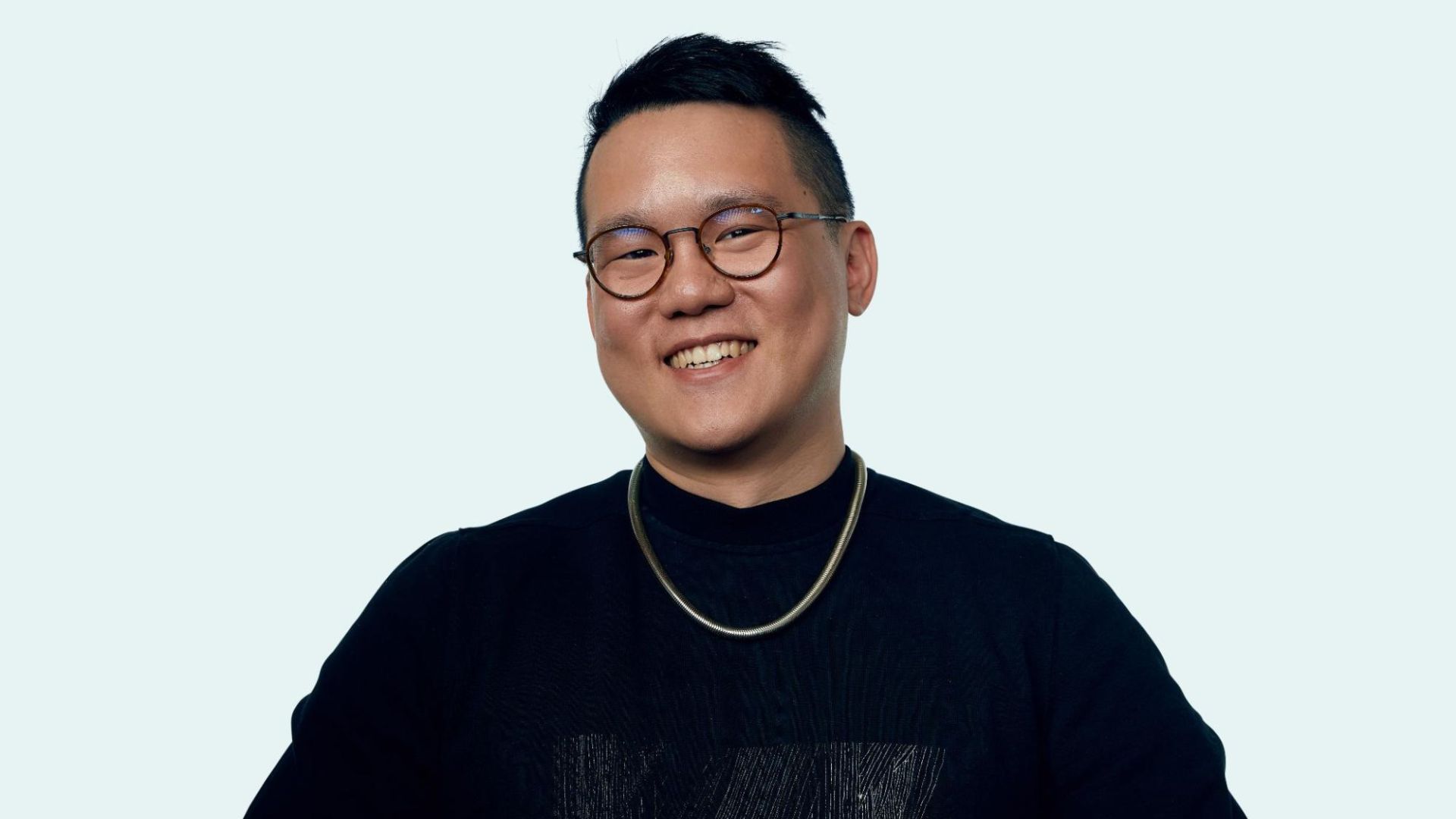
Enter Cohere, a company developing LLMs to address these issues. Started in 2019, Cohere partners with companies such as McKinsey, Oracle, and all the hyperscalers, and boasts a valuation of $5.5 billion. I sat down with one of the co-founders, Ivan Zhang, to talk about his journey.

TLDR; Key Takeaways

If you only have a few minutes, here are a few golden nuggets from my conversation with Ivan:

  • Sales should be customer-centric. This seems obvious, but have you ever started a sales conversation by talking about your product? Instead, try starting the conversation by asking your customer about their pain points, and then addressing them.
  • Data will be a bottleneck for AI development. Not in the sense that we will run out of internet to train on, but rather that there are types of data which we don’t have a lot of published datasets for. 
  • Your startup doesn’t have to be in the Bay to succeed. Cohere is headquartered in Toronto. This works for them because VCs are more open to remote work after the pandemic and Toronto has a lot of budding technical talent.
  • A key signal to look for when hiring is mastery in any domain. Learning how to master something is fairly transferable. Masters in one domain can likely become masters in another.
  • Being the lone Asian in a leadership room takes some time to adjust to. Getting more reps in has helped Ivan get used to his position.

Tell me about your upbringing, what pushed you to become a hacker?

I was born in Shenzhen, China, and moved to Toronto when I was eight. As a kid, I was always on the computer, even in China, playing the most random arcade games. I don’t want to paint Asians with a broad stroke, but if you’re a male Asian person who has been to high school in the past decade, more likely than not, you’ve played a ton of video games. I did that a lot, and I feel like it built a digital tolerance and stamina for sitting in front of a screen for long hours. Gaming was a big part of why I’m so drawn to building things, working really hard, and doing crazy hours in front of a screen. 

When I got to university, I discovered the hackathon community. Every weekend, we would just meet up at random Ontario universities and sometimes U.S. universities. We would build for the whole weekend. Gaming addiction primed me to get really good at software engineering. I spent my entire first year going to hackathons, building stuff on the side. I had this realization that I could be spending 18 hours playing League of Legends, or I could use the same energy to build stuff, which is also very fun and not as frustrating as a solo queue. It felt like a natural progression.

How has your role within Cohere changed as the company has grown?

When you’re in a startup, your role tends to evolve a lot. That’s been especially true for my time at Cohere. When we started, I was hands-on coding every day, building some of our early systems and pipelines. Eventually, the company grew, and we hired people. Some of our founders had to step up and do some people management.

Eventually, we hired people managers as well, so I have to do less of that. Nowadays, I’m much more settled. I’d say I spend probably 50% of my time still doing technical stuff like machine learning and data processing. For the other 50%, I spend time with customers, either building new relationships, fostering existing ones, or really bringing in business. I think that’s a big part of a founder’s job, like founder-led sales.

How was the transition to doing sales? Did that come naturally to you?

As someone who spent most of my time as the most backend of backend developers, it was definitely uncomfortable at first. When you think about sales, you might think of a business guy with a suit trying to convince someone to give you money for stuff. But when I started doing it more and more, it ended up being about genuinely trying to learn more about your customers, asking them good questions, and figuring out what issues they have. It’s honestly the most important thing you could do. Why are you building anything if you don’t know what your customers want? 

Sales has been super fun because it informs my technical work. I’m starting to see patterns across these conversations, which help inform what we should focus on. Another aspect is that as a founder, when you’re doing sales, you’re meeting executives and other founders as well–so you’re building good professional relationships. For anyone who’s new to it, you should expect some discomfort. But, like anything, you just learn to do it.

Why did you guys decide to focus on enterprise?

The enterprise market is often seen as boring, but actually, most of the world’s efficiency will come from automating a lot of these back-end use cases that don’t necessarily need human potential. A lot of these tasks we’re automating don’t need a well-educated human being sitting at a computer for eight hours a day. We’re much more interested in unlocking that human time for something else. Enterprise is where a lot of this kind of work is done. For example, Oracle is one of our customers, and they’ve deployed our models into their NetSuite features. So, a ton of HR and ERP use cases are now powered by our models. Our mission is scaling intelligence to serve humanity, and what better way to do it than to target the people doing this kind of back-end work at scale? 

We also liked the idea of not having to suck up all of our customers’ data to train these models. In enterprise, we actually ship our models on-prem and we air gap them, so we don’t see any of our customers’ data. In those kinds of scenarios, we have to build our models slightly differently. We have to teach our models to use the enterprise’s internal knowledge bases, use the information returned from these knowledge bases, and then write an answer and cite it. This is all RAG (retrieval augmented generation), which is what we’re focused on because we deploy these models in this air-gapped environment where we can’t continuously suck up people’s usage data. We still have an API and a demo, but the majority of our deployments are on-premise.

What are some areas of AI, whether infrastructure or application, that you think more people should be building in?

I think there will be a bottleneck in terms of training data, but not in the way it’s currently been communicated to the public. Some people paint a picture that we’ll run out of the internet to scrape. I think that’s a naive understanding of how these models work and how to train them. In terms of capturing digital signals—thoughts, demonstrations, audio, video, images, sensory data—there’s going to be a big bottleneck in capturing data from the world that’s not already represented on the internet. The internet does a good job of capturing data and it grows exponentially every year, but there’s information about the world that we experience on a daily basis.

Do you mean information that isn’t easily digitally representable, such as smell?

Yeah, so smell for example–we’d have to build this hypersensitive chemical detector. So if we want autonomous interactive robots in the real world that can smell, there is an information problem we have to solve for the robots, right? They don’t have a nose; we don’t have a great digital nose for them. And I’m sure there’s other stuff.

Why have you decided to keep Cohere headquartered in Toronto instead of the Bay Area?

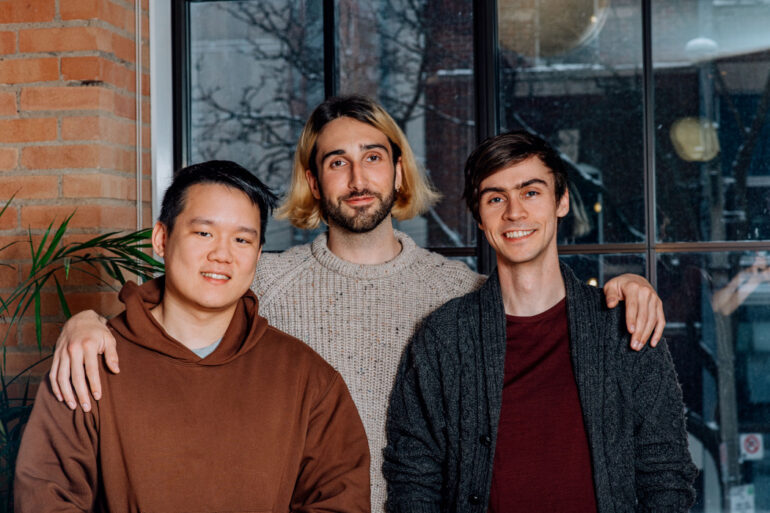
The three of us co-founders just really like living in Toronto. We grew up here, we have roots here. We also realized that it is actually a pretty great city for A.I. At some point in time, most of the people leading A.I. in the Valley came from Toronto. They came from Jeff Hinton’s lab at the University of Toronto. So there’s a ton of great early talent here. And I think because of how the VC attitude has shifted since the pandemic, investors are investing everywhere. They aren’t restricting investments to the Valley. Remote work is a thing now. And so luckily for us, we’ve been able to raise successfully. We’ve been able to build good models. 
I’ve heard that you don’t pursue brand-name resumes when hiring. What are some signals that you look at instead of pedigree that indicate someone could be a great hire?

I’ve thought about this a lot. I try to think about my own trajectory and places that have rejected me and what signals they didn’t see. What it comes down to is that I look for folks who are extremely skilled at something. Once you’re skilled at something, you can take that anywhere else. Sometimes we want to hire more experienced folks, for sure. But especially in a field like ours where disciplines such as pre-training haven’t been around long enough for anyone to have much experience, you want high-energy, high-autonomy individuals who are excited to learn, experiment, and fail fast.

I try to ask a few questions that probe at stuff related to this. Like, “What’s the coolest thing you’ve worked on?” Then I get to see if they’re going into a lot of detail and are really excited about this random thing. “What’s the hardest you’ve worked on anything?” I want to see if they can go the equivalent of 16 hours a day, seven days a week when they’ve actually gone to bat for something. And then obviously, experience in the field is definitely a big plus, but honestly, the best hires we’ve made have just been high-energy, hardworking, genuinely curious people who are also skilled at software engineering.

How has being Asian impacted your founder’s journey?

I’m not ignorant of it. I definitely know it’s a thing. For example, on my board, I’m the only Asian guy on it. But I’ve been fortunate in that, growing up in Toronto and starting this company in Toronto, it’s not that weird to be an Asian guy in tech. So on the technical front, I don’t see it as a hindrance whatsoever. But it’s definitely been a factor for my own comfort in leadership situations–being the only person that looks like me in certain situations. But honestly, once I got the reps in, being in those situations, it was totally fine. And I think there are a few things that, depending on how you were raised, could affect you in doing business at the leadership level here. But generally, once you get the reps in, it doesn’t even matter.

Is there anything you’d like to shout out?

I’d like to shoutout my wife, she’s a big inspiration for me. Shoutouts to my mom, my dad, my sister. I think my parents taught me what it means to work really hard. I think this is true for many of us immigrants, watching our parents and grandparents work the most menial labor jobs just so we can be fed and go to school. It’s super inspiring. It makes me think: Why am I not working harder? Why am I not thinking about how I can level up and help them retire? My family has been a big inspiration to me. Lastly, shoutouts to Cohere and my co-founders. It’s been super fun, and I’m privileged to be working on this tech. I think it’s genuinely the most interesting thing I could be doing right now.

If you are high-energy, hardworking, and highly curious about AI, please consider applying to work with Ivan at Cohere! You can check out available positions at this link.

Thank you for joining us, Ivan!
Related Articles

Screenshot 2023-07-10 160958-png

Stories

Accountant Escapes from the Mundane Reality into a World of Fantasy for Mental Wellness and Culture Through Digital Art

In a world where it can be easy to feel disconnected and jaded, Serene Chan’s art is a refreshing reminder of the beauty and magic that surrounds us.

With her ability to use digital art and visual storytelling to provoke child-like wonder and capture nostalgia, Serene creates images that are not just visually stunning – but also carry a deeper message about the importance of mental health and the value of diverse cultures and communities.

Serene is a Chinese-Canadian creative and expert daydreamer who worked as a freelance traditional painter and digital illustrator for 8 years, supporting other independent musicians, writers, and artists. Alongside her art, she works full time as an accountant. Her versatile background includes her academic education in business and years of entrepreneurial experience exemplified in three of her start-up businesses.

When she’s not painting, Serene channels her artistic energy into other creative endeavors such as crafting resin crafts, thrifting, sewing, and thrift flipping.

JOURNEY TO DISCOVERING ART AS AN OUTLET

Growing up, I was extremely socially awkward and spent a lot of time in my head. I like to call myself an expert daydreamer because I spent most of my life imagining different worlds that I fit in a little bit better than this one.

When I found art as an outlet, it just made sense because it allowed me to be able to create places that defied all odds; places where stars could be captured in your hands, where dragons roam free, a place that I can call home. I was inspired by the power that all artists have- the ability to create something from nothing, especially when it doesn’t exist in the real world. 

The traditional painting came naturally to me, but my immigrant parents pressured me to conform to their ideals of what a successful individual looks like and put little emphasis on my creative passions. I followed their well-intentioned guidance and wishes for their daughter to be self-sufficient one day. I did not receive the arts education I sometimes wish I received in my 20s. I followed the motions of getting a bachelor’s in business and my accounting designation, and ended up in a corporate budgets job.

Over time, I realized that going to art school does not determine the success of an artist. If I really wanted to have an art career, I was going to make it happen regardless of whether or not I had the connections or credentials to do so.

I began my art journey in 2015, starting an art website with no idea what I was doing. I transitioned into digital illustration only 2 years ago when I finally invested in an iPad to accelerate my painting process. For the last 8 years, I spent an uncountable amount of time experimenting with different tactics to maintain a part-time art career selling prints, doing custom artwork, and applying to every open call I qualified for.

I’ve spent much of my art journey finding resources to personally develop, and reached out to countless individuals in the art industry to learn about their experiences. Ambition is what fuels my love for learning and my efforts of sharing high-quality art content with the world. Though my art career is not full-time yet, I’m still excited to continue grinding it out and seeing where it takes me.

COPING UP WITH LIFE’S CHALLENGES

My immigrant parents pressured me to assimilate with society and put little emphasis on carrying out Chinese traditions from home. So, while I became comfortable with Westernized routines, I began to feel embarrassed about my culture in my youth.

I grew up developing mental health issues from suppressing my reactions to the microaggressions around me and being unable to cope with them. As time passed, I realized that resiliency comes from releasing some of the trauma and anxiety that’s been clouding my thoughts. However, it’s also understanding that although it might never disappear, it’s a part of what makes you-you. It’s transforming into someone who is at peace with the chaos and accepts it as something that has to happen in order to grow. This is why I’m now extremely driven to teach the importance of celebrating my Asian culture and incorporating the aspect of mental health to start conversations.

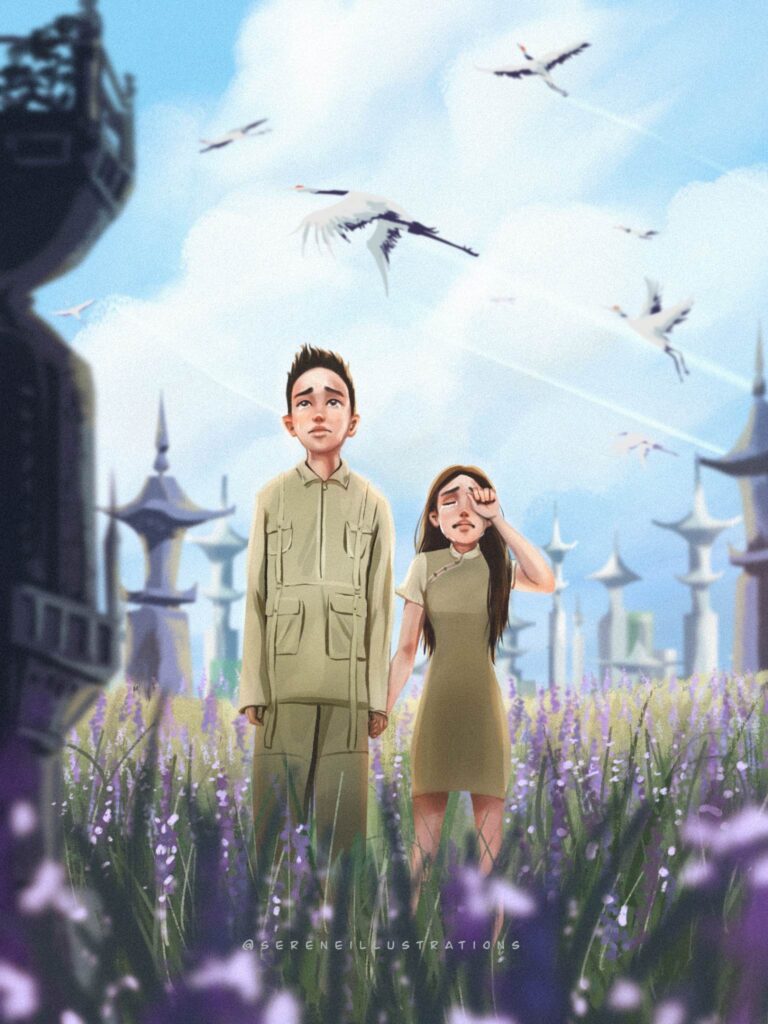
One of my favorite paintings with both of these concepts is “Remembered Always.” I painted this during a time when my family was trying to navigate grief from mental health-related death. Watching my family try to recover from that trauma made me realize how death, how to grieve, and mental health rarely gets talked about in an immigrant family, especially at an early age.

Remembered Always by Serene Chan

In Chinese symbolism, cranes are often believed to carry spirits to heaven after they die. This painting depicts loss remembered by the living and hopes that their spirits are brought to a happier place. My inspiration is to educate the values and symbolism the Chinese believe in to help them ease the pain of death.

PROMOTING MENTAL WELLNESS THROUGH ART

One of the worst parts of mental health is having thoughts or feelings that you can’t control. Any form of art (drawing, writing, music, etc) can be a way to express those thoughts you have. You don’t have to be good at it, or even have any experience. Using art to convey what’s on your mind lets you manifest those feelings into something physical that you CAN control. 

I know sometimes it sounds easier than putting it into practice. Maybe your mind is drawing a blank. Maybe it’s too difficult to put into words what you’re feeling because there are no words in the dictionary that describe what you’re going through. I would recommend finding paintings, poetry, stories, or music that speaks to you. I guarantee you that there’s someone out there who has felt what you feel and was able to put it into art. Perhaps then, you’ll feel a little less alone knowing there’s someone else in this universe who understands how you feel.

Just know that your mental struggles are never too small or insignificant. You matter in this world, so please take care of yourself.

THE PAINTING PROCESS

My process requires more planning than most might think. Before I begin a painting, I focus on a feeling I want to capture. I then refer to the resources I regularly collect from the internet or everyday life. I take inspiration from different components found in my references to construct an image in my head.

After I get an idea of the scene, I create a very rough sketch and a color mock-up. About 80% of the time, I have to do in-depth research about every item I’m painting so I have a better understanding of how each component looks in the environment it’s in. This could mean understanding how the light impacts each object, understanding how the body looks in a specific pose, or even how clothes fall on the body when positioned a certain way. After all that work, then I can finally begin the fun part: painting!

I usually start with the background and paint the figures on top after. Because I did so much planning and prep work beforehand, the painting process is pretty effortless afterward. The entire process can range between 1-2 weeks. 

Usually, the painting process is done digitally on my iPad. Lately, I’ve been doing sketches in pencil on paper before taking a picture of it and continuing the sketch digitally. I find that my hand-eye coordination is better when I can feel the pencil touch paper.

SUPPORTING AND SHARING OTHER ARTISTS’ STORIES

Art is meant to be shared and to inspire each other with our individual perceptions of the world. If I have the ability to help other artists/writers/musicians further their voices by providing thought-provoking artwork that attracts people’s attention, then why not? My art business is not only meant to share my own stories and experiences but to also help others share theirs.

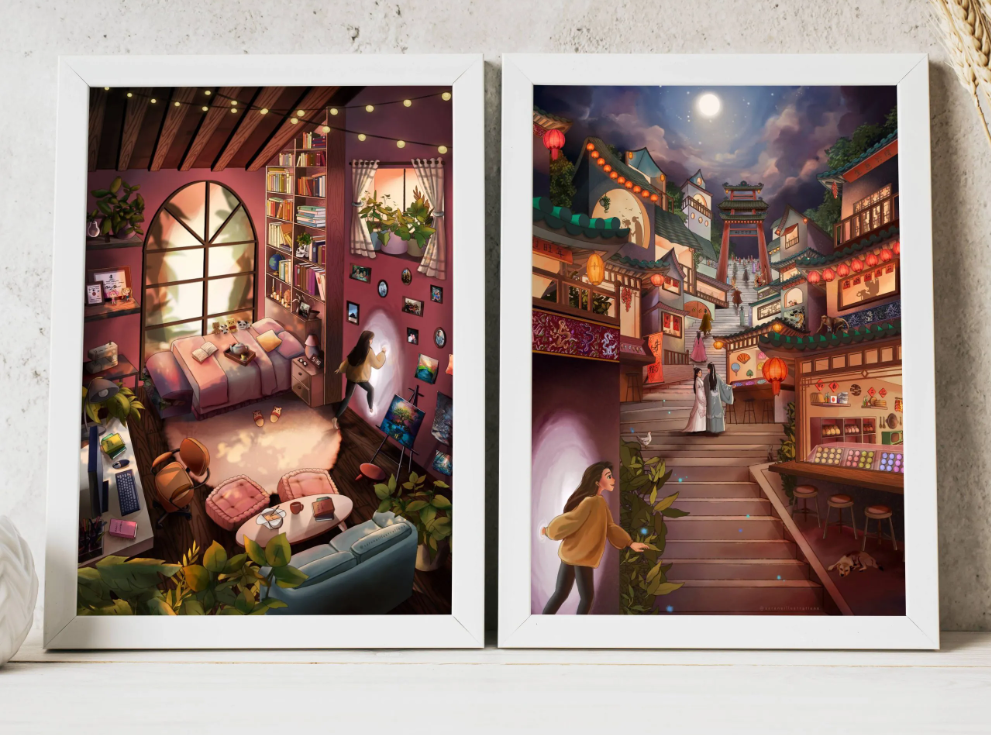
One of my favorite collaborations includes one with RBC and VIBE Arts, where I created two huge poster ads to be displayed in a Toronto Transit Commission Subway station in Toronto. This project was meant to promote women in art and what speaks to them as an artist. This two-panel illustration represents my present self in one painting and my discovering my past ancestry in another painting. The present self-painting depicts my safe haven- my ideal room filled with all my favorite art forms and passions. The ancestry painting depicts 6 different Chinese hidden mythologies in an alternate ancient East Asian universe. This project highlights the importance of my ancestry and how it’s deeply rooted in my identity today.

Stories That Made Me I & II by Serene Chan

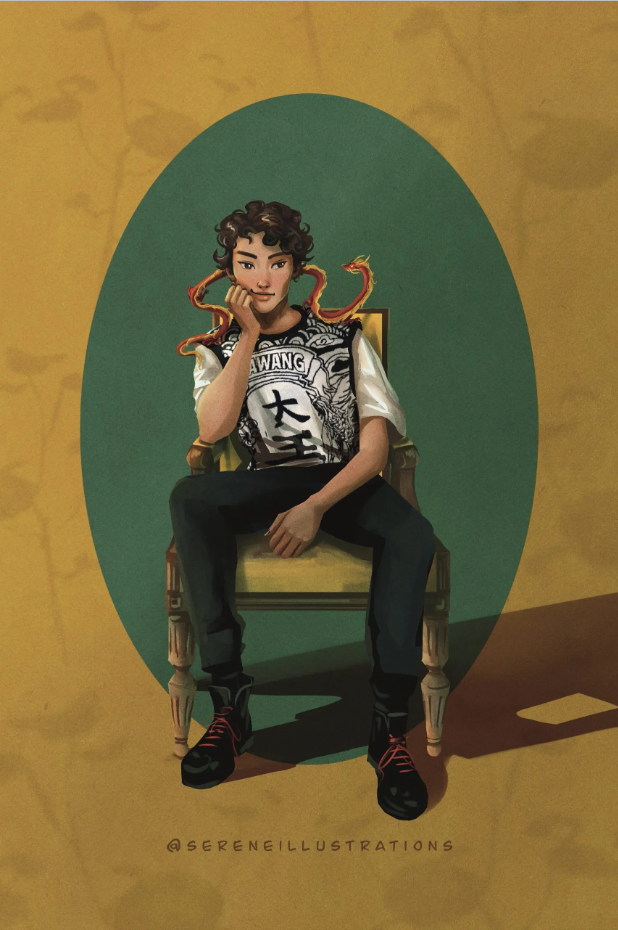
Other honorable mentions include the collaborations I did with East Asian fashion and jewelry designers, such as DAWANG and Sublima Jewelry. They both focus on promoting their East Asian heritage with a modern twist, encouraging their audiences to feel beautiful and proud of being Asian while wearing their pieces. What made it extra special for me was being able to connect with other small businesses and learn about how they bring their visions to life. Being inspired by other talented artists is truly such an honor.

Chinese New Year by Serene Chan
Male Mulan & Mushu by Serene Chan

COLLABORATE WITH SERENE

I have a current collaboration with DrawaDot, where I created a piece celebrating the Lunar New Year and the concept of celebration. All proceeds of this project go toward supporting emerging artists who are striving to kick-start their art careers.

I also have a super fun collaboration with Toronto Pearson Airport coming up. So if anyone is flying to Toronto… they might just see my artwork in Arrivals in a couple of months!

My hope is that my art will inspire others to appreciate the many traditions and celebrations of Asia, and help people develop a child-like wonder everyone is capable of experiencing when viewing the world. Between just you and me, I’m in the process of illustrating a self-published book that promotes both mental health and an Asian festival.

For anyone who wants to stay updated on my work and give feedback on what they’d like to see, I encourage you to sign up for my newsletter! I send monthly updates of new art, art processes, shop updates, and painting tips/tricks. If you come along on my journey, I promise you’ll find art that helps people become daydreamers and find a sense of belonging in this world.

Website: sereneillustrations.com

Instagram: @sereneillustrations 

Founder photo 2-jpeg

Stories

These Sisters Infuse Chinese Cultural Aesthetics in Designer Womenswear

SHUMINGYU is an esteemed designer womenswear brand that finds its roots in the poetic essence of Chinese art.

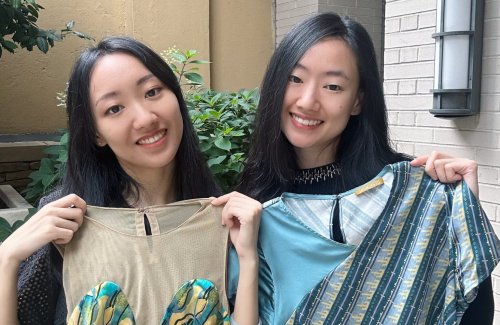
Alvina Ding and Laura Ding, the talented sister team behind the brand, have embarked on a remarkable venture to preserve and interpret the artistic lineages of China through the medium of fashion.

With their deep personal connection to their heritage as second-generation Chinese Americans, their brand serves as a heartfelt expression of their cultural journey and a platform to share the cultural memories passed down through generations. The name SHUMINGYU holds great significance, as it pays tribute to the profound Chinese saying “落叶归根”, which invokes the powerful imagery of autumn leaves falling towards their roots, returning to the soil that once nurtured it.

Throughout history, Chinese artists have expressed their poetic selves through various art forms such as painting and poetry. SHUMINGYU draws inspiration from this legacy. Alvina, as the designer, and Laura, in charge of marketing, collaborate to create a collection that captures the elegant beauty inherent in Chinese aesthetics.

In an exclusive interview with Asian Hustle Network, Alvina and Laura walked us through their journey of preserving Chinese artistic lineages through fashion.

WHAT INSPIRED THEM TO CREATE SHUMINGYU

Alvina and Laura: We always had a passion for Chinese culture. As Chinese Americans, we were fortunate to grow up in a household that gave us exposure to the beauty of the culture such as its poetry and the arts, despite not being able to visit that often.

The fact that we were physically removed from the country of our cultural heritage, in many ways enabled us to appreciate the culture even more. We spent the next decade in between the U.S. and China, completing our undergraduate degrees in Beijing, kickstarting our early professional careers, and finishing graduate school in the U.S. It was during this time that the idea for SHUMINGYU was conceptualized. 

Alvina: The idea for SHUMINGYU was first planted in my mind in college, where I was formally introduced to the canon of Chinese artistic lineages as a Chinese art history major. I thought it was odd that despite the breadth and nuances of Chinese aesthetics that were crystalized over thousands of years, it was rarely reflected in modern fashion products. To me, culture should not be relegated to a museum. It has meaning only when it is a part of one’s daily life. While I was studying fashion design at Parsons and Laura was in business school, we began to turn this idea into reality. I want this type of beauty to be seen, not only in rarified spaces such as classrooms and museums but by more people through a medium such as fashion that can be a part of our everyday lives. This fuels me as a fashion designer. 

HOW SELF-DISCOVERY INFLUENCED THEIR AESTHETIC AND VISION

During our young adult years living between China and the U.S., we came to understand that identity is multifaceted.

There isn’t one way to be American, Chinese, or Chinese American. Cultural identity and heritage are not limited by where you were born or what period you are living in. It is something that is constantly evolving, passed down through generations, and shaped by the people who are currently living and breathing it.

This motivated us to combine the cultural fluency we gained over the years with design as a universal language to create SHUMINGYU. This is our way of sharing our perspectives on the beauty of Chinese aesthetics and the artistic lineages that have come before us with a global audience.

THE CREATIVE PROCESS

Alvina: I first decide on a particular theme, which is either a genre of Chinese art or a type of craft. Then I dive into research on the theme for a month or two. I read academic papers and art history books to understand the significance of this kind of genre, the elements that influenced its formation, what type of art it had an impact on later, its philosophical underpinnings, where the colors come from, and literary references. I look at the most representative pieces of art from the genre and identify the most distinctive characteristics that will define the overall feel of the collection.

During this process, I am looking at art objects that have graced the courts of emperors, the gaze of connoisseurs, and the hands of skilled artisans. From the free-spirited brushwork of ink paintings, the rhythmic flow of poetry, and the delicate luster of ceramics, all of this informs my final design decisions.

As I do the research, I see designs in my head. I visualize the images and colors and capture what I see into sketches, which I then translate into prints. Once I finish my prints, I think about what silhouettes they would work best on. From then on, it’s about deciding what fabrics work best for each design and seeing how different designs fit together into an overall collection.

SHOWCASING CULTURAL HERITAGE INTO THEIR DESIGNS

Each of our collections has a specific theme, and then we incorporate that theme into the custom prints that we develop, as well as the silhouettes of our designs. For example, our first collection ‘Of Blue Mountain and Verdant Forests’ was designed around the theme of Chinese landscape paintings. Therefore, each custom print that we developed is rooted in a piece of artwork, literature, or philosophy that is connected to landscape paintings. Our hope is that with each piece a customer wears, they can discover a new piece of culture.

Example 1:

The print of our Brushwork Dress is inspired by a brush stroke technique from the Southern Song Dynasty landscape painting The Joy of Harvest. Developed by the painter Li Tang from the Northern Song dynasty, the technique is called the “axe-cut stroke” and uses angular, staccato brushstrokes to depict the rocky surfaces of mountain peaks. The brush stroke derives its name from its visual resemblance to chopped wood and is one of two major brush strokes used to depict the texture of rocks in landscape paintings. The color of the dress is inspired by the golden brown hue of the painting scroll and the style lines are outlined in the shape of mountain ranges. The skirt hem shape is symbolic of the reflection of mountains in the water.

The Joy of Harvest is a masterpiece by Song Dynasty artist Ma Yuan (1160 – 1225), one of the most influential landscape painters of his time.

Example 2:

The print of our Spring Mountains Set is inspired by the mountain ranges from the Sui Dynasty painting Spring Excursion, widely cited as the earliest surviving work of Chinese landscape painting. The print traces the delicate, twisting brush strokes that outline the rise and fall of spring mountains in the distance. The colors are inspired by the luxurious powdered gold, malachite green, and azurite blue pigments used in the painting.

Painted by artist Zhan Ziqian, Spring Excursion was one of the first paintings to give prominence to mountains and rivers over human figures. It is considered a seminal work that marks the genesis of the most influential category of Chinese art for thousands of years to come.

FOSTERING A DEEPER APPRECIATION OF CHINESE AESTHETICS AMONG A GLOBAL AUDIENCE

We want to share the breadth, depth, and nuances of Chinese aesthetics with a global audience through our clothing. By offering an alternative aesthetic view to the exotified and caricatured version of Chinese fashion that has been perpetuated throughout the past century, we want to move beyond the set of narrow motifs that have defined what Chinese fashion can look like and open the door into a world where design is created by those who live and breathe the culture and comes from an informed and nuanced perspective.

Perhaps one of our prints will spark someone’s interest in understanding a particular artistic movement in history or thinking about how Chinese aesthetics is perceived today. If our pieces can inspire people to value culture more and spark conversations, then we’d consider that a success. 

WHAT LIES AHEAD FOR SHUMINGYU

We already have a lineup of themes for our future collections, and some designs are already in the works for our second and third collections. We also want to integrate more types of fabrics, silhouettes, and crafts into our designs.

In addition to clothing, we have future plans to expand into accessories, including handbags and fragrances. We are excited to bring our vision to life, step by step, and hope that others are excited to come along on this journey as well!

CONNECT WITH SHUMINGYU

Instagram: @shumingyuofficial

Website: shumingyu.co

unnamed (1)-jpg

News

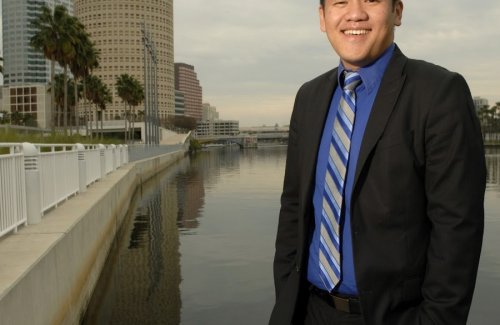
How This Entrepreneur Shares the Richness of Asian Cuisine and Culture in Tampa

Born in Indonesia, Ferdian Jap’s upbringing in a Chinese restaurant fostered his passion for culinary arts and his desire to share the richness of Asian cuisine.

As the owner of Zukku Sushi and Astro Craft Ice Cream, Ferdian is not only continuing his family’s legacy of running restaurants but is also on a mission to showcase the diverse cultures and flavors of Asia to the local community.

With his entrepreneurial spirit, Ferdian is set to revolutionize the dining experience in Tampa. In addition to his current ventures, he is working on a Korean BBQ concept that promises to be a unique and upscale establishment. He envisions a dining environment that goes beyond Tampa’s expectations, immersing guests in an extraordinary atmosphere while savoring delectable Korean dishes.

Beyond his influence in the culinary world, Ferdian has actively participated in initiatives to revitalize downtown Tampa, demonstrating his dedication to the community. As the former project manager for Friends of the Riverwalk, he played a crucial role in fundraising efforts that contributed to the development of downtown Tampa. Inspired by his involvement, Ferdian launched “Big City Events,” an organization that focuses on organizing festivals and concerts in Tampa.

Ferdian has also established a subsidiary called “Pier Events,” which aims to bring the same dynamic energy to St. Petersburg. Notably, he is the event manager for the iconic St. Pete Pier, overseeing a diverse range of engaging activities.

Ferdian Jap is eager to introduce new concepts and plans to expand his restaurant empire both locally and nationally. Through his endeavors, he continues to celebrate the diverse cultures of Asia while leaving a lasting impact on the dynamic landscape of Tampa’s restaurant and entertainment industries.

Featured Image Source: Linkedin

Daily Expert News-jpg

News

Indian Designer’s Iconic Lehengas Make Mark in Sustainable Fashion

Renowned fashion designer Rahul Mishra has emerged as a leading advocate of ‘slow fashion’ in the industry, redefining bridal wear with his unique ethos.

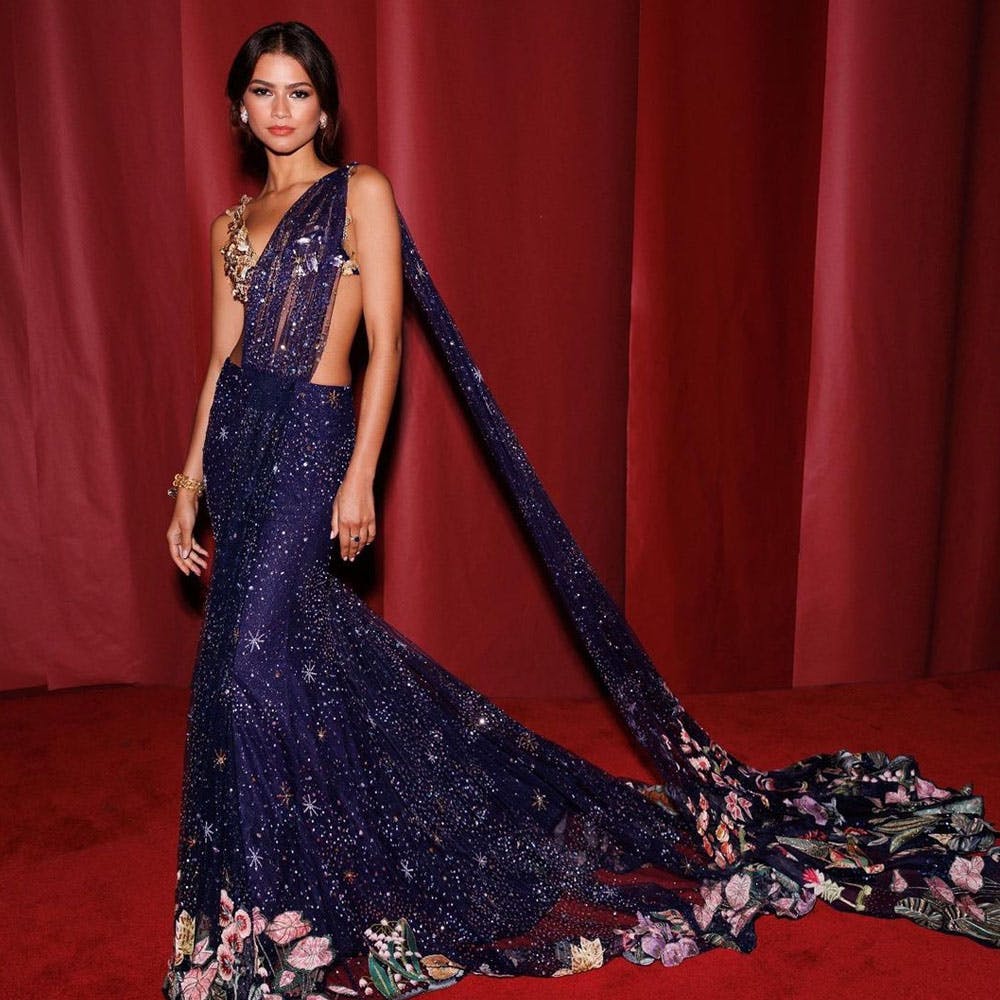
Since his debut in 2017, Mishra has seen a remarkable rise in demand for his bridal lehengas. Today, eager customers face an almost five-month wait to own one of his coveted designs. Mishra’s talent has also caught the attention of international celebrities. He recently made headlines for dressing Zendaya in a stunning blue sari at the opening of the Nita Mukesh Ambani Cultural Center in Mumbai.

Image Source: LBB

Mishra’s accomplishments include being the first Indian designer to showcase his collection at Paris Haute Couture Week in 2020, a feat he continues to achieve year after year.

Drawing inspiration from ancient Indian designs that utilized calico textile, an unbleached fabric made from cotton fibers, Mishra creates lehengas that embody an off-white, ecru aesthetic. The brides who choose Rahul Mishra lehengas appreciate the uniqueness of his designs, characterized by intricate embroidery and unparalleled craftsmanship.

The surge in wedding attire sales, especially during the COVID-19 pandemic, has helped Mishra support and provide employment to over 1,200 embroiderers from rural communities in India. The impact of his creations extends beyond fashion, creating meaningful opportunities for artisans and their families.

Rahul Mishra’s journey started from a small village in Uttar Pradesh. Although his initial aspirations to become a cinematographer were met with rejection, his decision to enroll in an apparel design program opened doors to a fulfilling career in fashion.

Featured Image Source: Daily Expert News