Awaken* newsletter

July 25, 2024

SHARE:

Wendy Wen, founder and CEO of pet CPG platform Antelope and co-founder of luxury handbag brand Senreve, shares insights on the early days of building the Senreve brand with her co-founder Coral Chung, creating their first iconic Maestra bag, and overcoming the challenges of scaling a startup. She reflects on the importance of focusing on vision, strategy, and hiring the right people, as well as maintaining resilience and equanimity as a CEO. Wendy also discusses her new venture, Antelope, her excitement for its potential, and the lessons learned from her Asian upbringing and entrepreneurial journey.

HanYue: Tell us a little bit about the early days of Senreve. And then what was the biggest challenge you had to overcome?

Wendy: You know, it was really just me and my co-founder Coral sitting across from each other in an empty conference room. We were borrowing an office space from one of our investors. And a lot of it was just kind of dreaming: thinking about what the brand could be. It was actually really, really fun. And I think because it’s before you have any metrics, any real product, anything. So anything is possible. In the early days of us, we were literally just trying to figure out what’s going to be our value proposition, positioning, and how we’re gonna get started. It was super fun. 

HanYue: That sounds fun. Tell us about your first “IT” bag, as you call it.

Wendy: Our first bag was the Maestra bag, which is a convertible bag that becomes a backpack. You can wear it in different ways: you can hold it over your hand on the handle, you can wear it as a crossbody, you can wear it as a shoulder bag, and then you can also wear it as a backpack. It fits a laptop, it’s water resistant, and it’s 100% made in Italy. It has all these nice compartments on the inside, so you can keep everything organized. It’s a beautiful bag that happens to be really functional, especially for the modern working woman who needs to carry a laptop. 

HanYue: Tell us a little bit about how you and your team created this popular bag.

Wendy: So I loved bags. Coral loved fashion. Personally, we just wanted something that was really beautiful and also worked with my busy professional life. So it kind of stemmed from a personal need. 

HanYue: Wow, that is amazing to hear. You really found a way to personally connect with the product that you’re building. Let’s switch gears a little bit, to what you’re currently building. Do you feel better prepared for a second go at entrepreneurship?

Wendy: Absolutely. Yes. There are always ups and downs in any startup journey, and I think I made a lot of mistakes with Senreve. 

I think, first of all, I didn’t necessarily focus on the important things. I was always kind of doing urgent things. Graham Weaver (a lecturer at GSB and founder of Alpine Investors) talks a lot about that matrix of important, not important, urgent, not urgent. As a founder, you really want to be operating in the non-urgent, important bucket. 

An example of what I didn’t focus on enough before would be our hiring culture. Instead, I was focusing on getting things done, which in retrospect, might not have been the best use of my time. For Antelope, I’m much more disciplined about how I spend my time. I really believe that the founder and CEO job should just be vision and strategy. Setting that vision, getting alignment across your team on that vision, helping your team truly understand how their work and their outcomes tie up to the grand vision, and what the dream outcome needs to look like. That’s one big rock for me. 

Another one is just hiring the right people. The people who are going to be better than you, at each division, at each function. Hire the best people who will help you dream up something better than what you can dream of, and then make it into a reality. So now I am always pushing for the dream candidate. After that, it’s about developing them, keeping them motivated, and building the culture so that they can thrive.

When I was at Senreve, I was younger, more junior, and much more just about blocking and tackling and getting things done. Now I try to think more about scalability. I think the third piece that I’ve learned, and just gotten a lot better over the years, is just being resilient. 

Part of being an entrepreneur and a CEO is maintaining a certain equanimity in the face of problems. I have to maintain an objective distance from the company. Because if you hold on to it too tightly, and it becomes life or death, then every problem can catch you off guard. Versus, if there’s a natural kind of distance, then you have space to treat everything as just a small problem or puzzle that you have to fix.

It makes you as a CEO think a lot more clearly, and a lot more strategically. Because at these higher levels, your main job is making decisions. It’s not fixing the problem. It’s about finding the right architecture, the right people, the right processes, and structures so that your team can fix the problem. And so having that equanimity as a muscle, to deal with the ups and downs, is a really important part of my job as CEO. 

HanYue: That’s really powerful. I love your learning about equanimity. Looking forward, what is your biggest challenge right now you want to solve?

Wendy: Our biggest challenge right now is to hire a chief supply chain officer. I have a big gap in operations and supply chain. So if anybody is really good at that kind of stuff, come to me! 1

I am also learning along the way, from 10 different colors to now 500 SKUs of pet treats, supplements, food, and dental treats with expiration dates. You have to get your planning and forecast super accurate. Every piece of the logistics needs to be precise and accurate in order to meet your demand. And it also has to be efficient from a cost perspective. We really need a C-level executive who has enough experience and lots of great attributes, so she/he can continue to learn and grow with us.

HanYue: Amazing. We hope someone in our subscriber base has this special talent! What are you most excited about next? 

Wendy: So many things excite me! I think Antelope is the next P&G/Honest Company of pet products. And we’re just getting started. And there’s just so much low-hanging fruit opportunity that we haven’t yet tapped. Every channel we are in can be grown by 10x. And I think that’s super, super, super exciting. It’s exciting to continue to educate pet parents. So many pet parents are not aware of the preservatives in their existing dog food, what the right content and makeup should be in their food, and what supplements they can give their dog to prevent cancer, arthritis, and joint pain. So I am super excited by this potential. 

HanYue: I think that there’s really nothing that compares to the potential as an early-stage founder. You can see this big dream just slowly unfolding in front of you. A lot of our new founders will be fundraising and thinking about working with their investors. I know you work very closely with Graham and Alpine Investors. Would love to hear a bit more about that partnership, and your advice on finding great mentors. 

Wendy: The relationship I have with Alpine and Graham has been just 20 out of 10 if I had to give it an NPS score. It’s beyond my wildest expectations what great partners they are. They provide the right level of support, but then they’re really hands-off. They’re empowering and trusting. And oftentimes, honestly, I think about how Alpine is treating and managing me, and how I should train and manage my executives and my direct reports, because they’re a really unique private equity fund that truly, truly has a heart of gold and focuses on people first. 

In terms of advice for how students can go out and build mentorship, and relationships with professors and people in their career. It’s simple –  just talk to them. Don’t be afraid to reach out. Make sure you follow up. That’s what I did to fundraise for Senreve. And those relationships have followed me through to Antelope.

I met Graham, in an MGE (Managing Growing Enterprise) class when he was practicing to become a lecturer at GSB. He was shadowing Dave Dodson back then. And I just had a conversation with him about what I wanted to do after school. That’s the most common question he gets nowadays, right? The students always go to a professor at Stanford and ask, what should I do with my life? Should I go back to private equity? Should I do this? And I remember, I think he actually offered me a job at Alpine as a CIT (CEO in Training), but I just didn’t want to move anywhere location-wise. So I politely declined.

Graham told the story about the genie goal in his class: if you have three wishes from the genie, what would your goals be? So when I was getting started with Senreve, I called him and I said, I think I’m gonna go pursue my genie goal – to cofound this handbag company. And he angel invested. It was really nice that he was willing to do that, and I think it came from the fact that I just asked and I had that prior relationship with him and reached out. 

After Senreve, when I was starting Antelope, I reached out again. So I think it’s just making sure you keep in touch with your professors. I remember going through every single person that I might have interacted with at the GSB. I was co-president of WIM (women in management), and I organized a ton of these speaker events. So I would email every one of the speakers I’d come into contact with. Many of them became mentors and some knew people in the handbag industry that could help. I was shocked that some of them remembered me. Most students don’t realize that all they need to do is a little bit of legwork and follow-up. Every time you go to a networking event, follow up. Even after a few months, send them an email, updating them on where you’re at. That’s how you build a relationship. It’s really not that hard. 

HanYue: That is really inspiring and empowering. The notion that a really good mentor relationship is just a few emails away is so powerful. 

Wendy: Definitely. Diane Von Furstenberg came to Stanford to speak once. After that, I was like, you know what, I’m just going to send her an email. And I said, “Hey, I loved your talk. I read your book, now I’m starting a handbag company. Would you mind talking to me?” And she replied, the same day, and said: “Here’s my number. Call me tomorrow at 9 am.” And that’s Diane Von Furstenberg. I think students overestimate how often these people get reached out to. I think you are probably thinking that – oh they get so many emails and pings. But the reality is that they probably don’t get that many. 

HanYue: Amazing. I want to switch gears a little bit again. If you don’t mind, we’d love to hear a little bit about your upbringing. How has being Asian impacted your entrepreneurship journey or maybe just the mentality of life? 

Wendy: I am Chinese, I grew up in Southern California to immigrant parents, who wanted me to be a doctor just like every other Chinese family. I remember doing like my freshman year summer internship in medicine and just being so bored. I was stuck in a lab all day. I think I was too extroverted to follow that path. I’m really dynamic. I love meeting people. I love talking, I love pitching. I get a high from pitching – probably why I enjoy entrepreneurship. And something just clicked. I realized that that medicine path wasn’t for me.

I think what my Asian upbringing helped with though was, that my parents were really good about rewarding effort and not outcomes. They always told me, “Hey, Wendy, it’s not about the grade that you get, if you get an A-minus, but you didn’t try, we will be disappointed in you. But if you got a B plus, and you tried your absolute best, we will be extremely proud of you.” They just wanted me to maximize my potential. And I think that notion really propelled me to just give it all to everything I do. If I’m going to put my mind to doing something, I want to knock it out of the park and do it really well. 

In terms of pursuing entrepreneurship, though, that is really not in my parents’ DNA, I think what happened is that they provided me with so many opportunities, by coming to the US and allowing me to have this American education, so that I just got so inspired and absorbed all these American thoughts. And I’m very American, obviously. But I still had the work ethic from my Asian upbringing. That, coupled with such family support, gave me the confidence to pursue what I really, really want to do, which is building companies. 

Mark Leslie, he’s another one of my angel investors and mentors, said, there are only three reasons why people want to start a company: one, it’s to make a lot of money. Two is to make a difference in the world. And then three is to build something of lasting value. He said usually people fall within one of these three camps. And I think for me, it’s definitely the last one like I just love building things. I love building culture. I love building a team, and I like building products. 

I also think being bilingual helped us expand into other regions for Senreve. We were in Singapore, Taiwan and Hong Kong. I think having multicultural blood and experiences in me, makes me more adaptable and flexible, and more resilient, potentially, because I know how to learn about a different culture. You know how to build a life somewhere else. That’s the entrepreneurial spirit. 

HanYue: So to sum it up, it’s like that notion of ‘give it your best’ that coupled with a little bit of risk-taking that allowed you to find out what you want to do and really go for it. On top of that, being open-minded and flexible when it comes to like, new obstacles, different experiences, and new regions. Those are amazing takeaways. You have accomplished a lot already. Do you have a few favorite moments from the past or favorite stories that you want to share?

Wendy: There was a time at my last company retreat for Antelope when I celebrated my birthday and the team surprised me with a birthday cake, a sash, and a crown. All 80 of our employees celebrated my birthday with me. And I thought that was really special. Because our team is so talented, they’re so smart. And for them to choose to contribute their talent, to Antelope’s vision – I take it very personally, I take it as a favor they’re doing for me. Seeing everybody in that room, working towards this Antelope vision was so inspiring. Running this company is the best job I could have asked for. 

HanYue: That is really heartwarming. You really build a great team and a great culture. And then you got to observe it taking on a life of its own! 

Wendy: Yeah, it did take on its own form. That’s the thing. I think seeing the moments when Antelope is taking on its own life just makes me so joyful. Our social media team is amazing. Last year, I remember seeing an Instagram post pop up on Bocce’s Bakery, which is one of our brands. The post was like PupChella – it was a play on Coachella. And they had a lineup of all these artists that were like, dog-named. Like Bark Pink, and Tailvin Harris. It was so cute. It was so funny. And I was so proud of my team. This team is so creative. And I was so proud to see their creativity come to life. 

HanYue: Wow. That sounds phenomenal. I think that is actually all my questions. Thank you so much. Wendy! 

Wendy Wen’s journey from Senreve to Antelope exemplifies the power of vision, resilience, and strategic focus in entrepreneurship. Her insights offer valuable lessons for aspiring founders on building successful and impactful companies.

  1. Since the time of this interview, Antelope was able to hire a great Chief Supply Chain Officer. ↩︎
Related Articles

nathan

Stories

After Being An Educator For 17 years, Professor Switches Career As A Creative Writer For DC Comics

Nathaniel “Nathan” Cayanan is a Filipino-American currently working as a lecturer at Cal State Fullerton part-time, where he teaches business communication. He has been teaching English composition and academic writing for almost a decade and has been in education for 17 years, 8 of those years in college. He studied creative writing and screenwriting at USC and earned a master’s in writing because he wanted to be a filmmaker, but found himself teaching English comp – which he loved for a time.

On a whim last year, Nathan applied for DC Comics Milestone Initiative, a talent development program created in partnership with groundbreaking publisher Milestone Media and Ally Financial for marginalized writers and artists who want to break into the industry. It was highly competitive, but, somehow, the story he wrote for the application caught their eye, and he was officially accepted into their inaugural class. He took part in a program that mentored them as they tried to advance in the comic book industry.

He’s putting more effort into his creative career, not only writing some comics or graphic novels but drawing too. Now, he will be making his DC Comics debut as a writer. His story features the superhero Icon during the Cambodian Civil War.

With his first story to release in just a few months, Nathan’s career is on the rise. But how did he get to this point? Let’s explore the decisions and experiences that brought him here.

I APPLIED BELIEVING THAT I WOULD FAIL

I’ve always loved stories, be they in movies, books, or comics. I have read comics ever since I was about eight years old, my first comic being Batman #416. I watched movies as much as I could growing up, falling in love with not only the stories, but also the craft of telling them. 

I studied creative writing and screenwriting, but as most people know, it’s not a career rife with opportunities, so I found a day job teaching while I tried to develop my creative career. But teaching was a job that took a lot of time and energy, so the amount of effort into my writing career was relatively low. I loved teaching, so I was okay with this for a while, especially since I constantly got rejections for stories I wrote. In short, I settled.

However, about 5-6 years into my college teaching career, I started to feel pigeonholed. Despite earning stellar reviews and even winning Teacher of the Year in 2018, I wasn’t getting consistent opportunities. I was passed up for full-time positions several times. And even though it’s common for adjuncts to make up for a lack of full-time work by finding employment at multiple colleges, many community colleges would not hire me to teach part-time despite me having more experience and qualifications than other candidates they did hire.

So, I realized I needed to let go of this career and go back to school in 2019 for something more practical and get an MBA to pursue opportunities outside higher ed. My logic was that I would continue to teach part-time at only one school and leave my admin job at another school, while I went to graduate school (again).

Then the pandemic happened, and I started to also lose some of the classes at that school because of low enrollment and cut hours. Simultaneously, while I was doing well in my business program (I was earning a 4.0 at the time), I was a bit depressed. The world was collapsing, people were just very unpleasant, student-teacher dynamics changed, and I felt like a failure in TWO careers I pursued.

I applied for the Milestone Initiative, thinking that I’m going to just go work in an office if I give up my passions completely, so I might as well make one last effort and “die trying,” knowing that I fought until the bitter end. I actually applied believing that I would fail and that I just needed one more rejection letter to make it official. But, instead, I was accepted, and that really changed things moving forward.

The world was collapsing, people were just very unpleasant, student-teacher dynamics changed, and I felt like a failure in TWO careers I pursued.

nathan cayanan

CREATIVE INFLUENCES

I have so many creative influences. In film, there are Wong Kar Wai, Christopher Nolan, Quentin Tarantino, Martin Scorsese, and Aaron Sorkin.

If we’re talking literature: Haruki Marakami, Juno Diaz, Amy Tan, Lan Samantha Chang, Edgar Allan Poe, Cormac McCarthy. Comics, Tom King (who was my mentor in the Milestone Initiative), Scott Snyder, Jim Lee, Alan Moore, and Frank Miller. I mean, this list can go on and on, and they all have different influences on my creative voice and eye.

Digital illustration of Sugar Pie DeSant, Filipina jazz singer in the mid-1900s. Drawn by Nathan Cayanan. Colors by Lala Narita.

CHALLENGES OF TRANSITIONING INTO THE CAREER

Most of my work so far is indie and still in the process of being made. I have one comic I’m writing and drawing and any money I get will come after it’s printed, and assuming that it sells enough.

Similarly, I have a graphic novel I’m writing, and an artist is drawing it, and we’ve been offered the opportunity to publish it when it’s finished, but we won’t see a dime until we see units sold in the future. This is why many of us have day jobs. I still teach, just less than I did, and only at a university closer to home. But we do this because we love the art of telling stories.

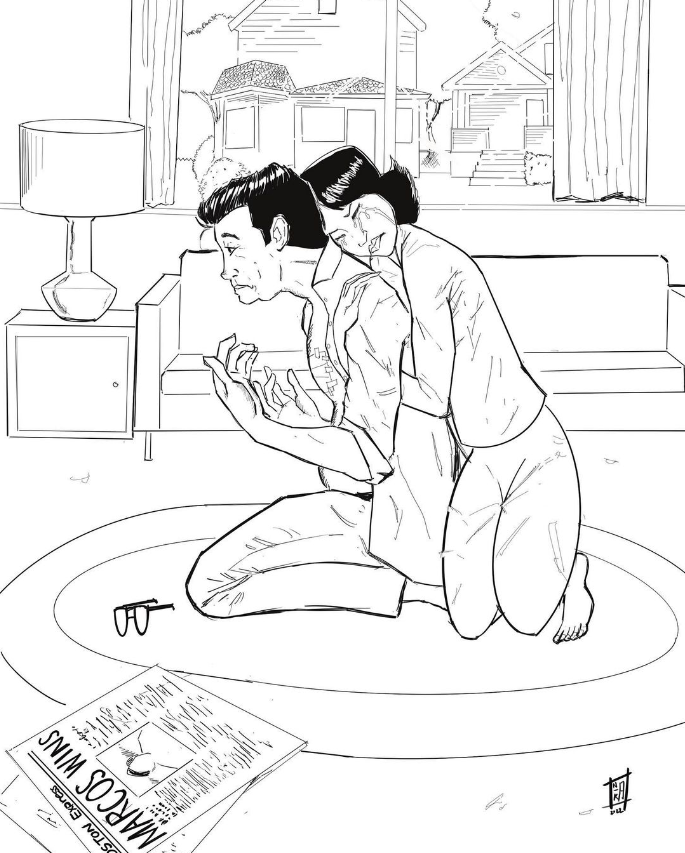
Drawn by Nathan Cayanan: Ninoy Aquino, a Filipino politician who was assassinated during Ferdinand Marcos’ rule in the Philippines. This illustration depicts Aquino and his wife, future president Cory Aquino, when they lived in Boston, after he was exiled for standing against Marcos.

ADVICE FOR ASPIRING WRITERS OR ARTISTS

It’s not easy, and I think admitting that first is important. Too many young aspiring artists ask for advice, but what I feel like they’re asking is how they make this a career where the opportunities are plentiful, the money is endless, they can do it only from 9-to-5, get a 401K, and feel happy 24/7.

Every person I’ve met in the creative world (especially in comics) has said the same thing. It’s a grind. But, if you love the art, I mean genuinely love it (as opposed to the potential for fame and money), then go for it. But, as many writers and artists have told me, 90% of us have a day job. So, prepare to work, even if you make it. And even when you do, enjoy it, because it may not last.

Also, while it may not feel like it should be important, your ability to work and communicate with others is highly important. VERY few people are talented enough to never have to interact with others. Instead, most must be able to work with each other.

Editors have told me that they don’t care if you’re talented. If you’re not professional, no one’s going to give you the opportunity, especially if you’re rude, always late, flakey, or overly stubborn. You don’t have to be the life of the party or admired by the masses. But surely, you have to be reliable and don’t be a d*&k. 

Drawn by Nathan Cayanan: “It just speaks to the times as we see Asian hate crimes on the rise.”

Website: nathanielcayanan.com

Instagram: @nathan_a.k.a

cj

Stories

This Gen-Z Quit Her Job And Turned Stressful Life Challenges Into Quirky Creations

Crystal was feeling emotionally and physically drained from her job before she finally decided to quit. She didn’t have any plans lined up when she did, which was very unlikely for her. So she decided to pursue something she’s passionate about – stickers and stationery.

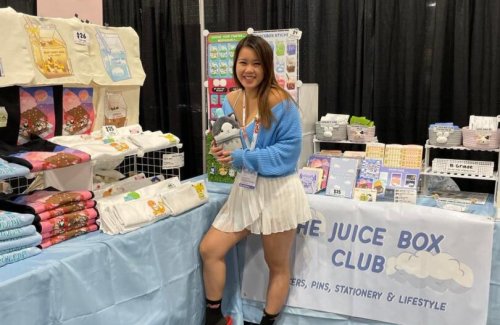
Juice Box Club was molded out of creativity, perseverance, and determination. This small business has faced numerous hurdles along the way, from financial uncertainty to unexpected delays in product arrivals. But despite the challenges, Crystal has remained committed to her dream of sharing her unique designs with the world.

Crystal’s designs are inspired by real-life experiences, from personal passions like fitness and mental health to inside jokes with friends. And speaking of friends, Crystal recently launched a new collection of plushies called Boba Friends, inspired by her own friend group and their real-life pets.

Now, her small business is more than just a sticker shop. She is now designing and selling lifestyle items (glassware, tote bags, apparel) and even plushies! Let’s dive into the story of how The Juice Box Club was born.

HOW THE JUICE BOX CLUB CAME TO LIFE

The process of setting up my own stationery shop was very nerve-racking and exciting at the same time. When I first started off, I used Etsy and I had a lot of support from people back home in New York City, where I was born and raised. However, when I learned that it took a huge chunk of the profits, I took it off and started my own website. I registered my shop as an LLC because I felt like this was going to be a long-term commitment.

I decided to start my own stationery shop because it was always a hobby and passion of mine. I would always collect envelopes, paper, and stickers. 

The concept of The Juice Box Club came from some drawings I did and then while I was sharing it with my friend, we were messaging about a cute name. The Juice Box Club kinda reminded me a little bit of The Breakfast Club, an extremely memorable movie, and that’s what I wanted my brand to be.

OVERCOMING BUSINESS HURDLES

The challenges I have faced circled around finance, having too many ideas, running it by myself, products not arriving on time, machines not working, and rejection.

Finance — in terms of not knowing if I’ll make any sales this week or the next. I do sign up for a lot of in-person pop-up events! I rely on that more than my online sales since the internet nowadays is so funky with algorithms. I also like interacting with customers because they have an opportunity to get to know the brand firsthand.

Having too many ideas — definitely a challenge because I didn’t wanna grow too fast and then have a bunch of inventory. I used to work in fashion and I was used to always developing NEW items. I felt like I had to do the same with my brand, but I realized that I don’t and it’s okay to slow it down. 

Running the business by myself — also pretty hard! Sometimes I would ask my friends if they’d want to help me at bigger events. But most of the time, I’m a one-woman team. I had to do everything from designing, packaging, shipping, content creation, handling emails, etc.

Products not arriving on time — There are times when I outsource items since I don’t have the time or the tools or make them. When I first started, I outsourced my stickers and they were LATE by 1-2 weeks. There was also another time when all of my plushies came EARLY and I had to store 12 big boxes (1,200 plushies total) in my garage and some in my house. 

My Cricuit machine was not working in the beginning — I was making and hand-cutting all my stickers. I gave my Cricut a break and went back and tried it again until it finally started to work properly.. after 5 months.  

Rejection is something I dealt with a lot growing up, so I thought I’m okay with it by now. But getting rejected by big conventions or wholesale sites hits differently. However, I learned to see it as dodging a bullet. If it’s meant to be, it will be, maybe at the right time.

DESIGNS INSPIRED FROM LIFE

Everything designed in my shop all ties into my life somehow. When I first started, I had seven juice box designs. Six of them were themed — three were inspired by my personal passion for fitness/bodybuilding and the other three were inspired by the importance of mental health because I’m a very functional-anxious person and have a hard time relaxing. 

Some of my juice box designs were inspired by my texts with my friends so you might find cute and funny quotes on them. For example, “broke b*tch juice” was inspired by my convo with my bestie, Beth, we always talk about how things are so expensive and how we’re always broke. Or if you see the Pokémon x Soju collection, it was a merge of my childhood and adulthood — because I grew up playing Pokemon with my brother and spent my college years pounding shots of soju.

The Juice Box Club Pokémon x Soju Collection

THE BOBA FRIENDS

Growing up, I didn’t have a consistent group of friends. Most of them just either change or grow apart. But when I moved to California, I met my best friend who later on introduced me to my current friend group.

Some of us in the group have pets, so I then designed characters based on our pets, and their personalities reflect the owner! I called them Boba Friends because boba gatherings are one of the most common hangouts to do now! They have different flavors as well. I own the two cats, Platinum and Luna. My best friend Beth owns Sesame, a lionhead rabbit, and my friend Justin owns Kona, the Shiba Inu. Now none of us owns a bear or frog but I dedicated Ribberto the Frog and his personality to my late friend Josh because it was his favorite.

The Boba Friends Plushies

In the future, I plan to continue producing more drawings and products for The Juice Box Club. I hope to have my products in shops and stationery stores. I am also working on a YouTube channel to show my journey and reach more people.

Website: www.thejuiceboxclub.shop

Instagram: @thejuiceboxclub

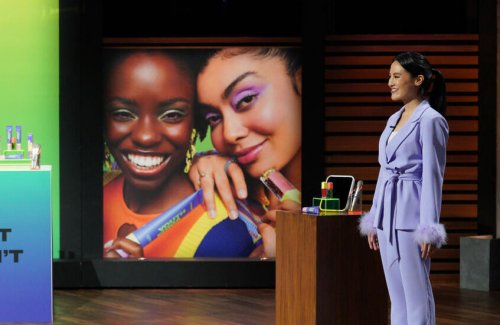
SHARK TANK - Ò1416Ó - Entrepreneurs come to the Tank to present their ideas to the Sharks in hopes of landing a deal, featuring an edible flower company, a sun protective solution, a clean makeup brand, and a modern dental tool used for oral care. FRIDAY, MARCH 3 (8:00-9:01 p.m. EST), on ABC. (ABC/Christopher Willard)
FIONA CO CHAN

Awaken* newsletter

Inside the Mind of Youthforia Founder Fiona Co Chan During Her Epic Shark Tank Pitch Revealed

From sleeping in makeup to owning a makeup brand that lets you do just that, Fiona Co Chan’s innovative beauty brand, Youthforia, is taking the beauty industry by storm.

When the pandemic hit, many of us were forced to adapt to a new way of living. For Fiona, it was a chance to create something truly innovative. The founder of Youthforia has been making waves in the beauty industry with her bio-based formulas.

And if that wasn’t impressive enough, Fiona recently appeared on Shark Tank, where she wowed the Sharks with her BYO Blush and nailed the negotiation process. Fiona let us dive deeper into her mind during the biggest pitch of her life.

Fiona revealed that she practiced a lot for her pitch, but changed it at the last minute to include a demo of their BYO Blush. “I was really nervous about doing that because normally when I do makeup at home, I have a lot of time to apply my makeup on – but for the Shark Tank pitch, I applied it in seconds,” she said.

Fiona applying the BYO Blush in front of the Sharks

She admitted to feeling nervous up until the point she applied the BYO Blush, “You can see it in the clip – but I can see myself in the mirror and I crack a big smile – that’s when I felt really confident and decided to have a lot of fun with the experience.”

But the real highlight of Fiona’s Shark Tank experience was her fierce negotiating skills, she was determined to make a deal that she was comfortable with. “The entire time I kept thinking to myself, ‘Is this something I want to do?’ and I kept countering until it was something I’d accept,” she said.

Fiona’s negotiation skills did not go unnoticed, Mark Cuban offered her a deal and she was over the moon. When asked what was going through her head at that time, she said, “So much – it all went by really quickly. There are parts of it that, watching it back, I didn’t even realize happened!”

Mark Cuban and Fiona Co Chan (ABC/Christopher Willard)

The entire time I kept thinking to myself, ‘Is this something I want to do?’ and I kept countering until it was something I’d accept.

-Fiona co chan, youthforia

Throughout her entrepreneurial journey, Fiona’s husband has been a constant source of support, “When we first started Youthforia, he was the only person I was interacting with because it was lockdown,” she said. Having someone by her side during this challenging time gave her the strength to keep pushing forward.

Launching a company in the middle of a pandemic wasn’t easy., Fiona had to create formulas that no one had done before, using bio-based ingredients instead of fossil fuels. Finding manufacturers willing to work with her was a challenge, but with determination and hard work, she made it happen. She told herself, “If it’s never been done before – you don’t need imposter syndrome.”

Looking ahead, Fiona is excited about the future of Youthforia and has plans to deepen the brand’s relationship with its existing retailers. She said, “My dream is to make a full face of Youthforia products!”

To other entrepreneurs just starting out in the beauty industry, Fiona’s advice is to share your authentic story, “My biggest advice for brand founders is to share your authentic story – of why you’re starting a company or why you created a product.”

Fiona’s journey with Youthforia is one of determination, hard work, and a passion for changing the beauty industry. With her innovative approach to makeup and her commitment to bio-based ingredients, she is sure to make a lasting impact.

Watch Fiona’s Shark Tank pitch here:

Image Source: Madeline Arenas Facebook

Stories

Award-Winning Photographer’s Pursuit of Art Against All Odds, “Throughout the years, I was told, there is no money on art.”

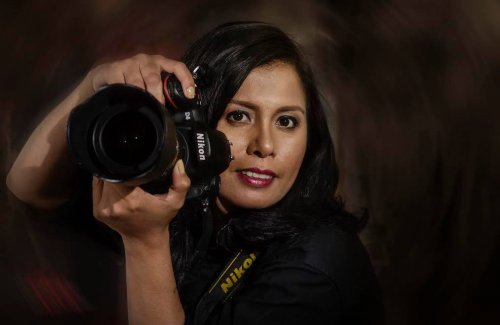
Her passion for art started at an early age, and she fell in love with photography when she got her first camera in elementary school. However, like many artists, she was told that there was no money in art and decided to pursue a different career path.

She went back to photography when she purchased her first digital camera in 2003. As a mother with a young baby, she started Cubrix Photography during the recession in 2008 and posted on Craigslist with her son as a sample portfolio.

Today, she specializes photographing in newborns, marriage proposals, weddings, and Bar Mitzvahs – “pretty much the milestones of their life” as she says. Madeline’s unique perspective on storytelling in photography and her empathy for others makes her work truly stand out.

In this interview, Madeline shares her most memorable moments as a photographer, how her Filipino heritage shapes her work and her personal and professional goals as an evolving artist.

PURSUING ART DESPITE ADVERSITIES

I was born & raised in Pangasinan, Philippines. Art has been a huge part of me growing up. My loving mother thought I had a great left hand when it came to art and sent me to art class at the early age of 7. Since then, I can see art everywhere through my eyes. I developed an interest in photography when I was in elementary years, my first camera was Kodak Ultralite (Film). 

Throughout the years, I was told, there is no money on art. So, I have set aside my passion and pursued a different career path. By 2003, I purchased my first digital camera. Photographing became my hobby again, I would capture the beauty of nature, my favorite being sunsets.

I started Cubrix Photography when the recession began in January 2008. My first child was only 1-month-old back then when I started taking his photos with little to no props. With no incoming income from my previous web development firm, I have to rapidly think, my camera was my only valued asset I have left which makes money. I immediately started posting on Craigslist LA/SF/IE/OC – on a daily basis with my son as a sample portfolio. That’s how I first started to get my first batch of clients.

My children – Dylan and Kyla

By 2nd quarter of 2009, I drove to San Francisco once a month to sustain my daughter’s baby formula & diaper supply for Dylan & Kyla. There was a season, I had barely any bookings and I was forced to sell some of my photography equipment so we can go to Costco to buy our necessities. By the year 2009, I was nominated and rank the top 5 out of 32 portrait photographers in Los Angeles. LA City Voter. The awards continue 2011 (3/57), 2012 (1/61), 2013 (1/45) & 2014 (2/29)

Expertise picked Cubrix Photography as one of the top 23 out of 1,336 newborn photographers serving Los Angeles (2017 & 2018)

As of today, my business runs based on “referrals/word of mouth”, I average 10-14 sessions per week including newborns, baby milestones, family, headshots, marriage proposals & special events. I still travel to San Francisco yearly, expanded to Great Neck, NY for the past 3 years, and travel 2x a year. I am currently I’m on my 4th batch in the newborn + children Photography workshop in Manila Philippines this July 2023.

INCORPORATING STORYTELLING INTO PHOTOGRAPHY

I was once taught by my first mentor, Alex Hernandez from Lifetouch, “Paint with light”. You may have some astonishing pictures that are technically perfect; however, there are two more elements that make a strong image even much stronger. The images should evoke strong emotional feelings in the viewer’s psyche.

Calasiao, Pangasinan

CAPTURING MORE THAN JUST PICTURES: THE MOST MEANINGFUL MOMENTS AS A PHOTOGRAPHER

So many, I feel each session, event, or newborn workshop I photograph was all memorable for me. But there were few who really stood out the most. As a portrait photographer, I trained myself to be emotionless despite what was happening during the time of the documentary.

I had this newborn session many years ago, while I was doing my craft, out of the blue, the mom started crying. Her husband passed away recently.  I had no words to say and kept doing my job. I keep telling her baby was so beautiful – her dad will be so proud of her someday. 

Yearly, I teach newborn workshops in the Philippines. While I was telling my students the profits were donated to a charity that makes special shoes for claw feet babies. It was hard for me to finish my speech – I was so emotional as I taught them the importance of giving back whenever your life is very comfortable.

On a lighter note, for this one-year-old boy’s milestone, every time I sing, he gives me a bad look. When I stop singing, he will stop the grin. I don’t have a talent for singing at all!

The little boy giving me his bad look

At events – Photographing 25 Billionaires during a private meeting event  – one of the guests was Bill Gates. I was so nervous I didn’t even say hi and shake his hands!

STAYING INSPIRED AND CONTINUING TO GROW AS A PHOTOGRAPHER

Surround Yourself with Success: Physically surround yourself with successful photographers. Go to photo conferences, and meet-ups, join a mastermind, and go to photography events and photo walks. If these don’t exist in your area, start them.

Booking signing with Anne Geddes, world-renowned baby photographer for 35 years.
Belly Baby and Beyond: A Collaborative Conference

HOW MY FILIPINO HERITAGE SHAPES MY WORK AROUND THE WORLD

Filipinos have extremely strong cultural empathy. I would like to think that we would never have been able to succeed across such a varied portfolio of countries (across six continents) without embodying this very strong Filipino value.

PERSONAL AND PROFESSIONAL ROADMAP AS AN EVOLVING ARTIST

Personally, to stay healthy and be able to photograph my children’s newborns. To be able to get grants and build 20 libraries per year for our children’s charity – JollyBox Philippines. 

Jollybox Philippines

Professionally, to be the first South/North East Asian Nikon USA Female Ambassador. To achieve a Master’s in WPPI (Wedding & Portrait Photographers International ), currently at the associate level. To continue to teach newborns workshops in the Philippines on a yearly basis. 

ADVICE FOR ASPIRING PHOTOGRAPHERS

An artist will always be an artist, in spite of everything. Pursue it, no matter what. No Matter what, you are emphasizing that you are definitely going to do it, even if there are obstacles or difficulties.

CONNECT WITH MADELINE

Whether you’re a fellow photographer or simply an admirer of stunning visual imagery, connecting with Madeline through social media and exploring her photography portfolios is a great way to stay up-to-date on her latest creations and gain inspiration for your own creative pursuits.

Babies and Family Photography

Event Photography

Marriage Proposals & Weddings Photography

Newborns Photography

Lifestyle, Birth, Fresh48 Photography

Maternity Photography

Creative Fashion

Photojournalism / B&W Photography