Awaken* newsletter

May 30, 2024

SHARE:

Welcome to another edition of AHN awaken*! Apart from our guest, I’m excited to introduce a new member of our team, Han Yue Yin! Han Yue is a current Stanford GSB student and was my fellow jazz bandmate in college. Although this article was written by me (Edwin), Han Yue co-interviewed with me and will be taking the lead on writing some great articles in the future. Everyone, please welcome Han Yue!

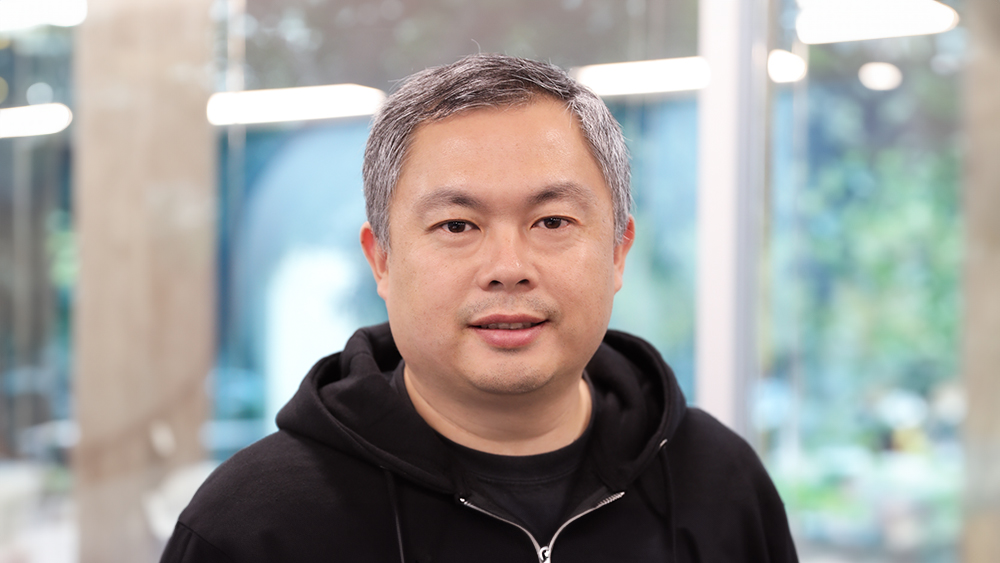
Our guest for this edition is Larry Liu, co-founder and CEO of Weee! (exclamation mark included). Weee! is the leading online Asian supermarket in America, think Amazon but for Asian groceries. Larry is an exceptional founder, and his journey of immigrating to America without any connections into founding a company worth $4.1 billion truly exemplifies the American dream. As an aside, Han Yue and I were especially excited about this interview as avid users of Weee! ourselves. Without further ado:

The Origins of Weee!

Our first question for Larry was how the idea for Weee! first came about:

Originally, we started as a WeChat (Chinese messaging app popular with the American diaspora) group-buying company. I believe it was really an opportunity we observed around the 2014-2015 time frame. This was when WeChat became extremely popular among Chinese immigrants and many people formed WeChat groups to buy food together, among other things. We found this to be a very interesting business model. As you may know, I was an eBay seller for more than 10 years and was familiar with the traditional e-commerce model, which is search-based. So, when I saw the group buys, I thought it was a completely new model, not search-based, but recommendation-based. I believed it was very promising. That’s when we decided to quit our jobs and start the business. However, it turned out not to be the right model. We pivoted in 2017 because social buying was not what we thought it was. It was not the ultimate solution to solve the lack of service experienced by Asian Americans for their food needs. The delivery-to-home model is a much better model. So, we pivoted in 2017. I believe it’s one of the greatest pivots in history.

The reason we pivoted was because we couldn’t grow the original group buy model. We couldn’t raise money because we didn’t grow. This forced us to think very hard about the fundamentals. That’s when we realized that the reason most people used group buys was actually because they didn’t have easy, affordable access to the food they love. It wasn’t apparent in the beginning because people were group buying all kinds of things. But those were only distractions. When we thought deeper, it was about the food. That’s why we had to pivot. 

Following up, we asked Larry what lessons they were able to port over from their group-buying stage into their current business model:

We learned a lot during the group buying stage. We had already built some warehousing and delivery capability during the group buy era. Many vendors didn’t want to sell to the group leaders directly, so we had to build a warehouse to buy a lot of products from the vendors. We acted as the supplier to many of the group leaders. This already made us into the warehousing and delivery side of things. We also learned that people were willing to wait for great products that were hard to find. This gave us the confidence to not do same-day delivery or on-demand.

Obviously, we had to ask what were these products that people were willing to wait for:

It’s usually the products that are hard to find even at Asian supermarkets. For example, super fresh fish, very fresh produce, and fruits. In the early days of group buying, the Pacific Black Cod was very popular. People were buying pork bellies together because they were not easy to find in mainstream supermarkets. During winter time, a lot of Chinese immigrants make sausages themselves, so they buy a lot of pork bellies. 

One of our most popular items was Kyoho grapes. Kyoho grapes are not always available in Asian supermarkets. Additionally, Asian supermarkets have issues with consistent quality, the range of products, and the fact that a lot of people live far away from those supermarkets. That’s why those kinds of products were very attractive. During the group buy days, we would never do tofu, soy sauce, or green onions. Those kinds of products were not considered exciting for group buys. So we only would do, like I said, super fresh seafood or produce or restaurant food or things not so readily available.

The Business of Weee!

One of the big ongoing initiatives at Weee! is adding storefronts for more ethnicities, complete with their own goods. We asked Larry what opportunities and challenges they’ve experienced expanding into more ethnicities:

All of them are very underserved, which makes our business very attractive to all these ethnicities. If you look at U.S. history, there was a very important piece of legislation passed by Congress called the Immigration Act of 1965. It really started this whole demographic shift in this country. It’s a once-in-a-century shift. That’s when the Asian and Latino populations started to grow in the U.S. Right now, if you look at the Chinese population, five to six million people in the U.S., this group is still quite small, less than two percent of the U.S. population, so it’s very hard for mainstream supermarkets to try to serve the specific needs of Chinese Americans. It doesn’t make sense for them to focus on this two percent of the population and try to bring in thousands of products to serve them. That gave opportunities for offline Chinese supermarkets, but the offline model is not the ideal model to serve low-density populations. That’s why there aren’t that many such stores. 

Ranch 99 is the biggest Chinese supermarket chain. The biggest Korean chain is H Mart. It took them more than 40 years to build less than 100 stores. The reason is that the population density is not high enough for them to build thousands of stores. All the mainstream supermarkets have thousands of stores. But these ethnic ones can never achieve that, which means they will always be more inconvenient to access. And that’s physics. You just can’t have that many stores when the population is so low. The good thing for our business is that our model is a better model. You don’t have to drive to us, we deliver to you. We have very large warehouses and we can cover a very wide range. Another big advantage for us is that we can be authentic to multiple ethnicities. An offline Chinese supermarket can never be an Indian supermarket at the same time. An offline Korean supermarket can never be a Filipino supermarket at the same time. No matter how you design this, it’s impossible. But online, you go to us, the first thing we ask you to do is choose the store. You choose the Filipino store, it’s all Filipino. You choose the Vietnamese store, it’s all Vietnamese. We can really be authentic to multiple ethnicities, and that can only be done online.

One thing that caught our attention was Larry’s point about how sparse populations inhibit additional stores which inhibit accessible stores, which would make more people turn to online stores such as Weee! We were curious if the converse was true, whether or not customers use Weee! less in Asian-dense areas where there are accessible in-person stores, like in cities such as Cupertino, CA:

That’s actually not the case. We actually have a lot of customers in Cupertino. Here’s the reason: our assortment is not the same as offline Asian supermarkets. A lot of things we carry, they don’t carry, and a lot of things we carry consistently, they don’t carry consistently. The assortment of items is differentiated. We also have a third-party marketplace. Right now, we have more than 50,000 third-party marketplace products on Weee!, these are all products that brick-and-mortar stores don’t carry. We have sellers in Japan, Korea, and China. Some other sellers are local restaurants and local bakeries. For example, on Weee! you can buy a local bakery product at the same price you would pay in the local bakery, and that is just not available in other apps. You can go to DoorDash, you buy the same product, you pay 40 percent more, 50 percent more depending on what’s your total order value. We have a lot of products that actually aren’t available from Asian supermarkets. In fact, we have slightly better prices than Asian supermarkets because our supply chain is more efficient. Even if you live in Cupertino, we have a better selection and prices. Plus, you don’t have to go out. You don’t have to spend your entire Saturday afternoon grocery shopping. You have better things to do. I’m not saying offline supermarkets shouldn’t exist. That’s not what I mean. We actually don’t see them as competitors. I think that they will exist for a long time and a lot of people like shopping offline. That’s totally fine. We just try to serve underserved communities and we believe we have better products and services than anyone in the marketplace.

A common customer behavior in Asia that hasn’t quite made it to the US is browsing online stores. For instance, most people who go on Amazon already know what they want to buy and only search for that, you generally don’t wander a disparate tab and scroll through those listings. Given that Weee! targets people from Asia, we asked if Larry has noticed such behavior on Weee!

Our customers tend to browse more. With our design, we actually want people to browse more. There’s a common belief that grocery shopping is boring and repetitive. Almost every single website prominently features a ‘buy again’ option. Amazon does that because it makes sense. If you think of shopping as a chore, then it’s logical. However, we see grocery shopping, especially for immigrants, as an opportunity to discover exciting new things that they may not even know exist in the U.S. We always try to create that excitement. That’s why we want people to browse. These exciting products are also important for our user acquisition strategy. People tend to tell their friends about the exciting things they find on our site. If you buy things from Amazon or Safeway, you probably won’t tell your friends about it because it’s the same old thing. But our customers actually tell their friends a lot after they buy something from us because we offer a lot of exciting products.

For our readers (and ourselves!), we asked Larry for examples of some of these exciting products on Weee!:

Nowadays, we’re really strong at seasonal fruits. We really care about flavor because our customers do too. We carry things like the Ori Mandarin from Israel, which is very tasty. Our dragon fruits and coconuts are super popular. In fact, we’re America’s largest retailer of fresh coconuts.

It’s fascinating because this ties in with our multi-ethnicity strategy. We have a lot of customers from different ethnicities. People from Vietnam, China, the Philippines, Southeast Asia, and India all consume coconuts. We are the only place that aggregates so much demand for coconuts and our price is unbeatable. For instance, if you go to Whole Foods, a coconut costs $4.99 each. If you buy on Weee!, it’s $14 for nine. It’s the best price on the market and our volume is really big. We’re also strong in fruits, vegetables, and hot pot-related products. We have all kinds of sliced meat, lamb, beef, pork, and different sauces and vegetables.

Larry’s Personal Growth

Although Weee! is not Larry’s first venture (he did some dropshipping previously), it is the first business he has scaled. As such, we asked him about his process of learning how to be a leader:

It was not very natural. It was a very steep learning curve for me. I managed like two people before I started Weee! at my previous company where I worked in finance. So I had very limited management experience, but as a founder CEO, you just have to learn everything on the fly. Not just managing people, but also how to raise money, how to come up with business strategies, and how to communicate the strategies to your team. 

I read a lot of books. I like to read. So I guess I had some knowledge on paper. This was my opportunity to apply that knowledge to the real world. I also reflect a lot. I’m a huge believer in deliberate practice. So I think I approached the job as something I need to really break down into different areas. For each area, I try to have some mechanism to get feedback and to check whether I did well or not so well. One of the reasons I was really attracted to retail is because retail gives you a very fast feedback loop. If you do a B2B business or pharmaceutical, it can take years for you to get the feedback. But in retail, if you do something right, you can literally see the results in minutes.

Also, I later realized that my finance background gave me an unusual habit. I try to forecast everything. For a lot of people, if you ask them about their strategy, they can’t tell you the impact of that strategy. I think forecasting is important because it requires understanding the mechanism between the input and the output. It also gives you the chance to constantly compare your expectations to the actuals, allowing you to fine-tune your understanding of the business. That feedback is very beneficial for improvement. 

I also hired really good people and learned from them. Our COO is very experienced. When she joined us, she managed teams with hundreds of people. I learned a lot from her. A lot of our management practice is what she brought to us. It’s really a combination of learning from experienced leaders and your own curiosity to constantly get better, to seek feedback, and just a lot of hard work.

We followed up by asking Larry if wished that he had done anything differently in his journey:

I think everything that happened was necessary. If I went back and told myself 10 years ago the things I know today, I still wouldn’t learn from my own advice. There are so many management books, and so many wise people out there. They give talks. Can you really learn from that? Even this conversation, can you really learn from this? I don’t think so. I think it’s just one piece of information. When I read a book now, I see it as one data point, one piece of information. I have to actually do it or be in the process of doing it, then revisit the concept I learned on paper and try to connect that concept to my real experience to make it part of my own. But without the doing part, the information is just a piece of information, nothing more. I could go back and tell myself a lot of things, but it wouldn’t help me 10 years before.

I have the habit of reading certain books over and over again at different stages of my life. For example, one of my favorite books is Sam Walton’s autobiography, “Made in America”. It’s very interesting. Throughout my journey, every time I read it, I pick up different things. The book didn’t change, I changed. A lot of things I didn’t understand before, but now I can understand because my experience grew. Sam Walton, I think when he wrote the book, he was diagnosed with cancer already. He probably gave everything he knew and put it in the book, but unfortunately, most people don’t understand all those things. They have to experience it and then they can relate to that. That’s why I think reading a really good book over and over again is a good idea.

I had heard Larry talk about Sam Walton in other interviews before so I figured that Walton must be one of Larry’s favorite entrepreneurs. We asked Larry what draws him to Sam Walton:

There are a few things I really admire about him. Firstly, in his whole life, he only did this one thing. He started Walmart and then he just stuck to it. He spent his whole life working on that. I’m attracted to that kind of entrepreneur. I’m not attracted to so-called serial entrepreneurs. I admire people who just try to do one thing super well, the best in the world. Also, he’s kind of an underdog. He was in Arkansas, a Midwest town. For a long time, Walmart only served towns with less than 5,000 people. It’s like how we at Weee! focus on serving minorities.  But he, as an underdog, built a business against all the odds. He started in the late 40s, and early 50s. His company went public around 1980. It took him 30 years to bring the company public. But even going public was just the beginning. In the next 20 years, I think Walmart’s stock price grew like a thousand times. Now, I think it has the most revenue out of any U.S. company. He was the richest man in America, but he lived a very simple life. His values very much match my values. So, I do see the parallels with us. If you read his book, you will love him. He’s very simple. I like a simple life. I don’t want things to be so complicated. Just figure out one thing you want to do, and then go for it and spend the rest of your life pursuing it. 

Asian Representation and Identity

Given that Weee! is the largest platform selling ethnic foods, we asked Larry how he sees Weee!’s role in enhancing the representation of ethnic food in the broader American landscape: 

We actually have a lot of mainstream users, and they’re growing very rapidly. We are the top seller on TikTok Shop in the U.S. in the food and beverage category. Almost all our customers on TikTok are mainstream Americans. I think it’s a less intimidating way to shop for products from another ethnicity if you do it online. Let’s say it’s a Middle Eastern store. You just want this one thing, you really like the lamb, what do you have to do? You have to drive to the store, go in, and it’s very unfamiliar. The barrier for mainstream Americans to try Asian supermarkets is a lot higher if they try to do it offline. It’s a lot lower if they do it online.

Personally, I found this extremely insightful as I had never thought of that. When you go to ethnic grocers such as Ranch 99, the store employees sometimes don’t speak very much English. I never thought much of it since I can speak the language, but I can see how the experience could be a lot more intimidating than buying online. For our next question, we asked Larry how being an Asian immigrant has impacted your founder journey:

I’m a first-generation immigrant. I came to the U.S. 20 years ago. My experience really put me in the position to do this business. That’s why I want to be like Sam Walton. I think this is almost a perfect business for me, and I want to keep doing it for as long as I can. There are so many smart people in the world, but what you can accomplish has a lot to do with what position you are in to see and recognize a great opportunity. I just felt like I was at the right place at the right time and I had the right experience and I met the right people. I owe everything to my background as an Asian immigrant to do this business. There were a lot of challenges in the early days. It was very difficult to raise money because people in the VC industry, the mainstream investors, didn’t really understand this opportunity. They couldn’t relate to it. But we were lucky enough to find Asian partners from those investment firms in every round of financing. I think I counted eight or nine rounds. In every single round, there was at least one Asian partner in the deal. They understood what we were trying to do.

Shoutouts

If you ever find yourself looking for Asian groceries, please consider joining millions of other users and trying out Weee! You can order on the web at https://www.sayweee.com/en or through the app, which you can download from all major app stores.

Weee! is also looking to grow their exceptional team across all functions. If you would like to work at the fastest-growing ethnic e-grocer, please check out their available job openings at https://www.sayweee.com/company/careers.

Thank you Larry for joining us!
Related Articles

News

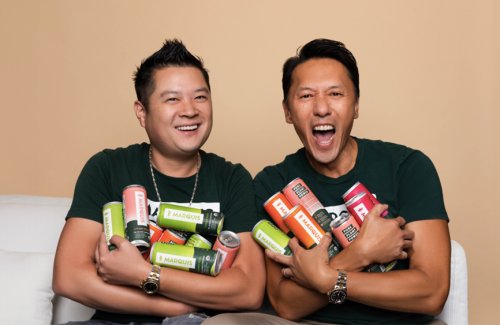
Marquis Blends Asian Roots and Modern Flair with Innovative Energy Drinks

The energy drink industry is on an exciting upswing, having expanded by a remarkable $7 billion over the past half-decade. Stepping into this dynamic field is Marquis, a family-founded beverage brand rooted in AAPI heritage. Their approach involves crafting a sparkling drink featuring a unique caffeine blend, setting them apart in the market.

Unlike most energy drinks and functional beverages that cram 200 to 300 milligrams of caffeine into each serving, Marquis opts for a milder 100 milligrams. Interested buyers can find Marquis beverages both on the official website, drinkmarquis.com, and select Target stores, including the Downtown branch located at 735 S. Figueroa Street, as well as local Erewhon Markets.

LA natives Christopher Lai and Danny Huang, co-founders of Marquis, are leading the charge for a healthier caffeine experience. Lai shared with LA Downtown News that around 90% of American adults consume caffeine daily, but Marquis’ caffeine drink comes with added benefits.

Marquis crafts its beverages with organic ingredients, sidestepping added sugars and excess calories. Their concoction combines green tea, green coffee, and yerba mate to offer a balanced, natural energy lift throughout the day. Huang emphasized their ability to provide sustained, natural energy with a fraction of the usual caffeine content.

Marquis beverages boast antioxidants, vitamins B and C, setting them apart in promoting health-conscious choices. Lai’s focus on differentiation from other energy drink companies reflects in Marquis’ careful crafting and dedication to responsible caffeine consumption.

The brand’s flavors, including citrus yuzu, lychee peach, mango ginger, super berry, and pineapple passion, carry a unique touch shaped by their “Asian-ness,” as described by Huang. Their latest flavor, lemon lavender, adds a botanical dimension. Huang revealed that these flavors are a testament to their history, culture, and personal experiences, a way to share nostalgia and love with the world.

Featured Image Source: LA Magazine

Screen Shot 2023-07-09 at 2.39.59 PM-png

Stories

An Entrepreneur’s Dream to Bring a Taste of Cambodia to the World and the Miracle That Started It All

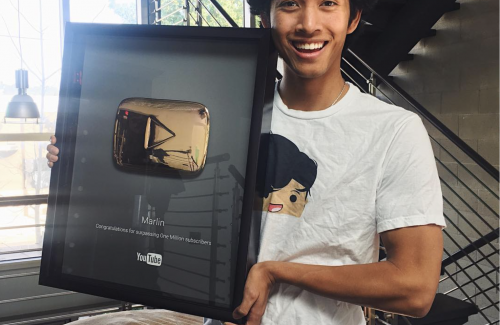
Marlin Chan is a remarkable individual whose journey embodies determination and triumph in the face of adversity. Born to Cambodian immigrants, Marlin’s family overcame hardships that spanned continents, shaping the very essence of his character.

His parents faced the harsh realities of the 1970’s Cambodian Genocide that forced their separation for nearly 2 decades. After being apart for 18 years, a fortunate stroke of serendipity allowed them to miraculously reunite and lead to the birth of the miracle baby Marlin.

Inspired by his grandmother’s beef crisps, Marlin started a business venture called “Yay’s” to pay homage to his culture. Through Yay’s, Marlin continues his family’s legacy of hard work and determination, sharing a unique taste of Cambodia to the world.

Asian Hustle Network had the privilege to sit down with Marlin Chan and delve into his inspiring journey. Join us as we explore his remarkable story of strength, dreams, and resilience.

CHALLENGES THAT MARLIN’S PARENTS FACED AS CAMBODIAN IMMIGRANTS

During the Cambodian Genocide, my parents faced the challenge of survival, as those of higher status, like artists, government officials, and intellectuals were among the first to be targeted and eliminated. 

Because there were countless horror stories of Khmer U.S. Air Force members being killed upon arrival at the Phnom Penh’s air station, it prevented my dad from returning home after serving the U.S. Air Force to save his family. This marked the onset of my parents 18-year separation.

Amid their time in the work camps, my mom tragically lost my sister to chickenpox and malnutrition due to the mistreatment by the Khmer Rouge. This tragic event left her devastated. To escape the work camps, my mom and her family had to navigate minefields at night to be unseen.

Like many immigrants, my dad faced the challenge of not knowing the English language upon his arrival in America so he turned to television to learn how to speak the language. Meanwhile, my mother successfully made her way to America to start a new life and began selling noodles on the streets of Stockton, California to support our family.

THE REMARKABLE REUNION OF LONG-LOST LOVE AFTER 18 YEARS

One day, my father visited a local donut shop for the first time to meet with an old friend, and the donut shop owner recognized him from their days in Cambodia. 

As the owner was inquiring about my mother, he revealed that the last he heard about her and her family’s whereabouts was in Stockton, California. My father’s face drained of color, and he froze upon hearing this shocking revelation. Immediately, he asked if the owner had their contact information and without skipping a beat, he got in touch and embarked on a road trip to Northern California the very next morning.

Upon arriving in Stockton, California, my dad found my mom, still hopeful and strong-willed as she had always been, but her health wasn’t in the best condition. She was living in a one-bedroom shared apartment with multiple other families. They promptly went for health check-ups and discussed restarting a life together again. In that same year, I was born on October 7, 1993. The Stockton Newspaper published an article of Marlin Chan as the miracle baby that beat the odds of survival with my parents’ long-lost reunion and my mother’s ability to bear children at forty.

LESSONS THAT SHAPE MARLIN’S JOURNEY

As a child of Cambodian immigrants, here are some of the things I learned:

  • Stay curious, for knowledge is a treasure that never diminishes and our curiosity fuels our drive to innovate. 
  • Having a positive outlook can transform our perception of life, particularly during trials.
  • Material wealth is temporary. The value in developing your knowledge and skills is what truly holds the key to unlocking your infinite potential for abundance, which created a drive for me to continually invest in myself.

Relentlessness and grit are values I learned from my parents’ stories at a young age. I come from a determined, resilient family that fights for love. Hearing stories of my mom walking from Cambodia to the border of Thailand in search of refuge taught me the power of determination. Based on these principles, I have always believed in my potential and fostering a strong work ethic. While I may not always be the most attractive or intelligent person in the room, I strive to outwork everyone to the best of my abilities.

FACING FAILURE, FINDING STRENGTH

When I was eighteen years old, I was selected as one of the top 10 finalists to compete on ‘Internet Icon,’ a show created by Ryan Higa, my content creator idol. Unfortunately, I ended up placing 8th on the show, and as a young eighteen-year-old, I was devastated. I doubted whether I could become a full-time content creator if I couldn’t win this competition.

In the following year, I took a service industry job at Chipotle and completely stopped making videos. By the end of that year, I felt a renewed sense of fervor and determination to pursue my career in content creation. The skills I learned from my job at Chipotle, such as executing with excellence to avoid repetition, transferred to my work ethic for content creation.

By doing something that wasn’t creative, it shifted my perspective with content creation and allowed me to pursue my passions with more fervor and focus. I realized that I would only be a failure if I gave up since you miss 100% of the shots you don’t take. This experience resonated with the Japanese proverb, “Fall seven times, stand up eight.”

Over the next three years, I moved to Los Angeles, California, and gained over 1 million subscribers, turning content creation into a full-time job. I learned that if I could visualize my goals, they could become my reality, or even exceed beyond my imagination.

LOOKING AHEAD

My greatest accomplishment would be giving my parents a better life and inspiring kids to foster their talents and pursue their passions.

Looking ahead, my goals for the future are centered around bringing joy and delight to the world with my food and creations. I aspire to represent Asian Americans, who are under-represented in American media and encourage my Asian community to share a piece of their culture with others.

My dream is to become the first Cambodian American to bring a taste of Cambodia to every home with Snack Yay’s on a global scale. Bringing exposure to the Cambodian community would be a true fulfillment of my mission in life.

ABOUT HIS BRAND YAY’S

My Grandma, known as ‘Yay’ in Khmer, has been crafting beef crisps since the early 90’s to cover her apartment rent in Stockton, California. Beef crisps consist of thinly sliced marinated beef air-dried to a delightful crunch with flavor profiles that offer a symphony of umami, sweetness, and spiciness. Consumer goods expert Kathryn Tuttle described them as a fusion of ‘Beef Carpaccio meets potato chips meets bright Asian flavors.’ What sets these apart from traditional American beef jerky is their light and crispy texture. While regular beef jerky takes about 3 hours to dehydrate, beef crisps demand up to 20 hours for that perfect crispiness.

Growing up, I thought beef crisps was a snack that was readily available in stores. My earliest memories involved enjoying this delectable treat outdoors, helping my grandma sell them to our community. The concept of making Yay’s as a brand first came to me in December 2017. Though the idea took root then, I didn’t start the business until June 2023. Pioneering and expanding something unprecedented like this has not been an easy feat. It was very discouraging at first to reach out to over 57 different manufacturers and be told numerous times that it couldn’t be done because of the technical hurdles in producing beef jerky with this level of crispiness.

Yay’s is currently self-manufactured to ensure we use the highest quality ingredients. Every bag we send out meets our standards because we take the time to slow-dry the meat for over 20 hours, while typical beef jerky takes 3 hours to produce.

We initially started out in a small commercial kitchen in Camarillo, California, and transferred to a medium-sized commercial kitchen in New Jersey this year to increase production. We are sourcing USDA Prime meat from the same suppliers that many Michelin-starred restaurants in New York City use. Every bag of Yay’s is handcrafted because we value quality. For me, the possibility of sharing a taste of Cambodia to the world is a dream come true.

MARLIN CHAN’S INSPIRATIONAL MESSAGE TO YOUNG AAPI INDIVIDUALS

Never give up. Remember to focus on your own journey because you are uniquely you, and your authenticity is your ultimate gift to share with the world. Being referred to as a miracle baby since birth has shaped my perspective to preserve through the seasons of life and be grateful of the blessings in my life. Maintaining a positive attitude is a powerful tool to develop unwavering confidence in your potential to achieve anything you set your mind to.

CONNECT WITH MARLIN CHAN

Instagram: @marlinramseychan

Youtube: @snackmarlin

Yay’s Instagram: @snackyays

SBS

News

He Used to Dislike Food, But Now He’s a Chef Mastering Asian Flavors

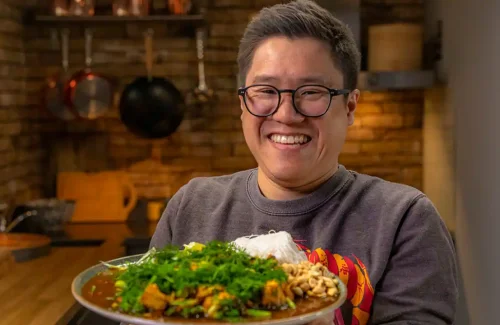
Chef Jeremy Pang’s journey into the world of cooking took an unexpected turn from his childhood aversion to food. In his early years, he confessed that he had a distaste for meals.

However, his life took an exciting turn when his family relocated to Singapore, exposing him to open-air food markets, where culinary artisans specialized in single dishes. This experience transformed his perspective, igniting a passion for Asian cuisine that would shape his career.

The pandemic prompted a shift in Pang’s family dynamic, leading him to cook with his son and discover his preferences. Through this shared experience, they explored crafting homemade pizzas and flapjacks. This is when they found out that his son really likes the flavors of Chinese food, like light and tasty dishes with fish and crispy veggies.

An advocate of the Asian tradition of feasting, Pang believes that sharing multiple dishes is integral to the dining experience. This philosophy, deeply ingrained in his approach to cooking, led him to create “Simple Family Feasts,” a guide designed to make the concept accessible to all.

Image Source: Irish News

Central to Pang’s culinary finesse is his artful balancing act of flavors and textures. He highlights the significance of contrast – harmonizing crispy and tender, soft and resilient, while incorporating fresh vegetables or quick-fried selections. This balance is the key to an unforgettable dining experience.

Featured Image Source: SBS

img_2350-jpg

Stories

JFERRER’s Mission to Empower Young Asian Creatives Through His Documentary

JFERRER is a talented Creative Director from Southern California. His journey began in high school when he discovered his love for film. Little did he know that this passion would lead him to an incredible path of self-discovery and empowerment.

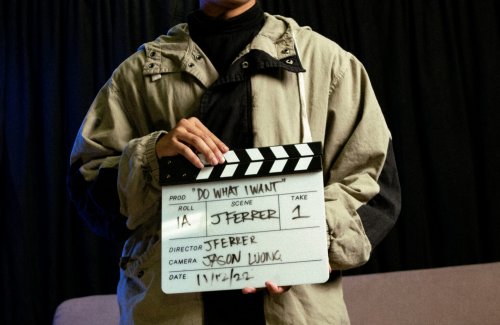
It was in college that JFERRER embraced his cultural heritage as a Filipino American, realizing the significance of being Asian in shaping his identity. Despite facing doubts from others, he remained determined to pursue his dreams. This led him to create a documentary titled “DO WHAT I WANT,” shining a spotlight on the incredible work of young Asian creatives.

Now, JFERRER is gearing up for his next mission with “DO WHAT I WANT: SPIN OFF EDITION,” focusing on up-and-coming Asian American DJs in Southern California. Join us as we delve deeper into his story and his mission through an insightful interview with Asian Hustle Network.

THE ARTISTIC VOYAGE OF JFERRER

The world of music has been a constant inspiration for me. When I listen to a song, my mind instinctively creates music video scenes that synchronize perfectly with each beat. I knew that I had to make these vivid visions into reality and on the screen. I started taking clips of videos and putting them into music and created a whole new vibe and energy for the song. It was exciting to help people experience the song in a whole new way.

As my passion for storytelling through visuals grew, so did the scope of my aspirations. Beyond music videos, I became interested in capturing and celebrating diverse narratives and talent. This interest and experience took on a life of its own and I became involved with crafting and managing live events tailored specifically for emerging creatives.

These events became platforms for budding talents to shine, fostering a community of artistic expression and collaboration. I realize that creativity knows no bounds and I want to unleash it and inspire others to find their own creative gifts.

THE IMPACT OF HIS CULTURAL UPBRINGING ON HIS CREATIVE DIRECTION

I grew up in a Filipino American family. Throughout my life, I’ve been fortunate to be surrounded by creative family members and friends. Knowing the immense talent and gifts of Asian Americans around me, yet seeing the simple, one-dimensional portrayals of Asian/Asian American characters in movies and television was disappointing.

I want to showcase the rich diversity and talents of Asian Americans and promote positive and authentic representation.

BREAKING BOUNDARIES WITH “DO WHAT I WANT”

Asian Americans do not rely on their creative side to make money. If we wanted financial stability, we would typically look at careers in the medical field, business, or engineering, right? Creative energy would just be reserved for hobbies. But why can’t it be our full-time career? That’s what I wanted to challenge in “Do What I Want”. I wanted to break free from the stereotypes and challenge the notion that you can’t be successful doing something creative and fun. 

I believe in eliminating the fear of pursuing our passions and going against the grain. We have the power to choose our own paths and find immense success in doing what we love. This is the essence of the documentary I want to create – to shine a light on a community of like-minded individuals who have shattered barriers and defied expectations.

In this documentary, we will meet incredible artists, each driven by their unique passions and determined to leave their mark on the creative world. They stand as living examples of why this project exists – to showcase Asian creatives who fearlessly pursued their dreams, despite parental and societal pressures.

The title “DO WHAT I WANT” embodies the spirit of this documentary, as each person featured chose to follow their heart’s desires. They rejected the notion that their career should be dictated by others and, instead, embraced their true calling. This is a celebration of those who broke free from the confines of societal expectations and carved out their own path to success.

NAVIGATING CHALLENGES AND SEIZING OPPORTUNITIES AS A YOUNG CREATIVE

In the realm of young creatives today, networking their art stands as a paramount challenge. Excelling in their craft is undoubtedly crucial, yet without the ability to effectively brand their work and themselves, opportunities for exposure may be limited.

Embracing the significance of self-branding, however, holds the key to unlocking a broader audience and creating a multitude of opportunities that lie ahead. So, dare to showcase your true potential, and let your art shine brightly in the vast sea of possibilities. Together, your creativity and strategic branding will pave the way for a remarkable journey of growth and success. Keep believing in yourself, and the world will undoubtedly take notice of your inspiring creations.

A MESSAGE OF EMPOWERMENT FOR ASIAN AMERICAN ARTISTS THROUGH DO WHAT I WANT

I believe that “DO WHAT I WANT” has the power to ignite a flame of empowerment within the Asian and Asian American communities. It serves as a reminder for individuals to embrace their authenticity and follow their true passions, refusing to conform to societal norms or the cookie-cutter lifestyle. I envision a wave of inspiration, encouraging people to break free from limiting beliefs and embrace the unique paths that await them.

“DO WHAT I WANT” carries a profound significance for Asian American youth. As they witness the success and creativity of these artists, they can find a sense of connection and envision their own future selves achieving greatness. The documentary not only inspires confidence but also fosters a sense of community and unity among Asian Americans, reminding them that they too, can embrace their dreams and make a lasting impact in the world.

INSIGHTS AND ADVICE FROM JFERRER

Throughout my creative journey, the most valuable lesson I’ve learned is the importance of letting go of seeking validation from others. Happiness cannot be solely dependent on the approval of others. While I appreciate and consider the professional opinions of others when it comes to my work, I firmly believe that I must retain ownership of my decisions. Embracing this mindset empowers me to stay true to my vision and creative expression, paving the way for genuine fulfillment and growth.

By freeing myself from the need for constant validation, I can embark on a path driven by authenticity and self-belief. This newfound sense of independence fuels my creativity and allows me to push boundaries without being confined by external expectations. As I continue to evolve creatively, I welcome constructive feedback and embrace the opportunities to learn and grow, but I will always hold firm to my convictions, knowing that the true essence of my work lies within my passion and dedication to making a meaningful impact.

CONNECT WITH JFERRER

Instagram: @itsjferrer