Awaken* newsletter

May 16, 2024

SHARE:

Karat Financial is a startup that provides banking services to content creators. At first glance, you may think this is a non-issue, but consider that popular chess streamer Alexandra Botez was rejected twice when applying for a business credit card, despite bringing in over $100,000 a year through her content. Clearly, investors also agree that this is an issue. Karat has raised over $100 million from top-tier investors such as SignalFire, USV, and GGV.

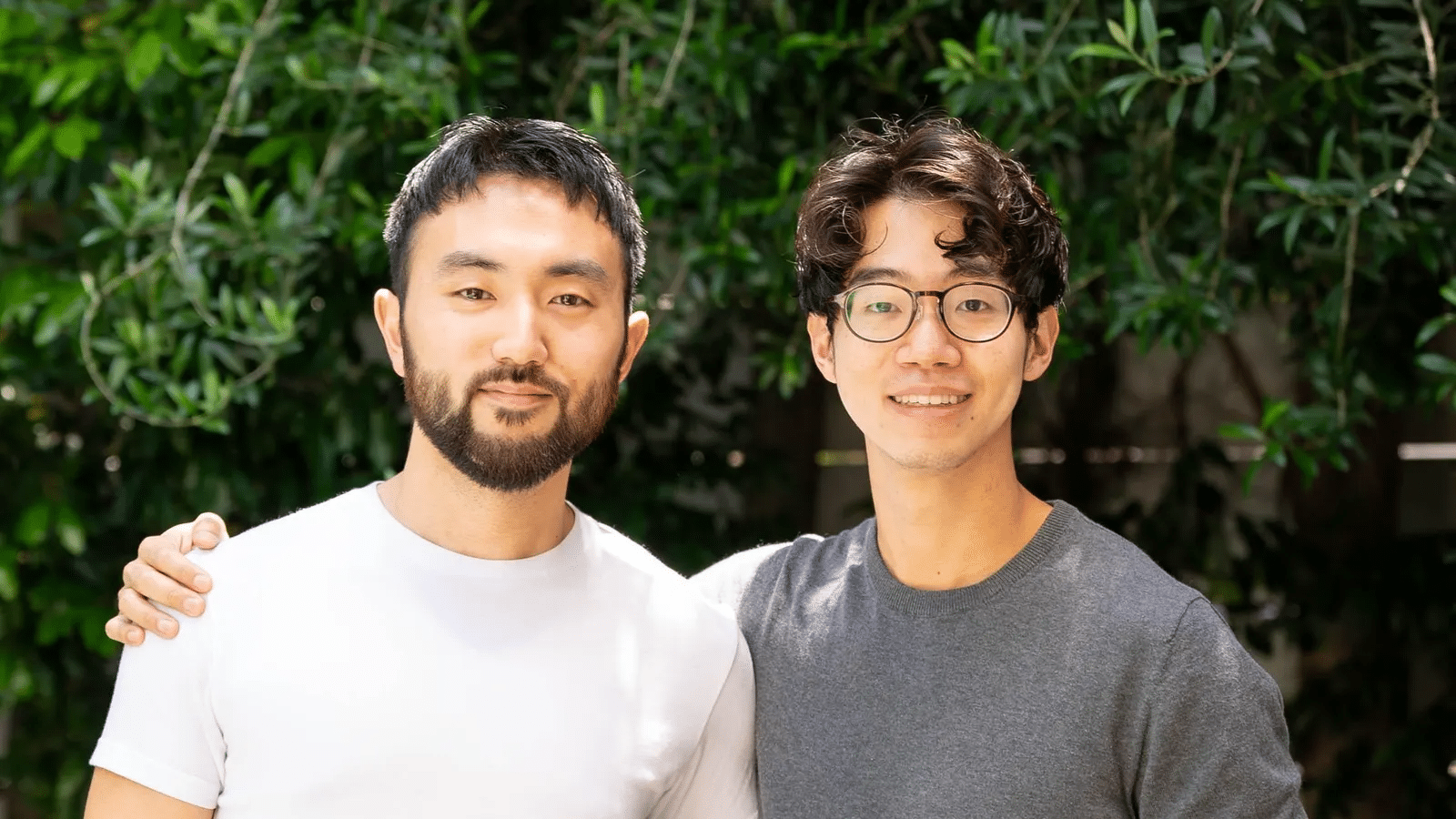
I had the honor to chat with Eric Wei and Will Kim, the co-founders of Karat. Eric and Will exemplify an ideal co-founder relationship, and I found them to be extremely thoughtful and insightful. Let’s get into it:

ENTREPRENEURIAL BEGINNINGS

Both Eric and Will have been entrepreneurs long before they had even thought up the idea for Karat. I asked them to talk about what their first entrepreneurial endeavors were:

Eric: I was going to say, Will was actually recognized in high school by President Obama for one of his early entrepreneurial efforts. Will, why not share?

Will: Sure. That was in high school. President Obama found out about this micro-lending organization I made, where I was lending money to high school students and underserved areas within the Bay, Oakland, Emeryville in particular, to high school entrepreneurs. I would say, “If I give you 500 bucks to start this business model that you have in mind, you’re going to pay me back after you make the money and we’re all going to be happy.” The lead up into that was just hearing about Kiva in an SAT prep book and thinking, “This is such a cool idea.” Kiva is a micro-lending platform that was taking off back in the early 2010s. I thought, “This is a cool idea. I’m going to intern for them.” I realized pretty quickly that interning for them is not as fun as just doing it myself. So I started my own micro-lending organization within the Bay. I saw the same wealth and equity problems that micro-lending is supposed to solve exist in the Bay, just as in these third-world countries. And I ran with it. What I quickly learned is that it’s actually very hard to execute well on what seems like a great idea. I found out the hard way. It’s easy to give money. It is a lot harder to get the money back. That was a kind of helpful testing ground for me. Eric, we’ve experimented with a number of ideas right before, haven’t we?

Eric: Yes, we have. I can share some quick context, too, from my side. One, just want to say, it’s pretty incredible that Will built a functioning company just as a high school student that continues to operate today. Even some of my Harvard classmates, actually, I remember there’s a guy I knew from Harvard. He graduated and he ended up working there. I was like, “Wow, this guy who was just a high school student built an institution that continues to perform and recruit quality people.” I’m not surprised Obama recognized him. It’s cool to build something that lasts and sustains, that’s trying to improve the financial system, but also something that’s just straight up helping people. I think that’s just really, really cool. I was reading about microfinance models like the Grameen Bank and such, and here Will was actually doing it. So I really, really just love how he did that. It’s one of the things I appreciated about him very early. On my side, similarly to Will, my early entrepreneurial efforts were also aimed at how we improve the financial system as it is. One of the very first things I worked with when I was at Harvard was on income share agreements. Now, they’ve become much more popular in the past, say, five, ten years. The concept is that you can fund your education or whatever vocational training you’d like, not just by taking out loans, but by promising to share a portion of your future income and revenue. And the whole thing is, in many cases, it’s going to be a more favorable repayment structure because, say, for whatever reason, you go through this training, this education, and you don’t end up getting a well-paying job afterwards. Well, it’s not really fair to put this burden, this onerous loan on you that you have to pay back. It might be easier if it’s just a percentage of whatever you did make. And my sophomore, and junior years at Harvard, I put together a team with JP Morgan bankers, and McKinsey consultants to go and pioneer this concept. We even pitched the president of Harvard, Drew Gilpin Faust, at the time. It didn’t work, mainly because it was extremely complicated from a regulatory point of view. Many of the companies also exploring educational ISAs at the time actually ended up pivoting. A great example is this company called Upstart which initially was also focused on this, and has since pivoted back to more traditional lending and just saying, hey, we have a better underwriting model, so we can give you better rates, but still loans rather than ISAs. That’s why, to my earlier point, similarly to Will, it gave me a glimpse into a lot of how this world works. It’s people deciding to give money to each other, where the rich have the most capital and they’re trying to get it to the people that ultimately need it the most. But for the people who need it the most, because they’ve gotten that money through so many layers, it’s so expensive for them. So you can try to improve that by building better underwriting mechanisms or by trying to go more directly from the people with money to those who don’t have it. 

Looking back, I think Will and I both had versions of that as some of our earliest entrepreneurial efforts, which I just think is really cool. And then to Will’s previous point, we worked together on a lot of products before Karat as well. I think it was a shared passion in not only wanting to start something of our own but also something along the lines of, hey, in life, there’s much more that matters than just money. When I met Will, he was coming off an internship at Goldman Sachs and was running a venture firm. I was coming from Blackstone and McKinsey and just starting a tech job. Both of us could have chosen to stay in finance and frankly, made much more on a risk-adjusted basis than any other occupation. And both of us saw something and, hey, but there’s some meaning that I can have in helping others. And what does that look like? So we started to work together, went through a lot of different projects, and ultimately decided to focus on working with creators and helping them navigate the financial system.

THE BUSINESS OF KARAT

I asked why Eric and Will decided to focus on creators and how they went about getting their first customers:

Will: In business, the best way to win is to play games that you make up. We’re trying to make up games in areas where they don’t exist because other people don’t know about them–it’s a secret. For us, that secret was that creators are businesses. And that was really, really compelling. It felt like everyone was writing off these creators as businesses back in 2017/2018 when we were first looking at creators; but, these were real businesses. 

Eric: Very early on, the most important thing was to go to where the creators were and just talk to them. So Will and I would go to conferences like VidCon and TwitchCon, and we just cold approached people and just asked them, hey, what are you most focused on these days? What’s the dream? What are the biggest problems that you’re facing? 

I think there’s an easy tendency to think a lot about overall strategy without just literally talking to people, right? No plan survives first contact with the enemy. And what I realized really early on was that creators are trying really, really hard to figure out how to make content, make money, and build a business.

The creator community has many individuals who are operating businesses, but they have no idea how to handle the business’ financial setup. Through these early insights, Will and I prototyped the first thoughts of what Karat could be. When we finally had actual products, we went back to many of the people we met and asked if they would try them. When they had a good experience, they would share it organically via word of mouth. One thing I’m proud about Karat is that we’ve never really done influencer marketing programs. It’s primarily just been organic and referral-focused. Creators especially are more likely to share because it’s what they do on a day-to-day basis.

Will: I remember Eric was wearing his Instagram shirt. He optimized every single element of this to make sure that we could make something out of nothing, which is incredibly difficult. Eric was pulling out all the tricks out of his bag. 

Eric: I used to work at Instagram. If you wear an Instagram shirt, people are more likely to chat with you. There are tons of hacks to this. For example, you go to a conference and a creator is speaking. At the end of that panel, run up and be the very first one to talk with them. Big creators, a lot of times, have fan meeting greets, where you wait in line. We would use that to pitch them. We would be absolutely shameless, asking very business-focused questions. Some people didn’t like the concepts we were going through. But that means you actually have a firm point of view. If you find something that some people don’t like, but some people actually really do, that’s promising. 

Edwin: I resonate with that. For some of the guests that I’ve had on the interview before, that’s what I had to do. Go to those events and say, hey, I sent you an email. You didn’t respond to it. 

Eric: Even if it rubs them the wrong way, in the end, you’re just trying to build something from scratch. It’s better to try than to not try at all. I greatly admire and respect the determination with which you followed up. When I had a free moment, I remembered and emailed back. And then to have you respond back instantly, I was very impressed. That’s a big reason why I was excited to share more for this newsletter and to build a relationship with you personally.

I really appreciate Eric’s endorsement of my tactics. As a side note, I also find it awkward and difficult to do this kind of cold pitching sometimes, it requires being very vulnerable. However, I have two thoughts about this. Firstly, cold outreach is like a muscle you train, the first time you go to the gym is going to be awkward, and the 100th time is second-nature. Secondly, if you really want to reach someone why wouldn’t you try multiple times, why wouldn’t you try every mode of contact you can find (email, phone call, mail)–this seems like table stakes. Though obviously, please stop if they aren’t interested, and don’t harass anyone.

I was also curious how Eric and Will came up with the business model for Karat, as the intersection of creators and fintech hadn’t been explored much before them:

Eric: From a people perspective, we worked with creators like Alexandra Botez, a top chess streamer who graduated from Stanford, started a company, and has over a million followers on Twitch. She was rejected for a business credit card multiple times because they just didn’t understand what she was doing. When you hear a problem like that, you start questioning if the current system is optimal. The answer is no because making a living as a creator is so new, that the existing financial system, which is built on traditional criteria, doesn’t evaluate it properly. From a systems POV, if everyone is thinking about making content going forward, everyone is learning how to be a creator, every business is learning how to use content, and getting to build the financial picks and shovels that facilitate money moving around could be a huge opportunity. We want every dollar in the creator economy to pass through Karat, whether it’s through our payment systems, credit cards, bank accounts, and more.

Will: When we first realized that creators are businesses, that felt like a secret. But the deeper secret that excites us is that we believe in the future, all businesses will have to have some kind of creator angle. This felt like a massive unlock. Procter & Gamble became a generational company because it capitalized on the advent of cable television. Now, creators own the airways and they have the cheapest distribution to their fanbase. They’re going to be able to out-compete Proctor & Gamble and make the new Proctor & Gambles. That’s very exciting. To Eric’s point, if we can sell the picks and shovels there–if we can be the financial rails, that’s going to crush.

Eric: A really good example of that, for instance, is if you’re familiar with Under the Influence and the seltzer brand Nectar. They’re an example of a company that developed a hard seltzer to compete against White Claw. To advertise it, they developed a podcast. The podcast has become so popular that its hosts were actually signed to an agency. Many of the people who watch the podcast think that the seltzer is just the brand sponsoring the podcast. It was actually the other way around. The podcast is the content marketing arm of a consumer packaged goods company because the founders grew up in social media. To Will’s point, the future Proctor & Gambles are going to be people who are building businesses with content built-in natively from day one.

RUNNING A STARTUP

The next question I asked the duo was how they deal with the mental stress of running a startup:

Will: First of all, I haven’t completely figured it out. I just have to deal with it. The quote I live by and come back to a lot is from Eddie Merckx, one of the world’s fastest cyclists ever. Reporters asked him how it felt to be so fast, and he said, “It doesn’t get easier. You just get faster.” That’s it. As we’ve scaled up, we’ve only run into more issues, and more challenges. Eric loves the quote, “The prize for eating humble pie is eating more humble pie.” I believe that’s true. So, it’s about accepting that’s the reality. Personally, I’ve been sticking to routines like simple stuff. Cold showers are nice. Waking up early is nice. Being able to meditate is nice. Reading Marcus Aurelius is nice. That works for me, and I stick to it. It’s pretty straightforward, but it works for me.

Eric: As founders, we obviously have to care a lot about financial runway, because presumably, we’re building something with a shot at being really big. Early on, it’s going to cost money. But what people forget is the emotional runway. Money is useless and pointless if you’re not in a place to be creative, brave, and determined to try and do things with it. In terms of how you maintain that emotional runway, it’s really different for everyone. For me, one of the things that really helps is my relationship with Will. There are many solo founders out there that I respect and think very highly of. I know confidently that I could not have done Karat without Will. We’re not only co-founders but also co-CEOs, which is why you get both of us here today instead of just one of us. We’ve found that if one of us is feeling very down, the other is usually not feeling as down. It’s very rare we both feel down at the same time, which is bad because then everything just kind of falls apart. But I’ve found him to be very helpful, not only from an emotional point of view, balancing when I’m sad and not sure if something’s going to work, but also when I’m really excited to sort of temper it because, at the start of the plan, everything changes so quickly. But also just to know that there’s someone else who cares just as much, if not more, than I do about this. I think that’s a relieving burden on a founder’s shoulders. Of course, it comes with its own consequences. To be clear, I think there’s also more complexities when you have a co-founder and co-CEO. Nothing in life is just a free lunch. Sure, you get to benefit from each other, but it also means you have to figure out what to do when you disagree.

The fact that Eric and Will were co-CEOs kind of blew my mind because I was taught at a young age that one person should be at the helm of the ship, obviously, I had to ask how they decided to be co-CEOs:

Will: It was pretty simple. We both want to build something cool. We both want to build something big. We have different personalities and skill sets, but we’re aligned on the general values. And why wouldn’t you want to have each other as equals? We’re not hierarchical. It’s not like one of us reports to the other, right? So why not just formalize it if it’s something you truly believe in from a title perspective and an equity perspective?

Edwin: That makes sense. I assume that you guys probably have different strengths. So is there some way that you guys divide the work? Or is it on a case-by-case basis?

Will: I think it’s just case-by-case because our strengths, as a founder, the most important thing is that you scale, that we grow with feedback, that we change with the environment. Stasis is death. And so it’s really, really important for us to always be responsive, not only to the business and the market, but to our own interests, desires, and strengths. For me, I really enjoy thinking about how we can build a system that last. The ideal business to me is one which doesn’t need me, one that already has a large market, that has a system in place, and a product that people want, where I am just icing on top rather than a core element. For me that’s really exciting, so that’s where I like to spend my time.

Eric: Will has always been a really good systems thinker. And again, these are generalities, because both of us have taken opposite approaches from what we’re describing to you now. But for me, there’s a certain satisfaction I get just from going and talking with someone and getting a quick sense if something is going to work or not. This speaks to the nature of a startup. You want to make sure that the people you’re building for actually care, and the fastest way of finding out is to literally go and interact with them. Also, for a venture-scale startup, you need to think about how those initial insights can potentially turn into a billion-dollar business. That needs to be something that can scale into a system.

BEING AUTHENTIC

When researching Eric and Will, one thing that stood out to me was how honest they were with their motivations behind building a company. In articles online, they were very transparent that ego and financial upside were partial motivations for building a company. I asked them how they reached this point of authenticity:

Eric: Something I’ve learned is that there’s literally no point doing anything if you can’t just be immediately straightforward and honest about it. Life’s too short to do things that you’re lying to yourself about or to others. If you care about yourself, you’ll be honest to yourself. If you care about others, you’ll be honest to them. It’s the very same reason I started this call up being like, one, I was super excited. Two, I was impressed by your dedication. And three, here’s something I didn’t love, and here’s why. Because if you want to invest in a relationship with each other, you have to be honest from the start. So, let’s extend this to why build a company. Obviously, Will and I would not be doing this if all we were optimizing for was the financial upside. He would have stayed at Goldman Sachs, I would have stayed at Blackstone. So, there’s a huge motivation around building something that’s better, that can help creators. And to your point, that doesn’t mean our other motivations aren’t real as well. Of course, Will and I are excited about the potential monetary upside of building a successful company, the ego that comes from, hey, we’re going to try to do something new and something of our own. Because from my perspective, that’s real. There’s no shame in that. And I’d much rather present myself as the whole set of motivations I am as a human and as a company. In fact, I don’t trust people who aren’t honest about why they do things. Those are the ones that I’m like, hmm, there’s something you’re hiding from me. If you’re hiding this from me, I don’t know if I can trust you.

Will: When Eric and I were getting close, I started realizing that when I’m talking with Eric, I can be pretty open. I remember at one moment, I just thought, “I can trust Eric with everything. This is the one guy that I can start a business with that would actually make sense.” When we started the business together, it became a really pivotal thing for me because Eric was so vulnerable and shared a lot. We had that kind of relationship that was fully open and transparent. I don’t know why you would ever start a business with someone you don’t trust entirely. In fact, I’d say it to people reading this and thinking about who they partner with: if you don’t trust them, don’t do it. I can say that from personal experience. It’s not worth it. 

Edwin: I think that’s really cool how you guys are very open. I think about how trusting and communicative your relationship is. I took a class in my last quarter at Stanford and basically, the whole point of the class is if people see models of really trusting relationships and open relationships, they’re probably more likely to mimic that and act that way. When you act that way, you’re showing other people to do that, and so on. So that’s really cool that you guys do that. I think there’s a benefit to everyone else beyond just you guys when you do that. 

Will: I hope it goes viral. Viral vulnerability would be very nice where we could all actually trust each other and make the world slightly better. It sucks when you have to always put up this defensive shield. I think frankly, before I met Eric, I walked around life with a defensive shield expecting that everyone’s out there to hurt me. Over time, I realized that if I open myself up, I invite far more excitement, joy in my life, and opportunity as well. 

Eric: I’ll add, if everyone seems to be a giant jerk to you, sometimes that can lead you to put your guard up. But in a weird way, that attracts more people who might not be the best to you because you yourself are not sharing. If you go around and you’re open to people, you’re more likely to find other people who are open. If someone’s open and honest, why would they want to interact with someone who’s hiding things? 

I asked Eric and Will how they extend their mindset around authentic relationships to their relationship with their employees:

Will: We are trying to continue to push this idea of appropriate authenticity in the workplace. The challenge that exists is that there is a power dynamic. Eric and I are peers and so we can be fully open, fully honest, fully transparent. With our team, there is an appropriate level of authenticity. Of course, we want to tell everything about the core business, but is it appropriate for me to say I feel really sad and pissed about all this stuff? Probably not. It creates fear because I’m ultimately their boss. In the beginning, I was fully authentic, expressing exactly how I feel, and that has been at times not the most well-received. So, finding the right balance, it’s a spectrum that we had to find. 

Eric: What I’d add is that in a workplace, if you’re the CEO, you do have managerial power over those you work with. So, in fact, you have to put in more work, you have even more responsibility to try and build safe spaces to receive that feedback. From a hierarchical perspective, they might not feel the same comfort sharing feedback with you that you feel with them. So, you actually have to do more work and shoulder more of a burden to try and make up for that. And again, that’s not to say we have done this super fantastic job. In fact, I think we’re still very much learning as managers. There are many things we have not done well. I say this more from a philosophical standpoint, what drives our intention, and how we think about it.

HOW TO FIND YOUR PURPOSE

I recently spoke to several Asian American high school and college students who don’t really know what they want to do with their lives and don’t really know what excites them, or how to find their passion. This seems to be a big problem among many youth, so I wanted to get Eric and Will’s perspective on what young people should be doing:

Eric: I think Will and I come from a fortunate place where we really followed those routes. Will was at Stanford, Goldman, and I was at Harvard, Blackstone. So, we have the luxury of sitting here and saying that’s really not all that it’s cracked up to be. A lot of that stuff is premised on prestige, wealth, and what other people want, and there’s a clear path on how to get there. It’s easy for me to sit here and say, forget all of that, and just do what you’re passionate about. But I’m saying this as someone who had the privilege of already going through these different experiences.

The most important thing is to feel emotionally in tune with yourself. A lot of what we do when we’re sad or frustrated leads to bad outcomes, and it’s even worse when you’re not even aware you’re sad or frustrated and that’s just fueling your actions and the choices you make. The sooner you accept that there are things you are scared about or insecure about, the sooner you’re going to be able to make decisions that are right for you. Whether that is, “Let me go work in the corporate world for x years and build up the credentials,” or “Now it’s time to leave and do something different,” 

Will: Everyone says “Be yourself” and I found that super frustrating because it’s not like  I’m masquerading as someone else. So, what goes into being yourself? I think it first comes from listening to yourself, even if you don’t trust yourself yet. Be honest about it. Even if it’s just about the prestige, go do it and do it wholeheartedly, and don’t feel any shame about it. Hopefully, that experience builds your trust in yourself. Like, “Oh, when I listened to myself and I followed my intuition, this didn’t work out so hot and that’s okay and this really worked out well so let me lean into that.” I think this is a part of the Asian upbringing. I love my parents a lot, but they didn’t know how to listen to me. They’re like, “You’re a child, I’m going to tell you what to do and you’re going to do it.” And so, I had to listen to my parents and I became my parents and I didn’t like it. In college, I had to unlearn so much of this, and Eric and I actually connected a lot over that unlearning process.

Edwin: I’m curious, I know you guys both use therapy. Has that been a big help in this journey?

Will: Eric is my therapy granddaddy, as in, I was inspired by Eric’s early experiences there and I was like, “Wow, you’re learning so much, you’re growing so much. I envy that, I want that.” I’m inspired by that and so it has been huge for my personal development and I think also my growth. So yes, it’s been crucial.

Eric: I think everyone who can afford therapy should do it. It’s unfortunate therapy is expensive but if not, I think everyone could benefit. In the same way that if you have no idea how to work out, you might have someone help teach you the ways to use your muscles. Guess what, the way you’ve lived your life, raised by your parents, surrounded by your friends and your environment, your mind has learned certain loops and ways in which it thinks. And if you want to be able to become more aware of them and try different ways of thinking, a therapist is really helpful for that.

BEING ASIAN AMERICAN

Eric: In Karat’s early days, to be honest, I wasn’t thinking about it much at all because I was focused on making the company work. Personally, I’ve only thought about it more as time has gone on and Karat’s grown bigger. Going to the Asian Hustle Network last year was super lovely because it helped me realize that I’m Asian American and that’s part of me.

Will: Eric and I used to talk about this quite a bit more in the very early days of our relationship back when we were working in corporate America. Now it’s become more about how we make the business succeed. In my lived experience, I’ve been focusing on things within my control. I really appreciated that about building a business. I just want to build something great, hire the best people, work with people I love, and serve the kind of users that I believe need the most help. That’s been exciting. 

Eric: It’s not like anything became more or less important, but in order to be an Asian American entrepreneur, you have to be an entrepreneur and your company needs to exist. There’s a certain hierarchy there of thinking about survival. 

Will: One thing that Eric and I talked a lot about in the early days was how we felt a lot of existential angst–“Is this the right thing for me?” but very little day-to-day anxiety. In the startup, it flipped. We felt a lot of day-to-day anxiety, but the existential angst vanished. That has been so freeing and so valuable that I wouldn’t want to ever go back. I wonder about the Asian American thing, perhaps that was part of the existential angst that was replaced with the day-to-day anxiety and excitement about how to make the company succeed.

SHOUTOUTS

If you are a creator looking to get a business credit card, please consider using Karat! Also, please go follow Karat on Instagram @trykarat, Eric @erictway, and Will @willikin. Thank you Eric and Will for the interview!

And finally, some parting advice from Eric: 

Advice is usually given to you from people who followed what they’re telling you now or wish they had followed what they’re telling you now. It’s not really based on you. So whenever you get advice, I’d say weigh it primarily based on the person who’s giving it, how much you actually think of yourself as similar to them or want to be them. That applies to the advice we’re giving as well.
Related Articles

Neal Jean

Awaken* newsletter

Behind the Scenes: A Conversation With Neal Jean About the Birth of Beacons.ai

If you want to see what the next generation of Asian leaders looks like–look no further than Beacons.ai co-founder and CEO, Neal Jean. Backed by Y Combinator, a16z, and even our former guest Bryant Chou, Beacons is an up-and-coming Operating System for creators. A one-stop shop for creators to do email marketing, make their online store, their link in bio, etc. Despite still being early in his entrepreneurial journey, Neal has already accumulated an incredible amount of insights and experiences, and I hope you enjoy learning about them as much as I did. Without further ado:

BEFORE STARTUPS

Neal’s background before startups is quite unorthodox. A few years after graduating from Duke undergrad, he went back to college and got a second bachelor’s degree, then went on to get a PhD from Stanford. I asked Neal to connect the dots for me:

I grew up in Ohio and when I was 18, I didn’t really know what I wanted to do with my life. I wasn’t ready to make big decisions like that. I wasn’t aware of many different career paths. When I got to Duke, I didn’t really know what I wanted to do. I ended up studying economics and math there. I started my career as an options trader working in finance. I fell into that because I was studying economics and was somewhat good at math. It became clear to me very quickly that I didn’t want to do that my whole life. Around 2010 or 2011, I was living in Chicago working in trading and I’d be sitting at my trading desk reading essays by Paul Graham about startups. At the time, I thought it would be cool to build a company and make a difference, but I wasn’t confident that I could do it myself. I wasn’t technical and I wasn’t very familiar with it. Now I know that it doesn’t really matter if you’re technical, you learn everything by doing it anyway.

I mentioned that as a non-technical person, being unconfident in my ability to start a startup resonated with me.

Definitely. I majored in economics, so maybe you can relate to some of this [I also majored in economics]. One of the only things I remembered from my economics classes at Duke was this idea that advances in technology are the only thing that really moves the world forward over long periods of time. I think that idea really stuck with me. It was one thing that drew me to tech. I started my career in finance. I actually got fired from that first job. I made a bad trade, lost a decent amount of money, and got fired the next day. Looking back, I feel really lucky because it gave me a chance to reset and be more intentional about what I wanted to do with my life. 

So my younger brother, Joel, was Stanford class of 2011. He then went to MIT and did a PhD there, researching solar cells. It just felt like the stuff he was working on, he was trying to save the world since he was working on climate change you know. He was working on developing new types of solar materials. It just felt very meaningful compared to what I was doing. He actually now has a solar startup called Swift Solar. So I decided to go back to school, went to Georgia Tech for two years, did a second bachelor’s in EE, and I thought I also wanted to work in solar, but the summer before I went to Stanford, I took Andrew Ng’s machine learning class on Coursera and found it really interesting. I did a rotation in a machine learning group at Stanford and decided to switch to CS basically. My PhD was mostly on using computer vision and satellite imagery to map out poverty in Africa, which was the kind of meaningful project I wanted to work on coming out of finance. But even coming into Stanford, I had the idea that I wanted to build something eventually. Near the end of my PhD, I started working with a couple of friends on some projects. That led to applying to YC, pivoting a couple of times, and eventually getting to what we’re working on at Beacons today. 

PIVOTING IDEAS

Most startups have co-founders. I asked Neal how he met his and if he had any advice for other people looking for co-founders:

I have three co-founders. Two of them were in my PhD program. We met when we were visiting Stanford, deciding what grad school to go to. I met our fourth co-founder at Georgia Tech when I was doing my second undergrad there, so I’ve known him for over 10 years. I think I got lucky and ended up being able to work with my friends. If you get lucky and you have friends who have similar interests and you work well together, that can be a great path. One of the things that surprised me about startups is that it’s very random. Before you do a startup, you read about startups in TechCrunch and you think they all follow a standard path. It’s like you raise a pre-seed, you raise a seed round, you raise a series A and then whatever. But people do all kinds of crazy things, and the same goes for finding a co-founder. There are lots of ways to do it. If you don’t have friends to do it with, one thing I would suggest is to develop your own interests. Follow things that you’re interested in and try to go deep in those areas. You’ll naturally start doing more interesting things and meet more people. If you’re doing that intentionally, I think you’ll create a lot of luck surface area for yourself.

Earlier in the interview, Neal mentioned that his team pivoted a few times, so I asked him what the original idea for Beacons was:

I used to live in Rains [graduate apartments at Stanford], and the first project that we built was a face recognition smart lock for my apartment. We tried to get it to recognize all of our friends’ faces and unlock my apartment when they showed up. It worked sometimes. We made a portable version of it to bring to our YC interview. That’s what we got into YC with.

We quickly pivoted away from our original idea after our YC interview. We realized that all of our backgrounds were in software, and to build the kind of company we initially envisioned would require more of a consumer hardware focus. So, we started exploring new ideas and different things. We entered YC without a clear idea and spent the first month building productivity software, which I think is a common trap for founders who don’t have any better ideas.  

About a month into YC, I attended a friend’s wedding in Singapore and met a woman who was running an e-commerce company and doing all of her marketing through influencers on Instagram. She heard about my background in machine learning and asked if I could build a system to help her find influencers to work with. She showed me spreadsheets where she was tracking people’s follower counts and the number of likes and comments they were getting on their posts. She would then compute their engagement ratios and try to figure out how much she would be willing to pay them. It seemed like a good problem to automate and potentially improve with machine learning. I returned to SF, discussed it with my co-founders, and we invited her to come from Singapore to SF so we could start building this system for her. She actually came over the next Monday and moved into our apartment. I gave up my bed for her and moved into my co-founder’s bed. We spent the rest of YC building with her, and that was how we got into the creator space. Eventually, we realized that we were more excited to build products for the creator side of the market than the brand side.

We first started building something that’s similar to Cameo. We were trying to build a Cameo for creators. However, we soon realized that Cameo was already doing a good job at catering to creators. But that’s how we started talking to lots of creators. We saw Linktree taking off around that time. Their product looked pretty basic and we weren’t that good at building software at the time. So we thought we could probably compete with them. That’s how we started down the path we’ve been on for the last couple of years.

GETTING CUSTOMERS

I’m always curious how startups get their first customers, and I was especially curious about Beacons since they sell to influencers. Here’s what Neal had to say:

It is harder today because I think there are more people trying to reach out and get in touch with these creators. We just used cold email in the beginning, this was when we were still building the Cameo for creators. 

We put together a list of 50 creators who were based in the Bay Area and I emailed all of them. The email was basically like, “Hey, whatever your name is, your biggest fan, Jesse, who is my co-founder, wants to pay you $20 for this video. So you have $20 waiting for you. Just reply to my email and we’ll tell you how you can get this money.” We thought it could work. We got one reply out of the 50. Her name is Suki. Her Instagram is @sukiluser, if you want to look her up. She had just moved to the Bay Area from Toronto. She didn’t have many friends yet. She asked if Jesse was my co-founder. I confirmed, she was really nice about it. We met up the next day in Hayes Valley. She was our first user. She’s an advisor to the company today and still a friend. 

Although I thought this idea was genius, it sounded like it wasn’t too effective, so I asked Neal if he switched up his tactics to get customers 2-10:

No, we kept doing the cold email. After we pivoted to the link in bio, we started a new cold email strategy. We would find creators who are using Linktree. Then, we would rebuild their website in Beacons. We would send them a screenshot of the website we built for them that was nicer than their existing Linktree website and then ask them to sign up. That’s how we got our first couple hundred users. 

PHD FOUNDERS

Because I know some folks who have or are pursuing a PhD and are looking to get into startups afterwards, I figured I’d ask Neal to reflect on the advantages and disadvantages of being a founder with a PhD:

I think we have more challenges than strengths. One challenge was that we didn’t have any experience working. My other co-founders had never worked before. I had only worked in finance. So I had never worked in tech. I had no idea how tech companies actually operate. So we just had to learn a lot of things from scratch and probably made a lot of rookie mistakes along the way. We also weren’t native to our space. None of us were content creators. And I think early on, there were some challenges that came with that. One, we didn’t have the most empathy for our users. So we were trying to build for them, but we didn’t really know what it was like. We’ve worked on that and improved over time. However, we probably made some decisions and mistakes that others wouldn’t have. From investors, there was a perception that we were mercenaries. We were machine learning PhDs, but we were building things for TikTok creators. They wondered if we were just capitalizing on a hot space. In terms of advantages: now that AI is so popular, I think our backgrounds are going to be more helpful. That’s maybe a more obvious one. A less obvious one that I think has been important is that we’re not necessarily smarter than people who don’t have PhDs. But one thing you do learn during your PhD is not to be intimidated by problems that you don’t know the answer to initially. As a founder, you often don’t know how to do anything going into it. You’re constantly figuring out new things. When you do a PhD, one of the challenges is that you have to bring new knowledge into the world. You’re always trying to figure out things that haven’t been figured out before. You’re not sure if you can figure it out, or at least not sure if you can figure it out in this way. So there’s a certain amount of intellectual resilience or courage that you develop. I think that’s actually been pretty helpful for building a company. To clarify, resilience or intellectual courage isn’t exclusive to PhDs, but it was helpful that we had developed that over time.

Naturally, I had to ask Neal how they managed to convince investors to bet on them:

It depends on the investor. Different investors care about different things and respond to different things. We’ve always been honest about who we are and who we’re not. We didn’t misrepresent ourselves as creator experts. We’ve always been earnest and curious, and over time, dedicated to solving problems in this space. For investors who cared more about that than domain expertise, our approach resonated with them. It’s probably a good thing because if you get money from an investor that doesn’t really match with you, it’s likely to cause problems later on.

BEING NON-TECHNICAL

Backtracking, I asked Neal to expand on an earlier point he made about how non-technical people can dive into a startup and pick things up along the way:

It was definitely beneficial for our team to have experience in software. But none of us had built any consumer software before; we were all research people. We knew Python, but we didn’t know JavaScript. I had imagined that to work and contribute to an early-stage startup, you have to be able to code things up yourself and build products yourself. It depends on the type of company you’re building. If you’re building a dev tools startup, maybe that’s more accurate. But there are many companies where it’s very helpful to have a non-technical person who’s willing to do a lot of different things to make the company work. At Beacons, I’ve done very little coding in the five years that we’ve been working together. Even though I have a PhD in CS, most of the work I’ve done at Beacons to help the company is not writing code. 

We’re a product-led company. Our go-to-market motion is mostly people using the product, and then other people seeing them use the product and adopting it for themselves. We haven’t done a lot of sales or even a lot of marketing up to this point. My role was mostly leading product, especially early on. Now we have other people on the product team. But early on, I was the main product person. Doing product is really about understanding your users or customers and then understanding their problems and then trying to figure out how you can solve them. Because we’re building a software product, it was about understanding how to solve them with software for the most part. The hard part is really understanding the problem and being creative in thinking about how you can provide a solution. That cycle of understanding the problem and then figuring out how to solve it actually creates a lot of leverage within the company.

One thing I took away from previous interviews is that you can’t just go and add all the features that your users ask you to. Users will ask you for this and that, but maybe you’ll end up with a really hodgepodge product if you do that. I wanted to get Neal’s thoughts on how to cut through the noise and identify what it is users actually need:

You do your best. If you look at our product, we definitely added a bunch of features that people asked for that didn’t end up being very useful. I definitely can’t claim that we’ve always done a good job of this. Understanding the problem is not a simple thing, there are lots of different problems and ways to think about them. It’s about fitting them together into one cohesive model of who the customer is and which problems are important enough to solve. It’s also about understanding which problems your company is well-positioned to solve or where you have a right to win as a company. It’s a high dimensional thing that requires a complex model of how the world works, how your customer fits into that world, how you fit into that world, and where you think things are going in the future. Then, it’s about trying to align all those things and build for that future while being constrained on the money, time, and people that you have to deliver that stuff. 

I asked Neal if he wrote out his models explicitly:

Yes, I really like to whiteboard stuff out. We have whiteboards in our office. That was a skill I picked up during my PhD. I also do a lot of writing internally. I believe that writing is thinking. There’s this quote, “Writing is nature’s way of showing you how sloppy your thinking is.” I believe that. 

BEING AN ASIAN FOUNDER

As per newsletter tradition, I asked Neal how being Asian has qualified his experience as a founder:

It’s definitely something I’ve thought about, but I wouldn’t say I spend a ton of time thinking about it. I think I’m relatively lucky in a lot of ways. As a founder, I’m a man, and women often have it harder as founders. I’m Asian, but as far as being a minority goes, being an Asian man is not the worst thing as a founder. I think because of other characteristics that I have, like having a PhD in machine learning from Stanford, I don’t not fit the mold that people are expecting. I think Asians are still pretty underrepresented in leadership roles.

I mentioned that although there are some very successful Asian founders, it seemed that Asian founders were especially lacking in terms of CEO representation. 

I share your impression that there aren’t many visible Asian CEOs. Jensen Huang, for example, has recently been in the media a lot. We’re still an early company, so I hope to help change that someday. However, it’s not always top of mind. Most days, I’m focused on what needs to get done at work.  

A fair answer, given that Neal is really in the thick of things having just launched Beacons 2.0 (a big expansion of their product suite featuring AI-powered tools) several months ago. 

SHOUTOUTS

The only thing Neal wanted to shoutout was Beacon’s mission:

For us, we always saw these creators as a new class of online entrepreneurs. They didn’t have a lot of tooling or support for them yet. That’s always been a big part of our mission at Beacons. This is actually related to the research I did at Stanford, where I got really excited about using software to create better economic opportunities for people around the world. I was doing that research on poverty in Africa. That’s a part of our mission at Beacons that I’m still pretty excited about, even though I never would have guessed that I would be working with TikTokers. It’s a cool space to be in. We’re starting to build one of the better, more comprehensive platforms out there to support online entrepreneurs, at least ones where content is pretty important for their business. We’re starting to build in a lot more AI and machine learning stuff to help them run their business more easily and make better decisions across the business. 

Given the rapid and accelerating growth of the creator economy, I suspect that Neal and his team will be in for some very busy and fun years. I’m excited to see how Neal grows during his time leading Beacons, and I hope that he’ll come back and grant us another interview once he’s made it!

Thank you Neal for speaking with us!

Awaken* newsletter

Navigating Startups and Challenges: A Conversation with Webflow’s Bryant Chou

On November 10th, I had the honor of chatting with Bryant Chou. Bryant is the co-founder of Webflow, one of the leading website-building platforms in the world with a valuation of $4 billion. Within startup-land, Webflow is especially notable for being mostly bootstrapped, waiting five years before raising an additional round after their seed round in 2014.

In our conversation, we touched on a variety of topics ranging from being Asian American to working at startups vs. big tech. 

Note: Quotes were lightly edited for brevity and clarity.

EARLY CAREER

I started our conversation by asking Bryant if he had any entrepreneurial endeavors before his first official company. While he never directly started a business, Bryant did display early signs of his scrappiness.

My mom gave me twenty dollars a week for all of my lunches and whatever discretionary income. So, of course I spent most of it on food, but that essentially meant that I had nothing really left over. But I also really wanted to be a normal high school student and go to prom and go to dances and stuff like that. So I made money in high school by entering Counter-Strike tournaments. I would earn, I don’t know, a few hundred bucks in these local LAN parties. And that’s how I paid for dances. So I always kind of adapted and tried to apply myself in different ways, with whatever skill sets I had.

He continued on to talk about his motivation for getting into startups:

To be honest, I don’t know if I would have done startups if I was at Facebook or Google. You know, I didn’t land those jobs coming out of school. I wasn’t smart enough. Didn’t pass those interviews… I think because I was at a mid-tier tech company, it kind of gave me more hunger to do something on my own. I wanted a change and believed software startups were the future. I took the plunge in 2011, driven by the belief that startups would be significant, 

However, he also cautioned about rushing into startups: 

You need to think about the things that really need to be true in order to be a founder and do it successfully. One of those things is working in a space that you really want to affect and make a difference in. You just want to make sure that you’re working on something that’s worthy of 16 hour days, you know?

BRYANT’S ROLE AT WEBFLOW

Although Bryant is perhaps best known as being the co-founder and CTO of Webflow, I saw that Bryant had recently shifted his focus away from technology to growth and marketing for Webflow, so I asked him about that:

Because we were bootstrapped, we never really invested in growth and marketing. So what started as an impatient maneuver on my end, like, ‘hey, I think we need to start doing these things’ turned into, ‘hey, this is actually something that is ROI positive.’ Who would have thunk? I suppose even though I’m an engineer and builder and product person at heart, I’m also a company builder in that sense. So I’ve–for example, started our marketing, started sales, started data, started security, so all these things are just things that are just like, ‘hey, we need to do these things. Let’s figure out how to do it.’ And I think that’s something that most entrepreneurs are going to have to do. I don’t think you’d necessarily have an option to not do it.

Coincidentally, I had talked to the new CTO of Webflow, Allan, a few months prior. Alan was super nice and very sharp–a great backfill for Bryant.

NAVIGATING ASIAN IDENTITY

As the Asian Hustle Network, I naturally had to ask Bryant about how he felt being Asian qualified his experience as a founder, he started out by acknowledging the position of Asian men:

It’s a well-known fact that Asian men in Western societies have a different bar to hurdle than other people. One of the reasons why I was so keen to help produce the 38 in the Garden movie with Jeremy Lin is because he articulated this so well. Have you seen that documentary? 

I had not, in fact, seen the documentary. Oops. I watched it after the interview on his recommendation and it was very, very good. Please give it a watch! Bryant continued:

It’s my one and only film and probably the last one that I’ll ever be involved in. I’m totally okay with this because I believe this cause is important. Part of the reason why I agreed to chat with you is because we obviously have a chip on our shoulder. We are seen differently in society. I’ve dealt with it in various ways myself. I’ve taken a colorblind approach to business interactions and never thought about my race or ethnicity in certain environments. I think that’s ultimately what you have to do. As Asian people in Western society, you’re supposed to be heads down, let your actions speak for themselves. I still very much have that approach. Who knows if it’s the most optimal thing to do.

Despite his colorblind approach, Bryant was clearly very cognizant of the fact that people perceive Asians differently, and had a suggestion for our readers:

To just walk amongst people of the same race and they speak your language, I think that’s like a worthy thing to do and to dive into. I identify as Taiwanese, at least as much as I identify as an American. When I go there, I literally feel different. I feel like I’m one of the same, like I’m among my people, I’m not viewed as a minority, I’m just viewed as a normal person. I think every Asian-American should have that sensation at some point in their life that they feel like they’re seen as someone just like everyone else, and the only place where I felt that has been Taiwan.

I knew Bryant grew up in the Bay where there were a lot of Asians, so I asked him if he felt the same sensation in those areas, he suggested:

The broader construct of society that we live in is still the US, which is still 85% non-Asian. I think Asian Americans make up about 12% of the population, maybe even less. I don’t think it’s so much about not being in the majority. It’s more about the sensation that you get that you are biologically or ethnically more similar to the people that you’re walking around with in Asia.

NAVIGATING ENTREPRENEURIAL CHALLENGES

Moving onto the next topic, I asked Bryant about his emotional experience as I had heard a lot of founders talk about how difficult this aspect of running a startup was:

I thought it would be harder technically than it would be emotionally. But I would say the social emotional components of building a company are 100 times harder than the technology itself.

I followed up by asking if there were any specific experiences that stood out to him:

They’ll come up in different forms. In 2020, there were a lot of social justice issues that made running a company very challenging. Ultimately, when you’re at a company, you need to be hyper-rational. You’re faced with a conundrum between being a good steward of the company’s mission and vision and maybe what people inside your company believe, and sometimes those things clash.

It was clear that this level of situation took an emotional toll on Bryant, so I asked him how he copes with it and prevents it from seeping into his personal life:

You compartmentalize most of it. It helps to have a supporting spouse and partner. It’s great to have kids that can distract you from this.

ADVICE FOR YOUNG PROFESSIONALS

Adding on his comments about entrepreneurial pain, Bryant offered:

I think like if you’re in your 20s, I would actually be chasing that kind of pain. It’s the best time to chase pain and suffering. If it means that will lead to a certain level of intellectual expansion, social emotional awareness. There’s no better time to find the limits of what you’re capable of than when you’ve graduated, when you’ve got a whole life in front of you. Like, it’s time to see what you’re made of. So I’d be a huge proponent of young folks going to startups that are hectic and crazy, working in environments where they can learn, dedicating time and energy to perfecting a craft. Those are things that you don’t learn in school. And those are only things that you can chase on your own accord.

This made me think about how I have a lot of friends who go into Big Tech. A good number of them say that they want to pursue their own company eventually, but want to get their start at a big company to build up their skills. I asked Bryant what he thought about this approach:

There’s two kinds of learning that you can do at a big tech company. One is technology related. So you can go and immerse yourself in a technology, and be surrounded by technologists that can help you. That’s something very valuable for sure, but learning how to do things the way Meta or Google does things is not transferable at all to startups. None of their processes matter. None of their ways of thinking about building products matter. It’s just a whole ‘nother ball game. There are maybe some professional skills that you get to pick up. Communication, the ergonomics around the work–such as just documenting your work, making your work transparent, and just picking up good habits–that’s for sure. But there’s nothing like working in an early stage startup where you’re building something from nothing. You know, you’re almost never doing that at a big company.

I was somewhat surprised that Bryant felt that the Meta or Google way of thinking about products was applicable, so I pressed him to elaborate:

So actually, that’s a great example of something that I did retain. It’s more so the principles at which you approach building a product, right? Developing customer empathy, ensuring you’re not over-engineering things really matters. Facebook and Meta have an abundance of resources. Engineers at large companies are very good at building incredible things that are well-defined in a narrow spectrum. However, in a startup, you’re trying to go as wide as possible with what an engineer could potentially contribute to and build 60 to 80% of it. It doesn’t need to be perfect.

Bryant’s comment about over-resourced companies made me think about the opposite, under-resourced companies, and how I often hear about employees at those companies working weekends and long nights. I asked Bryant if he thought that was necessary in a startup:

There’s a time and place for it. I don’t believe nights and weekends are required. It’s important for people in their 20s to find their limits professionally and personally. This means making time for personal things like dating, hanging out with friends, and attending events. It’s about striking the right balance. For instance, I encourage my team members to take vacations when needed. It’s crucial for startup leaders to have a good pulse on their employees, understanding their strengths and weaknesses, and checking in on their well-being. I don’t believe anyone at SpaceX or elsewhere can stare at a problem for 100 hours a week and feel productive. It’s important to step out of your zone, draw inspiration from different things, and take breaks. To live a balanced life. When I say that people should find their limits professionally and personally, it’s like that limit is different for each person. But you have to feel like you’re able to stretch, build the muscle for your mental and physical strength to stretch when you need it. I think that’s really important to do.

SHOUTOUTS  

Webflow is hiring across multiple functions! Please visit this link to find and apply for open roles, or feel free to get in touch with Bryant at bryant@webflow.com if you would like to reach out personally for opportunities.

38 at the Garden, the short film about Jeremey Lin which Bryant helped produce is available to watch on HBO Max. The film is 38 minutes short and is a must-watch for all Asian Americans.

Thank you Bryant for speaking with us!

1acf417a7f79dcca12c8fadaae682231-jpg

News

Ethos Fund’s Inaugural $12 Million Fund Invests In US-Vietnam Tech Synergy

Ethos Fund, the joint creation of David Yo and Simon Shin, serves a unique purpose of forging connections between the tech ecosystems of Vietnam and the U.S. Their approach is both innovative and influential, laying the foundation for strengthened cross-border collaboration between two nations. 

This innovative firm moves away from conventional models by prioritizing investments in a distinct group: “third culture founders”. Shaped by navigating multiple cultures, these individuals possess a unique blend of global understanding and a fervent desire to solve critical problems.

Ethos Fund acts as a bridge, fostering collaboration between the growing tech ecosystems of the United States and Vietnam. Led by the Korean-American duo of David Yi and Simon Shin, the firm leverages their founders’ multicultural backgrounds to identify promising investment opportunities. Their inaugural $12 million fund targets both sides of the US-Vietnam tech equation.

David Yi (L) and Simon Shin (R), co-founders of Ethos Fund (Ethos Fund)

The name “Ethos” reflects their core philosophy. Ethos Fund believes that founders are more than just cross-cultural connectors. Their unique third culture, shaped by experiences beyond nationality or geography, drives their vision and impact.

In the US, Ethos Fund seeks out “third culture founders”, individuals whose experiences span across cultures. Ethos Fund identifies these innovative minds with the potential to innovate industries and empower them through investments.

Within Vietnam, Ethos Fund takes a bold step further. They actively invest in early-stage startups, even those pre-revenue and pre-product. Their focus lies on the Vietnamese diaspora and expats filled with innovative ideas.

Ethos Fund’s commitment extends beyond financial support. They actively cultivate a collaborative environment by offering educational programs and events specifically designed to connect US and Vietnamese entrepreneurs. This dedication to enhancing cross-national collaboration emphasizes Ethos Fund’s vision for a future where geographical boundaries are no longer a concern. 

Eddie Kim

Awaken* newsletter

Behind the leading payroll solution in the US for SMBs, Gusto founder Eddie Kim established himself as a legend in tech lore

On January 3rd, I had the honor to chat with Eddie Kim. Like myself–Eddie happens to be a Stanford alumni. Unlike me–Eddie is the CTO and co-founder of a $9.6 billion company named Gusto: a payroll, benefits, and HR solution for businesses in the US. It’s already hard to find Asian unicorn founders, finding Asian near-decacorn founders is an order of magnitude rarer, making Eddie a certified legend. Despite his success, Eddie remains a very down to earth and genuine person, and I greatly enjoyed chatting with him. Without further ado:

PARENTAL PRESSURES

A common trope with some truth to it, is that many Asian parents pressure their children to pursue more stable, high-prestige careers, such as being a doctor or lawyer. I asked Eddie if he had experienced this:

I got pressure from my dad. My dad was a doctor and, like many Asian parents who are doctors, wanted their kids to be doctors. I think there was a fair bit of pressure from my dad, and then from my mom through my dad, to become a doctor and do pre-med and all that stuff. Of the STEM subjects, which I really liked and was good at, I was good at math, chemistry, and physics. The one that I didn’t like was biology. For me, it always felt like it was about memorizing things as opposed to actually using your brain. It seemed like being a doctor would require more of this, where I have to memorize all these different body parts and so on. I never really considered becoming a doctor, even though my parents really wanted me to. For them, it was the safe path, a prestigious occupation. There’s a lot of good to like about it, you’re saving lives and things like that, and you make a decent amount of money. 

However, once I was in college, my parents encouraged me to be in control of my destiny, which meant potentially starting my own business. They were supportive when I talked about it. Part of it was also that my dad is a doctor who started his own private practice, so he was an entrepreneur himself. When I was really young, my dad was just starting out. He immigrated from Korea and they didn’t have a lot of money. Once he became a doctor and had his own private practice, we were comfortable. We weren’t super rich, but money was not a huge worry. We’d always have food and basic necessities. We couldn’t buy super luxurious things and go on vacations, but it was enough that I could take risks early on. I think a lot of the reason why they were supportive of me starting my own business or doing something more risky was because even if it failed, it wouldn’t be devastating. I’d still have a home to go to and could fall back on my parents. It wouldn’t be a huge burden. So, I think I maybe had a little bit of a different experience than a lot of Asians once I was in college.

I asked Eddie if he thought that his parents were more understanding because they themselves were business owners:

Absolutely. My dad was a doctor and my mom was the one doing all the back office work. She was the receptionist, the insurance biller, the payroll runner. It was a small venture, just my dad and my mom, and they had one employee for 30 years. My dad never worked for a salary, he never joined Kaiser or anything like that. So, he definitely had a more entrepreneurial mindset.

My own mom is a small business owner, and Eddie’s parent’s attitudes paralleled my own parents’ so far. Since I sometimes ask my mom for advice when it comes to business, I wanted to see if Eddie did the same:

Not really. The whole tech world was so different from what they knew. Even questions about how to raise money or what is pre-money post-money valuation, all this sort of tech stuff, they had no idea. They weren’t practically helpful in that sense. But my mom was always super encouraging. She was very supportive, even though she didn’t really have a lot to contribute. It was more moral support more than anything.

SCARCITY MINDSET

Another common immigrant trope is having a scarcity mindset. This often persists even once families establish themselves in America. The traditional wisdom in startups is to build as lean as possible, and at first glance, having a scarcity mindset should help with this. I asked Eddie if he had this mindset and how it was expressed in his startup.

I remember, even though my parents’ practices were doing well, it wasn’t always like that. It started from nothing. We would rarely go out to eat, and when we did, it was at some chain like Sizzlers or maybe Red Lobster. Nothing super fancy. The thought of ordering an appetizer or a drink that wasn’t water felt wrong, like we were getting ripped off. There was definitely this mindset of being very frugal and not treating yourself to unnecessary luxuries. 

As I got older, I was influenced by some of my friends, who had less of a scarcity mindset. They would go out to nicer restaurants. We all had jobs post-college. We weren’t making tons of money, but while I was always about saving everything, they were not. At my first job at Volkswagen, I would pack lunch and figure out how to save about 60-70% of my salary. The rest was for rent, food, and gas. I was able to save, not a ton of money, but I had this mindset of frugality and saving as much money as possible. I’m not sure for what, but it was just the thing you do for a rainy day. My friends, on the other hand, were not saving money at all. They would go out to bars and fancier restaurants. That’s how I got exposed to it. Even though I was always a bit more on the frugal side, I started to see the value in treating yourself a little bit more. I learned from my friends that there’s no point in money if you’re not going to use it for something. What are you saving it for? I think the combination of how I grew up and my friends’ influence helped me find a balance.

I think it wasn’t until my second startup, Gusto, where we had the fortune of raising a lot more money than my first startup. Often, we had this mindset that you could spend a little more money and get higher quality stuff. For instance, instead of buying an Ikea desk, we bought from a company called Room and Board. It was a couple hundred more dollars per desk, but they were much nicer than an Ikea desk. Or like our first hires that we made, right? You can go for super cheap, outsource offshore to build your first product, or you can hire someone that’s really good, pay a little more, and be more generous with equity to get really top talent. 

So, I think it was at Gusto where I learned that if you have the resources to do so, it’s better to spend a little more. Don’t go super cheap on every single thing, don’t go frivolous and pay top dollar for everything either. But there’s a range, I would say, if it’s a range of one to a hundred, I would say a range of 70 to 80, or maybe 80 actually, where I think it’s worth spending that much because you just get so much more for it. Long term, it pays itself. 

There’s a moment where once you have the means, I think your mindset should shift a little bit. Not to go extravagant, but to not have so much of that scarcity mindset that we grew up with. 

BEING ASIAN AND BEING A LEADER

As I always do, I asked Eddie how he felt being Asian qualified his experience as a founder, and if it was something he thought about a lot:

I think to a certain extent, but not a ton. It’s not something that is always top of mind and something that I’m very self-conscious about or have imposter syndrome of. But also at the same time, it is something that’s kind of in the back of my mind. I sometimes ask myself, do I have what it takes to be a leader of hundreds of people in the organization? Will people not respect me as much because I’m Asian and Asians tend to be perceived as less of a leader than say, a white person. And so you definitely have a little bit of that, but also at the same time, I feel like whenever I have those thoughts, I tell myself that, no, why can’t you break the mold, right? Why can’t you be one of the first Asians that have done X or Y, right? Or one of the few Asian co-founders of a unicorn company, right? And so then I start to get excited about the concept of, “Hey, I can actually show people that it can be different.” And then, so it kind of turns into more of a motivating factor for me.

Eddie’s answer seemed to be focused on being a leader. From the research I did, it seemed like Eddie struggled in the transition from being an individual contributor to more of a manager role (or people empowerment at Gusto). I asked Eddie how he approached crafting his leadership skills.

One was, I had people that I could talk to that had more experience in it than I did that were very generous with their time and giving me advice and mentorship. Some of this came through investors that were early in the company. Our first seed round was basically a horde of angel investors that were entrepreneurs, right? It was people like Aditya, who was the head of engineering at Dropbox at the time. It was Jeremy Stoppelman, who’s CEO of Yelp. Drew Houston of Dropbox was among the founders of tech companies we wanted to invest in as some of the first investors. Through that, either directly or through people they knew, I got connected and would meet with some of these people regularly to get their advice on whatever issue I was facing. I remember actually talking to Aditya, at South Park in Soma, discussing how to structure comp bands. 

Having people around to ask was really helpful. I read a lot of books. I have this shelf full of business books. Things like High Output Management from Andy Grove, The Score Takes Care of Itself by Bill Walsh, and Mindset by Carol Dweck. Those are my three favorite business books that I read and they really helped me learn the tactics as well as the characteristics that are helpful in becoming more of a people manager. A lot of it is just experience. You do, then you fail and you learn. Like anything else that you spend time on, the more time you spend on it, the better you get at it. It’s really a question of how fast you progress. You will progress the more time you do something. Some people progress really fast, some people progress more slowly. But the point is that as long as you do something for a long period of time, you stick with it, you do get better at it. And then you like it even more. So it’s those three things: people, literature, and your own experience.

CUSTOMERS VS. FEATURES

When I spoke with Siqi, one of the things we talked about was how different potential customer segments can want completely different types of products and features, and how to think about where to prioritize. I asked Eddie for how he navigates this with Gusto:

In an unrealistic scenario where you have unlimited resources, it’s always better to have more features than less. However, the reality is that you have constraints in your resources and can’t do everything all at once. You have to decide how to invest your limited resources. You could build new features, improve the quality and scalability of what you have, or create new front doors into the product and focus more on acquisition and growth type efforts. 

At Gusto, we often have larger companies asking us for additional features for their businesses. At the same time, we have many small businesses that don’t know about us yet. So, we have to decide whether to focus more of our resources on creating more features for these large companies or creating more awareness of Gusto for all the small businesses that haven’t used any of our features. 

It really comes down to what you want to prioritize. For different companies, the answer will be different. It’s important to stay disciplined about who your customer is, who your target demographic is. It’s easy to just answer feature requests and get pulled into a direction that some of your customers want in the short term. This might help you get more money in the short term, but over time, you might find yourself not really focused on who your product is serving. 

Many companies have to be aware of this danger. If you start to prioritize too much of the short term feature requests and chase revenue short term, then you can miss the bigger picture. This company is building a product that works really well for this customer demographic. 

At Gusto, we always think about who our customer is. For us, it’s really the small businesses. It’s very enticing to try to go upmarket and land companies that are in the 100 or 500 employee range or a few thousand because they pay you so much more money than small businesses. Every once in a while, an opportunity comes along where a larger company says, “if you do this, then we’ll sign up”. This could be a huge deal for the company. It’s really hard to say no to those things, but you have to, because you really want to stay focused on who you’re serving. 

I asked Eddie to go a little deeper on the dangers of chasing the short term requests of the larger companies:

I think the danger is that there are two risks to this. One is you are diverting resources from something else. That could be a global maxima versus a local maxima. So that’s an opportunity cost that you could be missing. The second risk is that you lose focus on what makes your product or company so special. If we, for example, went and built a bunch of enterprise type features in Gusto that allowed any company to customize it to their heart’s content, that would be a very confusing experience for the 99% of our customers who are very small, who don’t want a customized solution because they have no idea how they want to do things and they want Gusto to guide them on how to do things.

GOALS FOR LARGER COMPANIES

Since Eddie is one of the few at the helm of a $500M ARR startup, I wanted to ask him what startups at that size prioritize, and if rapid growth was still the goal:

I think as you get more mature as a company, you start to think less about just growth at all costs. You start to think about growth at a reasonable price. There’s actually a non-standard technical term for this called GARP – Growth At a Reasonable Price. The rule of thumb for a later-stage company is that you want a GARP of 40 or above. GARP is essentially your growth rate minus your operating margins. So if you have a growth rate of 40% year on year, you’re growing your revenue 40%, then you should be breaking even because your operating margin is going to be zero. So 40 minus zero is 40. If your operating margin is 10%, then it’s 40 plus 10, which is 50. So that’s awesome. You’re going to get a really good response from your investors and the public.

Markets will be very happy if you could accomplish 40% year on year growth and 10% operating margins, right? You’re putting out 10% of profit cash flow every single year. If you’re growing at like, say 60% year on year, which is incredible growth, you can actually be negative 20% operating margin, and still have a GARP of 40%. You’re still going to be in a really good spot. So this formula really balances your growth with your profitability, your operating margins and using this rule of 40 is a pretty good rule of thumb for the markets when you’re a later stage company. When you’re early stage, it doesn’t really make any sense to use. 

Eddie’s comment on how “the markets would be happy” suggests to me that mature startups at this stage are looking at the numbers more at an IPO angle, and determining what public investors want to see.

BENEFITS OF DEI

At this point in the interview we ran out of time, but there was still one question I had for Eddie that I really wanted to ask. At the time of writing, the daily Twitter discourse was about DEI, so I wanted to get Eddie’s opinion on DEI. I emailed him the question after our interview and he graciously responded:

Gusto clearly takes DEI seriously given the RISE report. Do you feel that DEI is important at every stage of a startup or does it start gaining importance once a company is a certain size?

In my opinion, DEI is actually the most important in the early stages because there really is a vicious or virtuous cycle when it comes to building diverse teams. If you start early with a diverse team, you’ll attract more candidates from diverse backgrounds. The opposite is true too. 

I actually wrote about it a couple of times: 

https://engineering.gusto.com/growing-our-engineering-team-in-denver-diversity-begets-diversity/

https://engineering.gusto.com/staying-ambitious-on-diversity-new-goals-for-gusto-engineering/

SHOUTOUTS

If you are looking to start a business and/or hire your first employee or contractor, please consider using Gusto, the #1 payroll software in 2023!

Additionally, Gusto is hiring across technical and non-technical roles. You can find their job postings at https://gusto.com/about/careers

Thank you Eddie for speaking with us!