Awaken* newsletter

May 16, 2024

SHARE:

Karat Financial is a startup that provides banking services to content creators. At first glance, you may think this is a non-issue, but consider that popular chess streamer Alexandra Botez was rejected twice when applying for a business credit card, despite bringing in over $100,000 a year through her content. Clearly, investors also agree that this is an issue. Karat has raised over $100 million from top-tier investors such as SignalFire, USV, and GGV.

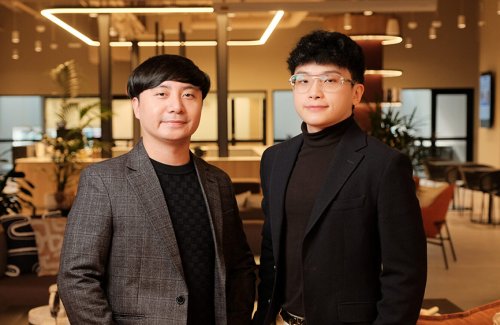
I had the honor to chat with Eric Wei and Will Kim, the co-founders of Karat. Eric and Will exemplify an ideal co-founder relationship, and I found them to be extremely thoughtful and insightful. Let’s get into it:

ENTREPRENEURIAL BEGINNINGS

Both Eric and Will have been entrepreneurs long before they had even thought up the idea for Karat. I asked them to talk about what their first entrepreneurial endeavors were:

Eric: I was going to say, Will was actually recognized in high school by President Obama for one of his early entrepreneurial efforts. Will, why not share?

Will: Sure. That was in high school. President Obama found out about this micro-lending organization I made, where I was lending money to high school students and underserved areas within the Bay, Oakland, Emeryville in particular, to high school entrepreneurs. I would say, “If I give you 500 bucks to start this business model that you have in mind, you’re going to pay me back after you make the money and we’re all going to be happy.” The lead up into that was just hearing about Kiva in an SAT prep book and thinking, “This is such a cool idea.” Kiva is a micro-lending platform that was taking off back in the early 2010s. I thought, “This is a cool idea. I’m going to intern for them.” I realized pretty quickly that interning for them is not as fun as just doing it myself. So I started my own micro-lending organization within the Bay. I saw the same wealth and equity problems that micro-lending is supposed to solve exist in the Bay, just as in these third-world countries. And I ran with it. What I quickly learned is that it’s actually very hard to execute well on what seems like a great idea. I found out the hard way. It’s easy to give money. It is a lot harder to get the money back. That was a kind of helpful testing ground for me. Eric, we’ve experimented with a number of ideas right before, haven’t we?

Eric: Yes, we have. I can share some quick context, too, from my side. One, just want to say, it’s pretty incredible that Will built a functioning company just as a high school student that continues to operate today. Even some of my Harvard classmates, actually, I remember there’s a guy I knew from Harvard. He graduated and he ended up working there. I was like, “Wow, this guy who was just a high school student built an institution that continues to perform and recruit quality people.” I’m not surprised Obama recognized him. It’s cool to build something that lasts and sustains, that’s trying to improve the financial system, but also something that’s just straight up helping people. I think that’s just really, really cool. I was reading about microfinance models like the Grameen Bank and such, and here Will was actually doing it. So I really, really just love how he did that. It’s one of the things I appreciated about him very early. On my side, similarly to Will, my early entrepreneurial efforts were also aimed at how we improve the financial system as it is. One of the very first things I worked with when I was at Harvard was on income share agreements. Now, they’ve become much more popular in the past, say, five, ten years. The concept is that you can fund your education or whatever vocational training you’d like, not just by taking out loans, but by promising to share a portion of your future income and revenue. And the whole thing is, in many cases, it’s going to be a more favorable repayment structure because, say, for whatever reason, you go through this training, this education, and you don’t end up getting a well-paying job afterwards. Well, it’s not really fair to put this burden, this onerous loan on you that you have to pay back. It might be easier if it’s just a percentage of whatever you did make. And my sophomore, and junior years at Harvard, I put together a team with JP Morgan bankers, and McKinsey consultants to go and pioneer this concept. We even pitched the president of Harvard, Drew Gilpin Faust, at the time. It didn’t work, mainly because it was extremely complicated from a regulatory point of view. Many of the companies also exploring educational ISAs at the time actually ended up pivoting. A great example is this company called Upstart which initially was also focused on this, and has since pivoted back to more traditional lending and just saying, hey, we have a better underwriting model, so we can give you better rates, but still loans rather than ISAs. That’s why, to my earlier point, similarly to Will, it gave me a glimpse into a lot of how this world works. It’s people deciding to give money to each other, where the rich have the most capital and they’re trying to get it to the people that ultimately need it the most. But for the people who need it the most, because they’ve gotten that money through so many layers, it’s so expensive for them. So you can try to improve that by building better underwriting mechanisms or by trying to go more directly from the people with money to those who don’t have it. 

Looking back, I think Will and I both had versions of that as some of our earliest entrepreneurial efforts, which I just think is really cool. And then to Will’s previous point, we worked together on a lot of products before Karat as well. I think it was a shared passion in not only wanting to start something of our own but also something along the lines of, hey, in life, there’s much more that matters than just money. When I met Will, he was coming off an internship at Goldman Sachs and was running a venture firm. I was coming from Blackstone and McKinsey and just starting a tech job. Both of us could have chosen to stay in finance and frankly, made much more on a risk-adjusted basis than any other occupation. And both of us saw something and, hey, but there’s some meaning that I can have in helping others. And what does that look like? So we started to work together, went through a lot of different projects, and ultimately decided to focus on working with creators and helping them navigate the financial system.

THE BUSINESS OF KARAT

I asked why Eric and Will decided to focus on creators and how they went about getting their first customers:

Will: In business, the best way to win is to play games that you make up. We’re trying to make up games in areas where they don’t exist because other people don’t know about them–it’s a secret. For us, that secret was that creators are businesses. And that was really, really compelling. It felt like everyone was writing off these creators as businesses back in 2017/2018 when we were first looking at creators; but, these were real businesses. 

Eric: Very early on, the most important thing was to go to where the creators were and just talk to them. So Will and I would go to conferences like VidCon and TwitchCon, and we just cold approached people and just asked them, hey, what are you most focused on these days? What’s the dream? What are the biggest problems that you’re facing? 

I think there’s an easy tendency to think a lot about overall strategy without just literally talking to people, right? No plan survives first contact with the enemy. And what I realized really early on was that creators are trying really, really hard to figure out how to make content, make money, and build a business.

The creator community has many individuals who are operating businesses, but they have no idea how to handle the business’ financial setup. Through these early insights, Will and I prototyped the first thoughts of what Karat could be. When we finally had actual products, we went back to many of the people we met and asked if they would try them. When they had a good experience, they would share it organically via word of mouth. One thing I’m proud about Karat is that we’ve never really done influencer marketing programs. It’s primarily just been organic and referral-focused. Creators especially are more likely to share because it’s what they do on a day-to-day basis.

Will: I remember Eric was wearing his Instagram shirt. He optimized every single element of this to make sure that we could make something out of nothing, which is incredibly difficult. Eric was pulling out all the tricks out of his bag. 

Eric: I used to work at Instagram. If you wear an Instagram shirt, people are more likely to chat with you. There are tons of hacks to this. For example, you go to a conference and a creator is speaking. At the end of that panel, run up and be the very first one to talk with them. Big creators, a lot of times, have fan meeting greets, where you wait in line. We would use that to pitch them. We would be absolutely shameless, asking very business-focused questions. Some people didn’t like the concepts we were going through. But that means you actually have a firm point of view. If you find something that some people don’t like, but some people actually really do, that’s promising. 

Edwin: I resonate with that. For some of the guests that I’ve had on the interview before, that’s what I had to do. Go to those events and say, hey, I sent you an email. You didn’t respond to it. 

Eric: Even if it rubs them the wrong way, in the end, you’re just trying to build something from scratch. It’s better to try than to not try at all. I greatly admire and respect the determination with which you followed up. When I had a free moment, I remembered and emailed back. And then to have you respond back instantly, I was very impressed. That’s a big reason why I was excited to share more for this newsletter and to build a relationship with you personally.

I really appreciate Eric’s endorsement of my tactics. As a side note, I also find it awkward and difficult to do this kind of cold pitching sometimes, it requires being very vulnerable. However, I have two thoughts about this. Firstly, cold outreach is like a muscle you train, the first time you go to the gym is going to be awkward, and the 100th time is second-nature. Secondly, if you really want to reach someone why wouldn’t you try multiple times, why wouldn’t you try every mode of contact you can find (email, phone call, mail)–this seems like table stakes. Though obviously, please stop if they aren’t interested, and don’t harass anyone.

I was also curious how Eric and Will came up with the business model for Karat, as the intersection of creators and fintech hadn’t been explored much before them:

Eric: From a people perspective, we worked with creators like Alexandra Botez, a top chess streamer who graduated from Stanford, started a company, and has over a million followers on Twitch. She was rejected for a business credit card multiple times because they just didn’t understand what she was doing. When you hear a problem like that, you start questioning if the current system is optimal. The answer is no because making a living as a creator is so new, that the existing financial system, which is built on traditional criteria, doesn’t evaluate it properly. From a systems POV, if everyone is thinking about making content going forward, everyone is learning how to be a creator, every business is learning how to use content, and getting to build the financial picks and shovels that facilitate money moving around could be a huge opportunity. We want every dollar in the creator economy to pass through Karat, whether it’s through our payment systems, credit cards, bank accounts, and more.

Will: When we first realized that creators are businesses, that felt like a secret. But the deeper secret that excites us is that we believe in the future, all businesses will have to have some kind of creator angle. This felt like a massive unlock. Procter & Gamble became a generational company because it capitalized on the advent of cable television. Now, creators own the airways and they have the cheapest distribution to their fanbase. They’re going to be able to out-compete Proctor & Gamble and make the new Proctor & Gambles. That’s very exciting. To Eric’s point, if we can sell the picks and shovels there–if we can be the financial rails, that’s going to crush.

Eric: A really good example of that, for instance, is if you’re familiar with Under the Influence and the seltzer brand Nectar. They’re an example of a company that developed a hard seltzer to compete against White Claw. To advertise it, they developed a podcast. The podcast has become so popular that its hosts were actually signed to an agency. Many of the people who watch the podcast think that the seltzer is just the brand sponsoring the podcast. It was actually the other way around. The podcast is the content marketing arm of a consumer packaged goods company because the founders grew up in social media. To Will’s point, the future Proctor & Gambles are going to be people who are building businesses with content built-in natively from day one.

RUNNING A STARTUP

The next question I asked the duo was how they deal with the mental stress of running a startup:

Will: First of all, I haven’t completely figured it out. I just have to deal with it. The quote I live by and come back to a lot is from Eddie Merckx, one of the world’s fastest cyclists ever. Reporters asked him how it felt to be so fast, and he said, “It doesn’t get easier. You just get faster.” That’s it. As we’ve scaled up, we’ve only run into more issues, and more challenges. Eric loves the quote, “The prize for eating humble pie is eating more humble pie.” I believe that’s true. So, it’s about accepting that’s the reality. Personally, I’ve been sticking to routines like simple stuff. Cold showers are nice. Waking up early is nice. Being able to meditate is nice. Reading Marcus Aurelius is nice. That works for me, and I stick to it. It’s pretty straightforward, but it works for me.

Eric: As founders, we obviously have to care a lot about financial runway, because presumably, we’re building something with a shot at being really big. Early on, it’s going to cost money. But what people forget is the emotional runway. Money is useless and pointless if you’re not in a place to be creative, brave, and determined to try and do things with it. In terms of how you maintain that emotional runway, it’s really different for everyone. For me, one of the things that really helps is my relationship with Will. There are many solo founders out there that I respect and think very highly of. I know confidently that I could not have done Karat without Will. We’re not only co-founders but also co-CEOs, which is why you get both of us here today instead of just one of us. We’ve found that if one of us is feeling very down, the other is usually not feeling as down. It’s very rare we both feel down at the same time, which is bad because then everything just kind of falls apart. But I’ve found him to be very helpful, not only from an emotional point of view, balancing when I’m sad and not sure if something’s going to work, but also when I’m really excited to sort of temper it because, at the start of the plan, everything changes so quickly. But also just to know that there’s someone else who cares just as much, if not more, than I do about this. I think that’s a relieving burden on a founder’s shoulders. Of course, it comes with its own consequences. To be clear, I think there’s also more complexities when you have a co-founder and co-CEO. Nothing in life is just a free lunch. Sure, you get to benefit from each other, but it also means you have to figure out what to do when you disagree.

The fact that Eric and Will were co-CEOs kind of blew my mind because I was taught at a young age that one person should be at the helm of the ship, obviously, I had to ask how they decided to be co-CEOs:

Will: It was pretty simple. We both want to build something cool. We both want to build something big. We have different personalities and skill sets, but we’re aligned on the general values. And why wouldn’t you want to have each other as equals? We’re not hierarchical. It’s not like one of us reports to the other, right? So why not just formalize it if it’s something you truly believe in from a title perspective and an equity perspective?

Edwin: That makes sense. I assume that you guys probably have different strengths. So is there some way that you guys divide the work? Or is it on a case-by-case basis?

Will: I think it’s just case-by-case because our strengths, as a founder, the most important thing is that you scale, that we grow with feedback, that we change with the environment. Stasis is death. And so it’s really, really important for us to always be responsive, not only to the business and the market, but to our own interests, desires, and strengths. For me, I really enjoy thinking about how we can build a system that last. The ideal business to me is one which doesn’t need me, one that already has a large market, that has a system in place, and a product that people want, where I am just icing on top rather than a core element. For me that’s really exciting, so that’s where I like to spend my time.

Eric: Will has always been a really good systems thinker. And again, these are generalities, because both of us have taken opposite approaches from what we’re describing to you now. But for me, there’s a certain satisfaction I get just from going and talking with someone and getting a quick sense if something is going to work or not. This speaks to the nature of a startup. You want to make sure that the people you’re building for actually care, and the fastest way of finding out is to literally go and interact with them. Also, for a venture-scale startup, you need to think about how those initial insights can potentially turn into a billion-dollar business. That needs to be something that can scale into a system.

BEING AUTHENTIC

When researching Eric and Will, one thing that stood out to me was how honest they were with their motivations behind building a company. In articles online, they were very transparent that ego and financial upside were partial motivations for building a company. I asked them how they reached this point of authenticity:

Eric: Something I’ve learned is that there’s literally no point doing anything if you can’t just be immediately straightforward and honest about it. Life’s too short to do things that you’re lying to yourself about or to others. If you care about yourself, you’ll be honest to yourself. If you care about others, you’ll be honest to them. It’s the very same reason I started this call up being like, one, I was super excited. Two, I was impressed by your dedication. And three, here’s something I didn’t love, and here’s why. Because if you want to invest in a relationship with each other, you have to be honest from the start. So, let’s extend this to why build a company. Obviously, Will and I would not be doing this if all we were optimizing for was the financial upside. He would have stayed at Goldman Sachs, I would have stayed at Blackstone. So, there’s a huge motivation around building something that’s better, that can help creators. And to your point, that doesn’t mean our other motivations aren’t real as well. Of course, Will and I are excited about the potential monetary upside of building a successful company, the ego that comes from, hey, we’re going to try to do something new and something of our own. Because from my perspective, that’s real. There’s no shame in that. And I’d much rather present myself as the whole set of motivations I am as a human and as a company. In fact, I don’t trust people who aren’t honest about why they do things. Those are the ones that I’m like, hmm, there’s something you’re hiding from me. If you’re hiding this from me, I don’t know if I can trust you.

Will: When Eric and I were getting close, I started realizing that when I’m talking with Eric, I can be pretty open. I remember at one moment, I just thought, “I can trust Eric with everything. This is the one guy that I can start a business with that would actually make sense.” When we started the business together, it became a really pivotal thing for me because Eric was so vulnerable and shared a lot. We had that kind of relationship that was fully open and transparent. I don’t know why you would ever start a business with someone you don’t trust entirely. In fact, I’d say it to people reading this and thinking about who they partner with: if you don’t trust them, don’t do it. I can say that from personal experience. It’s not worth it. 

Edwin: I think that’s really cool how you guys are very open. I think about how trusting and communicative your relationship is. I took a class in my last quarter at Stanford and basically, the whole point of the class is if people see models of really trusting relationships and open relationships, they’re probably more likely to mimic that and act that way. When you act that way, you’re showing other people to do that, and so on. So that’s really cool that you guys do that. I think there’s a benefit to everyone else beyond just you guys when you do that. 

Will: I hope it goes viral. Viral vulnerability would be very nice where we could all actually trust each other and make the world slightly better. It sucks when you have to always put up this defensive shield. I think frankly, before I met Eric, I walked around life with a defensive shield expecting that everyone’s out there to hurt me. Over time, I realized that if I open myself up, I invite far more excitement, joy in my life, and opportunity as well. 

Eric: I’ll add, if everyone seems to be a giant jerk to you, sometimes that can lead you to put your guard up. But in a weird way, that attracts more people who might not be the best to you because you yourself are not sharing. If you go around and you’re open to people, you’re more likely to find other people who are open. If someone’s open and honest, why would they want to interact with someone who’s hiding things? 

I asked Eric and Will how they extend their mindset around authentic relationships to their relationship with their employees:

Will: We are trying to continue to push this idea of appropriate authenticity in the workplace. The challenge that exists is that there is a power dynamic. Eric and I are peers and so we can be fully open, fully honest, fully transparent. With our team, there is an appropriate level of authenticity. Of course, we want to tell everything about the core business, but is it appropriate for me to say I feel really sad and pissed about all this stuff? Probably not. It creates fear because I’m ultimately their boss. In the beginning, I was fully authentic, expressing exactly how I feel, and that has been at times not the most well-received. So, finding the right balance, it’s a spectrum that we had to find. 

Eric: What I’d add is that in a workplace, if you’re the CEO, you do have managerial power over those you work with. So, in fact, you have to put in more work, you have even more responsibility to try and build safe spaces to receive that feedback. From a hierarchical perspective, they might not feel the same comfort sharing feedback with you that you feel with them. So, you actually have to do more work and shoulder more of a burden to try and make up for that. And again, that’s not to say we have done this super fantastic job. In fact, I think we’re still very much learning as managers. There are many things we have not done well. I say this more from a philosophical standpoint, what drives our intention, and how we think about it.

HOW TO FIND YOUR PURPOSE

I recently spoke to several Asian American high school and college students who don’t really know what they want to do with their lives and don’t really know what excites them, or how to find their passion. This seems to be a big problem among many youth, so I wanted to get Eric and Will’s perspective on what young people should be doing:

Eric: I think Will and I come from a fortunate place where we really followed those routes. Will was at Stanford, Goldman, and I was at Harvard, Blackstone. So, we have the luxury of sitting here and saying that’s really not all that it’s cracked up to be. A lot of that stuff is premised on prestige, wealth, and what other people want, and there’s a clear path on how to get there. It’s easy for me to sit here and say, forget all of that, and just do what you’re passionate about. But I’m saying this as someone who had the privilege of already going through these different experiences.

The most important thing is to feel emotionally in tune with yourself. A lot of what we do when we’re sad or frustrated leads to bad outcomes, and it’s even worse when you’re not even aware you’re sad or frustrated and that’s just fueling your actions and the choices you make. The sooner you accept that there are things you are scared about or insecure about, the sooner you’re going to be able to make decisions that are right for you. Whether that is, “Let me go work in the corporate world for x years and build up the credentials,” or “Now it’s time to leave and do something different,” 

Will: Everyone says “Be yourself” and I found that super frustrating because it’s not like  I’m masquerading as someone else. So, what goes into being yourself? I think it first comes from listening to yourself, even if you don’t trust yourself yet. Be honest about it. Even if it’s just about the prestige, go do it and do it wholeheartedly, and don’t feel any shame about it. Hopefully, that experience builds your trust in yourself. Like, “Oh, when I listened to myself and I followed my intuition, this didn’t work out so hot and that’s okay and this really worked out well so let me lean into that.” I think this is a part of the Asian upbringing. I love my parents a lot, but they didn’t know how to listen to me. They’re like, “You’re a child, I’m going to tell you what to do and you’re going to do it.” And so, I had to listen to my parents and I became my parents and I didn’t like it. In college, I had to unlearn so much of this, and Eric and I actually connected a lot over that unlearning process.

Edwin: I’m curious, I know you guys both use therapy. Has that been a big help in this journey?

Will: Eric is my therapy granddaddy, as in, I was inspired by Eric’s early experiences there and I was like, “Wow, you’re learning so much, you’re growing so much. I envy that, I want that.” I’m inspired by that and so it has been huge for my personal development and I think also my growth. So yes, it’s been crucial.

Eric: I think everyone who can afford therapy should do it. It’s unfortunate therapy is expensive but if not, I think everyone could benefit. In the same way that if you have no idea how to work out, you might have someone help teach you the ways to use your muscles. Guess what, the way you’ve lived your life, raised by your parents, surrounded by your friends and your environment, your mind has learned certain loops and ways in which it thinks. And if you want to be able to become more aware of them and try different ways of thinking, a therapist is really helpful for that.

BEING ASIAN AMERICAN

Eric: In Karat’s early days, to be honest, I wasn’t thinking about it much at all because I was focused on making the company work. Personally, I’ve only thought about it more as time has gone on and Karat’s grown bigger. Going to the Asian Hustle Network last year was super lovely because it helped me realize that I’m Asian American and that’s part of me.

Will: Eric and I used to talk about this quite a bit more in the very early days of our relationship back when we were working in corporate America. Now it’s become more about how we make the business succeed. In my lived experience, I’ve been focusing on things within my control. I really appreciated that about building a business. I just want to build something great, hire the best people, work with people I love, and serve the kind of users that I believe need the most help. That’s been exciting. 

Eric: It’s not like anything became more or less important, but in order to be an Asian American entrepreneur, you have to be an entrepreneur and your company needs to exist. There’s a certain hierarchy there of thinking about survival. 

Will: One thing that Eric and I talked a lot about in the early days was how we felt a lot of existential angst–“Is this the right thing for me?” but very little day-to-day anxiety. In the startup, it flipped. We felt a lot of day-to-day anxiety, but the existential angst vanished. That has been so freeing and so valuable that I wouldn’t want to ever go back. I wonder about the Asian American thing, perhaps that was part of the existential angst that was replaced with the day-to-day anxiety and excitement about how to make the company succeed.

SHOUTOUTS

If you are a creator looking to get a business credit card, please consider using Karat! Also, please go follow Karat on Instagram @trykarat, Eric @erictway, and Will @willikin. Thank you Eric and Will for the interview!

And finally, some parting advice from Eric: 

Advice is usually given to you from people who followed what they’re telling you now or wish they had followed what they’re telling you now. It’s not really based on you. So whenever you get advice, I’d say weigh it primarily based on the person who’s giving it, how much you actually think of yourself as similar to them or want to be them. That applies to the advice we’re giving as well.
Related Articles

{"ARInfo":{"IsUseAR":false},"Version":"1.0.0","MakeupInfo":{"IsUseMakeup":false},"FaceliftInfo":{"IsChangeEyeLift":true,"IsChangeFacelift":false,"IsChangePostureLift":false,"IsChangeNose":false,"IsChangeFaceChin":false,"IsChangeMouth":false,"IsChangeThinFace":false},"BeautyInfo":{"SwitchMedicatedAcne":false,"IsAIBeauty":false,"IsBrightEyes":false,"IsSharpen":false,"IsOldBeauty":false,"IsReduceBlackEyes":false},"HandlerInfo":{"AppName":2},"FilterInfo":{"IsUseFilter":false}}

Stories

How Benny Yap and Jae Tan Drive TGFX Agency’s Success

Benny Yap and Jae Tan are not just co-founders of TGFX Agency; they are a powerhouse duo transforming businesses through innovative branding and marketing.

Benny Yap, a seasoned entrepreneur, is renowned for his outstanding achievements in the marketing and advertising industry. His expertise encompasses advertising, branding, illustration, and ideation. Benny Yap’s leadership and artistic vision play a pivotal role in shaping TGFX’s distinctive approach to branding and marketing, driving its success.

Jae Tan is a dedicated and results-driven entrepreneur with over a decade of experience in branding, web development, and video production. Under his strategic guidance and leadership, Jae has propelled TGFX to unprecedented success.

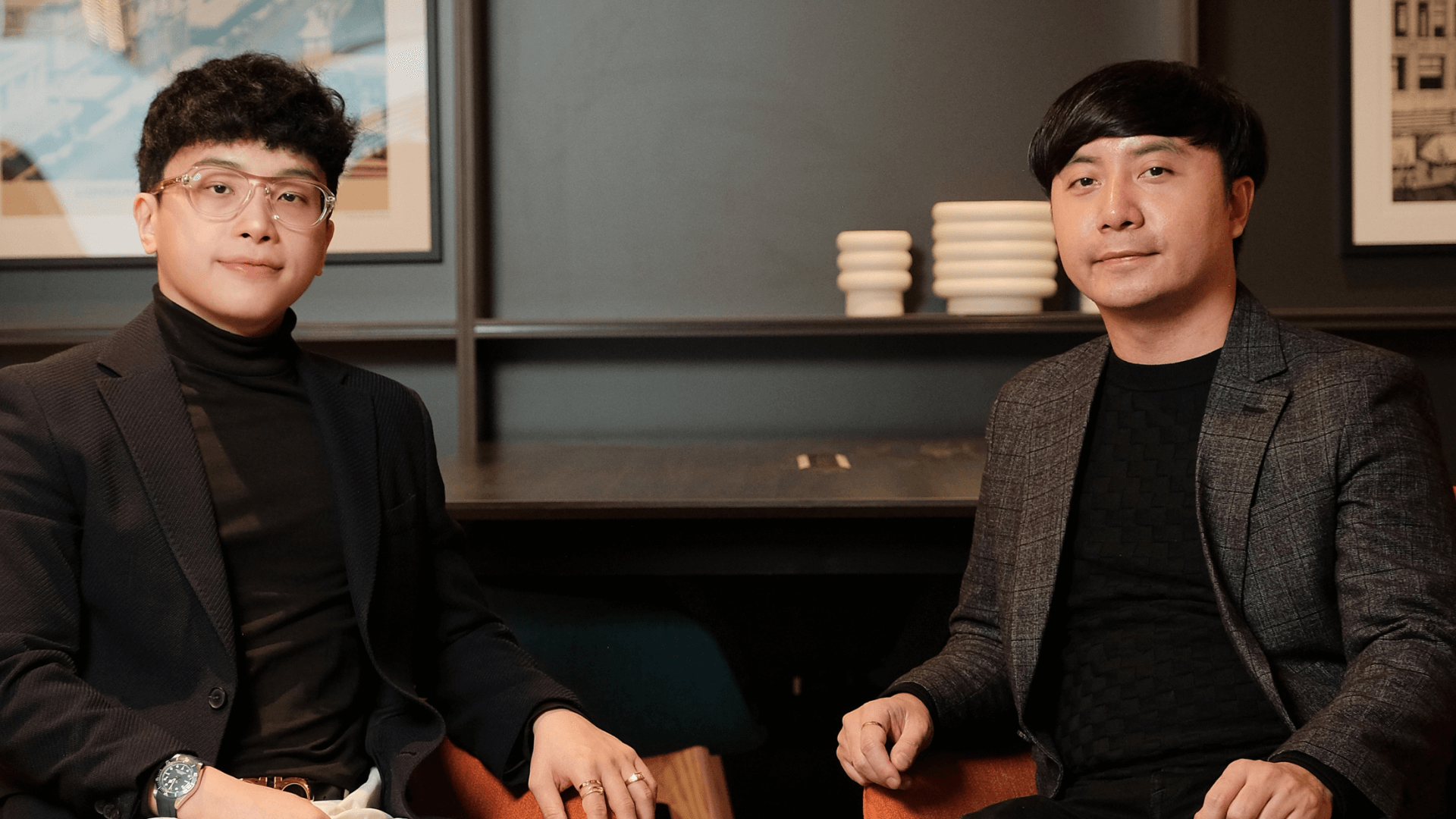
Jae Tan (left) and Benny Yap in a meeting.

In an exclusive interview with Asian Hustle Network, Benny and Jae share their journey, challenges, and insights, offering a glimpse into the dynamic partnership driving TGFX. Read on to discover how they are transforming brands and making a lasting impact on the marketing industry.

EARLY CAREER AND THE BIRTH OF TGFX

Benny Yap and Jae Tan both studied graphic design and advertising and initially met through a design project. This collaboration not only brought them together as best friends but also sparked the idea of starting a business together. They realized that by combining their forces—their creativity and design skills—they could tackle the business world more effectively as a team. This shared vision and partnership led them to start TGFX.

OVERCOMING INITIAL CHALLENGES

Benny and Jae faced significant challenges when starting TGFX, especially during the COVID period. One of the biggest hurdles was adapting their business model. Initially, they focused on one-off jobs, but they soon realized the need for stability and consistent cash flow.

They decided to pivot to a retainer basis, particularly in social media marketing. This shift not only helped them navigate through a difficult time but also allowed them to build stronger, long-term relationships with their clients.

DYNAMIC PARTNERSHIP

As co-founders, Benny and Jae complement each other perfectly in running TGFX. Benny, previously from BBDO Advertising agency, brings a wealth of creativity and innovative ideas, driving the creative direction and ensuring the campaigns are cutting-edge, Meanwhile, Jae excels in managing operations and strategic planning, providing a solid foundation for the business. This dynamic allows them to leverage their individual strengths, resulting in a well-balanced and effective partnership.

TGFX’S MISSION AND CORE VALUES

TGFX’s mission is to help businesses across Australia succeed and thrive. Their core values include providing world-class services and being recognized as one of the best and most innovative agencies in Australia. They emphasize treating clients like family and growing alongside them, fostering strong, long-term relationships built on trust and mutual success. 

INDUSTRY-SPECIFIC CHALLENGES

Having worked with numerous businesses across various industries, TGFX encounters several industry-specific challenges. Key issues include maintaining brand consistency, attracting the right customers, and building a loyal customer base.

TGFX addresses these challenges by tackling each core issue one day at a time and maintaining consistency in everything they do for the brand. This methodical and dedicated approach helps their clients overcome obstacles and achieve long-term success.

IMPACT ON THE ASIAN COMMUNITY

As entrepreneurs with roots in the Asian community, Benny and Jae see TGFX Agency as having a significant impact and contribution to this community. With 80% of their clientele being Asian-owned businesses, TGFX Agency is dedicated to helping the Asian business community in Australia thrive. By providing tailored branding and marketing strategies, they support these businesses in achieving success and growth.

Jae Tan (left) and Benny Yap
With TGFX, the duo aim to uplift Asian businesses in Australia.

ADVICE FOR ASPIRING ENTREPRENEURS

Benny and Jae emphasize the importance of adding value to the marketplace. Aspiring entrepreneurs should understand their consumers’ needs and preferences thoroughly, conduct extensive market research, and stay attuned to industry trends and client feedback.

“Persistence is key—never give up, even when faced with challenges. Building a successful agency requires resilience, continuous learning, and an unwavering commitment to delivering exceptional service and results. In addition to that, our team is the cornerstone of our success. Without their dedication and hard work, we wouldn’t have achieved our current position. Each member plays a crucial role in our accomplishments, bringing unique skills and perspectives that drive our progress forward. We are deeply grateful for their commitment and contribution to our shared goals. Together, we continue to grow and thrive, thanks to their invaluable efforts,” Benny and Jae shared.

Benny Yap (left) and Jae Tan
Benny (left) and Jae highlight persistence, market research, and a strong team as keys to success.

FUTURE VISION AND GOALS

TGFX Agency continually strives to expand into new areas across Australia and different industries, aiming to deliver data-driven results to businesses in need of growth. They are also committed to expanding their Malaysia agency, bringing on new businesses, and growing the team there.

Benny and Jae are excited about the future and look forward to furthering their impact on businesses both locally and internationally. Their advice to others is to stay focused, and consistent, and always strive to add value. Understand your customers’ needs and don’t shy away from innovation.

CONNECT WITH TGFX

Website: tgfx.com.au

Instagram: @tgfx.agency

Kevin Tan

Awaken* newsletter

From Bytes to Bites, A Conversation with Snackpass Co-founder and CEO Kevin Tan

If you’ve ever ordered boba, you’ve probably used Snackpass before. Snackpass is a fast-growing startup that operates a social food-ordering app alongside a suite of software and hardware solutions for restaurant operations.

Boasting a $400 million valuation, Snackpass is backed by a slew of the best investors around, including Craft Ventures, a16z, General Catalyst, First Round, and Y Combinator. I had the pleasure to sit down with Snackpass’s co-founder and CEO, Kevin Tan, to talk about his background and experiences.

JOURNEY TO BECOMING A FOUNDER

My first question was if Kevin did anything entrepreneurial before Snackpass:

I had multiple projects before SnackPass. As a kid, I shot a movie with friends and made a comic book to sell. In college, I picked up programming, which sparked my interest in technology startups. I started that in my sophomore year. I tried a few different projects or companies and started SnackPass in my senior year.

Back in college, Kevin actually majored in Physics, not Computer Science. I asked Kevin what made him decide to pursue software over a career in Physics, and also why he decided to start a company as opposed to joining a big tech company:

I actually initially started in the humanities. After a year of humanities, I went and moved into Physics and started programming at the same time. I chose software because I felt that things were a bit more fast-paced in the world of technology. Also, I didn’t feel that I was going to be a top 1% physicist–though I still really enjoy Physics. As far as pursuing a startup instead of big tech, I did actually apply to Google for an internship, but I didn’t get in. One of my favorite things about startups is that you don’t necessarily need to impress any gatekeepers who hold power over your next job, you can go make your own! That’s something that made me super excited about startups.

STORIES AND THOUGHTS ABOUT SNACKPASS

I remember sometimes to get to the restaurant owners, I would set up a meeting and then trek across campus in the cold and in two feet of snow only for the owner to say “Oh, I rescheduled”, yet I always followed up and went back to meet them.

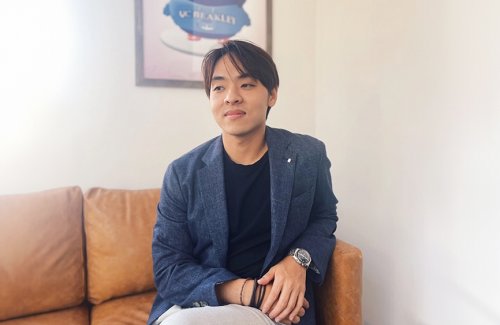
Kevin Tan

In an article by Free Ventures about Snackpass, I read “In the beginning, they partnered with restaurants by going door to door to mom-and-pop shops and talking personally with the owners. They also posted a bunch of flyers around campus and created referral mechanisms on the app to get the word out.” I asked Kevin what that experience was like:

Back then, we didn’t have any funding. We got rejected from Yale’s incubator, let alone venture capital. But we were able to get pretty far because I was able to code and go door to door to bootstrap our first set of customers. I’ve always had a very determined attitude about things and am willing to brute force it if I have to. I remember sometimes to get to the restaurant owners, I would set up a meeting and then trek across campus in the cold and in two feet of snow only for the owner to say “Oh, I rescheduled”, yet I always followed up and went back to meet them. Obviously, there needs to be a more efficient way to do that, but if you’re trying to learn something very quickly. That’s one way to do it. 

Even to this day, we’ll go to new installs and try to embody the customer as much as possible. It’s very hectic behind the restaurant counter. To make a product like ours work, we have to get very deep into how the staff interacts with our tech and how they are receiving orders. Like, were the printers printing? Were they able to confirm the order or did it get missed? 

As Kevin hinted in his answer, Snackpass started at Yale, then expanded to other colleges, and is now expanding to all restaurants. I asked Kevin how he decided it was time to expand to new markets:

There’s this blog post from Marc Andreessen about how there are two phases of a startup. One is before product-market fit, where you should do everything to find it. The second is after product-market fit, where you should do everything you can to exploit it. I think you don’t want to scale anything up before you have really strong product-market fit and a repeatable engine for driving revenue or growth. You can have an amazing product, but if you can’t get it out efficiently, that’s going to be a problem. 

Whenever I think about the restaurant business, one of the first things that comes to mind is the pandemic. I asked Kevin how the pandemic affected Snackpass:

It was definitely a huge curveball. At the height of the pandemic, people were asking if college campus restaurants would stay in business. People went back home. We saw a big dip in our volume in the same way a lot of local marketplaces did. We used that time to ask how we were going to expand outside of college campuses. The pandemic motivated us to shift our whole business model. We shifted into focusing on building an operating system for these restaurants, and we’re still playing that out today. 

I asked Kevin how Snackpass’s go-to-market motion has evolved over the company’s lifetime:

In terms of target customers, we’ve grown from just SMB restaurants to having some multi-location mid-market brands using us. In terms of how we acquire new customers, we get some inbound by being a market leader. Having a brand name and social proof is very important. Other channels that have worked for us are referrals and social media such as Instagram and Tiktok.

In a previous conversation I had with Gusto’s cofounder, Eddie Kim, he talked about the idea of sometimes needing to turn down larger customers and contracts to remain focused on the target customer. I asked Kevin if he ever thought about this:

Yes, we’ve definitely had to turn down some large potential customers. As a rule of thumb, larger and more enterprise-y customers tend to have more requirements, move slower, and want integrations and things that are not standardizable. These are often one-offs so we don’t get as much leverage with what we’re building. 

Unless your strategy is enterprise-focused, you probably want to focus your angle of attack on one segment. There’s a good book called Crossing the Chasm. One point it makes is that the market you go after should be a single entity, one with a common set of characteristics and needs that you can address as a whole. We’ve definitely had to find our niche because there were customers asking all sorts of things. In the world of restaurants, especially, there are so many different varieties operation-wise, that you can get pulled in many different directions. Sometimes it’s tempting to chase revenue, but that can easily lead to a very overreaching product surface area. It’s better to have a narrower angle of attack, generally speaking.

A key differentiator of Snackpass compared to other food-ordering apps is the social components of the app. In Snackpass, you are able to gift points to a friend with each order you make. Once you accumulate enough points from someone, you hatch a mini digital chicken–sort of like a minigame. I asked Kevin for some cool or surprising ways he has seen people using these features:

Oh, there are tons. There’s a feed where you can see who’s sending gifts to whom. The idea behind the feature was to give users a social way to figure out what restaurants are interesting or popular, but we’ve heard some people use it to see who’s flirting with whom. It’s kind of a sneaky way to get a closer look at some people’s relationships. Another cool one is that we’ve heard many anecdotes of someone sending points to all their co-workers in an office and then they not only try out Snackpass but also try out the restaurant the person ordered it from. It’s a win-win.

BUILDING A TEAM

I’ve talked to many founders and culture is brought up time and time again as something that is extremely hard but important to get right. To kick things off, I asked Kevin how to fire people in a way that minimizes the negative effect on the wider team:

I believe this is something that I, and probably many others, can always improve upon. I strive to excel in this area, though I’m not sure if I’ve reached that point yet. Having clear expectations, like a Performance Improvement Plan (PIP) process, is crucial. This way, it’s not a surprise when someone is let go. If we fire someone,  even though they may not realize it yet, they’re better off being successful somewhere else than being unsuccessful here.  It’s painful at the moment to be rejected or to reject someone, but it’s a necessary step to ensure both sides are in a situation where they can thrive.

I also asked Kevin what Snackpass’s cultural tenets are, and what he does to implement those tenets in practice:

Our slogan is that we are humble and hungry. On the humble side, part of it is being easy to work with, which facilitates collaboration. It’s also about asking questions, acknowledging fallibility, and striving to prove yourself wrong. It’s about starting from a position where you just want to learn and get closer to the truth. Having an ego can blind you to the truth, I’m also guilty of this. Sometimes pride prevents you from admitting you’re wrong, even subconsciously. You have to put that aside to find the right answer. That’s the humility side. The hungry part, obviously, we’re a food company, but we also look for people who have a chip on their shoulder and are willing to work hard. There’s nothing more demotivating than having part of your team that’s really hard-working and driving towards success, and then having others who are indifferent about it. So we generally want a team that is really hungry, ambitious, and genuinely cares about the outcome.

Some founders say they want to be completely authentic with their team, sharing their concerns or fears. Others want to always project confidence to avoid worrying the team. I asked Kevin how he prefers to show up:

I tend to wear my emotions on my sleeve and I’m quite transparent. If I’m excited or annoyed about something, I’ll show it. My co-founder, on the other hand, is better at separating her outward expressions from her inner feelings. It’s just a stylistic thing. I’m quite transparent. My co-founder and I balance each other out in many ways, including our aptitudes, styles, and communication methods.

Being a founder comes with a lot of very low lows, so I asked Kevin how he copes with the lows:

I realized that being unhealthy doesn’t make you better at your job. So, I started going to the gym and running. I see time away from the computer as just as valuable. Sometimes, you might be working hard in the wrong direction. It’s better to pause and think for a moment. The concept of working smarter, not harder, is crucial in technology and startups. You can spend years going down the wrong path. It’s important to always be asking questions and self-correcting your direction. This doesn’t always require hours of grinding. Sometimes, it just takes a clear head. 

I asked Kevin if his reflection time always took the form of exercise, or if it was anything away from work:

It could be taking walks or reading. There are some really good books that provide frameworks that expand the problem space even further or help me view problems from a different perspective. I like to read a lot. I also like to exercise and play music. It’s just something that isn’t focusing on the immediate problems in front of me. Sometimes, you can think really hard about something, but once you talk it through with someone or test it, you get so much more information quickly. You get out of the narrow set of parameters you’re working with.

ASIAN AMERICAN TALK

Anecdotally, I’ve noticed that a lot of places that use Snackpass are Asian restaurants. I asked Kevin if this lined up with reality, or if it was all in my head:

No, it’s not just you. We’re at a lot of Boba shops, for example. Part of it is because we initially launched on college campuses and there’s a lot of Boba near colleges, especially at Berkeley. I think it’s one of the most dense Boba areas in the country. We started off with just mobile order and pickup, and that has evolved into self-serve kiosks and digitizing the experience without a human in the loop. This has been particularly popular with Asians, especially Boba shops. It’s an interesting question as to why. I think we’ve found that Asian owners and operators are very practical. They see that it saves them money and increases efficiency, so they adopt it.

Next, I asked Kevin to tell me about his Asian background, and how it has impacted his own life journey, especially as a founder:

I was brought up by Chinese parents. They came from China for grad school. My dad arrived with only $50 in his pocket. My mom worked a full-time job while also taking care of me. I also spent a lot of time with my grandparents since my parents were working full-time, so they were also hugely influential for me.

I grew up in Ohio, where there weren’t a lot of Asians, so I grew up with a deep-seated feeling of being different and being an outsider. As a child or a teenager, I wished to fit in more with the mainstream. At some point, I learned to embrace going against the mainstream and being different. To this day, all my heroes are people who are counterculture and really go against the grain. As a founder, having a strong STEM background is helpful and I thank my family for that. My grandfather taught me math several years ahead of what I learned in school. It’s cool to see Asian-American founders like Jensen Huang or Tony Xu rising to the top. If you look at top leadership, a huge amount of them are Asian American, so I’d say that there’s a good match between tech and our culture. But, there’s also a sense of a bamboo ceiling. It takes time to break through that. The more examples there are of successful Asian leaders, the less of a bias there will be.

You know, the recent popularity of Asian culture has been incredible. Take K-pop for example, it’s like the new Hollywood in Korea. I feel like the 20th century was a century of unspeakable suffering for a ton of Asian countries. Our parents, my dad grew up in the cultural revolution and his dad went through the worst century of humiliation. Now, in the 21st century, I feel like they suffered for us to really thrive. Maybe this is the century where you see Asians globally–not just producing semiconductors or T-shirts–but being the cultural center of the world. 

SHOUTOUTS

Leaning into the cultural aspect, Kevin wanted to shout out a few of his favorite Asian American artists, namely EDM artist ZHU and the 88rising crew, especially Joji, please go check them out!

Also, if you ever find yourself looking to order food, consider using Snackpass! They often have great discounts and you can earn loyalty points which can be used to redeem free items. You can download Snackpass on any of the major app stores.

 If you own a quick-serve restaurant, please check out Snackpass’s offerings at https://www.snackpass.co/. Snackpass’s platform is trusted by many mom-and-pop shops as well as brands such as Sharetea, Somi Somi, and Pokeworks.

Thank you for coming to the newsletter, Kevin!

Creators Podcast- The Creative Minds Behind Tubby Nugget And Their Mission To Spread Joy -jpg

Stories

Creators Podcast: The Creative Minds Behind Tubby Nugget and Their Mission to Spread Joy

AHN and Meta Prosper have partnered on a new podcast series highlighting API creators. Meta Prosper is dedicated to amplifying and supporting the API community and driving economic growth and equitable representation. The Creators Podcast series delivers stories on how creators achieved success and created impact through their platforms, serving as an inspiration for the community.

Welcome to the third installment of the Creators Podcast series, where we delve into the inspiring stories behind some of the most beloved and innovative content creators. In this episode, we explore the charming and uplifting world of Tubby Nugget, a social media sensation dedicated to promoting self-love and mental health awareness.

Tubby Nugget is a delightful character from the whimsical universe of Nuggetville. This adorable alien loves eating chicken and has descended to Earth with a mission to spread positivity, laughter, and messages of self-care. With a growing presence on social media, Tubby Nugget offers a daily dose of joy and encouragement to fans around the world, reminding everyone to embrace their inner quirks and look after their mental well-being.

The creative minds behind Tubby Nugget are Joshua Jackson and Jenine Pastores.

Joshua, a skilled director, motion graphics artist, and film editor, has an impressive background working with notable media giants like Netflix, VEVO, and Jubilee Media. Leveraging his artistic expertise, he brings Tubby Nugget to life with vibrant animations and engaging storytelling. As the CEO and co-founder of Nuggetverse Inc., Joshua leads the team with a vision of spreading happiness through their unique content.

Jenine Pastores, the Chief Creative Officer of Nuggetverse, has a rich history as a creative producer and screenwriter, having collaborated with luminaries such as Jon M. Chu and companies like Jubilee Media, Alabaster Co., and VEVO. From a young age, Jenine’s passion for storytelling was nurtured by her love for books and her father’s bedtime stories. Pursuing a degree in screenwriting, she discovered the profound impact of storytelling in connecting people.

The story of Joshua and Jenine’s collaboration begins in 2015 during the Film Fellowship Program at Jubilee Media. Joshua, newly relocated from New Jersey to Los Angeles, met Jenine, who was already pursuing her screenwriting degree in LA. Their partnership started with Joshua directing a film that Jenine was involved in, marking the beginning of a creative journey that would eventually lead to the creation of Tubby Nugget.

Tubby Nugget’s mission is to provide a daily reminder of the importance of self-care and mental health. With a playful and humorous approach, Tubby Nugget encourages fans to embrace their unique selves and find joy in everyday moments.

Listen to the Creators Podcast featuring the creative minds behind Tubby Nugget here.

CONNECT WITH TUBBY NUGGET

Instagram: @tubbynugget

Facebook: Tubby Nugget

Website: tubbynugget.com

Stories

The Rise of Lola’s Fine Hot Sauce From Local Markets to 4000+ Walmart Stores

Last year, we had the pleasure of sharing the inspiring story of Taufeek Shah and Lola’s Fine Hot Sauce in the article “The Success Behind The First-Ever National Asian-Filipino-Owned Hot Sauce Brand,” delving into the brand’s multicultural roots and its recipe for success. With a unique blend of Filipino and Pakistani flavors, Lola’s Fine Hot Sauce, founded by Taufeek and his mother, has captured the hearts and taste buds of many across the United States.

Since then, Lola’s Fine Hot Sauce has achieved remarkable growth. From expanding its product line to securing a significant distribution agreement with Walmart, the brand has continued to build on its success.

We had the honor of interviewing their CEO and founder Taufeek Shah once again to discuss the latest updates and achievements of Lola’s Fine Hot Sauce. Join us and get inspired.

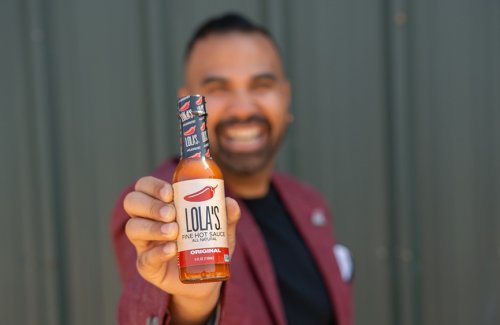
I remember when it was just my mom and I selling at farmers markets and now to see her recipes in every Walmart store in America is truly the American Dream.

Taufeek Shah, CEO and Founder of Lola’s Fine Hot Sauce

WHAT’S NEW WITH LOLA’S FINE HOT SAUCE

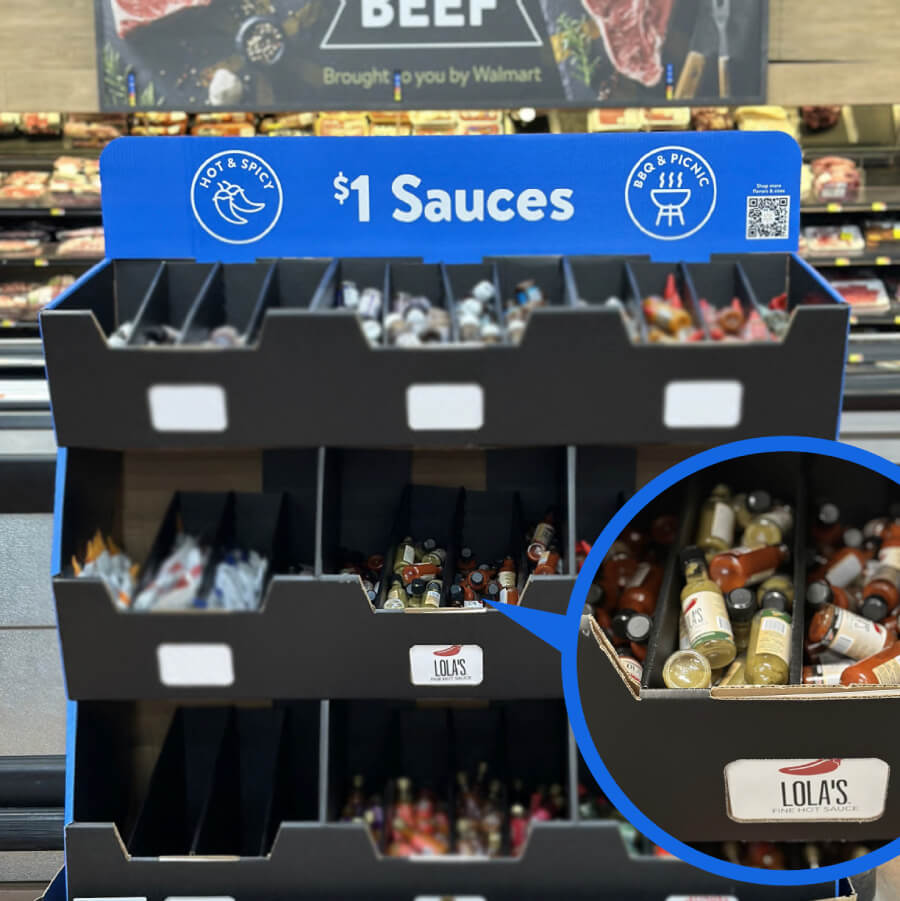
Since last year, Lola’s Fine Hot Sauce has achieved several significant milestones. We’ve expanded our product line by releasing Lola’s Fine Spicy Ketchup and AE Dairy Spicy Party Dip and introduced convenient mini bottles. Our distribution network has grown substantially, highlighted by a major partnership with Walmart: bringing our sauces to over 4,000 stores nationwide.

Product

We’ve also partnered with local farmers, packaging companies, and local supply chains to make sure our products are proudly made in America featuring fresh real all-natural ingredients.  Additionally, we’ve received numerous awards like the Best for Your Pantry Award by Better Homes and Gardens, awards in supplier diversity, and positive reviews, solidifying our reputation for quality and flavor. Overall, our growth and achievements reflect our commitment to bringing not only the best hot sauce but also our family’s recipe hot sauce to our customers while making a positive impact on the community.

HOW IT FEELS TO NOW BE AVAILABLE IN OVER 4000 WALMART STORES

It feels incredibly rewarding and humbling to see our family recipe hot sauces on the shelves of Walmart stores across the country! I remember when it was just my mom and I selling at farmers markets and now to see her recipes in every Walmart store in America is truly the American Dream.  This milestone represents years of hard work and dedication from our entire team, and it’s amazing to see our brand reach such a wide audience.

OVERCOMING PRODUCTION CHALLENGES

One of the major challenges was scaling up production to meet the demand of over 4,000 stores without compromising on quality. We had to streamline our processes, invest in new equipment, partners, and logistics, and ensure our supply chain could handle the increased volume. Great communication and great relationships with our current partners and new partners helped create new jobs within our community and also helped us understand our sauce better. Being all-natural and the amount of pepper/garlic and more that we brought in truly created an all-ships-rise in collaboration.

KEY LEARNINGS ON LARGE-SCALE PRODUCTION AND DISTRIBUTION

We’ve learned the importance of robust logistics and supply chain management. Ensuring that we have a reliable source of ingredients and efficient distribution channels is crucial. We also realized the value of maintaining flexibility in our production processes to adapt to unexpected changes in demand or supply. Additionally, building strong relationships with our retail partners has been essential in facilitating smooth operations.

FEEDBACK FROM THE CUSTOMERS

The feedback has been overwhelmingly positive. Customers love the convenience of our mini bottles, which are perfect for on-the-go use and trying out different flavors without committing to a full-sized bottle. Our expanded product line, including unique flavors like our Green Jalapeno & Serrano along with our coveted Original, has been well-received for its unique tastes with rich garlic nodes and just the right amount of heat and flavor.

LOOKING AHEAD

In the next few years, we aim to expand our product line with new and innovative flavors as well as continue to drive our signature original in both food service and retail. We also have a hot honey launching in the next few days which features a delicious flavor profile that matches our hot sauce with an all-natural honey.

We’re also looking to enter new international markets and increase our presence in existing ones. Another goal is to enhance our online shopping experience, increase direct-to-consumer sales, and expand internationally.

ADVICE FOR OTHER MINORITY-OWNED BUSINESSES

Stay true to your vision and values. Build a strong, dedicated team that believes in your mission. Networking and building relationships within the industry are crucial. Don’t be afraid to seek mentorship. But most importantly hustle – grinding hard and outworking everyone with the belief in your brand or product will get you to where you want to be.

CONCLUSION

We’re excited about the future of Lola’s Fine Hot Sauce and grateful for the support we’ve received from our customers and partners. We’re committed to continuing our journey of delivering high-quality, flavorful family recipe hot sauces while making a positive impact on our community and supplier diversity proudly made in America while staying true to our Filipino/Pakistani roots.

CONNECT WITH LOLA’S FINE HOT SAUCE

Website: lolasfinehotsauce.com

Instagram: @lolasfinehotsauce

TikTok: @lolasfinehotsauce

Facebook: Lola’s Fine Hot Sauce

X: @lolafinehotsauce