Awaken* newsletter

April 4, 2024

SHARE:

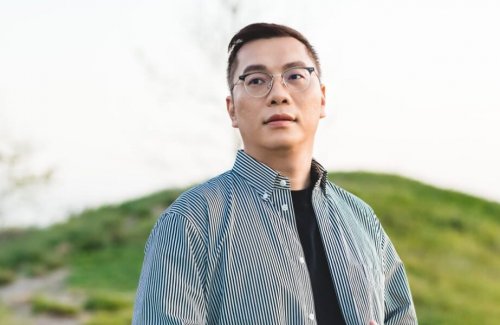
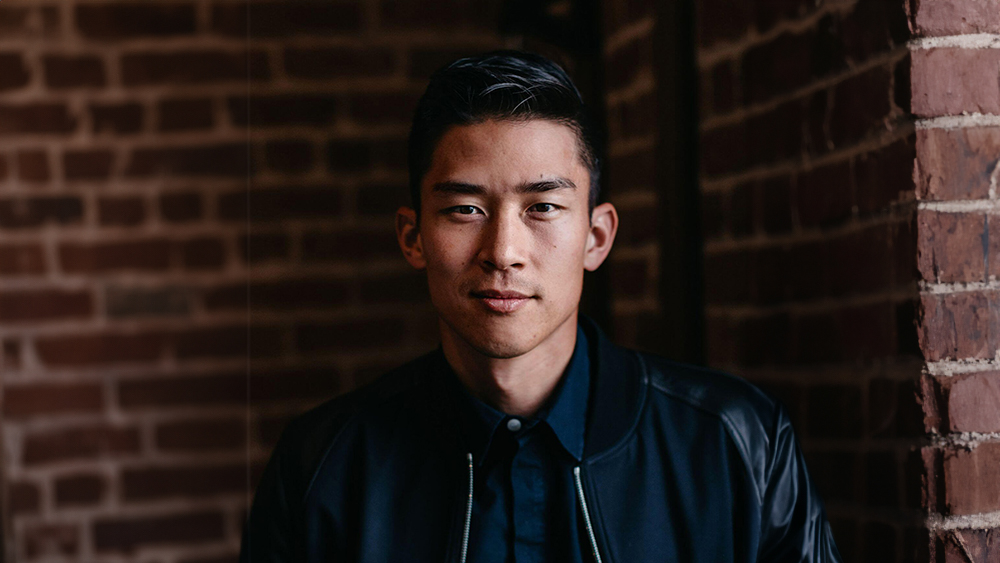
On November 10th, I had the honor of chatting with Bryant Chou. Bryant is the co-founder of Webflow, one of the leading website-building platforms in the world with a valuation of $4 billion. Within startup-land, Webflow is especially notable for being mostly bootstrapped, waiting five years before raising an additional round after their seed round in 2014.

In our conversation, we touched on a variety of topics ranging from being Asian American to working at startups vs. big tech. 

Note: Quotes were lightly edited for brevity and clarity.

EARLY CAREER

I started our conversation by asking Bryant if he had any entrepreneurial endeavors before his first official company. While he never directly started a business, Bryant did display early signs of his scrappiness.

My mom gave me twenty dollars a week for all of my lunches and whatever discretionary income. So, of course I spent most of it on food, but that essentially meant that I had nothing really left over. But I also really wanted to be a normal high school student and go to prom and go to dances and stuff like that. So I made money in high school by entering Counter-Strike tournaments. I would earn, I don’t know, a few hundred bucks in these local LAN parties. And that’s how I paid for dances. So I always kind of adapted and tried to apply myself in different ways, with whatever skill sets I had.

He continued on to talk about his motivation for getting into startups:

To be honest, I don’t know if I would have done startups if I was at Facebook or Google. You know, I didn’t land those jobs coming out of school. I wasn’t smart enough. Didn’t pass those interviews… I think because I was at a mid-tier tech company, it kind of gave me more hunger to do something on my own. I wanted a change and believed software startups were the future. I took the plunge in 2011, driven by the belief that startups would be significant, 

However, he also cautioned about rushing into startups: 

You need to think about the things that really need to be true in order to be a founder and do it successfully. One of those things is working in a space that you really want to affect and make a difference in. You just want to make sure that you’re working on something that’s worthy of 16 hour days, you know?

BRYANT’S ROLE AT WEBFLOW

Although Bryant is perhaps best known as being the co-founder and CTO of Webflow, I saw that Bryant had recently shifted his focus away from technology to growth and marketing for Webflow, so I asked him about that:

Because we were bootstrapped, we never really invested in growth and marketing. So what started as an impatient maneuver on my end, like, ‘hey, I think we need to start doing these things’ turned into, ‘hey, this is actually something that is ROI positive.’ Who would have thunk? I suppose even though I’m an engineer and builder and product person at heart, I’m also a company builder in that sense. So I’ve–for example, started our marketing, started sales, started data, started security, so all these things are just things that are just like, ‘hey, we need to do these things. Let’s figure out how to do it.’ And I think that’s something that most entrepreneurs are going to have to do. I don’t think you’d necessarily have an option to not do it.

Coincidentally, I had talked to the new CTO of Webflow, Allan, a few months prior. Alan was super nice and very sharp–a great backfill for Bryant.

NAVIGATING ASIAN IDENTITY

As the Asian Hustle Network, I naturally had to ask Bryant about how he felt being Asian qualified his experience as a founder, he started out by acknowledging the position of Asian men:

It’s a well-known fact that Asian men in Western societies have a different bar to hurdle than other people. One of the reasons why I was so keen to help produce the 38 in the Garden movie with Jeremy Lin is because he articulated this so well. Have you seen that documentary? 

I had not, in fact, seen the documentary. Oops. I watched it after the interview on his recommendation and it was very, very good. Please give it a watch! Bryant continued:

It’s my one and only film and probably the last one that I’ll ever be involved in. I’m totally okay with this because I believe this cause is important. Part of the reason why I agreed to chat with you is because we obviously have a chip on our shoulder. We are seen differently in society. I’ve dealt with it in various ways myself. I’ve taken a colorblind approach to business interactions and never thought about my race or ethnicity in certain environments. I think that’s ultimately what you have to do. As Asian people in Western society, you’re supposed to be heads down, let your actions speak for themselves. I still very much have that approach. Who knows if it’s the most optimal thing to do.

Despite his colorblind approach, Bryant was clearly very cognizant of the fact that people perceive Asians differently, and had a suggestion for our readers:

To just walk amongst people of the same race and they speak your language, I think that’s like a worthy thing to do and to dive into. I identify as Taiwanese, at least as much as I identify as an American. When I go there, I literally feel different. I feel like I’m one of the same, like I’m among my people, I’m not viewed as a minority, I’m just viewed as a normal person. I think every Asian-American should have that sensation at some point in their life that they feel like they’re seen as someone just like everyone else, and the only place where I felt that has been Taiwan.

I knew Bryant grew up in the Bay where there were a lot of Asians, so I asked him if he felt the same sensation in those areas, he suggested:

The broader construct of society that we live in is still the US, which is still 85% non-Asian. I think Asian Americans make up about 12% of the population, maybe even less. I don’t think it’s so much about not being in the majority. It’s more about the sensation that you get that you are biologically or ethnically more similar to the people that you’re walking around with in Asia.

NAVIGATING ENTREPRENEURIAL CHALLENGES

Moving onto the next topic, I asked Bryant about his emotional experience as I had heard a lot of founders talk about how difficult this aspect of running a startup was:

I thought it would be harder technically than it would be emotionally. But I would say the social emotional components of building a company are 100 times harder than the technology itself.

I followed up by asking if there were any specific experiences that stood out to him:

They’ll come up in different forms. In 2020, there were a lot of social justice issues that made running a company very challenging. Ultimately, when you’re at a company, you need to be hyper-rational. You’re faced with a conundrum between being a good steward of the company’s mission and vision and maybe what people inside your company believe, and sometimes those things clash.

It was clear that this level of situation took an emotional toll on Bryant, so I asked him how he copes with it and prevents it from seeping into his personal life:

You compartmentalize most of it. It helps to have a supporting spouse and partner. It’s great to have kids that can distract you from this.

ADVICE FOR YOUNG PROFESSIONALS

Adding on his comments about entrepreneurial pain, Bryant offered:

I think like if you’re in your 20s, I would actually be chasing that kind of pain. It’s the best time to chase pain and suffering. If it means that will lead to a certain level of intellectual expansion, social emotional awareness. There’s no better time to find the limits of what you’re capable of than when you’ve graduated, when you’ve got a whole life in front of you. Like, it’s time to see what you’re made of. So I’d be a huge proponent of young folks going to startups that are hectic and crazy, working in environments where they can learn, dedicating time and energy to perfecting a craft. Those are things that you don’t learn in school. And those are only things that you can chase on your own accord.

This made me think about how I have a lot of friends who go into Big Tech. A good number of them say that they want to pursue their own company eventually, but want to get their start at a big company to build up their skills. I asked Bryant what he thought about this approach:

There’s two kinds of learning that you can do at a big tech company. One is technology related. So you can go and immerse yourself in a technology, and be surrounded by technologists that can help you. That’s something very valuable for sure, but learning how to do things the way Meta or Google does things is not transferable at all to startups. None of their processes matter. None of their ways of thinking about building products matter. It’s just a whole ‘nother ball game. There are maybe some professional skills that you get to pick up. Communication, the ergonomics around the work–such as just documenting your work, making your work transparent, and just picking up good habits–that’s for sure. But there’s nothing like working in an early stage startup where you’re building something from nothing. You know, you’re almost never doing that at a big company.

I was somewhat surprised that Bryant felt that the Meta or Google way of thinking about products was applicable, so I pressed him to elaborate:

So actually, that’s a great example of something that I did retain. It’s more so the principles at which you approach building a product, right? Developing customer empathy, ensuring you’re not over-engineering things really matters. Facebook and Meta have an abundance of resources. Engineers at large companies are very good at building incredible things that are well-defined in a narrow spectrum. However, in a startup, you’re trying to go as wide as possible with what an engineer could potentially contribute to and build 60 to 80% of it. It doesn’t need to be perfect.

Bryant’s comment about over-resourced companies made me think about the opposite, under-resourced companies, and how I often hear about employees at those companies working weekends and long nights. I asked Bryant if he thought that was necessary in a startup:

There’s a time and place for it. I don’t believe nights and weekends are required. It’s important for people in their 20s to find their limits professionally and personally. This means making time for personal things like dating, hanging out with friends, and attending events. It’s about striking the right balance. For instance, I encourage my team members to take vacations when needed. It’s crucial for startup leaders to have a good pulse on their employees, understanding their strengths and weaknesses, and checking in on their well-being. I don’t believe anyone at SpaceX or elsewhere can stare at a problem for 100 hours a week and feel productive. It’s important to step out of your zone, draw inspiration from different things, and take breaks. To live a balanced life. When I say that people should find their limits professionally and personally, it’s like that limit is different for each person. But you have to feel like you’re able to stretch, build the muscle for your mental and physical strength to stretch when you need it. I think that’s really important to do.

SHOUTOUTS  

Webflow is hiring across multiple functions! Please visit this link to find and apply for open roles, or feel free to get in touch with Bryant at bryant@webflow.com if you would like to reach out personally for opportunities.

38 at the Garden, the short film about Jeremey Lin which Bryant helped produce is available to watch on HBO Max. The film is 38 minutes short and is a must-watch for all Asian Americans.

Thank you Bryant for speaking with us!

Related Articles

240909_AHN Stories (1)-png

Stories

Dr. Tiffany Moon on Empowering Women Through LeadHer Summit

Do you ever feel like you’re juggling a hundred things at once—your career, family, personal goals—and wonder how to keep it all together?

Dr. Tiffany Moon knows exactly what that’s like. As a mother, doctor, entrepreneur, and advocate for women’s empowerment, she has mastered the art of balancing multiple roles without losing sight of her passions. Not only did she figure out how to manage all these roles, but she’s also thriving in each of them.

Driven by her love for creativity and her desire to inspire others, Dr. Moon ventured into entrepreneurship, launching Aromasthesia Candles and Three Moons Wine. Most recently, she founded LeadHer Summit, a leadership conference designed to uplift and empower women from all different professional backgrounds.

Here’s how Dr. Moon is redefining success by finding joy in balancing her work, passions, and family—while staying true to her authentic self:

The Heart Behind Her Success

Dr. Tiffany Moon’s journey to success was deeply influenced by her immigrant parents, whose sacrifices fueled her ambition. Watching them work tirelessly to create a better life for their family shaped her determination to thrive—not just for herself, but for her twin daughters.

“I saw firsthand the struggles they faced, and I knew I wanted to create a better life for myself and my children,” she reflects.

Driven by this desire, Dr. Moon achieved remarkable milestones early on. By 19, she had graduated from Cornell University, and by 23, she completed medical school, quickly establishing herself as a respected anesthesiologist. However, her goals extended beyond her medical career. She also stepped into entrepreneurship to show her daughters that women can lead, build businesses, and create their own opportunities without sacrificing joy.

“I want my daughters to know that they don’t have to give up parts of themselves to fit into a box others might create for them,” Dr. Moon explains. “Being true to who they are is the most powerful way to lead and succeed.”

Navigating Challenges and Finding Her True Self

Like many of us, Dr. Moon faced pressures to meet the expectations placed on her, both by society and herself. As a first-generation Chinese American, she felt the weight of cultural norms that pushed her to be the perfect daughter, doctor, wife, and mother. This constant striving for perfection left her feeling exhausted and burnt out.

It wasn’t until she took a step back that she realized something needed to change. Through therapy, self-reflection, and surrounding herself with supportive mentors, Dr. Moon learned to let go of the need for perfection and embrace her true self. She began to prioritize her own well-being, and in doing so, she found a sense of freedom and joy that had been missing.

“It was a long process, but it’s something I now advocate for, especially with other women who feel like they have to do it all.“

In her book, Joy Prescriptions, Dr. Moon shares her journey of overcoming perfectionism and embracing vulnerability and authenticity, inspiring others to follow a similar path.

Turning Passion Into Purpose

Beyond medicine, Dr. Moon’s entrepreneurial spirit has flourished. She’s combined her love for creativity and her professional knowledge to launch two successful businesses: Aromasthesia Candles, a line of candles inspired by her medical career, and Three Moons Wine, which she started with her husband. Both ventures reflect her belief that you don’t have to limit yourself or strive for perfection—you can embrace all the different facets of who you are and explore them fully.

But perhaps her most meaningful venture is the LeadHer Summit, a leadership conference dedicated to empowering women across various industries. 

The LeadHer Summit 2024, set to take place from November 8 to 10 at the JW Marriott in Dallas, TX, is designed to inspire women to connect, grow, and take bold steps in their careers and personal lives. 

The 3-day event features keynote sessions, hands-on workshops, and panel discussions led by 25 expert speakers. Attendees will have the opportunity to build meaningful connections through networking opportunities and celebrate in style at the exclusive Glam Gala.

For more information, visit leadhersummit.com

Creating a Legacy for the Next Generation

At the heart of everything Dr. Moon does is her desire to leave a positive legacy for her twin daughters. She wants them to grow up knowing they can chase their dreams and still be true to who they are.

For Dr. Moon, success isn’t about sacrificing joy but about finding purpose in everything you do. Through her own life, she’s inspiring women everywhere to embrace authenticity and live fearlessly, showing that it’s possible to lead with both heart and ambition.

Connect with Dr. Tiffany Moon

Instagram: @leadhersummit @tiffanymoonmd
TikTok: @tiffanymoonmd
Facebook: Tiffany Moon, MD
LinkedIn: Tiffany Moon, MD, FASA

Elegant Cinematic Wedding Thumbnail HD 169-png

News

FaZe Jason Sparks a NewJeans Renaissance, Surpassing 100K Twitch Subscribers

NewJeans is onto another journey of global stardom, this time, it is towards a quite interesting, new audience. Their song “ETA” has surprisingly witnessed a resurgence after 1 year of its release, which many humorously referred to as “NewJeans Renaissance.” It all happened when Vietnamese American streamer Jason “theween” Nguyen, ranked 15th globally and 10th in the U.S. on Twitch, celebrated reaching 100,000 subscribers by playing the track during his livestream, becoming the 2nd most-subscribed Twitch streamer.

The viral meme of him and his friends passionately screaming the song lyrics “What’s your ETA?” took the internet by storm. Thanks in part to Jason’s live stream and the song’s inherent quality, this track’s daily streaming exploded. From September 29 to October 2, the song reached 322,985, 424,271, 563,295, and 659,860 streams on Spotify. On October 1 and 2, “ETA” became the most streamed song by NewJeans, despite its 1-year release. 

Jason Nguyen celebrated his 100,000-subscriber milestone to “ETA” by NewJeans

However, besides the song as an upsetting observation of modern romance, Jason has challenged a stereotype long-fixated on K-pop listeners. K-pop, especially in Western countries, was a novel concept until recent years. Since the global expansion of K-pop, it has gained a significant amount of popularity. Just when it seems like the world is more open to a new musical force, stereotypes remain or even worsen. 

K-pop was usually linked to cute, dreamy imagery, which widely attracted teenage girls and was often seen as un-masculine. Many, especially men, did not have a positive outlook on the genre, believing that its image went against their ideals of masculinity and lifestyle. NewJeans’ songs, which exude youthful femininity and often above-board quirkiness, could easily fall into the ‘no’ lists of many men chasing after that idea. By publicly showing his admiration for the group, Jason Nguyen has proven that K-pop is an open space for all ages, genders, and sexual orientations. 

While singing and dancing along to the cheerleader-chanting tunes of “ETA,” Jason has created a fun and free atmosphere, creating a welcoming space for everyone, including the male-dominated gaming and streaming communities. His open appreciation for K-pop has helped introduce the genre to a broader audience, particularly within the streaming and gaming communities, encouraging more people to embrace the music free from societal labels.

Jason Nguyen, better known as JasonTheWeen, is a Vietnamese American YouTuber and Twitch streamer. He is known for his in-real-life streams and gaming content. Jason officially joined FaZe Clan in April 2024 as part of their reboot. 

NewJeans has never really left the K-pop scene, even though it’s been almost five months since their last single album, “How Sweet.” Since they first caught the world’s attention with hit after hit, their coming-of-age, iridescent music has shaped a distinctive persona in the industry. NewJeans arrived on the K-pop scene as a group of teenage girls next door navigating young love and friendships, while a transcendental ambiance hovers around them, instilling a touch of nostalgia yet mystique. This unexpected renaissance is just one more proof that NewJeans is here to stay.

articlestory_lrg_img (1)-jpg

Stories

Empowering Entrepreneurs with Eric Le Tai’s Digital Design Solutions

Eric Le Tai is not your typical product designer.

As the Founder of Collective Engram, an online design studio based in Nevada, Eric has carved out a niche for himself by blending creativity with purpose. With a background in art direction and a keen focus on user experience (UX) research, he is driven by research-based design that impacts the community and connects business brands with their customers.

But how did Eric get here?

Eric’s journey began in 2019 when he took a pivotal step by studying social impact in New York. There, he discovered how to craft digital solutions that address economic challenges. This ultimately inspired him to pursue entrepreneurship seriously. “My passion for entrepreneurship has always driven me, but transitioning from a traditional 9-5 mindset has been a journey,” Eric shared with AHN.

Despite all the hurdles that he’s encountered, Eric is proud of his willingness to take risks, embrace failure, and keep moving forward.

Through Collective Engram, Eric hopes to form a collaborative community of professionals—designers, researchers, and developers—working together to deliver innovative digital services to small businesses in need.

His mission is simple but profound: to empower entrepreneurs and small businesses by offering design and research services tailored to their needs, while also creating new opportunities for collaboration within the industry.

The Services of Collective Engram

Eric offers a wide range of services that cater to businesses and entrepreneurs at different stages of their digital journeys. His primary focus is on final design deliverables for web, applications, and print. Clients can opt for additional research services, but they are not always required.

Here’s a breakdown of the services offered through Collective Engram:

User Research (optional):

  • UXR Research Report
  • Competitive Analysis
  • Personas

Final Designs (Figma, Photoshop, etc.):

  • Visual Design Final
  • Wireframe
  • Interactive Prototype

Design Support:

  • Design System/Components
  • User Journey Flow/Site Map
  • Product Strategy Workshopping
  • Presentation Support
  • Development Support (Hand-Off)

Any new business can benefit from creating an online website or blog for their product, but Collective Engram is especially beneficial for small businesses, entrepreneurs, and startups that need a professional and cohesive online presence.

For larger projects, such as application development or e-commerce platforms, Eric’s product design and research services become particularly valuable. He tailors his approach based on the client’s needs and the goals they wish to achieve with their product.

The Future of Collective Engram

Looking ahead, Eric sees exciting opportunities for Collective Engram. “My main focus is bringing in new clientele and optimizing the workflow process for different client needs,” Eric says. Currently, his primary focus is web design, but he plans to expand into larger-scale projects such as application and product design and large e-commerce platforms.

Eric is also exploring opportunities in industries like healthcare and education, where large-scale data analytics play a crucial role. In addition, he is learning the basics of front-end development to work more seamlessly with developers on future projects.

Connect with Eric

In his efforts to better understand potential clients and their needs, Eric offers free consultations for businesses interested in working with him. You may reach him at: collectiveengram.com

63dcd9ce-5cd7-4d0b-8443-84dfaf06544b (1)-jpeg

Stories

In Luffy Huang’s Vision for Pulse Events, Cultures Align Through EDM Music

CEO of Pulse Events Luffy Huang made waves across New York City this past Labor Day weekend. Known as “the world’s wettest party,” the S2O event made a splash in the Brooklyn neighborhood, delivering euphoric EDM melodies with Thai-inspired traditions that stretch across borders to America. 

But as the CEO of Pulse Events, his vision yearns for unity and togetherness through the power of music. Throughout the years, Luffy has been a driving force behind the diversification of the EDM festival scene, condensing the beats into a spectacular celebration of culture and community. 

The Sounds of Luffy Huang’s Chinese Upbringing and American Dream 

Growing up in China, his early passion for music led him to a career as a singer and TV host between 15 to 20 years ago. Encouraged by the eclectic soundscape in the U.S., his American dream for a successful music career was granted by one of the artists he was touring along with, paving the way for his move to the States. 

“I grew up in China and following my passion for music, I became a singer and TV host 15 to 20 years ago. Since it was always my dream to break into the music industry in the U.S., I began touring with artists and finally came to America with one of them in 2020.”

When he arrived in the U.S., Luffy was bewildered yet determined. The hustle in a foreign land might have caught him off guard for a moment but it also helped him head towards a new direction. “I found the industry here to be very open-minded and felt inspired and encouraged to start my own entertainment company here,” he says. 

Luffy left China for the U.S., driven by the fast-paced music scene.

This geographic shift is a tableau of music inspirations, cultural shock and a deepening sense of identity, all of which prompted him to create Pulse Events, an event agency focused on bridging the Eastern and Western cultures through music and community. 

Cultural Harmony Through Music and Luffy Huang’s Pulse Events Journey

“What inspired me the most was seeing people of different cultures embrace shows produced in Asia and influenced by Eastern traditions,” he says. 

Such ethos were themselves echoed throughout his work, by introducing a global audience to the purpose he wanted to share more of, from highlighting notable Asian creatives and talents, to celebrating the vibrant culture of the Asian community. “I realized that this experience was missing in the U.S. and it became my mission to produce shows here that expose fans to the traditions and dance community culture in Asia,” he says. “I am proud that my shows include elements like Asian night markets, lion dances and spraying water that is the Songkran Thai New Year custom.”

One of the drawbacks of starting Pulse Events in a new country, however, is the balance and harmony among different communities, especially in the U.S. where multiculturalism has long been its celebrated trademark. Yet, despite this animated diversity, Luffy needs to traverse the tricky waters of inclusivity, representation and U.S. culture: 

“Turning my vision into a reality took a bit of time. But once we put on our first Pulse Events show, we learned from the process and got into a good rhythm where we put on multiple shows annually and continued to expand. One of the challenges I face on a daily basis is figuring out how to represent Asian culture in the most authentic way possible, while having our shows appeal to a diverse audience. Striking that balance takes a lot of thought and hard work, finding the right partners to bring that to life. Another challenge I face is that English is my second language, so I sometimes have to take the extra step of using translation tools or making a greater effort to make sure my ideas are communicated correctly.”

Luffy Huang leads Pulse Events with determination, expanding the reach of Asian culture through unforgettable shows

While those challenges might have vexed him in the beginning, every show, event and festival was an emblem of the connectivity that he always has in mind for Pulse Events. The 2023 Spring Festival that Pulse Events had orchestrated last year was an EDM-heavy event to honor Lunar New Year and pull together traditional elements, joyful moments and different communities. It was the first event to infuse electronic music and Asian culture that introduced the beauty of this cultural festival to more American youths:

“I am proud of every show Pulse Events has put on and the legacy we are slowly building by making them annual. We are gearing up for our second Winter Festival in November and our third Spring Festival next year, and planning to bring back S2O after debuting it to the U.S. this past Labor Day weekend. I feel fortunate that we have established a good working relationship with one of the most famous venues in New York City and the world, The Brooklyn Mirage. I am also proud to be the founder of the Krazy Super Concert elevating K-pop in America.”

When East Meets West in Luffy Huang’s Vision for Pulse Events 

As an organization that holds the same values as AHN to uplift and highlight the Asian community, AHN takes this interview as a special opportunity to explore how Asian talents are being showcased and represented in the industry. Luffy’s vision remains unchanged: 

“The mission and vision of Pulse Events is to bridge the East and the West through music events that unite people of all backgrounds and educate them. Through bringing fans of all kinds together through the common love of music, we are able to open their minds and hearts to understanding Asian culture and embracing the immense talent within our community, from music producers and DJs to entrepreneurs like myself and my colleagues.”

This determination and commitment has led Luffy on a road of success, producing annual mega shows like the Lunar New Year Spring Festival, the Winter Festival and most recently S2O New York, all to celebrate cultures and unite communities through EDM. Even just at the start, Pulse Events has landed performance deals with many prominent artists in the electronic music scene, from the enigmatic Marshmello to platinum record-selling DJ Afrojack. 

Luffy’s goal is clear: bridge the East and West through music, uniting fans from all backgrounds while showcasing Asian talents.

Connect With Luffy Huang

Much of Luffy’s current success comes less from pure luck and more from a consistent performance of hard work and innovation. Whether it be electric live festivals, or getting deep down into his heritage, Luffy knows better than ever that Pulse Events was a child of hustle and resilience, no matter where you came from and who you are:

“From my own journey, I believe that if you hustle hard enough and never give up on your dreams, you will succeed, even in a foreign country or place outside of your comfort zone.” 

Facebook: One Pulse Events 

Instagram: @1pulseevents

X: @onepulseevents

TikTok: @1pulseevents