Awaken* newsletter

April 4, 2024

SHARE:

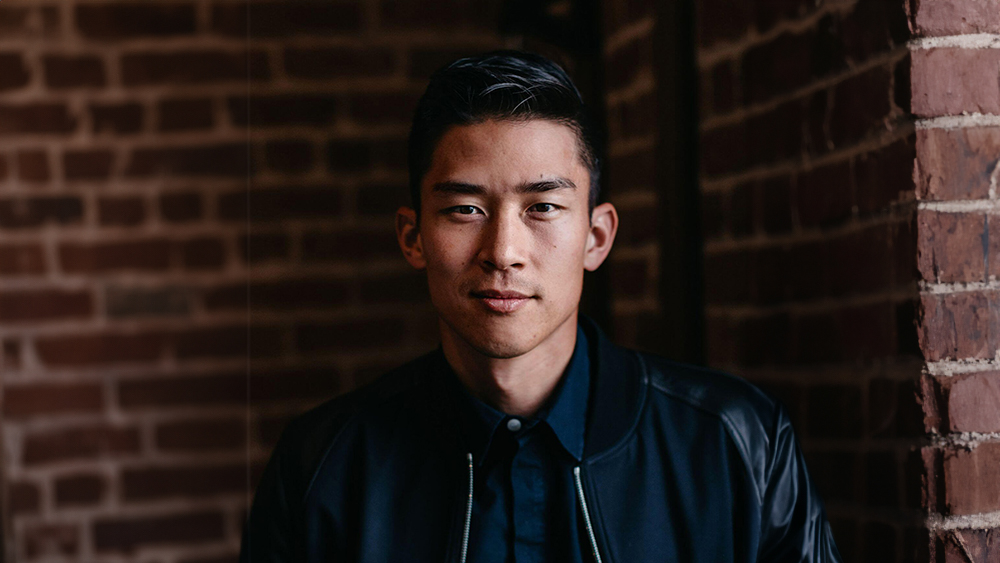
On November 10th, I had the honor of chatting with Bryant Chou. Bryant is the co-founder of Webflow, one of the leading website-building platforms in the world with a valuation of $4 billion. Within startup-land, Webflow is especially notable for being mostly bootstrapped, waiting five years before raising an additional round after their seed round in 2014.

In our conversation, we touched on a variety of topics ranging from being Asian American to working at startups vs. big tech. 

Note: Quotes were lightly edited for brevity and clarity.

EARLY CAREER

I started our conversation by asking Bryant if he had any entrepreneurial endeavors before his first official company. While he never directly started a business, Bryant did display early signs of his scrappiness.

My mom gave me twenty dollars a week for all of my lunches and whatever discretionary income. So, of course I spent most of it on food, but that essentially meant that I had nothing really left over. But I also really wanted to be a normal high school student and go to prom and go to dances and stuff like that. So I made money in high school by entering Counter-Strike tournaments. I would earn, I don’t know, a few hundred bucks in these local LAN parties. And that’s how I paid for dances. So I always kind of adapted and tried to apply myself in different ways, with whatever skill sets I had.

He continued on to talk about his motivation for getting into startups:

To be honest, I don’t know if I would have done startups if I was at Facebook or Google. You know, I didn’t land those jobs coming out of school. I wasn’t smart enough. Didn’t pass those interviews… I think because I was at a mid-tier tech company, it kind of gave me more hunger to do something on my own. I wanted a change and believed software startups were the future. I took the plunge in 2011, driven by the belief that startups would be significant, 

However, he also cautioned about rushing into startups: 

You need to think about the things that really need to be true in order to be a founder and do it successfully. One of those things is working in a space that you really want to affect and make a difference in. You just want to make sure that you’re working on something that’s worthy of 16 hour days, you know?

BRYANT’S ROLE AT WEBFLOW

Although Bryant is perhaps best known as being the co-founder and CTO of Webflow, I saw that Bryant had recently shifted his focus away from technology to growth and marketing for Webflow, so I asked him about that:

Because we were bootstrapped, we never really invested in growth and marketing. So what started as an impatient maneuver on my end, like, ‘hey, I think we need to start doing these things’ turned into, ‘hey, this is actually something that is ROI positive.’ Who would have thunk? I suppose even though I’m an engineer and builder and product person at heart, I’m also a company builder in that sense. So I’ve–for example, started our marketing, started sales, started data, started security, so all these things are just things that are just like, ‘hey, we need to do these things. Let’s figure out how to do it.’ And I think that’s something that most entrepreneurs are going to have to do. I don’t think you’d necessarily have an option to not do it.

Coincidentally, I had talked to the new CTO of Webflow, Allan, a few months prior. Alan was super nice and very sharp–a great backfill for Bryant.

NAVIGATING ASIAN IDENTITY

As the Asian Hustle Network, I naturally had to ask Bryant about how he felt being Asian qualified his experience as a founder, he started out by acknowledging the position of Asian men:

It’s a well-known fact that Asian men in Western societies have a different bar to hurdle than other people. One of the reasons why I was so keen to help produce the 38 in the Garden movie with Jeremy Lin is because he articulated this so well. Have you seen that documentary? 

I had not, in fact, seen the documentary. Oops. I watched it after the interview on his recommendation and it was very, very good. Please give it a watch! Bryant continued:

It’s my one and only film and probably the last one that I’ll ever be involved in. I’m totally okay with this because I believe this cause is important. Part of the reason why I agreed to chat with you is because we obviously have a chip on our shoulder. We are seen differently in society. I’ve dealt with it in various ways myself. I’ve taken a colorblind approach to business interactions and never thought about my race or ethnicity in certain environments. I think that’s ultimately what you have to do. As Asian people in Western society, you’re supposed to be heads down, let your actions speak for themselves. I still very much have that approach. Who knows if it’s the most optimal thing to do.

Despite his colorblind approach, Bryant was clearly very cognizant of the fact that people perceive Asians differently, and had a suggestion for our readers:

To just walk amongst people of the same race and they speak your language, I think that’s like a worthy thing to do and to dive into. I identify as Taiwanese, at least as much as I identify as an American. When I go there, I literally feel different. I feel like I’m one of the same, like I’m among my people, I’m not viewed as a minority, I’m just viewed as a normal person. I think every Asian-American should have that sensation at some point in their life that they feel like they’re seen as someone just like everyone else, and the only place where I felt that has been Taiwan.

I knew Bryant grew up in the Bay where there were a lot of Asians, so I asked him if he felt the same sensation in those areas, he suggested:

The broader construct of society that we live in is still the US, which is still 85% non-Asian. I think Asian Americans make up about 12% of the population, maybe even less. I don’t think it’s so much about not being in the majority. It’s more about the sensation that you get that you are biologically or ethnically more similar to the people that you’re walking around with in Asia.

NAVIGATING ENTREPRENEURIAL CHALLENGES

Moving onto the next topic, I asked Bryant about his emotional experience as I had heard a lot of founders talk about how difficult this aspect of running a startup was:

I thought it would be harder technically than it would be emotionally. But I would say the social emotional components of building a company are 100 times harder than the technology itself.

I followed up by asking if there were any specific experiences that stood out to him:

They’ll come up in different forms. In 2020, there were a lot of social justice issues that made running a company very challenging. Ultimately, when you’re at a company, you need to be hyper-rational. You’re faced with a conundrum between being a good steward of the company’s mission and vision and maybe what people inside your company believe, and sometimes those things clash.

It was clear that this level of situation took an emotional toll on Bryant, so I asked him how he copes with it and prevents it from seeping into his personal life:

You compartmentalize most of it. It helps to have a supporting spouse and partner. It’s great to have kids that can distract you from this.

ADVICE FOR YOUNG PROFESSIONALS

Adding on his comments about entrepreneurial pain, Bryant offered:

I think like if you’re in your 20s, I would actually be chasing that kind of pain. It’s the best time to chase pain and suffering. If it means that will lead to a certain level of intellectual expansion, social emotional awareness. There’s no better time to find the limits of what you’re capable of than when you’ve graduated, when you’ve got a whole life in front of you. Like, it’s time to see what you’re made of. So I’d be a huge proponent of young folks going to startups that are hectic and crazy, working in environments where they can learn, dedicating time and energy to perfecting a craft. Those are things that you don’t learn in school. And those are only things that you can chase on your own accord.

This made me think about how I have a lot of friends who go into Big Tech. A good number of them say that they want to pursue their own company eventually, but want to get their start at a big company to build up their skills. I asked Bryant what he thought about this approach:

There’s two kinds of learning that you can do at a big tech company. One is technology related. So you can go and immerse yourself in a technology, and be surrounded by technologists that can help you. That’s something very valuable for sure, but learning how to do things the way Meta or Google does things is not transferable at all to startups. None of their processes matter. None of their ways of thinking about building products matter. It’s just a whole ‘nother ball game. There are maybe some professional skills that you get to pick up. Communication, the ergonomics around the work–such as just documenting your work, making your work transparent, and just picking up good habits–that’s for sure. But there’s nothing like working in an early stage startup where you’re building something from nothing. You know, you’re almost never doing that at a big company.

I was somewhat surprised that Bryant felt that the Meta or Google way of thinking about products was applicable, so I pressed him to elaborate:

So actually, that’s a great example of something that I did retain. It’s more so the principles at which you approach building a product, right? Developing customer empathy, ensuring you’re not over-engineering things really matters. Facebook and Meta have an abundance of resources. Engineers at large companies are very good at building incredible things that are well-defined in a narrow spectrum. However, in a startup, you’re trying to go as wide as possible with what an engineer could potentially contribute to and build 60 to 80% of it. It doesn’t need to be perfect.

Bryant’s comment about over-resourced companies made me think about the opposite, under-resourced companies, and how I often hear about employees at those companies working weekends and long nights. I asked Bryant if he thought that was necessary in a startup:

There’s a time and place for it. I don’t believe nights and weekends are required. It’s important for people in their 20s to find their limits professionally and personally. This means making time for personal things like dating, hanging out with friends, and attending events. It’s about striking the right balance. For instance, I encourage my team members to take vacations when needed. It’s crucial for startup leaders to have a good pulse on their employees, understanding their strengths and weaknesses, and checking in on their well-being. I don’t believe anyone at SpaceX or elsewhere can stare at a problem for 100 hours a week and feel productive. It’s important to step out of your zone, draw inspiration from different things, and take breaks. To live a balanced life. When I say that people should find their limits professionally and personally, it’s like that limit is different for each person. But you have to feel like you’re able to stretch, build the muscle for your mental and physical strength to stretch when you need it. I think that’s really important to do.

SHOUTOUTS  

Webflow is hiring across multiple functions! Please visit this link to find and apply for open roles, or feel free to get in touch with Bryant at bryant@webflow.com if you would like to reach out personally for opportunities.

38 at the Garden, the short film about Jeremey Lin which Bryant helped produce is available to watch on HBO Max. The film is 38 minutes short and is a must-watch for all Asian Americans.

Thank you Bryant for speaking with us!

Related Articles

Blogs, Ideas

Pretty Isn’t Enough: 3 Functional Must-Haves for Your Website

A beautiful website doesn’t guarantee success if it lacks functional design. Here are some functional features that you need to consider for your website.

Loading Time 

Nobody likes waiting, so that means a slow website will significantly downgrade your audience’s experience. Improving your website speed is one of the first things to keep in mind when building a website.

loading-time

Mobile Responsiveness

Your audience won’t always find you on a laptop. With nearly 60% of global web traffic coming from mobile devices, it’s essential to design with phones in mind. Don’t just build for desktops—make sure the mobile experience is just as strong.

mobile-friendly

Clear Navigation

Users should find what they need in 2-3 clicks—anything more feels like ordering a coffee but going through a visa application to get it.

clear-navigation

Why Asian Hustle Solutions?

Looks are not all that the audience cares about. It’s the feels and experience that come along with it. At Asian Hustle Solutions, we help you build fast, functional, and stunning websites that don’t just look good—they convert.

If you want to learn more about our services, visit the Asian Hustle Solutions website at asianhustlenetwork.com/services/

Duolingo Shares Climb 7% as Users Swarm to App to Learn Mandarin (7)-png

Stories

Jelyca Villanueva Turns Passion for Color into a Purposeful Business

Being a female entrepreneur isn’t easy. Jelyca Villanueva is a mother of two, a wife, a certified personal color and image consultant, and the founder of Timeless Tones & Co. While juggling a range of responsibilities, one of her core priorities has always been helping others discover the power of color—not just to enhance their wardrobes, but to express themselves and reflect the unique tones of their lifestyles.

Her studio, Timeless Tones & Co., is more than just a color consulting brand—it offers an experience where clients feel truly seen.

Coming from a professional background in corporate environments, Jelyca brings a unique combination of analytical precision and sensory intuition to her work. She is known for her personalized approach that blends science, aesthetics, and cultural celebration.

jelyca-villanueva
Jelyca Villanueva | Founder of Timeless Tones & Co. 

From Curiosity to Passion

All passion begins with a simple question, and Jelyca’s interest is no exception. “It really started with curiosity. I’ve always loved the way color can completely transform how someone feels,” she shares.

That curiosity soon unfolded into a world of colors—where she was captivated not only through science, but also the cultural richness embedded in various systems, from Korean and Japanese frameworks to Western methodologies. “Once I learned about the science and cultural depth behind personal color analysis, I was hooked. I wanted to create a space where people could experience that same ‘aha’ moment—where everything just clicks and they feel seen.”

Realizing the transformative power of discovering one’s personal color palette, Jelyca decided to turn her passion into a professional journey. Timeless Tones & Co. came to life as a call for everyone to step into a world where color is more than just aesthetics—it’s a bridge to self-acceptance, cultural pride, and everyday confidence.

A Global, Tailored Approach to Color

As she immersed herself in advanced training—including professional certification under CPLUS3 Academy, where she studied Korean, Japanese, and American color systems—Jelyca developed a deep understanding of global color theories. She also trained under Francesca Cairns in the UK and received professional training in the Cocory colorimeter, a scientific tool widely trusted in Korea.

Currently, she is also expanding her expertise through certification in Colors in Nature: Wedding Colors by Leatrice Eiseman, further deepening her understanding of color harmony and seasonal palettes.

Determined to bring this knowledge home, she became San Diego’s first and only provider offering a multi-system approach—merging the best of Korean, Japanese, UK, and American frameworks to deliver deeply personalized results.

As a mother, her mission became even more personal. She aspired to create a business that embodied cultural pride, creativity, and empowerment. “There’s nothing better than seeing someone light up when they find the shades that make them feel confident and radiant,” she proudly shares.

Timeless Tones & Co.

Building a Business from Scratch

Working a stable office job while minding her own business at the same time was no easy task. “Shifting my mindset from structured systems to building something entirely my own was tough,” Jelyca reflects on this life-changing leap. However, it was this bold move that helped her develop the flexibility and creativity that would become the cornerstone of her entrepreneurial journey.

Adding to the challenge was the fact that personal color analysis was still a novel concept in San Diego. This meant Jelyca had to exercise patience, taking time to educate her clients while staying grounded in her belief in the value of her work. Through persistence and unwavering dedication to her craft, she gradually earned the community’s trust. With each session, her clients not only discovered colors that enhanced their features but also gained newfound confidence and a deeper understanding of themselves—solidifying the mission of Timeless Tones & Co. and highlighting the profound impact of her work.

Jelyca and her clients.

Connect with Jelyca Villanueva – Timeless Tones & Co.

Website: timelesstonesandco.com

IG: @timelesstones.andco

250514_AHS-EMAIL-MKT-jpg

Blogs, Ideas

Creating Websites That Connect With Asian Hustle Solutions

A good website goes beyond just its visual design. Its effectiveness hinges on user experience: the ease of navigation, the seamlessness of their journey, and the ability of the site to build brand trust and connection.

Make It Effortless to Explore

The process must stay accessible and navigation-friendly. Keep menus simple, pages scannable, links accessible, and CTA buttons recognizable. 

effortless-to-explore

Let Your Values Show, Naturally

A “good-looking” website means nothing if it doesn’t show who you are.
Your audience should feel your values—through your words, your visuals, your voice.
Whether it’s the copy, the images, or the testimonials, let your mission speak for itself

let-values-show

Optimize for Local SEO

Check out the latest SEO trends in your region. Optimizing for local search can help you stand out in specific markets. Utilize location-specific keywords, maps, and business hours.

optimize-local-seo

Why Asian Hustle Solutions?

At Asian Hustle Solutions, we understand that a great website is more than just a pretty design. It’s about creating an intuitive, seamless experience, and aligned with your brand’s values. Let’s create a website that feels right—for you AND your audience!

If you want to learn more about our services, visit the Asian Hustle Solutions website at asianhustlenetwork.com/services/

Duolingo Shares Climb 7% as Users Swarm to App to Learn Mandarin (7)-png

Stories

Jennifer Chun Blends Tradition With Innovation to Create Sustainable Fashion

Jennifer Chun, Uniformed’s designer, brings a refreshing collaboration of Korean-American heritage and sustainability practices. Her story began during the pandemic, when she discovered traditional natural dyeing techniques. After connecting with experts and artisans, she came to Korea and got directly involved in the dyeing lessons. “I had no idea Korea had its natural dyeing traditions,” Chun shared.

Her collection is a celebratory integration of hand-dyed materials and fabrics from traditional markets to create a sustainable, limited-edition line.

Jennifer Chun blends her Korean heritage into her sustainable fashion line, Uniformed. (Photo credit: Wayn Ohara Reid)

Overcoming the Challenges of Slow Fashion

Amidst the growing world of fast fashion, it is clear that Chun’s main challenge lies in maintaining sustainability while navigating an industry deeply accustomed to mass production and fleeting trends.

Fashion has changed so much that consumers want items faster or cheaper because we have gotten used to mass production. I make such limited quantities that it can be a challenge working with factories that would rather produce en masse and do not want to make specialized pieces that take thought or time, as producing less can increase manufacturing prices. It’s difficult to educate consumers on this when even people in my industry aren’t aware of what goes into the whole process.

During the global lockdown, designer Jennifer Chun found an unexpected bridge to her Korean heritage through a chance encounter with an article on Korea’s natural dyeing traditions—an art form predating the country’s unification.

I came across an article about Korea’s natural dyeing and artisans. I had no idea Korea had its own natural dyeing traditions and techniques that predated the formal unification of Korea. In the article, they interviewed a natural dyer outside of Seoul, and I decided to just email her. My mother was in lockdown, living in LA, and like many senior citizens, the isolation was incredibly difficult. So I asked her to collaborate with me by helping me communicate with the natural dyer.  

We all eventually became pen pals. Once travel restrictions were lifted, my husband and I visited my father, who was living in lockdown in Korea. We made arrangements to meet with the natural dyer and visited her indigo farm and studio. She taught me how to cut the indigo and showed me the basic process of her craft. She suggested we collaborate.

The line developed from there, eventually leading to a capsule collection, incorporating fabrics developed in Korea, including hand-dyed materials and fabrics purchased in traditional markets around the country. And constructed into limited edition pieces to ensure sustainability, and designed with a uniform aesthetic, in New York City’s garment district.

Working with Korean artists—who prioritize quality over quantity—has deepened her appreciation for true craftsmanship. ‘There is so much pride in the craft and process. They do not compromise sustainability at any cost, and I had to assure them that I wouldn’t either if we were to collaborate,’ she explains, highlighting Uniformed’s commitment to sustainability.

Jennifer, while in South Korea.

Integrating Heritage into Design

Jennifer is not one to shy away from how her heritage has a profound impact on her design. She takes great pride in how it informs her work, and she has learned to combine these cultural elements more skillfully as she refines her craft. “With Uniformed, I am really proud that I have been able to bring my Korean American heritage into my designs,” she shared. “None of this is easy or formulaic, but it is a new, interesting, and inspired challenge.”

The opportunities to reconnect with her roots, meet local artisans, and learn new techniques have been both humbling and transformative for Jennifer. “It can be a very humbling experience to adopt a new perspective and craft after working in this industry a certain way,” she reflected. “You’re almost starting over and sometimes have to prove yourself, but it’s all been worth it for the new experiences.” This humility and commitment to continuous learning form the foundation of her design philosophy and entrepreneurial values.

Fashion with a Global Vision

Jennifer’s ultimate goal for Uniformed is to collaborate with artisans around the world, incorporating the diverse experiences of Koreans globally. “I want to understand more about Koreans in different parts of the world,” she shared. By blending these cultural perspectives, she aims to create a brand that celebrates the universal appeal of the ‘uniform,’ merging tradition with modernity.

Jennifer Chun’s design (Photo Credit: Kim Jae Min)

Connect With Jennifer Chun

IG: @uniformed_world

Website: uniformedworld.com