Awaken* newsletter

March 21, 2024

SHARE:

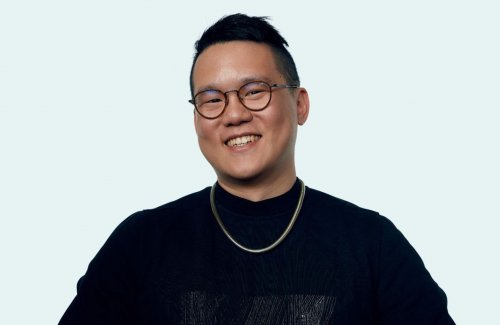
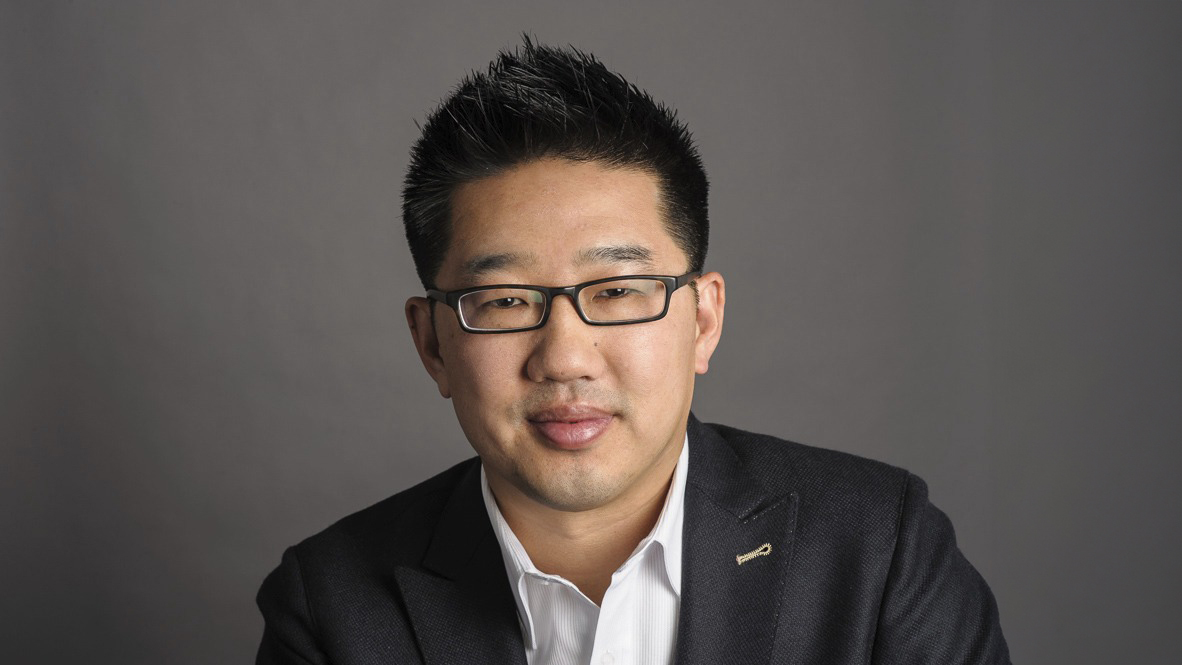
On December 15th, I had the honor to chat with Kevin Chou. Kevin is one of the foremost Asian American founders, having founded a number of gaming and web3 companies (Rally, Forte, Blocto, Gen.G, and Kabam) and currently spends his time working on Superlayer, a crypto venture studio he co-founded two years ago. Kevin also serves on the board of trustees at his alma mater UC Berkeley and notably made the largest donation to the school from an alumni under 40 years old. Without further ado:

FINDING YOUR OWN VOICE

In my research for this interview, I came across an article where Kevin said “Not working has helped me realize that by far the most important thing is finding that voice in your head that’s truly, authentically you”, but he never got around to sharing how to find your own voice, so that’s what I asked him:

One way to think about it is to try to meet as many people as possible, people that seem to inspire you–could be from all walks of life. It could be somebody in the government, the political field, someone doing nonprofit work, or even a church figure. Reach out to as many senior people, people that you admire, people whose work seems really cool. Reach out exactly like how you did. Say, “I’m a new graduate. I’m still trying to figure out what I want to do with my career. I’m really inspired by what you’ve done. Can I set up 30 minutes with you to talk about what you do, what you like about it, what advice you have, etc.?” It’s shocking how few people do this. I know it’s potentially a little scary. You’re reaching out to people who you don’t even know. 

Personalize a note, find them on LinkedIn, or social media, or email, and just send them a note. It’s actually surprising. I took a look at your note. And I was like, “You know what, it’s half an hour of my time. If I could help somebody, I think about it as just paying it forward.” I think a lot of people who’ve had some success in their life are very happy to pay it forward and try to help young people figure out what they want to do, because I think we were all there when we graduated.

On a personal note: I’ll add that my success rate with my cold emails to these founders is about 5-10%, which Kevin noted was within expectations. That’s not to discourage anyone from emailing, but to set realistic expectations as to the response rate. If your response rate is better than mine, I’d love to hear what you’re doing so I can copy you!

ON BEING ASIAN

At Asian Hustle Network, our one recurring question is: “how has being Asian qualified your experience as a founder?”, here is Kevin’s response:

I think about it all the time. I didn’t grow up in an Asian community. I grew up in a very small, rural community. So it was a lot of white and Hispanic folks, and I didn’t really have any Asian restaurants in my town. There were only two other Asian kids in my high school. When I was a kid, I thought it was weird that I was Asian. I looked different from people, ate different food than other people, and my parents didn’t speak English as fluently. I tried to blend in and not really focus on it. Then I went to college at Berkeley. There, I found a lot of friends and felt like I fit in a lot more. As a founder, it’s again, thrust into an environment with very few Asians as CEOs. There are a lot of Asians in technical roles. I think I’ve been incredibly successful. Lately, there have been more and more Asian founders, but there’s not as much of a cohesiveness around it as much as, for example, the Indian founder community is very tight. The Pakistani community is very tight. There are a lot of other ethnic communities that are founders that I think are tighter.

I had recently talked to Bryant Chou from Webflow, and his method of approaching this was to take a colorblind approach when it came to business. I mentioned to Kevin that his approach seemed the opposite of Bryant’s:

I definitely feel differently about it. I’m doing business with a lot of people. In general, when I’m doing business, I’m working with all different types of people. But in terms of people that I want to help out, it’s very natural that I’m more likely to say yes to an interview or try to help somebody else out if I see a little bit of myself in them. Ethnicity helps. I’ve done a lot of business in Asia, including having a 300 person office in China and starting an esports company called Gen.G, which is based in Seoul, Korea. 

Going to Asia, it’s a huge advantage to speak the language and understand some of the cultural aspects. I think about how I can take advantage of the good parts of being an Asian founder and entrepreneur, and then there are probably times where it’s a net negative, and I try to mitigate those as much as possible. 

For example, during COVID, there was a big group of Taiwanese American entrepreneurs, like Steve Chen from YouTube, and Kevin Lin from Twitch, and Jameson Hsu. We decided to go to Taiwan during COVID. There are lots of times where we’re celebrating Chinese New Year together, and just like Chinese New Year events that you go to, and you meet a bunch of other founders. Having kids and a family, I spend a lot of time just enjoying meeting people from those cultural events. 

Pulling on this thread, I asked Kevin what kinds of detriments he felt Asians faced:

I don’t think there’s as much of a detriment anymore. I would say in 2006, I was incredibly lucky that I was a VC. When I joined investment banking, there were like two other Asians in my hundred person office. And in all of the venture industry, there were maybe 10 Asians (circa 2005). How many CEOs were successful, CEOs of companies that were Asian, you had Jensen who ran Nvidia and that’s about it. There were just not many Asians. You think about all the .com companies, all of the e-commerce companies that were started in the late nineties and in that era of the technology world. It’s hard to think of many Asians. I would say Jerry Yang comes to mind.

Although he wasn’t the CEO initially, back then it was really hard to be a CEO who was Asian and trying to pitch to someone who’s generally not Asian. The investors do a lot of pattern matching. For example, they might think, “These kids are from MIT. That’s a good pattern match. I’m interested.” While nobody’s explicitly saying, “I don’t want to fund a woman or someone of a certain ethnicity,” they’re just pattern matching. They’re taking lots of meetings and they might think, “Something’s a little off about this one.” Think about it, how many CEOs have been Asian? It was a lot harder, but today there are a lot more, which is good. I think it’s less of an issue today. On the positive side, a lot of Asian founders get credit for being smart, being technologists, and for hustling. I don’t think it’s much of a detriment anymore the way it was 20 years ago. That’s good for the better in that regard. 

Going off his comment on the lack of Asian CEOs, I asked him what kinds of things he practiced or studied to overcome the additional headwinds he faced:

If you want to be a CEO, everyone has different perspectives on this. My perspective, especially in the context of the Asian Hustle Network, is that one of the Asian stereotypes is that they’re quiet, smart, and they work really hard, but they don’t know how to get out there. They don’t know how to sell or get deals done. So, I think being a good communicator and developing your own leadership style in a way that is authoritative, compelling, and authentic is important. Everyone has their own way of doing this, but there is a certain projection or pattern match of somebody who is going to be a good CEO. As a founder, you’ve got to be someone who can overcome obstacles, regardless of your ethnicity or gender. You have to be good at running through walls. Being good at sales, being able to get your ideas across in a compelling way, these are all incredibly important. These days you can do that via a variety of means. It doesn’t have to all be in person. 

FUNDRAISING 

I have some friends who are looking to raise a pre-seed round for their startup. But they were having some difficulty as they weren’t located in the Bay Area and didn’t have existing connections to angel investors. I wanted to see if Kevin had any advice for people in their position:

It’s definitely a lot easier if you’re from Stanford, MIT, Cal, or other top programs with a technical background. If you’re not from that, my biggest advice is to move to San Francisco or New York. If this is what you want to do, you have to do it right. If you wanted to be an actor or be in show business, you would go to New York or Los Angeles. That’s where everything is. The various angel investors, seed investors, and larger institutional investors are primarily in these two markets. I would say the Bay area still tops, but New York is a very close second these days. It’s much easier if you go out, attend some of the easier events, meet some people, spend some time networking, and then get invited to other events. You start meeting investors, figure out what events they are going to, go there and meet them, and talk to them about your ideas. There’s no substitute for meeting somebody face to face and talking.

Kevin later added a few additional thoughts:

As a young entrepreneur, there are two ways to build a company. The way I did it was through luck. I raised half a million dollars for my first round in 2006, which wasn’t a lot of money. We were incredibly frugal and had enough money to pivot a few times. This is a harder way to do it because it involves a lot of networking to find investors. I was fortunate to have spent two and a half years as a VC in the industry, so I knew a lot of VCs. My own firm and a few others were willing to write me a check, but I chose the firm I used to work with because they offered better terms. However, the best way to build a startup is raising a few hundred thousand dollars, around $200,000. Those types of deals are easier to get. Ideally, you can even avoid raising anything because what you can do is get a few friends together who are technical and build the thing, launch it, and get some success. Then raise money. It’s much easier raising money once you’ve built something than when it’s just a story.

When I say I’ve been pitched hundreds of Gen AI startups, I would say 80% of those pitches did not build anything yet. A lot of those emails start with, “I’m looking for pre-seed funding and here’s what I’m looking to try to do.” I generally don’t even read those emails. And I think a lot of other investors don’t either at this point. So if you haven’t met the team, if the team doesn’t have a really good background in exactly the area that they’re tackling, it’s an easy archive email. 

Whenever somebody built something and emailed me, “Here’s a link to the thing I built,” or “Here’s a video of the thing working,” I generally take the time to go take a look at it because I’m always interested in what’s new. I’ll take way more meetings with somebody who’s built something. 

And there you have it! Just building something and getting a few users will put you ahead of most pitches.

TAKING CARE OF YOURSELF AS A FOUNDER

The last question I asked Kevin was how he dealt with the emotional toll that being a CEO takes.

You have to have either a community or a relationship. Besides parental relationship, some meaningful relationship in your life that is going to ground you through the tough times, because without that, it’s just so easy to slip into that place. These days, it’s much more normal to talk about the importance of mental health. Mental health, emotional health is incredibly important. I think it’s all rooted in physical health, too. It’s really hard to run a startup if you’re not physically healthy. If you’re not physically healthy, that also drags down your emotional and mental health. So I think physical health is actually the very base of the pyramid.

From SoulCycles to sports, for example, I highly recommend a book that has been really helpful for me. It’s a book called Younger Next Year. This book came out, I think, over two decades ago. I recommend it to everyone. You don’t even have to read the book. The very basic thing to do is strength training two times a week, and then try to do some cardio exercises, another three to four days a week. So basically spend five or six days a week being physically active, with two of those days being strength. Exercise and eat reasonably okay. That is my number one advice to people with a stressful lifestyle. Having a grounding of physical health is super important. 

Then we get to the question that you started with, which is emotional health. Emotionally, mentally, it is incredibly important to have a community and to have a relationship that you care about. I know all this sounds like, “How am I going to do all this stressful stuff in your life?” But the whole point is, if you’re going to run a marathon, you have to pace yourself. The number one thing that I find is, if time permits, have something that you like doing. Ideally, that’s something that ties into physical health, because that way, you kill two birds with one stone. Whether it’s hiking, or a sport or something else, do things that you enjoy a few hours a week, because otherwise, you’ll just burn yourself out. So physical health, relationships for mental health, and then do some play every week.

I asked Kevin what exercises he tends to do and mentioned that I do mostly cardio:

Strength training is the number one thing that I recommend for everyone. That can come with all sorts of different things like circuit training, some sort of boot camps. It doesn’t have to be super intense, you’re not looking to necessarily get ripped and get a six pack. It’s just strength training, kind of a total body core strength training. Find something that you like that gives you energy, it could be a class, it could be one on one, it could be doing videos, something that you enjoy. Strength training doesn’t have to be a chore, it should be reasonably fun. On the cardio side, I love playing tennis, and lately pickleball. That’s what I do most of the time. On the weekends, I’m generally hiking, because I like spending time in nature with my family. 

There’s a website called Bay Area Hiker, or BA Hiker, I think. It has all sorts of great hikes that are all ranked by community. You can search by area and city. We like driving out to Half Moon Bay. Near the ocean, there’s a ton of great hikes along the one freeway. If you drive south from San Francisco, as you get towards Pacifica, there’s a lot of great hiking trails that take you above the one freeway. You get a gorgeous view of the ocean and the waves coming in. It’s just beautiful.

SHOUTOUTS 

If you like mobile games, check out Bored Button, a free mobile game where you can earn valuable loyalty points–made by one of Kevin’s companies. Bored Button is available to download on the Apple App Store, Google Play Store, and the Amazon App Store.

Thank you Kevin for speaking with us!
Related Articles

unnamed-jpg

Stories

John D. Tran Overcomes Industry Barriers to Empower Startups 

Navigating the world of law and order as an Asian American can be convoluted. However, as John D. Tran Talks about working with start-ups like AHN, overcoming industry barriers, and the power of mentorship.

A fun fact that encapsulates John’s impact is that he was the trademark attorney who helped protect and register the ASIAN HUSTLE NETWORK name back in 2019—a contribution that underscores his dedication to empowering the Asian American community.

As a Partner at the Rhema Law Group®, John has spent over 20 years working as a Registered Patent Attorney, Intellectual Property Counsel & IP litigator, driven by a mission to aid startups & emerging companies navigating the complex business world. 

Finding Balance & Purpose in the Madness

In 2012, with the arrival of their boy-girl twins, John and his wife Rosalind Ong switched gears. Both seasoned lawyers at larger firms, the duo seized this joyful moment and joined forces to partner at a private law firm, Rhema Law Group, which specializes in intellectual property, business, and corporate law. While people may think being a lawyer trades much of one’s freedom for endless tedious readings into acts and regulations, John finds a nice work/life balance being a “cool” dad to twins (double the coolness), playing basketball, and being an avid sports fan, but finds ultimate enjoyment in spending time with friends and family.  

Protecting the Interests of Start-Ups & Emerging Businesses

Working as a lawyer for startups can be tough, considering how new and fragile they are in the market. While his work requires a focus on quality, integrity, and community, John treats startups with extreme care and attention, prioritizing personalization and case-by-case flexibility for each of his clients. He understands that these new businesses often operate on tight budgets, but also wants his clients to recognize the importance of investing in intellectual property protection right from the start. 

This is not just about legal protection—it’s an act of partnership, building relationships with the clients, getting to know who they are, and helping them grow. John said in an interview with AHN:

“With start-ups, even those backed by investors or venture capitalists, you’re usually dealing with a limited budget that needs to be responsibly allocated across various areas, such as R&D, marketing, sales, employment, and more. A good IP attorney will understand these constraints and focus on identifying the core IP of the start-up that needs to be protected from the outset while determining which IP can be addressed later.

Also, we find it important to conduct IP ‘think tank’ sessions, where we work closely with our clients to identify what protectable IP the company has and then develop an overall IP portfolio strategy. From trademarks, patents, copyrights and even trade secrets, approaching a business’s IP ensures that the start-up’s IP is properly protected at every stage of its growth. It’s incredibly rewarding to work with start-ups and emerging companies, watching them grow and mature over the years, and being a small part of their journey to success.”

John finds pride in working with primarily Vietnamese, Asian and minority-run companies.  His client list ranges from the small entrepreneur with an idea to multi-million dollar manufacturers with hundreds of employees working overseas. 

Building Leaders and Communities

His legal acumen has been shaped by mentorship, as he profoundly affirms his gratitude and advocacy for what mentorship has given him, “I think mentorship is so important, and I wouldn’t be where I am today without being fortunate enough to be mentored by some great people in my life, both professionally and personally.”

Above all, mentorship is not just a veteran-novice work of professional guidance, but, to John, it is a way of personal growth for everyone involved. This mindset coheres with his work ethic, where he hones his expertise (as startups can be quite a hard case to crack, your honor) while supporting their growth. 

“Mentoring builds up individuals, individuals build up communities, and communities raise families, support businesses, and can become the social networks that bring people together. For me, personally, mentorship has been a valued and rewarding part of my life. My wife and I have been fortunate to mentor several individuals for over 15 years, many of whom we met while volunteering at a leadership camp for foster care and at-risk teens.”

For John, mentorship is about time, consistency, and authenticity—qualities he embodies both professionally and personally.

“One particular mentee has become a little brother to me. We have mentored Salesi since he was 12, and then he served in the Army after high school and later worked at our law firm as a paralegal. Now, we’re proud to say that he has just been accepted to law school on scholarship! He was the first in his family to graduate from college and is now on his way to becoming a lawyer. Watching him grow and being there with him through the years has been such a rewarding experience, and it truly highlights the power of mentorship.”

A photo of John D. Tran (L) with his mentee who served in the Army and has just been accepted to law school on scholarship.

Navigating the Legal Landscape as an Asian American

Now, let’s get to the part where most Asian parents will be intrigued to see—being an Asian American attorney. There’s nothing that excites them more than when their kids come home and say “I want to be an attorney.” Respect, stability, and profitability—needless to say more. However, as an Asian American attorney in a predominantly white male-dominated industry, John has faced a sense of isolation and underrepresentation within the industry, forging the urge to always have to outperform himself. 

“I remember the first time I appeared in court on a case—the judge looked at me, smiled, and asked if I was still in law school because I looked so young (haha). It’s that Asian curse! But thinking back now, although there have been great strides made in recent times, the legal industry is still greatly underrepresented when it comes to Asian American attorneys. In my field of intellectual property law, I primarily practice before the federal courts, which are still largely dominated by older white males. That’s just the way it is, and as an Asian American attorney, you can sometimes feel like you’re the only one and feel pressure to prove that you belong in such a competitive space.”

John has overcome them by focusing on his craft and building a reputation for doing great work. John’s advice to aspiring legal professionals all comes down to self-awareness and passion, emphasizing the importance of choosing a practice area that aligns with one’s strengths and personality, as well as the value of giving back through mentorship and community service.

“Matching your personality and skill set to a particular area of law is often overlooked. For example, if you’re an extrovert who likes to be ‘in the action’ of things, becoming a transactional attorney who drafts contracts and agreements at your desk all day may not be the best fit for you. Conversely, if you’re more of an introvert, choosing to become a litigator where you’re in court frequently and presenting oral arguments to a judge or jury may not be a good fit either… Additionally, I think serving on some non-profit organizations and local organizations are things that help provide joy & fulfillment, including what we talked about earlier regarding the power of mentorship.”

Connect With John D. Tran / Rhema Law Group®

“One thing I love about the law is that, for the most part, it is impartial.  So, if you’re a good attorney doing great work, it doesn’t matter if you’re white, black, brown, or blue,, there’s no limits to what you can achieve and accomplish.”

X: @patentjt

Website: www.rhemalaw.com 

Contact:  jdt@rhemalaw.com | 949-852-4430 

Newsletter KPOP graphics-png

News

Keith Dorrington and IW Group Bring ‘Hou Yi’ to Life, Exploring Family and Identity

Inspired by a career geographic shift and the late 90s nostalgia for a foreign land, Keith Dorrington and IW Group’s “Hou Yi” is an exploration of family identity, ego, and how love and care have the power to change the course of things.

Keith Dorrington, the man behind the storyline of “The Fighter,” and award-winning AAPI marketing firm IW Group have collaborated on a new movie project, which serves as his follow-up to the critically acclaimed boxing drama “The Fighter.”

In China, the film tells the story of a self-absorbed executive who unexpectedly becomes the guardian of a three-year-old orphan named Hou Yi. Despite the challenges of language and cultural differences, this unlikely duo develops a profound connection that transforms both their lives.

On “Hou Yi,” the movie broadens his cinematic ambiance, shifting from less “kicking and screaming” to a more subtle and lighter tone. However, the complexities of family and existentialist values that can be felt in “The Fighter” are still well-retained, even if there’s a perspective shift to fatherhood.

Dorrington’s partnership with the multicultural firm IW Group is one to note as the agency is known for connecting and highlighting cultures in their campaigns through impactful storytelling. Set in China, this movie marks a dynamic cross-production as Dorrington’s personal experience and the firm’s cultural expertise will meld into the rawest and most well-done cinematic universe for the audience. 

Dorrington expressed, “Bringing ‘Hou Yi’ to the screen has been a deeply personal mission of mine for over two decades. I’m thrilled to take this important step in making that happen.” He will executive-produce the film based on his original screenplay. He added, “This story means the world to me because it is inspired by the events surrounding my own daughter’s adoption. While I spent time in China in my former career, I’m by no means a cultural expert. I’m excited to partner with IW Group to deliver this story in the most authentic way possible.”

Keith Dorrington | Writer of “The Fighter” (2010) (Image Source: BigSpeak)

As a multicultural and multigenerational organization, IW Group has long been acknowledged for their cross-cultural marketing endeavors. Boasting a strong portfolio of partnerships with Walt Disney, Warner Bros., and the mega-viral “Barbie” campaign last year, the agency will be the main force behind “Hou Yi”’s marketing strategy and cross-national account management. Moreover, this also marks their initial direction towards filmmaking, which promises an explosive celebration of culture and stories.

“As an agency that works at the intersection of Hollywood, Madison Avenue, and Asia, we feel there are some amazing untapped opportunities in his current media landscape,” said Bill Imada, co-founder and chairman of IW Group and 2024 AAF Advertising Hall of Fame inductee, who serves as a producer on “Hou Yi.” “With IW Group approaching our 35th anniversary next year, I felt it was time to embark on an exciting new chapter and I can’t think of a better way to begin this journey than to collaborate with a writer of Keith’s caliber to bring his powerful and inspirational story to the silver screen.”  

Bill Imada, co-founder and chairman of IW Group and a 2024 AAF Advertising Hall of Fame inductee, who is also a producer on “Hou Yi,” said, “As an agency that operates at the crossroads of Hollywood, Madison Avenue, and Asia, we see incredible untapped opportunities in the current media landscape. 

Bill  Imada |  Co-founder and chairman of IW Group (Image Source: Bill Imada/ LinkedIn)

Telly Wong, IW Group Chief Content Officer and SVP, who is also a producer on “Hou Yi,” added, “We have two simple goals for “Hou Yi:” to produce a great film that resonates with global audiences and to explore the additional role our agency can play in the evolving world of media, entertainment, and culture. IW Group has always specialized in telling unique cultural stories in bold and innovative ways, and this new venture takes that philosophy to an exciting new level.”

1 (3)

Stories

Spinning Dreams: DJ Baby Yu’s Quest to Celebrate Asian Talent and Transform the Music Scene

Paddling the world of parties and turntables, DJ Baby Yu’s story may not be in many Asian parents’ favor, who prefer more stable nine-to-five academic jobs. He talks about family expectations, the entertainment industry, the values of his “unconventional” job, and more. 

We all love dancing, don’t we? Sometimes, it feels good to just let your hair down and move to the music for a bit. That’s where DJs come in, blending beats and energizing crowds from all walks of life.

Nonetheless, this job may receive quite a few skeptical and questioning frowns from Asian parents. Uncontrollable parties, unprecedented futures, and unstoppable debaucheries are what the music industry is all about, many would argue. However, DJ Baby Yu is here to bring more Asian creatives to the forefront, shattering the traditional barriers that may hinder them.

Rewind to 28 years ago, in tight-knit local college radios and nightclubs, flooded with ravers and heart-throbbing hip-hop music. Daniel Nakayama, known as Baby Yu, who made mixtapes featuring hosts like Ye, Ciara, and The Game, might be unmoored; but he knew what he was doing and that he was doing it for the fun of it all.

Asian Parents and Conventional Jobs

If the nine-to-five cyclic life is considered to be successful in many Asian households, then the fun-blasting, bass-hitting life would be considered to be one of the most unconventional career paths. “Not all of us are destined for high-paying traditional jobs,” he said. “Generally speaking, our parents weren’t supportive unless we finished school, earned a degree, and pursued a prestigious job.”

Upon the chance meeting with an old friend who happened to be DJ-ing at a house party, uninvited yet inspired, he bought a pair of turntables and records the day right after. Starting to DJ in high school and defining his career at university, he describes the universal battle of fighting for your dream, especially for someone with an immigrant background, where traditional values were the guiding star.

As a child of immigrant parents from Miyazaki, Japan, I share the growing pains experienced by many first-generation Asian children. Our parents often try to shape our futures, pushing us toward careers like doctors, nurses, or lawyers, without considering our personal interests and passions.

At the end of the day, those expectations only came from their own experiences and their desire for their children to have a happy and stable future.

However, once my parents saw me perform on TV, heard me on the radio, and received praise from their friends’ children, they understood that I had found something that made me happy. That realization was all that mattered to them.

The Mash-Ups of Highs and Lows in the Music Industry

This industry is no stranger to a bad reputation, where another rising public darling replaces the ones who don’t transform, where every part of your career move is baselessly evaluated and overblown, where the radio label could count you out if they can no longer profit from you.

DJ Baby Yu (center) with Drake (left) and Jeezy

It’s tough work being an artist in this competitive landscape. One may have to toe the line for mainstream appeal. Some may scream “Smash it, I’m here to do my own thing.”

Whatever approach they may choose, the Internet has given rise to the demand for artists with distinctive musical personalities. “There are no rules for how you should express yourself in life,” he says. “If people understand and believe in you, they’ll follow. If not, that’s okay—they’re not your audience. There will always be those who appreciate your art and direction. Focusing on this has helped me overcome any obstacles life throws my way.”

He Did It for the Fun and He Did It for the Asians

Despite the struggles, Daniel took a moment to reflect on what he had learned from his shows around the world, where he gets to travel to new places, meet new people, throw joyful parties, and try new things.

As I matured in the industry, I ventured into new areas, working on artist development and taking on marketing and branding projects for companies like Puff Puff in Thailand and Whims in Austin. Event planning is another passion of mine, and I particularly enjoy creating fun and unique events.

A shot from the Wiz Khalifa: Under The Influence of Music Tour in Toronto, Canada, featuring Daniel as the tour DJ for Jeezy

Back in Toronto, he was holding a “branded party” called Playbook Social, where he mixed “food, cocktails, karaoke and DJs.” The party sold out, seated the most versatile community in the city. Of course, if you were in the game for the right purpose, like-minded individuals will team up and recognize what you’re doing, even way before you realize it. It turns out that what he’s been doing has such a tremendous impact on the AAPI community.

There have been several times in my life when loyal supporters have come up to me and thanked me for what I do, often ending with the phrase, “You’re doing it for all the Asians!” For a while, I didn’t fully understand that sentiment. In my mind, I was doing it for myself, for the love of music, and to make everyone around me happy.

However, as I traveled and understood my cultural position in the industry, whether I was the only Asian in a room full of Hip Hop leaders or in the pop scene dominated by white people, I realized there weren’t many Asians in these spaces. Times have changed now, with K-pop gaining global popularity, but back then, it was different. Asians weren’t the creators of R&B, soul, Hip Hop, house, rock, or pop music; we were lovers of these cultures, trying to fit in.

Connect With DJ Baby Yu

Curating a unique and eventful experience is the ultimate wish of any musician. DJ Baby Yu has never been one to shy away from collaborating with rising Asian talents. His upcoming event, a collaboration project with UPRISERS, a Japanese female-owned AAPI streetwear brand, is meant to bring together great Asian talent and leaders for celebration and appreciation.

I’ve teamed up with UPRISERS, a Japanese female-owned AAPI streetwear brand, to celebrate their 5th anniversary. Other AAPI groups, such as FACE (Filipinos Advancing Creative Education) and Represent ASIAN Project, are also promoting this event. My goal is to bring together great Asian talent and leaders under one roof to celebrate each other.

This event is also one of the official events of SKAM Summer 2024, a two-day DJ and influencer weekend at the Mondrian Hotel in West Hollywood, created by Sujit Kundu of SKAM Artist (more information at https://skamartist.com/skamsummer).

“Now, I truly understand when people say, “I’m doing it for the Asians.” As a leader, I want to guide and nurture the next generations with the experiences and knowledge I’ve gained over my 28-year career, especially within the Asian community. Collaborating with Uprisers is one way to bring Asian leaders together to celebrate life and acknowledge our achievements.”

Event details:
RSVP: https://UPRISERSxSKAMSUMMERxBABYYU.eventbrite.com
Date: Monday, August 19, 2024
Time: 8 PM – Midnight (PT)
Location: Kimpton Everly Hotel, 1800 Argyle Ave, Los Angeles, CA 90028

Personal contact
Website: https://babyyu.com/
IG: @djbabyyu

Ivan Zhang

Awaken* newsletter

From Gamer to AI Unicorn Co-founder: A Conversation with Cohere’s Ivan Zhang

If you have followed the news in any capacity over the last few years, you have undoubtedly heard about LLMs, and the companies building these models. Though the consumer-facing models from companies such as Open AI have captured the hearts and minds of the public, enterprises have different concerns–things such as data privacy, and model reliability.

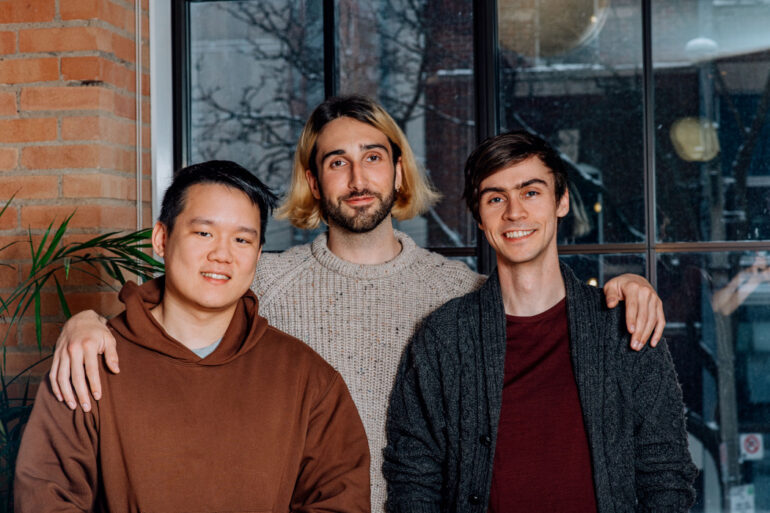
Enter Cohere, a company developing LLMs to address these issues. Started in 2019, Cohere partners with companies such as McKinsey, Oracle, and all the hyperscalers, and boasts a valuation of $5.5 billion. I sat down with one of the co-founders, Ivan Zhang, to talk about his journey.

TLDR; Key Takeaways

If you only have a few minutes, here are a few golden nuggets from my conversation with Ivan:

  • Sales should be customer-centric. This seems obvious, but have you ever started a sales conversation by talking about your product? Instead, try starting the conversation by asking your customer about their pain points, and then addressing them.
  • Data will be a bottleneck for AI development. Not in the sense that we will run out of internet to train on, but rather that there are types of data which we don’t have a lot of published datasets for. 
  • Your startup doesn’t have to be in the Bay to succeed. Cohere is headquartered in Toronto. This works for them because VCs are more open to remote work after the pandemic and Toronto has a lot of budding technical talent.
  • A key signal to look for when hiring is mastery in any domain. Learning how to master something is fairly transferable. Masters in one domain can likely become masters in another.
  • Being the lone Asian in a leadership room takes some time to adjust to. Getting more reps in has helped Ivan get used to his position.

Tell me about your upbringing, what pushed you to become a hacker?

I was born in Shenzhen, China, and moved to Toronto when I was eight. As a kid, I was always on the computer, even in China, playing the most random arcade games. I don’t want to paint Asians with a broad stroke, but if you’re a male Asian person who has been to high school in the past decade, more likely than not, you’ve played a ton of video games. I did that a lot, and I feel like it built a digital tolerance and stamina for sitting in front of a screen for long hours. Gaming was a big part of why I’m so drawn to building things, working really hard, and doing crazy hours in front of a screen. 

When I got to university, I discovered the hackathon community. Every weekend, we would just meet up at random Ontario universities and sometimes U.S. universities. We would build for the whole weekend. Gaming addiction primed me to get really good at software engineering. I spent my entire first year going to hackathons, building stuff on the side. I had this realization that I could be spending 18 hours playing League of Legends, or I could use the same energy to build stuff, which is also very fun and not as frustrating as a solo queue. It felt like a natural progression.

How has your role within Cohere changed as the company has grown?

When you’re in a startup, your role tends to evolve a lot. That’s been especially true for my time at Cohere. When we started, I was hands-on coding every day, building some of our early systems and pipelines. Eventually, the company grew, and we hired people. Some of our founders had to step up and do some people management.

Eventually, we hired people managers as well, so I have to do less of that. Nowadays, I’m much more settled. I’d say I spend probably 50% of my time still doing technical stuff like machine learning and data processing. For the other 50%, I spend time with customers, either building new relationships, fostering existing ones, or really bringing in business. I think that’s a big part of a founder’s job, like founder-led sales.

How was the transition to doing sales? Did that come naturally to you?

As someone who spent most of my time as the most backend of backend developers, it was definitely uncomfortable at first. When you think about sales, you might think of a business guy with a suit trying to convince someone to give you money for stuff. But when I started doing it more and more, it ended up being about genuinely trying to learn more about your customers, asking them good questions, and figuring out what issues they have. It’s honestly the most important thing you could do. Why are you building anything if you don’t know what your customers want? 

Sales has been super fun because it informs my technical work. I’m starting to see patterns across these conversations, which help inform what we should focus on. Another aspect is that as a founder, when you’re doing sales, you’re meeting executives and other founders as well–so you’re building good professional relationships. For anyone who’s new to it, you should expect some discomfort. But, like anything, you just learn to do it.

Why did you guys decide to focus on enterprise?

The enterprise market is often seen as boring, but actually, most of the world’s efficiency will come from automating a lot of these back-end use cases that don’t necessarily need human potential. A lot of these tasks we’re automating don’t need a well-educated human being sitting at a computer for eight hours a day. We’re much more interested in unlocking that human time for something else. Enterprise is where a lot of this kind of work is done. For example, Oracle is one of our customers, and they’ve deployed our models into their NetSuite features. So, a ton of HR and ERP use cases are now powered by our models. Our mission is scaling intelligence to serve humanity, and what better way to do it than to target the people doing this kind of back-end work at scale? 

We also liked the idea of not having to suck up all of our customers’ data to train these models. In enterprise, we actually ship our models on-prem and we air gap them, so we don’t see any of our customers’ data. In those kinds of scenarios, we have to build our models slightly differently. We have to teach our models to use the enterprise’s internal knowledge bases, use the information returned from these knowledge bases, and then write an answer and cite it. This is all RAG (retrieval augmented generation), which is what we’re focused on because we deploy these models in this air-gapped environment where we can’t continuously suck up people’s usage data. We still have an API and a demo, but the majority of our deployments are on-premise.

What are some areas of AI, whether infrastructure or application, that you think more people should be building in?

I think there will be a bottleneck in terms of training data, but not in the way it’s currently been communicated to the public. Some people paint a picture that we’ll run out of the internet to scrape. I think that’s a naive understanding of how these models work and how to train them. In terms of capturing digital signals—thoughts, demonstrations, audio, video, images, sensory data—there’s going to be a big bottleneck in capturing data from the world that’s not already represented on the internet. The internet does a good job of capturing data and it grows exponentially every year, but there’s information about the world that we experience on a daily basis.

Do you mean information that isn’t easily digitally representable, such as smell?

Yeah, so smell for example–we’d have to build this hypersensitive chemical detector. So if we want autonomous interactive robots in the real world that can smell, there is an information problem we have to solve for the robots, right? They don’t have a nose; we don’t have a great digital nose for them. And I’m sure there’s other stuff.

Why have you decided to keep Cohere headquartered in Toronto instead of the Bay Area?

The three of us co-founders just really like living in Toronto. We grew up here, we have roots here. We also realized that it is actually a pretty great city for A.I. At some point in time, most of the people leading A.I. in the Valley came from Toronto. They came from Jeff Hinton’s lab at the University of Toronto. So there’s a ton of great early talent here. And I think because of how the VC attitude has shifted since the pandemic, investors are investing everywhere. They aren’t restricting investments to the Valley. Remote work is a thing now. And so luckily for us, we’ve been able to raise successfully. We’ve been able to build good models. 

I’ve heard that you don’t pursue brand-name resumes when hiring. What are some signals that you look at instead of pedigree that indicate someone could be a great hire?

I’ve thought about this a lot. I try to think about my own trajectory and places that have rejected me and what signals they didn’t see. What it comes down to is that I look for folks who are extremely skilled at something. Once you’re skilled at something, you can take that anywhere else. Sometimes we want to hire more experienced folks, for sure. But especially in a field like ours where disciplines such as pre-training haven’t been around long enough for anyone to have much experience, you want high-energy, high-autonomy individuals who are excited to learn, experiment, and fail fast.

I try to ask a few questions that probe at stuff related to this. Like, “What’s the coolest thing you’ve worked on?” Then I get to see if they’re going into a lot of detail and are really excited about this random thing. “What’s the hardest you’ve worked on anything?” I want to see if they can go the equivalent of 16 hours a day, seven days a week when they’ve actually gone to bat for something. And then obviously, experience in the field is definitely a big plus, but honestly, the best hires we’ve made have just been high-energy, hardworking, genuinely curious people who are also skilled at software engineering.

How has being Asian impacted your founder’s journey?

I’m not ignorant of it. I definitely know it’s a thing. For example, on my board, I’m the only Asian guy on it. But I’ve been fortunate in that, growing up in Toronto and starting this company in Toronto, it’s not that weird to be an Asian guy in tech. So on the technical front, I don’t see it as a hindrance whatsoever. But it’s definitely been a factor for my own comfort in leadership situations–being the only person that looks like me in certain situations. But honestly, once I got the reps in, being in those situations, it was totally fine. And I think there are a few things that, depending on how you were raised, could affect you in doing business at the leadership level here. But generally, once you get the reps in, it doesn’t even matter.

Is there anything you’d like to shout out?

I’d like to shoutout my wife, she’s a big inspiration for me. Shoutouts to my mom, my dad, my sister. I think my parents taught me what it means to work really hard. I think this is true for many of us immigrants, watching our parents and grandparents work the most menial labor jobs just so we can be fed and go to school. It’s super inspiring. It makes me think: Why am I not working harder? Why am I not thinking about how I can level up and help them retire? My family has been a big inspiration to me. Lastly, shoutouts to Cohere and my co-founders. It’s been super fun, and I’m privileged to be working on this tech. I think it’s genuinely the most interesting thing I could be doing right now.

If you are high-energy, hardworking, and highly curious about AI, please consider applying to work with Ivan at Cohere! You can check out available positions at this link.

Thank you for joining us, Ivan!