Awaken* newsletter

March 6, 2024

SHARE:

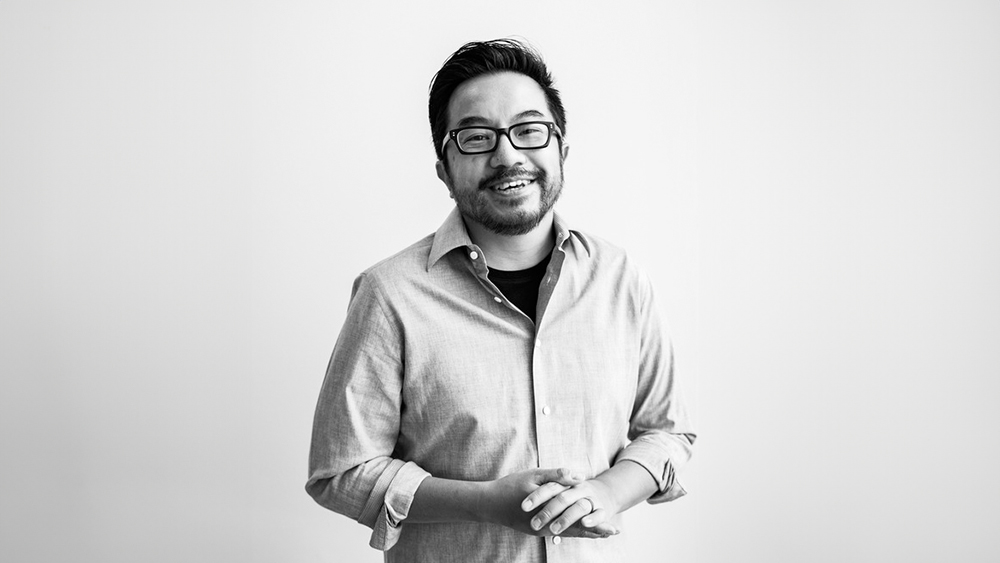
Few people in Silicon Valley are as high-profile as Y Combinator’s President and CEO, Garry Tan. Garry has worn many different hats over his illustrious career. In addition to leading the world’s most successful startup accelerator, Garry was the 10th employee at Palantir, co-founded Posterous (one of the earliest blogging sites), founded Initialized Capital (a VC fund with over $3.2B AUM), and has even ventured into the world of politics, becoming a prominent activist in San Francisco local politics. I got the chance to pick Garry’s brain about how being Asian has affected his life, and I hope that his answers can help and inspire our readers. Without further ado:

OVERCOMING DETRIMENTAL MINDSETS

My experience is that children of working class parents (especially Asian immigrants) tend to have a sticky mindset of scarcity–even when they improve their socioeconomic status. Garry has previously talked about his “$200 million mistake”. That is–he declined Peter Thiel’s offer to be a founding member at Palantir. To me, this seemed like a manifestation of this mindset, so I asked Garry how he overcame it:

I was able to realize that these things were two-way doors. Quitting a big tech company on good terms actually means you can go back anytime. There are one-way doors and two-way doors. For people who grow up with our upbringing, everything feels like a one-way door. But if you can recognize when that is wrong, then you have reclaimed some of the privileges those who come from money have by default.

The one-way vs two-way door framework is something Amazon founder Jeff Bezos has talked about extensively. You can hear him go more in depth here.

The stigma around mental health in the Asian community is another mindset that is gaining more attention. Personally, because my immigrant parents had to fight tooth and nail for survival, I don’t feel that I have the right to complain about my mental health since my life is comparatively easy. I asked Garry if this resonated with him and how he overcame this mental block:

I pretended I didn’t have any problems and spent a lot of time just trying to blend in, but in the end things about my childhood or unusual trauma-based reactions would pop up in my professional life. At some point I started going to therapy individually and it helped me immensely. All these things I didn’t have control over suddenly became something I could integrate and be aware of, and make better choices about. Carl Jung says if you don’t make the unconscious conscious, it will rule you, and you will call it fate. 

A third common mindset I see among Asian Americans is to keep their heads down and avoid rocking the boat, even if it means holding in their thoughts. Given that Garry is a very outspoken person, I asked him how he developed his confidence:

I remember in high school, I was editor of the school newspaper and noticed that students in our poorer high school got much more harsh sentences and expulsions for the same infractions that would get a slap on the wrist at the rich school. I was so angry about it, and I wrote an article exposing it but that was censored by my high school newspaper teacher. I was already going to graduate and go to Stanford so I let it slide, but deep inside me there was an anger at being silenced that I never forgot. Before newspaper, I would publish underground newspapers using Pagemaker and my English teacher would photocopy the newspapers for the class – it gave me a power I never forgot because otherwise I was the scrawny Asian nerd in the corner, but when I could channel the words of my community it gave me standing. I never forgot that.

ON ASIAN COMMUNITIES

On the topic of communities, I asked Garry about what motivated him to become a fierce advocate for the Asian community:

I feel strong solidarity with my Asian American community in San Francisco. We are a major part of the city but we are not seen. We are not heard. The local leaders would even denigrate our attempts at securing safety for our Asian American elders. Now I know I need to fight for those who don’t have a voice. One of the coolest things I found was a nonprofit called Dear Community that connects Asian Americans new to SF, often young professionals, to each other and to the existing SF Chinatown communities. It’s amazing to see smart driven people come together around that, and fight for our people in this city.

I also pointed out how he recently went to Singapore to attend a startup event called SWITCH, and asked him how he felt about the startup scenes popping up in Asian countries:

Startups are happening all around the world. You can learn from YouTube and the web. YC alums are everywhere in the world. I’m excited to see that what started in the Bay Area is now a global phenomenon and only growing.

THE ASIAN FOUNDER EXPERIENCE

On a friend’s recommendation, I asked Garry “Who are some non-technical Asian founder role models I might want to look towards? In terms of working at an early stage startup as a non-technical employee, what are the most valuable skills to learn?” Garry’s response kind of challenged the premise of my question:

In startups and in technology, being technical is a key strength. Be technical if you can be. And then be a polymath: it’s far easier for a technical person to pick up the soft skills than the other way around. 

In hindsight, I will admit that it seems silly to expect to get an outlier outcome (in the positive direction) in the tech industry if you aren’t willing to put in the effort to become technical. He got me on that one.

Lastly, I asked Garry the same question I ask all our guests–how does he think about his Asian-ness in the context of being a founder:

I didn’t think about it until much later. Frankly I tried to pretend it wasn’t an issue, even though there was absolutely a bamboo ceiling even for me. I was passed over for promotions and/or people didn’t think I was capable of doing what I have done. I would rage-quit jobs and it would work out, but I could see it going a different way. As a founder, I found that I needed to up-level my ability to speak up and speak out, and especially be as assertive as possible when I knew I was absolutely right. I had an unspoken desire that I was not even aware of for harmony, and without being aware of it I would sometimes self-abandon, and then be passive aggressive about it later. I don’t do that anymore, and it was a key step in my development as a leader. I wish I developed it earlier, and it was all because of unconscious programming from my childhood. 

The biggest lesson I took away from this interview was how the infallible and outspoken Garry Tan was not always so, and that at one point he was very much like the stereotypical Asian kid. Garry’s story proves that with self-awareness and determination, anybody can undergo tremendous growth and become an industry leader.

SHOUTOUTS

If you have an ambitious startup idea and want to be part of an amazing community of founders, apply to Y Combinator! Y Combinator runs batches twice a year–in the winter and summer. Applications for the summer 2024 batch are open, you can apply at https://www.ycombinator.com/apply

Thank you Garry for the interview!

Featured Image Source: Y Combinator
Related Articles

Image Source: gerryrobert.com

Uncategorized

Lush Enterprises CEO Kim-Manzolini Took Trading To The Next Level To Build Her Empire

Who wouldn’t want to engage in something that generates value? It took a while before you could achieve something like this. You had to be determined and keep going to get through the process. 

Think about how CEO Sun Yong Kim-Manzolini runs Lush Enterprises as an entrepreneur and, at the same, an investor. After working in the medical field for 33 years, she transitioned into entrepreneurship and trading options. She used her same can-do spirit and created opportunities.

All of her struggles, Kim-Manzolini told the USA Today, have helped to mold her into the woman she is today. She grew up as an orphan in Korea and was adopted by an American couple at 14. As an adult, she got into an unhealthy relationship but eventually got the courage to leave and move forward.

Kim-Manzolini knows that changing careers requires a great deal of hard work and self-control on her part. For years, she dedicated many hours per day to studying the ins and outs of the options trading industry and eventually mastered it. She simply had faith that she could pull it off, so she gave it her all without holding back.

Trading options expose investors to a diverse range of potentially significant risks. Even a single misfortune can completely wipe out a trader’s profits on the foreign exchange market due to the high risk associated with trading. But Kim-Manzolini did not let the challenges she faced discourage her, as she started gaining a new perspective on the situation. Instead of questioning why her experience was challenging, she adopted the mantra “Why not me?”

And as a result, she made $178,000 in her first year of live trading. Kim-Manzolini is now the owner of a multi-million dollar business. Her understanding of how to trade successfully was aided by the incredible commitment and sacrifice she made. 

The fact that Kim-Manzolini didn’t give up when it would have been simpler to do so is something for which she is grateful. She decided to focus on the positive aspects of the situation rather than ruminating on the potential downsides. She also put in a lot of time and energy and came up with a unique approach.

Image Source: Voyage LA

News

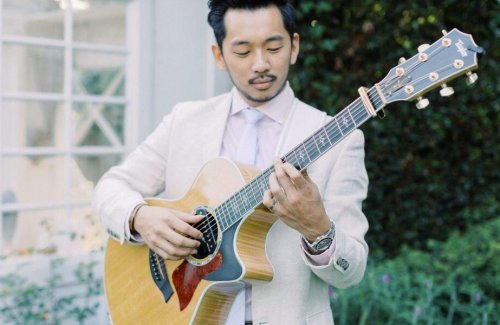
29-Year-Old Wedding Guitarist Made A Pandemic Pivot To Real Estate Earns $245K A Year

The best part is that playing weddings “doesn’t even feel like working. We’re just partying.” Moses Lin told CNBC Make It’s Millennial Money series.

Early in Lin’s career in 2016, he played at a coffee shop for three hours and got $3 tips. Today, his work takes him from New York to Hawaii, even to Cancun, and earns $175,000 before tips.

In the last two years, Lin has invested most of his wedding earnings into real estate.

Before becoming a real estate investor, Lin left college with just one semester left to pursue music full-time back in 2017. Several months later, Disney saw his YouTube videos and hired him to play in Disneyland’s hotels and restaurants. He took the job and decided he was never going back to college.

In the same year, Lin played a friend’s wedding as a favor and enjoyed it. He then charged $250 for his first wedding booking. After learning that wedding musician rates are $1200, he doubled his prices. Despite raising his rates, clients kept coming. Now, he charges $4,000 to $6,000 per wedding, depending on when the couple wants him to play. 

Lin became interested in real estate investing in 2014 and bought his first property in May 2020 as a “pandemic pivot” when Covid restrictions slowed his wedding gigs. He found a 4-bedroom house for $120,000 online and put down 20% plus $10,000 to renovate. His wedding earnings helped him buy a $40,000 home in Little Rock, including closing costs.

He rented the house for $1,425 and quickly found a tenant. He liked the process so much that he decided to buy a second property before the end of the year.

Today, Lin owns and rents out four properties in Little Rock. Lin didn’t turn a profit on his rental properties in 2021, but is in it for the long haul.

His goal with real estate is to get to a point where the passive income from his rentals pays all of his bills.

Lin pays a property manager to handle things on the ground, “so I’m able to focus 100% of my attention on weddings [and] on music, and real estate just makes money on the side.” he tells CNBC, “My whole master business plan is make money in weddings, dump it into real estate and let that grow itself.”

CONNECT WITH MOSES LIN

Instagram: instagram.com/moseslinmusic
Website: moseslinmusic.com

Image Source: kr-asia.com

Uncategorized

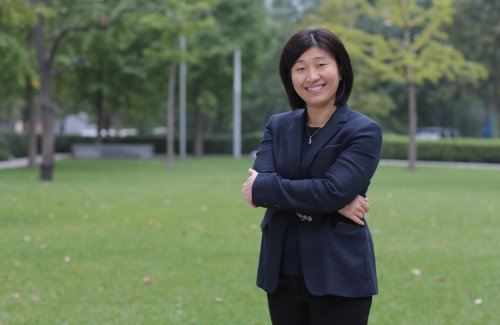
GGV Capital’s Jenny Lee: From Jet Engineer To One Of World’s Best Venture Capitalists

Recognized as one of the world’s top 100 venture capitalists by Forbes for 11 years in a row, Singaporean venture capitalist Jenny Lee stayed in her hometown to raise money for four new funds launched by her firm GGV Capital at the height of the pandemic in 2020. 

For four months, according to Forbes, the veteran VC barely slept as she made 250 zoom calls and remotely raised $2.5 billion from investors around the world. Lee and her team raised the most capital in GGV’s 22-year history, boosting assets by 27% to $9.2 billion. 

Long before she became one of Asia’s most powerful businesswomen, she earned a bachelor’s and master’s in Electrical Engineering at Cornell in 1995. She became an aviation engineer at Singapore’s ST Aerospace, where she modified F-16 fighter planes.

In 2001, the company sent Lee to attend Northwestern University’s Kellogg School of Management where she earned an M.B.A., but she had wanted to be a venture capitalist for a long time, so she quit her job that same year to follow her hidden passion.

Lee paid ST Aerospace $300,000 for not finishing the 11-year scholarship bond that paid for her bachelor’s, master’s, and M.B.A., but she has no regrets. For her, it was the best move.

She got her start as a venture capitalist at Morgan Stanley and Jafco Asia, but she made her name in China after joining GGV to create its office there in 2005. One of Lee’s more successful discoveries was the mobile phone maker Xiaomi before it had sold its first handphone.

Today, Lee is one of GGV’s top-tier managing partners along with Singaporean Jixun Foo, an early Grab investor. Hans Tung, who’s been on the Midas List 11 times. And VCs who have U.S. investment, industrial, and entrepreneurial expertise.

GGV’s 354 firms are balanced between Asia-Pacific and the Americas (GGV claims its investments include more than 85 unicorns). With the U.S. having more investments, at roughly 130, and 77 in China.

The company’s assets under management have expanded more than 50 times since its founding in 2000.

Image Source: Netflix

Uncategorized

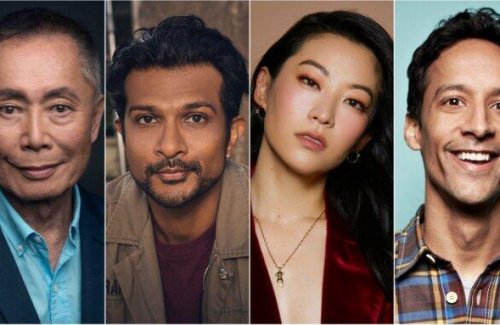
Netflix’s Star-studded Series Avatar: The Last Airbender Includes George Takei, Utkarsh Ambudkar, Arden Cho, Danny Pudi

More actors have joined the cast of Netflix’s live-action version of “Avatar: The Last Airbender,” including George Takei, Utkarsh Ambudkar from the sitcom “Ghosts,” Arden Cho from Partner Tracks, and Danny Pudi from the comedy series “Mythic Quest.”

Avatar: The Last Airbender unites the “four nations”: Water Tribe, Earth Kingdom, Fire Nation, and Air Nomads with a diverse representation of Asian and Indigenous talent.

Star Trek’s Takei voices Koh, an ancient predatory spirit. Cho, Ambudkar, and Pudi all portray Earth Kingdom characters, with Cho as June, a vicious bounty hunter; Ambudkar as King Bumi, the elderly and mercurial king of Omashu; and Pudi as the mechanist, an eccentric inventor and engineer raising his kid in a war-torn country.

Cast members include Gordon Cormier as Aang, Kiawentiio as Katara, Ian Ousley as Sokka, Dallas Liu as Zuko, Elizabeth Yu as Azula, Paul Sun-Hyung Lee as Iroh, and Daniel Dae Kim as Fire Lord Ozai.

Executive produced by showrunner Albert Kim, Rideback’s Dan Lin and Lindsey Liberatore, and Michael Goi, “Avatar: The Last Airbender” is a live-action version of the animated Nickelodeon series of the same name. Directors include Goi, co-executive producer Roseanne Liang, Jabbar Raisani, and Jet Wilkinson.

Kim tells Netflix that the live-action adaptation creates “a chance to showcase Asian and Indigenous characters as living, breathing people. Not just in a cartoon, but in a world that truly exists, very similar to the one we live in.”