Awaken* newsletter

March 6, 2024

SHARE:

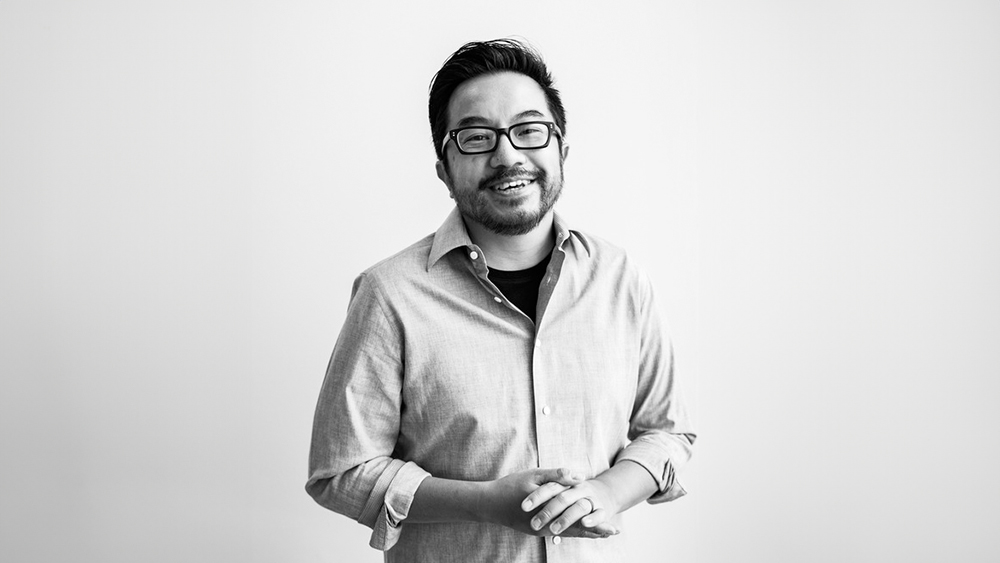
Few people in Silicon Valley are as high-profile as Y Combinator’s President and CEO, Garry Tan. Garry has worn many different hats over his illustrious career. In addition to leading the world’s most successful startup accelerator, Garry was the 10th employee at Palantir, co-founded Posterous (one of the earliest blogging sites), founded Initialized Capital (a VC fund with over $3.2B AUM), and has even ventured into the world of politics, becoming a prominent activist in San Francisco local politics. I got the chance to pick Garry’s brain about how being Asian has affected his life, and I hope that his answers can help and inspire our readers. Without further ado:

OVERCOMING DETRIMENTAL MINDSETS

My experience is that children of working class parents (especially Asian immigrants) tend to have a sticky mindset of scarcity–even when they improve their socioeconomic status. Garry has previously talked about his “$200 million mistake”. That is–he declined Peter Thiel’s offer to be a founding member at Palantir. To me, this seemed like a manifestation of this mindset, so I asked Garry how he overcame it:

I was able to realize that these things were two-way doors. Quitting a big tech company on good terms actually means you can go back anytime. There are one-way doors and two-way doors. For people who grow up with our upbringing, everything feels like a one-way door. But if you can recognize when that is wrong, then you have reclaimed some of the privileges those who come from money have by default.

The one-way vs two-way door framework is something Amazon founder Jeff Bezos has talked about extensively. You can hear him go more in depth here.

The stigma around mental health in the Asian community is another mindset that is gaining more attention. Personally, because my immigrant parents had to fight tooth and nail for survival, I don’t feel that I have the right to complain about my mental health since my life is comparatively easy. I asked Garry if this resonated with him and how he overcame this mental block:

I pretended I didn’t have any problems and spent a lot of time just trying to blend in, but in the end things about my childhood or unusual trauma-based reactions would pop up in my professional life. At some point I started going to therapy individually and it helped me immensely. All these things I didn’t have control over suddenly became something I could integrate and be aware of, and make better choices about. Carl Jung says if you don’t make the unconscious conscious, it will rule you, and you will call it fate. 

A third common mindset I see among Asian Americans is to keep their heads down and avoid rocking the boat, even if it means holding in their thoughts. Given that Garry is a very outspoken person, I asked him how he developed his confidence:

I remember in high school, I was editor of the school newspaper and noticed that students in our poorer high school got much more harsh sentences and expulsions for the same infractions that would get a slap on the wrist at the rich school. I was so angry about it, and I wrote an article exposing it but that was censored by my high school newspaper teacher. I was already going to graduate and go to Stanford so I let it slide, but deep inside me there was an anger at being silenced that I never forgot. Before newspaper, I would publish underground newspapers using Pagemaker and my English teacher would photocopy the newspapers for the class – it gave me a power I never forgot because otherwise I was the scrawny Asian nerd in the corner, but when I could channel the words of my community it gave me standing. I never forgot that.

ON ASIAN COMMUNITIES

On the topic of communities, I asked Garry about what motivated him to become a fierce advocate for the Asian community:

I feel strong solidarity with my Asian American community in San Francisco. We are a major part of the city but we are not seen. We are not heard. The local leaders would even denigrate our attempts at securing safety for our Asian American elders. Now I know I need to fight for those who don’t have a voice. One of the coolest things I found was a nonprofit called Dear Community that connects Asian Americans new to SF, often young professionals, to each other and to the existing SF Chinatown communities. It’s amazing to see smart driven people come together around that, and fight for our people in this city.

I also pointed out how he recently went to Singapore to attend a startup event called SWITCH, and asked him how he felt about the startup scenes popping up in Asian countries:

Startups are happening all around the world. You can learn from YouTube and the web. YC alums are everywhere in the world. I’m excited to see that what started in the Bay Area is now a global phenomenon and only growing.

THE ASIAN FOUNDER EXPERIENCE

On a friend’s recommendation, I asked Garry “Who are some non-technical Asian founder role models I might want to look towards? In terms of working at an early stage startup as a non-technical employee, what are the most valuable skills to learn?” Garry’s response kind of challenged the premise of my question:

In startups and in technology, being technical is a key strength. Be technical if you can be. And then be a polymath: it’s far easier for a technical person to pick up the soft skills than the other way around. 

In hindsight, I will admit that it seems silly to expect to get an outlier outcome (in the positive direction) in the tech industry if you aren’t willing to put in the effort to become technical. He got me on that one.

Lastly, I asked Garry the same question I ask all our guests–how does he think about his Asian-ness in the context of being a founder:

I didn’t think about it until much later. Frankly I tried to pretend it wasn’t an issue, even though there was absolutely a bamboo ceiling even for me. I was passed over for promotions and/or people didn’t think I was capable of doing what I have done. I would rage-quit jobs and it would work out, but I could see it going a different way. As a founder, I found that I needed to up-level my ability to speak up and speak out, and especially be as assertive as possible when I knew I was absolutely right. I had an unspoken desire that I was not even aware of for harmony, and without being aware of it I would sometimes self-abandon, and then be passive aggressive about it later. I don’t do that anymore, and it was a key step in my development as a leader. I wish I developed it earlier, and it was all because of unconscious programming from my childhood. 

The biggest lesson I took away from this interview was how the infallible and outspoken Garry Tan was not always so, and that at one point he was very much like the stereotypical Asian kid. Garry’s story proves that with self-awareness and determination, anybody can undergo tremendous growth and become an industry leader.

SHOUTOUTS

If you have an ambitious startup idea and want to be part of an amazing community of founders, apply to Y Combinator! Y Combinator runs batches twice a year–in the winter and summer. Applications for the summer 2024 batch are open, you can apply at https://www.ycombinator.com/apply

Thank you Garry for the interview!

Featured Image Source: Y Combinator
Related Articles

Image Source: Las Vegas Review Journal

Uncategorized

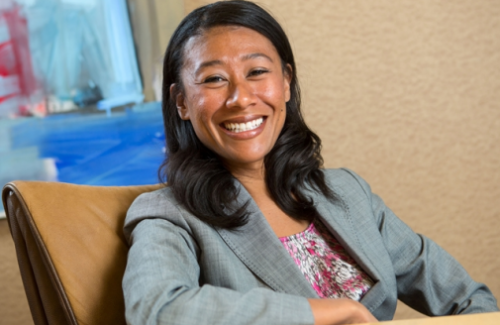
Patricia Lee Sculpts History as First Black Asian American To Succeed Seat F In Nevada Supreme Court

Following her victory over the other two candidates, Patricia Lee made history by becoming the first Black and Asian American attorney to hold the vacant Department F seat on the Nevada Supreme Court.

Lee was chosen by Gov. Sisolak from among the candidates put out by the state Judicial Selection Committee to take the place of Justice Abbi Silver, who resigned from her position due to “unexpected circumstances” and a desire to spend enough time with her family.

Being an attorney in Las Vegas, Lee contended with Washoe County District Judge Scott Freeman and Clark County District Judge Tierra Jones.

The Reno Gazette-Journal cited Sisolak saying, “I am thrilled and honored to appoint Patricia to serve on the Nevada Supreme Court. The breadth and depth of her skill set, as well as her personal and professional experience, make her an excellent addition to the State’s highest court.”

Lee will begin serving her term in January 2025 and must run for reelection in two years in order to preserve her position.

Lee’s mother, a native South Korean, and father, an African-American soldier, brought her up in South Korea. She majored in psychology and communications at the University of Southern California, where she also participated in the Black Students’ Union and had her first political experience.

She started working at Hutchison & Steffan in 2003, concentrating on family law, trademark law, medical claims billing, and business and commercial disputes. She later joined the firm as a partner.

Lee is a skilled attorney with a history of being chosen as the chair of the Nevada Crime Commission by the then-Gov. Jim Gibbons, a volunteer with the Children’s Attorney Project in Las Vegas who advocates for abused and abandoned children, has handled pro bono cases at the Legal Aid Center of Southern Nevada.

Nonetheless, Lee is not just a dedicated lawyer but also a devoted family woman being a mother to Brianna and Devin, and a wife to Ronnie.

Image Source: South China Morning Post

Uncategorized

Bankrupt Chinese Restaurant Owner Bounces Back To Pay $6.4 Million Debt Through Sausage-Selling

“We are born with nothing. Why be scared of starting all over again?” says Chinese Tang Jian after starting up a street food stall in Hangzhou, China following his business bankruptcy which left him with $6.4 million.

At 52, the former millionaire Chinese restaurant proprietor is positive of earning funds to pay his multi-million debt by selling barbecued sausages.

Thus, his optimism put netizens in awe as a person, who despite losing his 16-year-old business venture and everything he had because of the unsuccessful investment in the landscape engineering industry, is still hopeful of being able to recover from the downfall.

Tang was once a successful businessman starting at the age of 36. However, because of the fruitless outlay, he was compelled to sell everything he founded through his business including his restaurants, homes, and cars.

Still unable to pay his debts in full, Tang decided to put up the small-time sausage-selling business.

Tang proudly exclaimed that “Every sausage is genuinely filled with meat, and there is no starch in it. When compared with those sold in amusement parks or markets, ours will make you feel safer,” as quoted in South China Morning Post.

Upon knowing that his story trended in social media, Tang explained that it was because all of us face our own challenges in life, however, we must always have that strong spirit of winning each battle. 

He also said that he is really determined to settle his debts although still uncertain when it would be.

Tang shared that bravery is a key to overcoming hardships and going on in life and that we should always seek strength, especially during hard times.

Uncategorized

Virginia Embraces Diversity and Korean Culture, Celebrates First Kimchi Day

Being home to one of the biggest Korean communities in the nation, Virginia had its first-ever Kimchi Day on November 22, through the Korean American Women’s Association.

Held at the Good Shepherd Evangelical Church in  Springfield, the festivity was materialized especially for this motive: acknowledge kimchi as a nonnative dish in Virginia which is specially imported for the increasing number of Korean American citizens in the country. It also reflects how the state has embraced diversity.

During the celebration, roughly 150 people of different colors converged to make their own kimchi, following the traditional and neat process of kimchi preparation. 

Originally, families and acquaintances converge to happily prepare the ingredients, store them in jars, and place them underground for fermentation producing a savory, piquant, and sugary kimchi. This is done every November, a month after harvesting cabbage.

On the other hand, it was officially moved to be celebrated in January through Irene Shin (D), the foremost Korean American servant in the House of Delegates, who acquired two-way support for her proposition.

For Koreans, kimchi is beyond being a cuisine. It narrates Korea’s past, its folks’ tenacity, and its landscape which Koreans are more than proud of. Kimchi is a celebration of family and blessings.

Northern Virginia and Annandale seem to be “Korea Towns” as Korean establishments like diners, worship places, food markets, bakeries, and beauty shops in Hangul inscriptions are all over. The state and Korea have found strong connections with each other that Fairfax County Economic Development Authority can even be found in the latter’s capital.

A Korean American mentioned how Kimchi Day appreciates the essence of exporting not only the product but of Korean culture; a manifestation of how the US whole-heartedly accepted acculturation.

Image Source: Tufts Daily

Uncategorized

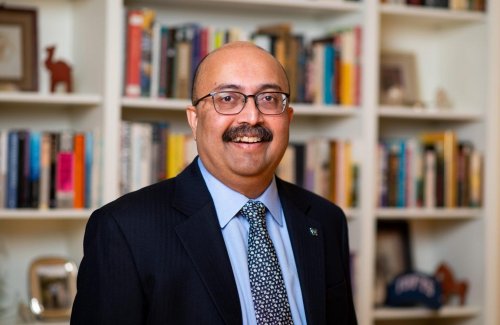
Sunil Kumar To Sit As The First Person Color President of Tufts University in 2023

The Board of Trustees commissioned Indian politician Sunil Kumar as the 14th president of Tufts University, Massachusetts in 2023 succeeding President Anthony P. Monaco, after the latter’s 12-year term.

Kumar is currently a provost and Vice President for Academic Affairs at Johns Hopkins University and was once the dean of the University of Chicago Booth School of Business with a Ph.D. in electrical engineering and is a competent operations manager.

The head of the commission on presidential search and BOT, Peter Dolan, proudly exclaimed that Kumar’s never-ending dedication to providing first-rate tertiary education and extraordinary track in leadership, teaching, and interpersonal skills are essential as a presidential successor. 

Furthermore, Kumar’s colleagues at Johns Hopkins mentioned him as a wholesome partner and co-worker who has the distinct qualifications of an outstanding leader.

Looking back at how Kumar started, he is a son of a police officer who attained his master’s in Computer Science Automation at the Indian Institute of Science, Bangalore two years after he completed his bachelor’s degree at Mangalore University in 1990. While having his master’s, he met a professor from the University of Illinois who enlisted him in the prestigious university for a doctorate program which he finished in 1996.

Kumar had his first teaching experience at Stanford Graduate School of Business where he exclaimed how was amazed to be paid for the work he is passionate about and after more than a decade there, he became the Dean of the University of Chicago Booth School of Business, leading him to the provost and senior vice president posts in Johns Hopkins in 2016.

Nonetheless, he said that being a mathematician served him well in his profession.

Prior to being named as the new president, Kumar already has his eyes on Tufts because of its pursuit of serving not just those who are inside the school but the wider community outside its premises.

As the newly-elected leader to sit on July 1, 2023, Kumar’s mission is to reach out to people to a greater degree by giving them an opportunity to know the school by experience and make that experience extraordinary.