Awaken* newsletter

March 6, 2024

SHARE:

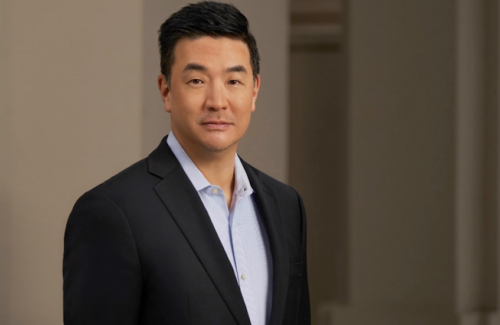
Few people in Silicon Valley are as high-profile as Y Combinator’s President and CEO, Garry Tan. Garry has worn many different hats over his illustrious career. In addition to leading the world’s most successful startup accelerator, Garry was the 10th employee at Palantir, co-founded Posterous (one of the earliest blogging sites), founded Initialized Capital (a VC fund with over $3.2B AUM), and has even ventured into the world of politics, becoming a prominent activist in San Francisco local politics. I got the chance to pick Garry’s brain about how being Asian has affected his life, and I hope that his answers can help and inspire our readers. Without further ado:

OVERCOMING DETRIMENTAL MINDSETS

My experience is that children of working class parents (especially Asian immigrants) tend to have a sticky mindset of scarcity–even when they improve their socioeconomic status. Garry has previously talked about his “$200 million mistake”. That is–he declined Peter Thiel’s offer to be a founding member at Palantir. To me, this seemed like a manifestation of this mindset, so I asked Garry how he overcame it:

I was able to realize that these things were two-way doors. Quitting a big tech company on good terms actually means you can go back anytime. There are one-way doors and two-way doors. For people who grow up with our upbringing, everything feels like a one-way door. But if you can recognize when that is wrong, then you have reclaimed some of the privileges those who come from money have by default.

The one-way vs two-way door framework is something Amazon founder Jeff Bezos has talked about extensively. You can hear him go more in depth here.

The stigma around mental health in the Asian community is another mindset that is gaining more attention. Personally, because my immigrant parents had to fight tooth and nail for survival, I don’t feel that I have the right to complain about my mental health since my life is comparatively easy. I asked Garry if this resonated with him and how he overcame this mental block:

I pretended I didn’t have any problems and spent a lot of time just trying to blend in, but in the end things about my childhood or unusual trauma-based reactions would pop up in my professional life. At some point I started going to therapy individually and it helped me immensely. All these things I didn’t have control over suddenly became something I could integrate and be aware of, and make better choices about. Carl Jung says if you don’t make the unconscious conscious, it will rule you, and you will call it fate. 

A third common mindset I see among Asian Americans is to keep their heads down and avoid rocking the boat, even if it means holding in their thoughts. Given that Garry is a very outspoken person, I asked him how he developed his confidence:

I remember in high school, I was editor of the school newspaper and noticed that students in our poorer high school got much more harsh sentences and expulsions for the same infractions that would get a slap on the wrist at the rich school. I was so angry about it, and I wrote an article exposing it but that was censored by my high school newspaper teacher. I was already going to graduate and go to Stanford so I let it slide, but deep inside me there was an anger at being silenced that I never forgot. Before newspaper, I would publish underground newspapers using Pagemaker and my English teacher would photocopy the newspapers for the class – it gave me a power I never forgot because otherwise I was the scrawny Asian nerd in the corner, but when I could channel the words of my community it gave me standing. I never forgot that.

ON ASIAN COMMUNITIES

On the topic of communities, I asked Garry about what motivated him to become a fierce advocate for the Asian community:

I feel strong solidarity with my Asian American community in San Francisco. We are a major part of the city but we are not seen. We are not heard. The local leaders would even denigrate our attempts at securing safety for our Asian American elders. Now I know I need to fight for those who don’t have a voice. One of the coolest things I found was a nonprofit called Dear Community that connects Asian Americans new to SF, often young professionals, to each other and to the existing SF Chinatown communities. It’s amazing to see smart driven people come together around that, and fight for our people in this city.

I also pointed out how he recently went to Singapore to attend a startup event called SWITCH, and asked him how he felt about the startup scenes popping up in Asian countries:

Startups are happening all around the world. You can learn from YouTube and the web. YC alums are everywhere in the world. I’m excited to see that what started in the Bay Area is now a global phenomenon and only growing.

THE ASIAN FOUNDER EXPERIENCE

On a friend’s recommendation, I asked Garry “Who are some non-technical Asian founder role models I might want to look towards? In terms of working at an early stage startup as a non-technical employee, what are the most valuable skills to learn?” Garry’s response kind of challenged the premise of my question:

In startups and in technology, being technical is a key strength. Be technical if you can be. And then be a polymath: it’s far easier for a technical person to pick up the soft skills than the other way around. 

In hindsight, I will admit that it seems silly to expect to get an outlier outcome (in the positive direction) in the tech industry if you aren’t willing to put in the effort to become technical. He got me on that one.

Lastly, I asked Garry the same question I ask all our guests–how does he think about his Asian-ness in the context of being a founder:

I didn’t think about it until much later. Frankly I tried to pretend it wasn’t an issue, even though there was absolutely a bamboo ceiling even for me. I was passed over for promotions and/or people didn’t think I was capable of doing what I have done. I would rage-quit jobs and it would work out, but I could see it going a different way. As a founder, I found that I needed to up-level my ability to speak up and speak out, and especially be as assertive as possible when I knew I was absolutely right. I had an unspoken desire that I was not even aware of for harmony, and without being aware of it I would sometimes self-abandon, and then be passive aggressive about it later. I don’t do that anymore, and it was a key step in my development as a leader. I wish I developed it earlier, and it was all because of unconscious programming from my childhood. 

The biggest lesson I took away from this interview was how the infallible and outspoken Garry Tan was not always so, and that at one point he was very much like the stereotypical Asian kid. Garry’s story proves that with self-awareness and determination, anybody can undergo tremendous growth and become an industry leader.

SHOUTOUTS

If you have an ambitious startup idea and want to be part of an amazing community of founders, apply to Y Combinator! Y Combinator runs batches twice a year–in the winter and summer. Applications for the summer 2024 batch are open, you can apply at https://www.ycombinator.com/apply

Thank you Garry for the interview!

Featured Image Source: Y Combinator
Related Articles

unnamed

Stories

How Christopher Thang Juggles Medical School and Entrepreneurship With Time Optimization Strategies

You don’t really need to feel motivated to start — you just need to start! (easier said than done, right?)

While it’s also important to understand why you put off doing something and what causes it, what’s even more important is overcoming it.

Christopher Thang is a medical student at the University of Texas Medical Branch. He is also an Online Fat Loss Specialist certified by the National Academy of Sports Medicine.

His current mission is to help busy working professionals lose 15+ lbs in 60 days with his Progressive Eating Strategy and fitness-lifestyle optimization systems.  

Read through as Christopher shares how he manages his time as both a full-time medical student and entrepreneur.

The Chronic Procrastinator

Now, I am not saying I have the busiest schedule out there, and I definitely do not. But, I’ve included a breakdown of my time-saving strategies below that help me find time to work on my business, study for medical school exams, and travel across the US to meet clients.

My deep dive into time management started in college. I was a chronic procrastinator and always rushed to meet deadlines the night before they were due. This left me super anxious and my disorganized tendencies, unfortunately, caused me to arrive late to almost everything. It got so bad that I showed up late to or forgot about work meetings, social events, and even important family gatherings.

Eventually, I had enough of winging my schedule every day (some days I didn’t even know I had tasks due). I tried countless things to improve my time management, and after a few years of trial and error (still ongoing), I came up with these 3 approaches that helped.

I was a chronic procrastinator and always rushed to meet deadlines the night before they were due. This left me super anxious and my disorganized tendencies, unfortunately, caused me to arrive late to almost everything.

-Christopher Thang

Strategy 1: Time Block Everything

Simply put, I time block my entire day out on Google Calendar as the day goes along. It may sound intense, and it honestly is… But, after I delegate tasks, meetings, and other life events, I gain structure and peace of mind for the day. I’m also able to look back at each day to see what I can be more efficient on.

Now, I don’t time block out every single minute of each day a week in advance (would be overwhelming), but I plan ahead for important events. By including things such as meal prep, working out, and business meetings, I can make a micro-commitment beforehand to fit these things into my schedule.

On the day of such events, I time block my day in 15, 30, or 1 hour+ chunks. Once I gain control and understanding of my time, I leverage it to do more work in less time throughout the day (of course, I have to be realistic when time blocking out tasks). I’m also able to enjoy social events, family time, and travel without worrying about work which brings me to Strategy 2.

Strategy 2: 100% Work or 100% Relaxation

Building off of Strategy 1, I stick to a hard rule of either working 100% or relaxing 100%. I take every effort to avoid the gray area in between, where I’d end up working inefficiently or trying to relax (and failing) because work is on my mind.

So, on my calendar, I include 15-minute blocks labeled “Break” (when I’m dividing up work into several chunks using the Pomodoro Method) and long hours blocked off for “Social Events” or “Family Time.”

Of course, life happens frequently, and sometimes events may take longer/shorter than expected or something may come up that interrupts my entire schedule. This brings me to Strategy 3 below.

Strategy 3: Plan Ahead, But Be Flexible

Whenever something unexpected happens, I time block it out in my calendar and shift everything down (Google Calendar lets me click and drag events around on my phone really easily).

Sometimes I shift down tasks so much that I have to move them on to the next day (if possible), but I remind myself to stay realistic if life suddenly hits on some days.

Connect with Christopher 

Now, I didn’t develop these approaches overnight, and they took time to develop into daily habits.

However, I hope my strategies would be able to inspire others to stay mindful of their time and perhaps try some of my approaches to elevate their personal lives and hustles.

Linkedin: Christopher Thang

Instagram: @christopher.thang

Website: https://www.hgbtconsulting.com/free-case-study

Image Source: CBS

News

Eric Kim To Lead CBS Entertainment and Studios As New Executive Vice President

Eric Kim has been recently promoted as CBS’ Executive Vice President for Current Programs after serving as Senior Vice President in the same company where he worked for 11 years.

He succeeds Amy Resisenbach who has just advanced as President of CBS Entertainment.

Kim will now be functioning in his new position to oversee the primetime and daytime programs.

Reisenbach mentioned in Deadline that in working with Kim for more than ten years, she has always been amazed by the latter’s remarkable expertise in programming, in working with showrunners, and in dealing with people whom he works with.

While still the SVP, Kim supervised comedy and drama series production in Blue Bloods, FBI: Most Wanted, FBI: International, and CSI.

Kim had a strong background in the field working in live-action series for Nickelodeon and Teen Nick for two years and was the then-VP for Current Programming at the CW for 3 years.

Moreover, Kim has been a part of the creative team that launched the new network when The WB and UPN networks merged as well as the executive at UPN from 2004 to 2006.

Kim entered the world of the entertainment industry by working for Jonathan Demme on the Academy Award-winning Philadelphia. 

He is a graduate of the University of Pennsylvania where he took a Bachelor of Arts in English Literature.

CBS TV Studios President David Stapf said, “His (Eric’s) leadership has earned the trust and respect of both the industry and his colleagues at the Studio and Network. As Eric steps into this new role, I’m looking forward to seeing the impact he makes both within the creative community and on our series that are enjoyed by global audiences.”

Image Source: Tammy Sun Linkedin

Stories

Through Personal Experience, Tammy Sun Starts Up Carrot Fertility Company To Help Women Start Families

At 34, Tammy Sun went looking for egg fertilizing services as she thought of starting a family of her own someday. But in her quest, she, unfortunately, found out that she has “premature ovarian failure.”

The mysterious disorder indicated negative effects on Tammy’s fertility that she had to go through several egg-freezing cycles which cost her $40,000.

Working in Evernote tech company that did not have fertility treatment benefits, the medication was very costly for her.

With this in mind, Sun put up Carrot Fertility, a fertility care provider, in 2016.

Carrot Fertility partnered with different companies to include fertility services in their health coverage where employees can avail of egg freezing, IVF, adoption, pregnancy, menopause treatments, and others.

In MSNBC, the CEO and founder stated that “The company was born out of a desire to make sure that every single person, regardless of their age, their sex, their sexual orientation, gender identity, marital status, race or geography would have equal access to high-quality care.”

Not only did the service provider address women’s concerns but also men’s as according to her, fertility is a human health issue for both sexes.

A year after Carrot’s onset, it has already acquired over $200 million in investments from first-class firms and is now a partner of above 800 companies.

Supporting millions of workers, including their families, Carrot is set to process claims worth $500 million.

Tammy also revealed that 95% of their clients remain in their respective jobs because of Carrot.

Unlike other businesses which declined during the pandemic, more than a three-fold increase in the use of the platform was observed during the time and up until now as many availed of mental and emotional health services.

Many companies partnered with Carrot to encourage employees to stay especially during the Great Resignation period.

Now, Carrot Fertility is the leading global platform for fertility healthcare and family-forming benefits.

Image Source: Richie Fernandez Facebook

News

Filipino Family Grows COVID Financial Aid From Government Through Fishball Sauce Business

Filipino Richie Fernandez, a new entrepreneur, was able to launch a business venture that now generates a five-digit income with the help of $100 in financial aid from the government.

During the height of the pandemic lockdowns, Richie and his family chose to grow the help by opening Manong’s Fishball Sauce, “We thought of how to grow and prolong the money,” Richie said.

With his family’s fondness of eating street food fish balls but at the same time considering the limitations posed by the pandemic at that time, the family decided to sell bottled fishball sauce so people could just enjoy it at home with their own-cooked fish balls.

The modest family business prospered through hard work and perseverance. Not only do they sell their product in the Philippines but they now also export to Japan, Australia, Austria, and the US.