Awaken* newsletter

March 6, 2024

SHARE:

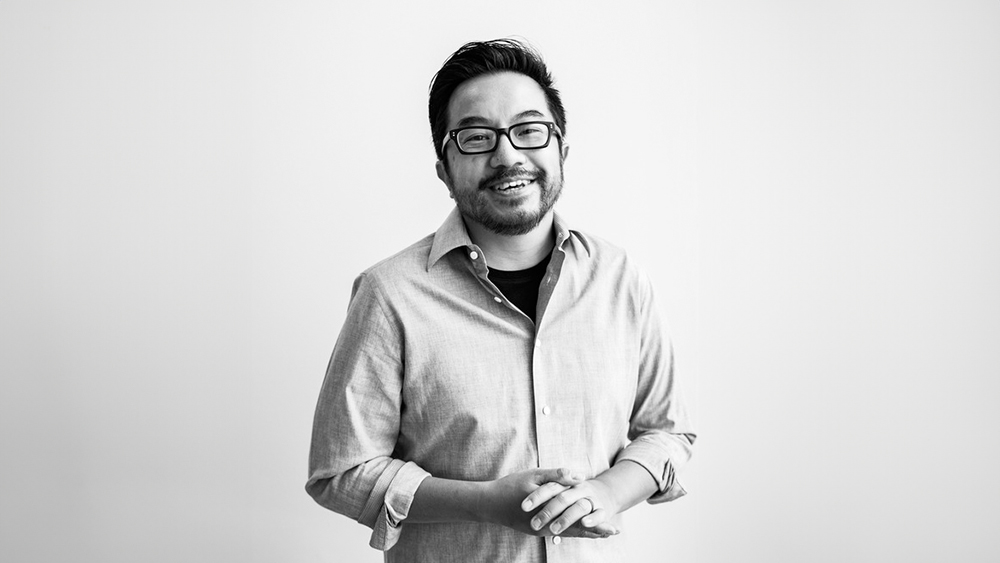
Few people in Silicon Valley are as high-profile as Y Combinator’s President and CEO, Garry Tan. Garry has worn many different hats over his illustrious career. In addition to leading the world’s most successful startup accelerator, Garry was the 10th employee at Palantir, co-founded Posterous (one of the earliest blogging sites), founded Initialized Capital (a VC fund with over $3.2B AUM), and has even ventured into the world of politics, becoming a prominent activist in San Francisco local politics. I got the chance to pick Garry’s brain about how being Asian has affected his life, and I hope that his answers can help and inspire our readers. Without further ado:

OVERCOMING DETRIMENTAL MINDSETS

My experience is that children of working class parents (especially Asian immigrants) tend to have a sticky mindset of scarcity–even when they improve their socioeconomic status. Garry has previously talked about his “$200 million mistake”. That is–he declined Peter Thiel’s offer to be a founding member at Palantir. To me, this seemed like a manifestation of this mindset, so I asked Garry how he overcame it:

I was able to realize that these things were two-way doors. Quitting a big tech company on good terms actually means you can go back anytime. There are one-way doors and two-way doors. For people who grow up with our upbringing, everything feels like a one-way door. But if you can recognize when that is wrong, then you have reclaimed some of the privileges those who come from money have by default.

The one-way vs two-way door framework is something Amazon founder Jeff Bezos has talked about extensively. You can hear him go more in depth here.

The stigma around mental health in the Asian community is another mindset that is gaining more attention. Personally, because my immigrant parents had to fight tooth and nail for survival, I don’t feel that I have the right to complain about my mental health since my life is comparatively easy. I asked Garry if this resonated with him and how he overcame this mental block:

I pretended I didn’t have any problems and spent a lot of time just trying to blend in, but in the end things about my childhood or unusual trauma-based reactions would pop up in my professional life. At some point I started going to therapy individually and it helped me immensely. All these things I didn’t have control over suddenly became something I could integrate and be aware of, and make better choices about. Carl Jung says if you don’t make the unconscious conscious, it will rule you, and you will call it fate. 

A third common mindset I see among Asian Americans is to keep their heads down and avoid rocking the boat, even if it means holding in their thoughts. Given that Garry is a very outspoken person, I asked him how he developed his confidence:

I remember in high school, I was editor of the school newspaper and noticed that students in our poorer high school got much more harsh sentences and expulsions for the same infractions that would get a slap on the wrist at the rich school. I was so angry about it, and I wrote an article exposing it but that was censored by my high school newspaper teacher. I was already going to graduate and go to Stanford so I let it slide, but deep inside me there was an anger at being silenced that I never forgot. Before newspaper, I would publish underground newspapers using Pagemaker and my English teacher would photocopy the newspapers for the class – it gave me a power I never forgot because otherwise I was the scrawny Asian nerd in the corner, but when I could channel the words of my community it gave me standing. I never forgot that.

ON ASIAN COMMUNITIES

On the topic of communities, I asked Garry about what motivated him to become a fierce advocate for the Asian community:

I feel strong solidarity with my Asian American community in San Francisco. We are a major part of the city but we are not seen. We are not heard. The local leaders would even denigrate our attempts at securing safety for our Asian American elders. Now I know I need to fight for those who don’t have a voice. One of the coolest things I found was a nonprofit called Dear Community that connects Asian Americans new to SF, often young professionals, to each other and to the existing SF Chinatown communities. It’s amazing to see smart driven people come together around that, and fight for our people in this city.

I also pointed out how he recently went to Singapore to attend a startup event called SWITCH, and asked him how he felt about the startup scenes popping up in Asian countries:

Startups are happening all around the world. You can learn from YouTube and the web. YC alums are everywhere in the world. I’m excited to see that what started in the Bay Area is now a global phenomenon and only growing.

THE ASIAN FOUNDER EXPERIENCE

On a friend’s recommendation, I asked Garry “Who are some non-technical Asian founder role models I might want to look towards? In terms of working at an early stage startup as a non-technical employee, what are the most valuable skills to learn?” Garry’s response kind of challenged the premise of my question:

In startups and in technology, being technical is a key strength. Be technical if you can be. And then be a polymath: it’s far easier for a technical person to pick up the soft skills than the other way around. 

In hindsight, I will admit that it seems silly to expect to get an outlier outcome (in the positive direction) in the tech industry if you aren’t willing to put in the effort to become technical. He got me on that one.

Lastly, I asked Garry the same question I ask all our guests–how does he think about his Asian-ness in the context of being a founder:

I didn’t think about it until much later. Frankly I tried to pretend it wasn’t an issue, even though there was absolutely a bamboo ceiling even for me. I was passed over for promotions and/or people didn’t think I was capable of doing what I have done. I would rage-quit jobs and it would work out, but I could see it going a different way. As a founder, I found that I needed to up-level my ability to speak up and speak out, and especially be as assertive as possible when I knew I was absolutely right. I had an unspoken desire that I was not even aware of for harmony, and without being aware of it I would sometimes self-abandon, and then be passive aggressive about it later. I don’t do that anymore, and it was a key step in my development as a leader. I wish I developed it earlier, and it was all because of unconscious programming from my childhood. 

The biggest lesson I took away from this interview was how the infallible and outspoken Garry Tan was not always so, and that at one point he was very much like the stereotypical Asian kid. Garry’s story proves that with self-awareness and determination, anybody can undergo tremendous growth and become an industry leader.

SHOUTOUTS

If you have an ambitious startup idea and want to be part of an amazing community of founders, apply to Y Combinator! Y Combinator runs batches twice a year–in the winter and summer. Applications for the summer 2024 batch are open, you can apply at https://www.ycombinator.com/apply

Thank you Garry for the interview!

Featured Image Source: Y Combinator
Related Articles

cnn-jpeg

News

TikTok Invests Billions to Drive E-Commerce Success in Southeast Asia

TikTok, the popular short video app owned by ByteDance, has announced plans to invest billions of dollars in Southeast Asia in a bid to boost its e-commerce business.

The move comes as TikTok aims to capitalize on its large user base in the region and address concerns over data security. With a collective population of 630 million, half of whom are under 30 years old, Southeast Asia represents a key market for TikTok, attracting over 325 million monthly visitors to the app.

Despite its impressive user numbers, TikTok has struggled to convert its popularity into significant e-commerce revenue in Southeast Asia, facing tough competition from established players such as Shopee, Lazada, and Tokopedia.

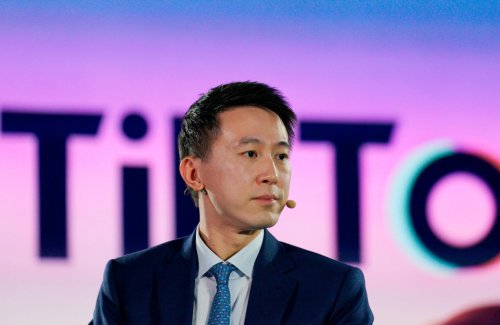
To address this challenge, TikTok CEO Shou Zi Chew revealed the company’s plans to invest billions of dollars in Indonesia and the broader Southeast Asian region over the next few years. While a detailed breakdown of the investment plan was not provided, TikTok intends to focus on training, advertising, and supporting small vendors interested in joining its e-commerce platform, TikTok Shop.

Chew emphasized that TikTok’s content is becoming more diverse as the platform expands beyond advertising into e-commerce. This evolution enables consumers to make purchases directly through the app during live streams. In Indonesia, TikTok’s largest market in Southeast Asia, the platform already hosts 2 million small vendors selling their products. The region’s e-commerce transactions reached nearly $100 billion in 2022, with Indonesia alone accounting for $52 billion of that figure, according to Reuters.

While Southeast Asian governments have not imposed major bans on government devices, TikTok has faced scrutiny regarding its content. In 2018, Indonesia briefly banned the app due to concerns over inappropriate content, while Vietnam has expressed concerns about the platform’s impact on local culture and tradition.

Despite the challenges posed by established competitors and data security concerns, TikTok remains committed to expanding its presence in Southeast Asia and tapping into the region’s vibrant e-commerce market.

Featured Image Source: CNN

the toronto star-jpg

News

Olivia Chow Makes History as First Chinese-Canadian Mayor in Toronto

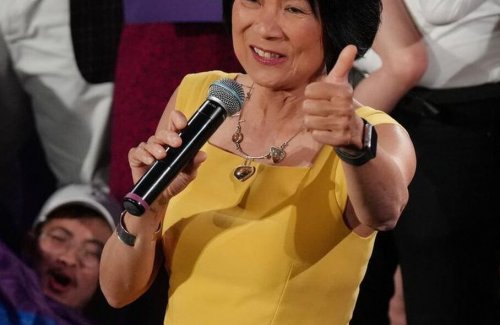
Olivia Chow has emerged as Toronto’s first Chinese-Canadian mayor, ending over a decade of conservative rule and ushering in a new progressive era for the city.

Olivia was 13 years old when she first arrived in the country as an immigrant. Now, at 66, she has achieved a remarkable feat, surpassing 102 candidates to become Toronto’s first Chinese-Canadian mayor.  During her campaign, she focused on addressing the housing affordability crisis and pledged to raise the city’s low property taxes while providing support for tenants.

Upon taking office, Olivia faces opposition from Ontario’s premier, Doug Ford, who had warned that her victory would be an “unmitigated disaster.” Ford’s brother, Rob Ford, previously served as mayor of Toronto but faced controversy due to a video showing him smoking crack cocaine and a cancer diagnosis.

Throughout her career, Olivia has served as a member of parliament for the New Democratic Party, a Toronto city councilor, and a school board trustee. She also campaigned alongside her late husband, Jack Layton, who ran for mayor in 1991 and later became the leader of the opposition in Canada.

Olivia assumes the role of mayor at a challenging time for Toronto. The city, with a population of 2.7 million and a metropolitan area of nearly 7 million, is grappling with surging rents and a budget deficit of approximately $1.5 billion. Public safety concerns have also grown, particularly following a series of violent attacks on individuals using the public transit system.

According to The Guardian, Olivia is expected to be a champion for transit, as well as for walking and cycling – she does not have a driving license – and has promised to turn the tide on years of low-tax austerity politics enacted by her conservative predecessors.

Featured Image Source: The Toronto Star

vogue sg-jpg

News

Daniel Wu Shines Spotlight on Asian Cultural Icons in ‘American Born Chinese’

Daniel Wu, known for his roles in “Into the Badlands” and “Westworld,” is thrilled to bring Gene Luen Yang’s celebrated graphic novel, “American Born Chinese,” to a wider audience through its screen adaptation.

In a Zoom interview with UPI, Wu expressed his excitement about introducing the action-comedy story to a broader mainstream audience. The series, which is now streaming on Disney+, follows the journey of Jin Wang (played by Ben Wang), a teenager navigating the challenges of fitting in at his high school against the wishes of his traditional parents (portrayed by Yeo Yann Yann and Chin Han).

“The screen adaptation that was done by Kelvin Yu is amazing in integrating these three disparate story lines,” Wu said to UPI.

When Jin meets Wei-Chen (Jimmy Liu), a Chinese immigrant and the secret son of the legendary Monkey King (portrayed by Wu), their intertwined destinies set the stage for a captivating narrative.

Wu emphasized the significance of showcasing the iconic Monkey King character to a different audience, highlighting the character’s deep-rooted connection to Asian culture. By doing so, he hopes to reveal the Asian “superheroes” and idols from his own childhood to viewers who may not be familiar with these cultural icons. 

According to UPI, Wu found a personal connection to the Monkey King character as a father himself. Reflecting on his experiences during the COVID-19 pandemic and the challenges of distance learning, he humorously described himself as a “Tiger Dad.”

“I realized that I am part Tiger Dad and that I am strict on my kid and then I need to let go,” he said to UPI. “This character is dealing with that same situation.”

Wu is working alongside Michelle Yeoh who portrays Guanyin the Goddess of Mercy. Despite knowing each other for two decades, this project marked their first collaboration, making it even more special.

With its visually spectacular action sequences and heartfelt storytelling, the series offers a distinctive viewing experience that can be cherished by families across generations.

Featured Image Source: Vogue SG

tatler asia-jpeg

News

A Korean Immigrant’s Journey to Becoming a Beauty Industry Icon

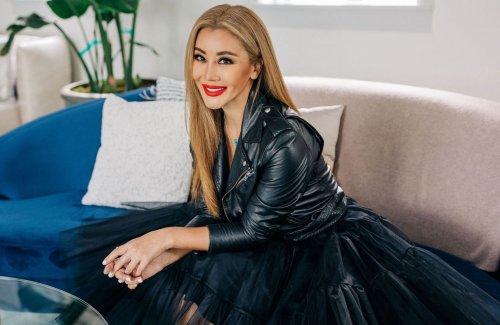
Toni Ko is a first-generation Korean immigrant who has made an indelible mark in the business world as the founder of NYX Cosmetics and a champion of women-run brands.

Toni is the visionary behind NYX Cosmetics and a fierce advocate for women-run brands. With her relentless work ethic and unparalleled business acumen, she has carved a path to success that has earned her a well-deserved place among Forbes magazine’s Richest Self-Made Women.

Despite facing numerous challenges after moving to California in 1986, the language barriers and unfamiliar surroundings, she thrived on the difficulties and developed a resilient character. She drew from her family’s background in the cosmetics industry to launch NYX Cosmetics in 1999 with $250,000 in seed money from her parents. Her vision was to provide high-quality cosmetics at affordable prices, bridging the gap between luxury and affordability.

Toni used social media to propel NYX Cosmetics to remarkable success. The brand gained traction through partnerships with influential beauty creators on platforms like YouTube, capturing a younger audience and solidifying its place in the market. In 2014, L’Oréal acquired NYX Cosmetics for an estimated $500 million.

Driven by her passion for empowering women, Toni established the Toni Ko Foundation in 2014. Through this foundation, she supports organizations dedicated to uplifting underprivileged children and championing women’s empowerment. In addition, she actively invests in women-owned businesses through her venture capital firm, Butter Ventures, fostering the growth and success of fellow female entrepreneurs.

Toni has been lauded with prestigious accolades, including the WWD Beauty Inc. Brand of the Year award for NYX Cosmetics and her inclusion on Forbes’ esteemed list of Richest Self-Made Women. More than a businesswoman, Toni is a beacon of inspiration, paving the way for a future where women’s voices are amplified and their dreams are within reach.

Featured Image Source: Tatler Asia