Awaken* newsletter

March 6, 2024

SHARE:

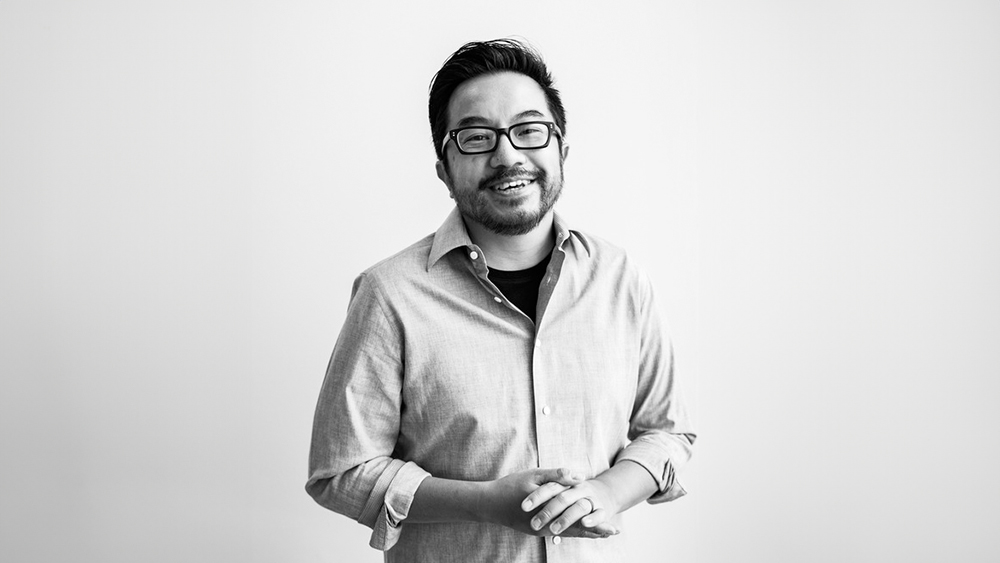
Few people in Silicon Valley are as high-profile as Y Combinator’s President and CEO, Garry Tan. Garry has worn many different hats over his illustrious career. In addition to leading the world’s most successful startup accelerator, Garry was the 10th employee at Palantir, co-founded Posterous (one of the earliest blogging sites), founded Initialized Capital (a VC fund with over $3.2B AUM), and has even ventured into the world of politics, becoming a prominent activist in San Francisco local politics. I got the chance to pick Garry’s brain about how being Asian has affected his life, and I hope that his answers can help and inspire our readers. Without further ado:

OVERCOMING DETRIMENTAL MINDSETS

My experience is that children of working class parents (especially Asian immigrants) tend to have a sticky mindset of scarcity–even when they improve their socioeconomic status. Garry has previously talked about his “$200 million mistake”. That is–he declined Peter Thiel’s offer to be a founding member at Palantir. To me, this seemed like a manifestation of this mindset, so I asked Garry how he overcame it:

I was able to realize that these things were two-way doors. Quitting a big tech company on good terms actually means you can go back anytime. There are one-way doors and two-way doors. For people who grow up with our upbringing, everything feels like a one-way door. But if you can recognize when that is wrong, then you have reclaimed some of the privileges those who come from money have by default.

The one-way vs two-way door framework is something Amazon founder Jeff Bezos has talked about extensively. You can hear him go more in depth here.

The stigma around mental health in the Asian community is another mindset that is gaining more attention. Personally, because my immigrant parents had to fight tooth and nail for survival, I don’t feel that I have the right to complain about my mental health since my life is comparatively easy. I asked Garry if this resonated with him and how he overcame this mental block:

I pretended I didn’t have any problems and spent a lot of time just trying to blend in, but in the end things about my childhood or unusual trauma-based reactions would pop up in my professional life. At some point I started going to therapy individually and it helped me immensely. All these things I didn’t have control over suddenly became something I could integrate and be aware of, and make better choices about. Carl Jung says if you don’t make the unconscious conscious, it will rule you, and you will call it fate. 

A third common mindset I see among Asian Americans is to keep their heads down and avoid rocking the boat, even if it means holding in their thoughts. Given that Garry is a very outspoken person, I asked him how he developed his confidence:

I remember in high school, I was editor of the school newspaper and noticed that students in our poorer high school got much more harsh sentences and expulsions for the same infractions that would get a slap on the wrist at the rich school. I was so angry about it, and I wrote an article exposing it but that was censored by my high school newspaper teacher. I was already going to graduate and go to Stanford so I let it slide, but deep inside me there was an anger at being silenced that I never forgot. Before newspaper, I would publish underground newspapers using Pagemaker and my English teacher would photocopy the newspapers for the class – it gave me a power I never forgot because otherwise I was the scrawny Asian nerd in the corner, but when I could channel the words of my community it gave me standing. I never forgot that.

ON ASIAN COMMUNITIES

On the topic of communities, I asked Garry about what motivated him to become a fierce advocate for the Asian community:

I feel strong solidarity with my Asian American community in San Francisco. We are a major part of the city but we are not seen. We are not heard. The local leaders would even denigrate our attempts at securing safety for our Asian American elders. Now I know I need to fight for those who don’t have a voice. One of the coolest things I found was a nonprofit called Dear Community that connects Asian Americans new to SF, often young professionals, to each other and to the existing SF Chinatown communities. It’s amazing to see smart driven people come together around that, and fight for our people in this city.

I also pointed out how he recently went to Singapore to attend a startup event called SWITCH, and asked him how he felt about the startup scenes popping up in Asian countries:

Startups are happening all around the world. You can learn from YouTube and the web. YC alums are everywhere in the world. I’m excited to see that what started in the Bay Area is now a global phenomenon and only growing.

THE ASIAN FOUNDER EXPERIENCE

On a friend’s recommendation, I asked Garry “Who are some non-technical Asian founder role models I might want to look towards? In terms of working at an early stage startup as a non-technical employee, what are the most valuable skills to learn?” Garry’s response kind of challenged the premise of my question:

In startups and in technology, being technical is a key strength. Be technical if you can be. And then be a polymath: it’s far easier for a technical person to pick up the soft skills than the other way around. 

In hindsight, I will admit that it seems silly to expect to get an outlier outcome (in the positive direction) in the tech industry if you aren’t willing to put in the effort to become technical. He got me on that one.

Lastly, I asked Garry the same question I ask all our guests–how does he think about his Asian-ness in the context of being a founder:

I didn’t think about it until much later. Frankly I tried to pretend it wasn’t an issue, even though there was absolutely a bamboo ceiling even for me. I was passed over for promotions and/or people didn’t think I was capable of doing what I have done. I would rage-quit jobs and it would work out, but I could see it going a different way. As a founder, I found that I needed to up-level my ability to speak up and speak out, and especially be as assertive as possible when I knew I was absolutely right. I had an unspoken desire that I was not even aware of for harmony, and without being aware of it I would sometimes self-abandon, and then be passive aggressive about it later. I don’t do that anymore, and it was a key step in my development as a leader. I wish I developed it earlier, and it was all because of unconscious programming from my childhood. 

The biggest lesson I took away from this interview was how the infallible and outspoken Garry Tan was not always so, and that at one point he was very much like the stereotypical Asian kid. Garry’s story proves that with self-awareness and determination, anybody can undergo tremendous growth and become an industry leader.

SHOUTOUTS

If you have an ambitious startup idea and want to be part of an amazing community of founders, apply to Y Combinator! Y Combinator runs batches twice a year–in the winter and summer. Applications for the summer 2024 batch are open, you can apply at https://www.ycombinator.com/apply

Thank you Garry for the interview!

Featured Image Source: Y Combinator
Related Articles

ezgif.com-webp-to-jpg (2)-jpg

News

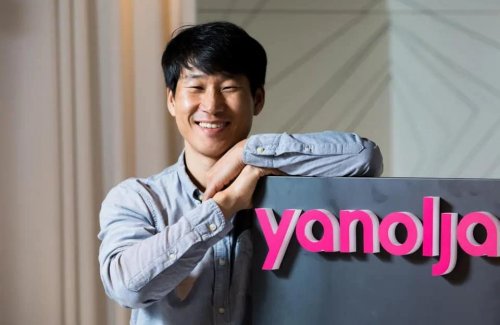
Lee Su-jin’s Rise from Motel Janitor to Billionaire Entrepreneur with Yanolja

Lee Su-jin, the founder and chairman of Yanolja, one of the world’s leading hotel booking sites, has a remarkable journey from being a motel janitor to amassing a net worth of $1.2 billion. 

Yanolja, a Korean phrase meaning “Hey, let’s play,” began its operations in 2007 and quickly evolved into a popular travel app, boasting over 57 million downloads worldwide.

Lee had a challenging upbringing, losing his parents at a young age and spending most of his childhood with relatives. At the age of 23, Lee found himself working as a janitor at a love hotel, which offers short-term accommodations at hourly rates.

But despite the difficult circumstances, Lee saw an opportunity to save money and invest in stocks. He even attempted a salad business, which unfortunately didn’t work out. However, these experiences laid the groundwork for his future in the hospitality industry.

The love hotel business faced societal stigmas and challenges in the early 2000s, particularly with the passage of an anti-prostitution law in South Korea in 2004. Lee aimed to make love hotels more appealing to a broader audience, emphasizing safety, convenience, and affordability, eventually skyrocketing Yanolja’s success.

The company achieved “unicorn” status in 2019, reaching a valuation of over $1 billion during a funding round. SoftBank Vision Fund 2 further bolstered Yanolja’s growth by acquiring a minority stake for $1.7 billion at a $6.7 billion valuation. Speculation about an IPO arose, but the company prioritized the industry’s post-pandemic recovery.

Beyond its travel booking services, Yanolja expanded its offerings to include Yanolja Cloud, an AI-powered software for hospitality and leisure platforms. Currently, its combined software platforms serve 19 million users, facilitating booking, travel, and property management operations.

 As Yanolja continues to make strides in the global travel industry, its impact extends far beyond its bottom line, transforming an entire sector and enriching the experiences of travelers worldwide.

Featured Image Source: Forbes

ezgif.com-webp-to-jpg (1)-jpg

News

Anjali Barman is the Only Indian Woman at Stanford University’s Special Program and This is How

From a small town called Raniganj in Bengal to the prestigious Stanford University, Anjali Barman’s journey is truly amazing.

She became famous for making an app called ‘Ema’ that lets people chat with their friends. And now, she’s the only Indian woman chosen for the special program at Stanford University.

Anjali kindly shared how she got into Stanford with Local 18 so that other Indian students can learn from her experience. According to her, Stanford has two types of classes for executives. One is for individuals who want to learn something specific. They apply on the university’s website, and if they’re chosen, they get a notification. Some short courses can also be done online.

The second type is for bosses like CEOs and directors. Their organizations apply for them to go to Stanford. Stanford also picks some cool start-up companies from all over the world and invites them. Anjali’s start-up was one of the lucky ones.

Anjali got the invitation because her company did really well. It became famous in other countries, not just India. Stanford noticed how quickly her company grew, and they wanted her to join their program.

Stanford will pay for everything, including her research, study costs, and even her stay there. Anjali is leaving for California soon, and her story shows us that with hard work and smart ideas, we can achieve big things no matter where we come from.

Featured Image Source: Indian Express Bangla

erik (1)-jpeg

Stories

How Erik Sun’s Unwavering Passion for Food Led Him to Entrepreneurship

Erik Sun is a lot of things. More than a businessman, he is a spearfisher, hunter, chef, and now farmer of the finest meats.

Erik is part of restaurants Bestia and Bavel located in Los Angeles, head chef of Intercrew in Koreatown, and 2 more restaurants in San Francisco. The focuses of the restaurants are fun, vibrant vibes with original recipes and unique takes on food.

He is also the founder of Pursuit Farms, perhaps the most interesting of his ventures yet. What started off originally as direct purchasing at the Japanese Auctions to import Wagyu Beef has transformed into a full farm that will support his most anticipated Asian BBQ with Mangalitsa Pork (think Iberico, but even bigger and more dynamic), and fat-tail sheep (so legendary, the first three US Presidents had flocks of these sheep).  

When it comes to ingredients, Erik only chooses or raises the best. 

And to make his pursuit of food even more delicious, he recently launched his new business, XXHEAT – a high-quality seasoning powder to take your food to the next level.

He learned some of the ingredients of this powder from a master chef from Sichuan and decided to blend 5 different chilies and 2 of the highest quality Sichuan peppercorns available in all of Asia.

ERIK AND HIS LOVE FOR SPEARFISHING

Erik Sun grew up in Orange County, California, where he discovered his deep passion for spearfishing and the ocean’s treasures.

What started as a personal hobby soon became a business venture, as he began making spearguns in South Africa and connecting with fellow underwater hunters worldwide. Erik’s love for spearfishing allowed him to experience the physical and mental aspects of diving in a single breath, with each day on the water offering new adventures.

His inspiring story showcases how pursuing one’s passion can lead to remarkable achievements and a lasting impact on a global community.

CONNECTIONS MADE OVER FOOD

Erik Sun’s journey into the food business began with a memorable encounter at a renowned Los Angeles restaurant helmed by the esteemed Italian chef, Gino Angelini. Captivated by the exceptional dining experience and the sommelier’s generous pouring of wine, Erik felt compelled to reciprocate the hospitality in his own unique way.

Determined to express his gratitude, Erik made a bold promise to the sommelier: “I’m going to bring you some fish.” With that, he embarked on a mission to deliver an assortment of seafood delicacies, including lobster, scallops, scorpionfish, and octopus.

When he presented the bountiful catch to the sommelier, the sommelier said, “Show up for dinner tomorrow.” Erik told him that those were for him but the sommelier insisted on inviting him over saying, “If you don’t show up for dinner, you’re never allowed back here.” He prepared an extraordinary feast using the ingredients Erik had brought and they have been friends ever since.

The sommelier turned out to be Ori Menashe. And when Ori expressed his desire to open his own restaurant, Erik was the first to pledge his support, eventually becoming a partner of Bestia Restaurant, and occasionally cooking there.

CHALLENGES THAT ERIK FACED

Erik encountered a lot of challenges while establishing his businesses, particularly in the demanding landscape of San Francisco. The process of obtaining permits and navigating the intricacies of building regulations proved to be a daunting task. The estimates provided by architects and project managers fell significantly short of the actual time required to transform a small coffee shop into a larger restaurant.

To compound matters, the unexpected arrival of the COVID-19 pandemic brought construction to a grinding halt, and Erik dealt with some fraudulent contractors. Shifting his focus away from construction woes, he channeled his energy into enhancing the customer’s journey and creating memorable dining moments.

ABOUT XXHEAT SEASONING

XXHEAT is Erik’s latest venture, introducing a distinctive blend of seasonings that promises to elevate the flavor profiles of various dishes, particularly when used on the grill. The inspiration for this unique blend came from Erik’s desire to infuse meats, including Sichuan fried chicken, with boldness and aromatic richness. The reception of XXHEAT has been overwhelmingly positive, with its captivating fragrance and exceptional taste capturing the attention of culinary enthusiasts.

Erik uses XXHEAT on 烧烤, the Chinese term for barbecue skewers. Unlike many alternatives that offer one-dimensional flavors, XXHEAT boasts a blend of the top two peppercorns and a harmonious combination of five blended chilies.

ERIK’S ADVICE TO FELLOW HUSTLERS WHO WANT TO START A BUSINESS

  1. Start and figure it out – There’s always going to be naysayers but if you believe in it, give it a shot and live with no regrets. Problems will come? Figure them out. Not starting is a worse problem. It’d be like playing poker and never playing a hand, just losing your ante every round.
  1. Research and Development – For me, eating is my “research” and then getting back to the kitchen is the “development.” Try all the top that’s available in your sector and figure out how to make it better.
  1. Customer Service – Focus on your customers and when you get negative feedback, do your best to fix it. At one point, we had a lot of shipping issues and UPS / Covid-related delays. Turning a bad situation into good is powerful and having people who rave about your company/service will keep you in business.

CONNECT WITH ERIK

Pursuit Farms Website: pursuitfarms.com

Pursuit of Food Website: thepursuitoffood.com

XXHEAT Website: xxheat.com

Instagram: @pursuitoffood @pursuitfarms @xxheatofficial

Memphis Flyer-jpg

News

Tuyen Le’s Inspiring Journey from Being a Reluctant Server to a Beloved Chef and Restaurant Owner

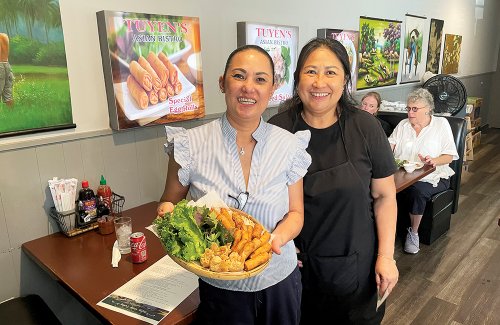
Tuyen Le, the owner of Tuyen’s Asian Bistro, has come a long way from her days as a server at her family’s old restaurant, Saigon Le.

Tuyen’s mother opened Saigon Le in 1992. She joined her family at the restaurant, planning to only stay for a day. But she ended up dedicating over 30 years to the establishment. Saigon Le became renowned for its unique dishes, like the little-bitty egg rolls wrapped in lettuce with a special sauce that attracted celebrities like Woody Harrelson, Cybill Shepherd, and MTV’s Jeff Buckley.

When she was working as a server in Saigon Le, Tuyen had a gambling addiction which was evident in the way she served. According to Memphis Flyer, Tuyen didn’t like being a server, but her mother forced her to be one, saying that she can’t say no to her mama.

When Tuyen decided to quit gambling, she turned to cooking. She claimed that she didn’t know she was good at it, until everything she cooked turned out to be good.

Eventually, Tuyen pursued other ventures and started a seafood restaurant named “New Orleans Seafood,” where she served crab legs, lobster, and other items, but no Asian food. However, economic challenges, exacerbated by the pandemic, led to its closure.

Customers were longing for the return of Saigon Le’s authentic Vietnamese flavors, so Tuyen opened Tuyen’s Asian Bistro. Located at 288 North Cleveland, the tiny restaurant focuses solely on Vietnamese cuisine.

Though Tuyen’s Asian Bistro may be small, it is undoubtedly big on flavors and hospitality. Tuyen ensures that every guest feels welcomed and cherished throughout their dining experience, treating them as family.

Featured Image Source: Memphis Flyer