Awaken* newsletter

March 6, 2024

SHARE:

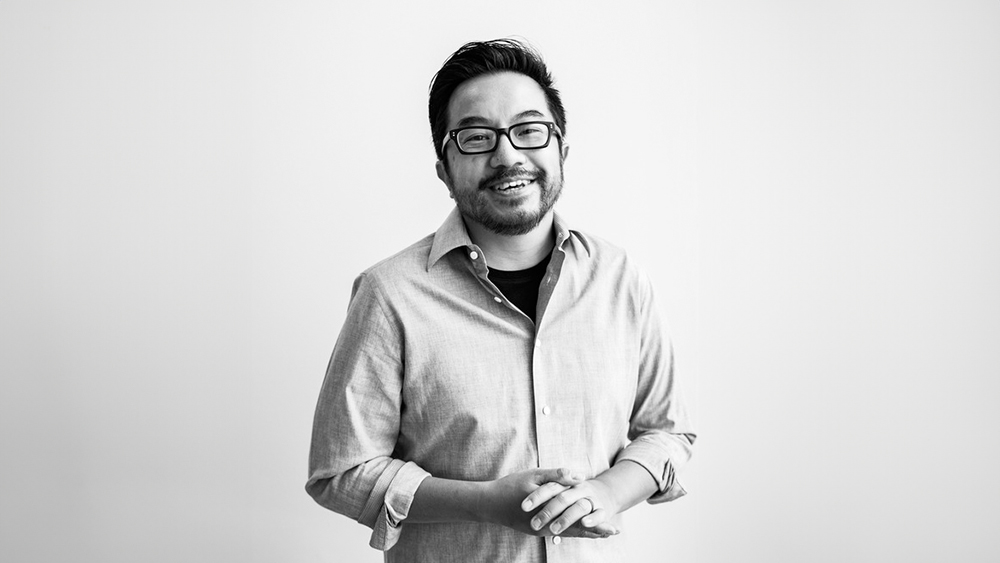
Few people in Silicon Valley are as high-profile as Y Combinator’s President and CEO, Garry Tan. Garry has worn many different hats over his illustrious career. In addition to leading the world’s most successful startup accelerator, Garry was the 10th employee at Palantir, co-founded Posterous (one of the earliest blogging sites), founded Initialized Capital (a VC fund with over $3.2B AUM), and has even ventured into the world of politics, becoming a prominent activist in San Francisco local politics. I got the chance to pick Garry’s brain about how being Asian has affected his life, and I hope that his answers can help and inspire our readers. Without further ado:

OVERCOMING DETRIMENTAL MINDSETS

My experience is that children of working class parents (especially Asian immigrants) tend to have a sticky mindset of scarcity–even when they improve their socioeconomic status. Garry has previously talked about his “$200 million mistake”. That is–he declined Peter Thiel’s offer to be a founding member at Palantir. To me, this seemed like a manifestation of this mindset, so I asked Garry how he overcame it:

I was able to realize that these things were two-way doors. Quitting a big tech company on good terms actually means you can go back anytime. There are one-way doors and two-way doors. For people who grow up with our upbringing, everything feels like a one-way door. But if you can recognize when that is wrong, then you have reclaimed some of the privileges those who come from money have by default.

The one-way vs two-way door framework is something Amazon founder Jeff Bezos has talked about extensively. You can hear him go more in depth here.

The stigma around mental health in the Asian community is another mindset that is gaining more attention. Personally, because my immigrant parents had to fight tooth and nail for survival, I don’t feel that I have the right to complain about my mental health since my life is comparatively easy. I asked Garry if this resonated with him and how he overcame this mental block:

I pretended I didn’t have any problems and spent a lot of time just trying to blend in, but in the end things about my childhood or unusual trauma-based reactions would pop up in my professional life. At some point I started going to therapy individually and it helped me immensely. All these things I didn’t have control over suddenly became something I could integrate and be aware of, and make better choices about. Carl Jung says if you don’t make the unconscious conscious, it will rule you, and you will call it fate. 

A third common mindset I see among Asian Americans is to keep their heads down and avoid rocking the boat, even if it means holding in their thoughts. Given that Garry is a very outspoken person, I asked him how he developed his confidence:

I remember in high school, I was editor of the school newspaper and noticed that students in our poorer high school got much more harsh sentences and expulsions for the same infractions that would get a slap on the wrist at the rich school. I was so angry about it, and I wrote an article exposing it but that was censored by my high school newspaper teacher. I was already going to graduate and go to Stanford so I let it slide, but deep inside me there was an anger at being silenced that I never forgot. Before newspaper, I would publish underground newspapers using Pagemaker and my English teacher would photocopy the newspapers for the class – it gave me a power I never forgot because otherwise I was the scrawny Asian nerd in the corner, but when I could channel the words of my community it gave me standing. I never forgot that.

ON ASIAN COMMUNITIES

On the topic of communities, I asked Garry about what motivated him to become a fierce advocate for the Asian community:

I feel strong solidarity with my Asian American community in San Francisco. We are a major part of the city but we are not seen. We are not heard. The local leaders would even denigrate our attempts at securing safety for our Asian American elders. Now I know I need to fight for those who don’t have a voice. One of the coolest things I found was a nonprofit called Dear Community that connects Asian Americans new to SF, often young professionals, to each other and to the existing SF Chinatown communities. It’s amazing to see smart driven people come together around that, and fight for our people in this city.

I also pointed out how he recently went to Singapore to attend a startup event called SWITCH, and asked him how he felt about the startup scenes popping up in Asian countries:

Startups are happening all around the world. You can learn from YouTube and the web. YC alums are everywhere in the world. I’m excited to see that what started in the Bay Area is now a global phenomenon and only growing.

THE ASIAN FOUNDER EXPERIENCE

On a friend’s recommendation, I asked Garry “Who are some non-technical Asian founder role models I might want to look towards? In terms of working at an early stage startup as a non-technical employee, what are the most valuable skills to learn?” Garry’s response kind of challenged the premise of my question:

In startups and in technology, being technical is a key strength. Be technical if you can be. And then be a polymath: it’s far easier for a technical person to pick up the soft skills than the other way around. 

In hindsight, I will admit that it seems silly to expect to get an outlier outcome (in the positive direction) in the tech industry if you aren’t willing to put in the effort to become technical. He got me on that one.

Lastly, I asked Garry the same question I ask all our guests–how does he think about his Asian-ness in the context of being a founder:

I didn’t think about it until much later. Frankly I tried to pretend it wasn’t an issue, even though there was absolutely a bamboo ceiling even for me. I was passed over for promotions and/or people didn’t think I was capable of doing what I have done. I would rage-quit jobs and it would work out, but I could see it going a different way. As a founder, I found that I needed to up-level my ability to speak up and speak out, and especially be as assertive as possible when I knew I was absolutely right. I had an unspoken desire that I was not even aware of for harmony, and without being aware of it I would sometimes self-abandon, and then be passive aggressive about it later. I don’t do that anymore, and it was a key step in my development as a leader. I wish I developed it earlier, and it was all because of unconscious programming from my childhood. 

The biggest lesson I took away from this interview was how the infallible and outspoken Garry Tan was not always so, and that at one point he was very much like the stereotypical Asian kid. Garry’s story proves that with self-awareness and determination, anybody can undergo tremendous growth and become an industry leader.

SHOUTOUTS

If you have an ambitious startup idea and want to be part of an amazing community of founders, apply to Y Combinator! Y Combinator runs batches twice a year–in the winter and summer. Applications for the summer 2024 batch are open, you can apply at https://www.ycombinator.com/apply

Thank you Garry for the interview!

Featured Image Source: Y Combinator
Related Articles

la crosse tribune-png

News

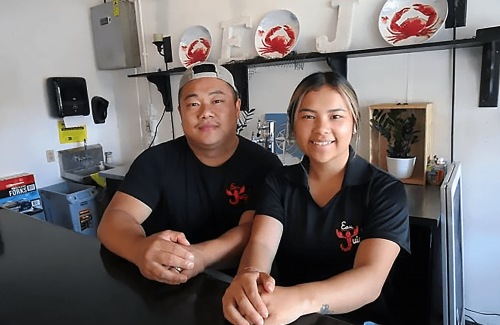
Couple Behind Eau Juicy-La Crosse Unveils Their Asian-inspired Menu

Bringing a delightful blend of Asian-inspired Cajun seafood to the city, Eau Juicy-La Crosse has been making waves since its opening on July 14. The minds behind this exciting venture are Xavier Yang and his fiancee, Yer Thao, who express their satisfaction with the positive response received from the community.

Through this venture, Yang and Thao have gained valuable insights into the preferences of local residents. Yang shares his observations with La Crosse Tribune, stating, “We’ve noticed that here, a lot of people like snow crab.” Located at 412 Main St. in downtown La Crosse, the restaurant has become a focal point after the closure of Soula’s Cuisina at the end of June.

Building on their prior experience, Yang and Thao operated their first Eau Juicy restaurant in Eau Claire from July 2021 to September 2022. Their success has paved the way for the next chapter, as they plan to open another Eau Juicy establishment in nearby Altoona come spring, according to La Crosse Tribune.

Unveiling the favorites on their menu, patrons are drawn to the head-off shrimp and the sumptuous Dillybob Special platter. This elaborate feast includes 4 to 5 pounds of shrimp, mussels, crawfish, and snow crab, complemented by four servings of corn, potatoes, and a generous portion of sausages. This feast is designed to cater to the appetites of two to four individuals.

Aside from seafood, the menu boasts a diverse array of options, ranging from wings and french fries to egg rolls and a variety of sides such as corn, potatoes, sausages, sticky rice, and sweet rolls. The dining experience is further elevated by an array of sauces, allowing patrons to tailor their meals to their preferences. Additionally, the restaurant offers catering services to ensure their delectable offerings are a highlight of special occasions.

Looking ahead, Yang and Thao are eager to expand their beverage options. Pending the acquisition of a city liquor license, they plan to introduce beer, wine, and cocktails to complement their culinary offerings, enhancing the overall dining experience.

Featured Image Source: La Crosse Tribune

Eater LA-jpg

News

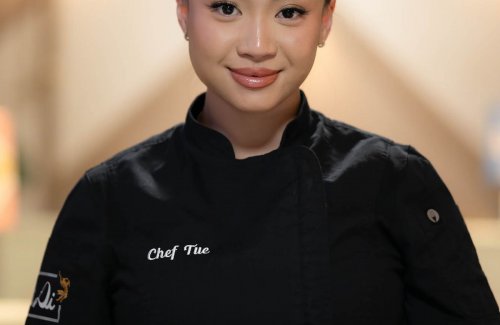
Tue Nguyen’s Journey from TikTok Stardom to Opening Her Own Restaurant

Tue Nguyen is a young cook who came to the US from Vietnam as a kid. She became extremely well-known on TikTok for demonstrating how to prepare Vietnamese food. She went from posting videos of her cooking Vietnamese dishes on TikTok during the pandemic to opening her own restaurant called Di Di near Los Angeles.

“I think that’s always kind of been like a dream. But… I honestly didn’t know that it would come this fast,” Nguyen shared in a recent interview with AFP.

She learned cooking in a special school, but her real talent came from her family’s way of cooking. Her mom and stepdad taught her how to make good food and trust her taste.

At first, Tue put videos online as TwayDaBae where she did mukbangs. People liked them, but they loved her cooking videos more. She saw that most of her audience didn’t just want to watch, they also wanted to learn how to make the delicious food themselves.

Tue didn’t start by making a big restaurant. She began with small places where she cooked for people. The first place where she did this is now her restaurant, called Di Di. Many people follow her on social media like Instagram and TikTok. They like her videos a lot, but Tue thinks that sharing recipes online won’t stop people from coming to her restaurant. She says her online recipes are simple, while her restaurant food looks and tastes more special.

Di Di, which means “Let’s go” in Vietnamese, is like a piece of Tue’s heart. It’s filled with comfy chairs, pretty lamps, and plants. It opened recently and is already making people happy. Tue mixes what she learned in cooking school with the flavors from her family.

Featured Image Source: Eater LA

The Fresno Bee-jpg

News

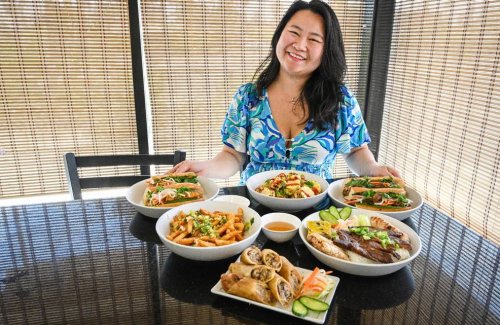
How Leila Jace Built a Thriving Street Food Joint Inspired by Childhood Memories in Vietnam

Growing up in Vietnam, Leila Jace cherished the simple joys of childhood, like the intoxicating aroma of smoky grilled corn wafting from street vendors as she walked home from school. She didn’t have much money, but she saved up her lunch money to buy a treat she loved – a slightly charred corn on the cob sprinkled with scallions for extra flavor.

Little did she know that this fond memory would become the star of her own restaurant in Fresno, California.

Just nine months ago, Leila’s dream came true as she opened the doors to Sizzle n’ Steam, a cozy spot at Maroa and Shields avenues in Fresno. This Vietnamese street food joint has quickly become a hit, boasting an impressive 4.5-star rating on Yelp.com and even snagging the third spot in The Bee’s poll for the most underrated restaurant in town.

Leila’s journey to becoming a food entrepreneur is quite a story. According to The Fresno Bee, Leila came to California at 14 without speaking much English. She pursued her studies and even built a successful career in retirement planning. But a longing for change and a desire to be close to her parents led her to Fresno, where she decided to give life a new flavor – by opening a restaurant.

What makes Sizzle n’ Steam so special? It’s all about fusing Leila’s unique style and travel adventures with the mouthwatering Vietnamese street food. Yes, the menu features well-known delicacies like pho, spring rolls, and bowls of vermicelli noodles. But the real magic lies in the lesser-known treats that Leila has added, like the Gilroy garlicky fries that pay homage to the place her family first settled when they came to the U.S. The restaurant also offers an array of vegan and vegetarian options, catering to a diverse clientele.

Aside from what her restaurant has to offer, Leila’s warm hospitality is outstanding, transforming her customers into friends, and turning Sizzle n’ Steam into a hub where diners feel right at home.

Featured Image Source: The Fresno Bee

gulf news-jpg

News

Filipino Entrepreneur’s Journey From Being an Employee to Owning Three Businesses in UAE

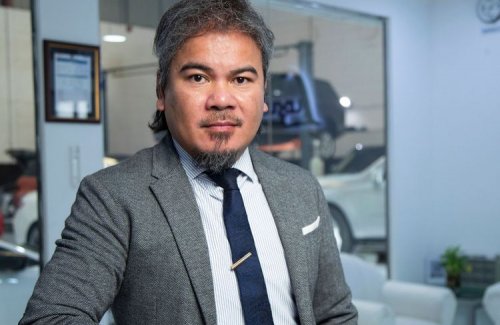
Dubai has long been known as a hub of opportunity, a place where dreams can flourish and aspirations come true. Frando Sarmiento’s journey from a regular worker to a successful entrepreneur is a great example of this. He now owns not one, not two, but three thriving businesses in the UAE. Let’s dive into his inspiring story and see how he made it happen.

Frando Sarmiento’s story began in a small fishing village in the Philippines. His parents worked hard to raise him and provide a good education. Even though life was simple, his parents’ efforts and support shaped his dreams of doing something big one day.

In 2005, Sarmiento came to Dubai to explore job options. He started with jobs like sales manager and gained experience in different companies. These experiences gave him insights into various industries and ignited his desire to run his own businesses someday.

The efficient process of setting up a company surprised him and made his entrepreneurial journey smoother. According to Gulf News, Sarmiento was amazed by how easy it was to start a business in the UAE, and this played a big role in his success.

“It is best to start while you’re young. Whatever happens, one is bound to learn something profound that will benefit him in many ways. When we are young, we are not afraid of making mistakes. There is a lot of time left to recover and learn. This is something I would have told myself during my younger years. But, as they say, it is never too late to start building what you want,” Sarmiento shared with Gulf News.

Featured Image Source: Gulf News