Awaken* newsletter

March 6, 2024

SHARE:

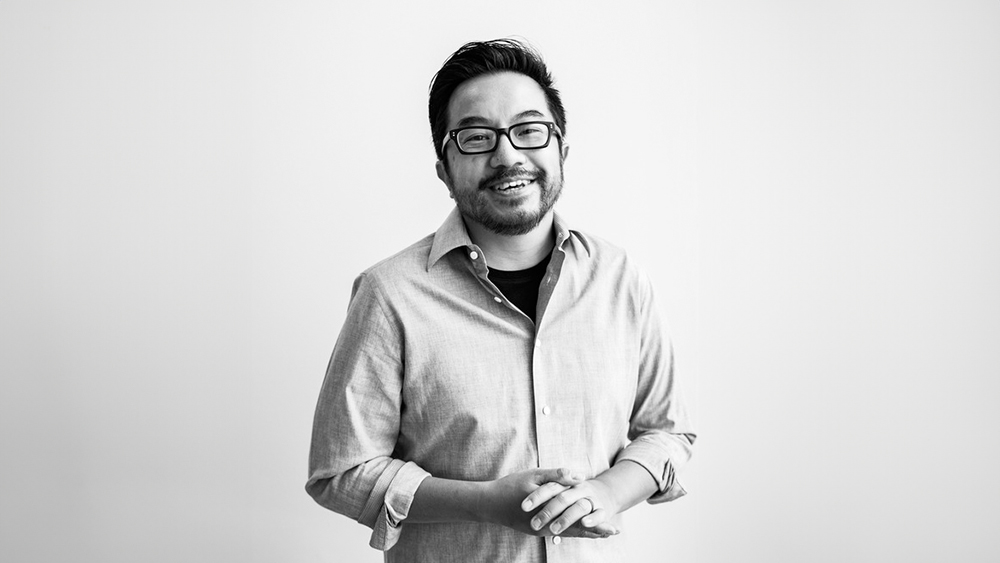
Few people in Silicon Valley are as high-profile as Y Combinator’s President and CEO, Garry Tan. Garry has worn many different hats over his illustrious career. In addition to leading the world’s most successful startup accelerator, Garry was the 10th employee at Palantir, co-founded Posterous (one of the earliest blogging sites), founded Initialized Capital (a VC fund with over $3.2B AUM), and has even ventured into the world of politics, becoming a prominent activist in San Francisco local politics. I got the chance to pick Garry’s brain about how being Asian has affected his life, and I hope that his answers can help and inspire our readers. Without further ado:

OVERCOMING DETRIMENTAL MINDSETS

My experience is that children of working class parents (especially Asian immigrants) tend to have a sticky mindset of scarcity–even when they improve their socioeconomic status. Garry has previously talked about his “$200 million mistake”. That is–he declined Peter Thiel’s offer to be a founding member at Palantir. To me, this seemed like a manifestation of this mindset, so I asked Garry how he overcame it:

I was able to realize that these things were two-way doors. Quitting a big tech company on good terms actually means you can go back anytime. There are one-way doors and two-way doors. For people who grow up with our upbringing, everything feels like a one-way door. But if you can recognize when that is wrong, then you have reclaimed some of the privileges those who come from money have by default.

The one-way vs two-way door framework is something Amazon founder Jeff Bezos has talked about extensively. You can hear him go more in depth here.

The stigma around mental health in the Asian community is another mindset that is gaining more attention. Personally, because my immigrant parents had to fight tooth and nail for survival, I don’t feel that I have the right to complain about my mental health since my life is comparatively easy. I asked Garry if this resonated with him and how he overcame this mental block:

I pretended I didn’t have any problems and spent a lot of time just trying to blend in, but in the end things about my childhood or unusual trauma-based reactions would pop up in my professional life. At some point I started going to therapy individually and it helped me immensely. All these things I didn’t have control over suddenly became something I could integrate and be aware of, and make better choices about. Carl Jung says if you don’t make the unconscious conscious, it will rule you, and you will call it fate. 

A third common mindset I see among Asian Americans is to keep their heads down and avoid rocking the boat, even if it means holding in their thoughts. Given that Garry is a very outspoken person, I asked him how he developed his confidence:

I remember in high school, I was editor of the school newspaper and noticed that students in our poorer high school got much more harsh sentences and expulsions for the same infractions that would get a slap on the wrist at the rich school. I was so angry about it, and I wrote an article exposing it but that was censored by my high school newspaper teacher. I was already going to graduate and go to Stanford so I let it slide, but deep inside me there was an anger at being silenced that I never forgot. Before newspaper, I would publish underground newspapers using Pagemaker and my English teacher would photocopy the newspapers for the class – it gave me a power I never forgot because otherwise I was the scrawny Asian nerd in the corner, but when I could channel the words of my community it gave me standing. I never forgot that.

ON ASIAN COMMUNITIES

On the topic of communities, I asked Garry about what motivated him to become a fierce advocate for the Asian community:

I feel strong solidarity with my Asian American community in San Francisco. We are a major part of the city but we are not seen. We are not heard. The local leaders would even denigrate our attempts at securing safety for our Asian American elders. Now I know I need to fight for those who don’t have a voice. One of the coolest things I found was a nonprofit called Dear Community that connects Asian Americans new to SF, often young professionals, to each other and to the existing SF Chinatown communities. It’s amazing to see smart driven people come together around that, and fight for our people in this city.

I also pointed out how he recently went to Singapore to attend a startup event called SWITCH, and asked him how he felt about the startup scenes popping up in Asian countries:

Startups are happening all around the world. You can learn from YouTube and the web. YC alums are everywhere in the world. I’m excited to see that what started in the Bay Area is now a global phenomenon and only growing.

THE ASIAN FOUNDER EXPERIENCE

On a friend’s recommendation, I asked Garry “Who are some non-technical Asian founder role models I might want to look towards? In terms of working at an early stage startup as a non-technical employee, what are the most valuable skills to learn?” Garry’s response kind of challenged the premise of my question:

In startups and in technology, being technical is a key strength. Be technical if you can be. And then be a polymath: it’s far easier for a technical person to pick up the soft skills than the other way around. 

In hindsight, I will admit that it seems silly to expect to get an outlier outcome (in the positive direction) in the tech industry if you aren’t willing to put in the effort to become technical. He got me on that one.

Lastly, I asked Garry the same question I ask all our guests–how does he think about his Asian-ness in the context of being a founder:

I didn’t think about it until much later. Frankly I tried to pretend it wasn’t an issue, even though there was absolutely a bamboo ceiling even for me. I was passed over for promotions and/or people didn’t think I was capable of doing what I have done. I would rage-quit jobs and it would work out, but I could see it going a different way. As a founder, I found that I needed to up-level my ability to speak up and speak out, and especially be as assertive as possible when I knew I was absolutely right. I had an unspoken desire that I was not even aware of for harmony, and without being aware of it I would sometimes self-abandon, and then be passive aggressive about it later. I don’t do that anymore, and it was a key step in my development as a leader. I wish I developed it earlier, and it was all because of unconscious programming from my childhood. 

The biggest lesson I took away from this interview was how the infallible and outspoken Garry Tan was not always so, and that at one point he was very much like the stereotypical Asian kid. Garry’s story proves that with self-awareness and determination, anybody can undergo tremendous growth and become an industry leader.

SHOUTOUTS

If you have an ambitious startup idea and want to be part of an amazing community of founders, apply to Y Combinator! Y Combinator runs batches twice a year–in the winter and summer. Applications for the summer 2024 batch are open, you can apply at https://www.ycombinator.com/apply

Thank you Garry for the interview!

Featured Image Source: Y Combinator
Related Articles

medschoolboiz-png

Stories

Creators Podcast: Surya Chinamuthevi on the Journey of Medschoolboiz

AHN and Meta Prosper have partnered on a new podcast series highlighting API creators. Meta Prosper is dedicated to amplifying and supporting the API community and driving economic growth and equitable representation. The Creators Podcast series delivers stories on how creators achieved success and created impact through their platforms, serving as an inspiration for the community.

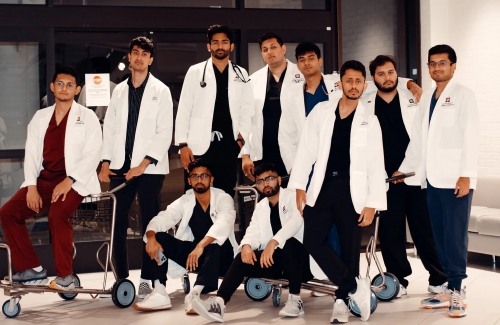
The journey through medical school is often depicted as one of relentless study and sacrifice, but the Medschoolboiz, a group of Texas A&M medical students, are flipping the narrative. With a mission to showcase the friendships, fun, and meaningful moments that make the medical journey worthwhile, Medschoolboiz has become a social media sensation.

Founded by a group of friends who bonded during a pre-medical school retreat, the Medschoolboiz started as an organic experiment. Their first video, a TikTok filmed at their white coat ceremony, captured their transition from casual attire to white coats. The video went viral overnight, and what began as a fun project evolved into a platform celebrating the lighter side of medical school.

Under the slogan “Camaraderie in Medicine” and the tagline “Excited for the journey, not just the destination,” the Medschoolboiz aim to highlight the importance of relationships and joy in what is often seen as a grueling profession.

In a recent episode of the Creators Podcast, hosted by Asian Hustle Network in partnership with Meta Prosper, Medschoolboiz member Surya Chinamuthevi shared insights into their journey. He discussed how the group balances medical school with content creation, the challenges of maintaining authenticity, and their vision for the future.

CONNECT WITH MEDSCHOOLBOIZ

Website: medschoolboiz.com
Instagram: @medschoolboiz
TikTok: @medschoolboiz

William Wang's

News

The Story Behind VIZIO Founder William Wang’s Lifetime Achievement Award

This October, William Wang was honored with Lifetime Achievement at the 75th Annual Technology & Engineering Emmy Awards. As the founder of VIZIO, Wang has revolutionized the television industry, shattering the cost-related concerns about whether quality and pricing can go hand in hand. From a Taiwanese immigrant to a trailblazer, his journey is one of innovation and persistence.

Humble Beginnings and Pursuit of the American Dream

Born in Taipei, Taiwan, William Wang immigrated to the United States as a teenager with his family. Settling in Southern California, cultural barriers arose as a major problem for an immigrant teenager like Wang. However, his persistence shone through: he excelled academically, leading him to pursue engineering at the University of Southern California (USC).

Image Soure: VIZIO

After graduation, Wang was on his way to materializing his dream: starting a company in the tech industry. Yet, he failed multiple times, draining his resources and budget. However, each failure gave him the opportunities and lessons to grow his entrepreneurial endeavors.

The Turning Point: A Life-Altering Experience

But life comes with unheralded events. In 2000, the Singapore Airlines Flight 006 that he was on encountered a crash, and he was one of the few survivors of that fatal incident.

This disastrous event completely altered his outlook on life: he became more grateful for his relationships and the comfort they provide, such as families spending cozy time together watching TV. This newfound perspective catalyzed his entrepreneurial shift into his next venture, fostering an idea that would transform the consumer electronics market. He envisioned a future where the gap between top-tier technology and affordability disappeared—a vision that soon became VIZIO. In 2002, he launched VIZIO. 

By 2007, just five years after its founding, VIZIO had become the top-selling LCD TV brand in the United States—a monumental achievement in an industry dominated by global giants like Sony and Samsung.

Wang’s Humble Reflections on the Achievement

William Wang's
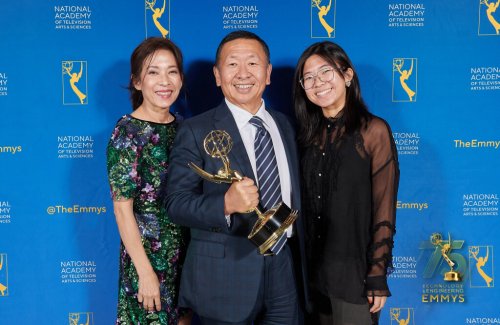
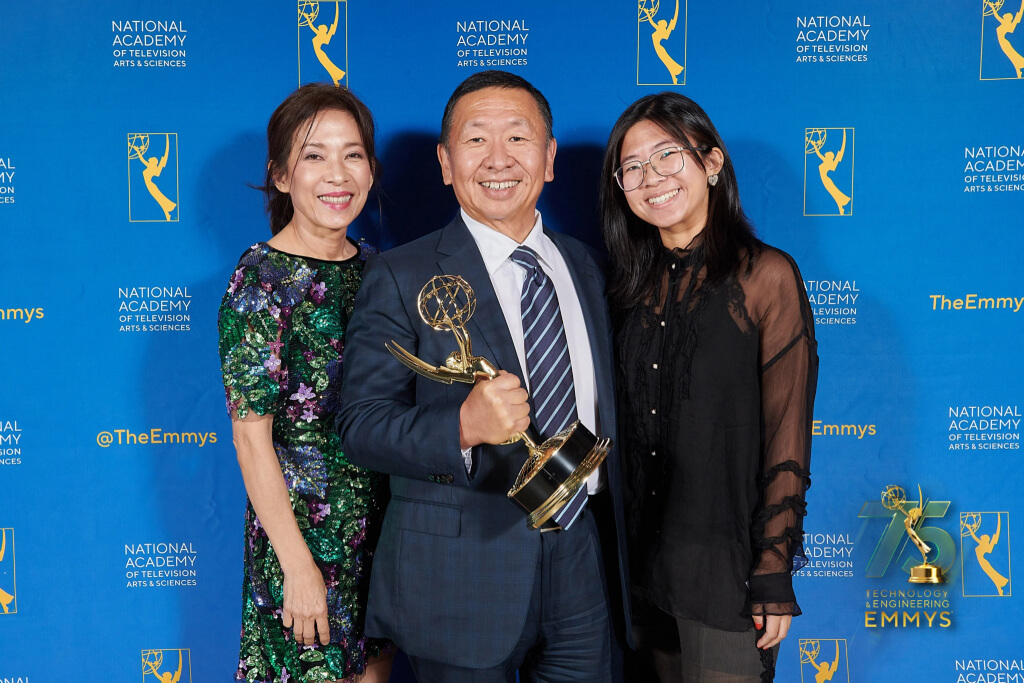
William Wang (center) with his family at the 75th Technology & Engineering Emmy Awards. (Image Source: VIZIO)

When receiving the prestigious Lifetime Achievement Award at the Emmy Awards, he couldn’t help but feel emotional about his near-death-inspired vision. At that moment, his survivor’s guilt had driven him to enrich lives, saying, “My life has been dedicated to bringing great technology to consumers in America.” As influential as he is, he expressed his gratitude for his team, stating, “This recognition is also a testament to the incredible team at VIZIO – it is our lifetime achievement. Together, we’ve challenged the status quo and have created new possibilities for the future of television. I’m proud of what we’ve accomplished and excited for the journey ahead as we continue to push the boundaries of technology and entertainment.”

Featured Image Source: VIZIO

2be9dbfe-8170-4a3a-8ef1-f1dd8a946db5 (1)-jpg

News

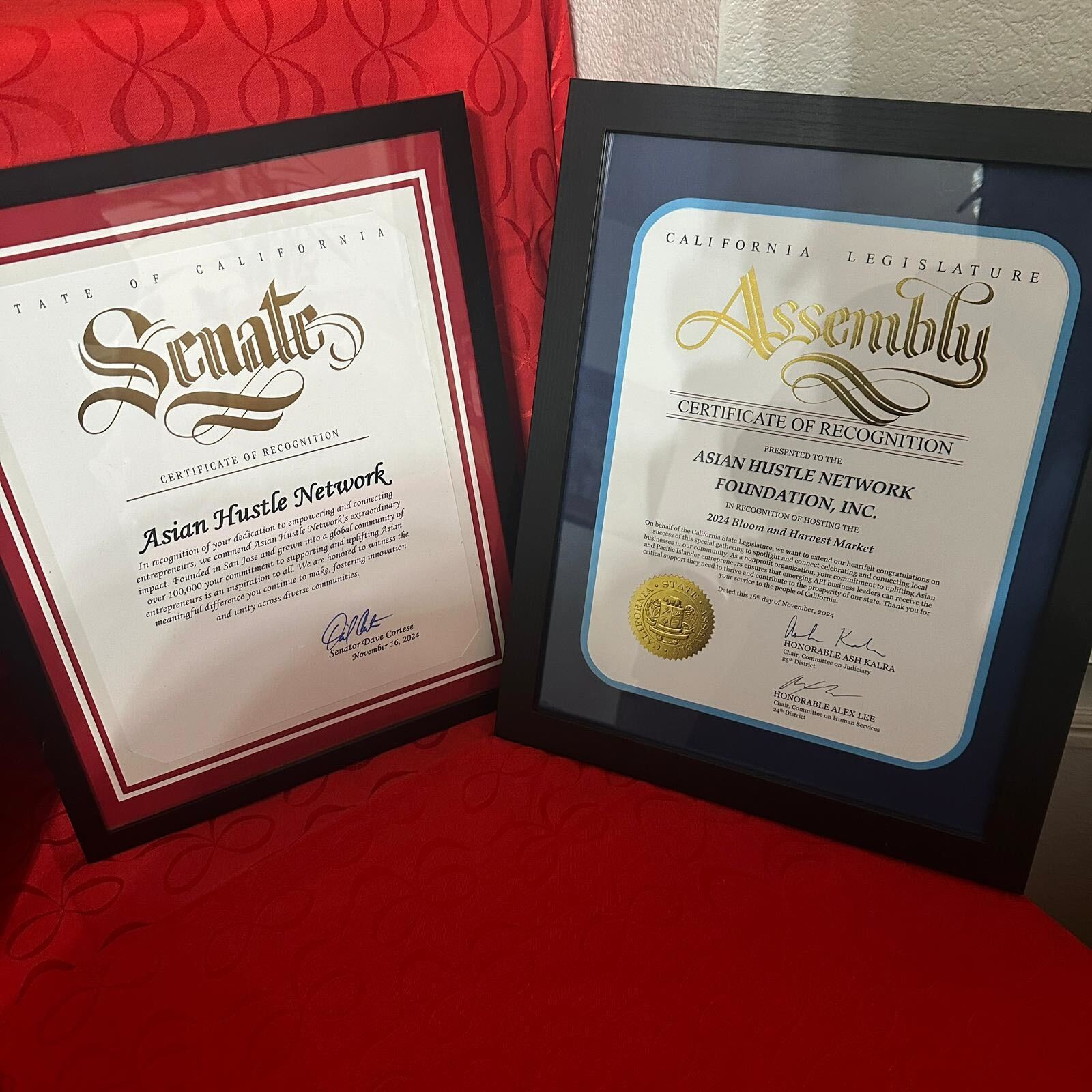
AHN and AHNF Celebrate Milestones with California Senate and Assembly Recognition

As an acknowledgment of Asian Hustle Network (AHN)’s contribution to the Asian and Pacific Islander (API) community, the California State Senate has extended its appreciation for AHN’s extraordinary efforts in fostering innovation and unity. Since its founding in 2019, AHN has continued to support and uplift the API community.

This year was a rewarding and progressive year for AHN, with numerous events and projects in the pipeline to build and strengthen the community while inspiring the next generation of future API leaders. 

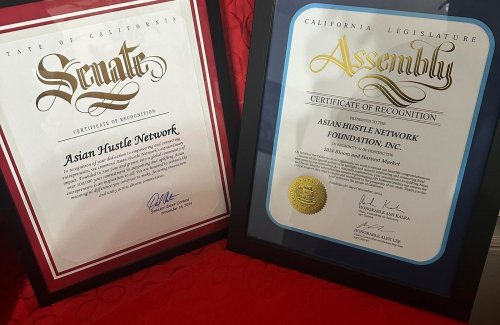
One of the highlights was having our executive director Tristan Paule, and the AHN organization honored with a Certificate of Recognition from the California State Senate and Assembly for successfully hosting the 2024 Bloom and Harvest Market in San Jose, CA. In partnership with SHOPLINE, Flora Haven, and Hot Boi Chili Oil, the event truly aligns with our vision, creating a vibrant marketplace for local AAPI vendors, entrepreneurs, creatives, and influencers. 

In addition, we want to extend our gratitude to those who have contributed to the event’s success:

Community Partners and Sponsors

@nestleusa, @yelpbayarea, @yelpsiliconvalley, @drinklunar, @banhmioven_ca, @andy_nguyen_photography, @lovemeknots_bridal, @varoundtable, @aodaifestival.sj, @vietsteps, @steph.eatsntravels, @amberkimv, @angelinahong_

Retail Vendors

@daesignstudio, @behabbi, @oyucosmetics, @shop_farols, @thebillyguan, @muzmak.official, @ajarofpickles_, @jhcandleco, @thehungryslothco

Prepackaged Goods

@chartruffles, @thepategirl, @thisisbabas.house, @bonjerksnacks, @nokkifarm, @drinklivingflora, @drinknarra, @hotboichilioil, @helladacbiet, @myjinka

Food & Drink

@nhathecafe, @_hetsay_

Beer Garden

@matchpointbrewing

As we look back on this incredible month, we are grateful for the support and excited for what’s coming. Thank you to the local legislation for believing in and enforcing our mission. 

Interior-Chinatown-e1729570164214

News

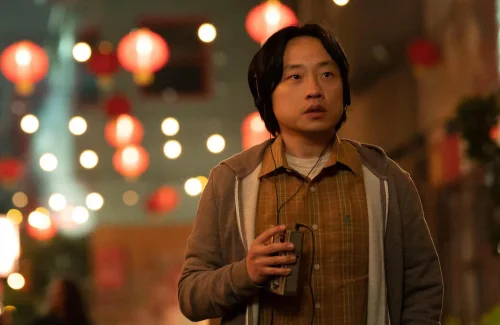
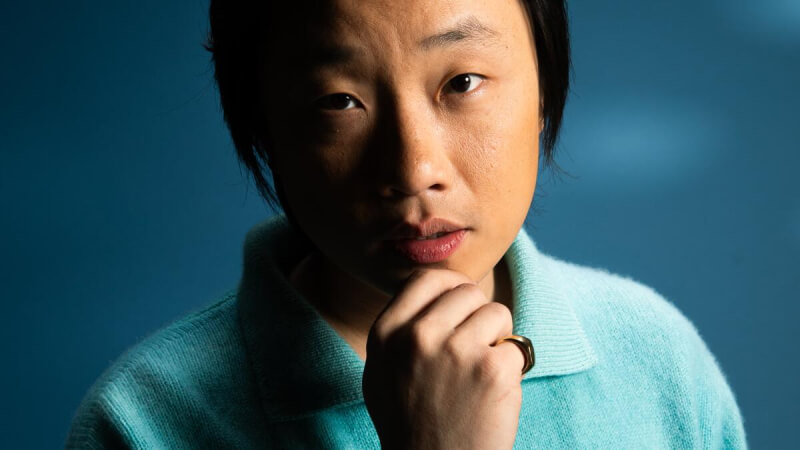
Jimmy O. Yang Finally Wins the First Lead Role in Charles Yu’s “Interior Chinatown”

After years of working at odd jobs, Yang has found his first lead role and left Yu knocked back in tears during his audition.

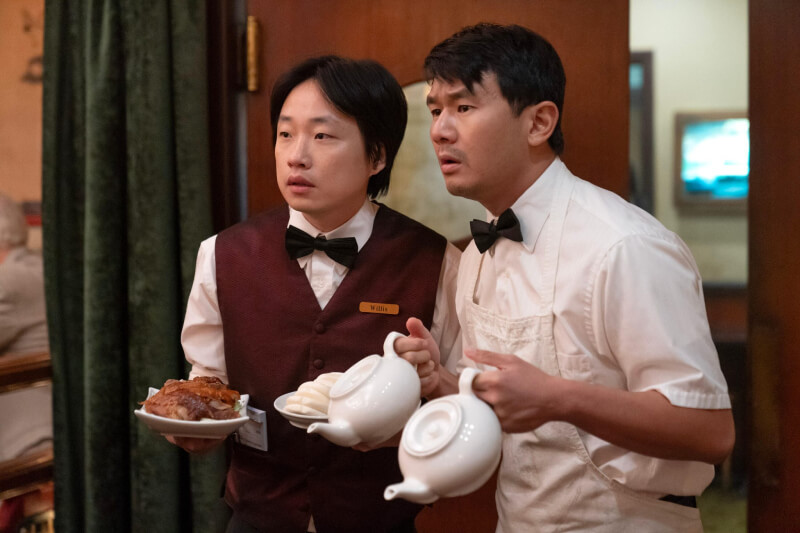
A Lemon. The $1,500 Toyota Corolla with no power windows, a busted side door, and poor brakes is what Jimmy O. Yang rode around Los Angeles to prepare for his role as Willis Wu, an overlooked Asian American everyman in the series “Interior Chinatown.” 

The result? “Pull over, call whoever got you in here. If you can’t, you gotta go…” A rude remark from the studio’s guard as Yang recalled in a Zoom with the Los Angeles Times (LA Times) even though he was No.1 on the call sheet. 

The experience reminded Yang of his life story as a Hong Kong immigrant moving to the United States. Yang stated in the interview, “Willis’ journey is such a metaphor for the Asian American experience because we are the model minority, but at the same time we are invisible. People talk about Black and white, but where do we fall? You’re just not seen for who you are.” In an article by SCMP, the actor-writer-comedian further exemplifies, “Willis laments feeling like a background actor in someone else’s story and longs to be in the spotlight, but that’s hard if you look like me.”

At the age of 13, Yang relocated to Los Angeles feeling the intense culture shock. “My goal was to just assimilate so I don’t get made fun of,” Yang recalled. In the school’s locker room, he was mocked for wearing whities instead of boxers. During 8th grade, his peers had mustaches and dunked basketballs while he barely hit puberty. Using a fake address, he enrolled in Beverly Hills High School and immersed himself in American pop culture. Unable to rap, Yang learned to incorporate his violin into the hip-hop beats he made through a software named Fruity Loops.

Despite his parents’ harsh opposition, Yang acknowledges, “I don’t think they were, like, anti-art by any means. My dad probably wishes he could have been an actor or a musician. It just truly wasn’t a real job for him. He wanted me to be financially stable, and not be homeless.” Yang started working at a string of odd jobs from selling used cars to DJing at strip clubs. Stand-up comedy, which Yang has now become notorious for besides acting, became his informal acting, writing, and directing school. 

Persistent in his passion, Yang landed small speaking roles in series like “Agents of S.H.I.E.L.D.,” where he was misunderstood as a background actor for his ethnicity, and “Silicon Valley,” originally a one-off guest role or a one-note cliché. Yang’s fame finally came in Crazy Rich Asians. Yang claims, “If I botched an audition, I never blamed the fact that they weren’t looking for an Asian actor. It didn’t deter me. But looking back, we had very limited opportunities. Since ‘Crazy Rich Asians,’ I think there’s more.” The success has made Yang’s father, Richard Ouyang, proud – even helping him with commercial and acting gigs with his son. 

The series “Interior Chinatown” became an immediate connection to Yang. According to the LA Times, Charles Yu, creator of the series which was adapted from his National Book Award-winning novel of the same name, was inspired by, “people who have these backstories, but they don’t get to tell those stories”. He was astonished by Yang’s performance as he felt a connection between Yang’s multicultural background, multilingualism, and his natural ability for acting. 

Despite the grueling six months of shooting, doing comedy, drama, and Kung Fu every week, Yang happily states, “It was very grueling. But of course, it’s a beautiful story worth telling.” At the end of the day, whether it is for better or worse, Yang’s days of being a sidekick are finally over.

Featured Image Source: Mike Taing from The Wrap