Awaken* newsletter

March 28, 2024

SHARE:

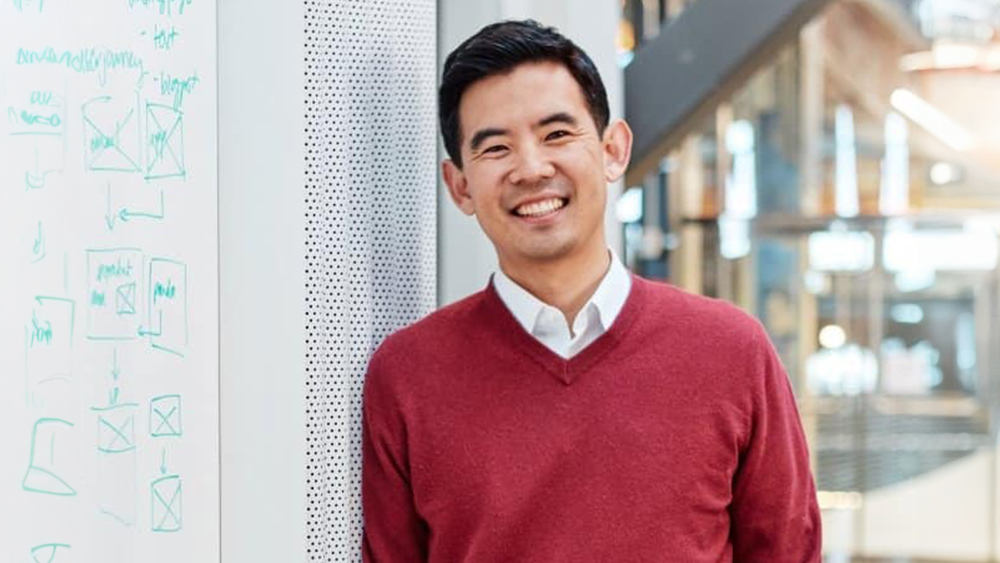
On January 3rd, I had the honor to chat with Eddie Kim. Like myself–Eddie happens to be a Stanford alumni. Unlike me–Eddie is the CTO and co-founder of a $9.6 billion company named Gusto: a payroll, benefits, and HR solution for businesses in the US. It’s already hard to find Asian unicorn founders, finding Asian near-decacorn founders is an order of magnitude rarer, making Eddie a certified legend. Despite his success, Eddie remains a very down to earth and genuine person, and I greatly enjoyed chatting with him. Without further ado:

PARENTAL PRESSURES

A common trope with some truth to it, is that many Asian parents pressure their children to pursue more stable, high-prestige careers, such as being a doctor or lawyer. I asked Eddie if he had experienced this:

I got pressure from my dad. My dad was a doctor and, like many Asian parents who are doctors, wanted their kids to be doctors. I think there was a fair bit of pressure from my dad, and then from my mom through my dad, to become a doctor and do pre-med and all that stuff. Of the STEM subjects, which I really liked and was good at, I was good at math, chemistry, and physics. The one that I didn’t like was biology. For me, it always felt like it was about memorizing things as opposed to actually using your brain. It seemed like being a doctor would require more of this, where I have to memorize all these different body parts and so on. I never really considered becoming a doctor, even though my parents really wanted me to. For them, it was the safe path, a prestigious occupation. There’s a lot of good to like about it, you’re saving lives and things like that, and you make a decent amount of money. 

However, once I was in college, my parents encouraged me to be in control of my destiny, which meant potentially starting my own business. They were supportive when I talked about it. Part of it was also that my dad is a doctor who started his own private practice, so he was an entrepreneur himself. When I was really young, my dad was just starting out. He immigrated from Korea and they didn’t have a lot of money. Once he became a doctor and had his own private practice, we were comfortable. We weren’t super rich, but money was not a huge worry. We’d always have food and basic necessities. We couldn’t buy super luxurious things and go on vacations, but it was enough that I could take risks early on. I think a lot of the reason why they were supportive of me starting my own business or doing something more risky was because even if it failed, it wouldn’t be devastating. I’d still have a home to go to and could fall back on my parents. It wouldn’t be a huge burden. So, I think I maybe had a little bit of a different experience than a lot of Asians once I was in college.

I asked Eddie if he thought that his parents were more understanding because they themselves were business owners:

Absolutely. My dad was a doctor and my mom was the one doing all the back office work. She was the receptionist, the insurance biller, the payroll runner. It was a small venture, just my dad and my mom, and they had one employee for 30 years. My dad never worked for a salary, he never joined Kaiser or anything like that. So, he definitely had a more entrepreneurial mindset.

My own mom is a small business owner, and Eddie’s parent’s attitudes paralleled my own parents’ so far. Since I sometimes ask my mom for advice when it comes to business, I wanted to see if Eddie did the same:

Not really. The whole tech world was so different from what they knew. Even questions about how to raise money or what is pre-money post-money valuation, all this sort of tech stuff, they had no idea. They weren’t practically helpful in that sense. But my mom was always super encouraging. She was very supportive, even though she didn’t really have a lot to contribute. It was more moral support more than anything.

SCARCITY MINDSET

Another common immigrant trope is having a scarcity mindset. This often persists even once families establish themselves in America. The traditional wisdom in startups is to build as lean as possible, and at first glance, having a scarcity mindset should help with this. I asked Eddie if he had this mindset and how it was expressed in his startup.

I remember, even though my parents’ practices were doing well, it wasn’t always like that. It started from nothing. We would rarely go out to eat, and when we did, it was at some chain like Sizzlers or maybe Red Lobster. Nothing super fancy. The thought of ordering an appetizer or a drink that wasn’t water felt wrong, like we were getting ripped off. There was definitely this mindset of being very frugal and not treating yourself to unnecessary luxuries. 

As I got older, I was influenced by some of my friends, who had less of a scarcity mindset. They would go out to nicer restaurants. We all had jobs post-college. We weren’t making tons of money, but while I was always about saving everything, they were not. At my first job at Volkswagen, I would pack lunch and figure out how to save about 60-70% of my salary. The rest was for rent, food, and gas. I was able to save, not a ton of money, but I had this mindset of frugality and saving as much money as possible. I’m not sure for what, but it was just the thing you do for a rainy day. My friends, on the other hand, were not saving money at all. They would go out to bars and fancier restaurants. That’s how I got exposed to it. Even though I was always a bit more on the frugal side, I started to see the value in treating yourself a little bit more. I learned from my friends that there’s no point in money if you’re not going to use it for something. What are you saving it for? I think the combination of how I grew up and my friends’ influence helped me find a balance.

I think it wasn’t until my second startup, Gusto, where we had the fortune of raising a lot more money than my first startup. Often, we had this mindset that you could spend a little more money and get higher quality stuff. For instance, instead of buying an Ikea desk, we bought from a company called Room and Board. It was a couple hundred more dollars per desk, but they were much nicer than an Ikea desk. Or like our first hires that we made, right? You can go for super cheap, outsource offshore to build your first product, or you can hire someone that’s really good, pay a little more, and be more generous with equity to get really top talent. 

So, I think it was at Gusto where I learned that if you have the resources to do so, it’s better to spend a little more. Don’t go super cheap on every single thing, don’t go frivolous and pay top dollar for everything either. But there’s a range, I would say, if it’s a range of one to a hundred, I would say a range of 70 to 80, or maybe 80 actually, where I think it’s worth spending that much because you just get so much more for it. Long term, it pays itself. 

There’s a moment where once you have the means, I think your mindset should shift a little bit. Not to go extravagant, but to not have so much of that scarcity mindset that we grew up with. 

BEING ASIAN AND BEING A LEADER

As I always do, I asked Eddie how he felt being Asian qualified his experience as a founder, and if it was something he thought about a lot:

I think to a certain extent, but not a ton. It’s not something that is always top of mind and something that I’m very self-conscious about or have imposter syndrome of. But also at the same time, it is something that’s kind of in the back of my mind. I sometimes ask myself, do I have what it takes to be a leader of hundreds of people in the organization? Will people not respect me as much because I’m Asian and Asians tend to be perceived as less of a leader than say, a white person. And so you definitely have a little bit of that, but also at the same time, I feel like whenever I have those thoughts, I tell myself that, no, why can’t you break the mold, right? Why can’t you be one of the first Asians that have done X or Y, right? Or one of the few Asian co-founders of a unicorn company, right? And so then I start to get excited about the concept of, “Hey, I can actually show people that it can be different.” And then, so it kind of turns into more of a motivating factor for me.

Eddie’s answer seemed to be focused on being a leader. From the research I did, it seemed like Eddie struggled in the transition from being an individual contributor to more of a manager role (or people empowerment at Gusto). I asked Eddie how he approached crafting his leadership skills.

One was, I had people that I could talk to that had more experience in it than I did that were very generous with their time and giving me advice and mentorship. Some of this came through investors that were early in the company. Our first seed round was basically a horde of angel investors that were entrepreneurs, right? It was people like Aditya, who was the head of engineering at Dropbox at the time. It was Jeremy Stoppelman, who’s CEO of Yelp. Drew Houston of Dropbox was among the founders of tech companies we wanted to invest in as some of the first investors. Through that, either directly or through people they knew, I got connected and would meet with some of these people regularly to get their advice on whatever issue I was facing. I remember actually talking to Aditya, at South Park in Soma, discussing how to structure comp bands. 

Having people around to ask was really helpful. I read a lot of books. I have this shelf full of business books. Things like High Output Management from Andy Grove, The Score Takes Care of Itself by Bill Walsh, and Mindset by Carol Dweck. Those are my three favorite business books that I read and they really helped me learn the tactics as well as the characteristics that are helpful in becoming more of a people manager. A lot of it is just experience. You do, then you fail and you learn. Like anything else that you spend time on, the more time you spend on it, the better you get at it. It’s really a question of how fast you progress. You will progress the more time you do something. Some people progress really fast, some people progress more slowly. But the point is that as long as you do something for a long period of time, you stick with it, you do get better at it. And then you like it even more. So it’s those three things: people, literature, and your own experience.

CUSTOMERS VS. FEATURES

When I spoke with Siqi, one of the things we talked about was how different potential customer segments can want completely different types of products and features, and how to think about where to prioritize. I asked Eddie for how he navigates this with Gusto:

In an unrealistic scenario where you have unlimited resources, it’s always better to have more features than less. However, the reality is that you have constraints in your resources and can’t do everything all at once. You have to decide how to invest your limited resources. You could build new features, improve the quality and scalability of what you have, or create new front doors into the product and focus more on acquisition and growth type efforts. 

At Gusto, we often have larger companies asking us for additional features for their businesses. At the same time, we have many small businesses that don’t know about us yet. So, we have to decide whether to focus more of our resources on creating more features for these large companies or creating more awareness of Gusto for all the small businesses that haven’t used any of our features. 

It really comes down to what you want to prioritize. For different companies, the answer will be different. It’s important to stay disciplined about who your customer is, who your target demographic is. It’s easy to just answer feature requests and get pulled into a direction that some of your customers want in the short term. This might help you get more money in the short term, but over time, you might find yourself not really focused on who your product is serving. 

Many companies have to be aware of this danger. If you start to prioritize too much of the short term feature requests and chase revenue short term, then you can miss the bigger picture. This company is building a product that works really well for this customer demographic. 

At Gusto, we always think about who our customer is. For us, it’s really the small businesses. It’s very enticing to try to go upmarket and land companies that are in the 100 or 500 employee range or a few thousand because they pay you so much more money than small businesses. Every once in a while, an opportunity comes along where a larger company says, “if you do this, then we’ll sign up”. This could be a huge deal for the company. It’s really hard to say no to those things, but you have to, because you really want to stay focused on who you’re serving. 

I asked Eddie to go a little deeper on the dangers of chasing the short term requests of the larger companies:

I think the danger is that there are two risks to this. One is you are diverting resources from something else. That could be a global maxima versus a local maxima. So that’s an opportunity cost that you could be missing. The second risk is that you lose focus on what makes your product or company so special. If we, for example, went and built a bunch of enterprise type features in Gusto that allowed any company to customize it to their heart’s content, that would be a very confusing experience for the 99% of our customers who are very small, who don’t want a customized solution because they have no idea how they want to do things and they want Gusto to guide them on how to do things.

GOALS FOR LARGER COMPANIES

Since Eddie is one of the few at the helm of a $500M ARR startup, I wanted to ask him what startups at that size prioritize, and if rapid growth was still the goal:

I think as you get more mature as a company, you start to think less about just growth at all costs. You start to think about growth at a reasonable price. There’s actually a non-standard technical term for this called GARP – Growth At a Reasonable Price. The rule of thumb for a later-stage company is that you want a GARP of 40 or above. GARP is essentially your growth rate minus your operating margins. So if you have a growth rate of 40% year on year, you’re growing your revenue 40%, then you should be breaking even because your operating margin is going to be zero. So 40 minus zero is 40. If your operating margin is 10%, then it’s 40 plus 10, which is 50. So that’s awesome. You’re going to get a really good response from your investors and the public.

Markets will be very happy if you could accomplish 40% year on year growth and 10% operating margins, right? You’re putting out 10% of profit cash flow every single year. If you’re growing at like, say 60% year on year, which is incredible growth, you can actually be negative 20% operating margin, and still have a GARP of 40%. You’re still going to be in a really good spot. So this formula really balances your growth with your profitability, your operating margins and using this rule of 40 is a pretty good rule of thumb for the markets when you’re a later stage company. When you’re early stage, it doesn’t really make any sense to use. 

Eddie’s comment on how “the markets would be happy” suggests to me that mature startups at this stage are looking at the numbers more at an IPO angle, and determining what public investors want to see.

BENEFITS OF DEI

At this point in the interview we ran out of time, but there was still one question I had for Eddie that I really wanted to ask. At the time of writing, the daily Twitter discourse was about DEI, so I wanted to get Eddie’s opinion on DEI. I emailed him the question after our interview and he graciously responded:

Gusto clearly takes DEI seriously given the RISE report. Do you feel that DEI is important at every stage of a startup or does it start gaining importance once a company is a certain size?

In my opinion, DEI is actually the most important in the early stages because there really is a vicious or virtuous cycle when it comes to building diverse teams. If you start early with a diverse team, you’ll attract more candidates from diverse backgrounds. The opposite is true too. 

I actually wrote about it a couple of times: 

https://engineering.gusto.com/growing-our-engineering-team-in-denver-diversity-begets-diversity/

https://engineering.gusto.com/staying-ambitious-on-diversity-new-goals-for-gusto-engineering/

SHOUTOUTS

If you are looking to start a business and/or hire your first employee or contractor, please consider using Gusto, the #1 payroll software in 2023!

Additionally, Gusto is hiring across technical and non-technical roles. You can find their job postings at https://gusto.com/about/careers

Thank you Eddie for speaking with us!
Related Articles

Image Source Canlis Restaurant

Uncategorized

Seattle’s Famous Canlis Restaurant named the First Female Executive Chef

Aisha Ibrahim has been announced as the new head chef of the famed restaurant Canlis in Seattle. She is the first female executive chef at Canlis and joins a long list of notable chefs who have worked at the restaurant over its seven decades.

The management at Canlis was looking for a chef who was interested in that way of thinking, someone who was interested in not simply putting his or her ego on a plate, but rather in actually trying to help inspire an entire industry.

Ibrahim was a sous chef at California’s three-star Manresa. She worked with chef Eneko Atxa at Aziamendi and Azurmendi, developing her culinary horizons.

The new head chef was drawn to Seattle’s wealth of locally sourced ingredients, according to the New York Times, her Canlis dishes would explore the region’s microclimates, traditional cuisine, and Asian influences.

Brian Canlis, a co-owner of the restaurant, considered Ibrahim’s test meal as the final step in the long process. “We set out to find a leader who could help rebuild a broken industry,” he tells Eater. Many kitchen cultures are toxic, he added. They want to continue creating a new norm for how individuals are regarded in kitchens and restaurants.

During the COVID-19 pandemic, Canlis, along with many other restaurants in the past year, experimented with a variety of different service formats. These formats included everything from parking lot yurts to drive-through burgers. 

The famed restaurant has informed that they will soon be opening a restaurant that will be distinct from the one that they previously operated but which they shut down a year ago. They have no interest in going in the other direction and would much rather proceed in the future path.

Canlis will be led by Ibrahim into the post-pandemic future, with the debut of her menu slated for July 2021.

Image Source theguardian.com

Uncategorized

Darjeeling Express Chef Asma Khan’s New Cookbook Celebrates Women and Her Ammu (Mother)

Cookbook author, activist Indian chef Asma Khan is so much more than just being in the kitchen. 

In addition to owning London’s Darjeeling Express and hosting her own online cooking class, YesChef, she uses her platforms to advocate for world hunger, mentoring immigrant women, gender equality, and calling out toxic work cultures in kitchens.

With the release of ‘Ammu: Indian Home-Cooking to Nourish Your Soul’, The Bengali chef continues to redefine how women are portrayed at home and in restaurant kitchens, with a loving ode to her Ammu (or mother).

“Ammu [is] a tribute to these powerful women”, Asma tells Elle Canada, “the sharp things in our lives and the anchors that kept us going in difficult and stormy times. There [are] births, deaths [and] marriages in our culture; food is a very important element of that. That’s what this book really reflects.”

Ammu is filled with 100 dishes that will leave your mouth-watering recipes that have been carefully passed down from generation to generation.

Asma hopes the readers to try her chicken biryani, “Because I’ve worked so hard on getting the recipe right and I [know] people have recreated it” she tells Elle Canada.

According to The Guardian, Asma Khan’s biryani has the power to make you cry — not in the hyperbolic, internet vernacular sense, where food is considered “amazing”, “divine” or “to die for”

Asma also recommends trying out cooking any of the kababs, fish dopiyaza, and prawn malai.

“So much of our food is bastardized into [something that is] super spicy, oily, with cream and butter. If I put [that] much cream and butter in my shoe, it’ll taste nice! Our food is actually light and refreshing, but most people don’t associate those words with Indian food.” 

As the only female-founded, all-female kitchen cooking Indian food globally, she hopes that the next generation of women would surpass her, “That will be my greatest victory.”

Caroline Mangune Alanis

Uncategorized

Bald, Bold, and Beautiful: Proud Of Being Fifty-Five Walking My Truth

In the view of society, hair is connected with youthfulness and beauty in women, virility, and masculinity in men. It should come as no surprise that hair loss may make many men and women feel self-conscious. But should that be always the case?

Caroline Mangune Alanis was only 4 years old when she lost all her hair, “I don’t even know what it is like to have hair.” she said. Caroline has Alopecia Universalis (AU)  — the rarest form of Alopecia Areata, it’s an autoimmune condition that attacks the hair follicles.

Growing up Bald

Born in the Philippines to a strict father and a sweet and kind soul mother, as she describes, “My dad didn’t allow me to go out with friends a lot. I was never allowed to go on sleepovers.  He sheltered me from people. I never realized that until I was an adult, and reflected on my childhood.” She also has two brothers who were protective as well.

At the tender age of 4, she was already practicing “DAILY AFFIRMATIONS” although she never knew how impactful they were,  “I was always told to look in the front of the mirror.  I would say, I am beautiful, I am strong, I am special. I have beautiful eyes, beautiful skin, etc.”  Her parents never told her the pain and heartbreak of raising her, rather they just always told her how special and beautiful she was, “They always told me I was meant to stand out.”

She had no recollection of the time her hair started falling out, but she was told that her hair fell off within a 2-week time frame, “My mom said it could have been brought by stress from an earthquake we had in the Philippines.”  

Caroline was never allowed to say negative words about herself, or else her father would scold her. She was imparted that words she says about herself will either bring her up or tear her down, “So maybe I thought negative things about myself, but I never said it. Growing up bald, I never felt ugly, just incomplete.”

Growing up bald, I never felt ugly, just incomplete.

– Caroline Mangune Alanis

Although her parents taught her how to be courageous and had always made her feel how beautiful and blessed she was, growing up bald was not easy — she had to endure the everyday pressure of life. “There was the pressure of seeing little girls with beautiful hair and wishing every day that I had that. There was the pressure of kids being mean and pulling off my bandana and laughing at me because I was bald.” She faced the pressure of name-calling and bullying.

Caroline’s parents finally convinced her to start wearing a wig which, unfortunately, didn’t make things easier as she recalls. Walking home from school one day with her brother, a girl decided it would be fun to pull Caroline’s wig off and throw it on the ground. “At that moment, all I could do was cry and run home,” she adds, “every day I feared leaving the house, the emotional scar is unimaginable.”

She learned how to hide her AU, she felt as if people wouldn’t accept her for being her so it became a secret, and only her family and those she truly trusted, which were not many, knew the real Caroline.

In high school, only a handful knew about her AU, “which made it so easy to try to blend in since I never wanted to stand out, never!” The ironic part about it, as Caroline describes, was she would always be the one to be called by her teachers to lead a project, sing solos, and participate in plays and fashion shows. They even nominated her to join the homecoming queen and enter a beauty pageant. However, “I realized that my fear never really went away by keeping my AU a secret and the emotional scar was also still a part of my life.”

Every day I feared leaving the house, the emotional scar is unimaginable.

-Caroline Mangune Alanis

Being Bold With The Love Of Her Life

She met her husband Mark from work, where they were both managing stores at a mall in Chicago. They became best friends and were each other’s plus one at weddings, “We didn’t start dating until I transferred to another mall.” she said.    

But the day has to come when she must tell Mark about her condition, “Telling Mark about my alopecia was very difficult. He once told me that he loved hair and eyes on a woman,” she adds, “He himself has gorgeous hair.” Caroline felt she didn’t have one of the criteria Mark was looking for. Although she mentioned several times that she had something to tell him and he would always say “whenever you are ready.” Caroline thought that they both knew that Mark is aware of her wearing a wig, they just never talked about it. 

Mark and Caroline had been dating for about a year when she finally tried to tell him one evening. She got choked up and started crying. He told her, “Caroline, don’t you think I know you by now from your head down to your toes?” He had tears in his eyes. She then asked Mark why he didn’t tell her.  He replied, “I wanted you to trust me enough to tell me”.  

As they began to start their family, Caroline’s AU became their secret. She held her family bound to her alopecia. When her daughters’ were infants, she wouldn’t carry them in public for fear that they would pull her wig. “They were taught never to touch mommy’s hair, ever!” 

Her daughter could never have friends sleep over because it would be very uncomfortable for Caroline to be her in her own home. “My daughters were always fearful when we were out in public, especially on windy days.” 

Caroline’s baldness was a big secret, even her husband’s family didn’t know, “because I hid so much all my life, I didn’t realize I walked in fear every day.  I didn’t realize I lived in bondage.”

Mark told her, “Caroline, don’t you think I know you by now from your head down to your toes?” He had tears in his eyes. She then asked Mark why he didn’t tell her.  He replied, “I wanted you to trust me enough to tell me”.  

Embracing Being Beautiful

In the summer of 2015, her life opened a new door, she became a part of an International Alopecia Group on Facebook and realized that her journey with AU has prepared her to help others like her. She saw so many men and women devastated by losing their hair. They were going through a lot of emotional pain, “You see, alopecia can happen at any time in one’s life so the adults experience a loss and have to grieve.” Caroline said. Alopecia might not be life-threatening but it is life-altering. Hair, eyebrows, and lashes truly make a difference in one’s appearance, “I myself put my face on every day.” she added. 

She also saw some men and women walking proudly bald. One man, in particular, Anthony Carrigan, an actor who also kept his alopecia a secret but he came out and had been helping others and is a beacon of light.  

Then, Caroline started giving advice about doing daily affirmations, “doing lots of SELF LOVE!”  as well as giving makeup tips, the alopecia community knows her as the “Eyelash Queen”.

But once the parents of alopecia children started posting their heartbreaks, “that’s when I realized my parents’ challenges of raising me, a bald child.” Caroline started reiterating what her parents taught her. She gave advice to parents, about how special their child was, how they were perfect and beautiful just as they were. “Alopecia children are so strong,” she noted.

“I then realized I was all those things: perfect, beautiful, and strong,” she said, but her baldness was still a secret. Caroline thought to herself, how does she encourage others to accept themselves if she herself could not let people know about her condition? So as those thoughts lingered in her head, she began telling her family and friends — she only wanted to tell people, not show people. Her goal was to have 30 different wigs for each day of the month.

“But God! God had other plans for me,” the unexplainable started occurring, her wigs became unbearably uncomfortable to wear, “it almost felt like my scalp was burning,” which she thought was completely strange since she has been wearing them for 40 years. It took a lot to take a look at herself bald.  She then began to think, “How can I tell my daughters  and others that beauty really lies deep within if I myself can’t see past my lack of hair?”

On August 14, 2015, on her way home with her husband from dinner, Caroline’s wig was getting itchy so she took it off to scratch her head. She was about to put her wig back on but Mark held her hand to stop her. He said “Honey, don’t put it on, you’re fine. You are safe with me, nothing can hurt you, and no one will hurt you. You are beautiful.” She reluctantly did what he asked and wanted to be strong for him. 

Mark kept holding her hand tight and kept asking if she was okay,  “I just kept saying it is scary.”  As they were nearing their home, her husband pulled over and said “Come on let’s take a selfie.” to lighten the situation. Her husband dropped Caroline off in front of their home, with her wig in her purse. Mark told her to go ahead and go into their home.  

“For the first time in 40  years, I felt God’s love on my head. The soft wind touched my head, a few raindrops falling on my head. I cried and laughed as I ran to my house.” she recalls.  

After that night, her husband helped Caroline with her small steps into seeing herself for who she was — a beautiful woman living with AU. Slowly, she found herself no longer wearing her wigs. They would go on drives and take walks on the beach. “I felt free, my secret slowly fading; including the emotional scar.”

I felt free, my secret slowly fading; including the emotional scar.

-Caroline Mangune Alanis

“On Sept 9, 2015, I posted it on Facebook, I cried the whole night.  Everyone was so kind.  I was still afraid, but I started walking bald.” she expressed.

In the fall of that year, it started getting cold and she didn’t like her hats since they looked terrible without any hair. She was pretty sad because she really did not want to start wearing her wigs again, “I just prayed and asked God to lead me in what I am supposed to do. I got my answer on Sunday, October 4th,” A lady stopped her and asked if she has Alopecia, to which she responded “Yes!”. The woman said, so did she, and asked Caroline, how does she do it? — She knew the lady meant how she could walk around without her wig.

Caroline answered “I don’t know. This is all new to me. “God is giving me the strength to do this. I couldn’t have done this on my own.” So that day, she officially retired all her wigs. “Yes, I put them all away for those special occasions,” she added.

She has met so many people just like her all over the world which inspired her to start her own Alopecia Group in Chicago, where they meet once a month. “I love having a family I call my own, people who truly understand me.”

The Chicago Alopecians

Caroline together with her friends started the Facebook group, with her as the main facilitator. It is a place where they can share their personal journeys and ask for advice or help. The Chicago Alopecians’ mission is to ensure that no one feels alone. Recently, they have been planning to create more events to cater to everyone, children, teens, and men. 

“We each have our own alopecia journey and we just want to connect with each other,” said Caroline. They also allow wig vendors in the group, “Chicagoland is such a big place. I love having a solution for everyone in the group.” As of writing, they currently have 332 members, and they’ve also started an Instagram page to widen their reach.

For the international group, Caroline is also encouraging others to create their own alopecia groups — their own tribe in their local towns.

“I have always known God wanted me to stand out, but I was always afraid.  These days, I am no longer afraid to not have my wig on, I embrace it.”

Caroline is truly a woman who is defying what society calls “beautiful”. 

Image Source tinhte.vn

Uncategorized

Google Data: Nearly Half of Gen Z Searches on TikTok Rather than Google

TikTok, which is the social media app that is expanding at the fastest rate, has seen its user base skyrocket over the past few years.

A Google executive has confirmed that the format of TikTok is changing the way that young people conduct internet searches, and Google is working to keep up with these changes. 

According to data that was initially discovered within Google and reported by TechCrunch, nearly 40% of members of Gen Z prefer to search using TikTok as well as Instagram rather than Google Search and Maps when they are looking for a place to eat lunch.

Google has now confirmed this figure to Insider and has acknowledged that they face stiff competition from a variety of sources, including general and specialized search engines, as well as apps that are designed specifically for searching. 

It is also predicted that TikTok’s advertising revenue will overtake YouTube by 2024, according to Insider Intelligence.

Google has outlined the modifications it intends to make to its search engine in order to appeal to a younger audience. One of these adjustments is the addition of a feature that will allow users to pan their camera over an area and obtain instant information about multiple objects in a wider scene.