Awaken* newsletter

March 28, 2024

SHARE:

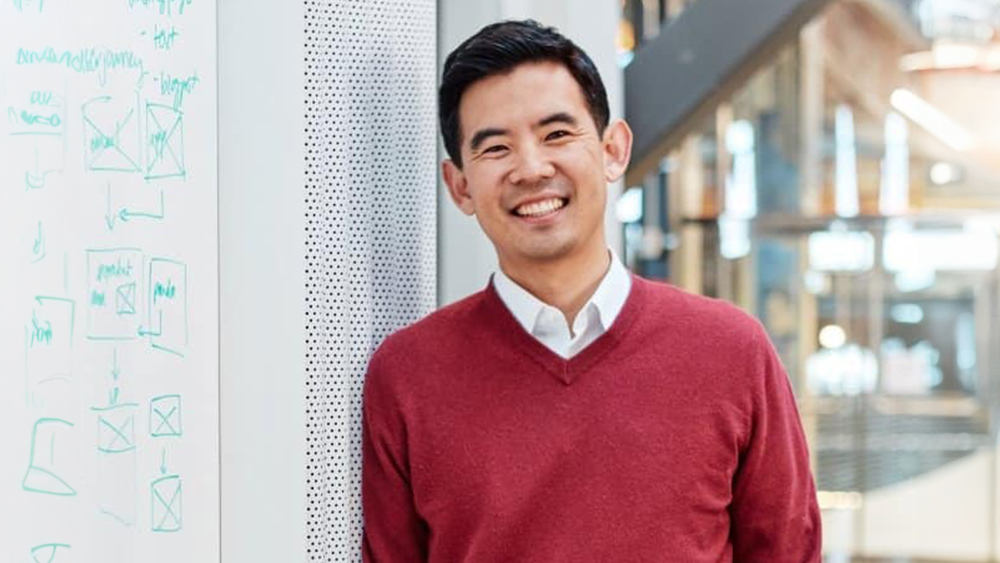
On January 3rd, I had the honor to chat with Eddie Kim. Like myself–Eddie happens to be a Stanford alumni. Unlike me–Eddie is the CTO and co-founder of a $9.6 billion company named Gusto: a payroll, benefits, and HR solution for businesses in the US. It’s already hard to find Asian unicorn founders, finding Asian near-decacorn founders is an order of magnitude rarer, making Eddie a certified legend. Despite his success, Eddie remains a very down to earth and genuine person, and I greatly enjoyed chatting with him. Without further ado:

PARENTAL PRESSURES

A common trope with some truth to it, is that many Asian parents pressure their children to pursue more stable, high-prestige careers, such as being a doctor or lawyer. I asked Eddie if he had experienced this:

I got pressure from my dad. My dad was a doctor and, like many Asian parents who are doctors, wanted their kids to be doctors. I think there was a fair bit of pressure from my dad, and then from my mom through my dad, to become a doctor and do pre-med and all that stuff. Of the STEM subjects, which I really liked and was good at, I was good at math, chemistry, and physics. The one that I didn’t like was biology. For me, it always felt like it was about memorizing things as opposed to actually using your brain. It seemed like being a doctor would require more of this, where I have to memorize all these different body parts and so on. I never really considered becoming a doctor, even though my parents really wanted me to. For them, it was the safe path, a prestigious occupation. There’s a lot of good to like about it, you’re saving lives and things like that, and you make a decent amount of money. 

However, once I was in college, my parents encouraged me to be in control of my destiny, which meant potentially starting my own business. They were supportive when I talked about it. Part of it was also that my dad is a doctor who started his own private practice, so he was an entrepreneur himself. When I was really young, my dad was just starting out. He immigrated from Korea and they didn’t have a lot of money. Once he became a doctor and had his own private practice, we were comfortable. We weren’t super rich, but money was not a huge worry. We’d always have food and basic necessities. We couldn’t buy super luxurious things and go on vacations, but it was enough that I could take risks early on. I think a lot of the reason why they were supportive of me starting my own business or doing something more risky was because even if it failed, it wouldn’t be devastating. I’d still have a home to go to and could fall back on my parents. It wouldn’t be a huge burden. So, I think I maybe had a little bit of a different experience than a lot of Asians once I was in college.

I asked Eddie if he thought that his parents were more understanding because they themselves were business owners:

Absolutely. My dad was a doctor and my mom was the one doing all the back office work. She was the receptionist, the insurance biller, the payroll runner. It was a small venture, just my dad and my mom, and they had one employee for 30 years. My dad never worked for a salary, he never joined Kaiser or anything like that. So, he definitely had a more entrepreneurial mindset.

My own mom is a small business owner, and Eddie’s parent’s attitudes paralleled my own parents’ so far. Since I sometimes ask my mom for advice when it comes to business, I wanted to see if Eddie did the same:

Not really. The whole tech world was so different from what they knew. Even questions about how to raise money or what is pre-money post-money valuation, all this sort of tech stuff, they had no idea. They weren’t practically helpful in that sense. But my mom was always super encouraging. She was very supportive, even though she didn’t really have a lot to contribute. It was more moral support more than anything.

SCARCITY MINDSET

Another common immigrant trope is having a scarcity mindset. This often persists even once families establish themselves in America. The traditional wisdom in startups is to build as lean as possible, and at first glance, having a scarcity mindset should help with this. I asked Eddie if he had this mindset and how it was expressed in his startup.

I remember, even though my parents’ practices were doing well, it wasn’t always like that. It started from nothing. We would rarely go out to eat, and when we did, it was at some chain like Sizzlers or maybe Red Lobster. Nothing super fancy. The thought of ordering an appetizer or a drink that wasn’t water felt wrong, like we were getting ripped off. There was definitely this mindset of being very frugal and not treating yourself to unnecessary luxuries. 

As I got older, I was influenced by some of my friends, who had less of a scarcity mindset. They would go out to nicer restaurants. We all had jobs post-college. We weren’t making tons of money, but while I was always about saving everything, they were not. At my first job at Volkswagen, I would pack lunch and figure out how to save about 60-70% of my salary. The rest was for rent, food, and gas. I was able to save, not a ton of money, but I had this mindset of frugality and saving as much money as possible. I’m not sure for what, but it was just the thing you do for a rainy day. My friends, on the other hand, were not saving money at all. They would go out to bars and fancier restaurants. That’s how I got exposed to it. Even though I was always a bit more on the frugal side, I started to see the value in treating yourself a little bit more. I learned from my friends that there’s no point in money if you’re not going to use it for something. What are you saving it for? I think the combination of how I grew up and my friends’ influence helped me find a balance.

I think it wasn’t until my second startup, Gusto, where we had the fortune of raising a lot more money than my first startup. Often, we had this mindset that you could spend a little more money and get higher quality stuff. For instance, instead of buying an Ikea desk, we bought from a company called Room and Board. It was a couple hundred more dollars per desk, but they were much nicer than an Ikea desk. Or like our first hires that we made, right? You can go for super cheap, outsource offshore to build your first product, or you can hire someone that’s really good, pay a little more, and be more generous with equity to get really top talent. 

So, I think it was at Gusto where I learned that if you have the resources to do so, it’s better to spend a little more. Don’t go super cheap on every single thing, don’t go frivolous and pay top dollar for everything either. But there’s a range, I would say, if it’s a range of one to a hundred, I would say a range of 70 to 80, or maybe 80 actually, where I think it’s worth spending that much because you just get so much more for it. Long term, it pays itself. 

There’s a moment where once you have the means, I think your mindset should shift a little bit. Not to go extravagant, but to not have so much of that scarcity mindset that we grew up with. 

BEING ASIAN AND BEING A LEADER

As I always do, I asked Eddie how he felt being Asian qualified his experience as a founder, and if it was something he thought about a lot:

I think to a certain extent, but not a ton. It’s not something that is always top of mind and something that I’m very self-conscious about or have imposter syndrome of. But also at the same time, it is something that’s kind of in the back of my mind. I sometimes ask myself, do I have what it takes to be a leader of hundreds of people in the organization? Will people not respect me as much because I’m Asian and Asians tend to be perceived as less of a leader than say, a white person. And so you definitely have a little bit of that, but also at the same time, I feel like whenever I have those thoughts, I tell myself that, no, why can’t you break the mold, right? Why can’t you be one of the first Asians that have done X or Y, right? Or one of the few Asian co-founders of a unicorn company, right? And so then I start to get excited about the concept of, “Hey, I can actually show people that it can be different.” And then, so it kind of turns into more of a motivating factor for me.

Eddie’s answer seemed to be focused on being a leader. From the research I did, it seemed like Eddie struggled in the transition from being an individual contributor to more of a manager role (or people empowerment at Gusto). I asked Eddie how he approached crafting his leadership skills.

One was, I had people that I could talk to that had more experience in it than I did that were very generous with their time and giving me advice and mentorship. Some of this came through investors that were early in the company. Our first seed round was basically a horde of angel investors that were entrepreneurs, right? It was people like Aditya, who was the head of engineering at Dropbox at the time. It was Jeremy Stoppelman, who’s CEO of Yelp. Drew Houston of Dropbox was among the founders of tech companies we wanted to invest in as some of the first investors. Through that, either directly or through people they knew, I got connected and would meet with some of these people regularly to get their advice on whatever issue I was facing. I remember actually talking to Aditya, at South Park in Soma, discussing how to structure comp bands. 

Having people around to ask was really helpful. I read a lot of books. I have this shelf full of business books. Things like High Output Management from Andy Grove, The Score Takes Care of Itself by Bill Walsh, and Mindset by Carol Dweck. Those are my three favorite business books that I read and they really helped me learn the tactics as well as the characteristics that are helpful in becoming more of a people manager. A lot of it is just experience. You do, then you fail and you learn. Like anything else that you spend time on, the more time you spend on it, the better you get at it. It’s really a question of how fast you progress. You will progress the more time you do something. Some people progress really fast, some people progress more slowly. But the point is that as long as you do something for a long period of time, you stick with it, you do get better at it. And then you like it even more. So it’s those three things: people, literature, and your own experience.

CUSTOMERS VS. FEATURES

When I spoke with Siqi, one of the things we talked about was how different potential customer segments can want completely different types of products and features, and how to think about where to prioritize. I asked Eddie for how he navigates this with Gusto:

In an unrealistic scenario where you have unlimited resources, it’s always better to have more features than less. However, the reality is that you have constraints in your resources and can’t do everything all at once. You have to decide how to invest your limited resources. You could build new features, improve the quality and scalability of what you have, or create new front doors into the product and focus more on acquisition and growth type efforts. 

At Gusto, we often have larger companies asking us for additional features for their businesses. At the same time, we have many small businesses that don’t know about us yet. So, we have to decide whether to focus more of our resources on creating more features for these large companies or creating more awareness of Gusto for all the small businesses that haven’t used any of our features. 

It really comes down to what you want to prioritize. For different companies, the answer will be different. It’s important to stay disciplined about who your customer is, who your target demographic is. It’s easy to just answer feature requests and get pulled into a direction that some of your customers want in the short term. This might help you get more money in the short term, but over time, you might find yourself not really focused on who your product is serving. 

Many companies have to be aware of this danger. If you start to prioritize too much of the short term feature requests and chase revenue short term, then you can miss the bigger picture. This company is building a product that works really well for this customer demographic. 

At Gusto, we always think about who our customer is. For us, it’s really the small businesses. It’s very enticing to try to go upmarket and land companies that are in the 100 or 500 employee range or a few thousand because they pay you so much more money than small businesses. Every once in a while, an opportunity comes along where a larger company says, “if you do this, then we’ll sign up”. This could be a huge deal for the company. It’s really hard to say no to those things, but you have to, because you really want to stay focused on who you’re serving. 

I asked Eddie to go a little deeper on the dangers of chasing the short term requests of the larger companies:

I think the danger is that there are two risks to this. One is you are diverting resources from something else. That could be a global maxima versus a local maxima. So that’s an opportunity cost that you could be missing. The second risk is that you lose focus on what makes your product or company so special. If we, for example, went and built a bunch of enterprise type features in Gusto that allowed any company to customize it to their heart’s content, that would be a very confusing experience for the 99% of our customers who are very small, who don’t want a customized solution because they have no idea how they want to do things and they want Gusto to guide them on how to do things.

GOALS FOR LARGER COMPANIES

Since Eddie is one of the few at the helm of a $500M ARR startup, I wanted to ask him what startups at that size prioritize, and if rapid growth was still the goal:

I think as you get more mature as a company, you start to think less about just growth at all costs. You start to think about growth at a reasonable price. There’s actually a non-standard technical term for this called GARP – Growth At a Reasonable Price. The rule of thumb for a later-stage company is that you want a GARP of 40 or above. GARP is essentially your growth rate minus your operating margins. So if you have a growth rate of 40% year on year, you’re growing your revenue 40%, then you should be breaking even because your operating margin is going to be zero. So 40 minus zero is 40. If your operating margin is 10%, then it’s 40 plus 10, which is 50. So that’s awesome. You’re going to get a really good response from your investors and the public.

Markets will be very happy if you could accomplish 40% year on year growth and 10% operating margins, right? You’re putting out 10% of profit cash flow every single year. If you’re growing at like, say 60% year on year, which is incredible growth, you can actually be negative 20% operating margin, and still have a GARP of 40%. You’re still going to be in a really good spot. So this formula really balances your growth with your profitability, your operating margins and using this rule of 40 is a pretty good rule of thumb for the markets when you’re a later stage company. When you’re early stage, it doesn’t really make any sense to use. 

Eddie’s comment on how “the markets would be happy” suggests to me that mature startups at this stage are looking at the numbers more at an IPO angle, and determining what public investors want to see.

BENEFITS OF DEI

At this point in the interview we ran out of time, but there was still one question I had for Eddie that I really wanted to ask. At the time of writing, the daily Twitter discourse was about DEI, so I wanted to get Eddie’s opinion on DEI. I emailed him the question after our interview and he graciously responded:

Gusto clearly takes DEI seriously given the RISE report. Do you feel that DEI is important at every stage of a startup or does it start gaining importance once a company is a certain size?

In my opinion, DEI is actually the most important in the early stages because there really is a vicious or virtuous cycle when it comes to building diverse teams. If you start early with a diverse team, you’ll attract more candidates from diverse backgrounds. The opposite is true too. 

I actually wrote about it a couple of times: 

https://engineering.gusto.com/growing-our-engineering-team-in-denver-diversity-begets-diversity/

https://engineering.gusto.com/staying-ambitious-on-diversity-new-goals-for-gusto-engineering/

SHOUTOUTS

If you are looking to start a business and/or hire your first employee or contractor, please consider using Gusto, the #1 payroll software in 2023!

Additionally, Gusto is hiring across technical and non-technical roles. You can find their job postings at https://gusto.com/about/careers

Thank you Eddie for speaking with us!

Related Articles

Image Source: CAA

Uncategorized

Constance Wu On Surviving Twitter, Producer’s Sexual Assault On Her New Memoir

Constance Wu is opening up about her time on “Fresh Off the Boat” and saying that a senior producer of the 2015–2020 ABC sitcom sexually harassed her.

She tells The New York Times about a producer’s “controlling behaviors” in her memoir Making a Scene. “Fresh Off the Boat was my first-ever TV show. I was thrown into this world,” she added, “I don’t have parents in the industry. And because I was 30, people thought I knew what I was doing. It made me paranoid and embarrassed.” 

Wu also told The Atlantic she hadn’t spoken about this before out of fear of repercussions. “I kept my mouth shut for a really long time about a lot of sexual harassment and intimidation that I received the first two seasons of the show,” Wu said. 

Once the show got successful after two seasons, she was able to say “no” to the producer’s harassment and intimidation. And, so she thought: ‘You know what? I handled it, nobody has to know, I don’t have to stain this Asian American producer’s reputation. I don’t have to stain the reputation of the show.”

The actress addressed the infamous tweet in spring 2019 when ABC renewed another season of the sitcom. “I was punished for being ungrateful,” she said. Wu publicly apologized, but she received backlash. 

She then sought psychiatric help and quit social media for three years. Wu had started writing a book back in 2016 but had lost momentum.

In the fall of 2019, she went back to work at “Fresh Off the Boat”, the final season, where she apologized to her colleagues in person.

The next year, the world stopped due to the pandemic. And she finished the book she was writing. In her memoir, Wu talks about how she felt alone, how racism affected her career, and how she’s moving on.

“I try not to make myself out to be a hero,” Ms. Wu told NYT. “I try to make myself out to be a pretty normal person who has flaws like everybody else. I’m not really into the actor memoir where it’s like, ‘I overcame the odds, and I’m this person who was humble and just kept working. I was the victim.’ It’s less black and white than simply victim and perpetrator.”

Image Source: Etsy.com

Uncategorized

Major Online Shops Including Etsy, Yelp, Uber Eats Boost Visibility Of Minority-Owned Businesses

The pandemic has devastated minority-owned businesses. Only 31% of Black-owned enterprises and 44% of Hispanic-owned businesses got Paycheck Protection Program aid, according to the Federal Reserve.

To raise awareness and support minority-owned companies across the country, major online shops and delivery systems are now showcasing Asian, Black, LGBTQ, and female entrepreneurs.

Amazon Launchpad enables vendors to identify on their “seller credentials” page if they are Black-owned, Latinx-owned, or women-owned.

DoorDash allows you to search for Black-owned restaurants in numerous US cities with “Black-owned” and “women-owned” tags on all company profiles. DoorDash Merchant Support can add the tag to a business’s profile.

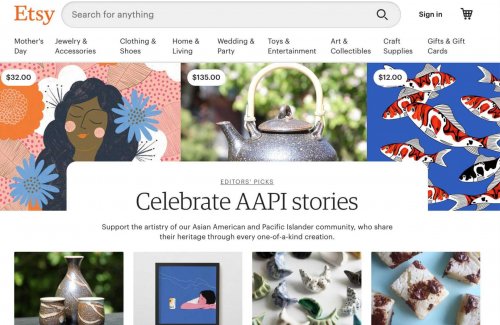
Etsy lets shoppers search for Asian, AAPI, Black, handicapped, Jewish, Latinx, Native, female, LGBTQ, as well as veteran and military family-run businesses.

Google Business Profiles that are verified can add “Black-owned,” “women-led,” and “LGBTQ-owned” attributes to Google Search, Shopping, and Maps.

Macy’s Diverse Owned Brands section of its website features hundreds of items from minority-helmed brands, including those manufactured by AAPI, Blacks, Latinos and Hispanics, LGBTQ persons, and women.

The Intentionalist sorts for Asian-owned, Black-owned, Latino-owned, LGBTQ-owned, Native-owned, veteran-owned and woman-owned companies.

Uber Eats has partnered with the EatOkra app, which connects diners to Black-owned eateries, restaurants and food trucks in cities of Atlanta, Chicago, Los Angeles, Miami and Seattle.

Yelp allows businesses to self-identify as Black-owned. Yelp’s Ones to Watch series also spotlights top Asian-, Black-, Latinx-, LGBTQ- and women-owned businesses around the country. Businesses can also categorize themselves as “open to all,” which means that they welcome anyone regardless of race, ethnicity, national origin, sex, sexual orientation, gender identity and expression, immigration status, religion or disability.

Olivia_headshot

Uncategorized

Twrl Milk Tea Co-Founder & CMO Olivia Chen Shares Essential Lessons On Setting Foot In Famed Retailer Costco

Two mom-friends and milk tea lovers Olivia Chen and Pauline Ang have capitalized on the early success of their milk tea company by sending samples to the head office in Costco which lead to launching their product with the retail giant in just three and a half months.

“We are still pinching ourselves that our Twrl’s Taiwan-Style Black Milk Tea is now in Southern California Costco!” Olivia says, “We’re starting with 3 locations: Irvine, Monterey Park, and Tustin (2700 Park Avenue).” 

Pauline (left) and Olivia (right)

They overcame it without calling in a broker to help them. It wasn’t easy at all, however, this exemplifies the importance of hard work and perseverance of the duo to learn every step of the way for their small business to set foot in one of the world’s largest retail stores.

Olivia enthusiastically shares with Asian Hustle Network the timeline of how their plant-based Twrl Milk Tea made it into Costco to help entrepreneurs navigate the highly competitive food and beverage space. 

Roadshow Or Small Rotation

We met our buyer at Expo West (Think Super Bowl for the Food & Beverage industry where retailers and manufacturers meet up. Super worth doing if you are in CPG. We even landed our 1st TV interview).

After Expo West, we sent more samples to the office and began negotiations for placement. We were offered two ways of being at Costco:

Roadshow

  • 4 days of selling on consignment. We could control costs by using our own people and decide the volume of product we wanted to bring in.
  • Typically, this is how small brands enter Costco. If it does well, you are offered a rotation. If you don’t do well, then it’s really hard to get into the regular set.

Small Rotation

  • We started with a number of stores and the item is part of the regular set.
  • This is harder to secure because Costco is paying for the inventory and the buyer has to believe in your product.

In both situations, it is critical that Twrl Milk Tea sells well and ideally sells out. Why is this important?

It proves to the Costco Buyer that there is a market for our better-for-you plant-based milk teas. More importantly, companies owned by Asian American small business owners like ours are proven to be great partners worth investing time in and onboarding.

Reasons For Opting for Small Rotation

After a few weeks of due diligence on our end, we decided to go with a small rotation. Our reasons were simple:

  • Our manufacturer could produce the volumes needed and in the time we needed. Not always the case in this crazy supply chain. We are made in the USA so it makes a huge difference in our speed for delivery.
  • We could handle the financial obligations to fund the inventory. It’s a lot of money upfront so it’s not a light decision for a smaller company like ours. And, there is still a chance you can be sitting on inventory if it does not sell through.
  • We are committed to Costco and wanted to be part of the regular set and did not want to take the chance that with Roadshow which is only 4 days could be a bust due to so many variables that we may not be able to control.
  • We love Costco ourselves and shop there regularly so we saw our consumers there! Did you know the typical Costco shopper is 35-44 years old, an Asian female making $125,000 and the average trip is $114?!

Roadshow which is only 4 days could be a bust due to so many variables that we may not be able to control.

-Olivia Chen

Decisions, Decisions, Decisions

What flavor to sell?

Out of our 3 flavors, we selected Taiwan-Style Black Milk Tea to launch because it’s one of our best sellers and our Taiwan-Style Black Milk Tea flavor is really unique. Our single-origin loose-leaf black tea is a one-of-a-kind varietal, sourced from a small multi-generational family farm on a misty slope, fed by sweet mountain spring water.

Our tea flavor, aroma, and health benefits are un-parallel to anything on the market. We use pea milk and lightly sweetened our teas with organic agave so our tea flavors really come through. Only 45 calories & 6g of sugar per can.

What would the packaging look like?

Packaging design and sourcing begin for Costco. Luckily for us, Pauline Ang is a seasoned graphic design guru (with 15+ years in the food and beverage packaging for Fortune 500 companies) and designs all our packaging in-house so we could save costs and time here!

How to onboard?

Mountains of paperwork for our two-person team begin. We didn’t use a broker and did everything ourselves. Yes, a broker would have been so incredibly helpful to answer all the questions that we didn’t know the answers to and definitely would have saved us some headaches.

Big Takeaways

  • Don’t be afraid to chase the account you want to be in. Don’t be shy about sharing your vision of where you see the company. Special thanks to Ryan Sung of Honolulu Cookie Company and Vincent Kitirattragarn of Dang Foods for talking to us about their journey with Costco and encouraging us to go for it.
  • It can be done without a broker but not without headaches and some huge learning curves and we did make some mistakes along the way.
  • Have an advocate. We have been super lucky that our buyer has been so incredible to work with and it’s important to have such an advocate in the company. Cannot over-emphasize this enough!
  • Your team matters. Grateful to share this journey with Pauline Ang who is such an amazing friend and business partner. We are two moms that love Milk Tea and simply wanted to make milk tea —a quintessential Asian drink that we love—even better.

Don’t be shy about sharing your vision of where you see the company.

-Olivia chen

Connect with Olivia and Pauline

Your support would mean the world to our small business and the small family farms that use sustainable practices for a tea that’s better for you, and better for the planet. Follow our journey: Instagram, Facebook, TikTok, Twitter

Twrl Warehouse

Uncategorized

From Refugee To Legendary: The Roller Coaster Hustling of Serial Entrepreneur Tony Lam

“I want to tell everyone it is NOT EASY. For all the folks in the restaurant/food business, I respect you and take my hat off to you.”

Tony’s current passion projects include helping to bring popularity to Vietnamese coffee in the United States and guiding the next generation of young, ambitious entrepreneurs to realize their full potential. 

He is married to his lovely wife Van Lam and has two sons named Damon and Andy. His son Andy is on the spectrum (ASD), “Raising an autistic child has many challenges and requires a lot of patience. These kids have a special place in my heart.” Because of this, he is currently working closely with Linda Nguyen, founder Laugh Out Loud with Autism Foundation (LOLA) whom he got connected through the Asian Hustle Network (AHN), “Much respect for this beautiful human being for having a BIG heart. We need more compassionate leaders like her in this world.” he said. 

Known for being a successful serial entrepreneur, Tony shared his successes and his humble beginnings and challenges that made him the hustler he is today. 

Escaping Vietnam

My story began 45 years ago from today. During the Fall of Saigon (April 30th, 1975), I was only 3 months old when my family fled on a tiny boat to the US. My father was one of the Naval captains of the South Vietnam government. 

My mother had just given birth to me and they had to make the difficult decision: Should they stay, or should they go with a 3-month-old baby and risk death by the communist government? They made the decision to drop everything they had and took a chance on a better life into the unknown. 

My grandma, aunts, uncles, and cousins left everything behind and boarded the boat. My father to this day still has nightmares of the harrowing escape.

My mother had just given birth to me and they had to make the difficult decision: Should they stay, or should they go with a 3-month-old baby and risk death by the communist government?

-Tony Lam
3 year-old Tony

A Fresh Start

My family was refugees in the Philippines for about 6 months. Not knowing what would happen, my family prayed hard and God answered our prayers. We were sponsored by an American family through Catholic Charities.

This American family took in a total of 6 of us, gave us a roof over our heads, put food on the table, and gave my family support for a couple of years to survive. My “sponsored grandparents” are now angels in heaven, but their kids whom I called Aunt Kim and Uncle John still live in southern California and we still communicate every so often. My family is grateful to their parents’ kindness and open heart to take in complete strangers into their homes.

My family would move to the Bay Area a few years later for a fresh start. My brother and sister were born, and we quickly became a family of 5. My father got his AA degree from San Jose City College and his trade was being a technician fixing medical devices for hospitals while my mother worked as an assembly worker.

Building Blocks That Lead To Success

I remember growing up in a poor neighborhood, teased by classmates for being Asian. Racism did exist at an early age for me but I did not let it bother me.

I remember my parents giving me a $100 allowance to buy enough clothes every year during my middle and high school years. So no, I did not grow up with a silver spoon in my mouth, but I was grateful for what I had. I got decent grades but was not smart by all means in high school.

I attended California Polytechnic State University (Cal Poly) where I got my business degree. My dream was to open a business one day but I didn’t know at the time what it would be. My first job out of college was at Cisco Systems (’97). I worked for corporate for way too long (14 years). I was a workaholic working 60-70 hr. weeks to save up money to start a family one day.

I should mention that this all would not have been possible without the love and support of my wife. I met my beautiful wife Van Lam through a college friend. We chatted for 3 months via Yahoo Messenger, fell in love, and married her one year later in Vietnam. We have two boys (Damon – 10 yrs. old and Andy – 7 yrs. old)

While I was working at Cisco, I discovered my first hustle (Wingstop) and the many more that would follow after leaving the company.

I was a workaholic working 60-70 hr. weeks to save up money to start a family one day.

-TONY LAM

The Serial Entrepreneur

Wingstop Franchisee — for 5 Locations (San Jose, Milpitas, Fremont, Union City) in the Bay Area for over 3 decades.

COOP Marketing President — for 50 Wingstop in the Bay Area instrumental in inking the deal with the GS Warriors and becoming “The Official Wings of the Golden State Warriors” since 2015

Omni Bev Co-founder — the first company to have an RTD (Ready to Drink) Vietnamese cold brew with condensed milk on the market with a shelf life of over 6 months. Its coffee beans are imported directly from Da Lat. They also serve nitro cold brew!

Omni Bev Co-Founders Tony Lam and Tammy Huynh

Mavens Creamery Shark Tank Winner — a macaron ice cream place that started in a 400 sq. ft. garage, expanded to 300 venues, and 4 years later struck a Shark Tank deal on TV with Barbara Corcoran. 

alaMar Kitchen & Bar Co-Owner — voted the Best Seafood Restaurant in Oakland by Oakland Magazine in 2020, was also featured in the Michelin Guide for 3 years, and on KQED

Okashi Fusion Co-Owner — with a 4.8/5 star rating on Yelp reviewed by 710 customers, is the  “BEST POKE in town with the BEST desserts” as Tony describes.

VitaBowl Board Advisor & Investor — a premium on-demand delivery brand that serves locally sourced, vegetarian, superfood meals and beverages. Tony teamed up with Charles Michael Yim through Asian Hustle Network, who also struck a deal on Shark Tank. Charles has assembled an A-team of talent, “I am honored to be working with these guys. Together, we have started a new company VitaBowl.” he expressed.

Enterprise Purchasing Group Co-Owner — a group purchasing organization that leverages the combined volume of many e-commerce businesses to secure exclusive programs with major shipping carriers (USPS, UPS, DHL, FEDEX) for both domestic and international destinations. “Our team has saved 10’s of millions for many customers spending in the range of $10K to $70M+ to date,” Tony added, “If you ship at least 50 orders a day domestically, we can surely help you with saving with our program.”

A Few Hurdles That Turned Into Bigger Opportunities

When IOS apps were just coming out in 2011, my partner and I created a booking app called Chimpped, which allows users to book with all your service providers (e.g. your dentist, doctor, kid’s activities, restaurant, etc.). One and a half years later, we closed down our business because we ran out of money and did not get enough traction. The “high tuition” I had to pay through this failure allowed me to consult with other app companies.

The apps KEA, Nextforce, and WorkStream have gone through Series-A funding and 1 Seed round. The seeds have been planted, just waiting on fruits to grow.

The “high tuition” I had to pay through this failure allowed me to consult with other app companies.

-Tony Lam

What Is Next For Tony Lam? 

Tony wants to dedicate his time to the special needs / autistic community and provide resources such as jobs and career-building services.

He is also planning on launching Andy’s cafe where a large portion of the staff hires will be from the special needs community. The plan is to launch this in 2023 in California. If successful, he would like to open 100 of these in the next 5 years to give the special needs community a safe place to work and be able to socialize with people

Lastly, Tony is planning on starting up a PE fund to invest in startup CPG companies.

Advice To Aspiring Entrepreneurs

  • Surround yourself with mentors and successful entrepreneurs. Join a support network of folks that bring positive energy
  • Write up a business plan so that you have done the research before venturing out
  • Have 18 months of the runway of savings to cover your expenses while you launch your company

You can reach Tony at tony@launchyourfirst.com