Awaken* newsletter

May 25, 2024

SHARE:

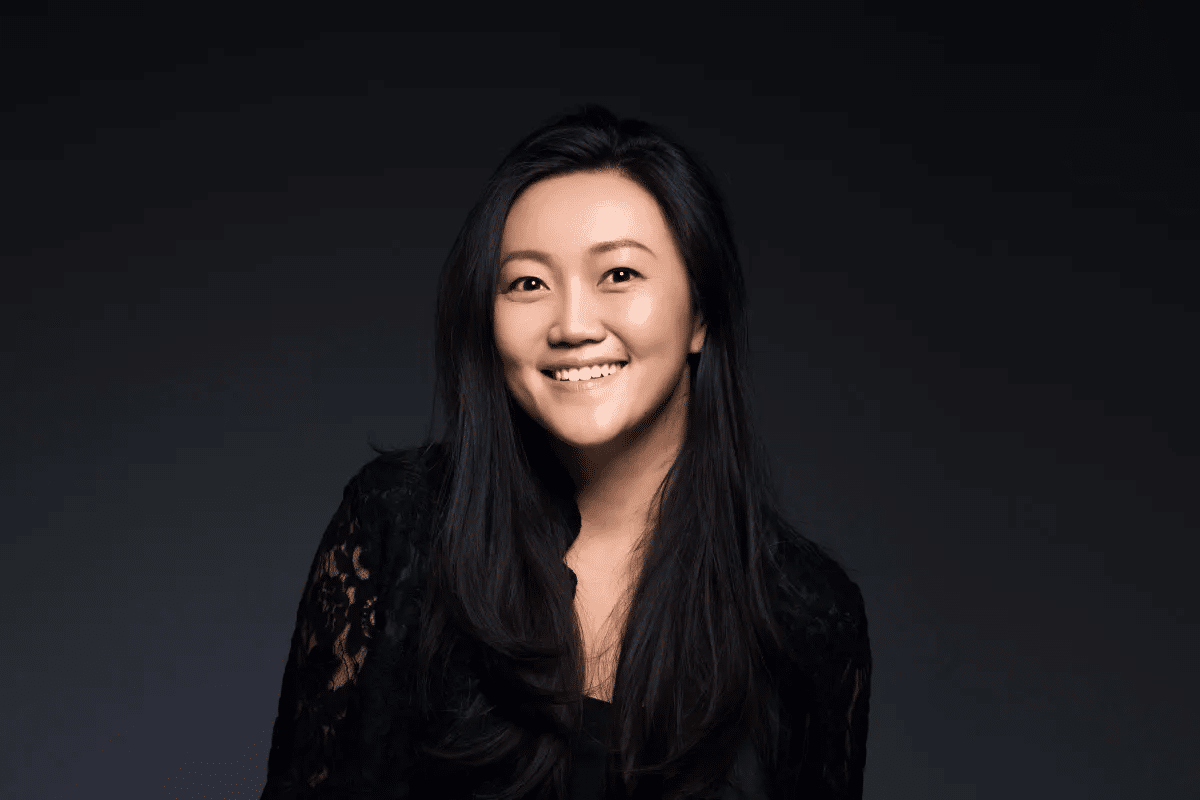
Anna Fang is the CEO of ZhenFund, an early-stage venture fund that has invested in over 600 startup companies, particularly in e-commerce and AI, with successful investments in unicorns like RED (XiaoHongShu), Perfect Diary, and Horizon Robotics. Anna began her career in investment banking at JPMorgan in New York City and later helped expand M&A efforts at GE China before joining ZhenFund in 2011.

In a recent interview with AHN Ventures, Anna shared insights about her venture capital journey, the high standards ZhenFund maintains for selecting founders, and the evolving landscape of early-stage investments. Read through to learn more:

HanYue: What inspired you to start Zhen Fund?

Anna: I began building Zhen Fund in 2011 after a significant tenure at GE. The catalyst was a conversation with a Graduate School of Business friend who was with Sequoia China about initiating a Y Combinator-like model in China. During this period, I met Mr. Xiaoping Xu, whose vision was truly inspiring. Additionally, the vast opportunities in China’s entrepreneurial landscape were too compelling to ignore.

HanYue: You are one of the pioneers in China’s venture capital industry. How has being an investor changed over the years?

Anna: Ten years ago, being a VC wasn’t as glamorous as being a private equity or angel investor. The scene was quieter. Entrepreneurship wasn’t as trendy, so it was easier to find thoughtful, high-caliber founders. Our first fund was $15 million, and we made 16 investments, including Xiao Hong Shu, which topped lifestyle app charts, and Huobi, HTX, which became China’s largest crypto exchange, and Deeplint, which went public. The VC scene entered a hype cycle from 2014 to 2020, with an overwhelming amount of money chasing deals. It felt wasteful to me. Now, with a ‘VC winter,’ I appreciate the slower pace that allows for more selective investments.

HanYue: Can you discuss the high standards Zhen Fund maintains when selecting founders?

Anna: There’s a high bar, especially for AI nowadays. Founders must deeply understand the technology. For example, we invested in Zhilin Yang, a renowned and famous PhD.  Zhilin Yang is the founder of Moonshot AI, with a ChatGPT-like product Kimmy Chat.When I was looking for interns, there are kids these days who would say ‘whoa, you invested in Dr. Yang? That’s so cool. I want to work for you.’ Interns want to work for us because we invested in Yang, that was really something special.

HanYue: Yodu achieved many significant successes with your first fund. What excites you currently?

Anna: Lately, I’m fascinated by AGI and the global integration of foundational models into robotics. There’s also a burgeoning interest in applications built on these models, alongside video and productivity apps like monaco.im and max.me. Observing how human and AI co-pilots can coexist and interact is particularly intriguing.

HanYue: You’ve invested in many successful founders. What traits do they share?

Anna: It all boils down to hustle – your organization’s name Asian Hustle Network really speaks volume by the way. Successful founders are not afraid to get out there and continue to network. They have an infectious enthusiasm. Even I had to do it once. When I was just getting started, I would put ‘send me deals’ directly in my email signature.

HanYue: What challenges do early-stage startups typically face, and what advice do you have for navigating these challenges?

Anna: All successful companies have experienced moments where they almost didn’t survive, be it due to regulatory issues, cash flow problems, or founder conflicts. My advice is not to be phased by difficulties. Believe that you will pull through. Having mentorship is also crucial as it provides support and helps solve problems together.

One thing I really love about angel investing is the thrill of being the first to adopt new and innovative ideas, always staying alert and aware of emerging trends. Emma and I often joke about not being the top students at Stanford, always admiring how incredibly smart our classmates are. 

Bob taught me the essentials: reviewing the team page – I often feel like an admissions officer searching for predictors of future success. It’s like trying to find Yao Ming among a crowd of tall people—a search for standout talent in a field of strong contenders. 

With everything changing so fast, I am more excited about looking for really thoughtful founders. For example, I am really excited about this one young man, who used to my intern, he could just sit there and talk about the macroeconomy trends forever. And the way he thinks about what might become popular among young people continues to impress me. For example: The younger generation embraces ‘YOLO’—living in the present. And as a founder, you will need to think about new hobbies and cultural shifts that might emerge, and find ways to take advantage of that. 

HanYue: As a lecturer at GSB and a seasoned investor, how do you differentiate in a crowded VC landscape?

Anna: Our differentiation lies in our founder-first approach and our simplified, transparent investment process. Even when we pass on an investment, we provide thoughtful feedback. Zhen Fund is not just about funding; it’s about fostering a community and offering programs like the EIR and Ostrich Club that systematically identify and support potential top founders. We want to build a supportive community. 

Edwin: What trends from China do you see influencing the US, and vice versa?

Anna: E-commerce platforms like Shein and Temu are leading trends, with TikTok’s integration of e-commerce being particularly noteworthy. We’re also seeing interest in replicating China’s online education model and infrastructure globally. Additionally, attempts to mimic the success of businesses like Luckin Coffee in various international markets highlight the growing influence of Chinese business models abroad.
Related Articles

Image Source: Business Wire

Uncategorized

Takashi Cheng Honored With A Special Award For Exemplary Initiatives On Elevating The AAPI Creator Community

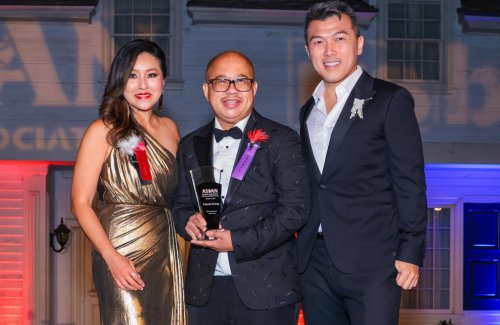
The Gala hosted by the Asian Business Association was in full swing during the evening spent celebrating AAAPI contemporaries. The evening’s events revolved around the concept of authentic old Hollywood, and its guest list included several famous personalities. 

Takashi Cheng was honored with the Media Visionary of the Year Award, one of the night’s main highlights. He is one of the business leaders from the Los Angeles community who highlights the accomplishments of prosperous business owners and corporations and has contributed to advancing the ABA’s goals and mission. 

Cheng serves as the Chief Executive Officer of Society One. He is known to be a creative investor and a public intellectual. Cheng has seen many ups and downs, but he credits his success to the American Bar Association (ABA), which he calls a shelter for young professionals seeking mentorship and employment. He attributed a significant portion of his success to the support of his wife and their young children.

Cheng’s Bling Empire castmate and friend Kane Lim called him a visionary. Lim is proud and happy that Cheng is in the spotlight for investing in people and projects that aim to elevate the Asian community. He is amazed at how Cheng invests in people and projects that seek to promote the Asian community.

Besides all the recognition that night, Cheng modestly used his platform to show the world that a large investment in the AAPI creator community is needed to provide a perspective and a complete spectrum of content that better understands the underrepresented. 

Cheng pledged $100 million to create new films, programs, resources, and infrastructure for Asian American business leaders. This showed Society 1’s support for AAPI creators. He concluded that he had “come full circle” from being a spectator in the crowd to receiving recognition from highly regarded community members.

Image Source: Amberlyns Cake / Danica Lynne Casta

Uncategorized

How An Engineering Graduate Trades Hard Hats For Pastry Becomes 6-Figure Baker

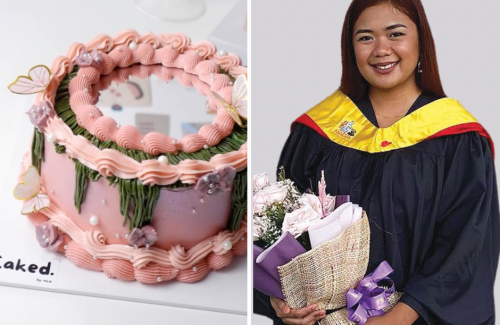
For Danica Lynne Casta, an engineer by profession turned baker, success was hers after she risked taking a big step outside her comfort zone. She now manages her online cake business under “Amberlyns Cake.”

The Filipina baker had just graduated from university when the pandemic struck. Danica began to reconsider her professional goals in baking when her family had financial difficulties, so she looked for a short-term position in the online world.  

Danica had limited experience in baking. But through hard work, she persisted in her quest to become a better baker until she became well-known for her delicious “bento cakes”.

The bento cakes were not only delicious but also the perfect size and price for those watching their spending. She also recently launched a “Selfie Mirror Cake” featuring a real mirror on top of the cake. So, you can take one-of-a-kind mirror selfies while taking a snap of your scrumptious cake.

In only one month, she turned a profit into double digits. At that moment, she knew that baking was her true calling in life. “I told my family that I was quitting my job and would be a full-time baker from now on,” she told The Philippine Star, a digital newspaper in the Philippines.

As of writing, Amberlyns Cake (@amberlynscake) got over 178k followers on Instagram and Facebook.

Image Source: CNBC Make It

Uncategorized

25-year-old Who Earns Half A Million Per Year Proves That No One Is Too Young To Be A Real Estate Investor

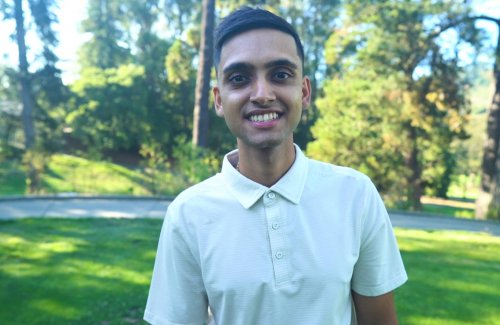
This millennial will inspire you with his quest for financial independence. Sahil Mehta earns $515,000 a year flipping houses in addition to his full-time job at Golden Gate Sotheby’s.

Mehta grew up in a low-income household. He moved to California at 16, where he started college and graduated early to launch a successful career in real estate. Today, he has already put five rental apartments into the real estate market in Berkeley and has been able to make a profit from them.

He acknowledges that prospective investors require substantial capital even to enter the game. One essential thing he considers in investing his money is making deposits into a personal retirement account. Now, Mehta puts a lot of money into himself and puts away about $10,000 monthly for real estate investments. 

The 25-year-old also invests $1,500 per month, while most financial advisers recommend saving 10% to 15% of income for retirement. Brilliant move to put some of it in an IRA, where it can multiply at 6% to 8% every year.

O’Leary, chairman of O’Shares ETFs and a judge on the new CNBC show “Money Court,” was impressed by Sahil Mehta’s connotations to stock market strategies. “That’s what you’re putting aside for your nest egg when you turn 65.”

Made with Canva

Uncategorized

Eight Trailblazing Asian Women Who Are Slaying It In Startups

When it comes to closing the gender equality gap in entrepreneurship, many barriers remain to be addressed. However, female entrepreneurs in the startup industry are now rising and have been taking center stage.

Fortune recently released a list of the 15 Most Powerful Women in Startups based on PitchBook valuation data. 

Eight women on the list are notable Asian women who are either founders of highly valued startups where they hold important jobs or chief executives of highly valued firms.

Without further ado, here are the most powerful women in charge of the most valuable private companies in the world today.


Melanie Perkins

Cofounder and CEO, Canva

Valuation: $26 billion

The Malaysian-Austrailian cofounder and CEO of design software maker Canva was valued at $40 billion in 2021, which makes it the highest-valued female-founded startup in the world. Launching their new office product, the company is ready to take on Microsoft and Google.


Divya Gokulnath

Cofounder and director, Byju’s

Valuation: $22 billion

Gokulnath cofounded India’s most valuable startup, Byju’s. The firm’s aim is to make learning engaging and effective by leveraging deep pedagogy and cutting edge technology.


Miranda Qu

Cofounder and president, Xiaohongshu

Valuation: $20 billion

Based in Shanghai, the social e-commerce app Xiaohongshu (translation: “Little Red Book”) has been key to the rise of experiential shopping in China. The innovative platform integrates the authentic content shared by its community with commerce, quickly becoming one of the most popular destinations for making lifestyle decisions.


Ruchi Kalra

Cofounder and CFO, OfBusiness; cofounder and CEO, Oxyzo

Valuations: $5 billion (OfBusiness); $1 billion (Oxyzo)

Kalra along with her husband Asish Mohapatra, cofounded the carbon management business OfBusiness and the digital lender Oxyzo. OfBusiness provides India’s SMEs access to cash flow-based financing for buying raw materials through its NBFC ‘Oxyzo Financial Services’.


Adi Tatarko

Cofounder and CEO, Houzz

Valuation: $4 billion

The Israeli-American cofounder and CEO started the home remodeling and design platform where people can browse and save beautiful photos of inspiring home, as well as find and hire the right design and construction professionals.


Eynat Guez

Cofounder and CEO, Papaya Global

Valuation: $3.7 billion

Papaya Global is a payroll platform trusted across 160+ countries and all types of employment. Based in Israel, Guez cofounded the startup after a long career in global workforce management.


April Koh

Cofounder and CEO, Spring Health

Valuation: $2 billion

Koh became the youngest woman to run a multibillion-dollar company when the startup hit its $2 billion valuation in 2021. With the mission to eliminate every barrier to mental health, Spring Health offers mental health care services as an employer-provided health benefit.


Jinglan Wang

Cofounder and CEO, Optimism

Valuation: $1.7 billion

Optimism is an Ethereum-based decentralized infrastructure platform that allows for instant transactions and scalable smart contracts.The company valued at $1.7 billion as it worked to scale Ethereum.