Awaken* newsletter

May 25, 2024

SHARE:

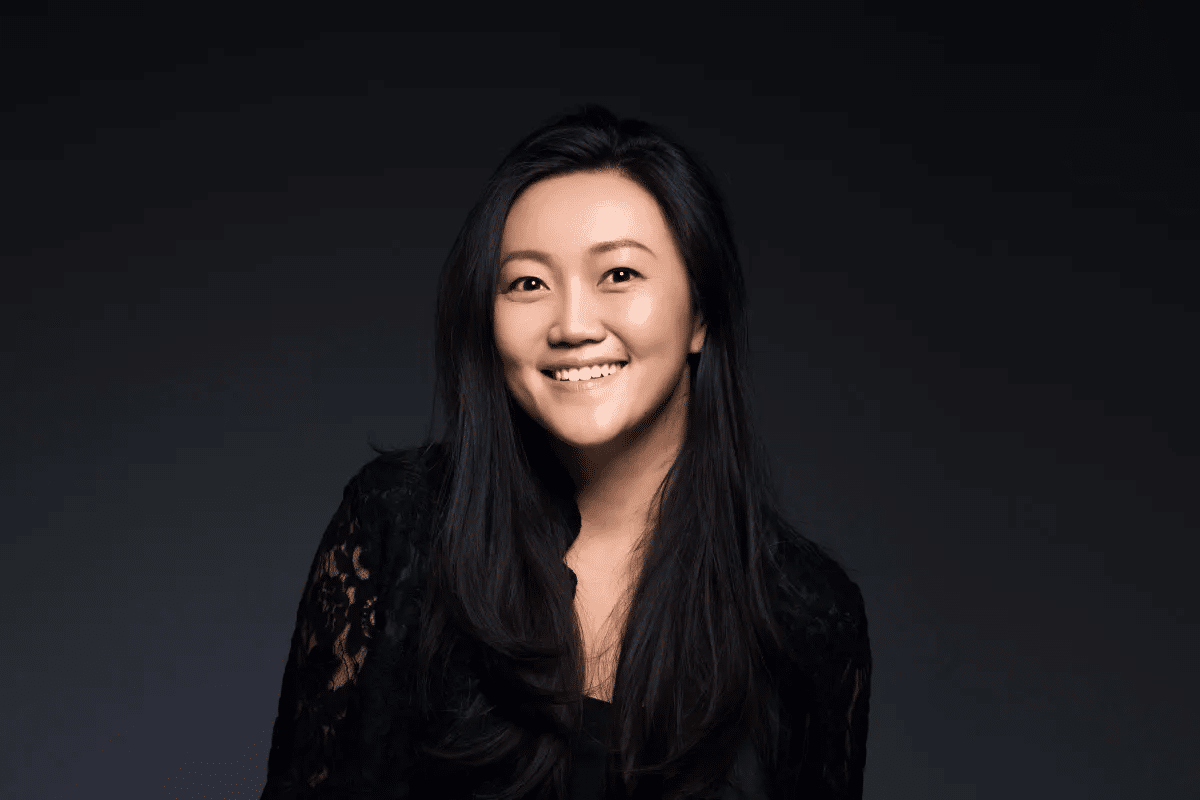
Anna Fang is the CEO of ZhenFund, an early-stage venture fund that has invested in over 600 startup companies, particularly in e-commerce and AI, with successful investments in unicorns like RED (XiaoHongShu), Perfect Diary, and Horizon Robotics. Anna began her career in investment banking at JPMorgan in New York City and later helped expand M&A efforts at GE China before joining ZhenFund in 2011.

In a recent interview with AHN Ventures, Anna shared insights about her venture capital journey, the high standards ZhenFund maintains for selecting founders, and the evolving landscape of early-stage investments. Read through to learn more:

HanYue: What inspired you to start Zhen Fund?

Anna: I began building Zhen Fund in 2011 after a significant tenure at GE. The catalyst was a conversation with a Graduate School of Business friend who was with Sequoia China about initiating a Y Combinator-like model in China. During this period, I met Mr. Xiaoping Xu, whose vision was truly inspiring. Additionally, the vast opportunities in China’s entrepreneurial landscape were too compelling to ignore.

HanYue: You are one of the pioneers in China’s venture capital industry. How has being an investor changed over the years?

Anna: Ten years ago, being a VC wasn’t as glamorous as being a private equity or angel investor. The scene was quieter. Entrepreneurship wasn’t as trendy, so it was easier to find thoughtful, high-caliber founders. Our first fund was $15 million, and we made 16 investments, including Xiao Hong Shu, which topped lifestyle app charts, and Huobi, HTX, which became China’s largest crypto exchange, and Deeplint, which went public. The VC scene entered a hype cycle from 2014 to 2020, with an overwhelming amount of money chasing deals. It felt wasteful to me. Now, with a ‘VC winter,’ I appreciate the slower pace that allows for more selective investments.

HanYue: Can you discuss the high standards Zhen Fund maintains when selecting founders?

Anna: There’s a high bar, especially for AI nowadays. Founders must deeply understand the technology. For example, we invested in Zhilin Yang, a renowned and famous PhD.  Zhilin Yang is the founder of Moonshot AI, with a ChatGPT-like product Kimmy Chat.When I was looking for interns, there are kids these days who would say ‘whoa, you invested in Dr. Yang? That’s so cool. I want to work for you.’ Interns want to work for us because we invested in Yang, that was really something special.

HanYue: Yodu achieved many significant successes with your first fund. What excites you currently?

Anna: Lately, I’m fascinated by AGI and the global integration of foundational models into robotics. There’s also a burgeoning interest in applications built on these models, alongside video and productivity apps like monaco.im and max.me. Observing how human and AI co-pilots can coexist and interact is particularly intriguing.

HanYue: You’ve invested in many successful founders. What traits do they share?

Anna: It all boils down to hustle – your organization’s name Asian Hustle Network really speaks volume by the way. Successful founders are not afraid to get out there and continue to network. They have an infectious enthusiasm. Even I had to do it once. When I was just getting started, I would put ‘send me deals’ directly in my email signature.

HanYue: What challenges do early-stage startups typically face, and what advice do you have for navigating these challenges?

Anna: All successful companies have experienced moments where they almost didn’t survive, be it due to regulatory issues, cash flow problems, or founder conflicts. My advice is not to be phased by difficulties. Believe that you will pull through. Having mentorship is also crucial as it provides support and helps solve problems together.

One thing I really love about angel investing is the thrill of being the first to adopt new and innovative ideas, always staying alert and aware of emerging trends. Emma and I often joke about not being the top students at Stanford, always admiring how incredibly smart our classmates are. 

Bob taught me the essentials: reviewing the team page – I often feel like an admissions officer searching for predictors of future success. It’s like trying to find Yao Ming among a crowd of tall people—a search for standout talent in a field of strong contenders. 

With everything changing so fast, I am more excited about looking for really thoughtful founders. For example, I am really excited about this one young man, who used to my intern, he could just sit there and talk about the macroeconomy trends forever. And the way he thinks about what might become popular among young people continues to impress me. For example: The younger generation embraces ‘YOLO’—living in the present. And as a founder, you will need to think about new hobbies and cultural shifts that might emerge, and find ways to take advantage of that. 

HanYue: As a lecturer at GSB and a seasoned investor, how do you differentiate in a crowded VC landscape?

Anna: Our differentiation lies in our founder-first approach and our simplified, transparent investment process. Even when we pass on an investment, we provide thoughtful feedback. Zhen Fund is not just about funding; it’s about fostering a community and offering programs like the EIR and Ostrich Club that systematically identify and support potential top founders. We want to build a supportive community. 

Edwin: What trends from China do you see influencing the US, and vice versa?

Anna: E-commerce platforms like Shein and Temu are leading trends, with TikTok’s integration of e-commerce being particularly noteworthy. We’re also seeing interest in replicating China’s online education model and infrastructure globally. Additionally, attempts to mimic the success of businesses like Luckin Coffee in various international markets highlight the growing influence of Chinese business models abroad.
Related Articles

Image Source: The Sacramento Bee

News

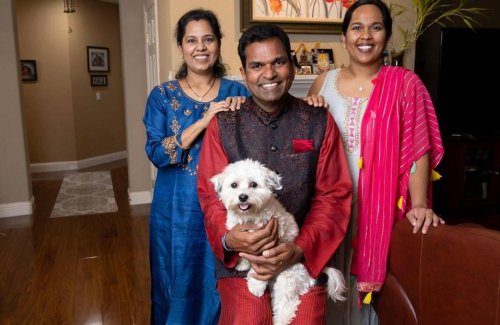
Asian American Community Is Prospering In Folsom Sacramento County

The number of Asian American immigrants in Folsom multiplied five-fold from 2000 until last year as found out by the US Census Bureau.

Among them are Chalamcherla of India, Steven Wang of China, and Marcus Yasatuke of Japan.

51-year-old Chalamcherla long decided to come to Folsom after falling in love with the city while attending the birthday celebration of a friend’s son, but it wasn’t until 2006 that he actually did so after spending two years in Singapore and the Bay Area.

Nearly ten years after arriving in the country, Steven Wang, who is currently Folsom’s city attorney, became a citizen.

Back then, it was hard for tourists to enter the US but Wang, together with her brother and mother, swiftly passed the immigration after saying that they would be visiting Disneyland, the only place he knew. 

Wang, who is now a lieutenant colonel, has been a member of the US Army Reserve since 2004. During that time, many of his fellow soldiers were losing their lives while serving, and Wang felt in danger.

Because of this, he worked in Folsom city before finishing the necessary time to serve in his Afghanistan deployment, and he told The Sacramento Bee, “I don’t know if every company is like this, but Folsom has been quite supportive of the military.”

Additionally, in 2003, Marcus Yasutake, 45, moved to Folsom with his wife after receiving job offers from Placerville and Roseville. They were able to reside there and raise a family of three children.

Communications director Christine Brainerd of the city of Folsom said that Asian Americans are likely attracted to the area on the same note as why many citizens choose to call Folsom home.

The head of the Sacramento Asian Pacific Chamber of Commerce’s economic development team believes that the tech-based companies in Folsom may be one factor for the recent increase in Asian residents.

Marcus cited the excellent school system in Folsom as one of the reasons why he came there, whilst Chalamcherla claimed that technology plays a significant role in the city’s increasing Asian population.

Racial discrimination is far from nonexistent in Folsom. That’s why Chalamcherla urges other Asians to immerse them in Asian culture.

Image Source: The Denver Post

News

Denver’s Vietnamese Refugees Share New Life While Keeping Family’s Heritage

Because of the chaos that was happening in their homeland in the 1970s, thousands of Vietnamese fled and some, later on, found a home in Colorado.

The melancholic memory is still fresh for Nga Vương-Sandoval, who, at the age of three, had to temporarily stay in refugee camps in the Philippines, Guam, and Arkansas.

She was with the about 2 million people who were unhoused and still have from within the shock of their suffering. 

It had been very challenging for them as they had to leave behind the good life they have in Vietnam and even depart from their relatives in order for them to leave safely.

Starting their life all over again, Denver has become a home to the 24,000-man Vietnamese Americans.

After being able to establish their community and found a home in the place, Nga said “I’m proud to say that it’s the city that I love, it’s the state that I love.”

Meanwhile, Vo, a 21-year-old grandchild of a Vietnamese who grew up in Aurora after his grannies and parents left Vietnam in the 1990s to seek a better life, had the experience of living in “a very diverse place.”

Knowing very little about his family’s past in Vietnam, he conducted a research project to unleash an “inherently American story,” according to him. 

Enabling people to have a glimpse of the refugees from a different perspective, Vo made use of his relatives as objects of his photography.

“Even though we moved here, they still lived a very Vietnamese life,” Vo said in Denver Post, 

It was also in his research that he found out how the majority of his family members were able to escape Vietnam while being robbed of cash and gold on their way.

He also mentioned how his family kept their culture by still practicing them in Denver which contributed to what America is, a place with diverse cultures. 

Despite having to start from scratch, they were able to begin life anew and even owned an Asian supermarket, Asian cinema, and Truong An Gifts.

His family also started the Far East Center shopping mall in 1987, home to him and his cousins and even to the Asian community.

Image Source: Silicon India

News

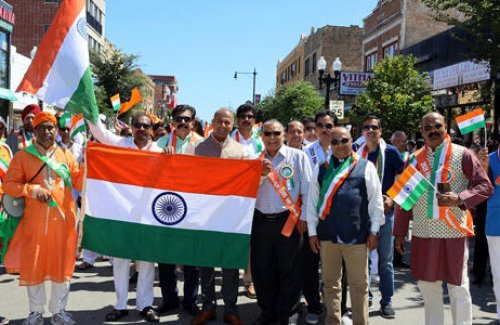
South Asians Found Second Home in Devon Avenue’s “Little India”

At Devon Avenue in Chicago, immigrants from India discovered a taste and comfort of their home country.

The area, commonly referred to as “Little India,” has served as a shelter for Indians who miss their culture.

Finding a home in it, Indians such as National Indo-American Museum board member Beverly Kumar, go there every now and then, especially when she craves Kalakand, a traditional Indian fudge.

According to Kumar, “It’s very comforting knowing that just 14 miles away from my house, there is an essence of Little India.” She also mentioned how reminiscing it is to see familiar sights, sounds, scents, and flavors when visiting Devon Avenue since it makes her feel as though she has never left home.

The area not only became a haven for Indians, but also for other South Asians who opened grocery stores, sari and jewelry stores, as well as many other enterprises in addition to food stores.

In the middle of 1960s, the place it became the second and fourth-largest enclave for Indian and Pakistani Americans, respectively.

The Federal Immigration and Naturalization Act of 1965 ushered in the first wave of South Asian immigration, which established settlements for South Asian professionals in Chicago, while the second phase arrived in the 1980s and 1990s.

Psychotherapist Ranjana Bhargava was one of the first immigrants who yearned for vegan food and searched for spices to sate her craving for Indian cuisines, which she found at Mexican places.

Between the first and second waves, businesses such as The Sari Palace sari store and Indian grocery stores began to thrive there.

Since then, a new community has been created where Indians continue to practice their culture through activities like viewing Indian movies, getting together, playing instruments, performing traditional dances, and eating.

The once Jewish-dominated place became a mainly Indian community which captivated more visitors where one can meet not only Indians but people of different races.

Image Source: Olivier Koning / Honolulu Magazine

Stories

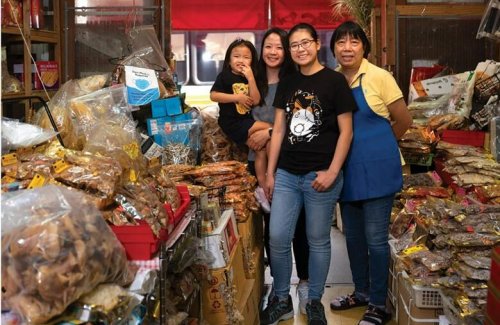
Chinatown’s Oldest and Most Respected Businesses Proudly Carried On By Next Generation

The blood of entrepreneurship runs through the veins of Chinatown’s Chinese food business owners, as three of the longest-running businesses have their children enter the management fields of their family business.

Tony and Selina Chun, together with Alan and Helen Chun, who have been in the business for decades, fully trusted their children to run the meat market company they bought in the 1980s.

The older generation passed it down to their children believing that they would treat it the same way they had after 40 years of building and creating the Chinatown cornerstone with crispy roast pigs, burnished roast ducks, and glazed char siu along with butcher store and seafood vendor.

Frankie, 35, and his cousins are now in charge of running the company that they established through diligence and thrift. Given that they have a family business to manage, Frankie has known since then that he won’t take long in any career.

He was reported in Honolulu magazine as saying, “I knew that anything I was going to pursue wasn’t going to be lengthy, because the family would always ask us back for support.”

He and his cousins learned the operations as a result of early exposure to the business and used them as a means of support, which pleased their parents, especially when they took their first vacation in four decades.

Meanwhile, Liana Fang, whose parents Wesley and Jie Mei Fang founded Sing Cheong Yuan Bakery, assists in running the business.

The pair bought the bakery from its original owners and then expanded it by bringing in more goods. The homemade goods were prepared using original family recipes that they later improved.

The 27-year-old claims she adores Chinatown but acknowledges that she is more passionate about cooking than baking. “It’s so authentic. I love Asian food, the fresh markets, the mom-and-pop shops,” she said.

Completing the list, the 33-year-old daughter of Sun Chong supermarket co-owner Ann Sung also contributes to management of the business.

Sun helps them sell their products and other items by marketing it online and by helping accomplish other stuff needed in the business.

Sun, who grew up at the shop with her cousins, said that their business is like a thread that can connect generations. She also claimed that coming home after studying abroad was like paying back her mother, who had done everything for her. Sun plans to update and improve her mother and aunt’s traditional business structure.