Awaken* newsletter

May 25, 2024

SHARE:

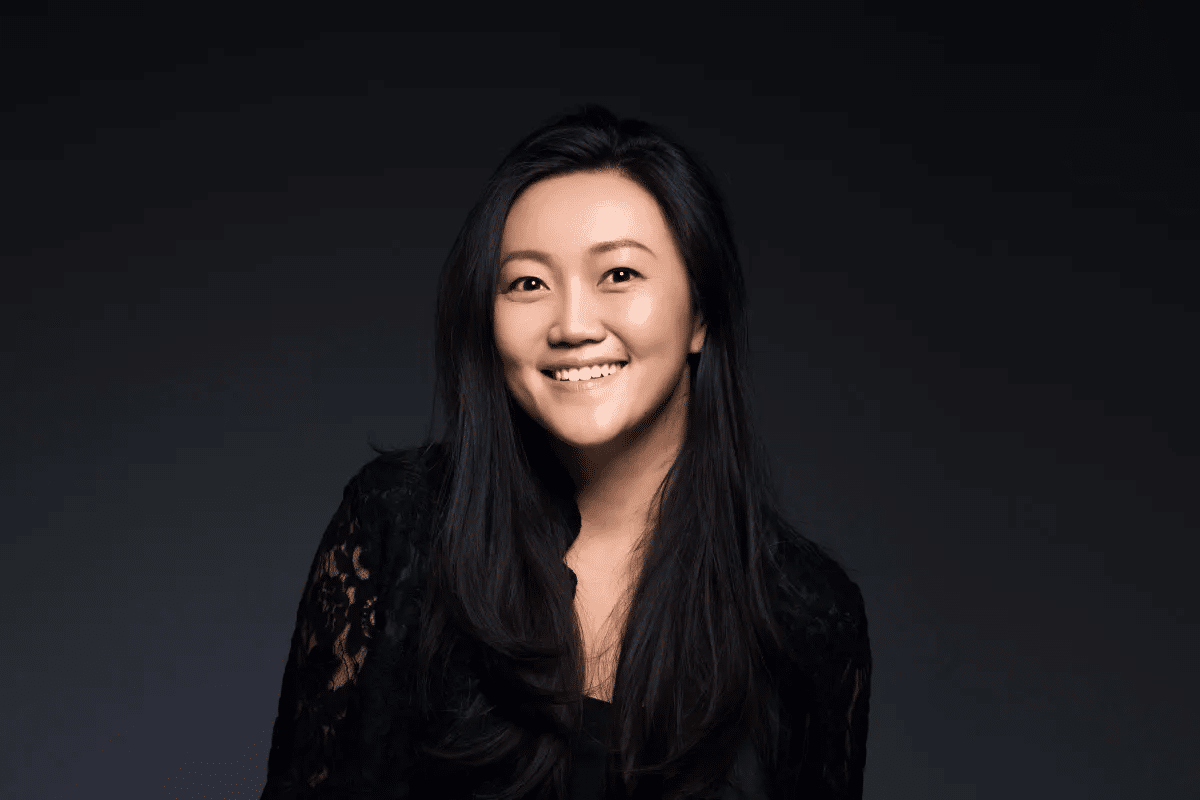
Anna Fang is the CEO of ZhenFund, an early-stage venture fund that has invested in over 600 startup companies, particularly in e-commerce and AI, with successful investments in unicorns like RED (XiaoHongShu), Perfect Diary, and Horizon Robotics. Anna began her career in investment banking at JPMorgan in New York City and later helped expand M&A efforts at GE China before joining ZhenFund in 2011.

In a recent interview with AHN Ventures, Anna shared insights about her venture capital journey, the high standards ZhenFund maintains for selecting founders, and the evolving landscape of early-stage investments. Read through to learn more:

HanYue: What inspired you to start Zhen Fund?

Anna: I began building Zhen Fund in 2011 after a significant tenure at GE. The catalyst was a conversation with a Graduate School of Business friend who was with Sequoia China about initiating a Y Combinator-like model in China. During this period, I met Mr. Xiaoping Xu, whose vision was truly inspiring. Additionally, the vast opportunities in China’s entrepreneurial landscape were too compelling to ignore.

HanYue: You are one of the pioneers in China’s venture capital industry. How has being an investor changed over the years?

Anna: Ten years ago, being a VC wasn’t as glamorous as being a private equity or angel investor. The scene was quieter. Entrepreneurship wasn’t as trendy, so it was easier to find thoughtful, high-caliber founders. Our first fund was $15 million, and we made 16 investments, including Xiao Hong Shu, which topped lifestyle app charts, and Huobi, HTX, which became China’s largest crypto exchange, and Deeplint, which went public. The VC scene entered a hype cycle from 2014 to 2020, with an overwhelming amount of money chasing deals. It felt wasteful to me. Now, with a ‘VC winter,’ I appreciate the slower pace that allows for more selective investments.

HanYue: Can you discuss the high standards Zhen Fund maintains when selecting founders?

Anna: There’s a high bar, especially for AI nowadays. Founders must deeply understand the technology. For example, we invested in Zhilin Yang, a renowned and famous PhD.  Zhilin Yang is the founder of Moonshot AI, with a ChatGPT-like product Kimmy Chat.When I was looking for interns, there are kids these days who would say ‘whoa, you invested in Dr. Yang? That’s so cool. I want to work for you.’ Interns want to work for us because we invested in Yang, that was really something special.

HanYue: Yodu achieved many significant successes with your first fund. What excites you currently?

Anna: Lately, I’m fascinated by AGI and the global integration of foundational models into robotics. There’s also a burgeoning interest in applications built on these models, alongside video and productivity apps like monaco.im and max.me. Observing how human and AI co-pilots can coexist and interact is particularly intriguing.

HanYue: You’ve invested in many successful founders. What traits do they share?

Anna: It all boils down to hustle – your organization’s name Asian Hustle Network really speaks volume by the way. Successful founders are not afraid to get out there and continue to network. They have an infectious enthusiasm. Even I had to do it once. When I was just getting started, I would put ‘send me deals’ directly in my email signature.

HanYue: What challenges do early-stage startups typically face, and what advice do you have for navigating these challenges?

Anna: All successful companies have experienced moments where they almost didn’t survive, be it due to regulatory issues, cash flow problems, or founder conflicts. My advice is not to be phased by difficulties. Believe that you will pull through. Having mentorship is also crucial as it provides support and helps solve problems together.

One thing I really love about angel investing is the thrill of being the first to adopt new and innovative ideas, always staying alert and aware of emerging trends. Emma and I often joke about not being the top students at Stanford, always admiring how incredibly smart our classmates are. 

Bob taught me the essentials: reviewing the team page – I often feel like an admissions officer searching for predictors of future success. It’s like trying to find Yao Ming among a crowd of tall people—a search for standout talent in a field of strong contenders. 

With everything changing so fast, I am more excited about looking for really thoughtful founders. For example, I am really excited about this one young man, who used to my intern, he could just sit there and talk about the macroeconomy trends forever. And the way he thinks about what might become popular among young people continues to impress me. For example: The younger generation embraces ‘YOLO’—living in the present. And as a founder, you will need to think about new hobbies and cultural shifts that might emerge, and find ways to take advantage of that. 

HanYue: As a lecturer at GSB and a seasoned investor, how do you differentiate in a crowded VC landscape?

Anna: Our differentiation lies in our founder-first approach and our simplified, transparent investment process. Even when we pass on an investment, we provide thoughtful feedback. Zhen Fund is not just about funding; it’s about fostering a community and offering programs like the EIR and Ostrich Club that systematically identify and support potential top founders. We want to build a supportive community. 

Edwin: What trends from China do you see influencing the US, and vice versa?

Anna: E-commerce platforms like Shein and Temu are leading trends, with TikTok’s integration of e-commerce being particularly noteworthy. We’re also seeing interest in replicating China’s online education model and infrastructure globally. Additionally, attempts to mimic the success of businesses like Luckin Coffee in various international markets highlight the growing influence of Chinese business models abroad.
Related Articles

cnn-jpeg

News

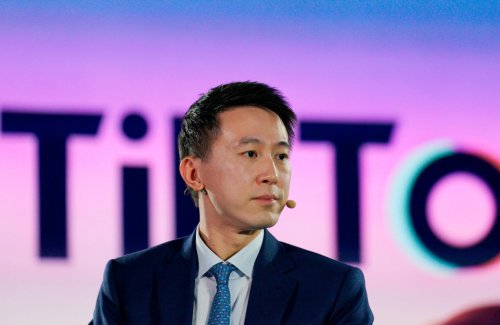
TikTok Invests Billions to Drive E-Commerce Success in Southeast Asia

TikTok, the popular short video app owned by ByteDance, has announced plans to invest billions of dollars in Southeast Asia in a bid to boost its e-commerce business.

The move comes as TikTok aims to capitalize on its large user base in the region and address concerns over data security. With a collective population of 630 million, half of whom are under 30 years old, Southeast Asia represents a key market for TikTok, attracting over 325 million monthly visitors to the app.

Despite its impressive user numbers, TikTok has struggled to convert its popularity into significant e-commerce revenue in Southeast Asia, facing tough competition from established players such as Shopee, Lazada, and Tokopedia.

To address this challenge, TikTok CEO Shou Zi Chew revealed the company’s plans to invest billions of dollars in Indonesia and the broader Southeast Asian region over the next few years. While a detailed breakdown of the investment plan was not provided, TikTok intends to focus on training, advertising, and supporting small vendors interested in joining its e-commerce platform, TikTok Shop.

Chew emphasized that TikTok’s content is becoming more diverse as the platform expands beyond advertising into e-commerce. This evolution enables consumers to make purchases directly through the app during live streams. In Indonesia, TikTok’s largest market in Southeast Asia, the platform already hosts 2 million small vendors selling their products. The region’s e-commerce transactions reached nearly $100 billion in 2022, with Indonesia alone accounting for $52 billion of that figure, according to Reuters.

While Southeast Asian governments have not imposed major bans on government devices, TikTok has faced scrutiny regarding its content. In 2018, Indonesia briefly banned the app due to concerns over inappropriate content, while Vietnam has expressed concerns about the platform’s impact on local culture and tradition.

Despite the challenges posed by established competitors and data security concerns, TikTok remains committed to expanding its presence in Southeast Asia and tapping into the region’s vibrant e-commerce market.

Featured Image Source: CNN

the toronto star-jpg

News

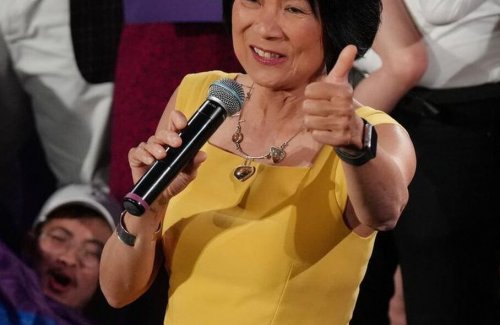
Olivia Chow Makes History as First Chinese-Canadian Mayor in Toronto

Olivia Chow has emerged as Toronto’s first Chinese-Canadian mayor, ending over a decade of conservative rule and ushering in a new progressive era for the city.

Olivia was 13 years old when she first arrived in the country as an immigrant. Now, at 66, she has achieved a remarkable feat, surpassing 102 candidates to become Toronto’s first Chinese-Canadian mayor.  During her campaign, she focused on addressing the housing affordability crisis and pledged to raise the city’s low property taxes while providing support for tenants.

Upon taking office, Olivia faces opposition from Ontario’s premier, Doug Ford, who had warned that her victory would be an “unmitigated disaster.” Ford’s brother, Rob Ford, previously served as mayor of Toronto but faced controversy due to a video showing him smoking crack cocaine and a cancer diagnosis.

Throughout her career, Olivia has served as a member of parliament for the New Democratic Party, a Toronto city councilor, and a school board trustee. She also campaigned alongside her late husband, Jack Layton, who ran for mayor in 1991 and later became the leader of the opposition in Canada.

Olivia assumes the role of mayor at a challenging time for Toronto. The city, with a population of 2.7 million and a metropolitan area of nearly 7 million, is grappling with surging rents and a budget deficit of approximately $1.5 billion. Public safety concerns have also grown, particularly following a series of violent attacks on individuals using the public transit system.

According to The Guardian, Olivia is expected to be a champion for transit, as well as for walking and cycling – she does not have a driving license – and has promised to turn the tide on years of low-tax austerity politics enacted by her conservative predecessors.

Featured Image Source: The Toronto Star

vogue sg-jpg

News

Daniel Wu Shines Spotlight on Asian Cultural Icons in ‘American Born Chinese’

Daniel Wu, known for his roles in “Into the Badlands” and “Westworld,” is thrilled to bring Gene Luen Yang’s celebrated graphic novel, “American Born Chinese,” to a wider audience through its screen adaptation.

In a Zoom interview with UPI, Wu expressed his excitement about introducing the action-comedy story to a broader mainstream audience. The series, which is now streaming on Disney+, follows the journey of Jin Wang (played by Ben Wang), a teenager navigating the challenges of fitting in at his high school against the wishes of his traditional parents (portrayed by Yeo Yann Yann and Chin Han).

“The screen adaptation that was done by Kelvin Yu is amazing in integrating these three disparate story lines,” Wu said to UPI.

When Jin meets Wei-Chen (Jimmy Liu), a Chinese immigrant and the secret son of the legendary Monkey King (portrayed by Wu), their intertwined destinies set the stage for a captivating narrative.

Wu emphasized the significance of showcasing the iconic Monkey King character to a different audience, highlighting the character’s deep-rooted connection to Asian culture. By doing so, he hopes to reveal the Asian “superheroes” and idols from his own childhood to viewers who may not be familiar with these cultural icons. 

According to UPI, Wu found a personal connection to the Monkey King character as a father himself. Reflecting on his experiences during the COVID-19 pandemic and the challenges of distance learning, he humorously described himself as a “Tiger Dad.”

“I realized that I am part Tiger Dad and that I am strict on my kid and then I need to let go,” he said to UPI. “This character is dealing with that same situation.”

Wu is working alongside Michelle Yeoh who portrays Guanyin the Goddess of Mercy. Despite knowing each other for two decades, this project marked their first collaboration, making it even more special.

With its visually spectacular action sequences and heartfelt storytelling, the series offers a distinctive viewing experience that can be cherished by families across generations.

Featured Image Source: Vogue SG

tatler asia-jpeg

News

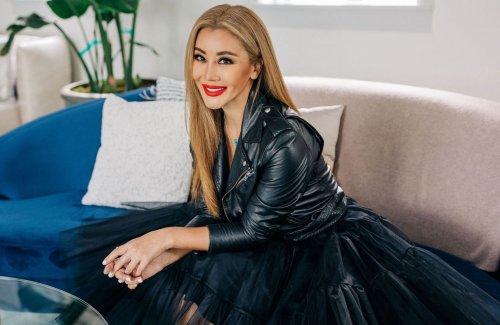
A Korean Immigrant’s Journey to Becoming a Beauty Industry Icon

Toni Ko is a first-generation Korean immigrant who has made an indelible mark in the business world as the founder of NYX Cosmetics and a champion of women-run brands.

Toni is the visionary behind NYX Cosmetics and a fierce advocate for women-run brands. With her relentless work ethic and unparalleled business acumen, she has carved a path to success that has earned her a well-deserved place among Forbes magazine’s Richest Self-Made Women.

Despite facing numerous challenges after moving to California in 1986, the language barriers and unfamiliar surroundings, she thrived on the difficulties and developed a resilient character. She drew from her family’s background in the cosmetics industry to launch NYX Cosmetics in 1999 with $250,000 in seed money from her parents. Her vision was to provide high-quality cosmetics at affordable prices, bridging the gap between luxury and affordability.

Toni used social media to propel NYX Cosmetics to remarkable success. The brand gained traction through partnerships with influential beauty creators on platforms like YouTube, capturing a younger audience and solidifying its place in the market. In 2014, L’Oréal acquired NYX Cosmetics for an estimated $500 million.

Driven by her passion for empowering women, Toni established the Toni Ko Foundation in 2014. Through this foundation, she supports organizations dedicated to uplifting underprivileged children and championing women’s empowerment. In addition, she actively invests in women-owned businesses through her venture capital firm, Butter Ventures, fostering the growth and success of fellow female entrepreneurs.

Toni has been lauded with prestigious accolades, including the WWD Beauty Inc. Brand of the Year award for NYX Cosmetics and her inclusion on Forbes’ esteemed list of Richest Self-Made Women. More than a businesswoman, Toni is a beacon of inspiration, paving the way for a future where women’s voices are amplified and their dreams are within reach.

Featured Image Source: Tatler Asia