Awaken* newsletter

March 15, 2024

SHARE:

Edwin Ong

2024.03.06

翻译:田头草

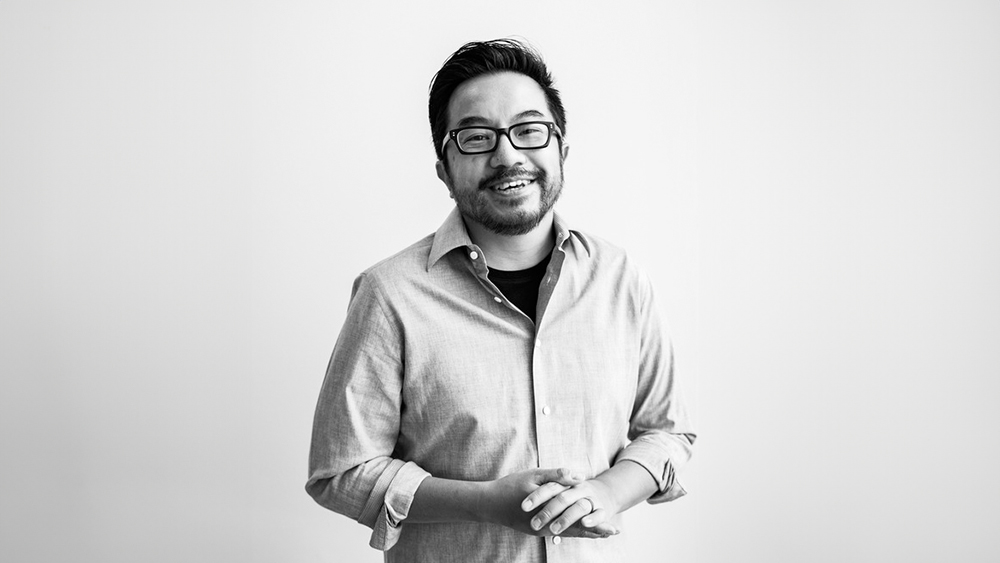
在硅谷,极少有人能像 Y Combinator 的总裁兼首席执行官 Garry Tan (陈嘉兴) 那样高调。Garry在其辉煌的职业生涯中担任过许多不同的职务。

除了领导世界上最成功的创业加速器(Y Combinator) 之外,Garry 是 Palantir (帕浪)的第 10 名员工,共同创立了 Posterous(最早的博客网站之一),创立了 Initialized Capital(管理规模超过 32 亿 美元的风险投资基金),甚至还由投资而步入政界,成为旧金山当地政治的杰出活动家。

(译者注;Palantir 帕浪公司基本上没有中文的介绍,帕浪服务的用户牛气冲天)

(译者注:Posterous 被Twitter 于2012 年收购)

我有幸有机会了解Garry 的亚裔身份如何影响他的生活,我希望他的答案能够帮助和启发我们的读者。言归正传:

一、克服有害的心态

1. 因稀缺环境而诱发稀缺的粘性心态

Ong: 

我的经验是,工薪阶级父母(尤其是亚洲移民)的孩子往往有一种因稀缺环境而诱发稀缺的粘性心态——即使他们的社会经济地位已经有所提高。加里此前曾谈到过他的“价值 2 亿美元的错误”。也就是说,他拒绝了 Peter Thiel 成为 Palantir 创始成员的邀请。对我来说,这似乎是这种心态的体现,所以我问Garry他是如何克服的:

(译者注:Peter Thiel,“奇葩的牛人,自由穿梭于法律、金融、投资及创业之间。”)

(译者注:当时Garry 是微软高薪稳定的员工)。

Tan: 

我能够意识到这些东西是双向门。以良好的条件退出一家大型科技公司实际上意味着你可以随时回去。有单向门和双向门之分。

对于与我们一样环境长大的人来说,一切都感觉像是一扇单向门。但如果你什么时候能意识到这是错误的,那么你就改造了那些有钱人默认拥有的一些特权。

Ong: 

亚马逊创始人杰夫·贝索斯(Jeff Bezos)多次谈论单向门与双向门框架。你可以在这里听到他更深入的阐述。https://m.youtube.com/watch?v=VFwCGECvq4I&ab_channel=LexClips

(译者注:单向门VS双向门,贝佐斯认为决策有两种。一种决策是单向门(one-way door),不可逆转而且非常重要。另一种决策是双向门(two-way door),90%以上的决策都属于此。也就是说,可以制定决策并执行,一旦事实证明决策错误,马上可以推倒重来,损失不大。)

2. 亚裔社区对心理健康的耻辱感

Ong: 

亚裔社区对心理健康的耻辱感,是另一种越来越受到关注的心态。就我个人而言,因为我的移民父母为了生存而拼尽全力,我觉得我没有权利抱怨我的心理健康,因为我的生活相对安逸。我问Garry这是否引起他的共鸣以及他如何克服这种心理障碍:

Tan: 

我假装自己没有任何问题,花了很多时间试图融入其中。但最终,有关我童年的事情或不寻常的留下创伤的反应,会在我的职业生活中突然出现。在某个时候,我开始单独接受治疗,这对我帮助很大。

所有这些我无法控制的事情突然变成了我可以整合和意识到的事情,并做出更好的选择。卡尔·荣格说:你未觉察到的潜意识决定着你的人生,你却将其称之为“命运”。(译者注:荣格是瑞士心理学家、精神科医师,分析心理学的创始人。)

3. 第三种常见心态是低着头,避免搅局

Ong:

我在亚裔美国人中看到的第三种常见心态是低着头,避免搅局,即使这意味着抑制自己的想法。鉴于Garry是一个非常直言不讳的人,我问他是如何培养自信的:

Tan:

我记得在高中时,我是校报的编辑,注意到我们在比较贫困高中的学生因为同样的违规行为而受到严厉的判决和开除,而在富人区的学校则仅会受到不痛不痒的轻罚。我对此非常生气,我写了一篇文章揭露它,但被我的高中指导报纸的老师审查(没过)了。我已经快毕业,并已被斯坦福大学录取了,所以我就顺其自然了。

但在我内心深处,有一种对被压制的愤怒,我永远不会忘记。

在出报纸之前,我会使用 Pagemaker (译者注:一款页面排版软件)出版“地下”报纸,而我的英语老师会为班级复印报纸 – 这给了我一种我永远不会忘记的力量。因为否则我就是角落里骨瘦如柴的亚洲书呆子,但是当我可以传达我社区的声音,我有了立足点。我从未忘记过这一点。

二、关于亚裔社区

Ong:

关于社区的话题,我问Garry 是什么促使他成为亚裔社区的积极倡导者:

Tan: 

我对旧金山的亚裔美国人社区有强烈的团结感。我们是这座城市的重要组成部分,但我们却没有被看到。我们没有被听到。

当地领导人甚至会诋毁我们为确保亚裔美国长辈安全所做的努力。现在我知道我需要为那些没有发言权的人而战。

我发现的最酷的事情之一是一个名为“亲爱的社区”的非营利组织,它将刚新到旧金山的亚裔美国人(通常是年轻的专业人​​士)以及传统的旧金山唐人街社区联系起来。看到聪明的人们聚集在一起,为这座城市的人民而战,真是太棒了。

(译者注:了解旧金山的严重的社会现状的读者,就能更深入理解Garry 的这段话)。

Ong:

我还提到他最近去新加坡参加一个名为SWITCH的创业活动,并问他对亚洲国家涌现的创业场景有何感想:

Tan:

初创公司正在世界各地涌现。您可以从 YouTube 和网络上学习。 YC 校友遍布世界各地。我很高兴看到从湾区开始的事情现在已经成为一种全球现象,而且还在不断增长。

三、亚裔创始人经验

Ong:

在朋友的建议下,我问Garry:“我可以向哪些非技术性的亚洲创始人榜样学习?对于在初创公司作为非技术员工而言,最有价值去学习的技能是什么?” Garry的回答有点挑战了我问题的前提:

Tan:

在初创公司和技术领域,技术是关键优势。如果可以的话,请更重于科技。然后成为一名博学者:科技人员掌握软技能比反过来要容易得多。

Ong:

事后看来,我承认,如果你不愿意付出努力来成为技术人才,那么期望在科技行业获得优异成果似乎很愚蠢。他给我上了一课。

四、如何看待自己的亚裔身份

Ong:

最后,我问了Garry,和我问所有受访人的问题一样——作为创始人,他如何看待自己的亚裔身份:

Tan:

直到很晚我才想到这一点。坦白说,我试图假装这不是问题,虽然绝对存在“竹制天花板”- 既使对我来说。我没有获得晋升和/或人们认为我没有能力做我所做的事情。我会愤怒地辞掉工作,这是解决问题的一种方式,但我看到事情可以有不同的解决方式。

作为一名创始人,我发现我需要提高自己畅所欲言的能力,尤其是当我知道自己绝对正确时,要尽可能自信。

我有一种隐而不发的心理,我甚至没有意识到这是为了和谐。在没有意识到的情况下,我有时会自我放弃,然后又被动地攻击它。我不再这样做了,这是我作为领导者发展的关键一步。我希望我早点发展这种能力,这都是因为我童年时无意识的编程。

(译者注:Garry 在 14 岁时开始编程,他通过制作网页和网站的互联网部分获得每小时 7 美元的报酬。这笔收入帮助他的父母支付了买房的第一笔首付。)

Ong:

我从这次采访中得到的最大收益是,“永远正确、直言不讳”的 Garry Tan 并不总是如此,而且在某一时刻,他非常像典型的亚裔孩子。Garry 的故事证明,只要有自我意识和决心,任何人都可以实现巨大的成长并成为行业领导者。

呼吁

Ong:

如果您有一个雄心勃勃的创业想法,并希望成为一个令人惊叹的创始人社区的一部分,请申请 Y Combinator! Y Combinator 每年运行两次批次——冬季和夏季。 

2024年夏季批次的申请已开放,您可以通过 https://www.ycombinator.com/apply 进行申请

感谢Garry 接受采访!

照片来源:Y Combinator

英文采访链接

Garry Tan on Startups, Advocacy, and Overcoming Cultural Mindsets

附:福布斯中国对陈嘉兴的介绍
https://www.forbeschina.com/billionaires/61673

Related Articles

Image Source: Shoutout LA

Uncategorized

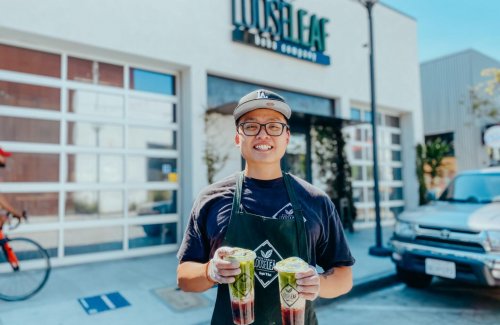
Loose Leaf Boba Company Blends Third-wave Coffee And Tea With Cultural Inclusion

Loose Leaf Boba Company is not only well-known for its expert “bobaristas.” but also for its diverse cultural representation including Burmese, Thai, Filipino, and Hispanic. “Going out for boba” was a childhood tradition that assisted the company’s mission of unifying people by normalizing cultural differences.

The brand constantly values cultural inclusivity and also empowers BIPOC, AAPI, women, and the LGBTQ+ community.

Loose Leaf Boba Company’s sharp vision of “Building a Better Boba Company” comes to life every time a customer experiences a foreign favorite, for which they make beverages for customers to try global favorites. This means making tasty beverages like Vietnamese Egg Coffee or Mexican-inspired Guava Atole.

Founded in 2012 by husband and wife duo Thomas and Jasmine Liu in West Covina, the viral third-wave shop has locations across the United States, including Connecticut, California, and Massachusetts.  This bubble tea tycoon has big plans to grow large retail sites in metro Dallas, TX, Northampton, MA, and Hadley, MA.

Image Source: Forbes Asia

Stories

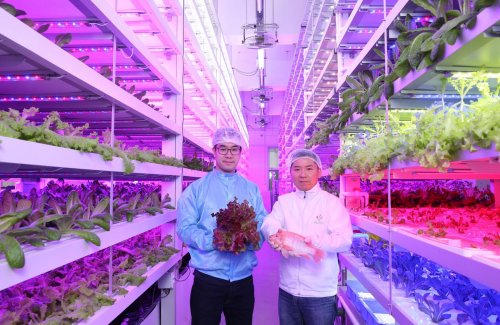
Farm of the Future: Farm66 Cultivates Vegetables Within Hong Kong’s Skyscrapers

In the course of COVID-19, a significant number of people have reported having insufficient access to fresh food entirely for sustainable living.

Gordon Tam has created an urban farm that solves this problem. He is the co-founder and CEO of the Hong Kong-based vertical farming – Farm66. With advanced farming technology, he grows fresh vegetables inside skyscrapers in Hong Kong. 

In 2013, Tam and Billy Lam, Farm66’s COO, founded Hong Kong’s first high-tech vertical farm and developed LED lighting and wavelength innovations for farms. Tam and his team found that different light wavelengths affect plant growth. Red LEDs generate longer, stronger stems, whereas blue LEDs produce larger, stronger leaves.

The technological and robotic advances at Farm66 are also both groundbreaking. The 20,000-square-foot indoor farm is managed with IoT sensors and robots for quality assurance and other tasks. 

When asked about the challenges facing conventional farming, Tam cites a lack of talent as a significant issue. “It’s because the children of many remaining farmers don’t want to take over the farms. They think it’s a very tedious job.” – he told Forbes. This is why he placed a premium on technology and saw it as a means to attract young people to farming by making the industry more appealing.

Farm66’s latest farming mechanism impressed billionaire Tang Yiu’s tech-focused venture capital firm ParticleX. The Alibaba Entrepreneurs Fund, Sino Group, and the Hong Kong government’s Cyberport and Science & Technology Parks are also investors. A total of over $4 million in funding has been acquired so far. Hengqin Financial Investment and the City University of Hong Kong have also backed Farm66.

There are currently fifteen full-time workers at Farm66, including data analysts, food scientists, and mechanical engineers, who can harvest as much as seven tons of vegetables every month. Tam hopes to share its company’s urban farming methods and success in Hong Kong with other cities. For instance, Farm66 converted a shipping container into a mobile farm for use in Middle Eastern desert cities.

Image Source: Jack X. Li/Eater Chicago

Stories

Chicago’s Khmai Fine Dining: A Daughter’s Tribute To Mother’s Healing From Khmer Rouge

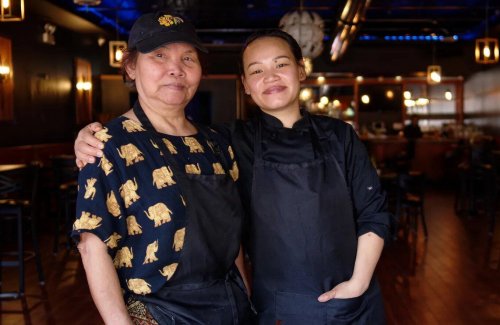
Khmai Fine Dining is a unique Cambodian restaurant in Rogers Park, Chicago. Owned by executive chef Mona Sang, the name is a mix of “Khmer,” the language and ethnicity of native Cambodians, and “me,” the Khmer term for mother, to emphasize her mother’s important role in presenting traditional Cambodian cuisine.

Mona, together with her sister, two brothers, and mother Sarom Sieng came to the US in early 1980 after surviving the Cambodian genocide. The Khmer Rouge tortured Sarom and executed her husband as the family fled to Thai refugee camps.

A single mother who never spoke English, Sarom began cooking for other families in the Cambodian community in order to survive and eventually expanded into catering events at Living Water Community Church in Rogers Park.

Mona hasn’t heard every detail of Sarom’s experience during the genocide, but the trauma her mother went through is still very clear to her. “I don’t know the whole story, but she tells it little by little when she’s cooking,” Mona told Eater Chicago. “I think there’s a lot of other people out there who have been through the same thing, but their story has never been told.”

In 2018, another family tragedy came when one of Mona’s brothers died unexpectedly in his sleep. Her mother discovered him the next morning and that image haunted Sarom.

Now that she is almost 80 years old, Sarom spends her days with her 13 grandchildren or assisting at Khmai.

According to Eater, Mona isn’t simply conveying a message to its customers with Khmai’s name. It is also a way of healing and writing a love letter to her mother who has fought for them to survive through the restaurant.

Khmai’s mesmerizing dishes include “Nom Bahn Chok”, a vermicelli noodle dish with minced tilapia marinated in kreoung and prahok, simmered in coconut fish stock, “Sach Koh Ang”, beef skewers marinated in lemongrass, Khmer spices and chili peppers, and Mai’s famous eggrolls stuffed with ground chicken, bean thread noodles and taro root.

Image Source: Liezel Nudalo Formentera

Uncategorized

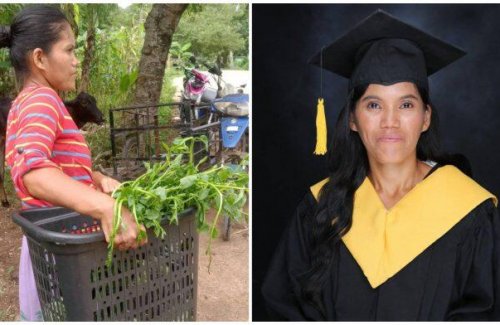
Filipina Mom Started Her Career Selling Vegetables Got Her Degree At 32 To Become A Teacher

Liezel Nudalo Formentera is now ready to work toward achieving her lifelong ambition in the field of education.

Formentera works as a street vendor in Cebu, Philippines, and hopes to improve her family’s situation someday. The only way she can see doing so is to further her education and get a better job. She could not finish elementary and high school, but she was determined and decided to join the DepEd’s ALS (Department of Education’s Alternative Learning System) program. 

ALS is a parallel learning system in the Philippines that gives students an alternative to the formal education they already got. She didn’t have to miss out on her primary education because of ALS.

In 2018, Formentera finished high school, and she began to sign up for college. She went to Cebu Technological University to earn a Bachelor of Industrial Technology with a major in Computer Technology (CTU). 

Because she also has to look after her children while she is in school, there were times when she felt physically exhausted from her work. They also experienced financial difficulties, but her farmer husband assists and supports her. There were times when she wanted to give up on her studies when times were tough, but she considered her children and the life she has worked so hard to provide for them. Thus, she worked harder for it.

She understood that there is no age limit on learning. Today, she remains overjoyed and grateful that she never expected to graduate from college. “Life is like this when you are confronted with hard times; simply pray to the Lord, and your blessing will arrive when you least expect it. This is for my children and my hope for the prosperity of my family. My children will not face poverty as I did.” – she happily shared with their local newspaper, The Philippine Star.