Awaken* newsletter

March 28, 2024

SHARE:

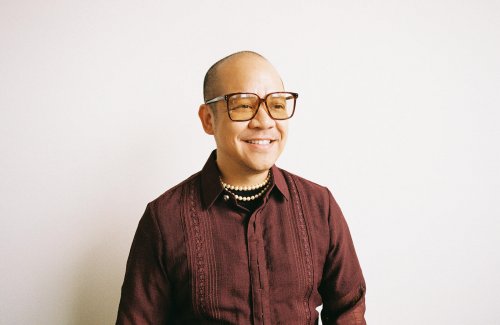
On January 3rd, I had the honor to chat with Eddie Kim. Like myself–Eddie happens to be a Stanford alumni. Unlike me–Eddie is the CTO and co-founder of a $9.6 billion company named Gusto: a payroll, benefits, and HR solution for businesses in the US. It’s already hard to find Asian unicorn founders, finding Asian near-decacorn founders is an order of magnitude rarer, making Eddie a certified legend. Despite his success, Eddie remains a very down to earth and genuine person, and I greatly enjoyed chatting with him. Without further ado:

PARENTAL PRESSURES

A common trope with some truth to it, is that many Asian parents pressure their children to pursue more stable, high-prestige careers, such as being a doctor or lawyer. I asked Eddie if he had experienced this:

I got pressure from my dad. My dad was a doctor and, like many Asian parents who are doctors, wanted their kids to be doctors. I think there was a fair bit of pressure from my dad, and then from my mom through my dad, to become a doctor and do pre-med and all that stuff. Of the STEM subjects, which I really liked and was good at, I was good at math, chemistry, and physics. The one that I didn’t like was biology. For me, it always felt like it was about memorizing things as opposed to actually using your brain. It seemed like being a doctor would require more of this, where I have to memorize all these different body parts and so on. I never really considered becoming a doctor, even though my parents really wanted me to. For them, it was the safe path, a prestigious occupation. There’s a lot of good to like about it, you’re saving lives and things like that, and you make a decent amount of money. 

However, once I was in college, my parents encouraged me to be in control of my destiny, which meant potentially starting my own business. They were supportive when I talked about it. Part of it was also that my dad is a doctor who started his own private practice, so he was an entrepreneur himself. When I was really young, my dad was just starting out. He immigrated from Korea and they didn’t have a lot of money. Once he became a doctor and had his own private practice, we were comfortable. We weren’t super rich, but money was not a huge worry. We’d always have food and basic necessities. We couldn’t buy super luxurious things and go on vacations, but it was enough that I could take risks early on. I think a lot of the reason why they were supportive of me starting my own business or doing something more risky was because even if it failed, it wouldn’t be devastating. I’d still have a home to go to and could fall back on my parents. It wouldn’t be a huge burden. So, I think I maybe had a little bit of a different experience than a lot of Asians once I was in college.

I asked Eddie if he thought that his parents were more understanding because they themselves were business owners:

Absolutely. My dad was a doctor and my mom was the one doing all the back office work. She was the receptionist, the insurance biller, the payroll runner. It was a small venture, just my dad and my mom, and they had one employee for 30 years. My dad never worked for a salary, he never joined Kaiser or anything like that. So, he definitely had a more entrepreneurial mindset.

My own mom is a small business owner, and Eddie’s parent’s attitudes paralleled my own parents’ so far. Since I sometimes ask my mom for advice when it comes to business, I wanted to see if Eddie did the same:

Not really. The whole tech world was so different from what they knew. Even questions about how to raise money or what is pre-money post-money valuation, all this sort of tech stuff, they had no idea. They weren’t practically helpful in that sense. But my mom was always super encouraging. She was very supportive, even though she didn’t really have a lot to contribute. It was more moral support more than anything.

SCARCITY MINDSET

Another common immigrant trope is having a scarcity mindset. This often persists even once families establish themselves in America. The traditional wisdom in startups is to build as lean as possible, and at first glance, having a scarcity mindset should help with this. I asked Eddie if he had this mindset and how it was expressed in his startup.

I remember, even though my parents’ practices were doing well, it wasn’t always like that. It started from nothing. We would rarely go out to eat, and when we did, it was at some chain like Sizzlers or maybe Red Lobster. Nothing super fancy. The thought of ordering an appetizer or a drink that wasn’t water felt wrong, like we were getting ripped off. There was definitely this mindset of being very frugal and not treating yourself to unnecessary luxuries. 

As I got older, I was influenced by some of my friends, who had less of a scarcity mindset. They would go out to nicer restaurants. We all had jobs post-college. We weren’t making tons of money, but while I was always about saving everything, they were not. At my first job at Volkswagen, I would pack lunch and figure out how to save about 60-70% of my salary. The rest was for rent, food, and gas. I was able to save, not a ton of money, but I had this mindset of frugality and saving as much money as possible. I’m not sure for what, but it was just the thing you do for a rainy day. My friends, on the other hand, were not saving money at all. They would go out to bars and fancier restaurants. That’s how I got exposed to it. Even though I was always a bit more on the frugal side, I started to see the value in treating yourself a little bit more. I learned from my friends that there’s no point in money if you’re not going to use it for something. What are you saving it for? I think the combination of how I grew up and my friends’ influence helped me find a balance.

I think it wasn’t until my second startup, Gusto, where we had the fortune of raising a lot more money than my first startup. Often, we had this mindset that you could spend a little more money and get higher quality stuff. For instance, instead of buying an Ikea desk, we bought from a company called Room and Board. It was a couple hundred more dollars per desk, but they were much nicer than an Ikea desk. Or like our first hires that we made, right? You can go for super cheap, outsource offshore to build your first product, or you can hire someone that’s really good, pay a little more, and be more generous with equity to get really top talent. 

So, I think it was at Gusto where I learned that if you have the resources to do so, it’s better to spend a little more. Don’t go super cheap on every single thing, don’t go frivolous and pay top dollar for everything either. But there’s a range, I would say, if it’s a range of one to a hundred, I would say a range of 70 to 80, or maybe 80 actually, where I think it’s worth spending that much because you just get so much more for it. Long term, it pays itself. 

There’s a moment where once you have the means, I think your mindset should shift a little bit. Not to go extravagant, but to not have so much of that scarcity mindset that we grew up with. 

BEING ASIAN AND BEING A LEADER

As I always do, I asked Eddie how he felt being Asian qualified his experience as a founder, and if it was something he thought about a lot:

I think to a certain extent, but not a ton. It’s not something that is always top of mind and something that I’m very self-conscious about or have imposter syndrome of. But also at the same time, it is something that’s kind of in the back of my mind. I sometimes ask myself, do I have what it takes to be a leader of hundreds of people in the organization? Will people not respect me as much because I’m Asian and Asians tend to be perceived as less of a leader than say, a white person. And so you definitely have a little bit of that, but also at the same time, I feel like whenever I have those thoughts, I tell myself that, no, why can’t you break the mold, right? Why can’t you be one of the first Asians that have done X or Y, right? Or one of the few Asian co-founders of a unicorn company, right? And so then I start to get excited about the concept of, “Hey, I can actually show people that it can be different.” And then, so it kind of turns into more of a motivating factor for me.

Eddie’s answer seemed to be focused on being a leader. From the research I did, it seemed like Eddie struggled in the transition from being an individual contributor to more of a manager role (or people empowerment at Gusto). I asked Eddie how he approached crafting his leadership skills.

One was, I had people that I could talk to that had more experience in it than I did that were very generous with their time and giving me advice and mentorship. Some of this came through investors that were early in the company. Our first seed round was basically a horde of angel investors that were entrepreneurs, right? It was people like Aditya, who was the head of engineering at Dropbox at the time. It was Jeremy Stoppelman, who’s CEO of Yelp. Drew Houston of Dropbox was among the founders of tech companies we wanted to invest in as some of the first investors. Through that, either directly or through people they knew, I got connected and would meet with some of these people regularly to get their advice on whatever issue I was facing. I remember actually talking to Aditya, at South Park in Soma, discussing how to structure comp bands. 

Having people around to ask was really helpful. I read a lot of books. I have this shelf full of business books. Things like High Output Management from Andy Grove, The Score Takes Care of Itself by Bill Walsh, and Mindset by Carol Dweck. Those are my three favorite business books that I read and they really helped me learn the tactics as well as the characteristics that are helpful in becoming more of a people manager. A lot of it is just experience. You do, then you fail and you learn. Like anything else that you spend time on, the more time you spend on it, the better you get at it. It’s really a question of how fast you progress. You will progress the more time you do something. Some people progress really fast, some people progress more slowly. But the point is that as long as you do something for a long period of time, you stick with it, you do get better at it. And then you like it even more. So it’s those three things: people, literature, and your own experience.

CUSTOMERS VS. FEATURES

When I spoke with Siqi, one of the things we talked about was how different potential customer segments can want completely different types of products and features, and how to think about where to prioritize. I asked Eddie for how he navigates this with Gusto:

In an unrealistic scenario where you have unlimited resources, it’s always better to have more features than less. However, the reality is that you have constraints in your resources and can’t do everything all at once. You have to decide how to invest your limited resources. You could build new features, improve the quality and scalability of what you have, or create new front doors into the product and focus more on acquisition and growth type efforts. 

At Gusto, we often have larger companies asking us for additional features for their businesses. At the same time, we have many small businesses that don’t know about us yet. So, we have to decide whether to focus more of our resources on creating more features for these large companies or creating more awareness of Gusto for all the small businesses that haven’t used any of our features. 

It really comes down to what you want to prioritize. For different companies, the answer will be different. It’s important to stay disciplined about who your customer is, who your target demographic is. It’s easy to just answer feature requests and get pulled into a direction that some of your customers want in the short term. This might help you get more money in the short term, but over time, you might find yourself not really focused on who your product is serving. 

Many companies have to be aware of this danger. If you start to prioritize too much of the short term feature requests and chase revenue short term, then you can miss the bigger picture. This company is building a product that works really well for this customer demographic. 

At Gusto, we always think about who our customer is. For us, it’s really the small businesses. It’s very enticing to try to go upmarket and land companies that are in the 100 or 500 employee range or a few thousand because they pay you so much more money than small businesses. Every once in a while, an opportunity comes along where a larger company says, “if you do this, then we’ll sign up”. This could be a huge deal for the company. It’s really hard to say no to those things, but you have to, because you really want to stay focused on who you’re serving. 

I asked Eddie to go a little deeper on the dangers of chasing the short term requests of the larger companies:

I think the danger is that there are two risks to this. One is you are diverting resources from something else. That could be a global maxima versus a local maxima. So that’s an opportunity cost that you could be missing. The second risk is that you lose focus on what makes your product or company so special. If we, for example, went and built a bunch of enterprise type features in Gusto that allowed any company to customize it to their heart’s content, that would be a very confusing experience for the 99% of our customers who are very small, who don’t want a customized solution because they have no idea how they want to do things and they want Gusto to guide them on how to do things.

GOALS FOR LARGER COMPANIES

Since Eddie is one of the few at the helm of a $500M ARR startup, I wanted to ask him what startups at that size prioritize, and if rapid growth was still the goal:

I think as you get more mature as a company, you start to think less about just growth at all costs. You start to think about growth at a reasonable price. There’s actually a non-standard technical term for this called GARP – Growth At a Reasonable Price. The rule of thumb for a later-stage company is that you want a GARP of 40 or above. GARP is essentially your growth rate minus your operating margins. So if you have a growth rate of 40% year on year, you’re growing your revenue 40%, then you should be breaking even because your operating margin is going to be zero. So 40 minus zero is 40. If your operating margin is 10%, then it’s 40 plus 10, which is 50. So that’s awesome. You’re going to get a really good response from your investors and the public.

Markets will be very happy if you could accomplish 40% year on year growth and 10% operating margins, right? You’re putting out 10% of profit cash flow every single year. If you’re growing at like, say 60% year on year, which is incredible growth, you can actually be negative 20% operating margin, and still have a GARP of 40%. You’re still going to be in a really good spot. So this formula really balances your growth with your profitability, your operating margins and using this rule of 40 is a pretty good rule of thumb for the markets when you’re a later stage company. When you’re early stage, it doesn’t really make any sense to use. 

Eddie’s comment on how “the markets would be happy” suggests to me that mature startups at this stage are looking at the numbers more at an IPO angle, and determining what public investors want to see.

BENEFITS OF DEI

At this point in the interview we ran out of time, but there was still one question I had for Eddie that I really wanted to ask. At the time of writing, the daily Twitter discourse was about DEI, so I wanted to get Eddie’s opinion on DEI. I emailed him the question after our interview and he graciously responded:

Gusto clearly takes DEI seriously given the RISE report. Do you feel that DEI is important at every stage of a startup or does it start gaining importance once a company is a certain size?

In my opinion, DEI is actually the most important in the early stages because there really is a vicious or virtuous cycle when it comes to building diverse teams. If you start early with a diverse team, you’ll attract more candidates from diverse backgrounds. The opposite is true too. 

I actually wrote about it a couple of times: 

https://engineering.gusto.com/growing-our-engineering-team-in-denver-diversity-begets-diversity/

https://engineering.gusto.com/staying-ambitious-on-diversity-new-goals-for-gusto-engineering/

SHOUTOUTS

If you are looking to start a business and/or hire your first employee or contractor, please consider using Gusto, the #1 payroll software in 2023!

Additionally, Gusto is hiring across technical and non-technical roles. You can find their job postings at https://gusto.com/about/careers

Thank you Eddie for speaking with us!

Related Articles

Image Source: IGO online shop Ph Instagram

Blogs, Development, Ideas, Stories

Teen Student Entrepreneur Earns Millions Through Online Business Thanks To Mother’s Mentorship

16-year-old Irish Oloris from the Philippines has not only been successful in launching her beauty products business, but she also inspires others to follow their dreams and make them a reality. 

She wasn’t interested in starting her own business when she was young, but after being mentored by her entrepreneur mother, she learned the strategies and tried them. Today, she was able to make her first millions from the sale of skincare and other beauty products in her online shop Irish White Corp.

Irish has decided to invest in land in Zambales, Philippines, and is now a property owner at a very young age. With her motivation and inspiration, she desires to continue her online business to generate additional funds for her college education.

The young CEO encourages other young people like her to dream big and begin early. One of her favorite quotes is ‘Dream at a very young age,’ because for Irish there are no limits to dreams. She thinks it’s wise to lay the groundwork for future success by first focusing on the little things.  

Irish proved that any young person with an entrepreneurial spirit can establish a business at any age. Can you imagine what you could accomplish if you get going right this minute?

Image Source: The Guardian / Unison Creative

Stories

TukTuk Box Founders Highlight Southeast Asian Flavors With Snack Kits

Laotian American Christy Innouvong-Thornton and Beatriz Aurelio-Saguin of Filipino and Indonesian descent use food to explore and share their heritage.

“Food is our love language. In the Asian community, sometimes our parents don’t like to express their emotion,” Beatriz told the Guardian, “But they’d give you a big bowl of rice and your favorite dish when you’re sad, and you know you’re loved. For us, food is also an ever-changing storytelling vehicle.”

They wanted to find a way to debunk racist stereotypes about the foods they grew up eating while giving back to Southeast Asian communities.

In 2020, Christy and Beatriz founded TukTuk Box to raise money and awareness for Thai refugees.TukTuk Box is a specialty food retailer and subscription box company focusing exclusively on Southeast Asian products and purveyors, working with people from the diaspora or identifying as BIPOC.

For Christy, starting TukTuk was also a way for her to heal and create a relationship with my biological mom. 

Most of Beatriz’s dad’s siblings were born in Jakarta, while her dad was born in the Philippines, which made him only know a few staple Indonesian dishes. But because of Tuk Tuk Box, he’s been able to learn more about his own background.

They told The Guardian that they’ve curated their products from Asian stores all around California, Thai Town in LA, and Cambodian communities in Orange county. Before the pandemic, they also had a lot of snacks directly imported from Thailand and the Philippines.

Christy and Beatriz are publishing a cookbook soon featuring different stories and recipes from folks in our community that they have collected over the last two years.

Jeremiah

News, Stories

Gleaming Presence of Tremendous Communications Shining an Iridescent Light on AAPI

Jeremiah Abraham, the founder and CEO of Tremendous Communications, had bumps in the road in getting to where he is today. Starting his business right before the pandemic, he doubted the path that he created and considered quitting everything that he was doing. But with mentors along his side and his determination to uplift the AAPI community, his company has contributed to protecting and celebrating the Asian American and Pacific Islander communities when they needed it the most.

Working at renowned companies like Disney and Warner Bros., Jeremiah has spent years hustling at the intersection of technology and entertainment. Using his talent in marketing, he has constantly shed light on the AAPI community by promoting films such as Everything Everywhere All At Once and co-producing the Filipino American musical drama film Yellow Rose. He still finds ways to balance work and life by tearing down the systematically ingrained notion of working from 9 to 5.

In this one hour interview, Jeremiah lays out his story of how he entered this industry, experiencing ignorant approaches to different cultures in a white dominant workplace, and his immense passion for AAPI representation.

Blend of Tech and Entertainment

I got my degree in computer engineering from UC Irvine and that was when I needed to decide what I wanted to do in life. I wanted to make a difference in technology back then, so I got that degree. One of my first jobs was in the aerospace industry. I was working there and I realized that I was just really bad at math. I didn’t think I could realistically pursue this as a long-term career. It was one of those moments where you had to have this introspective, realization, or catharsis about what you thought you were going to be and what you want in life.

Then I found this blend of tech and entertainment, which I was always interested in. I ended up being a front-end developer for Disney, which was a nice blend of the programming skills that I learned from school and the entertainment brands that I’ve always admired. Social media was still fairly new at these companies. This was back in 2007, and I would say that the biggest leap from this tech world to this communications world was when I discovered a Master’s program for Digital Social Media and Online Communities at USC. So I worked at Disney full-time, and at night I tried to get my master’s degree. I knew in my head what I wanted to build for myself and that was this intersection.

An intersection of my interest in engineering and social dynamics is interesting because a lot of people didn’t know why I even majored in computer engineering and minored in sociology. Engineers build societies, but you can’t build it without understanding it first. I ended up pursuing this even more and realized that I had a knack for marketing which I ended up pursuing after receiving my degree at USC.

Uplifting the Filipino Community

After I got my master’s degree, I decided to pursue my thesis project as a full-on business venture, which was an online community and editorial group for Filipino Americans called BakitWhy.com. Uplifting the Filipino community has always been a constant in my life. Since high school, I was part of a Filipino club where we celebrated our culture and volunteered for Filipino community organizations. I knew that whatever I did, whether it was engineering or marketing, was in the service of our people.

So I started this website and it was one of the first, if not the first, Filipino American digital destinations for editorial and news content. We were covering events and a new emerging digital identity among the Filipino American community. I called this the golden age of Filipino YouTubers back in 2007. These were the days of HappySlip, NinjaDrops, ndtitanlady, and more. We were able to rally this community both on the digital side and also offline to develop not just a thriving company and brand, but a lifestyle destination that people could relate to. I wanted to create something wonderful for us.

One of the things that I pride Tremendous on is that we’re not just there to engage the AAPI community as a business, but we primarily want to instill genuine progress and impact. We are immersed in our Asian American community. We don’t clock out after a certain time and say “Sorry we’re done today Asians, it’s five o’clock and we’re not going to do anything anymore.” No, this is our life. This is what fulfills us and I think it helps set our campaigns apart. The way we communicate and interact with our clients also influences the strategy we give to them because we’re not just looking at numbers, we’re looking at people. We are all about uplifting authentic Asian American experiences, diasporas, stories and narratives. For us not to be authentic with that presence in our daily lives would be hypocritical.

One of the things that I pride Tremendous on is that we’re not just there to engage the AAPI community as a business, but we primarily want to instill genuine progress and impact

– Jeremiah Abraham

Marketing in a White Dominant Setting

There was one instance where I was the only person of color in the room at a large entertainment company, still very green and inexperienced. I didn’t feel like I had the authority and the voice to chime in and redirect these senior leaders of this space. And they’re sitting around going like, “Hey, it’s February next month. It’s almost Black History Month. What can we do?” And then someone just started listing off all the movies in their catalog that had some resemblance of Black narrative. And I’m just like, “All right, well, that’s very top-level. But what more can we do? Can we bring in more people who actually represent this community in the room and have a conversation about it?” That situation really helped me realize that we needed to be part of that room of decision-makers. Being there that day sparked a drive in me that I’ll never forget.

One of the things that I had issues with while leading the publicity and marketing for Yellow Rose before we got acquired by Sony Pictures, was that people didn’t understand what Filipinos were, that our stories were relatable to all moviegoers, and that we were equally as valuable in Hollywood. People couldn’t wrap their brains around this and asked “Why is a Filipino family living in Texas? Do they really sing country music like that? Will non-Filipinos even relate to this?” They were seeing the Filipino diaspora within one specific lens instead of embracing the spectrum of the Filipino experience. They didn’t realize that there are mechanisms that historically pushed us to these areas that we’re thriving in, to these places where they may not think that there is a large thriving Filipino community. The lead characters are Filipino American, but the story is universal. If you took the lead characters out and made them Latinx or Black, for example, you would still have the same emotion. You’d still have the same humanity. You’d still have the same story. It just so happened that these people are Filipino. This is one of the things that Jo Koy discusses during his  interviews for Easter Sunday. The movie isn’t about Filipinos, it’s a movie about his family and his mom. That’s one of the biggest things I appreciated about this film. It’s a story for everyone.

The first movie that I ever saw when I moved to the United States was Superman 2 with my dad and that’s always ingrained in my head. I was in such awe of this superhero and I’ve always wondered how impactful it would have been if Superman was Filipino. That would have made such a big difference for me growing up. I love Christopher Reeve as Superman, but imagine if it was a Christopher Santos or a Christopher Dela Cruz in that heroic cape instead! Today I’m so happy that our next generation can enjoy seeing themselves as heroes with films like Shang-Chi and people like Iman Vellani as Kamala Kahn making a difference.

I think it’s incredibly important for us to make these decisions on how we are portrayed and valued for ourselves, with representation across every part of the process –  behind the camera, in front of the camera, in business and below the line. We can bring these little nuances of authenticity to these stories that are so important and help shape the next generation of folks who want to do this work. 

They were seeing the Filipino diaspora within one specific lens instead of embracing the spectrum of the Filipino experience. They didn’t realize that there are mechanisms that historically pushed us to these areas that we’re thriving in, to these places where they may not think that there is a large thriving Filipino community.

– Jeremiah Abraham

A Chronicle of Starting a Business Right Before a Pandemic

Starting a business at the cusp of a global pandemic was a big lesson in resilience. There is a lot of strategy, planning, introspection and decisions that need to be made behind the scenes. I had been planning Tremendous for years. I spent so much time creating the structure of it, the business strategy, forecasting our trajectory and all those things that you need to help lay the foundation of a business… then the pandemic hit and I needed to shift very quickly.

Tremendous incorporated in 2019 and started to plant the seeds of studio partnerships. When we were ready to sign a couple of contracts, all the major movie studios suddenly shut down. I had to take a step back and I realized the mission of Tremendous is not rooted in movies and entertainment, but it exists to uplift the visibility of Asian Americans as a whole. We couldn’t work in entertainment at the time but that didn’t stop us from working within the community. That’s when we helped support Racism is a Virus, and co-founded Unapologetically Asian and CollaborAzian. We used our expertise to help uplift Stop AAPI Hate. We were able to leverage our network and our skills and our desire to make change in this very crucial moment of the Asian American community.

There certainly were many surprises along the way. I pitched this movie that was supposed to come out on January 2021. We were ready! We put this beautiful deck together, we brainstormed, we strategized. And then they told me, “Hey, we’re going to make an announcement today that this movie is going to be pushed to January 2022.” I was like, “What am I going to do for a year?” It’s a lot of those things that I learned as an entrepreneur that it doesn’t necessarily go how you forecast, even though you spend so much time strategizing and pulling numbers. And that’s fine because that will push you to be more dynamic as a business and help you imagine new, creative avenues for yourself. But for me, it was a lesson in resilience, being flexible, and not beating yourself up too much for things that are outside of your control.

I had to take a step back and I realized the mission of Tremendous is not rooted in movies and entertainment, but it exists to uplift the visibility of Asian Americans as a whole.

– Jeremiah Abraham

Confinements that Pull us Back

There were many moments where that lingering voice of doubt made me wonder if this was the right path for me. Should I go back to a safe, stable job with benefits and a retirement plan? What if I end up losing all my money in this venture? Is it okay that I decided not to work today?

Even now, I can make my own schedule. I can wake up at noon if I wanted to and keep working until 2:00 am or just take a random afternoon off. And that’s my choice to make. But because I’ve been so conditioned to think that the limits of my brain power need to be confined between nine to five, having this new freedom came with a sense of guilt.

I have such a hard time realizing that you don’t need to operate within those confines to be productive and successful and fulfilled. I just have to keep reminding myself that it’s okay to permit yourself to watch Netflix for an hour at 2:00 pm for you to refocus and recenter. It’s okay that you’re sleeping in until 11:00 am or 12:00 pm today because you worked until 1:00 am last night. I have to keep reminding myself that nobody is telling you what you need to do except for yourself. That’s the life of an entrepreneur and I’m still learning how to adjust to this new level of control, even today.

Shining Leadership Skills for Better Productivity

Throughout the years, I have applied my learning lessons in leadership – especially with how I lead my team and how I conduct business. Sometimes we have many projects to work on at the same time, sometimes we have less. I’ve always told my team, as long as you get your stuff done and you are communicative and responsive, then I’m good with that.

I really encourage them to explore their interests, experience life and bring those experiences back to the company. This helps bring fresh, new ideas during our brainstorms and campaigns. One of the things that I took away from working as a Marketing Director at Condé Nast is that they encouraged you to go travel. Travel changes you, it opens up your mind. It allows you to experience new things so you can bring that experience back into your editorial piece or your marketing strategy.

I’ve never liked the idea that you need to clock in at 9:00 am every day or else you’re considered a bad employee. Just because I’m sitting there physically doesn’t mean I’m mentally there. I’ve never understood that kind of leadership where it’s more important to appease other people and make them feel better about themselves because of your presence. It’s those antiquated expectations and older ways of doing business that I’m constantly reshaping for Tremendous. As long as we get our projects done, we don’t miss meetings, and our clients are happy… who cares if you sleep in an extra hour that day?

Travel changes you, it opens up your mind. It allows you to experience new things so you can bring that experience back into your editorial piece or your marketing strategy.

– Jeremiah Abraham

People that helped along the way

I never had one specific mentor during my career. Instead, I’ve had some amazing senior executives who have taught me different aspects of my leadership skills. One of them taught me negotiation skills, another taught me how to properly communicate my ideas in a meeting, another pushed me to be more assertive with what I need to succeed in a business setting. I’ve really taken these lessons and made them my own.

One of these executives is Terra Potts, who is the Executive Vice President of Worldwide Marketing at Warner Bros. Pictures. We kind of grew up at WB together back in the day. She taught me how to stand up for your worth in situations where people may not immediately see it. I take that into every negotiation that I am part of. Teal Newland, my Senior Vice President at Condé Nast Entertainment helped me hone my creative eye and incorporate different perspectives in my marketing campaigns. Diane Paragas, who is the director of Yellow Rose, mentored me in the filmmaking process. These are just some of the people who empowered me in my journey and I’m happy to give back to others who are working with me today.

Another friend of mine is Jose Antonio Vargas, who is the Founder of Define American. We had many check-ins during the pandemic and I told him straight up once that I was thinking about quitting because I didn’t know if I was doing the right thing. No studios hired me, no movies went out, the movies that were supposed to be in theaters were going out into streaming services. And it was hard for me to see what was coming down the line and the larger picture of it all. He gave me some tough love and said “Jeremiah, you’re building something that doesn’t currently exist. Obviously you’re going to run into these situations where the solution isn’t immediately there because you have to make it up for yourself.” I never thought about it that way. If the path has not always been taken, obviously you have the flexibility and the responsibility to forge a new one to create something that never existed before. That conversation inspired me to realize that I can’t hold myself to the same standard that I had before because I’m creating new standards for myself now. That helped shift my thinking and my perspective about it and, honestly, helped shape the development of Tremendous. I could have easily quit because of the pandemic, but I would have regretted it the rest of my life.

I would encourage people to pursue multiple avenues of mentorship. It was very valuable to me to learn from many very skilled individuals, not just one. And you never know where your new life lesson is going to come from or which experience you’re going to value for years to come. For me, it was the guidance of many people that helped me get to where I am today.

I can’t hold myself to the same standard that I had before because I’m creating new standards for myself now.

– Jeremiah Abraham

How to reach out

I am @jerabraham on Instagram and Twitter, and Tremendous is @tremendous_comm on all those platforms as well.

Interviewed by Tiff Soga

Image Sources: shopwithkendallyn.com, bfa.com

Uncategorized

Former Wacoal Marketing Executive Kristin DiCunzolo Leads Her Way For Lingerie Brand Lively As Newest CEO

Lingerie companies continue to operate in the same outmoded ways, but times have changed and the industry is ready for advancement and growth.

Despite the fact that the founder and current CEO of Lively, Michelle Cordeiro Grant is stepping down to manage the transition and assist with the company’s PR and brand partnerships.

Lively was founded in 2015 as a lingerie brand focused on comfort and style. New CEO, Kristin DiCunzolo, will be appointed to take charge of concentrating solely on the brand’s global growth.

DiCunzolo has extensive experience with the company’s structure and operations from her time as vice president of marketing and helped lead at parent company Wacoal America Inc., which Lively can leverage more.

Today, consumers desire higher-quality underwear, particularly for women. Lively’s other goal is to attract a younger demographic. The U.S. market for women’s underwear is predicted to reach $14.5 billion in 2026, up from $12.9 billion in 2021, according to market researcher Euromonitor International.

Lively understands it must abandon traditional marketing strategies to grow sales and survive in today’s competitive market. Ms. Cordeiro Grant believes Lively’s new mission is to revitalize the company’s reputation by strengthening its connection with its clients on an individual level, and that DiCunzolo’s skills as a former Marketing Executive will benefit the company.

Ms. DiCunzolo has stated that she hopes to place an emphasis on Lively’s customer interaction. While strategically adjusting to the ever-changing environment, she intends to maintain the Lively community’s centrality in decision-making, maintain the brand’s focus on its team, and preserve the brand’s vision and heart.