Stories

August 25, 2022

SHARE:

When looking at an Asian-American woman, certain implicit biases exist. They are often judged as being too meek, timid, or passive to achieve their goals. They may be held back by such an evaluation, preventing them from realizing their full potential.

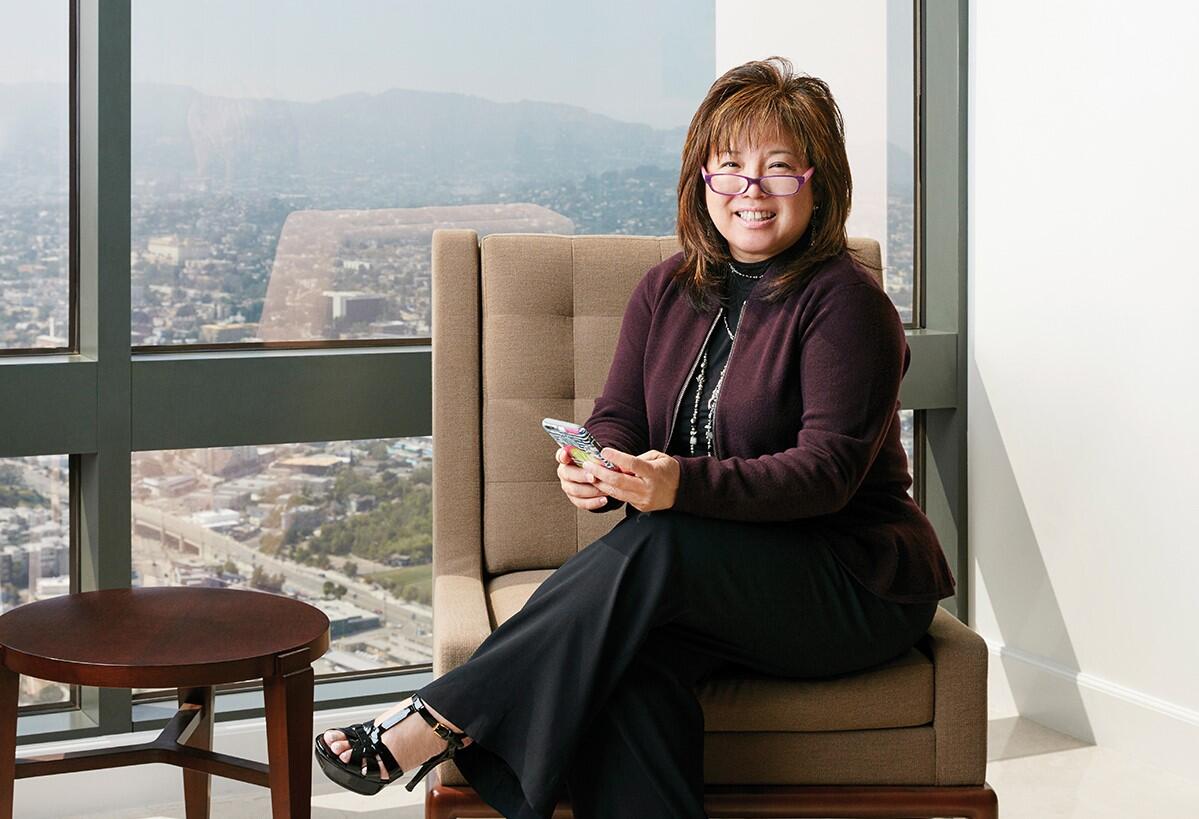
It was difficult for Asian-American lawyer Debra Wong Yang to speak up throughout her early career. In the long run, she realized that her inability to stand up for herself did not only hurt her but also her clients.

“Eventually, we all find a voice — my advice is to just make sure the one you ultimately adopt is actually yours,” she advised in her essay published by Law360.

Yang graduated from law school in 1985 when women were still relatively powerless in the legal field. Since she was still working toward the goal of following the path she had chosen, she has faced many challenges along her journey. She has witnessed it all, from the very traditional Chinese upbringing she received to the various sacrifices, frustrations, and challenges she must face on a day-to-day basis in her chosen field.

After years of practicing law and facing challenges in the courtroom, she came to a number of important realizations that helped her become a successful attorney. She remembered when she thought up some strategies that she hoped would assist her in communicating effectively with others. 

Yang also tried to conquer her fear, and her motivation helped her cope with the situation and make further progress. With a lot of the many books she has read on leadership, she knows she has finally found her own approach to developing herself. 

She aspires on detailing how she was preparing for her court session with an outline of her questions and concerns, and other litigants will be able to better manage their time with counsel. She realized she was getting better at defending her clients in court because she was able to keep her attention solely on the issues and evidence in her case.

When she was currently going through a period of learning and challenges, she learned that holding a position of authority does not guarantee respect from subordinates. She came to understand that one of the responsibilities of a leader is to address concerns raised by those who doubt one’s abilities.

In her courtroom sessions, Yang strongly suggests analyzing the situation first and looking for authentic solutions carefully. She strongly believed that the solutions to some problems sometimes are not immediately obvious and have never been tried before, or that it’s extremely straightforward. However, she is challenged to keep turning the issue over and over in her mind until she begins to see it from a new perspective.

Yang also stressed the importance of having mentors to turn to for advice and insight. She was assertive in her belief that one should be guided by the process of sitting down, thinking it through, and acting in a way that is most beneficial to them. She went on to say that if the message comes from within, the receiver will perceive it as more genuine and at ease.

In 2002, She was appointed by President George W. Bush as United States Attorney and became a former judge serving the Los Angeles County Superior Court. The fact that her success can be attributed to her strong leadership and the bravery that she possesses as an individual is a reason why she wields her power. 

Not only does Yang share her own experiences, but she also provides valuable advice that other women can use to advance their careers. She stated, “My wish for each of you is that you will be brave when facing self-doubts, challenges, and obstacles. That you will dig deep, reach out if needed, do the research, make the tough decision and not be afraid of losing.”

The fact that Yang, an Asian American woman-in-law, was able to take control of her power demonstrates that one’s race should not determine the opportunities available to them or the path they choose to take in their professional advancement. However, by maintaining a positive attitude and giving oneself the power to make decisions, one will be able to live up to the standards and goals that have been established to assist in one’s own success.
Related Articles

Image Source: kr-asia.com

Uncategorized

GGV Capital’s Jenny Lee: From Jet Engineer To One Of World’s Best Venture Capitalists

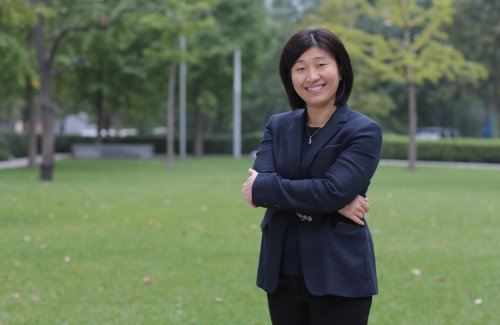
Recognized as one of the world’s top 100 venture capitalists by Forbes for 11 years in a row, Singaporean venture capitalist Jenny Lee stayed in her hometown to raise money for four new funds launched by her firm GGV Capital at the height of the pandemic in 2020. 

For four months, according to Forbes, the veteran VC barely slept as she made 250 zoom calls and remotely raised $2.5 billion from investors around the world. Lee and her team raised the most capital in GGV’s 22-year history, boosting assets by 27% to $9.2 billion. 

Long before she became one of Asia’s most powerful businesswomen, she earned a bachelor’s and master’s in Electrical Engineering at Cornell in 1995. She became an aviation engineer at Singapore’s ST Aerospace, where she modified F-16 fighter planes.

In 2001, the company sent Lee to attend Northwestern University’s Kellogg School of Management where she earned an M.B.A., but she had wanted to be a venture capitalist for a long time, so she quit her job that same year to follow her hidden passion.

Lee paid ST Aerospace $300,000 for not finishing the 11-year scholarship bond that paid for her bachelor’s, master’s, and M.B.A., but she has no regrets. For her, it was the best move.

She got her start as a venture capitalist at Morgan Stanley and Jafco Asia, but she made her name in China after joining GGV to create its office there in 2005. One of Lee’s more successful discoveries was the mobile phone maker Xiaomi before it had sold its first handphone.

Today, Lee is one of GGV’s top-tier managing partners along with Singaporean Jixun Foo, an early Grab investor. Hans Tung, who’s been on the Midas List 11 times. And VCs who have U.S. investment, industrial, and entrepreneurial expertise.

GGV’s 354 firms are balanced between Asia-Pacific and the Americas (GGV claims its investments include more than 85 unicorns). With the U.S. having more investments, at roughly 130, and 77 in China.

The company’s assets under management have expanded more than 50 times since its founding in 2000.

Image Source: Netflix

Uncategorized

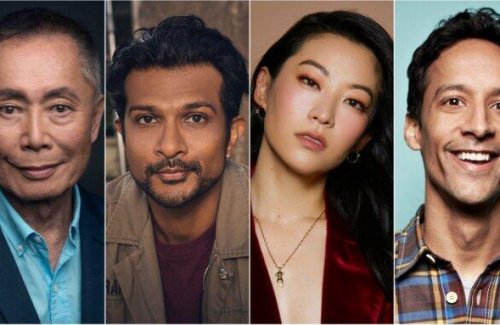
Netflix’s Star-studded Series Avatar: The Last Airbender Includes George Takei, Utkarsh Ambudkar, Arden Cho, Danny Pudi

More actors have joined the cast of Netflix’s live-action version of “Avatar: The Last Airbender,” including George Takei, Utkarsh Ambudkar from the sitcom “Ghosts,” Arden Cho from Partner Tracks, and Danny Pudi from the comedy series “Mythic Quest.”

Avatar: The Last Airbender unites the “four nations”: Water Tribe, Earth Kingdom, Fire Nation, and Air Nomads with a diverse representation of Asian and Indigenous talent.

Star Trek’s Takei voices Koh, an ancient predatory spirit. Cho, Ambudkar, and Pudi all portray Earth Kingdom characters, with Cho as June, a vicious bounty hunter; Ambudkar as King Bumi, the elderly and mercurial king of Omashu; and Pudi as the mechanist, an eccentric inventor and engineer raising his kid in a war-torn country.

Cast members include Gordon Cormier as Aang, Kiawentiio as Katara, Ian Ousley as Sokka, Dallas Liu as Zuko, Elizabeth Yu as Azula, Paul Sun-Hyung Lee as Iroh, and Daniel Dae Kim as Fire Lord Ozai.

Executive produced by showrunner Albert Kim, Rideback’s Dan Lin and Lindsey Liberatore, and Michael Goi, “Avatar: The Last Airbender” is a live-action version of the animated Nickelodeon series of the same name. Directors include Goi, co-executive producer Roseanne Liang, Jabbar Raisani, and Jet Wilkinson.

Kim tells Netflix that the live-action adaptation creates “a chance to showcase Asian and Indigenous characters as living, breathing people. Not just in a cartoon, but in a world that truly exists, very similar to the one we live in.”


Image Source: CAA

Uncategorized

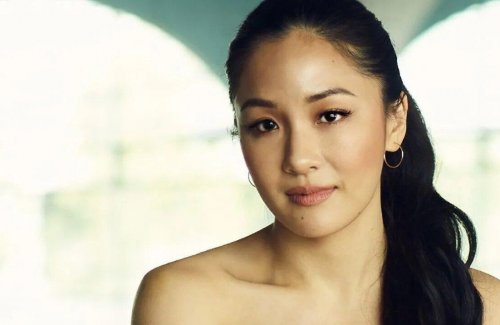
Constance Wu On Surviving Twitter, Producer’s Sexual Assault On Her New Memoir

Constance Wu is opening up about her time on “Fresh Off the Boat” and saying that a senior producer of the 2015–2020 ABC sitcom sexually harassed her.

She tells The New York Times about a producer’s “controlling behaviors” in her memoir Making a Scene. “Fresh Off the Boat was my first-ever TV show. I was thrown into this world,” she added, “I don’t have parents in the industry. And because I was 30, people thought I knew what I was doing. It made me paranoid and embarrassed.” 

Wu also told The Atlantic she hadn’t spoken about this before out of fear of repercussions. “I kept my mouth shut for a really long time about a lot of sexual harassment and intimidation that I received the first two seasons of the show,” Wu said. 

Once the show got successful after two seasons, she was able to say “no” to the producer’s harassment and intimidation. And, so she thought: ‘You know what? I handled it, nobody has to know, I don’t have to stain this Asian American producer’s reputation. I don’t have to stain the reputation of the show.”

The actress addressed the infamous tweet in spring 2019 when ABC renewed another season of the sitcom. “I was punished for being ungrateful,” she said. Wu publicly apologized, but she received backlash. 

She then sought psychiatric help and quit social media for three years. Wu had started writing a book back in 2016 but had lost momentum.

In the fall of 2019, she went back to work at “Fresh Off the Boat”, the final season, where she apologized to her colleagues in person.

The next year, the world stopped due to the pandemic. And she finished the book she was writing. In her memoir, Wu talks about how she felt alone, how racism affected her career, and how she’s moving on.

“I try not to make myself out to be a hero,” Ms. Wu told NYT. “I try to make myself out to be a pretty normal person who has flaws like everybody else. I’m not really into the actor memoir where it’s like, ‘I overcame the odds, and I’m this person who was humble and just kept working. I was the victim.’ It’s less black and white than simply victim and perpetrator.”

Image Source: Etsy.com

Uncategorized

Major Online Shops Including Etsy, Yelp, Uber Eats Boost Visibility Of Minority-Owned Businesses

The pandemic has devastated minority-owned businesses. Only 31% of Black-owned enterprises and 44% of Hispanic-owned businesses got Paycheck Protection Program aid, according to the Federal Reserve.

To raise awareness and support minority-owned companies across the country, major online shops and delivery systems are now showcasing Asian, Black, LGBTQ, and female entrepreneurs.

Amazon Launchpad enables vendors to identify on their “seller credentials” page if they are Black-owned, Latinx-owned, or women-owned.

DoorDash allows you to search for Black-owned restaurants in numerous US cities with “Black-owned” and “women-owned” tags on all company profiles. DoorDash Merchant Support can add the tag to a business’s profile.

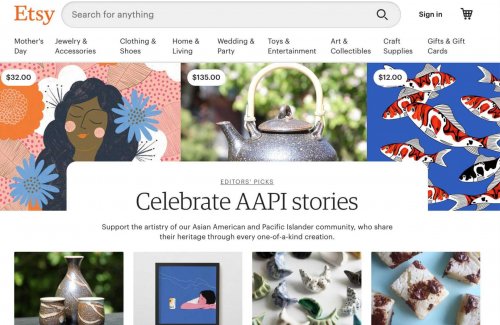
Etsy lets shoppers search for Asian, AAPI, Black, handicapped, Jewish, Latinx, Native, female, LGBTQ, as well as veteran and military family-run businesses.

Google Business Profiles that are verified can add “Black-owned,” “women-led,” and “LGBTQ-owned” attributes to Google Search, Shopping, and Maps.

Macy’s Diverse Owned Brands section of its website features hundreds of items from minority-helmed brands, including those manufactured by AAPI, Blacks, Latinos and Hispanics, LGBTQ persons, and women.

The Intentionalist sorts for Asian-owned, Black-owned, Latino-owned, LGBTQ-owned, Native-owned, veteran-owned and woman-owned companies.

Uber Eats has partnered with the EatOkra app, which connects diners to Black-owned eateries, restaurants and food trucks in cities of Atlanta, Chicago, Los Angeles, Miami and Seattle.

Yelp allows businesses to self-identify as Black-owned. Yelp’s Ones to Watch series also spotlights top Asian-, Black-, Latinx-, LGBTQ- and women-owned businesses around the country. Businesses can also categorize themselves as “open to all,” which means that they welcome anyone regardless of race, ethnicity, national origin, sex, sexual orientation, gender identity and expression, immigration status, religion or disability.